



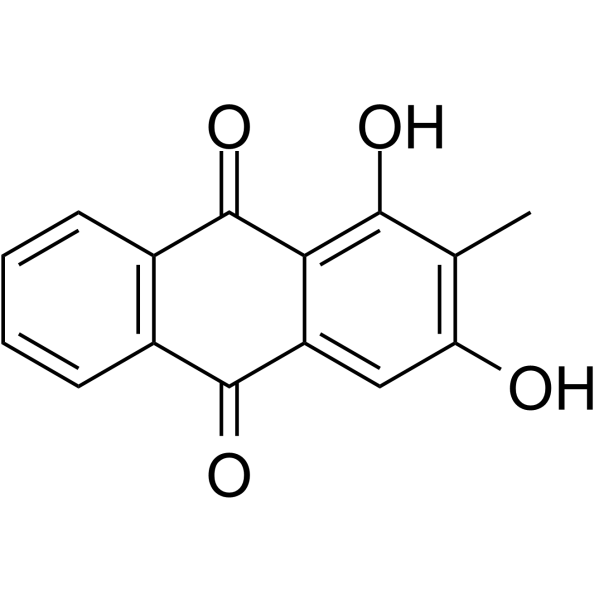
Rubiadin

Based on 1 Customer Validation
Rubiadin is an orally active free radical scavenger that inhibits the activation of the NF-κB pathway. Rubiadin inhibits osteoclast formation, bone resorption, lipid peroxidation, HBV DNA replication and cancer cell proliferation; reduces pro-inflammatory cytokine levels; induces cancer cell apoptosis; and possesses antifungal, antimalarial, antibacterial and anticonvulsant activities. Rubiadin can be used in the research of osteoporosis, acute inflammation, chronic inflammation, carbon tetrachloride-induced liver injury, Alzheimer's disease, breast cancer, iron overload disorders, hepatitis B virus infection, colon cancer, liver cancer, T-lymphocytic leukemia, cervical cancer, diabetic nephropathy, epileptic seizures, fungal infections, malaria and bacterial infections.
Nos produits utilisent uniquement pour la recherche. Nous ne vendons pas aux patients.
- Pureté: 99.20%
- CAS No.: 117-02-2
- Formule: C15H10O4
- Masse moléculaire:254.24
-
Stockage:
4°C, protect from light
* In solvent : -80°C, 6 months; -20°C, 1 month (protect from light)

To place orders, for customer services and technical support, please contact: MedChemExpress USA
Tel: 609-228-6898 E-mail: [email protected] [email protected]


-
 Activité biologique
-
Chemical Information
-
Solvant et solubilité
- Pureté et documentation
- Références
-
 Help & FAQs


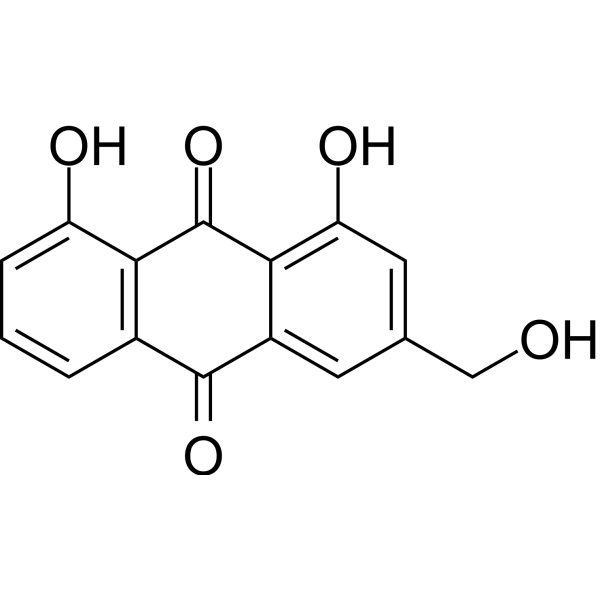
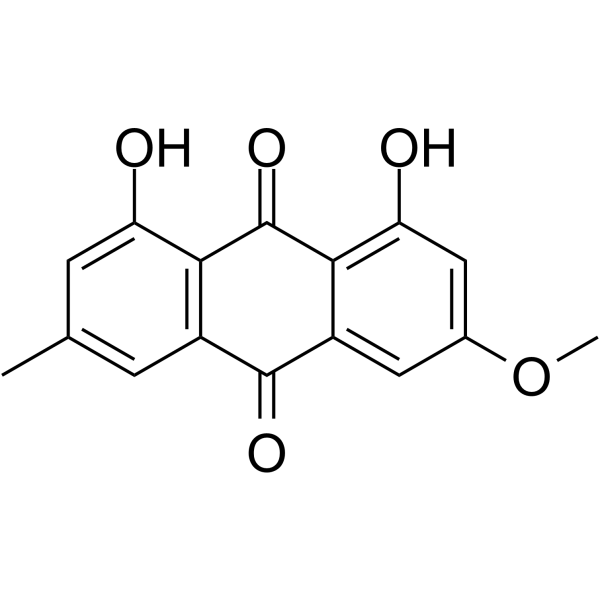
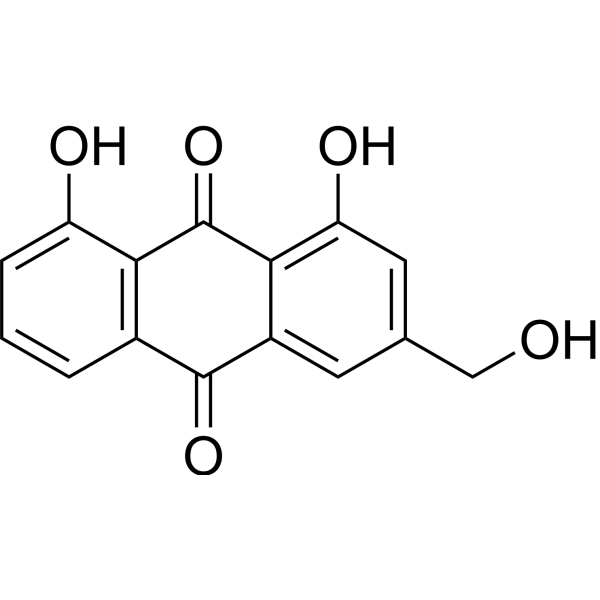


Voir tous les produits spécifiques à Isoform Parasite
More

Activité biologique
|
Cell Line

|
Type | Value | Description | References |
|---|---|---|---|---|
| DU-145 | IC50 |
32 μM
Compound: 10, rubiadin
|
Cytotoxicity against Homo sapiens (human) DU145 cells assessed as inhibition of cell survival after 96 hr by MTT assay
Cytotoxicity against Homo sapiens (human) DU145 cells assessed as inhibition of cell survival after 96 hr by MTT assay
|
10.1007/s00044-012-0197-5 |
| MCF7 | IC50 |
56 μM
Compound: 10, rubiadin
|
Cytotoxicity against Homo sapiens (human) MCF7 cells assessed as inhibition of cell survival after 96 hr by MTT assay
Cytotoxicity against Homo sapiens (human) MCF7 cells assessed as inhibition of cell survival after 96 hr by MTT assay
|
10.1007/s00044-012-0197-5 |
| MES-SA | IC50 |
38 μM
Compound: 10, rubiadin
|
Cytotoxicity against Homo sapiens (human) MES-SA cells assessed as inhibition of cell survival after 96 hr by MTT assay
Cytotoxicity against Homo sapiens (human) MES-SA cells assessed as inhibition of cell survival after 96 hr by MTT assay
|
10.1007/s00044-012-0197-5 |
| MES-SA/Dx5 | IC50 |
35 μM
Compound: 10, rubiadin
|
Cytotoxicity against Homo sapiens (human) MES-SA/Dx5 cells assessed as inhibition of cell survival after 96 hr by MTT assay
Cytotoxicity against Homo sapiens (human) MES-SA/Dx5 cells assessed as inhibition of cell survival after 96 hr by MTT assay
|
10.1007/s00044-012-0197-5 |
| NCI-H460 | IC50 |
42 μM
Compound: 10, rubiadin
|
Cytotoxicity against Homo sapiens (human) H460 cells assessed as inhibition of cell survival after 96 hr by MTT assay
Cytotoxicity against Homo sapiens (human) H460 cells assessed as inhibition of cell survival after 96 hr by MTT assay
|
10.1007/s00044-012-0197-5 |
Rubiadin (5-20 μM; 3 h pre-incubation, then 24 h continued incubation) protects N2a cells against Aβ1−42-induced cytotoxicity, significantly enhancing cell viability relative to Aβ1−42-only treated cells[4].
Rubiadin (5-20 μM; 3 h pre-incubation, then 24 h continued incubation) suppresses activation of the IKK/IκB/NF-κB pathway in Aβ1-42-induced N2a cells by reducing phosphorylation of key pathway components[4].
Rubiadin (1-100 μM; 24 h post-irradiation) induces light dose-dependent cytotoxicity in MCF-7c3 human breast cancer cells, with an LD50 of 0.66 J/cm2, reducing viability by 76% at 100 μM and 1 J/cm2[5].
Rubiadin (0.4-40 μM; 24 h) does not impair the viability of human HepG2 cells[6].
Rubiadin (0.4-40 μM; 24 h, dose-dependent) and (20 μM; 3-24 h, time-dependent) upregulates hepcidin mRNA and protein expression in human HepG2 cells in both a dose-dependent and time-dependent manner, with maximal 5-fold mRNA upregulation at 20 μM for 24 h[6].
Rubiadin (5, 10, 20, 40 μg/ml; 72 h) dose-dependently inhibits the proliferation of HepG2.2.15 cells with an IC50 of 17 μg/ml, and nontoxic concentrations (<8 μg/ml) support its use in anti-HBV activity assays[7].
Rubiadin (4, 6 μg/ml; 24, 48, 72 h) dose-dependently reduces the secretion of HBsAg, HBeAg, and HBcAg by HepG2.2.15 cells, with particularly potent inhibition of HBeAg and HBcAg at 72 h[7].
Rubiadin inhibits Candida tropicalis biofilm formation and induces oxidative stress under irradiation, and acts synergistically with Amphotericin B against the fungus[8].
Rubiadin inhibits Plasmodium falciparum viability with an IC50 of 13.00 μg/mL, reducing schizont counts in a dose-dependent manner[8].
Rubiadin exhibits moderate experimental DPPH radical scavenging activity in aqueous physiological media (pH 7.4), with an IC50 of 91.00 μM[9].
Rubiadin exhibits moderate experimental ABTS•+ radical scavenging activity in aqueous physiological media (pH 7.4), with an IC50 of 73.44 μM[9].
MedChemExpress (MCE) has not independently confirmed the accuracy of these methods. They are for reference only.
-
Cell Line:mouse neuroblastoma N2a cells (Aβ1₋42-induced model)
-
Concentration:5 μM; 20 μM
-
Incubation Time:3 h pre-incubation, then 24 h continued incubation
-
Result:Significantly improved cell viability in Aβ1₋42-exposed N2a cells.
-
Cell Line:mouse neuroblastoma N2a cells (Aβ1₋42-induced model)
-
Concentration:5 μM; 20 μM
-
Incubation Time:3 h pre-incubation, then 24 h continued incubation
-
Result:Reduced the expression levels of pro-inflammatory cytokines IL-1β, IL-6, TNF-α. Increased the expression of anti-inflammatory cytokine IL-4. Decreased phosphorylated Tau protein expression in Aβ1₋42-exposed N2a cells.\nSignificantly inhibited the phosphorylation of IKK, IκB, and NF-κB in Aβ1₋42-exposed N2a cells.
-
Cell Line:mouse neuroblastoma N2a cells (Aβ1₋42-induced model)
-
Concentration:5 μM; 20 μM
-
Incubation Time:3 h pre-incubation, then 24 h continued incubation
-
Result:Reversed the increased nuclear overlap of NF-κB and DAPI-labeled nuclei observed in Aβ1₋42-exposed N2a cells. Significantly reduced NF-κB nuclear fluorescence intensity.
-
Cell Line:MCF-7c3 human breast cancer cells
-
Concentration:1, 50, 100 μM
-
Incubation Time:24 h (post-irradiation)
-
Result:Exhibited photochemical activity in a light dose-dependent manner, with an LD50 value at 0.66 J/cm2 light dose and 76% cell killing at 1 J/cm2.
-
Cell Line:human HepG2 cells, ferric ammonium citrate (FAC)-treated human HepG2 cells
-
Concentration:0.4, 4, 8, 20, 40 μM (untreated cells); 20 μM (FAC-pretreated cells)
-
Incubation Time:24 h (untreated cells); 24 h (FAC-pretreated cells)
-
Result:Dose-dependently decreased protein expression of TfR1, Fpn1 and FtL in untreated HepG2 cells, with significant reductions at 20 and 40 μM for TfR1 and Fpn1, and at 8, 20, and 40 μM for FtL; had no significant effect on divalen DMT1 or FtH expression.\nFurther decreased TfR1 protein expression and reversed FAC-induced elevation of FtL protein expression in FAC-pretreated HepG2 cells; had no significant effect on Fpn1, DMT1, or FtH expression in FAC-pretreated cells.
-
Cell Line:HepG2.2.15 human hepatoma cells
-
Concentration:4, 6 μg/ml
-
Incubation Time:24, 48, 72 h
-
Result:Dose-dependently decreased extracellular levels of hepatitis B surface antigen (HBsAg), hepatitis B e antigen (HBeAg), and hepatitis B core antigen (HBcAg). Reduced HBeAg secretion by 26.31% and HBcAg secretion by 29.26% at 72 h, with more efficient inhibition than the positive control.
-
Cell Line:HepG2.2.15 human hepatoma cells
-
Concentration:4, 6 μg/ml
-
Incubation Time:72 h
-
Result:Resulted in G0/G1 phase percentages of 75.2% (4 μg/ml) and 78.1% (6 μg/ml), with no statistically significant difference from the untreated control (73.3%). Induced no cell cycle arrest.
Rubiadin (50-200 mg/kg; p.o.; daily; 14 days) exhibits dose-dependent hepatoprotective activity against CCl4-induced hepatic damage in Sprague-Dawley rats, with highly significant efficacy at 100 and 200 mg/kg that approaches the activity of the reference drug silymarin[3].
Rubiadin (20 mg/kg; intragastric; daily; 8 weeks) improves spatial and non-spatial memory, reduces cerebral Aβ deposition, mitigates neuroinflammation, and inhibits NF-κB pathway activation in APP/PS1 Alzheimer's disease model mice[4].
Rubiadin (1 mg/kg; i.p.; every other day; 6 weeks) reduces serum iron, total iron-binding capacity, and transferrin saturation in normal 8-week-old C57BL/6 male mice[6].
Rubiadin (5-20 mg/kg; i.p.; daily; 4 weeks) alleviates iron overload in high-iron diet-fed C57BL/6 male mice by reversing splenomegaly, reducing serum iron parameters and duodenal iron content, and enhancing hepatic hepcidin expression and SMAD1/5/9 phosphorylation[6].
Rubiadin (100-250 mg/kg; p.o.; daily; 3 days) exhibits anticonvulsant effects in Swiss albino mice, reducing seizure severity in both pentylene tetrazole and maximal electro shock models when administered orally at 100 and 250 mg/kg for 3 days[8].
Rubiadin (0.04%; dietary; daily; 23 weeks) acts as a carcinogenic metabolite in F344 rats, enhancing renal preneoplastic lesions, liver cell foci, and intestinal dysplasias when administered at 0.04% in the diet for 23 weeks[8].
MedChemExpress (MCE) has not independently confirmed the accuracy of these methods. They are for reference only.
-
Animal Model:Wistar albino rats (male, 150-200 g)[2]
-
Dosage:0.3 mg/kg; 0.5 mg/kg
-
Administration:i.p.; single dose
-
Result:Produced paw edema inhibition percentages of 24% (0.5 hr), 17.5% (1 hr), 8.3% (2 hr), 21% (3 hr), and 13% (4 hr) at 0.3 mg/kg.\nProduced paw edema inhibition percentages of 48% (0.5 hr), 40% (1 hr), 45% (2 hr), 61% (3 hr), and 54% (4 hr) at 0.5 mg/kg, with 61% inhibition at peak edema time being statistically significant.\nCaused a statistically significant decrease in paw tissue TNF-α levels at 0.5 mg/kg compared to controls.\nSignificantly reduced paw tissue edema and histopathological damage compared to controls at both doses.
-
Animal Model:Wistar albino rats (male, 150-200 g)[2]
-
Dosage:0.3 mg/kg; 0.5 mg/kg
-
Administration:i.p.; daily; 7 days
-
Result:Produced 34.71% inhibition of granuloma formation and 19.76% inhibition of transudate formation at 0.3 mg/kg.\nProduced 46.12% inhibition of granuloma formation and 38.13% inhibition of transudate formation at 0.5 mg/kg, with both values statistically. Caused a statistically significant decrease in serum IL-1β levels at 0.5 mg/kg compared to controls.
-
Animal Model:C57BL/6 (6-week-old, male; high-iron diet-induced iron overload)[6]
-
Dosage:5 mg/kg; 20 mg/kg
-
Administration:i.p.; daily; 4 weeks
-
Result:Did not significantly affect mouse body weight.\nSignificantly reversed splenomegaly, reduced elevated serum iron, total iron-binding capacity, and transferrin saturation caused by the high-iron diet, and reversed the elevated duodenal iron content caused by the high-iron diet.\nFurther increased hepatic hepcidin mRNA expression, hepatic hepcidin protein expression, and hepatic SMAD1/5/9 phosphorylation levels relative to the high-iron diet alone.
-
Animal Model:Wistar (carbon tetrachloride-induced liver injury)[8]
-
Dosage:50 mg/kg; 100 mg/kg; 200 mg/kg
-
Administration:p.o.; daily; 2 weeks
-
Result:Restored serum glutamic oxaloacetic transaminase, glutamate pyruvate transaminase, alkaline phosphatase, γ-glutamyltransferase, glutathione S-transferase, and glutathione reductase levels to normal.\nInhibited hepatic malondialdehyde formation in a dose-dependent manner.\nReduced glutathione depletion in a dose-dependent manner.
-
Animal Model:Wistar (streptozotocin-nicotinamide-induced diabetic nephropathy)[8]
-
Dosage:100 mg/kg/week; 200 mg/kg/week
-
Administration:p.o.
-
Result:Markedly reduced blood glucose levels, urea, uric acid, and creatinine levels.\nImproved lipid, thiobarbituric acid reactive substances, glutathione, superoxide dismutase, and catalase levels.
-
Animal Model:F344[8]
-
Dosage:0.04%
-
Administration:dietary; daily; 23 weeks
-
Result:Enhanced atypical renal tubules/hyperplasias.\nInduced renal cell adenomas and carcinomas.\nIncreased glutathione S-transferase placental form-positive liver cell foci.\nCaused major intestinal dysplasias.


Chemical Information
-
CAS No. 117-02-2
-
Appearance Solid
-
Masse moléculaire 254.24
-
Formule C15H10O4
-
Color Light yellow to yellow
-
SMILES
O=C1C2=C(C=CC=C2)C(C3=CC(O)=C(C)C(O)=C13)=O
-
Structure Classification
-
Initial Source
-
Livraison
Room temperature in continental US; may vary elsewhere.
-
Stockage
4°C, protect from light
* In solvent : -80°C, 6 months; -20°C, 1 month (protect from light)


Solvant et solubilité
DMSO : ≥ 6.25 mg/mL (24.58 mM; Hygroscopic DMSO has a significant impact on the solubility of product, please use newly opened DMSO)
* "≥" means soluble, but saturation unknown.
Please refer to the solubility information to select the appropriate solvent. Once prepared, please aliquot and store the solution to prevent product inactivation from repeated freeze-thaw cycles.
Storage method and period of stock solution: -80°C, 6 months; -20°C, 1 month (protect from light). When stored at -80°C, please use it within 6 months. When stored at -20°C, please use it within 1 month.
Please refer to the solubility information to select the appropriate solvent. Once prepared, please aliquot and store the solution to prevent product inactivation from repeated freeze-thaw cycles.
Storage method and period of stock solution: -80°C, 6 months; -20°C, 1 month (protect from light). When stored at -80°C, please use it within 6 months. When stored at -20°C, please use it within 1 month.
Concentration (start) × Volume (start) = Concentration (final) × Volume (final)


Pureté et documentation
-
Fiche technique (295 KB)
-
SDS (394 KB)
- English - EN (394 KB)
- Français - FR (394 KB)
- Deutsch - DE (394 KB)
- Norwegian - NO (394 KB)
- Español - ES (394 KB)
- Swedish - SV (394 KB)
- Italian - IT (394 KB)
- Korean - KR (394 KB)
- Portuguese - PT (394 KB)
-
Instruction de manipulation (2659 KB)
Références
[2]. Chitsaz R, et al. Rubiadin exerts an acute and chronic anti-inflammatory effect in rodents. Braz J Biol. 2021;83:e243775. Published 2021 Dec 13. [Content Brief]
[3]. Rao GM, et al. Hepatoprotective effects of rubiadin, a major constituent of Rubia cordifolia Linn. J Ethnopharmacol. 2006;103(3):484-490. [Content Brief]
[4]. Zhang Y, et al. Rubiadin Alleviates Alzheimer's Disease Pathology via NF-κB Pathway Regulation. J Integr Neurosci. 2025;24(10):33497. [Content Brief]
[5]. Rumie Vittar NB, et al. Photochemotherapy using natural anthraquinones: Rubiadin and Soranjidiol sensitize human cancer cell to die by apoptosis. Photodiagnosis Photodyn Ther. 2014;11(2):182-192. [Content Brief]
[6]. Xie X, et al. Rubiadin Mediates the Upregulation of Hepatic Hepcidin and Alleviates Iron Overload via BMP6/SMAD1/5/9-Signaling Pathway. Int J Mol Sci. 2025;26(3):1385. Published 2025 Feb 6. [Content Brief]
[7]. Peng Z, et al. Effects of Rubiadin isolated from Prismatomeris connata on anti-hepatitis B virus activity in vitro. Phytother Res. 2017;31(12):1962-1970. [Content Brief]
[8]. Watroly MN, et al. Chemistry, Biosynthesis, Physicochemical and Biological Properties of Rubiadin: A Promising Natural Anthraquinone for New Drug Discovery and Development. Drug Des Devel Ther. 2021;15:4527-4549. Published 2021 Nov 3. [Content Brief]
[9]. Hieu LT, et al. The Theoretical and Experimental Insights into the Radical Scavenging Activity of Rubiadin. J Phys Chem B. 2023;127(51):11045-11053. [Content Brief]


Complete Stock Solution Preparation Table
Please refer to the solubility information to select the appropriate solvent. Once prepared, please aliquot and store the solution to prevent product inactivation from repeated freeze-thaw cycles.
Storage method and period of stock solution: -80°C, 6 months; -20°C, 1 month (protect from light). When stored at -80°C, please use it within 6 months. When stored at -20°C, please use it within 1 month.
| Optional Solvent | Concentration Solvent Mass | 1 mg | 5 mg | 10 mg | 25 mg |
|---|---|---|---|---|---|
| DMSO | 1 mM | 3.9333 mL | 19.6665 mL | 39.3329 mL | 98.3323 mL |
| 5 mM | 0.7867 mL | 3.9333 mL | 7.8666 mL | 19.6665 mL | |
| 10 mM | 0.3933 mL | 1.9666 mL | 3.9333 mL | 9.8332 mL | |
| 15 mM | 0.2622 mL | 1.3111 mL | 2.6222 mL | 6.5555 mL | |
| 20 mM | 0.1967 mL | 0.9833 mL | 1.9666 mL | 4.9166 mL |


Rubiadin Related Classifications
HY-N0444 Related Classifications
 Powered by Bioz