



Fenhexamid

Based on 1 Customer Validation
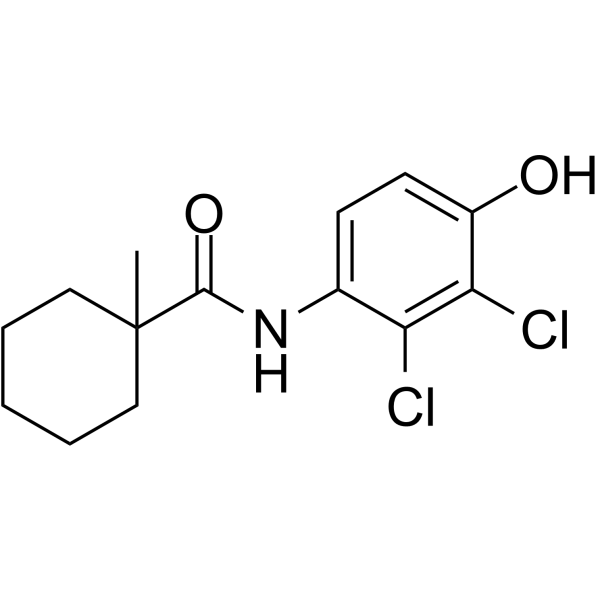
Fenhexamid, a botryticide, is a sterol biosynthesis inhibitor. Fenhexamid shows fungicide efficient against the plant pathogenic fungus Botryotinia fuckeliana (Botrytis cinerea).
For research use only. We do not sell to patients.
- Purity : 99.38%
- CAS No.: 126833-17-8
- Formula: C14H17Cl2NO2
- Molecular Weight:302.20
-
Storage:
4°C, protect from light
* In solvent : -80°C, 6 months; -20°C, 1 month (protect from light)

To place orders, for customer services and technical support, please contact: MedChemExpress USA
Tel: 609-228-6898 E-mail: [email protected] [email protected]


-
 Biological Activity
-
Chemical Information
-
Solvent & Solubility
- Purity & Documentation
- References
-
 Help & FAQs


-

HY-118065R
Fenhexamid (Standard)Antifungal Agent -
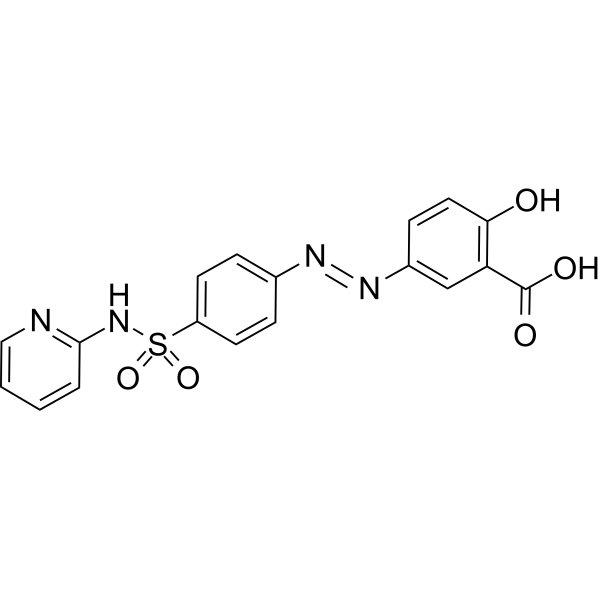
HY-14655
SulfasalazineAnti-rheumatic Agent -
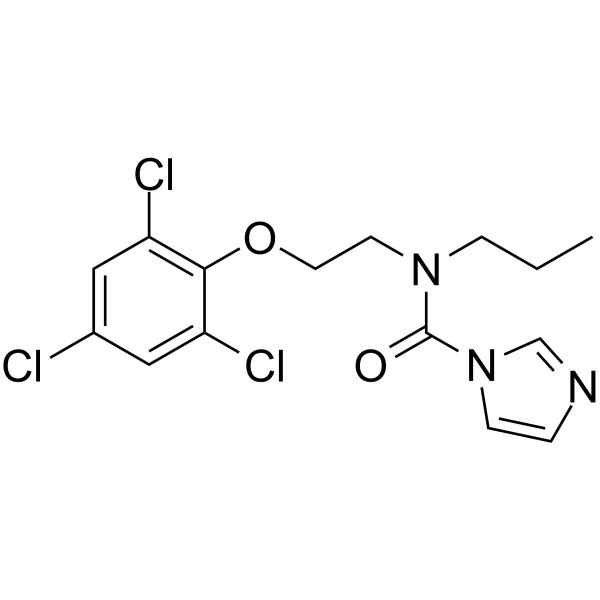
HY-B0845
ProchlorazAntifungal -
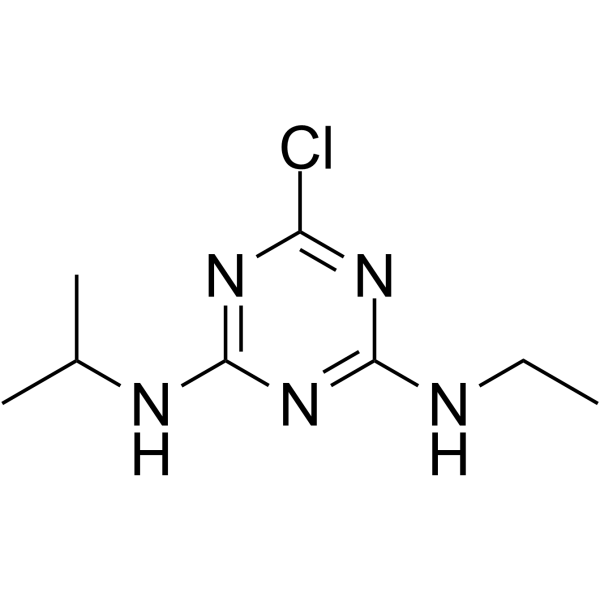
HY-N7091
AtrazinePhotophosphorylation Inhibitor -
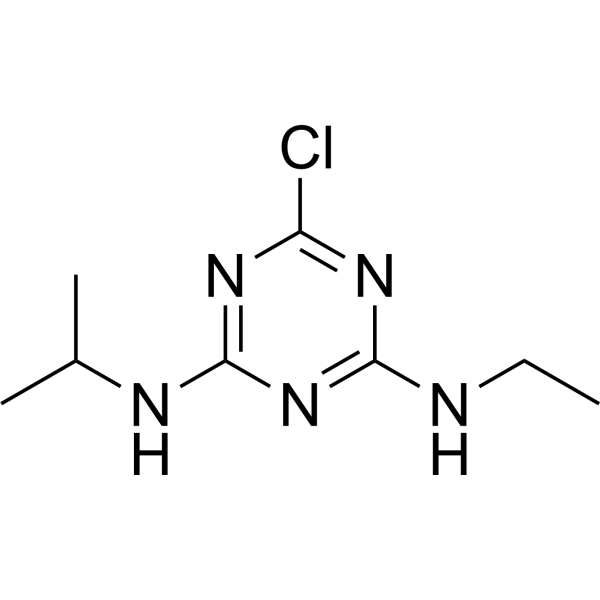
HY-N7091R
Atrazine (Standard)Photophosphorylation Inhibitor -
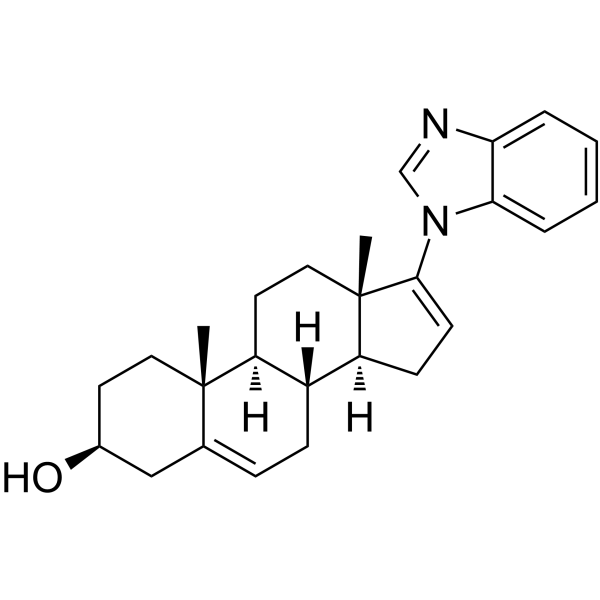
HY-70006
GaleteroneMolecular Glue Degrader -
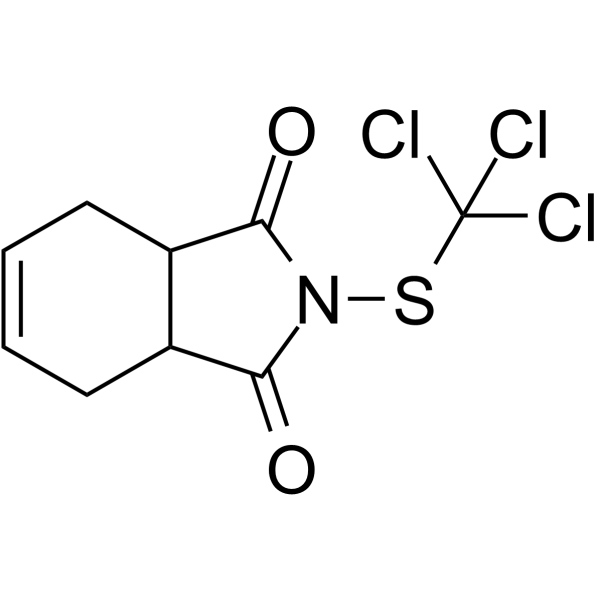
HY-B1584
CaptanFungicide -

HY-W714137
(6-Isothiocyanatohexyl)(methyl)sulfaneIsothiocyanate -

HY-14655R
Sulfasalazine (Standard)Anti-rheumatic Agent -
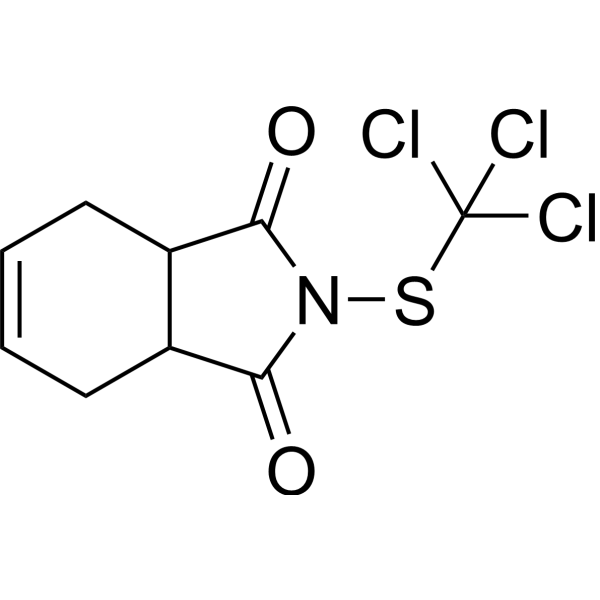
HY-B1584R
Captan (Standard)Fungicide -

HY-B0845R
Prochloraz (Standard)Antifungal


Biological Activity
Description
In Vitro
Fenhexamid (0.1-10 μM, 24 h-9 days) is the agonist for ERα with EC50 of 9 μM. Fenhexamid enhances the proliferation and migration of ovarian cancer cell BG-1, promotes the expression of cyclin D1 and cathepsin D[2][3].
Fenhexamid (0.1-10 μM, 4 h) promotes angiogenesis of HUVEC cells and increases the expression of VEGF through activation of PI3K signaling pathway[3].
Fenhexamid (0.1-10 μM, 4 h) promotes the EMT process of ER-positive MCF-7 cells, reducse the expression of E-cadherin and Occludin, and increases the expression of N-cadherin and Vimentin[4].
MedChemExpress (MCE) has not independently confirmed the accuracy of these methods. They are for reference only.
In Vivo
MedChemExpress (MCE) has not independently confirmed the accuracy of these methods. They are for reference only.
-
Animal Model:BG-1 xenograft mouse models[2]
-
Dosage:20 mg/kg
-
Administration:ip, every 3 days for 80 days
-
Result:Caused mouse death within 60 days.


Chemical Information
-
CAS No. 126833-17-8
-
Appearance Solid
-
Molecular Weight 302.20
-
Formula C14H17Cl2NO2
-
Color Off-white to light yellow
-
SMILES
O=C(NC1=CC=C(C(Cl)=C1Cl)O)C2(CCCCC2)C
-
Synonyms
KBR 2738
-
Shipping
Room temperature in continental US; may vary elsewhere.
-
Storage
4°C, protect from light
* In solvent : -80°C, 6 months; -20°C, 1 month (protect from light)


Solvent & Solubility
In Vitro:
DMSO : 100 mg/mL (330.91 mM; Need ultrasonic; Hygroscopic DMSO has a significant impact on the solubility of product, please use newly opened DMSO)
Please refer to the solubility information to select the appropriate solvent. Once prepared, please aliquot and store the solution to prevent product inactivation from repeated freeze-thaw cycles.
Storage method and period of stock solution: -80°C, 6 months; -20°C, 1 month (protect from light). When stored at -80°C, please use it within 6 months. When stored at -20°C, please use it within 1 month.
Please refer to the solubility information to select the appropriate solvent. Once prepared, please aliquot and store the solution to prevent product inactivation from repeated freeze-thaw cycles.
Storage method and period of stock solution: -80°C, 6 months; -20°C, 1 month (protect from light). When stored at -80°C, please use it within 6 months. When stored at -20°C, please use it within 1 month.
Concentration (start) × Volume (start) = Concentration (final) × Volume (final)
In Vivo:
Select the appropriate dissolution method based on your experimental animal and administration route.
- For the following dissolution methods, please ensure to first prepare a clear stock solution using an In Vitro approach and then sequentially add co-solvents:
- To ensure reliable experimental results, the clarified stock solution can be appropriately stored based on storage conditions. As for the working solution for In Vivo experiments, it is recommended to prepare freshly and use it on the same day.
- The percentages shown for the solvents indicate their volumetric ratio in the final prepared solution. If precipitation or phase separation occurs during preparation, heat and/or sonication can be used to aid dissolution.
Add each solvent one by one: 10% DMSO 40% PEG300 5% Tween-80 45% Saline
Solubility: ≥ 2.5 mg/mL (8.27 mM); Clear solution
This protocol yields a clear solution of ≥ 2.5 mg/mL (saturation unknown).
Taking 1 mL working solution as an example, add 100 μL DMSO stock solution (25.0 mg/mL) to 400 μL PEG300, and mix evenly; then add 50 μL Tween-80 and mix evenly; then add 450 μL Saline to adjust the volume to 1 mL.
Preparation of Saline: Dissolve 0.9 g sodium chloride in ddH₂O and dilute to 100 mL to obtain a clear Saline solution.
Add each solvent one by one: 10% DMSO 90% (20% SBE-β-CD in Saline)
Solubility: ≥ 2.5 mg/mL (8.27 mM); Clear solution
This protocol yields a clear solution of ≥ 2.5 mg/mL (saturation unknown).
Taking 1 mL working solution as an example, add 100 μL DMSO stock solution (25.0 mg/mL) to 900 μL 20% SBE-β-CD in Saline, and mix evenly.
Preparation of 20% SBE-β-CD in Saline (4°C, storage for one week): 2 g SBE-β-CD powder is dissolved in 10 mL Saline, completely dissolve until clear.
In Vivo Dissolution Calculator
Please enter the basic information of animal experiments:
-
-
-
-
Recommended: Prepare an additional quantity of animals to account for potential losses during experiments.
Please enter your animal formula composition:
-
%DMSO +
Recommended: Keep the proportion of DMSO in working solution below 2% if your animal is weak.
-
%+
-
+%Tween-80 + +
-
%Saline +
The co-solvents required include: DMSO, . All of co-solvents are available by MedChemExpress (MCE). , Tween 80. All of co-solvents are available by MedChemExpress (MCE).
Working solution concentration: 0.22 mg/mL
Method for preparing stock solution: mg drug dissolved in μL DMSO. Stock solution concentration: mg/mL. * In solvent : -80°C, 6 months; -20°C, 1 month (protect from light)
1. Take μL DMSO stock solution;
2. Add μL .
μL , mix evenly;
3. Then add μL Tween 80, mix evenly;
4. Then add μL
Please ensure that the stock solution in the first step is dissolved to a clear state, and add co-solvents in sequence. You can use ultrasonic heating (ultrasonic cleaner, recommended frequency 20-40 kHz), vortexing, etc. to assist dissolution.


Purity & Documentation
-
Data Sheet (275 KB)
-
SDS (458 KB)
- English - EN (458 KB)
- Français - FR (458 KB)
- Deutsch - DE (458 KB)
- Norwegian - NO (458 KB)
- Español - ES (458 KB)
- Swedish - SV (458 KB)
- Italian - IT (458 KB)
- Korean - KR (458 KB)
- Portuguese - PT (458 KB)
-
Handling Instructions (2659 KB)
References
[1]. Debieu D, et al. The hydroxyanilide fenhexamid, a new sterol biosynthesis inhibitor fungicide efficient against the plant pathogenic fungus Botryotinia fuckeliana (Botrytis cinerea). Pest Manag Sci. 2001 Nov;57(11):1060-7. [Content Brief]
[2]. Go RE, et al., Effect of fenhexamid and cyprodinil on the expression of cell cycle- and metastasis-related genes via an estrogen receptor-dependent pathway in cellular and xenografted ovarian cancer models. Toxicol Appl Pharmacol. 2015 Nov 15;289(1):48-57. [Content Brief]
[3]. Medjakovic S, et al., Effect of nonpersistent pesticides on estrogen receptor, androgen receptor, and aryl hydrocarbon receptor. Environ Toxicol. 2014 Oct;29(10):1201-16. [Content Brief]
[4]. Go RE, et al., A fungicide, fenhexamid, is involved in the migration and angiogenesis in breast cancer cells expressing estrogen receptors. Life Sci. 2022 Sep 15;305:120754. [Content Brief]


Complete Stock Solution Preparation Table
Please refer to the solubility information to select the appropriate solvent. Once prepared, please aliquot and store the solution to prevent product inactivation from repeated freeze-thaw cycles.
Storage method and period of stock solution: -80°C, 6 months; -20°C, 1 month (protect from light). When stored at -80°C, please use it within 6 months. When stored at -20°C, please use it within 1 month.
| Optional Solvent | Concentration Solvent Mass | 1 mg | 5 mg | 10 mg | 25 mg |
|---|---|---|---|---|---|
| DMSO | 1 mM | 3.3091 mL | 16.5453 mL | 33.0907 mL | 82.7267 mL |
| 5 mM | 0.6618 mL | 3.3091 mL | 6.6181 mL | 16.5453 mL | |
| 10 mM | 0.3309 mL | 1.6545 mL | 3.3091 mL | 8.2727 mL | |
| 15 mM | 0.2206 mL | 1.1030 mL | 2.2060 mL | 5.5151 mL | |
| 20 mM | 0.1655 mL | 0.8273 mL | 1.6545 mL | 4.1363 mL | |
| 25 mM | 0.1324 mL | 0.6618 mL | 1.3236 mL | 3.3091 mL | |
| 30 mM | 0.1103 mL | 0.5515 mL | 1.1030 mL | 2.7576 mL | |
| 40 mM | 0.0827 mL | 0.4136 mL | 0.8273 mL | 2.0682 mL | |
| 50 mM | 0.0662 mL | 0.3309 mL | 0.6618 mL | 1.6545 mL | |
| 60 mM | 0.0552 mL | 0.2758 mL | 0.5515 mL | 1.3788 mL | |
| 80 mM | 0.0414 mL | 0.2068 mL | 0.4136 mL | 1.0341 mL | |
| 100 mM | 0.0331 mL | 0.1655 mL | 0.3309 mL | 0.8273 mL |


Fenhexamid Related Classifications
HY-118065 Related Classifications
 Powered by Bioz