



Citropten

Based on 1 Customer Validation
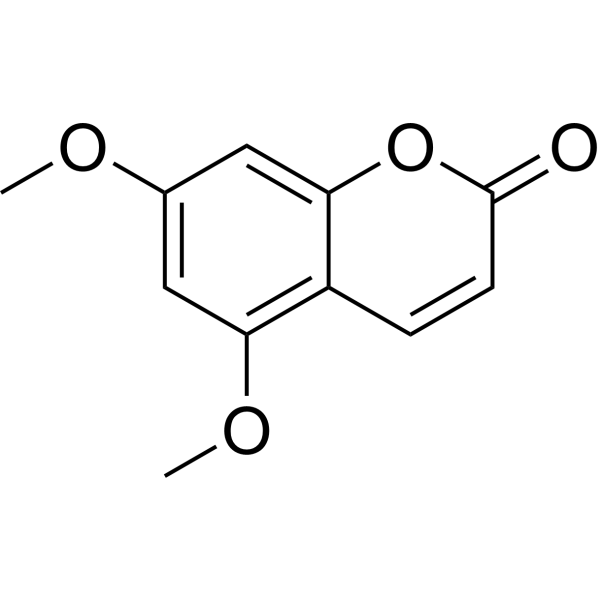
Citropten (5, 7-dimethoxycoumarin) is one of the coumarin derivatives. Citropten is an effective oral anticancer agent. Citropten has anti-proliferative activity against A2058 and B16 melanoma cells. Citropten exerts anti-inflammatory effects through the NFκB and MAPK signaling pathways. Citropten acts as an antidepressant through heat shock protein-70, monoamine oxidase-A and inhibition of apoptosis .
연구목적의 판매만을 진행합니다. 환자를 대상으로 한 판매는 하지 않습니다.
- Purity : 99.69%
- CAS No.: 487-06-9
- 화학식: C11H10O4
- 분자량:206.20
-
보관:Powder -20°C, 3 years , 4°C, 2 years ; In solvent -80°C, 6 months , -20°C, 1 month

To place orders, for customer services and technical support, please contact: MedChemExpress USA
Tel: 609-228-6898 E-mail: [email protected] [email protected]


-
 Biological Activity
-
Chemical Information
-
용액&용해도
- Protocol
- 순도&문서
- References
-
 Help & FAQs


-

HY-N7085R
Citropten (Standard)Anticancer Agent -
HY-N0763
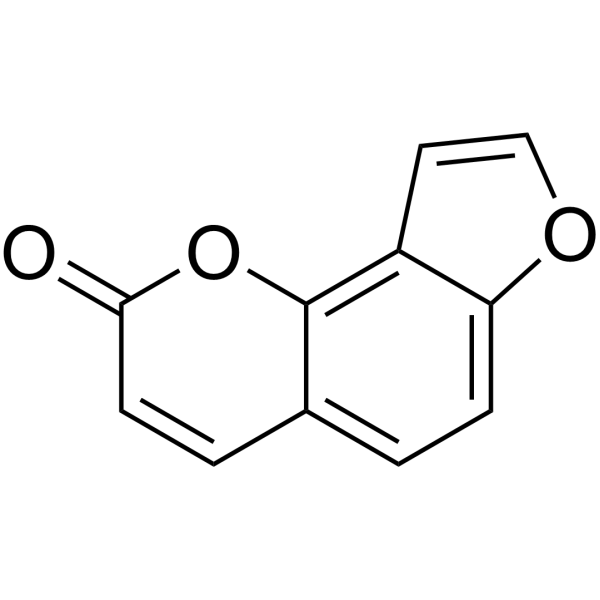
AngelicinApoptosis Inducer -
HY-127170
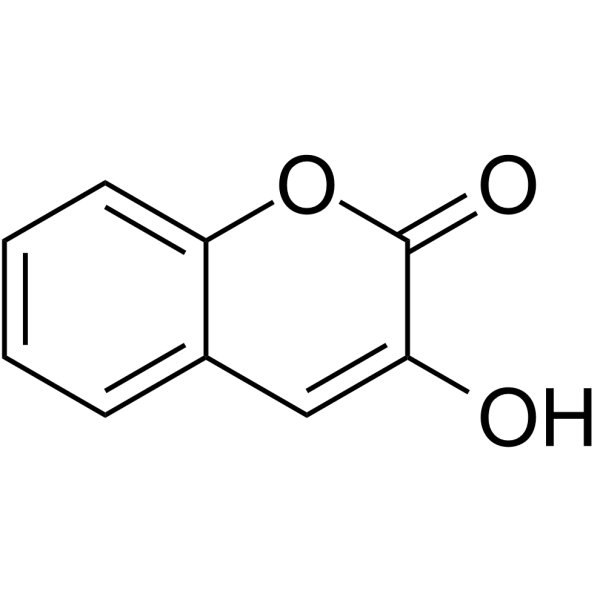
3-HydroxycoumarinTyrosinase/LOX Inhibitor -

HY-127170R
3-Hydroxycoumarin (Standard)Lipoxygenase Inhibitor -
HY-N0105
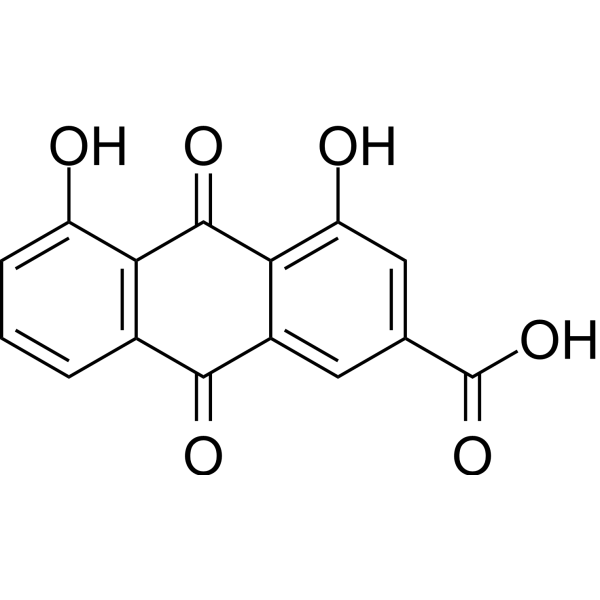
RheinAntioxidant -
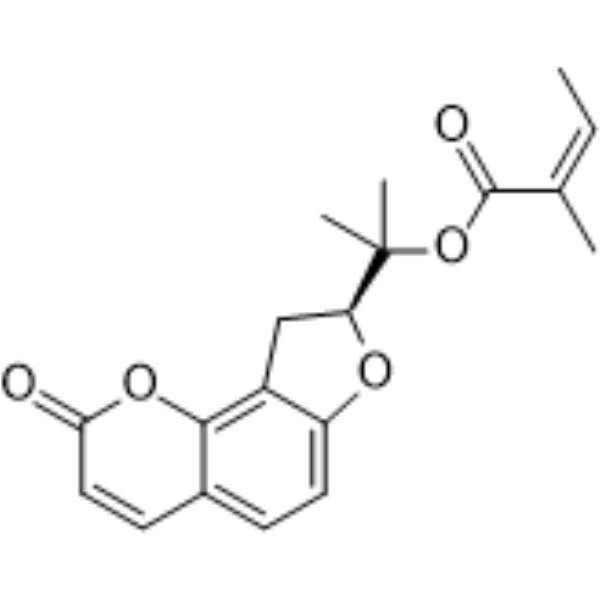
HY-N0362
ColumbianadinApoptosis Inducer -
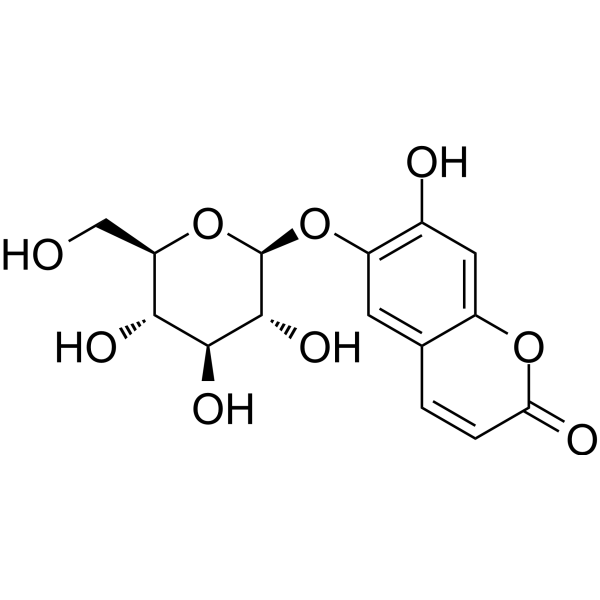
HY-N0188
Esculinp38 MAPK Inhibitor -
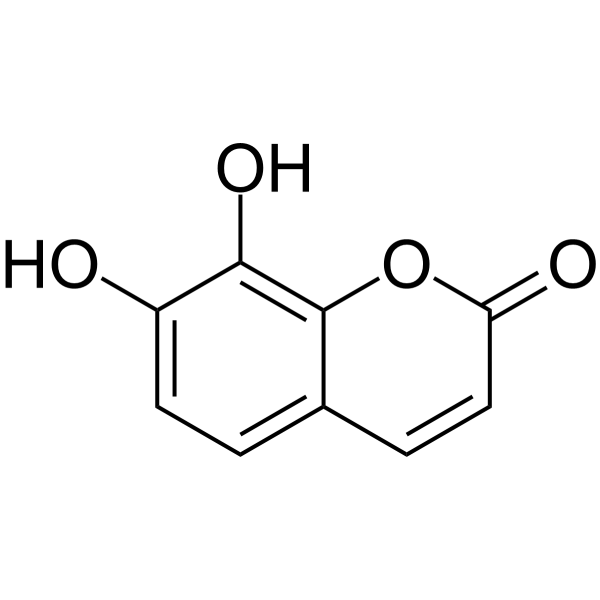
HY-N0281
DaphnetinProtein Kinase Inhibitor -
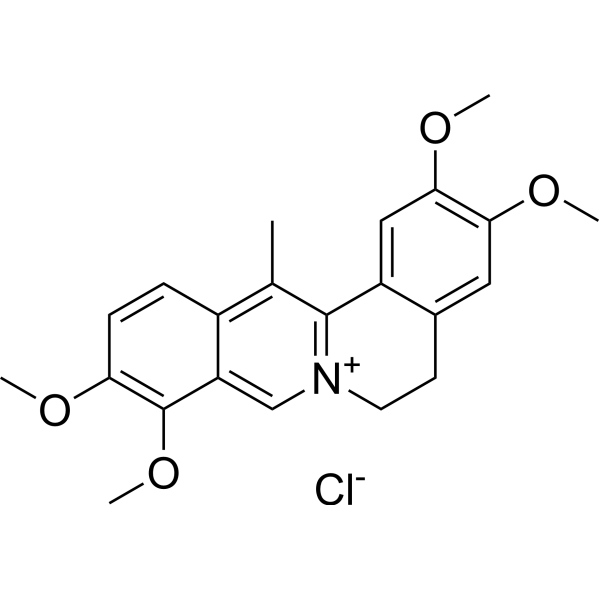
HY-N0674A
Dehydrocorydaline chloridep38 MAPK Activator -
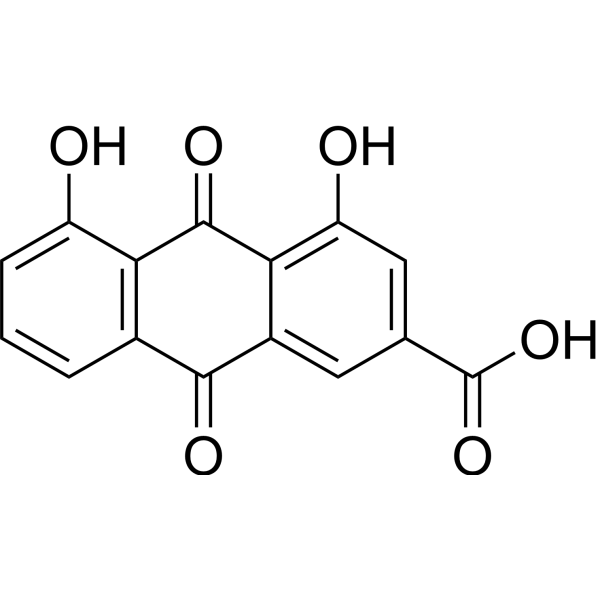
HY-N0105R
Rhein (Standard) -
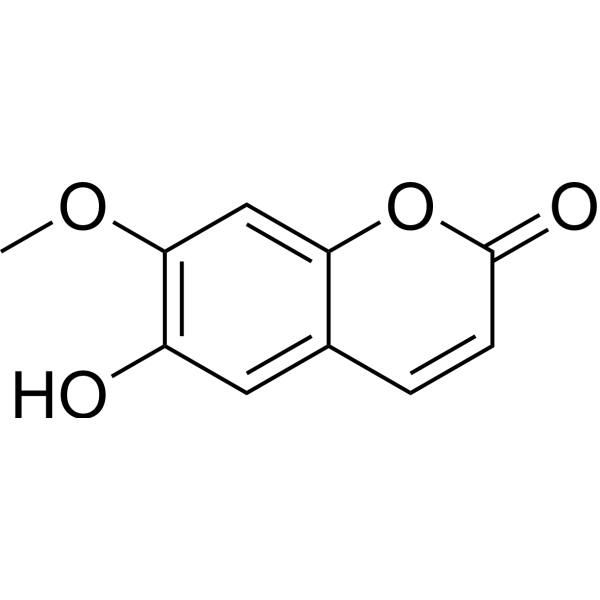
HY-N1365
IsoscopoletinHBV Inhibitor -
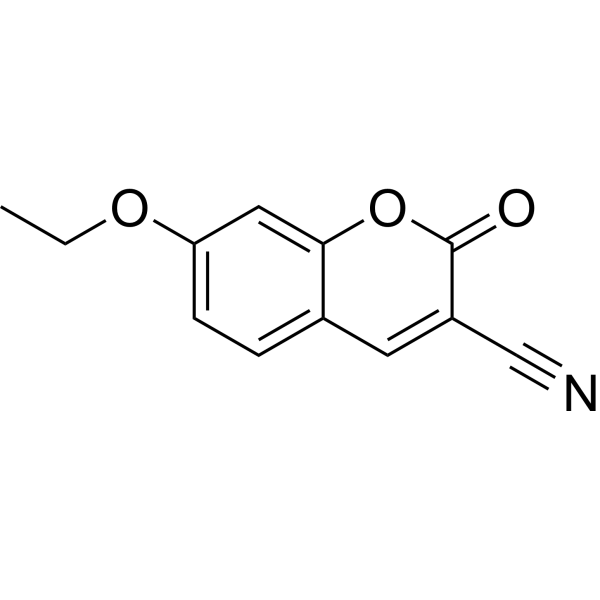
HY-D0055
3-Cyano-7-ethoxycoumarinCytochrome P-450 Substrate


Biological Activity
제품 설명
In Vitro
Citropten (10-500 mM; 72 h) inhibits the proliferation in A2058 human melanoma cell line[1].
Citropten (0-40 μM; 24 h) reduces NFκB and MAPK signaling pathway in activated Jurkat and HT-29 cells[2].
MedChemExpress (MCE) has not independently confirmed the accuracy of these methods. They are for reference only.
-
Cell Line:A2058 human melanoma cell
-
Concentration:10, 50, 100, 150 and 500 mM
-
Incubation Time:72 h
-
Result:Inhibited cell proliferation in a concentration‐dependent manner.
-
Cell Line:Activated Jurkat and HT-29 cells
-
Concentration:0, 10, 20 and 40 μM
-
Incubation Time:24 h
-
Result:Inhibited the phosphorylation levels of IκBα, ERK, p38 and JNK.
In Vivo
Citropten (10 mg/kg; Intraperitoneal injection; Single injection) exerts an antidepressant effect by increasing the level of heat shock protein-70 and inhibiting the level of monoamine oxidase-A in rat models of chronic mild stress depression[3].
MedChemExpress (MCE) has not independently confirmed the accuracy of these methods. They are for reference only.
-
Animal Model:DSS (HY-116282) treated C57BL/6J female mice aged 6-8 weeks old[2]
-
Dosage:10 mg/kg
-
Administration:Oral administration (p.o.); every day; 7 days
-
Result:Ameliorated the severity of inflammation on colonic tissues.
Reduced cytokine (TNFα, IL-1β and IL-8) production on colonic tissues.
Attenuated the activity of effector T cells.
-
Animal Model:Chronic mild stress treated male adult Sprague-Dawley rats (around 190 g)[3]
-
Dosage:10 mg/kg
-
Administration:Intraperitoneal injection (i.p.), Single injection
-
Result:Prevented the chronic mild stress induced damage to locomotor activity.
Inhibited chronic mild stress induced increase in level of monoamine oxidase-A.
Inhibited the chronic mild stress induced increase in level ofcaspase-3.
Increased the level of heat shock protein-70 in the rat hippocampus.


Chemical Information
-
CAS No. 487-06-9
-
Appearance Solid
-
분자량 206.20
-
화학식 C11H10O4
-
Color White to light yellow
-
SMILES
O=C1OC2=C(C(OC)=CC(OC)=C2)C=C1
-
Synonyms
5,7-Dimethoxycoumarin; Limettin
-
Structure Classification
-
선적
Room temperature in continental US; may vary elsewhere.
-
보관
Powder -20°C 3 years 4°C 2 years In solvent -80°C 6 months -20°C 1 month


용액&용해도
In Vitro:
DMSO : 25 mg/mL (121.24 mM; ultrasonic and warming and heat to 60°C; Hygroscopic DMSO has a significant impact on the solubility of product, please use newly opened DMSO)
Please refer to the solubility information to select the appropriate solvent. Once prepared, please aliquot and store the solution to prevent product inactivation from repeated freeze-thaw cycles.
Storage method and period of stock solution: -80°C, 6 months; -20°C, 1 month. When stored at -80°C, please use it within 6 months. When stored at -20°C, please use it within 1 month.
Please refer to the solubility information to select the appropriate solvent. Once prepared, please aliquot and store the solution to prevent product inactivation from repeated freeze-thaw cycles.
Storage method and period of stock solution: -80°C, 6 months; -20°C, 1 month. When stored at -80°C, please use it within 6 months. When stored at -20°C, please use it within 1 month.
Concentration (start) × Volume (start) = Concentration (final) × Volume (final)
In Vivo:
Select the appropriate dissolution method based on your experimental animal and administration route.
- For the following dissolution methods, please ensure to first prepare a clear stock solution using an In Vitro approach and then sequentially add co-solvents:
- To ensure reliable experimental results, the clarified stock solution can be appropriately stored based on storage conditions. As for the working solution for In Vivo experiments, it is recommended to prepare freshly and use it on the same day.
- The percentages shown for the solvents indicate their volumetric ratio in the final prepared solution. If precipitation or phase separation occurs during preparation, heat and/or sonication can be used to aid dissolution.
Add each solvent one by one: 10% DMSO 90% (20% SBE-β-CD in Saline)
Solubility: ≥ 2.08 mg/mL (10.09 mM); Clear solution
This protocol yields a clear solution of ≥ 2.08 mg/mL (saturation unknown).
Taking 1 mL working solution as an example, add 100 μL DMSO stock solution (20.8 mg/mL) to 900 μL 20% SBE-β-CD in Saline, and mix evenly.
Preparation of 20% SBE-β-CD in Saline (4°C, storage for one week): 2 g SBE-β-CD powder is dissolved in 10 mL Saline, completely dissolve until clear.
In Vivo Dissolution Calculator
Please enter the basic information of animal experiments:
-
-
-
-
Recommended: Prepare an additional quantity of animals to account for potential losses during experiments.
Please enter your animal formula composition:
-
%DMSO +
Recommended: Keep the proportion of DMSO in working solution below 2% if your animal is weak.
-
%+
-
+%Tween-80 + +
-
%Saline +
The co-solvents required include: DMSO, . All of co-solvents are available by MedChemExpress (MCE). , Tween 80. All of co-solvents are available by MedChemExpress (MCE).
Working solution concentration: 0.22 mg/mL
Method for preparing stock solution: mg drug dissolved in μL DMSO. Stock solution concentration: mg/mL.
1. Take μL DMSO stock solution;
2. Add μL .
μL , mix evenly;
3. Then add μL Tween 80, mix evenly;
4. Then add μL
Please ensure that the stock solution in the first step is dissolved to a clear state, and add co-solvents in sequence. You can use ultrasonic heating (ultrasonic cleaner, recommended frequency 20-40 kHz), vortexing, etc. to assist dissolution.


순도&문서
-
Data Sheet (279 KB)
-
SDS (393 KB)
- English - EN (393 KB)
- Français - FR (393 KB)
- Deutsch - DE (393 KB)
- Norwegian - NO (393 KB)
- Español - ES (393 KB)
- Swedish - SV (393 KB)
- Italian - IT (393 KB)
- Korean - KR (393 KB)
- Portuguese - PT (393 KB)
-
Handling Instructions (2659 KB)
References
[1]. Wolny D, et al. Antiproliferative effect of valproic acid and 5,7-dimethoxycoumarin against A2058 human melanoma cells. Acta Pol Pharm. 2014 Nov-Dec;71(6):1056-9. [Content Brief]
[2]. Lee HS, et al. Ameliorative Effect of Citropten Isolated from Citrusaurantifolia Peel Extract as a Modulator of T Cell and Intestinal Epithelial Cell Activity in DSS-Induced Colitis. Molecules. 2022 Jul 20;27(14):4633. [Content Brief]
[3]. Yang W, et al. 5,7-Dimethoxycoumarin prevents chronic mild stress induced depression in rats through increase in the expression of heat shock protein-70 and inhibition of monoamine oxidase-A levels. Saudi J Biol Sci. 2018 Feb;25(2):253-258. [Content Brief]


Complete Stock Solution Preparation Table
Please refer to the solubility information to select the appropriate solvent. Once prepared, please aliquot and store the solution to prevent product inactivation from repeated freeze-thaw cycles.
Storage method and period of stock solution: -80°C, 6 months; -20°C, 1 month. When stored at -80°C, please use it within 6 months. When stored at -20°C, please use it within 1 month.
| Optional Solvent | Concentration Solvent Mass | 1 mg | 5 mg | 10 mg | 25 mg |
|---|---|---|---|---|---|
| DMSO | 1 mM | 4.8497 mL | 24.2483 mL | 48.4966 mL | 121.2415 mL |
| 5 mM | 0.9699 mL | 4.8497 mL | 9.6993 mL | 24.2483 mL | |
| 10 mM | 0.4850 mL | 2.4248 mL | 4.8497 mL | 12.1242 mL | |
| 15 mM | 0.3233 mL | 1.6166 mL | 3.2331 mL | 8.0828 mL | |
| 20 mM | 0.2425 mL | 1.2124 mL | 2.4248 mL | 6.0621 mL | |
| 25 mM | 0.1940 mL | 0.9699 mL | 1.9399 mL | 4.8497 mL | |
| 30 mM | 0.1617 mL | 0.8083 mL | 1.6166 mL | 4.0414 mL | |
| 40 mM | 0.1212 mL | 0.6062 mL | 1.2124 mL | 3.0310 mL | |
| 50 mM | 0.0970 mL | 0.4850 mL | 0.9699 mL | 2.4248 mL | |
| 60 mM | 0.0808 mL | 0.4041 mL | 0.8083 mL | 2.0207 mL | |
| 80 mM | 0.0606 mL | 0.3031 mL | 0.6062 mL | 1.5155 mL | |
| 100 mM | 0.0485 mL | 0.2425 mL | 0.4850 mL | 1.2124 mL |


Citropten Related Classifications
HY-N7085 Related Classifications
 Powered by Bioz