



EC144

Based on 1 Customer Validation
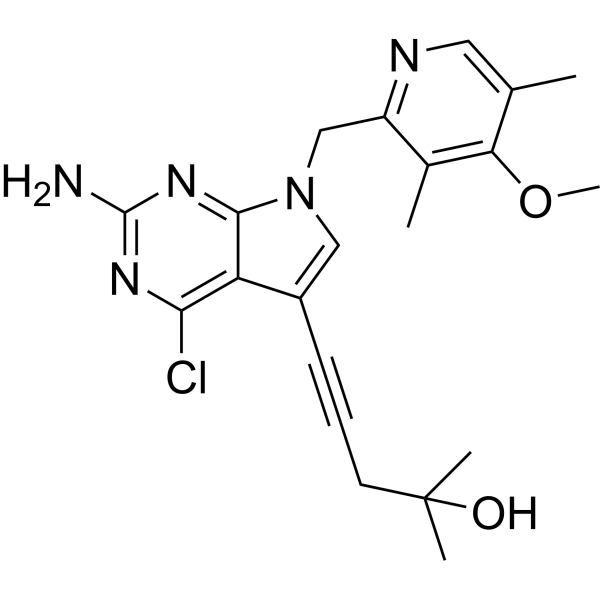
EC144 is a potent and selective inhibitor of heat shock protein 90 (Hsp90) with an IC50 of 1.1 nM. EC144 inhibits tumor growth and causes partial tumor regressions. EC144 has the potential for the research of cancer diseases. EC144 is a click chemistry reagent, it contains an Alkyne group and can undergo copper-catalyzed azide-alkyne cycloaddition (CuAAc) with molecules containing Azide groups.
연구목적의 판매만을 진행합니다. 환자를 대상으로 한 판매는 하지 않습니다.
- Purity : 98.01%
- CAS No.: 911397-80-3
- 화학식: C21H24ClN5O2
- 분자량:413.90
-
보관:
4°C, sealed storage, away from moisture and light
* In solvent : -80°C, 6 months; -20°C, 1 month (sealed storage, away from moisture and light)

To place orders, for customer services and technical support, please contact: MedChemExpress USA
Tel: 609-228-6898 E-mail: [email protected] [email protected]


-
 Biological Activity
-
Chemical Information
-
용액&용해도
- Protocol
- 순도&문서
- References
-
 Help & FAQs


-
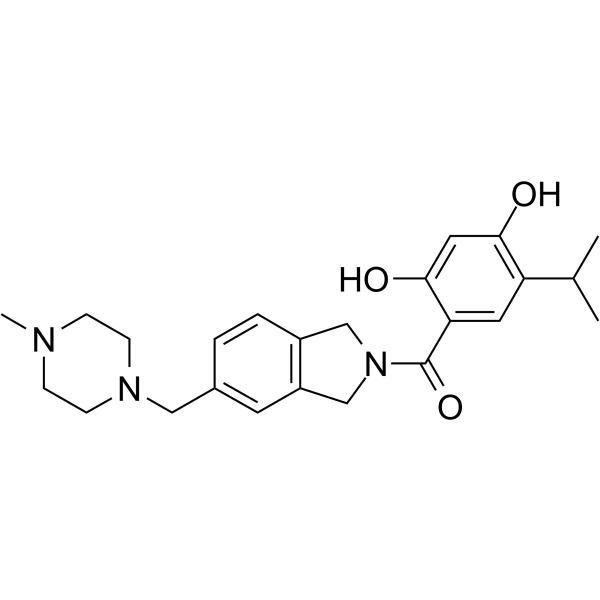
HY-14463
OnalespibHsp90 Inhibitor -
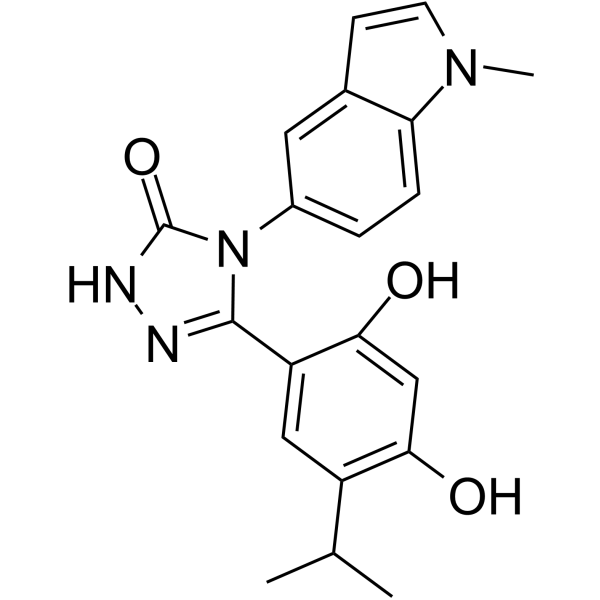
HY-15205
GanetespibHSP90 Inhibitor -
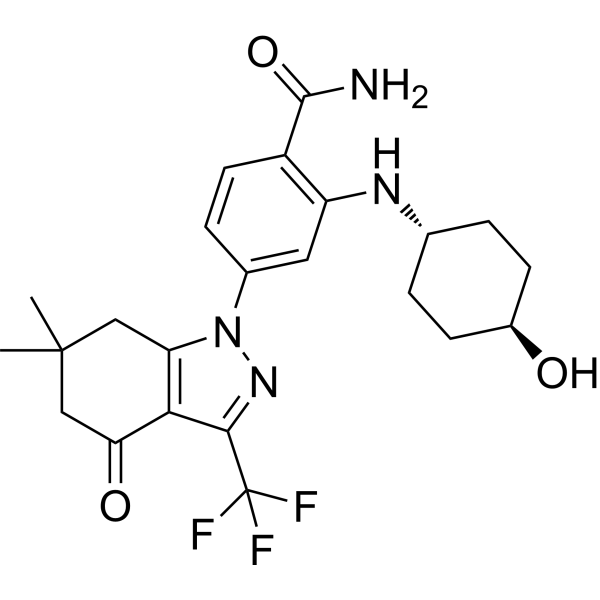
HY-10214
SNX-2112 -
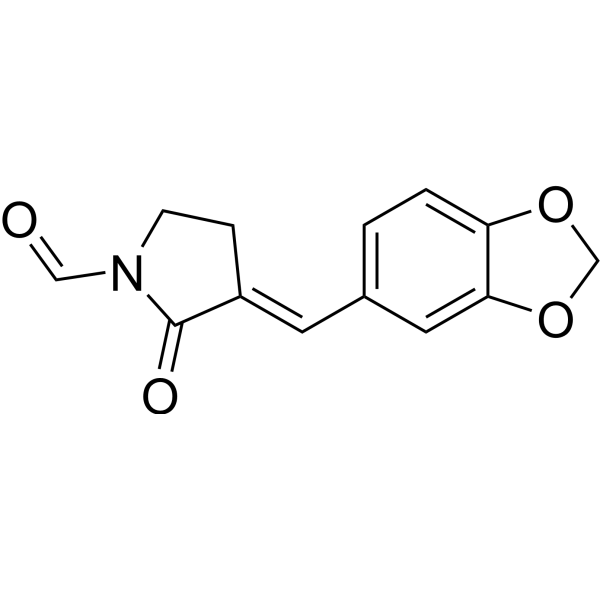
HY-100110
KNK437HSP Inhibitor -
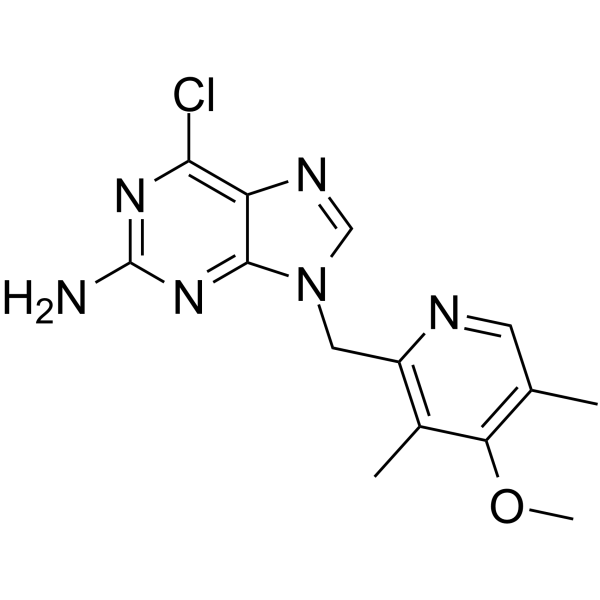
HY-10212
BIIB021HSP90 Inhibitor -
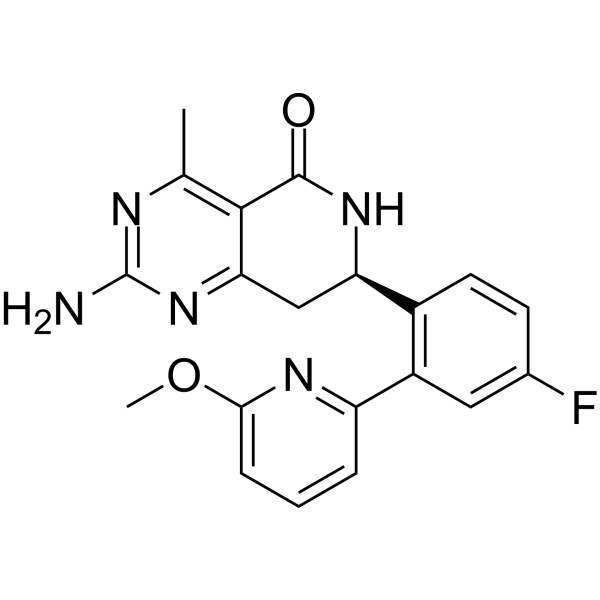
HY-15190
NVP-HSP990Apoptosis Inducer -
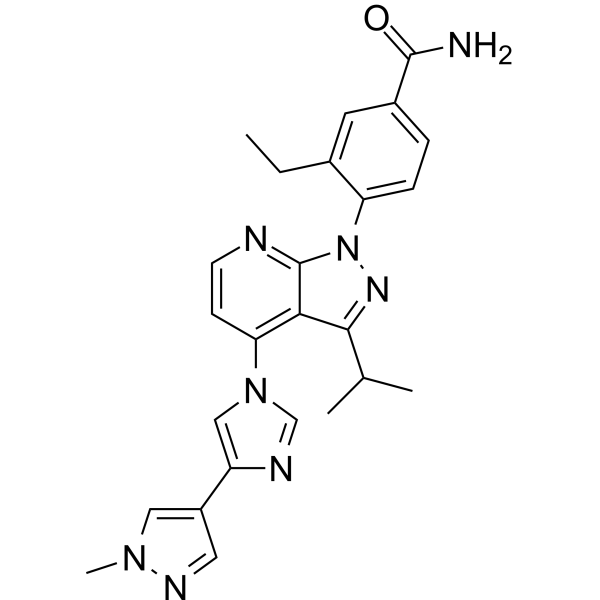
HY-15785
PimitespibHSP90α/HSP90β Inhibitor -
HY-15096
MKT-077Hsp70 Inhibitor -
HY-10942
VER-82576HSP Inhibitor -
HY-15984
VER-50589Apoptosis Inducer -
HY-11038
ZelavespibHsp90 Inhibitor -
HY-18680
PU-WS13


Biological Activity
제품 설명
Cellular Effect
|
Cell Line

|
Type | Value | Description | References |
|---|---|---|---|---|
| MCF7 | EC50 |
14 nM
Compound: 40, EC144
|
Inhibition of HSP90alpha in human MCF7 cells assessed as degradation of Her-2
Inhibition of HSP90alpha in human MCF7 cells assessed as degradation of Her-2
|
[PMID: 22938030] |


Chemical Information
-
CAS No. 911397-80-3
-
Appearance Solid
-
분자량 413.90
-
화학식 C21H24ClN5O2
-
Color Light brown to brown
-
SMILES
CC(O)(C)CC#CC1=CN(CC2=NC=C(C)C(OC)=C2C)C3=NC(N)=NC(Cl)=C31
-
선적
Room temperature in continental US; may vary elsewhere.
-
보관
4°C, sealed storage, away from moisture and light
* In solvent : -80°C, 6 months; -20°C, 1 month (sealed storage, away from moisture and light)


용액&용해도
In Vitro:
DMSO : 66.67 mg/mL (161.08 mM; Need ultrasonic; Hygroscopic DMSO has a significant impact on the solubility of product, please use newly opened DMSO)
Please refer to the solubility information to select the appropriate solvent. Once prepared, please aliquot and store the solution to prevent product inactivation from repeated freeze-thaw cycles.
Storage method and period of stock solution: -80°C, 6 months; -20°C, 1 month (sealed storage, away from moisture and light). When stored at -80°C, please use it within 6 months. When stored at -20°C, please use it within 1 month.
Please refer to the solubility information to select the appropriate solvent. Once prepared, please aliquot and store the solution to prevent product inactivation from repeated freeze-thaw cycles.
Storage method and period of stock solution: -80°C, 6 months; -20°C, 1 month (sealed storage, away from moisture and light). When stored at -80°C, please use it within 6 months. When stored at -20°C, please use it within 1 month.
Concentration (start) × Volume (start) = Concentration (final) × Volume (final)
In Vivo:
Select the appropriate dissolution method based on your experimental animal and administration route.
- For the following dissolution methods, please ensure to first prepare a clear stock solution using an In Vitro approach and then sequentially add co-solvents:
- To ensure reliable experimental results, the clarified stock solution can be appropriately stored based on storage conditions. As for the working solution for In Vivo experiments, it is recommended to prepare freshly and use it on the same day.
- The percentages shown for the solvents indicate their volumetric ratio in the final prepared solution. If precipitation or phase separation occurs during preparation, heat and/or sonication can be used to aid dissolution.
Add each solvent one by one: 10% DMSO 40% PEG300 5% Tween-80 45% Saline
Solubility: ≥ 2.5 mg/mL (6.04 mM); Clear solution
This protocol yields a clear solution of ≥ 2.5 mg/mL (saturation unknown).
Taking 1 mL working solution as an example, add 100 μL DMSO stock solution (25.0 mg/mL) to 400 μL PEG300, and mix evenly; then add 50 μL Tween-80 and mix evenly; then add 450 μL Saline to adjust the volume to 1 mL.
Preparation of Saline: Dissolve 0.9 g sodium chloride in ddH₂O and dilute to 100 mL to obtain a clear Saline solution.
Add each solvent one by one: 10% DMSO 90% (20% SBE-β-CD in Saline)
Solubility: 2.5 mg/mL (6.04 mM); Suspended solution; Need ultrasonic
This protocol yields a suspended solution of 2.5 mg/mL. Suspended solution can be used for oral and intraperitoneal injection.
Taking 1 mL working solution as an example, add 100 μL DMSO stock solution (25.0 mg/mL) to 900 μL 20% SBE-β-CD in Saline, and mix evenly.
Preparation of 20% SBE-β-CD in Saline (4°C, storage for one week): 2 g SBE-β-CD powder is dissolved in 10 mL Saline, completely dissolve until clear.
In Vivo Dissolution Calculator
Please enter the basic information of animal experiments:
-
-
-
-
Recommended: Prepare an additional quantity of animals to account for potential losses during experiments.
Please enter your animal formula composition:
-
%DMSO +
Recommended: Keep the proportion of DMSO in working solution below 2% if your animal is weak.
-
%+
-
+%Tween-80 + +
-
%Saline +
The co-solvents required include: DMSO, . All of co-solvents are available by MedChemExpress (MCE). , Tween 80. All of co-solvents are available by MedChemExpress (MCE).
Working solution concentration: 0.22 mg/mL
Method for preparing stock solution: mg drug dissolved in μL DMSO. Stock solution concentration: mg/mL. * In solvent : -80°C, 6 months; -20°C, 1 month (sealed storage, away from moisture and light)
1. Take μL DMSO stock solution;
2. Add μL .
μL , mix evenly;
3. Then add μL Tween 80, mix evenly;
4. Then add μL
Please ensure that the stock solution in the first step is dissolved to a clear state, and add co-solvents in sequence. You can use ultrasonic heating (ultrasonic cleaner, recommended frequency 20-40 kHz), vortexing, etc. to assist dissolution.


순도&문서
-
Data Sheet (275 KB)
-
SDS (252 KB)
- English - EN (252 KB)
- Français - FR (252 KB)
- Deutsch - DE (252 KB)
- Norwegian - NO (252 KB)
- Español - ES (252 KB)
- Swedish - SV (252 KB)
- Italian - IT (252 KB)
- Korean - KR (252 KB)
- Portuguese - PT (252 KB)
-
Handling Instructions (2659 KB)
References


Complete Stock Solution Preparation Table
Please refer to the solubility information to select the appropriate solvent. Once prepared, please aliquot and store the solution to prevent product inactivation from repeated freeze-thaw cycles.
Storage method and period of stock solution: -80°C, 6 months; -20°C, 1 month (sealed storage, away from moisture and light). When stored at -80°C, please use it within 6 months. When stored at -20°C, please use it within 1 month.
| Optional Solvent | Concentration Solvent Mass | 1 mg | 5 mg | 10 mg | 25 mg |
|---|---|---|---|---|---|
| DMSO | 1 mM | 2.4160 mL | 12.0802 mL | 24.1604 mL | 60.4011 mL |
| 5 mM | 0.4832 mL | 2.4160 mL | 4.8321 mL | 12.0802 mL | |
| 10 mM | 0.2416 mL | 1.2080 mL | 2.4160 mL | 6.0401 mL | |
| 15 mM | 0.1611 mL | 0.8053 mL | 1.6107 mL | 4.0267 mL | |
| 20 mM | 0.1208 mL | 0.6040 mL | 1.2080 mL | 3.0201 mL | |
| 25 mM | 0.0966 mL | 0.4832 mL | 0.9664 mL | 2.4160 mL | |
| 30 mM | 0.0805 mL | 0.4027 mL | 0.8053 mL | 2.0134 mL | |
| 40 mM | 0.0604 mL | 0.3020 mL | 0.6040 mL | 1.5100 mL | |
| 50 mM | 0.0483 mL | 0.2416 mL | 0.4832 mL | 1.2080 mL | |
| 60 mM | 0.0403 mL | 0.2013 mL | 0.4027 mL | 1.0067 mL | |
| 80 mM | 0.0302 mL | 0.1510 mL | 0.3020 mL | 0.7550 mL | |
| 100 mM | 0.0242 mL | 0.1208 mL | 0.2416 mL | 0.6040 mL |


EC144 Related Classifications
HY-13479 Related Classifications
 Powered by Bioz