



CPPHA

Based on 1 Customer Validation
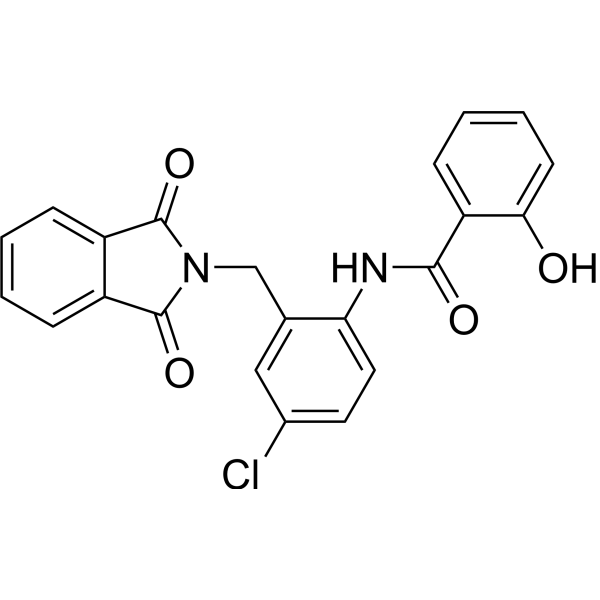
CPPHA is potent and selective positive allosteric modulator (PAM) of the mGluR5 and mGluR1 (metabotropic glutamate receptor). CPPHA can potentiate responses of mGluR5 and mGluR1 to activation of these receptors. CPPHA is developed for the research of central nervous system disorders.
For research use only. We do not sell to patients.
- Purity : 98.06%
- CAS No.: 693288-97-0
- Formula: C22H15ClN2O4
- Molecular Weight:406.82
-
Storage:Powder -20°C, 3 years , 4°C, 2 years ; In solvent -80°C, 2 years , -20°C, 1 year

To place orders, for customer services and technical support, please contact: MedChemExpress USA
Tel: 609-228-6898 E-mail: [email protected] [email protected]


-
 Biological Activity
-
Chemical Information
-
Solvent & Solubility
- Purity & Documentation
- References
-
 Help & FAQs


-
HY-50906
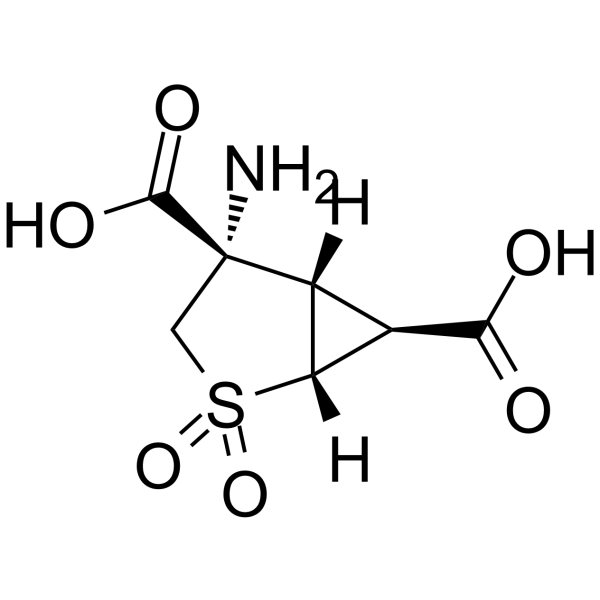
LY404039mGluR2/3 Agonist -
HY-70059
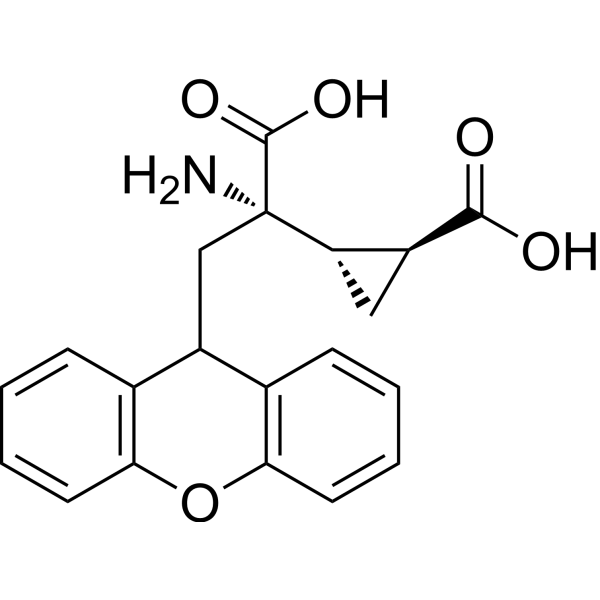
LY341495mGluR Antagonist -
HY-14609
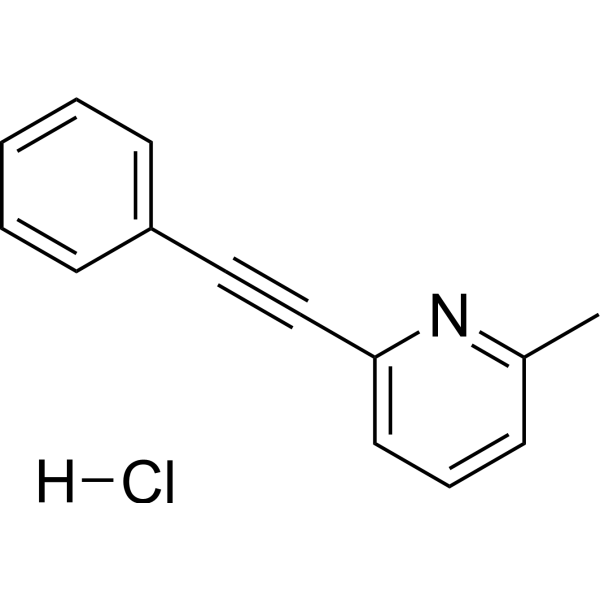
MPEP HydrochloridemGlu5 Receptor Antagonist -
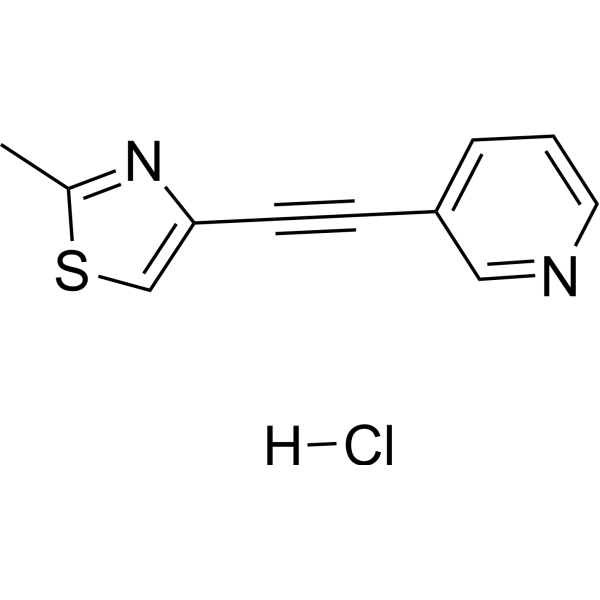
HY-13206
MTEP hydrochloridemGlu5 Antagonist -
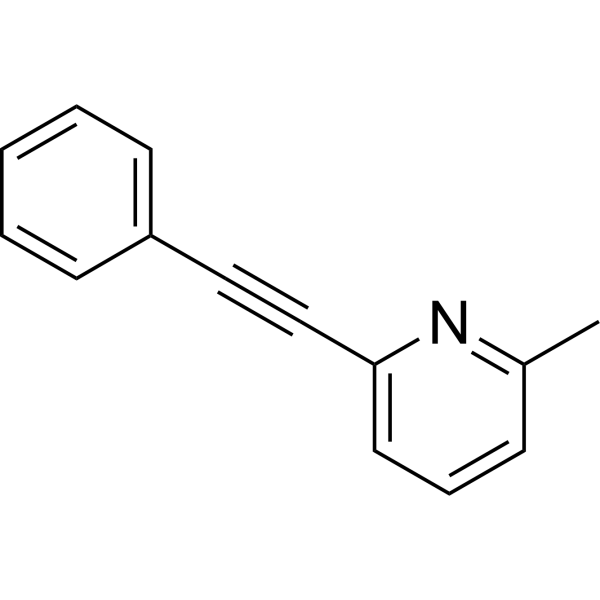
HY-14609A
MPEPmGlu5 Receptor Antagonist -
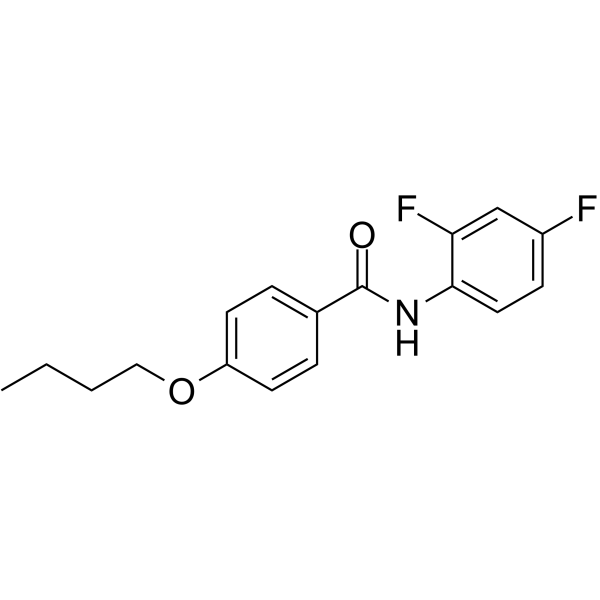
HY-15393
VU 0357121mGlu5R Activator -
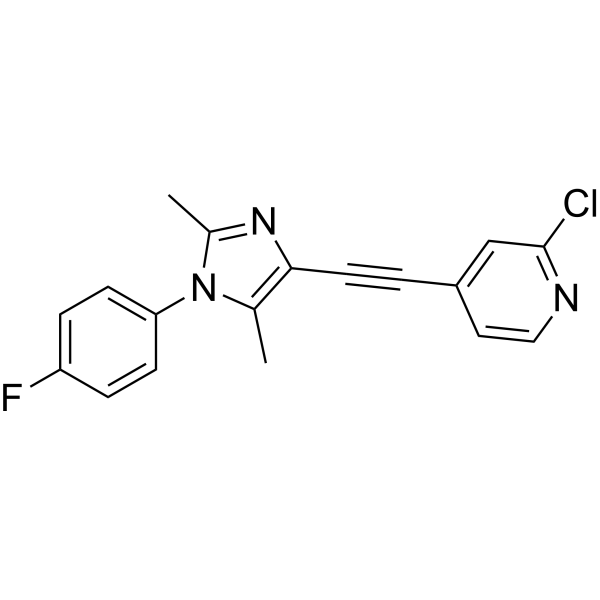
HY-15446
BasimglurantmGlu5 Negative Allosteric Modulator -
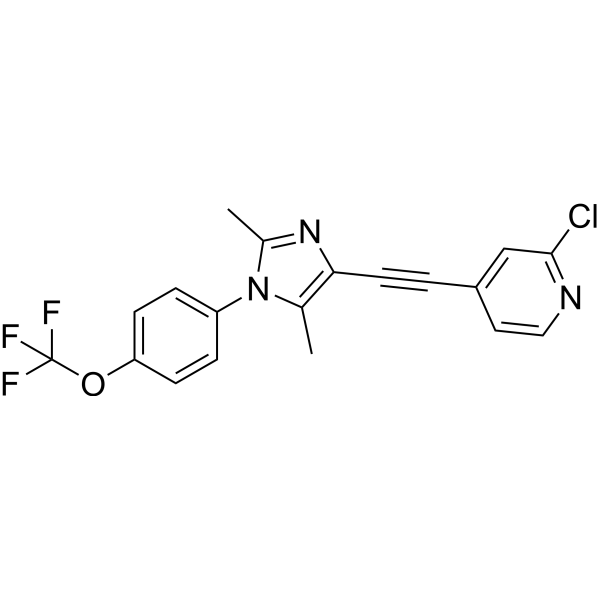
HY-15445
CTEPmGluR Antagonist -
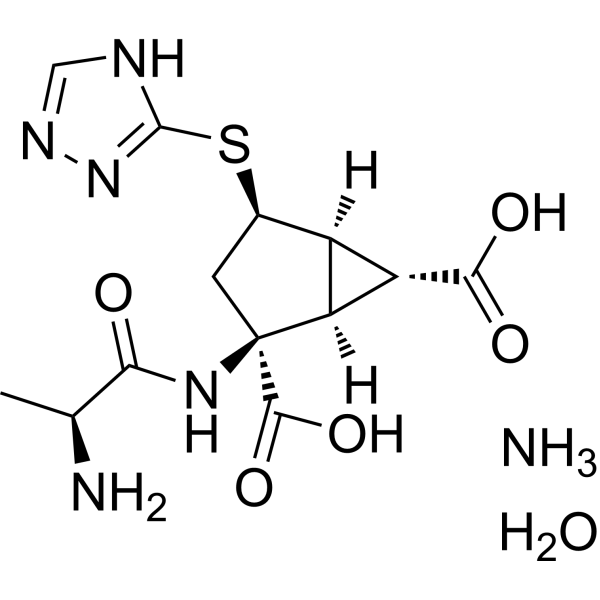
HY-13239
LY2979165mGluR Receptor Agonist -
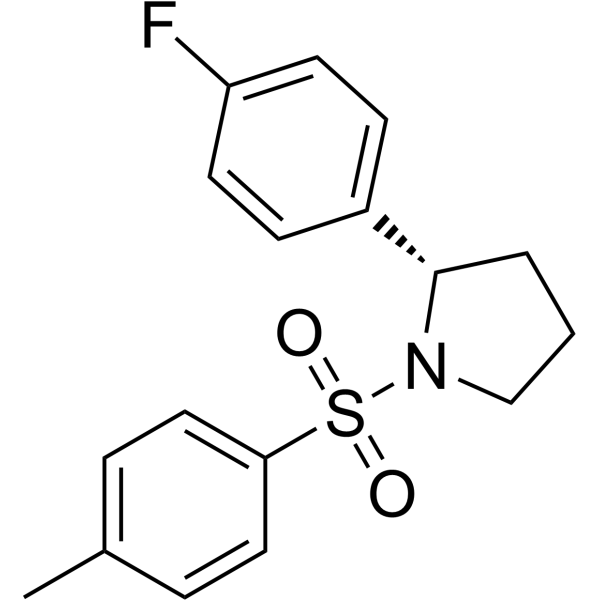
HY-100403
Ro 67-7476mGluR1 PAM -
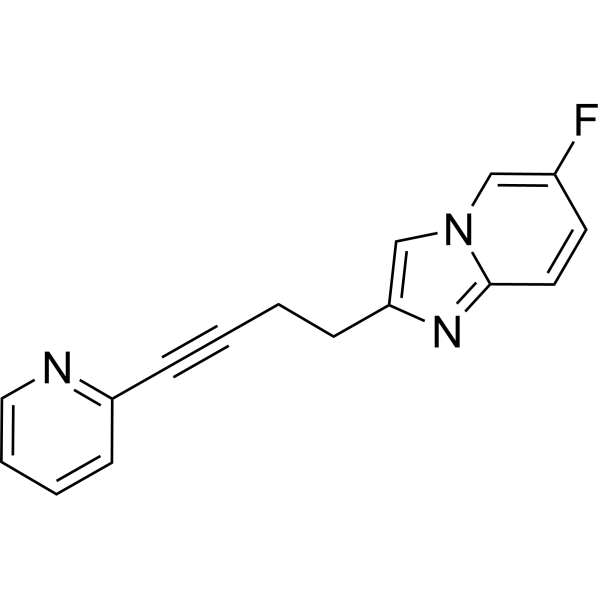
HY-14859
DipraglurantmGluR5 NAM -
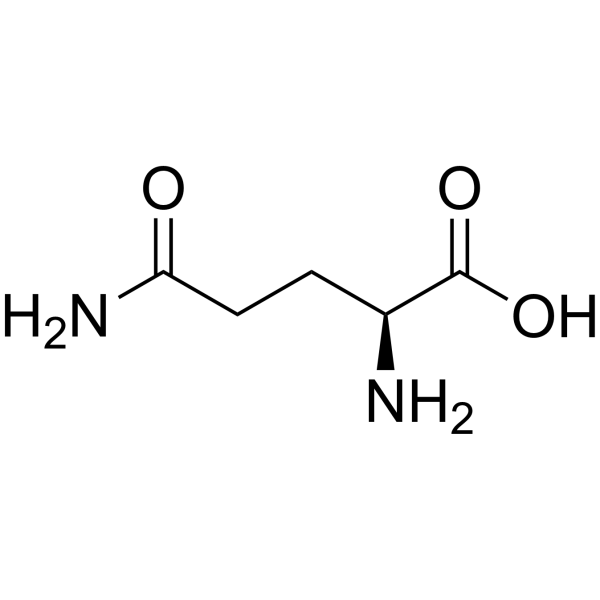
HY-N0390
L-GlutamineEndogenous Metabolite


Biological Activity
Description
IC50 & Target
[1]|
mGlu5 Receptor |
Cellular Effect
|
Cell Line

|
Type | Value | Description | References |
|---|---|---|---|---|
| CHO | EC50 |
300 nM
Compound: 4
|
Effective concentration against metabotropic glutamate receptor 5 of human transfected into CHO cells
Effective concentration against metabotropic glutamate receptor 5 of human transfected into CHO cells
|
[PMID: 15537338] |
| CHO | EC50 |
<1 μM
Compound: 2, CPPHA
|
Activity at rat mGluR5 expressed in CHO cells assessed as potentiation of glutamate response by FLIPR assay
Activity at rat mGluR5 expressed in CHO cells assessed as potentiation of glutamate response by FLIPR assay
|
[PMID: 17210250] |
| CHO | EC50 |
0.25 μM
Compound: 2, CPPHA
|
Activity at human mGluR5 expressed in CHO cells assessed as potentiation of glutamate response by FLIPR assay
Activity at human mGluR5 expressed in CHO cells assessed as potentiation of glutamate response by FLIPR assay
|
[PMID: 17210250] |
| HEK293 | IC50 |
>10000 nM
Compound: CPPHA
|
Displacement of [3H]-MethoxyPEPy from human mGlu5 receptor expressed in HEK293 cell membranes after 8 hrs by micro beta scintillation counting analysis
Displacement of [3H]-MethoxyPEPy from human mGlu5 receptor expressed in HEK293 cell membranes after 8 hrs by micro beta scintillation counting analysis
|
[PMID: 27994742] |
In Vitro
CPPHA alone has no agonist activity[1].
CPPHA causes concentration-dependent potentiation of the response of human mGluR5 CHO cells to agonists[1].
CPPHA potentiates threshold response to glutamate in fluorometric Ca2+ assays 7- to 8-fold with EC50 values in the 400 to 800 nM range[1].
CPPHA (20 μM; 15 minutes) potentiates the response to a subthreshold concentration of DHPG (HY-12598A) on ERK and cyclic-AMP responsive element-binding protein (CREB) activity, as well as NMDA receptor subunit NR1 phosphorylation in cortical and hippocampal slices[3].
MedChemExpress (MCE) has not independently confirmed the accuracy of these methods. They are for reference only.
-
Cell Line:Rat hippocampal cells
-
Concentration:20 μM
-
Incubation Time:15 minutes
-
Result:Potentiated the DHPG (20 μM)-induced increase in phosphorylation of ERK and CREB, approaching levels seen with 100 μM DHPG alone.


Chemical Information
-
CAS No. 693288-97-0
-
Appearance Solid
-
Molecular Weight 406.82
-
Formula C22H15ClN2O4
-
Color Light yellow to yellow
-
SMILES
O=C1N(C(C2=CC=CC=C21)=O)CC3=CC(Cl)=CC=C3NC(C4=CC=CC=C4O)=O
-
Shipping
Room temperature in continental US; may vary elsewhere.
-
Storage
Powder -20°C 3 years 4°C 2 years In solvent -80°C 2 years -20°C 1 year


Solvent & Solubility
In Vitro:
DMSO : 100 mg/mL (245.81 mM; Need ultrasonic; Hygroscopic DMSO has a significant impact on the solubility of product, please use newly opened DMSO)
Please refer to the solubility information to select the appropriate solvent. Once prepared, please aliquot and store the solution to prevent product inactivation from repeated freeze-thaw cycles.
Storage method and period of stock solution: -80°C, 2 years; -20°C, 1 year. When stored at -80°C, please use it within 2 years. When stored at -20°C, please use it within 1 year.
Please refer to the solubility information to select the appropriate solvent. Once prepared, please aliquot and store the solution to prevent product inactivation from repeated freeze-thaw cycles.
Storage method and period of stock solution: -80°C, 2 years; -20°C, 1 year. When stored at -80°C, please use it within 2 years. When stored at -20°C, please use it within 1 year.
Concentration (start) × Volume (start) = Concentration (final) × Volume (final)
In Vivo:
Select the appropriate dissolution method based on your experimental animal and administration route.
- For the following dissolution methods, please ensure to first prepare a clear stock solution using an In Vitro approach and then sequentially add co-solvents:
- To ensure reliable experimental results, the clarified stock solution can be appropriately stored based on storage conditions. As for the working solution for In Vivo experiments, it is recommended to prepare freshly and use it on the same day.
- The percentages shown for the solvents indicate their volumetric ratio in the final prepared solution. If precipitation or phase separation occurs during preparation, heat and/or sonication can be used to aid dissolution.
In Vivo Dissolution Calculator
Please enter the basic information of animal experiments:
-
-
-
-
Recommended: Prepare an additional quantity of animals to account for potential losses during experiments.
Please enter your animal formula composition:
-
%DMSO +
Recommended: Keep the proportion of DMSO in working solution below 2% if your animal is weak.
-
%+
-
+%Tween-80 + +
-
%Saline +
The co-solvents required include: DMSO, . All of co-solvents are available by MedChemExpress (MCE). , Tween 80. All of co-solvents are available by MedChemExpress (MCE).
Working solution concentration: 0.22 mg/mL
Method for preparing stock solution: mg drug dissolved in μL DMSO. Stock solution concentration: mg/mL.
1. Take μL DMSO stock solution;
2. Add μL .
μL , mix evenly;
3. Then add μL Tween 80, mix evenly;
4. Then add μL
Please ensure that the stock solution in the first step is dissolved to a clear state, and add co-solvents in sequence. You can use ultrasonic heating (ultrasonic cleaner, recommended frequency 20-40 kHz), vortexing, etc. to assist dissolution.


Purity & Documentation
-
Data Sheet (277 KB)
-
SDS (459 KB)
- English - EN (459 KB)
- Français - FR (459 KB)
- Deutsch - DE (459 KB)
- Norwegian - NO (459 KB)
- Español - ES (459 KB)
- Swedish - SV (459 KB)
- Italian - IT (459 KB)
- Korean - KR (459 KB)
- Portuguese - PT (459 KB)
-
Handling Instructions (2659 KB)
References
[1]. O'Brien JA, et al. A novel selective allosteric modulator potentiates the activity of native metabotropic glutamate receptor subtype 5 in rat forebrain. J Pharmacol Exp Ther. 2004 May;309(2):568-77. [Content Brief]
[2]. N-{4-Chloro-2-[(1,3-dioxo-1,3-dihydro-2H-isoindol-2-yl)methyl]phenyl}-2-hydroxybenzamide (CPPHA) acts through a novel site as a positive allosteric modulator of group 1 metabotropic glutamate receptors. Mol Pharmacol. 2008 Mar;73(3):909-18. [Content Brief]
[3]. Liu F, et al. The effect of mGlu5 receptor positive allosteric modulators on signaling molecules in brain slices. Eur J Pharmacol. 2006 May 1;536(3):262-8. [Content Brief]
[4]. Zhang Y, et al. Allosteric potentiators of metabotropic glutamate receptor subtype 5 have differential effects on different signaling pathways in cortical astrocytes. J Pharmacol Exp Ther. 2005 Dec;315(3):1212-9. [Content Brief]


Complete Stock Solution Preparation Table
Please refer to the solubility information to select the appropriate solvent. Once prepared, please aliquot and store the solution to prevent product inactivation from repeated freeze-thaw cycles.
Storage method and period of stock solution: -80°C, 2 years; -20°C, 1 year. When stored at -80°C, please use it within 2 years. When stored at -20°C, please use it within 1 year.
| Optional Solvent | Concentration Solvent Mass | 1 mg | 5 mg | 10 mg | 25 mg |
|---|---|---|---|---|---|
| DMSO | 1 mM | 2.4581 mL | 12.2904 mL | 24.5809 mL | 61.4522 mL |
| 5 mM | 0.4916 mL | 2.4581 mL | 4.9162 mL | 12.2904 mL | |
| 10 mM | 0.2458 mL | 1.2290 mL | 2.4581 mL | 6.1452 mL | |
| 15 mM | 0.1639 mL | 0.8194 mL | 1.6387 mL | 4.0968 mL | |
| 20 mM | 0.1229 mL | 0.6145 mL | 1.2290 mL | 3.0726 mL | |
| 25 mM | 0.0983 mL | 0.4916 mL | 0.9832 mL | 2.4581 mL | |
| 30 mM | 0.0819 mL | 0.4097 mL | 0.8194 mL | 2.0484 mL | |
| 40 mM | 0.0615 mL | 0.3073 mL | 0.6145 mL | 1.5363 mL | |
| 50 mM | 0.0492 mL | 0.2458 mL | 0.4916 mL | 1.2290 mL | |
| 60 mM | 0.0410 mL | 0.2048 mL | 0.4097 mL | 1.0242 mL | |
| 80 mM | 0.0307 mL | 0.1536 mL | 0.3073 mL | 0.7682 mL | |
| 100 mM | 0.0246 mL | 0.1229 mL | 0.2458 mL | 0.6145 mL |


CPPHA Related Classifications
HY-14612 Related Classifications
 Powered by Bioz