



Polygalacic acid

Based on 1 Customer Validation
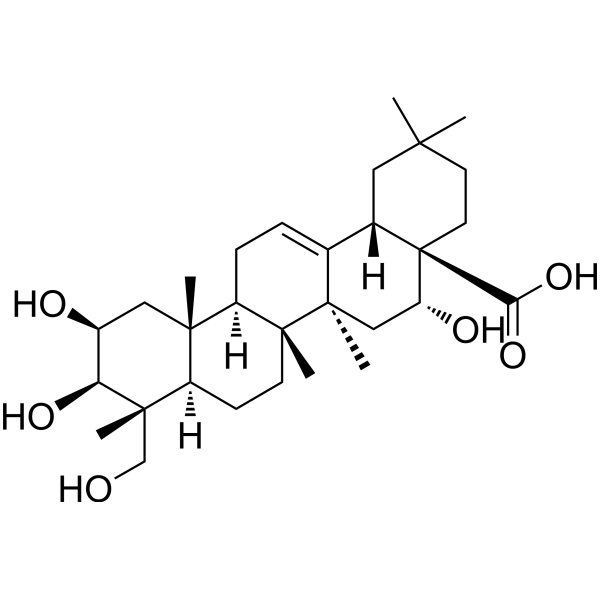
Polygalacic acid, is a triterpene, isolated from the root of Polygala tenuifolia Willd. Polygalacic acid inhibits MMP expression. Polygalacic acid may have a therapeutic effect in Osteoarthritis (OA) treatment . Polygalacic acid exerts a significant neuroprotective effect on cognitive impairment, PA improves cholinergic system reactivity by inhibiting acetylcholinesterase (AChE) activity, increasing choline acetyltransferase (ChAT) activity, and elevating levels of acetylcholine (Ach) in the hippocampus and frontal cortex.
For research use only. We do not sell to patients.
- Purity : 98.92%
- CAS No.: 22338-71-2
- Formula: C30H48O6
- Molecular Weight:504.70
-
Storage:
4°C, protect from light
* In solvent : -80°C, 6 months; -20°C, 1 month (protect from light)

To place orders, for customer services and technical support, please contact: MedChemExpress USA
Tel: 609-228-6898 E-mail: [email protected] [email protected]


-
 Biological Activity
-
Chemical Information
-
Solvent & Solubility
- Protocols
- Purity & Documentation
- References
-
 Help & FAQs


-
HY-N0431
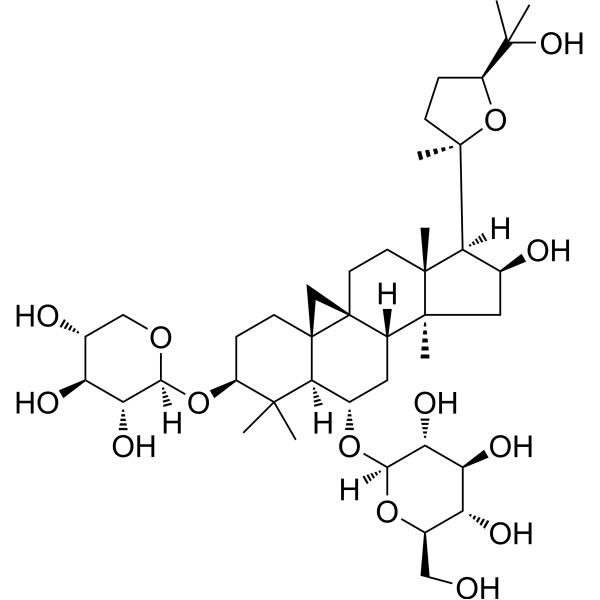
Astragaloside IVMMP Inhibitor -
HY-N0262
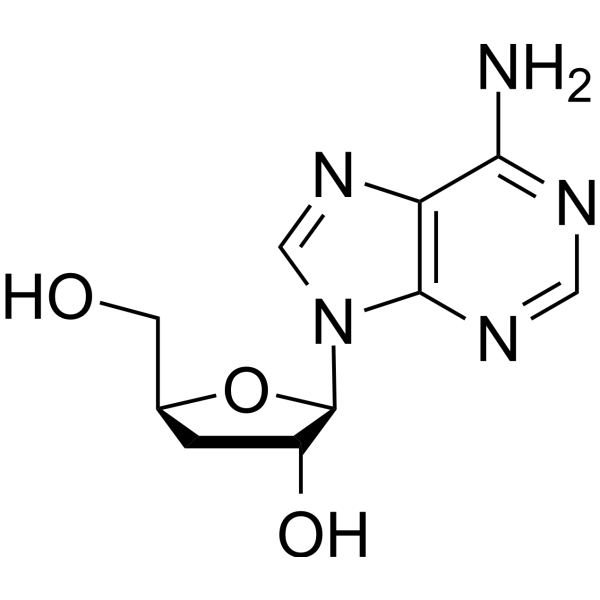
CordycepinBacterial Inhibitor -

HY-N0431R
Astragaloside IV (Standard)MMP Inhibitor -
HY-N0532
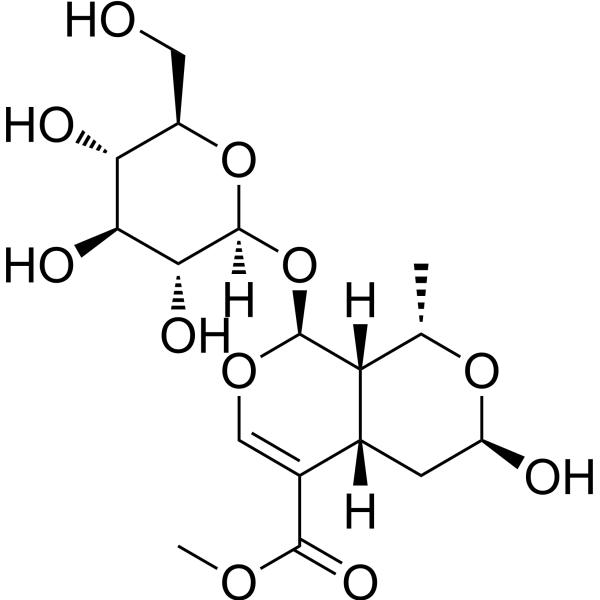
MorronisidePyroptosis Inhibitor -

HY-132179
FucoidanAnticoagulant/Cancer Agent -

HY-N0262R
Cordycepin (Standard)Bacterial Inhibitor -
HY-N0565A
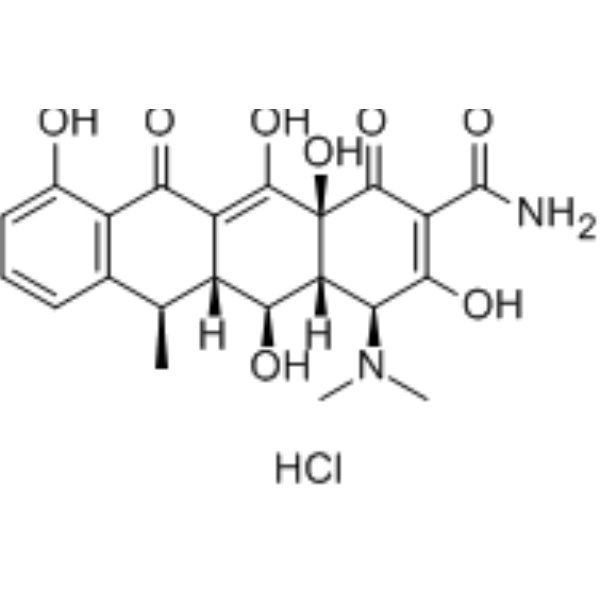
Doxycycline hydrochlorideMMP Inhibitor -
HY-N0204
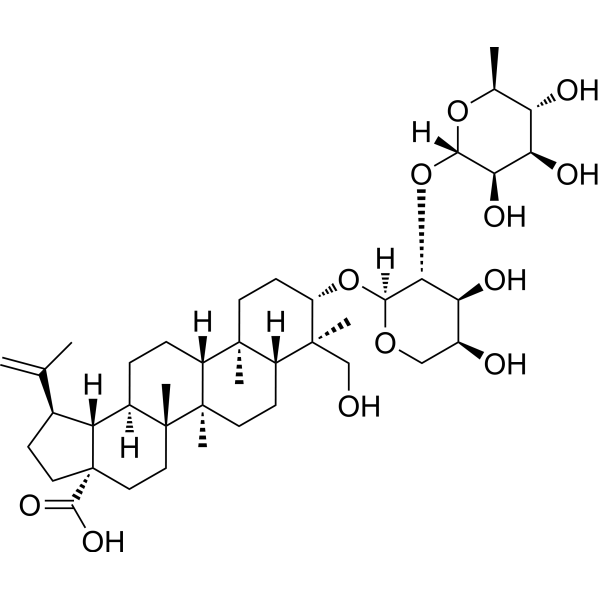
Pulchinenoside ATriterpenoid Glycoside -
HY-B0099
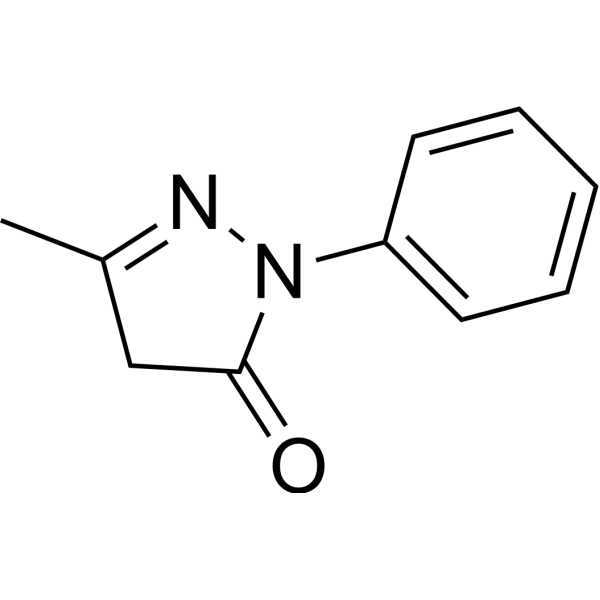
EdaravoneApoptosis Inducer -
HY-N0155
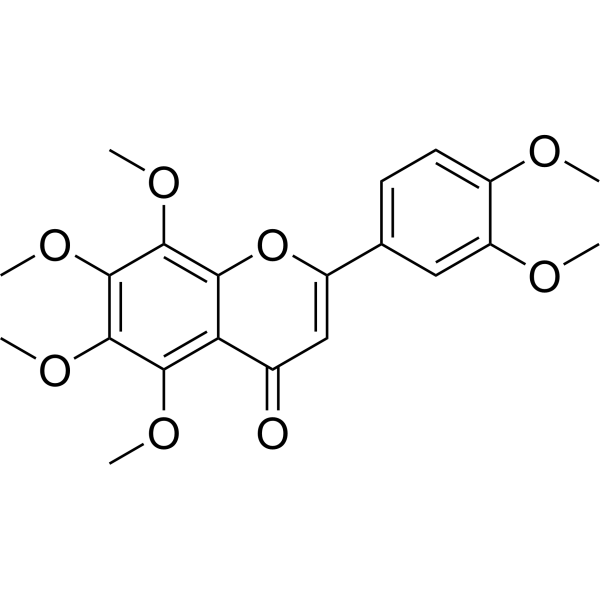
NobiletinROR Agonist -
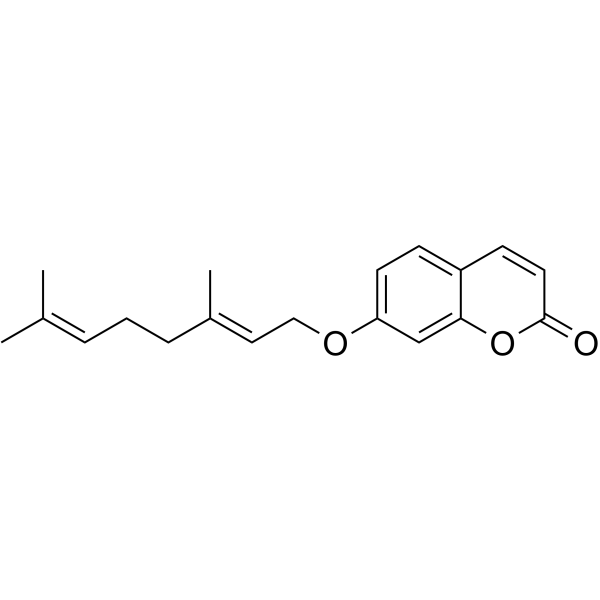
HY-N2388
AurapteneMMP Inhibitor; PPARα Agonists -
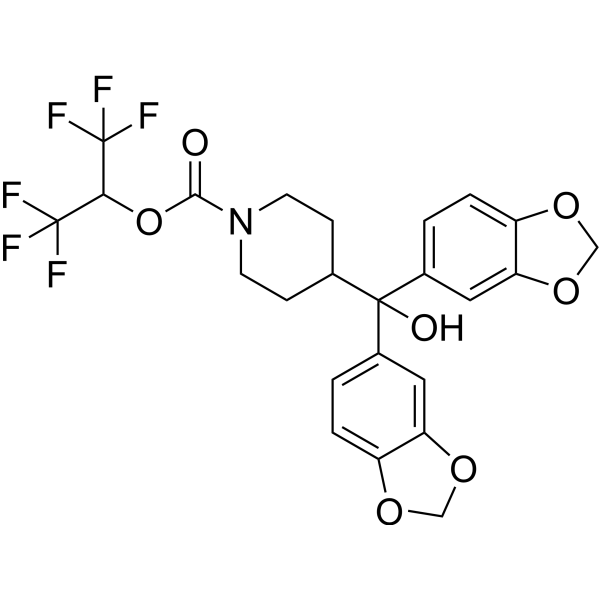
HY-18977
KML29MAGL Inhibitor


Biological Activity
Description
IC50 & Target
|
AChE |
In Vitro
Polygalacic acid (0-100 μM; 24 hours) significantly decreases the mRNAexpressions of MMP-3, MMP-9, MMP-13, and COX-2, which are significantly increased by IL-1β, in a dose-dependent manner[1]. Polygalacic acid (0-100 μM; 6 hours) decreases the expression of phosphor-p38, phosphor-Erk, and phosphor-Jnk induced by IL-1β, phosphor-p65 is not reduced by polygalacic acid[1].
MedChemExpress (MCE) has not independently confirmed the accuracy of these methods. They are for reference only. Further protocols information, click here.
-
Cell Line:Chondrocyte cells
-
Concentration:50 μM; 100 μM
-
Incubation Time:24 hours
-
Result:Suppressed IL-1β-induced COX-2, MMP3, MMP9, and MMP13 mRNA expression.
-
Cell Line:Chondrocyte cells
-
Concentration:50 μM; 100 μM
-
Incubation Time:6 hours
-
Result:Inhibited the IL-1β-induced activation of the MAPK pathway in chondrocytes.


Chemical Information
-
CAS No. 22338-71-2
-
Appearance Solid
-
Molecular Weight 504.70
-
Formula C30H48O6
-
Color White to off-white
-
SMILES
C[C@]([C@@]1([H])[C@]2(C[C@H](O)[C@@H]3O)C)(CC[C@@]2([H])[C@]3(C)CO)[C@@](C4=CC1)(C[C@@H](O)[C@]5(C(O)=O)[C@@]4([H])CC(C)(C)CC5)C
-
Structure Classification
-
Initial Source
-
Shipping
Room temperature in continental US; may vary elsewhere.
-
Storage
4°C, protect from light
* In solvent : -80°C, 6 months; -20°C, 1 month (protect from light)


Solvent & Solubility
In Vitro:
DMSO : 50 mg/mL (99.07 mM; Need ultrasonic; Hygroscopic DMSO has a significant impact on the solubility of product, please use newly opened DMSO)
Please refer to the solubility information to select the appropriate solvent. Once prepared, please aliquot and store the solution to prevent product inactivation from repeated freeze-thaw cycles.
Storage method and period of stock solution: -80°C, 6 months; -20°C, 1 month (protect from light). When stored at -80°C, please use it within 6 months. When stored at -20°C, please use it within 1 month.
Please refer to the solubility information to select the appropriate solvent. Once prepared, please aliquot and store the solution to prevent product inactivation from repeated freeze-thaw cycles.
Storage method and period of stock solution: -80°C, 6 months; -20°C, 1 month (protect from light). When stored at -80°C, please use it within 6 months. When stored at -20°C, please use it within 1 month.
Concentration (start) × Volume (start) = Concentration (final) × Volume (final)

Protocols
-
RNA extraction experimental
By lysing cells, releasing RNA, and removing impurities such as proteins and DNA, high-purity RNA products are finally obtained. The commonly used traditional method is the guanidine isothiocyanate/phenol/chloroform method (Trizol), which is suitable for a variety of animal materials including animal tissues, microorganisms, cultured cells, etc., and most plant materials.
-
Mitochondrial membrane-potential fluorescent assay
Mitochondrial membrane potential fluorescent assays estimate ΔΨm in living cells using lipophilic cationic dyes such as TMRM, TMRE, rhodamine 123, and JC-1, which accumulate in mitochondria according to membrane polarization; loss of signal after FCCP or CCCP treatment is interpreted as mitochondrial depolarization. TMRM/TMRE and rhodamine 123 are commonly used for semi-quantitative live-cell microscopy or flow cytometry, while JC-1 can report a shift from red aggregate fluorescence to green monomer fluorescence during depolarization; interpretation requires controls because dye concentration, quenching mode, cell type, dye efflux, and mitochondrial mass can affect fluorescence independently of ΔΨm.
-
Mitochondrial membrane-potential and mitochondrial mass staining
Mitochondrial membrane potential staining measures the electrochemical polarization across the mitochondrial inner membrane in live cells using lipophilic cationic fluorescent probes; early rhodamine-based work showed that selective mitochondrial dye accumulation is lost when the mitochondrial transmembrane potential is dissipated. JC-1 reports mitochondrial polarization by shifting from green monomer fluorescence to red J-aggregate fluorescence as dye concentration increases within energized mitochondria; therefore, the red/green fluorescence ratio is used as a relative readout of mitochondrial membrane potential. TMRE or TMRM staining provides a single-channel relative readout because these cationic rhodamine esters accumulate in polarized mitochondria, and lower fluorescence indicates reduced mitochondrial polarization when acquisition and dye-loading conditions are controlled. Mitochondrial mass staining is commonly performed with MitoTracker Green FM or related MitoTracker dyes as
-
Alzheimer’s Disease Modeling
Alzheimer’s Disease (AD) is a neurodegenerative disorder characterized by a progressive decline in cognitive functions and loss of specific types of neurons and synapses. Alzheimer's symptoms can be simulated in mice by injecting drugs (such as Aβ) or genetically modified.


Purity & Documentation
-
Data Sheet (277 KB)
-
SDS (252 KB)
- English - EN (252 KB)
- Français - FR (252 KB)
- Deutsch - DE (252 KB)
- Norwegian - NO (252 KB)
- Español - ES (252 KB)
- Swedish - SV (252 KB)
- Italian - IT (252 KB)
- Korean - KR (252 KB)
- Portuguese - PT (252 KB)
-
Handling Instructions (2659 KB)
References
[1]. Guo C, et al. Neuroprotective effects of polygalacic acid on scopolamine-induced memory deficits in mice. Phytomedicine. 2016 Feb 15;23(2):149-55. [Content Brief]
[2]. Xu K, et al. Polygalacic acid inhibits MMPs expression and osteoarthritis via Wnt/β-catenin and MAPK signal pathways suppression. Int Immunopharmacol. 2018 Oct;63:246-252. [Content Brief]


Complete Stock Solution Preparation Table
Please refer to the solubility information to select the appropriate solvent. Once prepared, please aliquot and store the solution to prevent product inactivation from repeated freeze-thaw cycles.
Storage method and period of stock solution: -80°C, 6 months; -20°C, 1 month (protect from light). When stored at -80°C, please use it within 6 months. When stored at -20°C, please use it within 1 month.
| Optional Solvent | Concentration Solvent Mass | 1 mg | 5 mg | 10 mg | 25 mg |
|---|---|---|---|---|---|
| DMSO | 1 mM | 1.9814 mL | 9.9069 mL | 19.8138 mL | 49.5344 mL |
| 5 mM | 0.3963 mL | 1.9814 mL | 3.9628 mL | 9.9069 mL | |
| 10 mM | 0.1981 mL | 0.9907 mL | 1.9814 mL | 4.9534 mL | |
| 15 mM | 0.1321 mL | 0.6605 mL | 1.3209 mL | 3.3023 mL | |
| 20 mM | 0.0991 mL | 0.4953 mL | 0.9907 mL | 2.4767 mL | |
| 25 mM | 0.0793 mL | 0.3963 mL | 0.7926 mL | 1.9814 mL | |
| 30 mM | 0.0660 mL | 0.3302 mL | 0.6605 mL | 1.6511 mL | |
| 40 mM | 0.0495 mL | 0.2477 mL | 0.4953 mL | 1.2384 mL | |
| 50 mM | 0.0396 mL | 0.1981 mL | 0.3963 mL | 0.9907 mL | |
| 60 mM | 0.0330 mL | 0.1651 mL | 0.3302 mL | 0.8256 mL | |
| 80 mM | 0.0248 mL | 0.1238 mL | 0.2477 mL | 0.6192 mL |


Polygalacic acid Related Classifications
HY-N0801 Related Classifications
 Powered by Bioz