1. Search Result
Search Result
Results for "

BV2cells

" in MedChemExpress (MCE) Product Catalog:

21

Inhibitors & Agonists

12

Natural
Products

Cat. No. Product Name Target Research Areas Chemical Structure
  • HY-N2896

    Reactive Oxygen Species (ROS) Apoptosis Fungal Bacterial NF-κB SOD AMPK mTOR Notch Toll-like Receptor (TLR) Wnt MyD88 Sirtuin Infection Neurological Disease Inflammation/Immunology Cancer
    Arjunolic acid is an orally active, multifunctional bioactive compound. Arjunolic acid exhibits free radical scavenging activity, as well as fungal and bacterial activities. Arjunolic acid induces apoptosis (Apoptosis) in various cancer cells. Arjunolic acid protects hepatocytes against induced oxidative stress and apoptosis by reducing reactive oxygen species and inhibiting NF-κB activation. Arjunolic acid regulates pancreatic dysfunction in type 2 diabetic rats by blocking the activation of the TLR-4/MyD88 and canonical Wnt pathways. Arjunolic acid inhibits neuroinflammation and ameliorates depressive behaviors via the SIRT1/AMPK/Notch1 signaling pathway in microglia. Arjunolic acid improves Crohn's disease-like colitis by restoring gut microbiota composition and inhibiting TLR4 signaling. Arjunolic acid suppresses osteosarcoma progression by inhibiting Wnt3a-mediated M2 polarization of macrophages. Arjunolic acid ameliorates diabetic retinopathy via the autophagy pathway regulated by AMPK/mTOR/HO-1. Arjunolic acid is applicable to research related to type 2 diabetes, organ toxicity, depression, Crohn's disease, osteosarcoma, diabetic retinopathy, and testicular dysfunction [2] .
    Arjunolic acid
  • HY-N5025

    P2X Receptor Apoptosis ERK p38 MAPK c-Myc NF-κB Reactive Oxygen Species (ROS) Neurological Disease Inflammation/Immunology Cancer
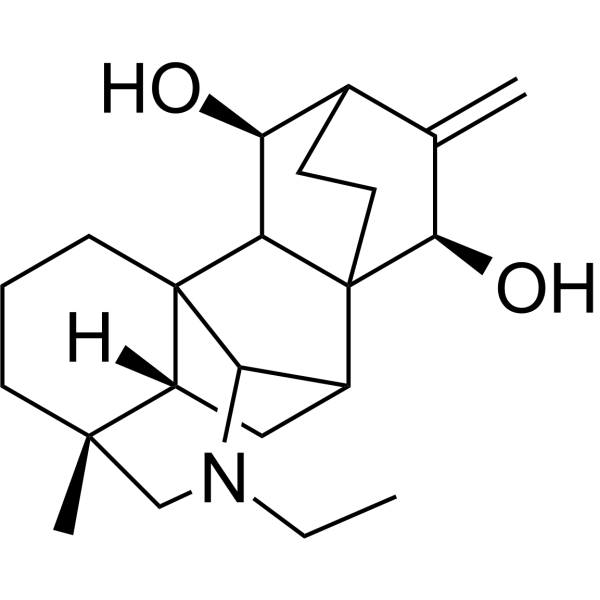
    Bullatine A, a diterpenoid alkaloid, is a potent P2X7 antagonist. Bullatine A possesses anti-rheumatic, anti-inflammatory and anti-nociceptive effects. Bullatine A inhibits ATP-induced BV-2 cell death/apoptosis and P2X receptor-mediated inflammatory responses. Bullatine A suppresses glioma cell growth by targeting SIRT6. Bullatine A specifically attenuates pain hypersensitivity in rats. Bullatine A attenuates LPS (HY-D1056)-induced systemic inflammatory response by inhibiting the ROS/JNK/NF-κB pathway in mice. Bullatine A improves despair behavior in Chronic chronic social defeat stress (CSDS) mice. Bullatine A can be used for the study of inflammation, glioblastoma (GBM) and depression [2] .
    Bullatine A
  • HY-149202

    PGE synthase Neurological Disease Inflammation/Immunology
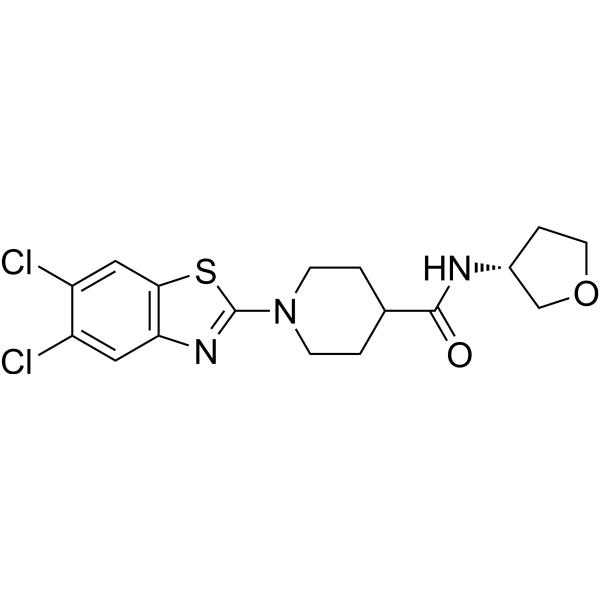
    UT-11 is a potent and blood-brain barrier-permeable microsomal prostaglandin E synthase-1 (mPGES-1) inhibitor with IC50s of 0.10 μM and 2.00 μM for inhibiting PGE2 production in human (SK-N-AS) and murine (BV2) cells, respectively .
    UT-11
  • HY-146005

    Microtubule/Tubulin Neurological Disease Inflammation/Immunology
    Tau-aggregation and neuroinflammation-IN-1 is a potent tau-aggregation and neuroinflammation inhibitor. Tau-aggregation and neuroinflammation-IN-1 exhibits remarkable inhibitory activities against AcPHF6 and full-length tau aggregation. Tau-aggregation and neuroinflammation-IN-1 has a low cytotoxicity and reduced NO release in LPS-stimulated BV2 cells. Tau-aggregation and neuroinflammation-IN-1 can reverse okadaic acid-induced memory impairment in rats .
    Tau-aggregation and neuroinflammation-IN-1
  • HY-155850

    Pyruvate Kinase Neurological Disease
    CIAC001 is a Pyruvate Kinase PKM2 inhibitor with anti-neuroinflammatory activity. CIAC001 inhibits LPS-induced proinflammatory nitric oxide (NO) production and protects immunologically active BV-2 cells (IC50=2.5 μM). CIAC001 also has anti-neuroinflammation in mouse models and inhibits chronic morphine-induced addiction .
    CIAC001
  • HY-N8631

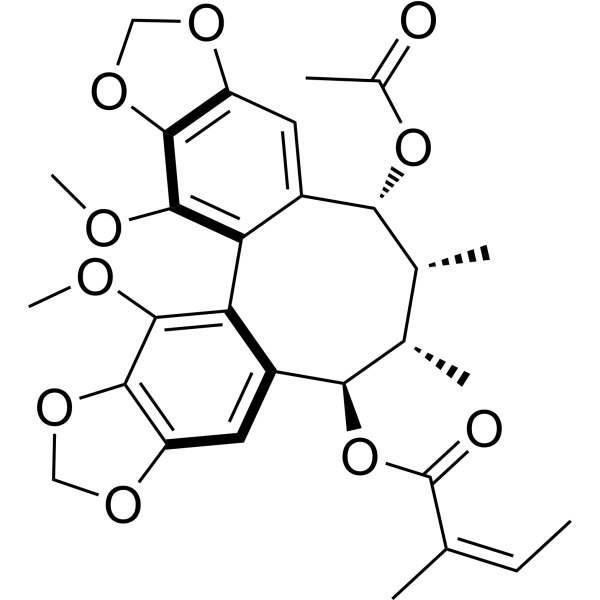
    Acetylschisantherin L

    NO Synthase Inflammation/Immunology
    O-Acetylschisantherin L (Acetylschisantherin L) is a natural lignan, which exhibits inhibitory effects on LPS-induced NO production in BV-2 cells with an IC50 of 23.1 μM .
    O-Acetylschisantherin L
  • HY-178356

    Cholinesterase (ChE) nAChR Interleukin Related TNF Receptor Neurological Disease Inflammation/Immunology
    BChE-IN-44 is a potent, brain-penetrant, highly selective BChE inhibitor [equine BChE IC50 = 18.00 pM, human BChE IC50 = 1.50 nM]. BChE-IN-44 shows neuroprotective effects against the Aβ1-42-induced injury model and inhibitory effects on Aβ1-42 self-aggregation. BChE-IN-44 reduces the levels of inflammatory factors (NO, IL-6, and TNF-α) in Lipopolysaccharides (HY-D1056)-induced BV2 cells. BChE-IN-44 can significantly ameliorate Scopolamine (HY-N0296)-induced cognition impairment. BChE-IN-44 exhibits capacity in the regulation of BChE and acetylcholine levels in the mouse hippocampus. BChE-IN-44 can be used for the study of Alzheimer’s disease (AD) .
    BChE-IN-44
  • HY-W095499

    NO Synthase Others Inflammation/Immunology Cancer
    Corydaldine is a alkaloid. Corydaldine inhibits the production of NO in the BV2 cell line when stimulated by LPS. [1]
    Corydaldine
  • HY-N11945

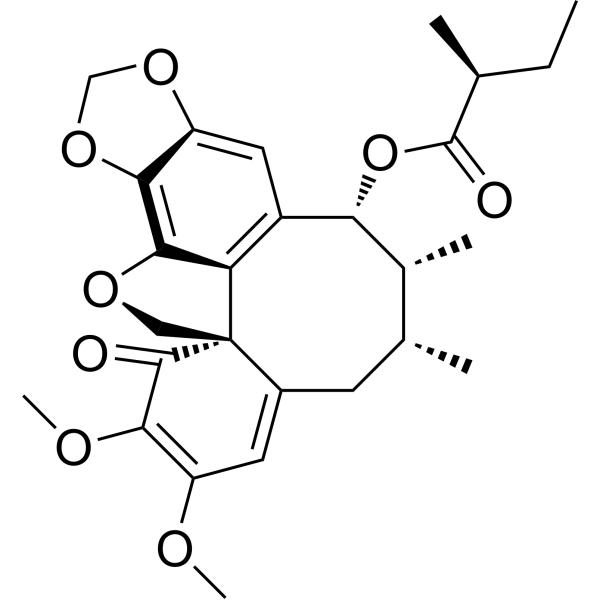
    Kadsulignan J

    NO Synthase Others
    Schiarisanrin A (Kadsulignan J) is a lignan with inhibitory activity on NO production. Schiarisanrin A inhibits NO production in BV-2 cells with an IC50 of 9.6 μM .
    Schiarisanrin A
  • HY-N10119

    p38 MAPK Neurological Disease
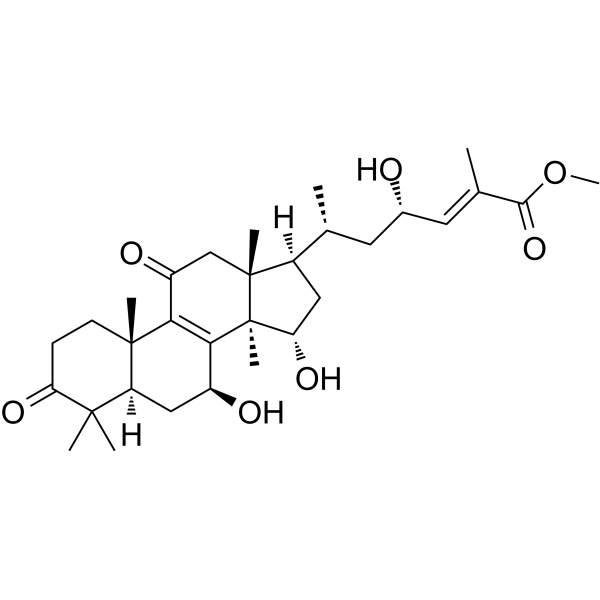
    Ganoderterpene A attenuates LPS-induced inflammation and apoptosis via suppressing MAPK and TLR-4/NF-κB pathways in BV-2 cells.
    Ganoderterpene A
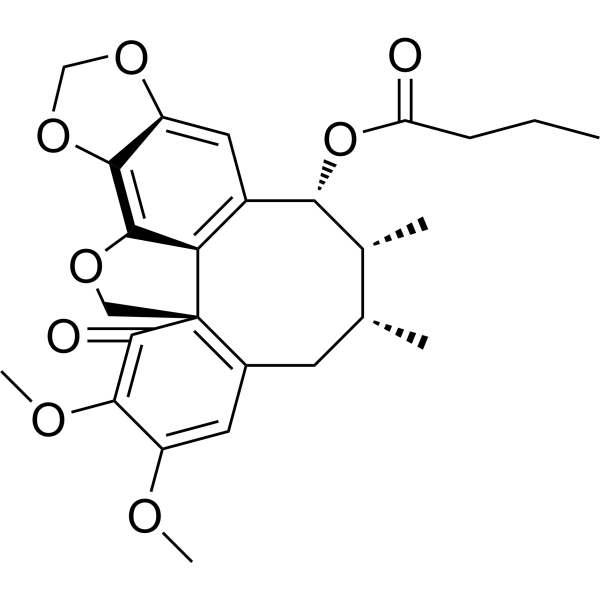
  • HY-N11943

    NO Synthase Others
    Kadsulignan H (compound 13) is a lignan with inhibitory activity on NO production. Kadsulignan H inhibits NO production in BV-2 cells with an IC50 of 14.1 μM .
    Kadsulignan H
  • HY-N12525

    Others Inflammation/Immunology
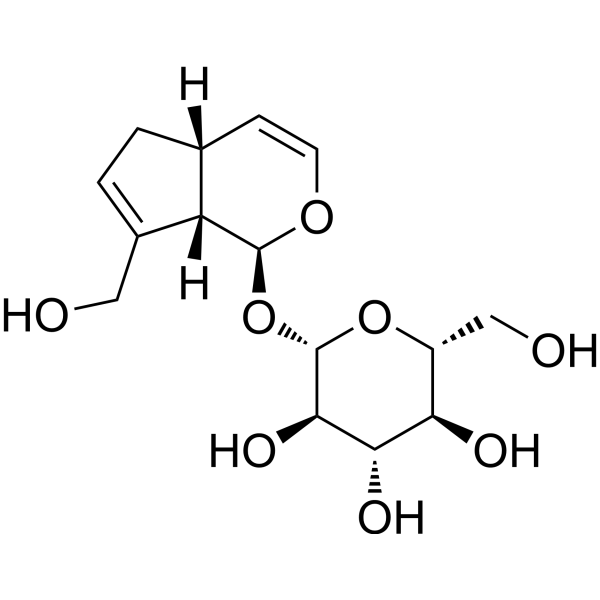
    Bartsioside is an anti-inflammatory agent which can be extracted from C. deserticola. Bartsioside exerts no significant cytotoxicity under 40 μM to BV-2 cells .
    Bartsioside
  • HY-N2968

    (+)​-​Bullatantriol

    Others Inflammation/Immunology
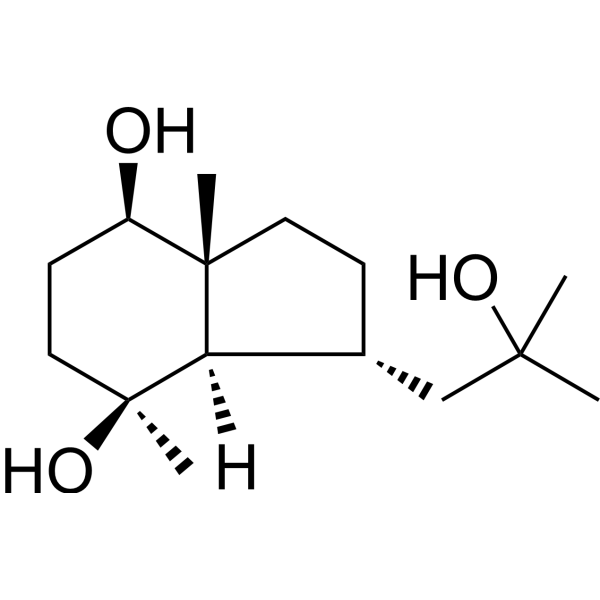
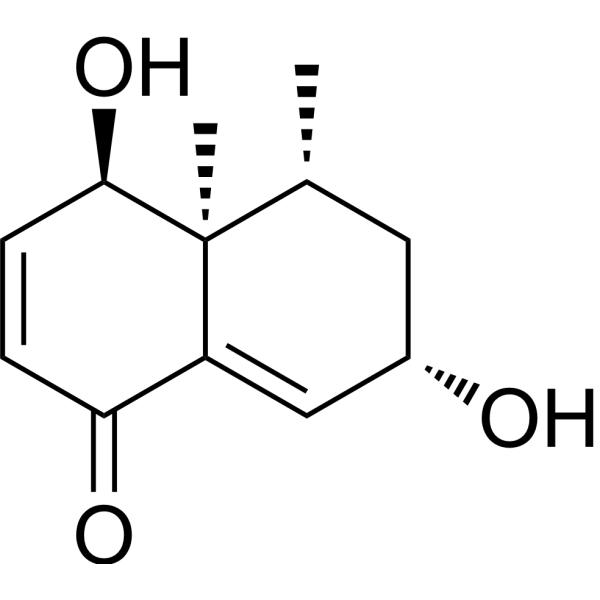
    Bullatantriol ((+)?-?Bullatantriol) can be isolated from the roots of Homalomena aromatica. Bullatantriol can promote the proliferation and differentiation of osteoblasts. Bullatantriol also inhibits LPS-induced NO production in BV2 cells .
    Bullatantriol
  • HY-N12527

    NF-κB Others
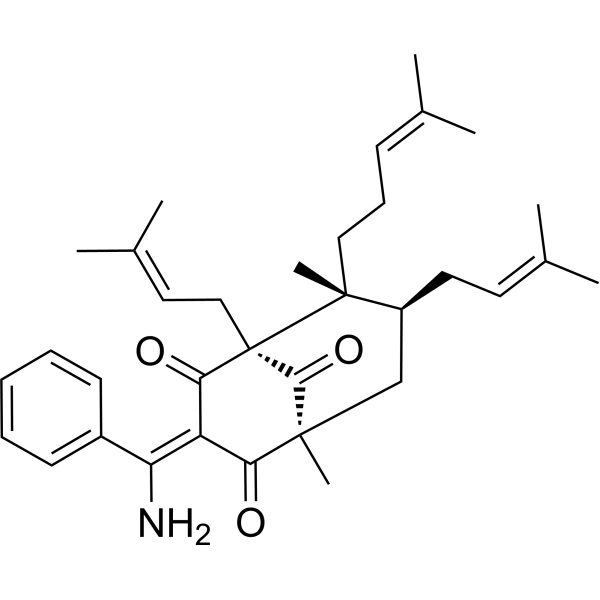
    Hyperelamine A (compound 5) is a polycyclic polyprenylated acylphloroglucinols (PPAPs). Hyperelamine A exhibits inhibitory activity against LPS-activated NO production in BV-2 cells via TLR-4/NF κB signaling .
    Hyperelamine A
  • HY-153690

    TNF Receptor Others
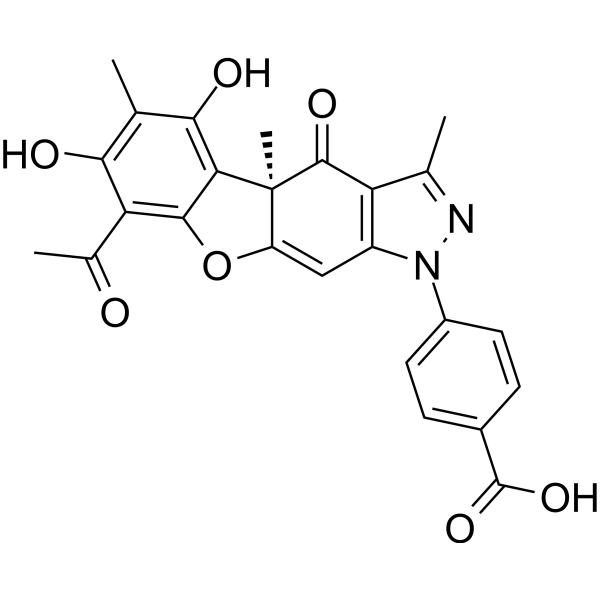
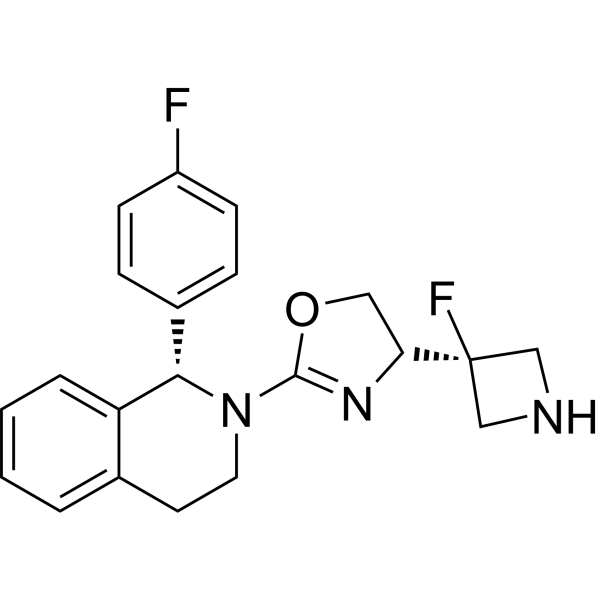
    Progranulin modulator-1 (Compound 60) is an orally active enhancer of progranulin (PGRN) secretion. Progranulin modulator-1 enhances the potency of BV-2 cell to increase PGRN levels, has inhibitory effect on hERG and Low cytotoxicity, the PGRN EC50 and hERG IC50 were 83 and 3100 nM, respectively .
    Progranulin modulator-1
  • HY-168091

    NOD-like Receptor (NLR) Interleukin Related Inflammation/Immunology
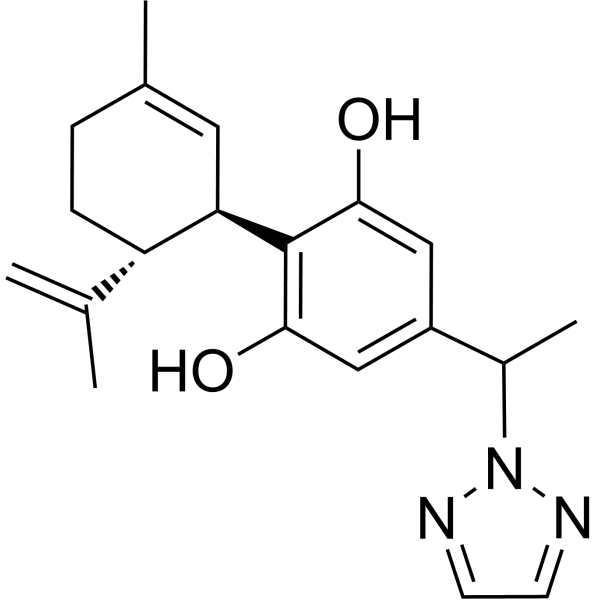
    YM-I-26 is a selective NLRP3 inflammasome inhibitor. YM-I-26 enhances the phagocytosis of β-amyloid protein by mouse microglial BV2 cells and inhibits the production of IL-1β and IL-10. YM-I-26 can be used to study the immunomodulatory activity associated with inflammation .
    YM-I-26
  • HY-N8936

    Others Inflammation/Immunology
    Narchinol B (Compound 4) is a sesquiter penoid compound. Narchinol B has anti-inflammatory effects. Narchinol B works by inhibiting proinflammatory mediators, including prostaglandin E2 (PGE2), inducible nitric oxide synthase (iNOS), and cyclooxygenase-2 (COX-2) proteins, as well as proinflammatory cytokines, such as interleukin-1b, IL-6, and tumor necrosis factor-α (TNF-α). Narchinol B significantly inhibits LPS-induced overproduction of NO in BV2 cells (IC50=2.43 μM) .
    Narchinol B
  • HY-161925

    TGF-β Receptor Neurological Disease Inflammation/Immunology
    sTGFBR3 antagonist 1 (Compound p24) is an antagonist for soluble transforming growth factor beta receptor 3 (sTGFBR3), thus activates TGF-β signaling pathway, and inhibits IκBα/NF-κB signaling pathway. sTGFBR3 antagonist 1 inhibits NO-release in LPS (HY-D1056) -induced BV2 cells with an IC50 of 0.52 μM. sTGFBR3 antagonist 1 exhibits anti-inflammatory and neuroprotective activities with blood brain barrier (BBB) permeability. sTGFBR3 antagonist 1 can be used in Alzheimer’s Disease research .
    sTGFBR3 antagonist 1
  • HY-169103

    NO Synthase COX Cholinesterase (ChE) Amyloid-β Neurological Disease Inflammation/Immunology
    Neuroprotective agent 5 (compound 28) is a brain permeabilizing agent with anti-neuritis, anti-oxidative damage and neuroprotective effects. Neuroprotective agent 5 exhibits a potent NO inhibitory effect (EC50=0.49 μM), inhibits the release of proinflammatory factors PGE2 and TNF-α, downregulates the expression of iNOS and COX-2 proteins, and promotes the polarization of BV-2 cells from the proinflammatory M1 phenotype to the anti-inflammatory M2 phenotype. In addition, Neuroprotective agent 5 can also inhibit acetylcholinesterase (AChE) activity and Aβ42 aggregation in a dose-dependent manner. Neuroprotective agent 5 can be used for the study of Alzheimer's disease .
    Neuroprotective agent 5
  • HY-167853

    SK-1080

    Angiotensin Receptor Metabolic Disease
    KR-31080 is an derivative of imidazo [4,5-b] pyridine. KR-31080 inhibits angiotensin II receptor. KR-31080 inhibits the NO production in LPS-stimulated BV-2 cells at a concentration of 2 μm with inhibition of 8.3% .
    KR-31080
  • HY-N19854

    NO Synthase Neurological Disease
    Mariaterpenoside A is an inducible nitric oxide synthase (iNOS) inhibitor. Mariaterpenoside A interacts with the active cavity of iNOS protein via hydrogen bonds with specific residues of the binding site. Mariaterpenoside A suppresses NO release in LPS (HY-D1056)-induced murine microglial BV-2 cells. Mariaterpenoside A can be used for the research of neurodegenerative disease .
    Mariaterpenoside A

Inquiry Online

Your information is safe with us. * Required Fields.

Salutation


Country or Region *

Applicant Name *


Organization Name *

Department *


Email Address *


Product Name *

Cat. No.


Requested quantity *

Phone Number *


Remarks

Inquiry Online

Inquiry Information

Product Name:
Cat. No.:
Quantity:
MCE Japan Authorized Agent:

