
1. Search Result
Search Result
Results for "

C57/6J-ApcMin/Nju mice

" in MedChemExpress (MCE) Product Catalog:

4536

Inhibitors & Agonists

1

Screening Libraries

55

Fluorescent Dyes

73

Biochemical Assay Reagents

351

Peptides

3

MCE Kits

211

Inhibitory Antibodies

660

Natural
Products

121

Isotope-Labeled Compounds

1

Antibodies

37

Click Chemistry

91

Oligonucleotides

5

GMP Molecules

Cat. No. 상품명 Target 연구분야 Chemical Structure
  • HY-B0921
    Succinylsulfathiazole
    1 Publications Verification

    Succinylsulphathiazole

    Antibiotic Bacterial Dihydrofolate reductase (DHFR) mTOR Infection
    Succinylsulfathiazole (Succinylsulphathiazole) is a long-acting sulfonamide antibiotic with localized gut-specific antibacterial activity and is orally active. Succinylsulfathiazole inhibits bacterial folate synthesis, reduces coliform counts, suppresses intestinal bacterial growth and vitamin biosynthesis, and depletes gut folate-producing bacteria. Succinylsulfathiazole modulates hepatic mTOR signaling, diminishes cecal fermentation, decreases hepatic folate levels and total folate excretion, elevates nitrogen excretion and reduces the fermentability of certain dietary fibers. Succinylsulfathiazole induces folate deficiency and triggers biotin- and folate-related nutritional deficiency symptoms in rats and C57BL/6 mice .
    Succinylsulfathiazole
  • HY-N0538

    Xylite

    Environmental Pollutants Endogenous Metabolite Bacterial Autophagy Atg7 Atg8/LC3 Metabolic Disease Cancer
    Xylitol can be classified as a polyol and sugar alcohol, exhibiting inhibitory activity on cancer cell proliferation. It induces autophagy (Autophagy) and cell death in A549 cells by activating the autophagy signaling pathway, as evidenced by the increased expression of LC3-II and Atg5-Atg12 upon Xylitol treatment. Additionally, Xylitol inhibits acetaldehyde production by Candida species, thereby reducing their carcinogenic potential. In vivo, Xylitol induces alterations in the gut microbiota of mice, which may enhance cholesterol accumulation and upregulate hepatic ChREBP, while also slowing tumor growth in the B16F10 melanoma C57BL/6 mouse model .
    Xylitol
  • HY-19900
    ITX5061
    3 Publications Verification

    p38 MAPK Scavenger Receptor Class B type I (SR-BI) Inflammation/Immunology
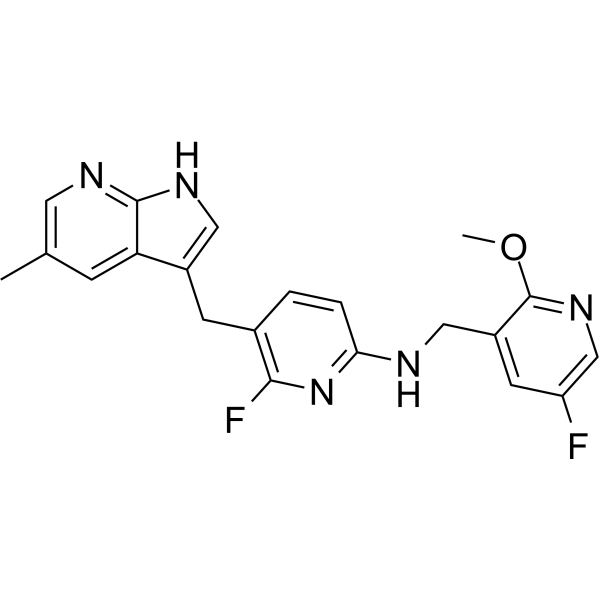
    ITX5061 is an orally active type II non-competitive p38 MAPK inhibitor. ITX5061 increases HDL-C levels by inhibiting SR-BI activity. ITX5061 also moderately elevates ApoA-I levels. ITX5061 reduces early atherosclerotic lesions in the aortic arch of mice fed an atherogenic diet. ITX5061 can be used in the research of atherosclerosis .
    ITX5061
  • HY-W052508
    Norquetiapine
    1 Publications Verification

    N-Desalkylquetiapine

    Drug Metabolite 5-HT Receptor HCN Channel Serotonin Transporter Neurological Disease
    Norquetiapine ( N-Desalkylauetiapine), a metabolite of Quetiapine (HY-14544), is a selective HCN1 channel inhibitor, with an IC50 of 13.9 μM. Norquetiapine selectively inhibits noradrenaline reuptake, is a partial 5-HT1A (Ki = 45 nM) receptor agonist, and acts as an antagonist at presynapticα2 (Ki = 237 nM), 5-HT2C(Ki = 107 nM), and 5-HT7 (Ki = 76 nM) receptors. Norquetiapine blocks the human cardiac sodium channel Nav1.5 in a state-dependent manner. Norquetiapine shows partial anti-inflammatory effects in LPS (HY-D1056) injected C57BL/6 mice. Norquetiapine can be used for the study of depression and inflammation .
    Norquetiapine
  • HY-117427
    D5D-IN-326
    2 Publications Verification

    Stearoyl-CoA Desaturase (SCD) Metabolic Disease
    D5D-IN-326 is a selective, orally active delta-5 desaturase (D5D) inhibitor, with IC50s of 72 and 22 nM for rat and human D5D in enzymic and cell-based assays, respectively, has no effect on D6D or D9D activity. D5D-IN-326 reduces insulin resistance and decreases body weight in diet-induced obese C57BL/6J mice .
    D5D-IN-326
  • HY-149874
    BMS-502
    1 Publications Verification

    DGK Inflammation/Immunology Cancer
    BMS-502 (Compound 22) is a potent dual inhibitor of diacylglycerol kinase (DGK) α and ζ with IC50 of 4.6 nM and 2.1 nM. BMS-502 enhanced T cell immune responses in mice. BMS-502 can be used in tumor immunity related research .
    BMS-502
  • HY-B1817

    Environmental Pollutants Apoptosis Biochemical Assay Reagents HSP Cardiovascular Disease Inflammation/Immunology Cancer
    Zinc acetate acts as an immune response modulator. Zinc acetate enhances the expression of HSP-70 mRNA. Zinc acetate restores the proliferation and cytokine production capacities of splenocytes. Zinc acetate reduces the Apoptosis level of splenocytes in endotoxemic mice. Zinc acetate increases plasma zinc levels and improves survival rates in mice with LPS-induced lethal endotoxemia. Zinc acetate induces rapid death of prostate cancer cell lines in vitro. Zinc acetate inhibits the growth of prostate cancer xenografts in SCID mice. Zinc acetate can be used in endotoxemia research .
    Zinc acetate
  • HY-P1434

    Insulin Receptor Metabolic Disease
    [Pro3]-GIP (mouse) is a GIP receptor antagonist (IC50: 2.6 μM). [Pro3]-GIP (mouse) improves glucose tolerance and insulin sensitivity in ob/ob mice. [Pro3]-GIP (mouse) can be used for research of type 2 diabetes .
    [Pro3]-GIP (mouse)
  • HY-123936

    NF-κB IKK COX Interleukin Related Neurological Disease Inflammation/Immunology
    SR12343 is a IKK/NF-κB inhibitor and a mimetic of the NF-κB essential modulator (NEMO)-binding domain (NBD). SR12343 inhibits TNF-α- and LPS-induced NF-κB activation by blocking the interaction between IKKβ and NEMO. SR12343 suppresses LPS-induced acute pulmonary inflammation in mice. SR12343 extends the healthspan of naturally aged and accelerated aging mice. SR12343 can be used for research on inflammatory and degenerative diseases .
    SR12343
  • HY-109754

    PF-03709270

    Bacterial Antibiotic Infection
    Sulopenem etzadroxil is an orally active prodrug of the antibiotic Sulopenem (HY-105284). Sulopenem etzadroxil is active in mice infected with Bacillus anthracis .
    Sulopenem etzadroxil
  • HY-137440A

    TAK-994

    Orexin Receptor (OX Receptor) ERK Neurological Disease
    Firazorexton hydrate (TAK-994) is an orally active and brain-penetrant orexin type 2 receptor (OX2R) selective agonist. Firazorexton hydrate can promote wakefulness and has the potential to improve narcolepsy-like symptoms in mice .
    Firazorexton hydrate
  • HY-153617
    FOXO1-IN-3
    1 Publications Verification

    FOXO Metabolic Disease
    FOXO1-IN-3 is a highly-selective and orally active FOXO1 inhibitor. FOXO1-IN-3 reduces hepatic glucose production in mice. FOXO1-IN-3 improves insulin sensitivity and glucose control in db/db mice without causing weight gain .
    FOXO1-IN-3
  • HY-N0654

    Drug Isomer Others
    Corypalmine is an alkaloid identified in the dried tubers of Corydalis Decumbens Pers, with an oral bioavailability of 4.6% in mice. Corypalmine exhibits poor gastrointestinal absorption properties, which correlate with its high hydrophilicity and low permeability .
    Corypalmine
  • HY-130687A

    DL-Psicose

    PI3K mTOR Akt IGF-1R TGF-beta/Smad Mitochondrial Metabolism Neurological Disease Metabolic Disease
    Psicose (DL-Psicose) is an orally effective sugar substitute. Psicose activates the PI3K/Akt/mTOR pathway to promote muscle synthesis. Psicose upregulates IGF-1 and downregulates Myostatin. Psicose normalizes mitochondrial dysfunction by increasing G6P activity. Psicose enhances the activity of antioxidant enzymes and reduces oxidative stress markers. Psicose increases muscle mass, grip strength and muscle weight in aged mice and diet-induced obese mice. Psicose improves obesity and type 2 diabetes. Psicose can be used in the research of age-related sarcopenia .
    Psicose
  • HY-114853

    PPAR Metabolic Disease
    BVT.13 is an orally active and selective PPARγ agonist with a maximal efficacy similar to that of Rosiglitazone (HY-17386). In addition, BVT.13 exhibits antidiabetic activity in ob/ob mice .
    BVT.13
  • HY-W203683

    PFNA; Heptadecafluorononanoic acid

    PPAR PERK Metabolic Disease
    Perfluorononanoic acid (PFNA) is an orally active PPARα activator. Perfluorononanoic acid activates PPARα-mediated gene expression, including upregulating target genes associated with lipid metabolism and triglyceride storage. Perfluorononanoic acid exhibits certain developmental and reproductive toxicity. Perfluorononanoic acid causes hepatomegaly in pregnant mice, induces high postnatal mortality in neonatal mice, and leads to dose-dependent delays in eye-opening time and puberty onset in mouse offspring .
    Perfluorononanoic acid
  • HY-137440

    TAK-994 free base

    Orexin Receptor (OX Receptor) ERK Neurological Disease
    Firazorexton (TAK-994 free base) is an orally active and brain-penetrant orexin type 2 receptor (OX2R) selective agonist. Firazorexton (TAK-994 free base) can promote wakefulness and has the potential to improve narcolepsy-like symptoms in mice .
    Firazorexton
  • HY-126426

    DNA Methyltransferase Cardiovascular Disease
    CBHcy is an inhibitor for betaine-homocysteine S-methyltransferase (BGMT), with an IC50 of 0.09 μM. CBHcy upregulates the plasma total homocysteine and causes transient hyperhomocysteinemia in mice model .
    CBHcy
  • HY-131334

    AMPK Metabolic Disease
    AMPK activator 4 is a potent AMPK activator without inhibition of mitochondrial complex I. AMPK activator 4 selectively activates AMPK in the muscle tissues. AMPK activator 4 dose-dependently improves glucose tolerance in normal mice, and significantly lowers fasting blood glucose level and ameliorates insulin resistance in db/db diabetic mice. Anti-hyperglycemic effect .
    AMPK activator 4
  • HY-163087

    Orphan GPCR Neurological Disease Metabolic Disease
    PT-91 is an agonist of GPR27. PT-91 exhibits high metabolic stability and brain exposure in mice .
    PT-91
  • HY-172930

    Molecular Glues IKZF Family Potassium Channel Inflammation/Immunology Cancer
    PVTX-405 is a selective and oral active IKZF2 molecular glue degrader with a DC50  of  0.7 nM and a Dmax of 91%. PVTX-405 enhances degradation efficiency, significantly reduces off-target degradation, and alleviates hERG inhibition with IC50 of 48 µM. PVTX-405 significantly inhibits the growth of MC38 tumors, with greater synergistic anti-cancer efficacy in combination with immune checkpoint therapies (ICTs) (anti-PD1 or anti-LAG3) in the MC38 mouse tumor xenograft model using Crbn 391V C57BL/6 mice .
    PVTX-405
  • HY-170362

    Cyclic GMP-AMP Synthase Inflammation/Immunology
    cGAS-IN-4 (Compound 36) is an orally active inhibitor for cyclic GMP-AMP synthase (cGAS) with IC50 of 32 nM and 5.8 nM for h-cGAS and m-cGAS. cGAS-IN-4 inhibits the cGAMP in THP-1 cell with an IC50 of 60 nM, which improves the cellular potency. cGAS-IN-4 exhibits anti-inflammatory efficacy in Concanavalin A (HY-P2149)-induced acute liver injury in mouse models . orally active, THP-1, C57Bl/6 mouse, orally active
    cGAS-IN-4
  • HY-169784

    Drug Derivative Metabolic Disease
    PPI-1040 is an orally bioavailable vinyl ether synthetic plasmalogen. PPI-1040 acts as a precursor of plasmalogen. PPI-1040 increases plasmalogen levels in plasmalogen-deficient mice and normalizes hyperactive behaviors in these mice. In wild-type mice, PPI-1040 retains the sn-1 vinyl ether group and sn-3 phosphoethanolamine group, and is converted into endogenous ethanolamine plasmalogen. PPI-1040 can be used in studies related to rhizomelic chondrodysplasia punctata .
    PPI-1040
  • HY-101122

    SGLT GLP Receptor Metabolic Disease
    LX2761 is an orally active, dual SGLT1/SGLT2 inhibitor with IC50 values of 2.2 nM and 2.7 nM against human SGLT1 and SGLT2, respectively. LX2761 locks human SGLT1 in an outward-open conformation and blocks its putative water permeation pathway. After oral administration, LX2761 is confined exclusively to the intestinal lumen, delays intestinal glucose absorption, regulates intestinal glucose metabolism, increases cecal glucose levels, reduces cecal pH, improves glycemic control and elevates plasma total GLP-1 levels. However, LX2761 induces diarrhea in a dose-dependent manner. LX2761 can be used in diabetes-related research .
    LX2761
  • HY-W052508S

    N-Desalkylquetiapine-d8

    Isotope-Labeled Compounds Others Neurological Disease Inflammation/Immunology
    Norquetiapine-d8 (N-Desalkylquetiapine-d8) is the deuterium labeled Norquetiapine.Norquetiapine ( N-Desalkylauetiapine), a metabolite of Quetiapine (HY-14544), is a selective HCN1 channel inhibitor, with an IC50 of 13.9 μM. Norquetiapine selectively inhibits noradrenaline reuptake, is a partial 5-HT1A (Ki = 45 nM) receptor agonist, and acts as an antagonist at presynapticα2 (Ki = 237 nM), 5-HT2C(Ki = 107 nM), and 5-HT7 (Ki = 76 nM) receptors. Norquetiapine blocks the human cardiac sodium channel Nav1.5 in a state-dependent manner. Norquetiapine shows partial anti-inflammatory effects in LPS (HY-D1056) injected C57BL/6 mice. Norquetiapine can be used for the study of depression and inflammation .
    Norquetiapine-d8
  • HY-159972

    Prokineticin Receptor Neurological Disease
    PKR1 antagonist 1 (PC1) is a potent PKR1 antagonist. PKR1 antagonist 1 reduces hyperalgesia and allodynia in SNI mice .
    PKR1 antagonist 1
  • HY-173517

    Na+/H+ Exchanger (NHE) Neurological Disease
    NHE-1-IN-2 (compound 7g) is a potent NHE-1 inhibitor with an IC50 of 0.78 μM. NHE-1-IN-2 alleviates left ventricular systolic dysfunction in mice model of heart failure .
    NHE-1-IN-2
  • HY-177406

    TNF Receptor Apoptosis NO Synthase Inflammation/Immunology
    VR11 aptamer is a DNA-based TNF-α inhibitor with a KD of 7.0 nM. VR11 aptamer prevents TNFα-induced apoptosis and NO production. VR11 aptamer has non-immunogenicity and does not raise immune responses when injected intraperitoneally into C57BL/6 mice model. VR11 aptamer can be used for inflammatory diseases research .
    VR11 aptamer
  • HY-175660

    Heme Oxygenase (HO) Cancer
    KCL-HO-1i is an orally active heme oxygenase-1 (HO-1) inhibitor (rat HO-1: IC50 = 123 nM) and human HO-1: IC50 = 128 nM). KCL-HO-1i targets immunosuppressive LYVE-1 + perivascular tumor-associated macrophages (PvTAMs) in the tumor microenvironment (TME), reduces PvTAM-mediated immune exclusion. KCL-HO-1i demonstrates synergistic anti-tumor efficacy with chemotherapy in MMTV-PyMT spontaneous breast cancer mice or C57Bl/6 mice bearing subcutaneous MN-MCA1 sarcomas. KCL-HO-1i can be used for the study of cancer .
    KCL-HO-1i
  • HY-W040555
    Norquetiapine dihydrochloride
    1 Publications Verification

    N-Desalkylquetiapine dihydrochloride

    Drug Metabolite 5-HT Receptor HCN Channel Serotonin Transporter Neurological Disease
    Norquetiapine ( N-Desalkylauetiapine) dihydrochloride, a metabolite of Quetiapine (HY-14544), is a selective HCN1 channel inhibitor, with an IC50 of 13.9 μM. Norquetiapine dihydrochloride selectively inhibits noradrenaline reuptake, is a partial 5-HT1A (Ki = 45 nM) receptor agonist, and acts as an antagonist at presynapticα2 (Ki = 237 nM), 5-HT2C(Ki = 107 nM), and 5-HT7 (Ki = 76 nM) receptors. Norquetiapine dihydrochloride blocks the human cardiac sodium channel Nav1.5 in a state-dependent manner. Norquetiapine dihydrochloride shows partial anti-inflammatory effects in LPS (HY-D1056) injected C57BL/6 mice. Norquetiapine dihydrochloride can be used for the study of depression and inflammation .
    Norquetiapine dihydrochloride
  • HY-134191

    Cryptochrome Metabolic Disease
    Cryptochrome modulator 1 (Compound 50) is a cryptochrome modulator. Cryptochrome modulator 1 reduces glucose intolerance in diabetic mice .
    Cryptochrome modulator 1
  • HY-113878

    Endogenous Metabolite Metabolic Disease
    12-OAHSA is a component of olive oil. 12-OAHSA has oral activity, and improves glucose homeostasis in insulin resistant obese mice .
    12-OAHSA
  • HY-162710

    Aminopeptidase Inflammation/Immunology
    LTA4H-IN-5 (Compound H122) is an orally active inhibitor for leukotriene A4 hydrolase (LTA4H), that inhibits the LTA4H aminopeptidase and LTA4H hydrolase with IC50 of 0.38 nM and 16.93 nM. LTA4H-IN-5 exhibits good pharmacokinetic characteristics in C57 mice and ameliorates the DNBS-induced ulcerative enteritis in rat models .
    LTA4H-IN-5
  • HY-163363

    Adrenergic Receptor Cancer
    β-AR antagonist 2 (compound 43) is an antagonist of β-AR (IC50: 0.17 μM). β-AR-IN-1 inhibits the growth of mouse A549 xenograft tumors and shows cardioprotective efficacy against DOX-induced HF in C57 mice .
    β-AR antagonist 2
  • HY-128435

    Estrogen Receptor/ERR Metabolic Disease
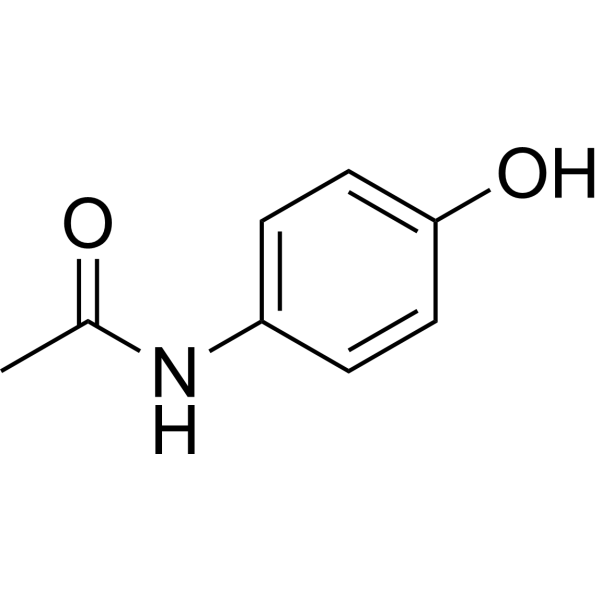
    2,4'-Dihydroxybenzophenone ((Z)-SU4312) exhibited estrogenic activities. 2,4'-Dihydroxybenzophenone has oral bioactivity that can effectively protect C57BL/6J mice from Acetaminophen (HY-66005, APAP)-induced hepatotoxicity .
    2,4'-Dihydroxybenzophenone-1
  • HY-117236

    γ-secretase Neurological Disease
    GSI-136 is an inhibitor of γ-secretase with an IC50 of 3 nM. GSI-136 can lead to a dose-dependent reduction of Aβ40 levels in diethylamine-extracted brain homogenates of C57BL/6 mice. GSI-136 can be studied in medicinal chemistry and Alzheimer's disease research .
    GSI-136
  • HY-157429

    5-HT Receptor Neurological Disease
    25N-N1-Nap (compound 16) is a β-arrestin-biased 5-HT2A agonist. 25N-N1-Nap antagonizes phencyclidine induced hyperactivity in Male C57BL/6 J mice .
    25N-N1-Nap
  • HY-D1056A5

    LPS, from Escherichia coli (K-235)

    Toll-like Receptor (TLR) Inflammation/Immunology
    Lipopolysaccharides, from E. coli (Escherichia coli) K-235 are lipopolysaccharide endotoxins and TLR-4 activators derived from E. coli, classified as S-type LPS, which can activate pathogen-associated molecular patterns (PAMP) of the immune system and induce cellular secretion of migrasomes. Lipopolysaccharides, from E. coli K-235 exhibit a typical three-part structure: O-antigen (O-antigen), core oligosaccharide (core oligosaccharide), and lipid A (Lipid A). Lipopolysaccharides, from E. coli K-235 have a mitogenic effect on C57BL/10ScN spleen cells. Additionally, LPS purified using butanol and deoxycholic acid methods stimulates spleen cells in C57BL/10ScCR and C3H/HeJ mice .
    It is recommended to prepare a solution with concentration ≥2 mg/mL. Vortex thoroughly for more than 10 minutes. Due to the adsorption characteristics of LPS, silanized container or low adsorption centrifuge tubes should be used for aliquoting and storage, and mix thoroughly before use.
    Lipopolysaccharides, from E. coli K-235
  • HY-N15180

    (-)-Corynantheidine

    Opioid Receptor Neurological Disease
    Corynantheidine ((-)-Corynantheidine) is a mu-opioid receptor (MOR) partial agonist that shows MOR-dependent analgesic effects in mice .
    Corynantheidine
  • HY-120872

    Glycosyltransferase Metabolic Disease
    AJS1669 free acid is a potent and orally available glycogen synthase (GS) activator. AJS1669 improves glucose metabolism and reduces body fat mass in mice[1].
    AJS1669 free acid
  • HY-P11031

    Fungal Infection
    CotH3 peptide is a functional peptide unique to Mucorales that binds to the host GRP78 receptor and allows them to invade endothelial cells. CotH3 peptide–targeted monoclonal antibodies protect immunosuppressed mice from mucormycosis caused by R. delemar and other Mucorales. CotH3 peptide also synergizes with antifungal drugs to protect mice with diabetic ketoacidosis (DKA) from R. delemar infection .
    CotH3 peptide
  • HY-P6053

    Opioid Receptor Neurological Disease
    KK-103 is a precursor of leucine-enkephalin (Leu-ENK) overcomes high proteolytic instability of Leu-ENK via markedly increased plasma stability in mice that has antinociceptive effect .
    KK-103
  • HY-177297

    NVP-LCZ960

    Glucokinase Metabolic Disease
    LCZ960 is an orally active glucokinase (GK) activator. LCZ960 stimulates GK activity in hepatocytes in vitro and stimulates glucose uptake in vivo through hepatic GK activation. LCZ960 lowers blood glucose in mice with diet-induced obesity (DIO). LCZ960 maintains normoglycemia and improves glucose tolerance in DIO mice and rats. LCZ960 stimulates glycogen synthase flux and increases hepatic glycogen turnover in rats. LCZ960 induces increased hepatic glycogen recycling. LCZ960 can be used to study high-fat diet-induced obesity and type 2 diabetes .
    LCZ960
  • HY-173096

    NADPH Oxidase Neurological Disease
    NCATS-SM7270 is a highly specific NOX2 inhibitor, with an IC50 of 4.09 μM. NCATS-SM7270 protects mice from mild traumatic brain injury .
    NCATS-SM7270
  • HY-116595

    Farnesyl Transferase Metabolic Disease
    J-104118 is a potent and orally active squalene synthase (SQS) inhibitor with an IC50 of 0.52 nM. J-104118 inhibits cholesterol synthesis in mice. J-104118 can be used for cholesterol-lowering research .
    J-104118
  • HY-P11431

    IGF-1R Neurological Disease Inflammation/Immunology
    Cyclo(Gly-Pro) is a cyclic dipeptide. Cyclo(Gly-Pro) can be derived from the Nterminus of the IGF-1. Cyclo(Gly-Pro) attenuates nociceptive behaviour and inflammatory response in mice .
    Cyclo(Gly-Pro)
  • HY-103537A

    γ-secretase Amyloid-β Neurological Disease
    BIIB042 is a potent, orally active, brain-penetrant, and selective γ-secretase modulator (GSM). BIIB042 reduces Aβ42 and increases Aβ38 levels in cells. BIIB042 significantly reduces brain Aβ42 levels in CF-1 mice and Fischer rats, as well as plasma Aβ42 levels in cynomolgus monkeys. BIIB042 reduces Aβ42 levels and Aβ plaque burden in Tg2576 mice. BIIB042 can be used for alzheimer's disease (AD) research .
    BIIB042
  • HY-125721

    Fungal Bacterial Antibiotic Infection
    Tetranactin is an orally active antibiotic that has insecticidal properties and can inhibit the growth of Gram-positive bacteria and plant pathogenic fungal in vitro. Tetranactin LD50 for intraperitoneal injection in mice is greater than 300 mg/kg, and the LD50 is greater than 15,000 mg/kg .
    Tetranactin
  • HY-P991634

    CD73 TNF Receptor Interleukin Related IFNAR Inflammation/Immunology Cancer
    IBI-325 is a humanized monoclonal antibody inhibitor targeting CD73. IBI-325 completely inhibits CD73 enzymatic activity without hook effect. IBI-325 reverses Adenosine monophosphate (HY-A0181)-mediated immune suppression and significantly inhibits T cell proliferation and cytokines (IL-2, IFN-γ and TNF-α) release. IBI-325 has potent antitumor activities in hPBMC-reconstituted mice model and hCD73 knock-in mice model. IBI-325 can be used for cancer immunotherapy research .
    IBI-325
  • HY-179474

    Toll-like Receptor (TLR) MyD88 Inflammation/Immunology
    TSI-13-57 is a pan-TLR inhibitor (IC50: 2.7 μM, 6.03 μM, 7.37 μM, 6.38 μM for TLR9, TLR7, TLR2, TLR4, respectively). TSI-13-57 inhibits homodimerization of the TIR domains of MyD88. TSI-13-57 reduces systemic inflammatory responses in LPS-induced mice .
    TSI-13-57

온라인 문의

Your information is safe with us. * Required Fields.

호칭


Country or Region *

고객명 *


회사명 *

Department *


메일주소 *


상품명 *

Cat. No.


Requested quantity *

전화번호 *


비고

온라인 문의

Inquiry Information

상품명:
Cat. No.:
수량:
MCE Japan Authorized Agent:

