1. Search Result
Search Result
Pathways Recommended: Protein Tyrosine Kinase/RTK
Results for "

EGF-R kinases

" in MedChemExpress (MCE) Product Catalog:

335

Inhibitors & Agonists

5

Screening Libraries

1

Fluorescent Dyes

2

Biochemical Assay Reagents

4

Peptides

2

Inhibitory Antibodies

17

Natural
Products

27

Isotope-Labeled Compounds

18

Click Chemistry

2

Oligonucleotides

1

GMP Molecules

Targets Recommended:
Cat. No. Product Name Target Research Areas Chemical Structure
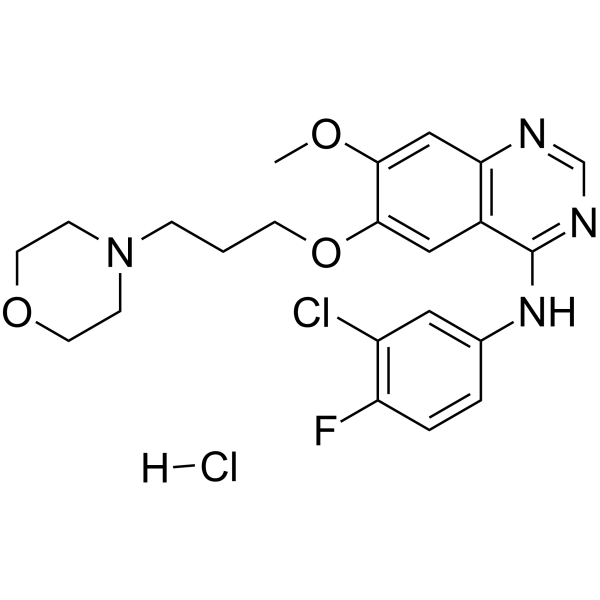
  • HY-50898
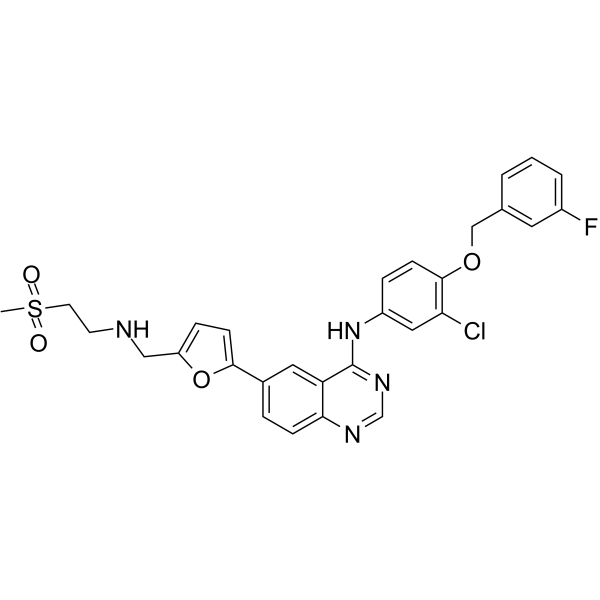
    Lapatinib
    90+ Cited Publications

    GW572016; GW2016

    EGFR Autophagy Ferroptosis Infection Neurological Disease Metabolic Disease Cancer
    Lapatinib (GW572016) is a potent, orally active inhibitor of the ErbB-2 and EGFR tyrosine kinase domains with IC50 values against purified EGFR and ErbB-2 of 10.2 and 9.8 nM, respectively .
    Lapatinib
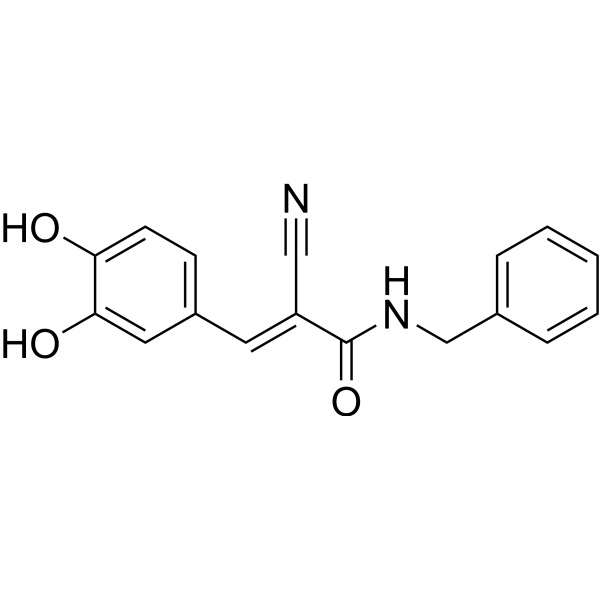
  • HY-12000
    AG490
    160+ Cited Publications

    Tyrphostin AG490; Tyrphostin B42

    EGFR STAT JAK Autophagy Cancer
    AG490 (Tyrphostin AG490) is a tyrosine kinase inhibitor that inhibits EGFR, Stat-3 and JAK2/3.
    AG490
  • HY-101084
    NSC 228155
    15+ Cited Publications

    EGFR Histone Acetyltransferase Epigenetic Reader Domain Cancer
    NSC 228155 is an activator of EGFR, binds to the extracellular region of EGFR and enhance tyrosine phosphorylation of EGFR . NSC 228155 is also a potent inhibitor of KIX-KID interaction, inhibits kinase-inducible domain (KID) from CREB and KID-interacting domain (KIX) from CBP, with an IC50 of 0.36 μM .
    NSC 228155
  • HY-19730
    Olmutinib
    10+ Cited Publications

    HM61713; BI 1482694

    EGFR Cancer
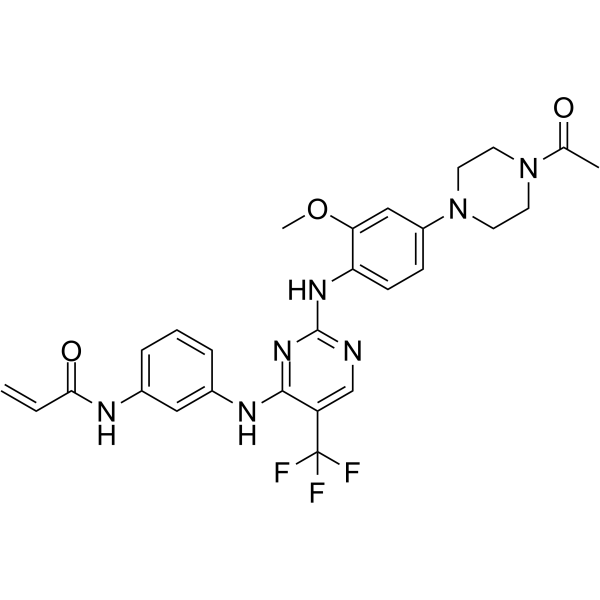
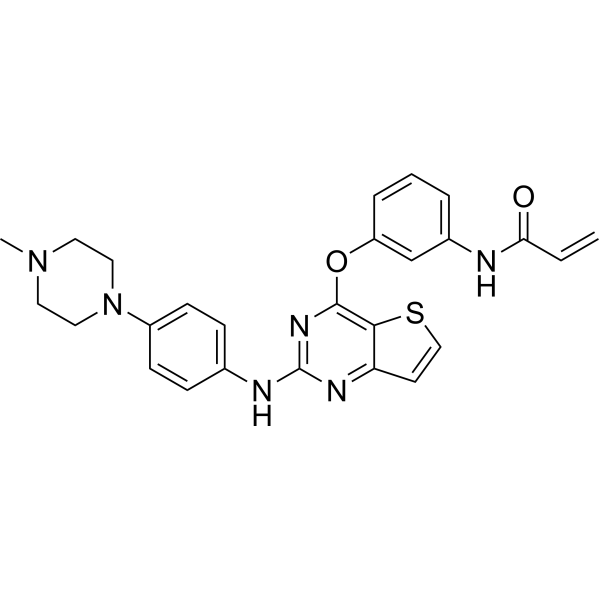
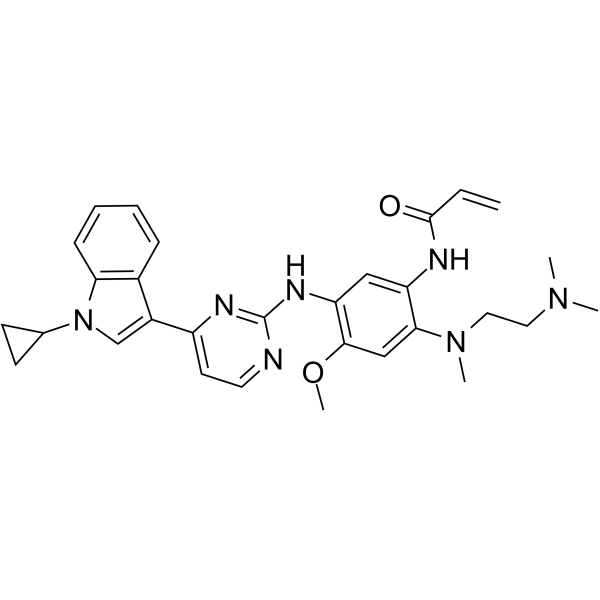
    Olmutinib (HM61713; BI-1482694) is an orally active and irreversible third EGFR tyrosine kinase inhibitor that binds to a cysteine residue near the kinase domain. Olmutinib is used for NSCLC .
    Olmutinib
  • HY-50898A
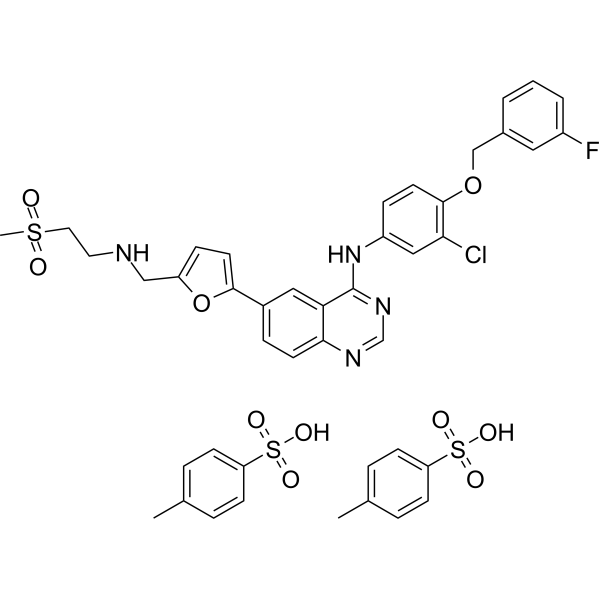
    Lapatinib ditosylate
    90+ Cited Publications

    GW572016 ditosylate; GW2016 ditosylate

    EGFR Autophagy Ferroptosis Infection Neurological Disease Metabolic Disease Cancer
    Lapatinib ditosylate (GW572016 ditosylate) is a potent, orally active inhibitor of the ErbB-2 and EGFR tyrosine kinase domains with IC50 values against purified EGFR and ErbB-2 of 10.2 and 9.8 nM, respectively .
    Lapatinib ditosylate
  • HY-18957
    Lifirafenib
    2 Publications Verification

    BGB-283

    EGFR Raf Cancer
    Lifirafenib (BGB-283) is a novel and potent Raf Kinase and EGFR inhibitor with IC50 values of 23 and 29 nM for recombinant BRaf V600E and EGFR, respectively.
    Lifirafenib
  • HY-50898B
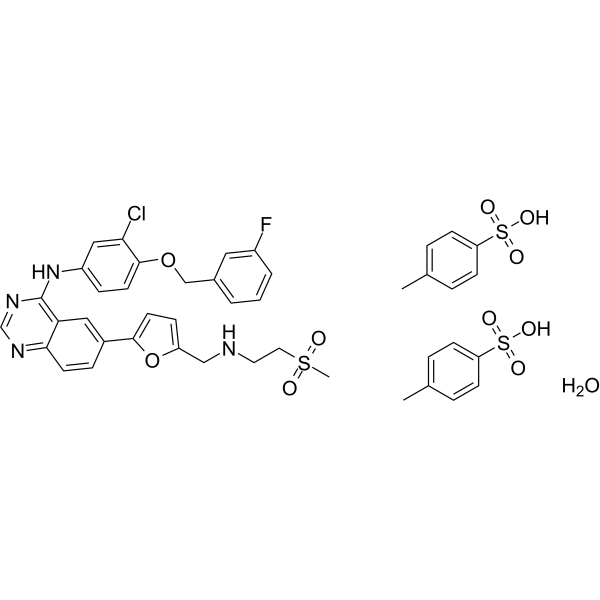
    Lapatinib ditosylate monohydrate
    90+ Cited Publications

    GW572016 ditosylate monohydrate; GW2016 ditosylate monohydrate

    EGFR Autophagy Ferroptosis Infection Metabolic Disease Cancer
    Lapatinib ditosylate monohydrate (GW572016 ditosylate monohydrate) is a potent, orally active inhibitor of the ErbB-2 and EGFR tyrosine kinase domains with IC50 values against purified EGFR and ErbB-2 of 10.2 and 9.8 nM, respectively .
    Lapatinib ditosylate monohydrate
  • HY-117155
    PKI-166
    1 Publications Verification

    EGFR Cancer
    PKI-166 is a potent, selective and orally bioavailable EGFR tyrosine kinase inhibitor, with an IC50 of 0.7 nM .
    PKI-166
  • HY-19815

    CK-101; RX518

    EGFR Cancer
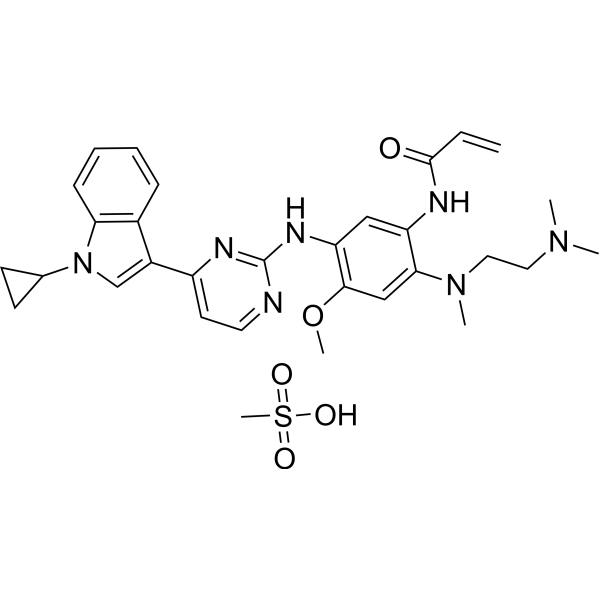
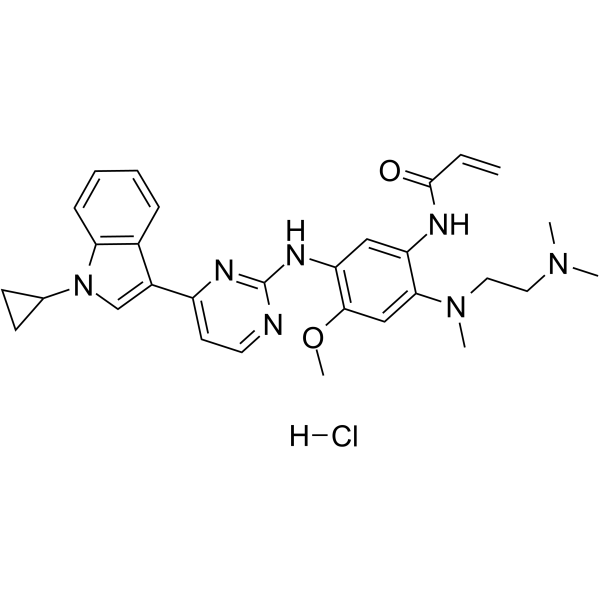
    Olafertinib (CK-101) is an orally available, third generation and irreversible epidermal growth factor receptor tyrosine kinase inhibitor (EGFR-TKI). Olafertinib selectively inhibits both EGFR-TKI-sensitizing and resistance mutations with minimal activity on wild-type EGFR. Olafertinib can be used in research for non-small cell lung cancer (NSCLC) with EGFR mutations and other advanced malignancies .
    Olafertinib
  • HY-59219

    Drug Intermediate Cancer
    Cyclopropylboronic acid is an intermediate. Cyclopropylboronic acid can be used to synthesize EGFR kinase inhibitor (Compound 25). Compound 25 has antiproliferative effects on EGFR mutant (EGFR Δ19del/T790M/C797S) cells. Cyclopropylboronic acid can be used in lung cancer research .
    Cyclopropylboronic acid
  • HY-128862

    EGFR Cancer
    EGFR-IN-7 is a potent, selective and orally active EGFR kinase inhibitor. EGFR-IN-7 has inhibitory effect for for EGFR (WT) and EGFR (mutant C797S/T790M/L858R) with IC50 values of 7.92 nM and 0.218 nM, respectively. EGFR-IN-7 can be used for the research of various cancers .
    EGFR-IN-7
  • HY-136430

    JGK037

    EGFR Cancer
    JCN037 (JGK037) is non-covalent and BBB-penetrant EGFR tyrosine kinase inhibitor, with IC50 values of 2.49 nM, 3.95 nM, 4.48 nM for EGFR, p-wtEGFR and pEGFRvⅢ, respectively .
    JCN037
  • HY-P2503

    EGFR Cancer
    EGFR Protein Tyrosine Kinase Substrate is a EGFR protein tyrosine kinase substrate.
    EGFR Protein Tyrosine Kinase Substrate
  • HY-139920
    Oritinib
    1 Publications Verification

    SH-1028

    EGFR Cancer
    Oritinib (SH-1028), an irreversible third-generation EGFR TKI, overcomes T790M-mediated resistance in non-small cell lung cancer. Oritinib (SH-1028), a mutant-selective inhibitor of EGFR kinase activity, inhibits EGFR WT, EGFR L858R, EGFR L861Q, EGFR L858R/T790M, EGFR d746-750 and EGFR d746-750/T790M kinases, with IC50s of 18, 0.7, 4, 0.1, 1.4 and 0.89 nM, respectively .
    Oritinib
  • HY-17499

    EGFR Apoptosis Cancer
    EGFR-IN-12 is a 4,6-disubstituted pyrimidine and is a potent, ATP-competitive, irreversible and highly selective EGFR inhibitor with an IC50of 21 nM. EGFR-IN-12 also inhibits mutant EGFR L858R and EGFR L861Q with IC50s of 63 nM and 4 nM, respectively. EGFR-IN-12 displays strong selectivity for EGFR over HER4 (IC50 = 7640 nM) and a panel of 55 other kinases. EGFR-IN-12 induces cells apoptosis and has antitumor activity .
    EGFR-IN-12
  • HY-108484

    EGFR Cancer
    PP 3 (Compound 3) is an EGFR tyrosine kinase inhibitor with an IC50 of 2.7 μM .
    PP 3
  • HY-101006

    EGFR Cancer
    Methyl 2,5-dihydroxycinnamate is an erbstatin analog and a stable, potent inhibitor of EGFR kinase activity .
    Methyl 2,5-dihydroxycinnamate
  • HY-101820

    EGFR Cancer
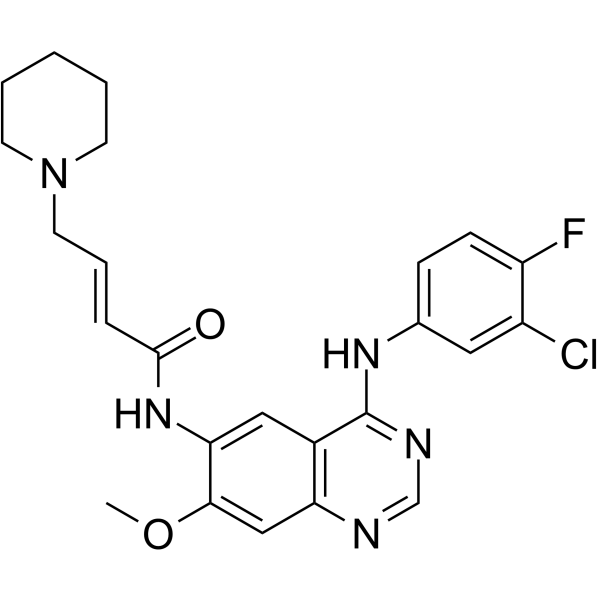
    Simotinib is a selective, specific, and orally bioavailable EGFR tyrosine kinase inhibitor, with an IC50 of 19.9 nM. Antineoplastic activities .
    Simotinib
  • HY-112412

    PDGFR Neurological Disease
    PDGFR Tyrosine kinase-IN-1, a multikinase inhibitor, inhibits PDGFR, EGFR, FGFR, PKA, and PKC, respectively. PDGFR Tyrosine kinase-IN-1 can be used for the research of amyotrophic lateral sclerosis .
    PDGFR Tyrosine kinase-IN-1
  • HY-153110

    EGFR IRAK Btk Cancer
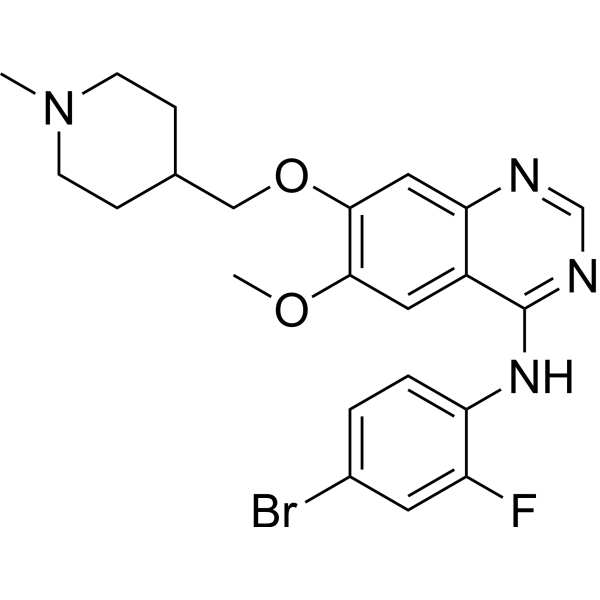
    Larotinib is a potent broad-spectrum and orally active tyrosine kinase inhibitor (TKI) with EGFR as the main target with an IC50 of 0.6 nM .
    Larotinib
  • HY-161633

    PROTACs EGFR FAK Cancer
    PROTAC EGFR degrader 11 (Compound B71) is a PROTAC degrader for epidermal growth factor receptor (EGFR), with DC50 <100 nM. PROTAC EGFR degrader 11 binds CRBN-DDB1 with a Ki of 36 nM. PROTAC EGFR degrader 11 degrades EGFR, focal adhesion kinase (FAK), and RSK1, inhibits the proliferation of BaF3 wild type and EGFR mutants, with IC50 <100 nM.
    PROTAC EGFR degrader 11
  • HY-W013852

    PKC Cancer
    PKC-IN-6 is a selective inhibitor of protein kinase C-α (PKC-α) with an IC50 of 240 μM. PKC-IN-6 shows no inhibitory activity against PKC-δ, PKA or EGF-R tyrosine kinase. PKC-IN-6 can be used in research related to bladder cancer .
    PKC-IN-6
  • HY-153110A

    EGFR IRAK Btk Cancer
    Larotinib mesylate hydrate is a potent broad-spectrum and orally active tyrosine kinase inhibitor (TKI) with EGFR as the main target with an IC50 of 0.6 nM .
    Larotinib mesylate hydrate
  • HY-17654

    EGFR mTOR Cancer
    BIEGi-1 is an EGFR inhibitor. BIEGi-1 effectively disrupts the EGFR-Rheb interaction in cells. BIEGi-1 robustly inhibits EGFR kinase activity (reduces p-Y1068-EGFR) as well as mTORC1 activation (reduces p-T389-S6K1) in EGFR-mutant cells. BIEGi-1 shows strong antiproliferative effects on EGFR-mutant PC9 and HCC827 cells with IC50 values of 17 nM and 20 nM, respectively. BIEGi-1 can be used for the study of cancers harboring EGFR mutations, such as non-small cell lung cancer (NSCLC) .
    BIEGi-1
  • HY-101522

    EGFR BMX Kinase Btk MEK Cancer
    CHMFL-EGFR-202 is a potent, irreversible inhibitor of epidermal growth factor receptor (EGFR) mutant kinase, with IC50s of 5.3 nM and 8.3 nM for drug-resistant mutant EGFR T790M and WT EGFR kinases, respectively. CHMFL-EGFR-202 exhibits ~10-fold selectivity for EGFR L858R/T790M against the EGFR wild-type in cells. CHMFL-EGFR-202 adopts a covalent “DFG-in-C-helix-out” inactive binding conformation with EGFR, with strong antiproliferative effects against EGFR mutant-driven nonsmall-cell lung cancer (NSCLC) cell lines .
    CHMFL-EGFR-202
  • HY-156741A

    EGFR Cancer
    EGFR-IN-87 (Compound Example 2) hydrochloride is a EGFR tyrosine kinase inhibitor. EGFR-IN-87 hydrochloride has IC50 value of 3.1 nM, 1.3 nM and 7.1 nM for EGFR_d746-750, EGFR_L858R/T790 and EGFR_WT in A431 cells, respectively. EGFR-IN-87 hydrochloride can be used for cancer diseases research .
    EGFR-IN-87 hydrochloride
  • HY-156912

    EGFR Cancer
    Tyrosine kinase-IN-7 (compound 13h) is an inhibitor of the tyrosine kinase EGFR. The IC50s for inhibiting EGFR(WT) and EGFR(T790M) are 0.630 μM and 0.956 μM respectively. Tyrosine kinase-IN-7 has antitumor activity against four cancer cell lines (HepG2, HCT-116, MCF-7, and A431) with IC50s of 13.02 μM, 10.14 μM, 12.68 μM, and 47.05 μM, respectively .
    Tyrosine kinase-IN-7
  • HY-117852

    TRX-13

    EGFR Tyrosinase Cancer
    CGP-59326 (TRX-13) is a highly potent and selective epidermal growth factor receptor (EGFR) tyrosine kinase inhibitor (IC50=0.027 μM). CGP-59326 blocks the EGFR signaling pathwa, demonstrating highly selective inhibition of EGFR-dependent tumor cells. CGP-59326 is promising for research of cancers .
    CGP-59326
  • HY-129510

    EGFR Mitosis Cancer
    4-Methyl erlotinib, is a potent and selective epidermal growth factor receptor (EGFR) tyrosine kinase inhibitor. 4-Methyl erlotinib potently inhibits EGF-mediated tumor cell mitosis by reducing EGFr-specific tyrosine phosphorylation. Using a mouse model of human tumor transplantation, 4-Methyl erlotinib demonstrated significant and sustained suppression of EGFr phosphotyrosine levels, resulting in significant growth inhibition of EGFr-dependent human cancers .
    4-Methyl erlotinib
  • HY-N3634

    EGFR TAM Receptor Tie Cancer
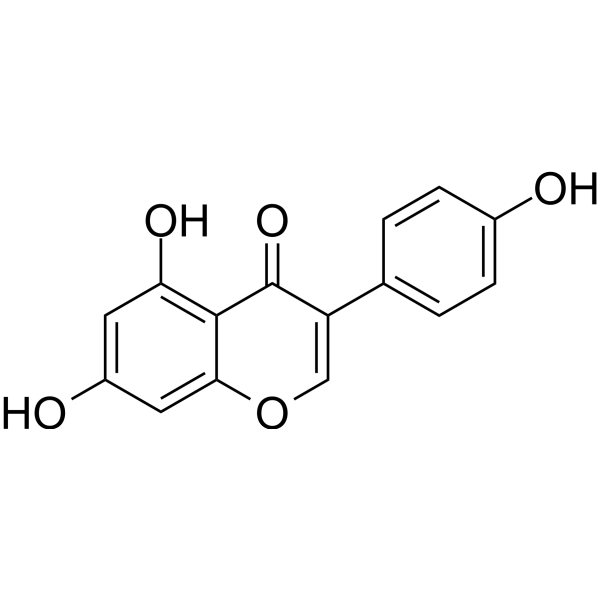
    Corylifol C is a potent protein kinase inhibitor with IC50 valueS of 8.7, 3.0, 2.1, 6.4, 4.5, 6.2, 2.3, 1.2, 5.1 μg/ml for ARK5, Aurora-A, Aurora-B, AXL, B-RAF-VE, CDK4/CycD1, TIE2, EGF-R, EPHB4, respectively .
    Corylifol C
  • HY-156741

    EGFR Cancer
    EGFR-IN-87 (Compound Example 2) is a EGFR tyrosine kinase inhibitor. EGFR-IN-87 has IC50 value of 3.1 nM, 1.3 nM and 7.1 nM for EGFR_d746-750, EGFR_L858R/T790 and EGFR_WT in A431 cells, respectively. EGFR-IN-87 can be used for cancer diseases research .
    EGFR-IN-87
  • HY-130616

    EGFR Apoptosis Cancer
    EGFR-IN-11 is a fourth-generation EGFR-tyrosine kinase inhibitor (EGFR-TKI) with an IC50 of 18 nM for triple mutant EGFR L858R/T790M/C797S. EGFR-IN-11 significantly suppresses the EGFR phosphorylation, induce the apoptosis, and arrest cell cycle at G0/G1 .
    EGFR-IN-11
  • HY-174826

    EGFR c-Kit Cancer
    EGFR-IN-164 (Compound 4) is a selective and covalent allosteric EGFR inhibitor. EGFR-IN-164 significantly inhibits the activity of EGFR L858R/T790M/C797S kinase (IC50: 48.1 nM) and proliferation of of EGFR-mutant cells. EGFR-IN-164 can be used for drug resistance of cancer research .
    EGFR-IN-164
  • HY-161632

    PROTACs EGFR FAK Cancer
    PROTAC EGFR degrader 10 (Compound B56) is a PROTAC degrader for epidermal growth factor receptor (EGFR), with DC50 <100 nM. PROTAC EGFR degrader 10 binds CRBN-DDB1 with a Ki of 37 nM. PROTAC EGFR degrader 10 degrades EGFR, focal adhesion kinase (FAK), and RSK1, inhibits the proliferation of BaF3 wild type and EGFR mutants, with IC50 <150 nM .
    PROTAC EGFR degrader 10
  • HY-19730A

    HM61713 hydrochloride; BI 1482694 hydrochloride

    EGFR Cancer
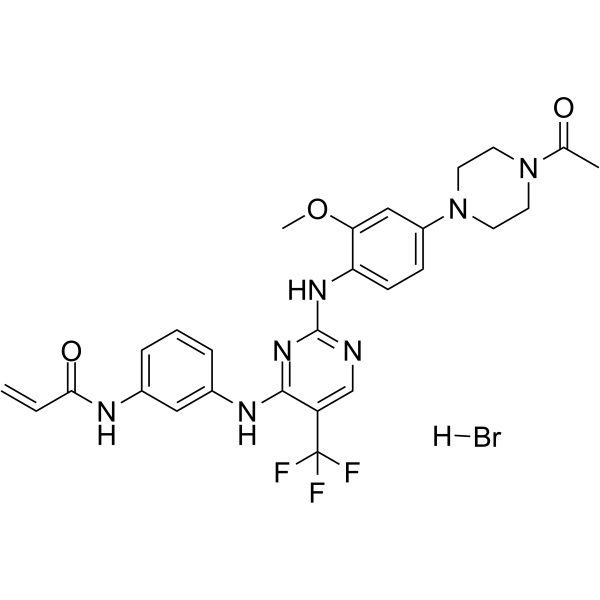
    Olmutinib hydrochloride is an orally active and irreversible third EGFR tyrosine kinase inhibitor that binds to a cysteine residue near the kinase domain. Olmutinib hydrochloride is used for NSCLC .
    Olmutinib hydrochloride
  • HY-144445

    EGFR Cancer
    NSC114126 is a potent and orally active inhibitor of EGFR tyrosine kinase (EGFR-TK). NSC114126 has strong antiproliferative activities. NSC114126 has the potential for the research of cancer diseases .
    NSC114126
  • HY-103439

    Tyrosine Hydroxylase EGFR Cancer
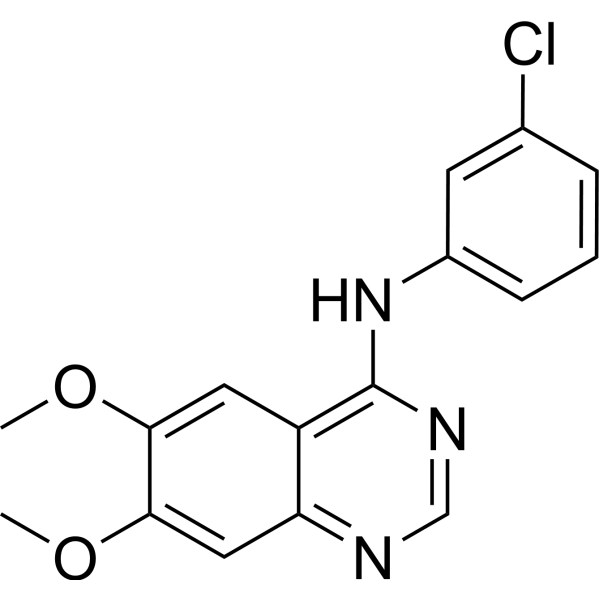
    GW 583340 dihydrochloride is an orally active ErbB-2/EGFR tyrosine kinase inhibitor. GW 583340 dihydrochloride exhibits antitumor activity in xenograft models with EGFR overexpression or ErbB-2 overexpression. GW 583340 dihydrochloride is applicable to research related to head and neck cancer, breast cancer, and gastric cancer .
    GW583340 dihydrochloride
  • HY-101820A

    EGFR Cancer
    Simotinib hydrochloride is a selective, specific, and orally bioavailable EGFR tyrosine kinase inhibitor, with an IC50 of 19.9 nM. Antineoplastic activities .
    Simotinib hydrochloride
  • HY-P2548

    EGFR Others
    pp60 (v-SRC) Autophosphorylation Site, Phosphorylated is the phosphorylated peptide of an EGFR substrate. pp60 (v-SRC) Autophosphorylation Site, Phosphorylated can be used for the screening of EGFR Kinase inhibitors via phosphorylated-substrate quantification .
    pp60 (v-SRC) Autophosphorylation Site, Phosphorylated
  • HY-17499R

    EGFR Apoptosis Cancer
    EGFR-IN-12 (Standard) is the analytical standard of EGFR-IN-12. This product is intended for research and analytical applications. EGFR-IN-12 is a 4,6-disubstituted pyrimidine and is a potent, ATP-competitive, irreversible and highly selective EGFR inhibitor with an IC50of 21 nM. EGFR-IN-12 also inhibits mutant EGFRL858R and EGFRL861Q with IC50s of 63 nM and 4 nM, respectively. EGFR-IN-12 displays strong selectivity for EGFR over HER4 (IC50 = 7640 nM) and a panel of 55 other kinases. EGFR-IN-12 induces cells apoptosis and has antitumor activity .
    EGFR-IN-12 (Standard)
  • HY-18213

    EGFR Cancer
    EGFR-IN-9 (Compound 8) is a potent EGFR kinase inhibitor with IC50s of 7 nM, 28 nM for the wild type EGFR kinase and double mutant EGFR kinase (L858R/T790M). EGFR-IN-9 has antitumor activity .
    EGFR-IN-9
  • HY-171252

    EGFR Cancer
    EGFR-IN-145 (compound 7c) is an EGFR kinase inhibitor. At a concentration of 20 μM, EGFR-IN-145 has an inhibition rate of 52.7% on EGFR-wild type kinase .
    EGFR-IN-145
  • HY-162300

    EGFR Cancer
    EGFR kinase inhibitor 4 (Compound 4) is a bivalent ATP-allosteric EGFR inhibitor (IC50: 1.8 nM for mutant EGFR (LRTMCS)). EGFR kinase inhibitor 4 can be used for research of NSCLC .
    EGFR kinase inhibitor 4
  • HY-162482

    EGFR Apoptosis Inflammation/Immunology Cancer
    EGFR kinase inhibitor 5 (Compound 4c) is an orally active inhibitor for epidermal growth factor receptor (EGFR) kinase, with IC50 of 18.35 μM. EGFR kinase inhibitor 5 induces apoptosis. EGFR kinase inhibitor 5 exhibits anticancer and anti-inflammatory activity with low toxicity (LD50 range: 500-2000 mg/kg) .
    EGFR kinase inhibitor 5
  • HY-162483

    EGFR Apoptosis Inflammation/Immunology Cancer
    EGFR kinase inhibitor 6 (Compound 4b) is an orally active inhibitor for epidermal growth factor receptor (EGFR) kinase, with IC50 of 24.34 μM. EGFR kinase inhibitor 6 induces apoptosis. EGFR kinase inhibitor 6 exhibits anticancer and anti-inflammatory activity with low toxicity (LD50 range: 500-2000 mg/kg) .
    EGFR kinase inhibitor 6
  • HY-158154

    EGFR Cancer
    EGFR-IN-110 (Compound 6) is a covalent EGFR inhibitor, with pIC50 values of 9.2 and 8.7 for EGFR enzyme and EGFR cell, respectively. EGFR-IN-110 shows high EGFR potency and good kinase selectivity .
    EGFR-IN-110
  • HY-162299

    EGFR Cancer
    EGFR kinase inhibitor 3 (compound 2) is a bivalent ATP-allosteric EGFR kinase inhibitor with IC50s of <10 nM, 1.5 nM, 0.059 nM, 0.064 nM for WT EGFR, EGFR-activating mutations L858R, L858R/T790M and L858R/T790M/C797S, respectively. EGFR kinase inhibitor 3 is a C-linked inhibitor .
    EGFR kinase inhibitor 3
  • HY-143246

    EGFR Apoptosis Cancer
    EGFR kinase inhibitor 1 is a potent EGFR inhibitor with IC50s of 37, 1.7, >300 nM for WT, l885R/T790M, L858R/T790M/C797S, respectively. EGFR kinase inhibitor 1 induces apoptosis and cell cycle arrest at G0/G1-phase. EGFR kinase inhibitor 1 inhibits the cell motility. EGFR kinase inhibitor 1 shows antiproliferative and anti-tumor activity .
    EGFR kinase inhibitor 1
  • HY-159512

    EGFR Apoptosis Cancer
    EGFR kinase inhibitor 7 (compound 18i) is an EGFR inhibitor (IC50=42.3 nM) with anticancer activity. EGFR kinase inhibitor 7 has significant in vitro cytotoxicity and apoptosis induction ability. EGFR kinase inhibitor 7 has antiproliferative activity against human colon cancer cell line HCT116 and human non-small cell lung cancer cell line A549, with IC50 values ​​of 4.82 µM and 1.43 µM, respectively .
    EGFR kinase inhibitor 7
  • HY-151156

    EGFR Apoptosis Cancer
    EGFR/HER2-IN-6 (compound 43) is an EGFR/HER2 and DHFR inhibitor. EGFR/HER2-IN-6 inhibits EGFR kinase, HER2 kinase and DHFR with IC50s of 0.122, 0.078 and 0.585 μM, respectively. EGFR/HER2-IN-6 shows anticancer activity against several cancer cell lines with high safety profile and selectivity indices. EGFR/HER2-IN-8 can be used for the research of cancer .
    EGFR/HER2-IN-6

Inquiry Online

Your information is safe with us. * Required Fields.

Salutation


Country or Region *

Applicant Name *


Organization Name *

Department *


Email Address *


Product Name *

Cat. No.


Requested quantity *

Phone Number *


Remarks

Inquiry Online

Inquiry Information

Product Name:
Cat. No.:
Quantity:
MCE Japan Authorized Agent:

