1. Search Result
Search Result
Results for "

NSCs

" in MedChemExpress (MCE) Product Catalog:

560

Inhibitors & Agonists

1

Screening Libraries

6

Fluorescent Dye

5

Biochemical Assay Reagents

11

Peptides

1

Inhibitory Antibodies

91

Natural
Products

75

Isotope-Labeled Compounds

2

Oligonucleotides

Cat. No. Product Name Target Research Areas Chemical Structure
  • HY-15036
    Diclofenac
    20+ Cited Publications

    COX Apoptosis Inflammation/Immunology Cancer
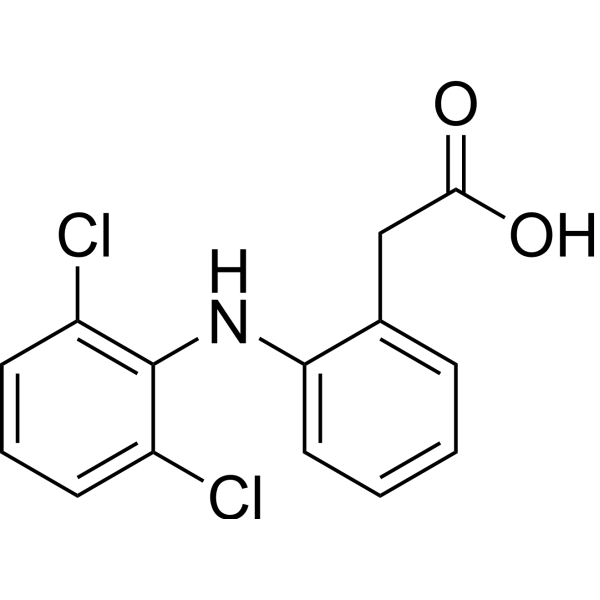
    Diclofenac is a potent and nonselective anti-inflammatory agent, acts as a COX inhibitor, with IC50s of 4 and 1.3 nM for human COX-1 and COX-2 in CHO cells , and 5.1 and 0.84 μM for ovine COX-1 and COX-2, respectively . Diclofenac induces apoptosis of neural stem cells (NSCs) via the activation of the caspase cascade .
    Diclofenac
  • HY-15038
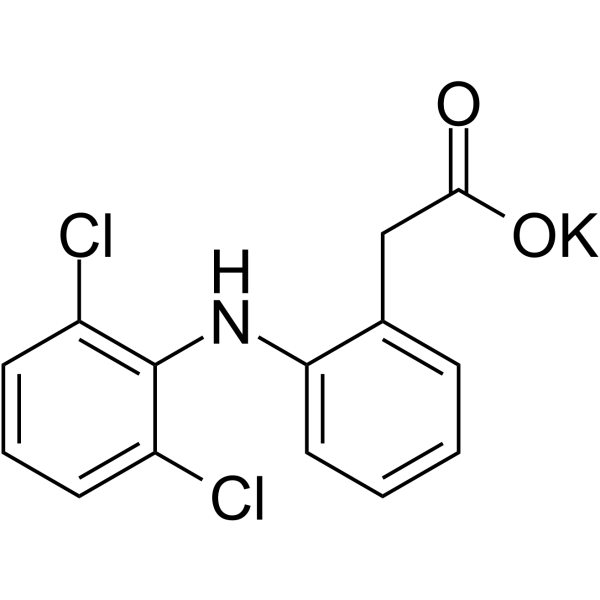
    Diclofenac potassium
    20+ Cited Publications

    COX Apoptosis Inflammation/Immunology Cancer
    Diclofenac potassium is a potent and nonselective anti-inflammatory agent, acts as a COX inhibitor, with IC50s of 4 and 1.3 nM for human COX-1 and COX-2 in CHO cells , and 5.1 and 0.84 μM for ovine COX-1 and COX-2, respectively . Diclofenac potassium induces apoptosis of neural stem cells (NSCs) via the activation of the caspase cascade .
    Diclofenac potassium
  • HY-15827
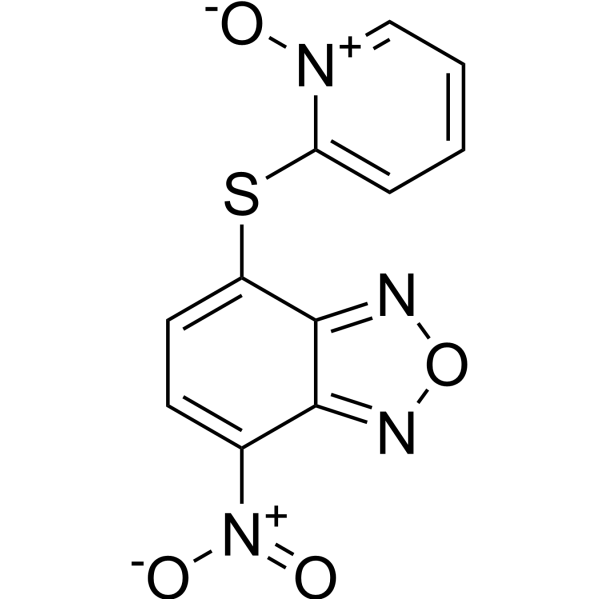
    NSC 405020
    3 Publications Verification

    MMP Cardiovascular Disease Cancer
    NSC 405020 is a specific MMP14 inhibitor. NSC 405020 can directly interact with the hemopexin domain of MMP14. NSC 405020 reduces the expression of full length and active cleaved Notch3 (NICD3). NSC 405020 can be used to research vestibular schwannoma, hemostasis and thrombosis .
    NSC 405020
  • HY-18756
    NSC-87877
    3 Publications Verification

    SHP2 SHP1 Phosphatase Apoptosis Others
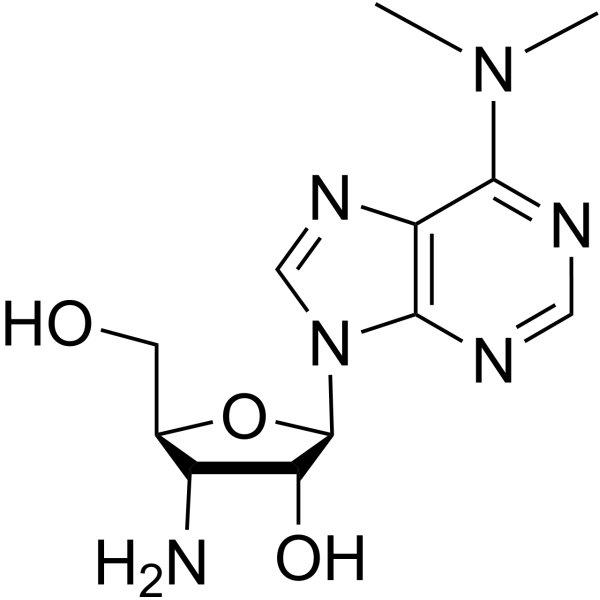
    NSC-87877 is a potent inhibitor of Shp2 and Shp1 protein tyrosine phosphatases (SH-PTP2 and SH-PTP1), with IC50 values of 0.318 μM, 0.355 μM shp2 and shp1, respectively . NSC-87877 also inhibits dual-specificity phosphatase 26 (DUSP26) .
    NSC-87877
  • HY-120782
    Yhhu-3792
    2 Publications Verification

    Notch Neurological Disease
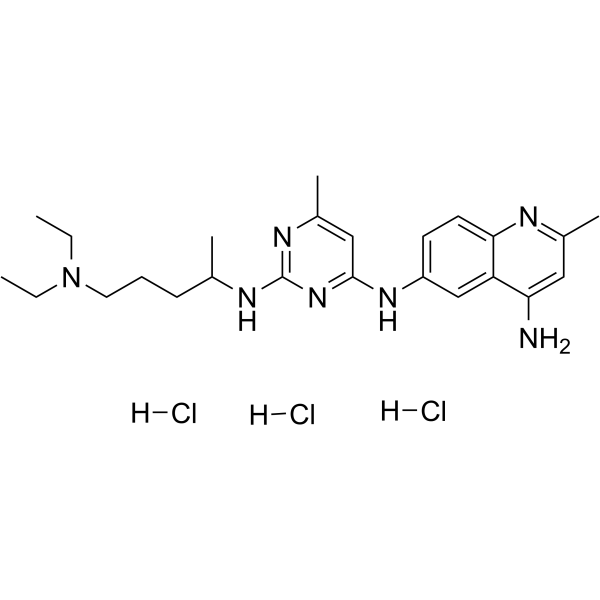
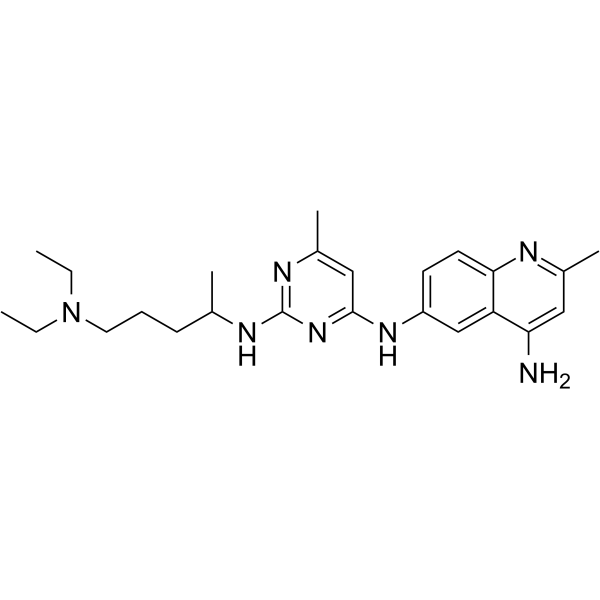
    Yhhu-3792 is a Notch activator. Yhhu-3792 enhances the self-renewal capability of neural stem cells (NSCs). Yhhu-3792 promotes the expression of Hes3 and Hes5. Yhhu-3792 increases the spatial and episodic memory abilities of mice. Yhhu-3792 can be used for the study of neurodegenerative diseases (such as Alzheimer's disease) or for neural regeneration after brain injury .
    Yhhu-3792
  • HY-15037
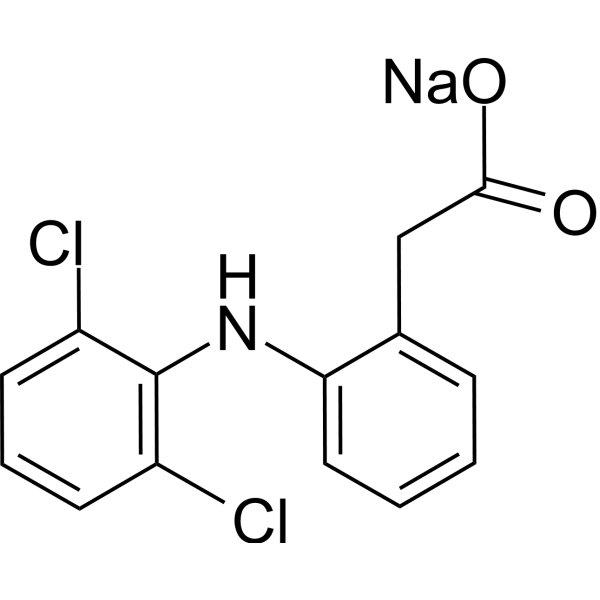
    Diclofenac Sodium
    20+ Cited Publications

    GP 45840

    COX Apoptosis Inflammation/Immunology Cancer
    Diclofenac Sodium (GP 45840) is a potent and nonselective anti-inflammatory agent, acts as a COX inhibitor, with IC50s of 4 and 1.3 nM for human COX-1 and COX-2 in CHO cells , and 5.1 and 0.84 μM for ovine COX-1 and COX-2, respectively . Diclofenac Sodium induces apoptosis of neural stem cells (NSCs) via the activation of the caspase cascade .
    Diclofenac Sodium
  • HY-16933
    L-Alanosine
    1 Publications Verification

    NSC-153353; SDX-102

    Antibiotic DNA/RNA Synthesis Infection Cancer
    L-Alanosine (NSC-153353), an antibiotic from Streptomyces alanosinicus, has antineoplastic activity. L-Alanosine (NSC-153353) inhibits adenylosuccinate synthetase, which converts inosine monophospate (IMP) into adenylosuccinate. L-Alanosine is the inhibitor for methylthioadenosine phosphorylase (MTAP) .
    L-Alanosine
  • HY-115492
    NSC668394
    3 Publications Verification

    PKC Cancer
    NSC668394 is a potent ezrin (Thr567) phosphorylation inhibitor, with a Kd of 12.59 μM. NSC668394 inhibit ezrin T567 phosphorylation caused by PKCΙ primarily via their binding to ezrin. NSC668394 can be used to prevent tumor metastasis .
    NSC668394
  • HY-15036A
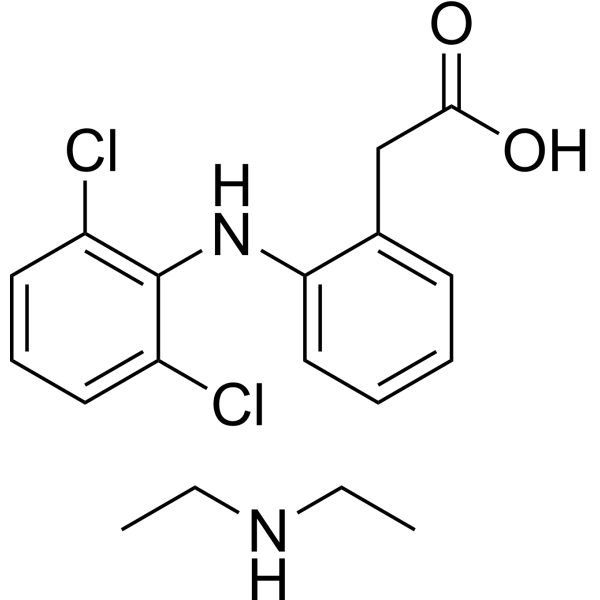
    Diclofenac diethylamine
    20+ Cited Publications

    COX Apoptosis Inflammation/Immunology Cancer
    Diclofenac diethylamine is a potent and nonselective anti-inflammatory agent, acts as a COX inhibitor, with IC50s of 4 and 1.3 nM for human COX-1 and COX-2 in CHO cells , and 5.1 and 0.84 μM for ovine COX-1 and COX-2, respectively . Diclofenac diethylamine induces apoptosis of neural stem cells (NSCs) via the activation of the caspase cascade .
    Diclofenac diethylamine
  • HY-19387
    Didox
    10+ Cited Publications

    NSC-324360

    DNA/RNA Synthesis Cancer
    Didox (NSC-324360) is a synthetic ribonucleotide reductase (RR) inhibitor.
    Didox
  • HY-122258

    STAT TET Protein Cancer
    NSC-370284 is a selective inhibitor of ten-eleven translocation 1 (TET1) and 5-hydroxymethylcytosine (5hmC). NSC-370284 significantly inhibits the level of TET1 expression via targets STAT3/5 .
    NSC-370284
  • HY-107194

    FGFR c-Myc DNA/RNA Synthesis Caspase Reactive Oxygen Species (ROS) Cancer
    NSC12 is an orally active pan-FGF trap. NSC12 inhibits the interaction between FGF2/FGFR. NSC12 suppresses the phosphorylation of FGFR3. NSC12 reduces c-Myc levels, induces DNA damage, triggers the cleavage of Caspase 3, and promotes ROS production. NSC12 exhibits anticancer activity against lung cancer and multiple myeloma .
    NSC12
  • HY-108638
    NSC 146109 hydrochloride
    2 Publications Verification

    XI-011 hydrochloride

    MDM-2/p53 Apoptosis PARP Cancer
    NSC 146109 hydrochloride (XI-011 hydrochloride) is a p53 activator and MDMX inhibitor. NSC 146109 hydrochloride inhibits MDMX gene transcription, downregulates MDMX mRNA and protein levels, stabilizes p53 and activates the transcriptional activity of p53. NSC 146109 hydrochloride induces cancer cell apoptosis (apoptosis) and inhibits the growth of transformed cells. NSC 146109 hydrochloride inhibits the growth of xenograft tumors. NSC 146109 hydrochloride can be used in research related to breast cancer and cervical cancer .
    NSC 146109 hydrochloride
  • HY-W016794

    Reactive Oxygen Species (ROS) Apoptosis Cancer
    NSC3852 exhibits anti-proliferative activity against cancer cell MCF-7. NSC3852 promotes the ROS generation, DNA damage, and apoptosis in MCF-7. NSC3852 exhibits anti-tumor against leukemia in mouse model
    NSC3852
  • HY-141687
    NSC 107512
    1 Publications Verification

    CDK Apoptosis Cancer
    NSC 107512 is a potent inhibitor of cyclin-dependent kinase 9 (CDK9). NSC 107512 is a class of sangivamycin-like molecules (SLM). NSC 107512 inhibits growth and induces apoptosis of multiple myeloma tumors .
    NSC 107512
  • HY-122066

    Others Infection
    NSC47924 is a laminin receptor (LR) inhibitor. NSC47924 affects 37/67 kDa LR cell surface localization and interaction with the cellular prion protein. NSC47924 can be used for testing prion diseases .
    NSC47924
  • HY-18756A
    NSC-87877 disodium
    3 Publications Verification

    SHP2 SHP1 Phosphatase Apoptosis Cancer
    NSC-87877 disodium is a potent inhibitor of Shp2 and Shp1 protein tyrosine phosphatases (SH-PTP2 and SH-PTP1), with IC50 values of 0.318 μM, 0.355 μM shp2 and shp1, respectively . NSC-87877 also inhibits dual-specificity phosphatase 26 (DUSP26) .
    NSC-87877 disodium
  • HY-15036R

    Reference Standards COX Apoptosis Inflammation/Immunology Cancer
    Diclofenac (Standard) is the analytical standard of Diclofenac. This product is intended for research and analytical applications. Diclofenac is a potent and nonselective anti-inflammatory agent, acts as a COX inhibitor, with IC50s of 4 and 1.3 nM for human COX-1 and COX-2 in CHO cells , and 5.1 and 0.84 μM for ovine COX-1 and COX-2, respectively . Diclofenac induces apoptosis of neural stem cells (NSCs) via the activation of the caspase cascade .
    Diclofenac (Standard)
  • HY-145330
    NSC639828
    2 Publications Verification

    DNA/RNA Synthesis Cancer
    NSC639828 is a potent inhibitor of DNA polymerase α with an IC50 of 70 μM. NSC639828 has high antitumor activity. NSC639828 has the potential for researching cancer disease .
    NSC639828
  • HY-160638

    TET Protein Cancer
    NSC-311068 is TET1 inhibitor. NSC-311068 selectively suppress TET1 transcription and 5-hydroxymethylcytosine (5hmC) modification. NSC-311068 represses the level of TET1 expression and the global 5hmC level. NSC-311068 effectively inhibits cell viability in AML cells with high expression of TET1 .
    NSC-311068
  • HY-Y0124S

    α,α-Dimethylglycine-d6; α-Aminoisobutanoic acid-d6

    Isotope-Labeled Compounds Endogenous Metabolite Others
    NSC 16590-d6 is the deuterium labeled NSC 16590. NSC 16590 inhibits the production of endogenous ethylene in the cotyledonary segments of cocklebur.
    NSC 16590-d6
  • HY-160793

    Interleukin Related Inflammation/Immunology
    NSC80734 is a IL- 18 inhibitor. NSC80734 disrupts hIL-18 binding to the ectromelia virus IL-18BP. NSC80734 inhibits IL-18-induced production of IFN-γ .
    NSC80734
  • HY-176902

    ROCK Akt FOXO Apoptosis Cancer
    NSC126188 is a RhoB inducer. NSC126188 can induce apoptosis by inhibiting Akt/FoxO3 signaling. NSC126188 can be used for the research of cancer, such as prostate cancer .
    NSC126188
  • HY-171152A

    Claudin Metabolic Disease
    NSC 357754 dihydrochloride is an inhibitor of Claudin. NSC 357754 dihydrochloride can increase the transepithelial electrical resistance of cells and reduce the permeability of specific cations. NSC 357754 dihydrochloride can be used in the research of intestinal diseases mediated by Claudin-2 and/or Claudin-15 .
    NSC 357754 dihydrochloride
  • HY-18594

    Drug Derivative Others
    NSC-41589 is N-[2-(methylsulfanyl) phenyl]acetamide.
    NSC-41589
  • HY-Y0219S1

    s-Triazole-d3; Pyrrodiazole-d3

    Isotope-Labeled Compounds Others
    NSC 83128-d3 is the deuterium labeled NSC 83128 .
    1,2,4-Triazole-d3
  • HY-19820

    Akt Ser/Thr Protease Neurological Disease Cancer
    NSC45586 is an inhibitor of pleckstrin homology domain and leucine-rich repeat protein phosphatase (PHLPP). NSC45586 targets the PP2C phosphatase domain in PHLPP1 and PHLPP2. NSC45586 can activate AKT in neurons .
    NSC45586
  • HY-120782A

    Notch Neurological Disease
    Yhhu-3792 hydrochloride is a Notch activator. Yhhu-3792 hydrochloride enhances the self-renewal capability of neural stem cells (NSCs). Yhhu-3792 hydrochloride promotes the expression of Hes3 and Hes5. Yhhu-3792 hydrochloride increases the spatial and episodic memory abilities of mice. Yhhu-3792 hydrochloride can be used for the study of neurodegenerative diseases (such as Alzheimer's disease) or for neural regeneration after brain injury .
    Yhhu-3792 hydrochloride
  • HY-15038R

    Reference Standards COX Apoptosis Inflammation/Immunology Cancer
    Diclofenac (potassium) (Standard) is the analytical standard of Diclofenac (potassium). This product is intended for research and analytical applications. Diclofenac potassium is a potent and nonselective anti-inflammatory agent, acts as a COX inhibitor, with IC50s of 4 and 1.3 nM for human COX-1 and COX-2 in CHO cells , and 5.1 and 0.84 μM for ovine COX-1 and COX-2, respectively . Diclofenac potassium induces apoptosis of neural stem cells (NSCs) via the activation of the caspase cascade .
    Diclofenac potassium (Standard)
  • HY-15036AR

    Reference Standards COX Apoptosis Inflammation/Immunology Cancer
    Diclofenac (diethylamine) (Standard) is the analytical standard of Diclofenac (diethylamine). This product is intended for research and analytical applications. Diclofenac diethylamine is a potent and nonselective anti-inflammatory agent, acts as a COX inhibitor, with IC50s of 4 and 1.3 nM for human COX-1 and COX-2 in CHO cells , and 5.1 and 0.84 μM for ovine COX-1 and COX-2, respectively . Diclofenac diethylamine induces apoptosis of neural stem cells (NSCs) via the activation of the caspase cascade .
    Diclofenac diethylamine (Standard)
  • HY-124486

    Phosphodiesterase (PDE) Others
    NSC-88915 is an inhibitor of Tdp1 with an IC50 of 7.7 μM. NSC-88915 is a C21-subsitited progesterone derivative .
    NSC-88915
  • HY-N16121

    PKC Neurological Disease
    12-Deoxyphorbol 13-isobutyrate (ER272) (DPB), a diterpene, is a PKCα activator. 12-Deoxyphorbol 13-isobutyrate can be isolated from Euphorbia resinifera's latex. 12-Deoxyphorbol 13-isobutyrate facilitates neural stem cells (NSCs) proliferation and activation as well as TGFα release in a reaction dependent on PKCα activation. 12-Deoxyphorbol 13-isobutyrate increases cognitive performance and hippocampal neurogenesis in senescence-accelerated mouse-prone (SAMP8) models. 12-Deoxyphorbol 13-isobutyrate can be used for neurodegenerative diseases research .
    12-Deoxyphorbol 13-isobutyrate
  • HY-176433

    Flavivirus Infection
    NSC-323241 is a potent STT3A-mediated mega protein complex assembly inhibitor. NSC-323241 disrupts he endoplasmic reticulum (ER) mega complex nucleated by STT3A during dengue virus (DENV) and Zika virus (ZIKV) infection. NSC-323241 targets the binding of STT3A subcomplex with viral nonstructural proteins (e.g., NS2B, NS3) and host translocon proteins, disrupting the formation of viral replication microenvironment. NSC-323241 is promising for research of flavivirus infection, such as dengue fever and Zika virus .
    NSC-323241
  • HY-134309

    Virus Protease Infection
    NSC 288387 is a pan-flavivirus MTase inhibitor. NSC 288387 binds to the SAM-binding pocket. NSC 288387 inhibits ZIKV with an IC50 of 0.2 μM. NSC 288387 also inhibits viral replication in cell culture .
    NSC 288387
  • HY-Y1675S

    m-Acetylanisole-d4; m-Methoxyacetophenone-d4

    Isotope-Labeled Compounds Others
    NSC 65593-d4 is the deuterium labeled NSC 65593 .
    NSC 65593-d4
  • HY-144445

    EGFR Cancer
    NSC114126 is a potent and orally active inhibitor of EGFR tyrosine kinase (EGFR-TK). NSC114126 has strong antiproliferative activities. NSC114126 has the potential for the research of cancer diseases .
    NSC114126
  • HY-168602

    E1/E2/E3 Enzyme Cancer
    NSC-217913 is an inhibitor of WWP1 with an IC50 value of 158.3 μM .
    NSC-217913
  • HY-105293

    DNA/RNA Synthesis Topoisomerase Cancer
    NSC 727357 is a DNA intercalator and topoisomerase inhibitor with antitumor activity. NSC 727357 can inhibit cells proliferation and induce G1 phase arrest. NSC 727357 can be used for the research of cancer, such as melanoma .
    NSC 727357
  • HY-144105

    MDM-2/p53 Cancer
    NSC405640 is a potent inhibitor of the MDM2-p53 interaction. NSC405640 rescues structural p53 mutations. NSC405640 selectively inhibits the growth of cell lines with wild-type p53 .
    NSC405640
  • HY-105489

    NSC-615985

    Reverse Transcriptase HIV Infection
    UC-84 (NSC-615985) is a non-nucleoside reverse transcriptase inhibitor (NNRTI) with anti-HIV activity .
    UC-84
  • HY-B1714

    Drug Derivative Cancer
    NSC 601980 analog is an analogue of NSC601980. In yeast screening experiments, NSC 601980 exhibited antitumor activity, effectively inhibiting cell proliferation in both COLO 205 and HT29 cell lines, with Log GI 50 values of -6.6 and -6.9, respectively.
    NSC 601980 analog
  • HY-118365

    RUNX Infection Cancer
    NSC 140873 is an inhibitor of the RUNX1-CBFβ interaction. NSC 140873 can be used for research of viral infection and leukemia. NSC 140873 has an unstable structure and can be converted spontaneously in solution to a benzodiazepine (Ro5-3335) .
    NSC 140873
  • HY-180498

    EGFR Cancer
    NSC 57148 is a selective Grb7 SH2 domain antagonist with an IC50 value of 1.1 μM. NSC 57148 reduces cancer cell proliferation and migration. NSC 57148 is promising for research of Grb7-overexpressing malignancies such as breast and pancreatic cancers .
    NSC 57148
  • HY-153719

    SARS-CoV Infection
    NSC111552 is a potent SARS-CoV-2 NSP14 MTase inhibitor. NSC111552 inhibits the FL-NAH binding to the SARS-CoV-2 NSP14 MTase with an IC50 of 5.1 μM .
    NSC111552
  • HY-101796

    Ras SOS1 Cancer
    NSC-70220 is a selective and allosteric SOS1 inhibitor. NSC-70220 inhibits allosteric site activation, and partially inhibited catalytic site activation. NSC-70220 has an anticancer effect .
    NSC-70220
  • HY-119172R

    Bacterial Infection Inflammation/Immunology Cancer
    NSC-60339 (Standard) is the analytical standard of NSC-60339. This product is intended for research and analytical applications. NSC-60339, an efflux pump inhibitor and a substrate of AcrAB-TolC, is a polybasic terephthalic acid derivative studied as a potential cancer chemotherapeutic agent .
    NSC-60339 (Standard)
  • HY-117481

    Apoptosis Cancer
    NSC-639829 is a Benzoylphenylurea (BPU) analogue which has antitumor activity. NSC-639829 is promising for research of refractory metastatic cancer .
    NSC-639829
  • HY-164402

    DNA/RNA Synthesis Cancer
    NSC-124854 is a DNA polymerase β (Pol-β) inhibitor with an IC50 of 5.3 μM. NSC-124854 has antitumor activity .
    NSC-124854
  • HY-117831

    Endogenous Metabolite Bacterial Infection
    NSC-79887 is a nucleoside hydrolase (NH) inhibitor with activity against Bacillus anthracis. NSC-79887 is considered a good candidate inhibitor of nucleoside hydrolases for biological testing and further development. The pharmacokinetic (ADMET) prediction of NSC-79887 showed that all physicochemical parameters were within the acceptable range for human use .
    NSC-79887
  • HY-19539

    SOS1 Ras Cancer
    NSC-658497 is an effective inhibitor of Ras-GEF, SOS1. NSC-658497 binds to SOS1, competitively suppresses SOS1-Ras interaction, and dose-dependently inhibits SOS1 GEF activity. NSC-658497 showed dose-dependent efficacy in inhibiting Ras, downstream signaling activities, and associated cell proliferation .
    NSC-658497

Inquiry Online

Your information is safe with us. * Required Fields.

Salutation


Country or Region *

Applicant Name *


Organization Name *

Department *


Email Address *


Product Name *

Cat. No.


Requested quantity *

Phone Number *


Remarks

Inquiry Online

Inquiry Information

Product Name:
Cat. No.:
Quantity:
MCE Japan Authorized Agent:

