
83 Results for "

Nephrotoxicity

" in MedChemExpress (MCE) Product Catalog:
Products (83)

83 Results for "Nephrotoxicity" in MCE Product Catalog:

30
30 Publications Verification
Cat. No.: HY-B0509A
CAS No.: 37517-28-5
Synonyms: BAY 41-6551
Target:  

Bacterial Antibiotic

Domaines de recherche:  

Infection Cancer

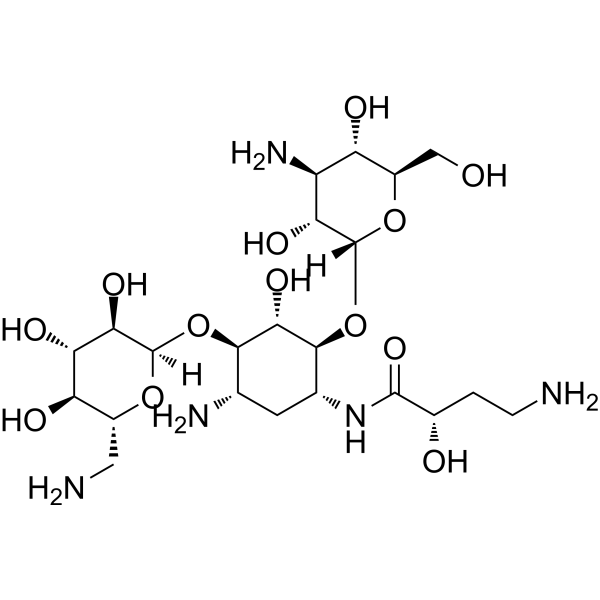
Amikacin (BAY 41-6551) is a semisynthetic kanamycin analog that is active against most Gram-negative bacteria, including gentamicin- and tobramycin-resistant strains. Significant inhibitory effect. Amikacin is ototoxic and nephrotoxic. Amikacin can be used in bacteriostatic, anti-cancer and analgesic studies .
loading...
    loading...
29
29 Cited Publications
Cat. No.: HY-113678
CAS No.: 1066-17-7
Synonyms: Polymyxin E
Category:  

Natural Products

Target:  

Antibiotic Bacterial

Colistin is an orally active polypeptide antibiotic. Colistin has excellent activity against various Gram-negative rod-shaped bacteria, including multidrug-resistant Pseudomonas aeruginosa, Acinetobacter baumannii and Klebsiella pneumoniae. Colistin is associated with nephrotoxicity. Colistin can be used for the research of infections caused by Gram-negative bacilli .
loading...
    loading...
26
26 Cited Publications
Cat. No.: HY-149179
CAS No.: 1404-26-8
Pureté:  ≥91.0%
Target:  

Antibiotic Bacterial

Domaines de recherche:  

Infection

Polymyxin B is an antibiotic. Polymyxin B inhibits Gram-negative infections by binding to the LPS of the bacterial wall with high affinity. Polymyxin B neutralizes the effect of endotoxin. Polymyxin B induces bacterial death by increasing its permeability. Polymyxin B is used in endotoxemia research .
loading...
    loading...
15
15 Cited Publications
Cat. No.: HY-W016420
CAS No.: 26016-99-9
Synonyms: MK-0955 sodium
Fosfomycin (MK-0955) sodium is a blood-brain barrier penetrating, broad-spectrum antibiotic by irreversibly inhibiting an early stage in cell wall synthesis. Fosfomycin sodium shows both in vivo and in vitro activity against a wide range of bacteria, including multidrug-resistant (MDR), extensively drug-resistant (XDR), and pan-drug-resistant (PDR) bacteria .
loading...
    loading...
15
15 Cited Publications
Cat. No.: HY-B1075
CAS No.: 26016-98-8
Synonyms: MK-​0955 calcium
Target:  

Bacterial Antibiotic

Domaines de recherche:  

Infection Cancer

Fosfomycin (MK-0955) calcium is a blood-brain barrier penetrating, broad-spectrum antibiotic by irreversibly inhibiting an early stage in cell wall synthesis. Fosfomycin calcium shows both in vivo and in vitro activity against a wide range of bacteria, including multidrug-resistant (MDR), extensively drug-resistant (XDR), and pan-drug-resistant (PDR) bacteria .
loading...
    loading...
15
15 Cited Publications
Cat. No.: HY-B0609
CAS No.: 78964-85-9
Synonyms: MK-0955 tromethamine
Target:  

Bacterial Antibiotic

Domaines de recherche:  

Infection Cancer

Fosfomycin (MK-0955) tromethamine is a blood-brain barrier penetrating, broad-spectrum antibiotic by irreversibly inhibiting an early stage in cell wall synthesis. Fosfomycin tromethamine shows both in vivo and in vitro activity against a wide range of bacteria, including multidrug-resistant (MDR), extensively drug-resistant (XDR), and pan-drug-resistant (PDR) bacteria .
loading...
    loading...
5
5 Cited Publications
Cat. No.: HY-N0351
CAS No.: 501-98-4
Synonyms: trans-4-Hydroxycinnamic acid
p-Coumaric acid (trans-4-Hydroxycinnamic acid) is an isomer of cinnamic acid with oral activity. p-Coumaric acid inhibits cell proliferation and promotes apoptosis. p-Coumaric acid has antibacterial, anti-inflammatory, antioxidant and anti-tumor activities .
loading...
    loading...
4
4 Cited Publications
Cat. No.: HY-N1462
CAS No.: 102130-43-8
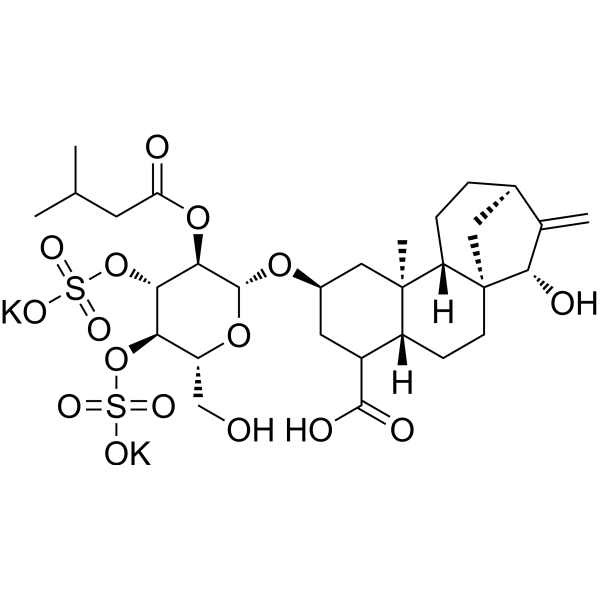
Atractyloside potassium salt is a powerful and specific inhibitor of mitochondrial ADP/ATP transport. Atractyloside potassium salt inhibits chloride channels from mitochondrial membranes of rat heart. Atractyloside potassium salt activates autophagy, inhibits ANT2, mTOR and promotes the activation of p-AMPK. Atractyloside potassium salt has anti-cancer effects on non-small cell lung cancer and can inhibit liver steatosis. Atractylodesin potassium salt has nephrotoxicity .
loading...
    loading...
3
3 Cited Publications
Cat. No.: HY-N7110
CAS No.: 6665-83-4
6-Hydroxyflavone is an orally effective flavonoid compound. 6-Hydroxyflavone can inhibit LPS (HY-D1056) -induced NO production and has anti-inflammatory effects. 6-Hydroxyflavone promotes osteoblast differentiation by activating AKT, ERK 1/2 and JNK signaling pathways. 6-Hydroxyflavone has an inhibitory effect on bovine hemoglobin (BHb) glycosylation. 6-Hydroxyflavone has a kidney protective effect. In addition, 6-Hydroxyflavone enhances GABA-induced current through the Benzodiazepine sites of γ-aminobutyric acid (GABAA) receptors. 6-Hydroxyflavone shows a clear preference for α2 - and α3 - subtypes, which play an anti-anxiety role .
loading...
    loading...
3
3 Cited Publications
Cat. No.: HY-B1275
CAS No.: 58-71-9
Synonyms: Cefalotin sodium
Domaines de recherche:  

Infection

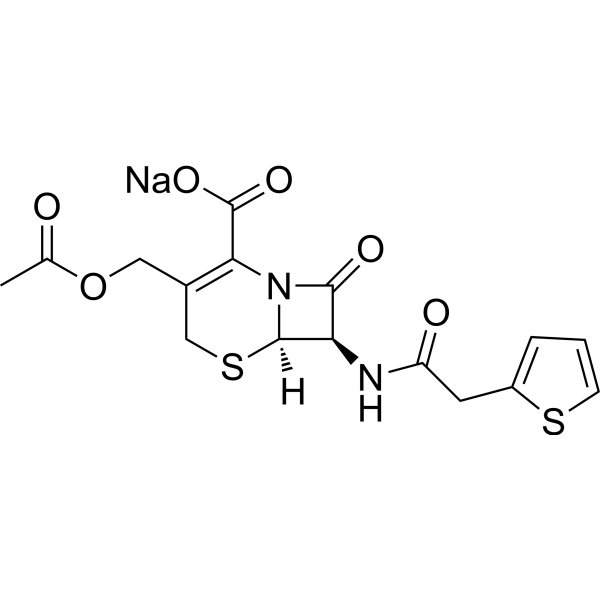
Cephalothin (Cephalotin) sodium is a semi-synthetic cephalosporin antibiotic and beta-lactam antibiotic. Cephalothin inhibits class C β-lactamase AmpC, with an Ki of 0.32 µM. Cephalothin sodium binds to penicillin-binding proteins, interfering with the cross-linking of peptidoglycan in the cell wall and thus hindering the normal synthesis of the bacterial cell wall. Cephalothin sodium shows antibacterial activity against a variety of bacteria. Cephalothin sodium can be used in hematological and nephrotoxicity studies .
loading...
    loading...
3
3 Cited Publications
Cat. No.: HY-B1275A
CAS No.: 153-61-7
Synonyms: Cephalotin
Domaines de recherche:  

Infection Cardiovascular Disease

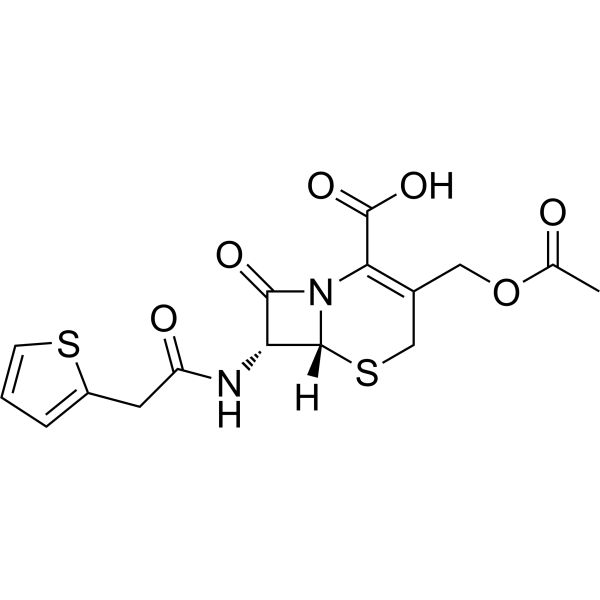
Cephalothin (Cephalotin) is a semi-synthetic cephalosporin antibiotic and beta-lactam antibiotic. Cephalothin inhibits class C β-lactamase AmpC, with an Ki of 0.32 µM. Cephalothin binds to penicillin-binding proteins, interfering with the cross-linking of peptidoglycan in the cell wall and thus hindering the normal synthesis of the bacterial cell wall. Cephalothin shows antibacterial activity against a variety of bacteria. Cephalothin can be used in hematological and nephrotoxicity studies .
loading...
    loading...
1
1 Cited Publications
Cat. No.: HY-119459
CAS No.: 658066-35-4
Pureté:  99.30%
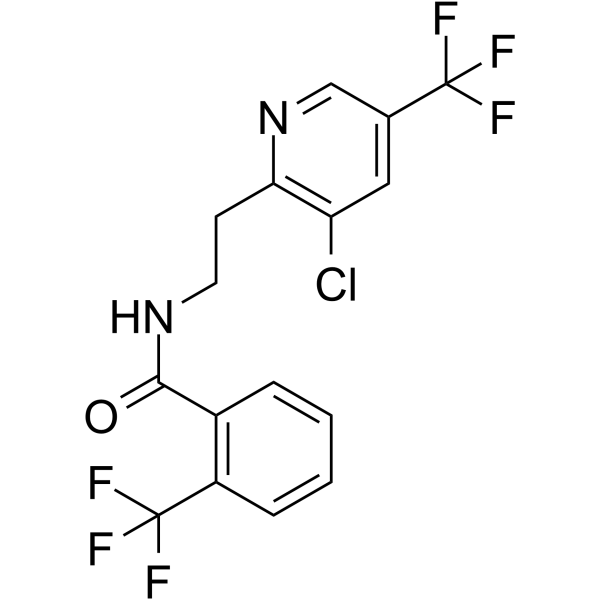
Fluopyram is an orally active succinate dehydrogenase inhibitor, antifungal and nematicide. Fluopyram inhibits succinate dehydrogenase activity, activates CAR/PXR nuclear receptors, and increases caspase-3, TNF-α and NF-κB. Fluopyram inhibits the growth of F. virguliforme, Botrytis cinerea and Alternaria solani with EC50 values of 3.35, 5.389 and 0.244 µg/mL, respectively. Fluopyram induces liver and thyroid tumor formation. Fluopyram is nephrotoxic and embryotoxic .
loading...
    loading...
1
1 Cited Publications
Cat. No.: HY-100594
CAS No.: 81065-76-1
Pureté:  98.27%
Target:  

NF-κB

Domaines de recherche:  

Cardiovascular Disease

EUK-134, a synthetic superoxide dismutase and catalase mimetic, protects rat kidneys from ischemia-reperfusion-induced damage. EUK-134 is a superoxide dismutase (SOD) mimetics (SODm) with catalase activity. EUK-134 is a mitoprotective antioxidant. EUK-134 reduces the expression of NF-κB, MDA level, and protein carbonylation in H9C2 cells .
loading...
    loading...
1
1 Cited Publications
Cat. No.: HY-Y1117
CAS No.: 108-78-1
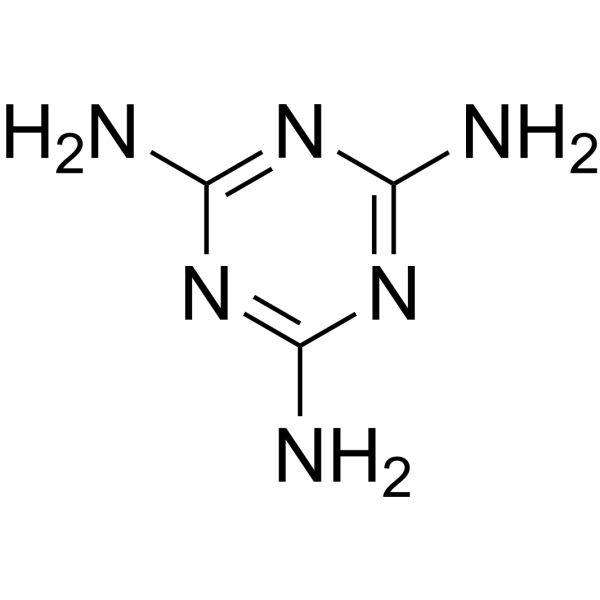
Melamine is an orally active inducer of Apoptosis. Melamine induces animal disease models. Melamine affects the activity of Sertoli cell and can be used for research on male reproductive function. Melamine also has neurotoxicity and nephrotoxicity. Melamine induces cognitive impairment and acute kidney injury models. Melamine can also be used to induce bladder cancer and urinary stone models .
loading...
    loading...
1
1 Cited Publications
Cat. No.: HY-P3206
CAS No.: 63958-90-7
Synonyms: Thymulin; Thymic factor
Target:  

ERK

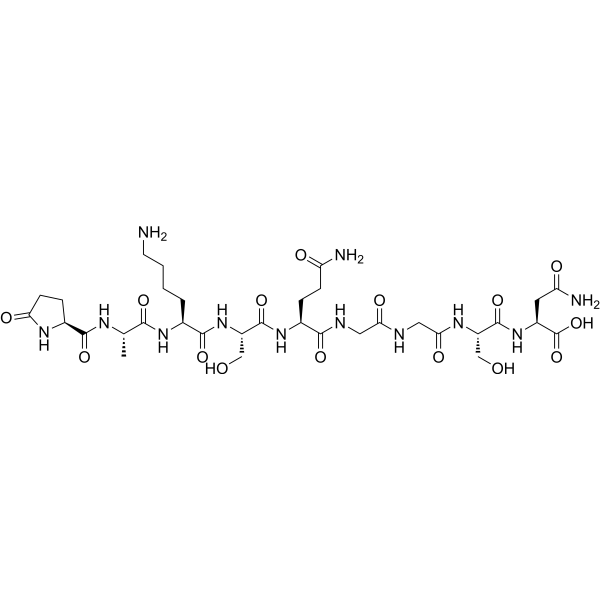
Serum thymic factor (Thymulin) is a zinc-dependent immunomodulatory peptide hormone, which can be produced by the thymic epithelial cells. Serum thymic factor stimulates the release of hormones from the pituitary gland, exhibits hypophysiotropic activity. Serum thymic factor protects rats from Cephaloridine (HY-B2072)-induced nephrotoxicity by inhibiting ERK activation. Serum thymic factor exhibits anti-diabetic, anti-inflammatory and analgesic effects. Serum thymic factor can be used in research about endocrine, reproductive, neurodegenerative and inflammatory diseases .
loading...
    loading...
1
1 Cited Publications
Cat. No.: HY-N2013
CAS No.: 13395-02-3
Synonyms: Aristololactam; Aristolactam
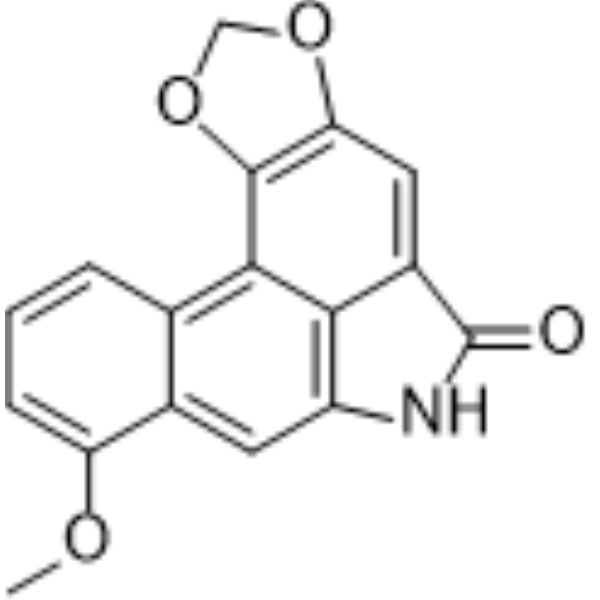
Aristolactam I is an AQP1 inhibitor and Aristolochic acid I metabolite. Aristolactam I can be isolated from Aristolochia plants. Aristolactam I downregulates Twist1 expression, increases E-cadherin expression, and activates the TGF-β/Smad signaling pathway. Aristolactam I has anticancer activity against breast cancer. Aristolactam I is nephrotoxic. Aristolactam I is mainly used in the study of breast cancer and kidney diseases such as renal interstitial fibrosis .
loading...
    loading...
1
1 Cited Publications
Cat. No.: HY-30234A
CAS No.: 1163-36-6
Target:  

TRP Channel Apoptosis

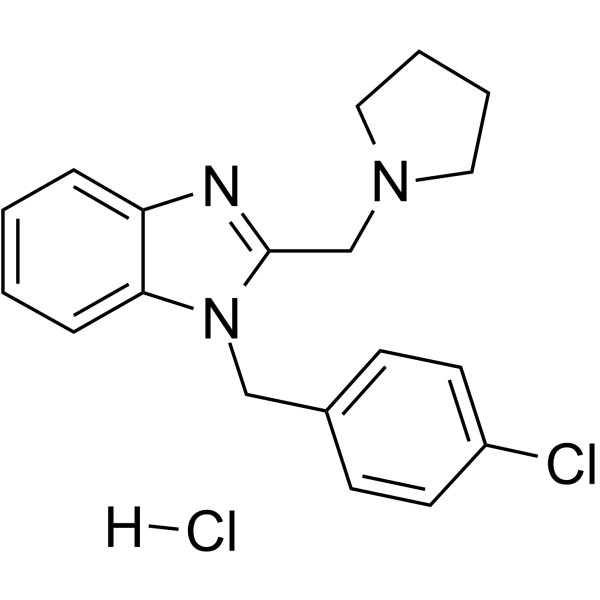
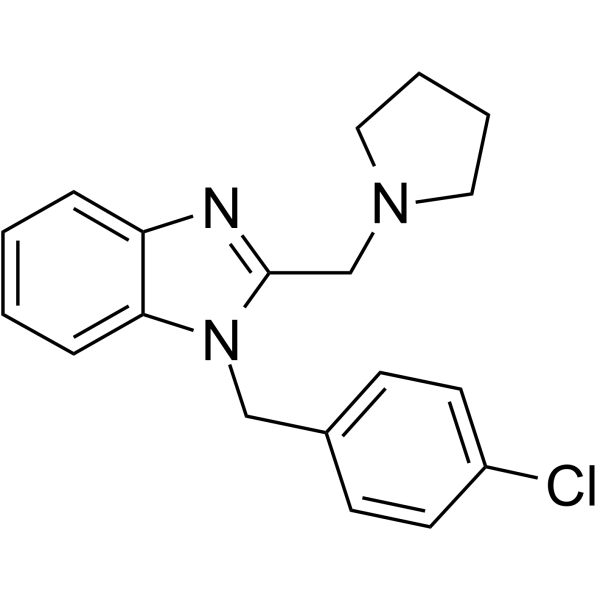
Clemizole hydrochloride is an orally active, blood-brain barrier permeable TRPC5 inhibitor, with an IC50 value of 1.05-1.34 μM against mouse TRPC5. Clemizole hydrochloride blocks TRPC1:TRPC5, TRPC3, TRPC4, TRPC6, TRPC7, hERG, hKCNQ1/hKCNE1 and hKv1.5 channels, and activates TRPA1; it modulates 5HT-2B and HTR2A receptors; it inhibits HCV RNA replication, CrtN enzymatic activity, oxidative stress, neuroinflammation, cell apoptosis and bacterial virulence; it maintains blood-brain barrier (BBB) integrity; it enhances DNA repair capacity; it improves cell viability; and it alters cardiac electrophysiological properties. Clemizole hydrochloride can be used in the research of Dravet syndrome, hepatitis C virus infection, Staphylococcus aureus skin infection, Cisplatin (HY-17394)-induced nephrotoxicity, STXBP1-related diseases, traumatic brain injury and xeroderma pigmentosum type C .
loading...
    loading...
1
1 Cited Publications
Cat. No.: HY-Y1315
CAS No.: 133-37-9
Domaines de recherche:  

Endocrinology

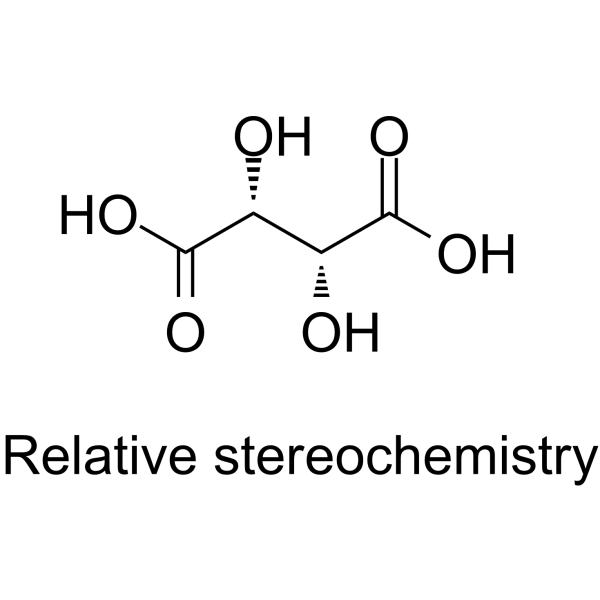
DL-Tartaric acid is an orally active and non-racemic mixture of L- and D-tartaric acid with antioxidant activity. 14C-labeled DL-Tartaric acid is nephrotoxic .
loading...
    loading...
1
1 Cited Publications
Cat. No.: HY-B1022
CAS No.: 16208-51-8
Synonyms: BNP-7787
Target:  

Drug Derivative

Domaines de recherche:  

Endocrinology Cancer

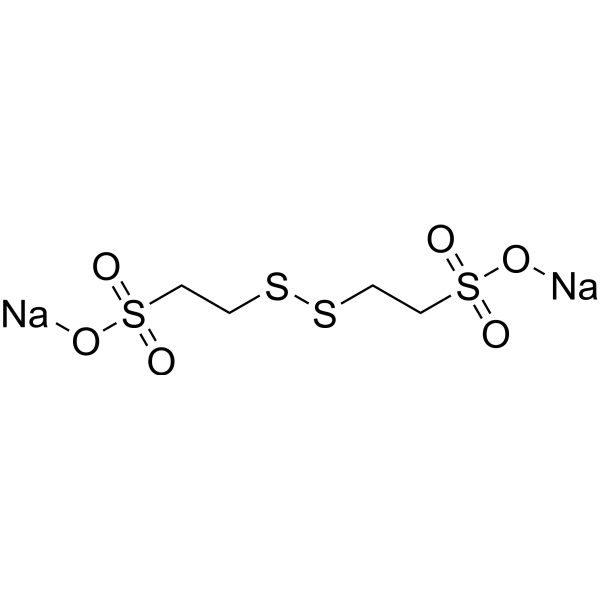
Dimesna (BNP-7787), the disulfide form of Mesna (HY-13679), is a platinum-related toxicity protective agent. Dimesna converts to Mesna, which in turn inactivates toxic platinum substances. Dimesna does not interfere with the antitumor activity of platinum compounds. Dimesna does not affect the antiproliferative effects of Cisplatin (HY-17394) or Carboplatin (HY-17393). Dimesna counteracts Cisplatin-induced nephrotoxicity. Dimesna exerts selective protective effects on the kidneys. Dimesna can be used in studies related to ovarian cancer and Cisplatin-induced nephrotoxicity .
loading...
    loading...
1
1 Cited Publications
Cat. No.: HY-W018171
CAS No.: 6515-38-4
Synonyms: TCPy
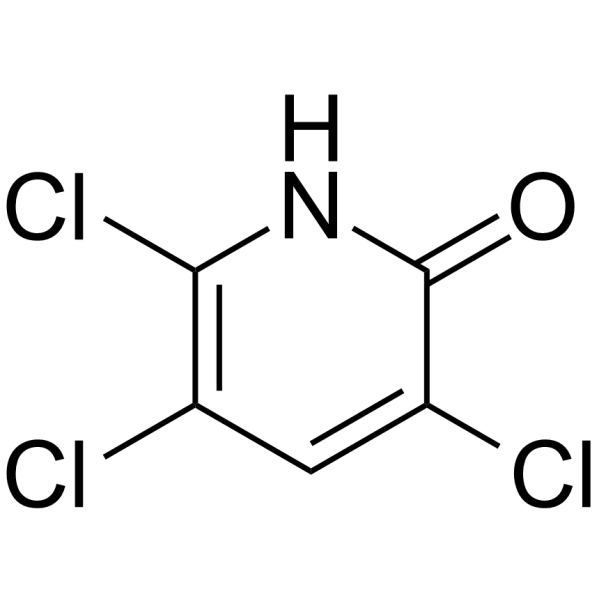
3,5,6-Trichloro-2-pyridinol (TCPy) is a chloride of 2-pyridone with oral activity. 3,5,6-Trichloro-2-pyridinol is the main degradation product of the herbicide Triclopyr and the insecticides Chlorpyrifos and chlorpyrifos-methyl. 3,5,6-Trichloro-2-pyridinol is associated with attention deficit hyperactivity disorder (ADHD) and decreased testosterone levels. 3,5,6-Trichloro-2-pyridinol causes hearing loss, hepatotoxicity and nephrotoxicity in mice .
loading...
    loading...

