1. Search Result
Search Result
Pathways Recommended: Stem Cell/Wnt Cell Cycle/DNA Damage
Results for "

PC-3 cancer cell lines

" in MedChemExpress (MCE) Product Catalog:

18

Inhibitors & Agonists

1

Peptides

2

Natural
Products

1

Click Chemistry

Cat. No. Product Name Target Research Areas Chemical Structure
  • HY-18696
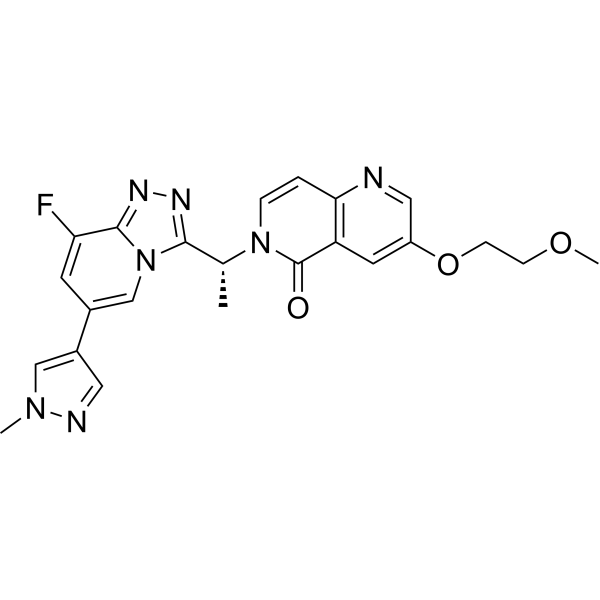
    AMG-337
    3 Publications Verification

    c-Met/HGFR Caspase Apoptosis Cancer
    AMG-337 is a potent, orally active, selective MET kinase inhibitor with IC50 values of 1, 1, 4.7, 5, 21.5, 1077 and >4000 nM of WT MET, H1094R MET, M1250T MET, HGF-stimulated pMET (PC3 cells) MET, V1092I MET, Y1230H MET, and D1228H MET, respectively. AMG 337 inhibits the phosphorylation of MET and downstream effectors in MET-amplified cancer cell lines, resulting in an inhibition of MET-dependent cell proliferation and induction of apoptosis .
    AMG-337
  • HY-N13772

    (+)-Dihydroisorhamnetin

    Apoptosis Cancer
    3'-O-Methyltaxifolin ((+)-Dihydroisorhamnetin) is a dihydroflavanol found in Pulicaria jaubertii. A mixture of these alcohol compounds including 3'-O-Methyltaxifolin found in Pulicaria jaubertii exhibits antitumor activity with IC50 values ​​of 19.1 μg, 20.0 μg, and 24.1 μg against prostate cancer (PC-3), breast cancer (MCF-7), and hepatocellular carcinoma (HepG-2) cell lines, respectively. Furthermore, 3'-O-Methyltaxifolin can induce cell apoptosis, making it a promising candidate for anticancer research. .
    3'-O-Methyltaxifolin
  • HY-178133

    Pim Apoptosis Caspase Cancer
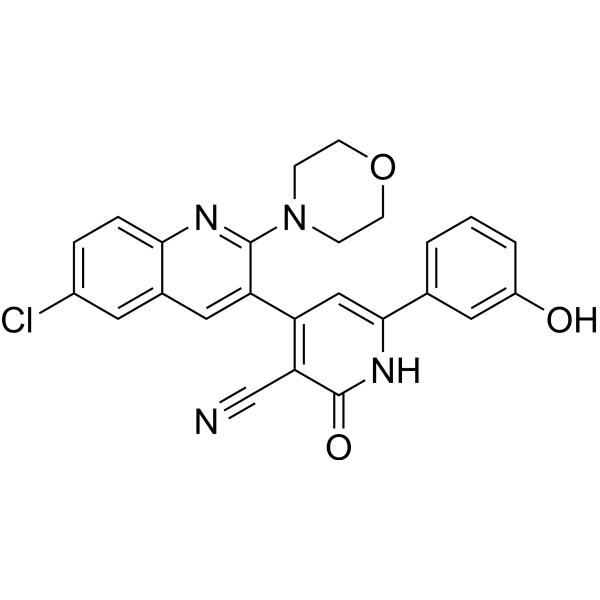
    Pim-1 kinase-IN-14 is a PIM-1 kinase inhibitor with an IC50 value of 94 nM. Pim-1 kinase-IN-14 shows broad-spectrum and high-efficiency anticancer activity against multiple human cancer cell lines, including liver cancer (HepG-2), colon cancer (Caco-2), myeloid leukemia (NFS-60), and prostate cancer (PC-3) cells. Pim-1 kinase-IN-14exerts its anticancer effects by inducing apoptosis and activating caspase 3/7. Pim-1 kinase-IN-14 can be used for the study of cancers associated with PIM-1 kinase overexpression .
    Pim-1 kinase-IN-14
  • HY-157404

    Pim Cancer
    Pim-1/2 kinase inhibitor 2 (compound 5b) is a competitive PIM-1 and PIM-2 kinase inhibitor with IC50s of 1.31 μM and 0.67 μM, respectively. Pim-1/2 kinase inhibitor 2 shows in-vitro low cytotoxicity against normal human lung fibroblast Wi-38 cell line and potent in-vitro anticancer activity against myeloid leukaemia (NFS-60), liver (HepG-2), prostate (PC-3), and colon (Caco-2) cancer cell lines .
    Pim-1/2 kinase inhibitor 2
  • HY-172562

    PROTACs Epigenetic Reader Domain Cancer
    BTR2004 is a selective BET family (BRD2/3/4) protein PROTAC degrader. BTR2004 forms a ternary complex with BRD proteins and KLHL20, inducing ubiquitination and proteasomal degradation through the UPS pathway. BTR2004 is promising for research of PC3 prostate cancer and MDA-MB-231 breast cancer cell lines. Pink: (+)-JQ1-OH (HY-161125); Blue: BTR2000 (HY-172563); Black: Linker (HY-W015236) .
    BTR2004
  • HY-141863

    Apoptosis Cancer
    Lepidozin G inhibits the growth of a panel of cancer cell lines with IC50 values ranging from 4.2 ± 0.2 to 5.7 ± 0.5 μM. Lepidozin G induces PC-3 cell death via mitochondrial-related apoptosis.
    Lepidozin G
  • HY-147734

    Calcium Channel Cancer
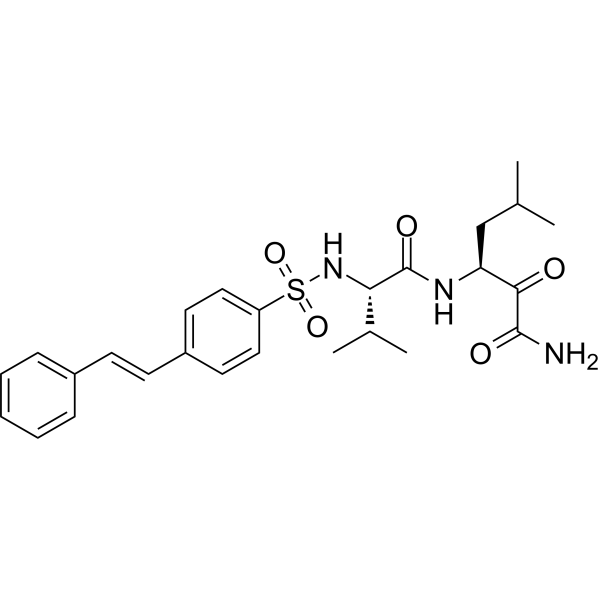
    Calpain Inhibitor-2 (compound 5) is a peptide inhibitor of μ-calpain (Ki=9 nM). Calpain Inhibitor-2 exhibits antiproliferative activity against melanoma cell lines (A-375 and B-16F1) and PC-3 prostate cancer cells in vitro .
    Calpain Inhibitor-2
  • HY-169476

    Drug Derivative Cancer
    Pyrrolidine linoleamide is a derivative of linoleic acid amide with anticancer activity. Pyrrolidine linoleamide exhibits antiproliferative activity against a range of cancer cell lines, with IC50 values of 12.0, 27.5, 7.7, 21.9, 36.6, 32.6, and 33.9 μg/mL against U251, MCF-7, NCI-ADR/RES, 786-0, NCI-H460, PC-3, and OVCAR-3 cell lines, respectively .
    Pyrrolidine linoleamide
  • HY-169098

    HSP Histone Demethylase Cancer
    HSP90/LSD1-IN-1 (compound 6) is a HSP90/LSD1 dual inhibitor. HSP90/LSD1-IN-1 inhibits the proliferation of prostate cancer cell lines PC-3 and DU145, with GI50 values ​​of 0.24 and 0.30 μM, respectively .
    HSP90/LSD1-IN-1
  • HY-172872

    CDK Apoptosis Cancer
    CDK2-IN-45 (Compound 8f) is a CDK2 inhibitor (IC50: 0.64 μM). CDK2-IN-45 inhibits the proliferation of DU-145 and PC-3 cell lines with IC50 of 2.20 μM and 4.17 μM, respectively. CDK2-IN-45 induces G0/G1 cell cycle arrest and apoptosis. CDK2-IN-45 can be used in prostate cancer research .
    CDK2-IN-45
  • HY-B0530A

    γ-pipradol hydrochloride

    Reactive Oxygen Species (ROS) mAChR NADPH Oxidase Cancer
    Azacyclonol (γ-pipradol) hydrochloride is a compound with promising anticancer activity, showing effectiveness in inhibiting NOX-derived ROS in A549 human lung cancer cells. Azacyclonol hydrochloride exhibits enhanced proliferation inhibition against androgen-refractory cancer cell lines, specifically DU145 and PC-3. Azacyclonol hydrochloride demonstrates antitumor activity in DU145-xenografted chorioallantoic membrane tumor models. Azacyclonol hydrochloride also acts as a ligand for the M3 muscarinic acetylcholine receptor, which is overexpressed in ARPC. Azacyclonol hydrochloride effectively blocks carbachol-induced proliferation and NOX activity in DU145 cells. Azacyclonol hydrochloride can also be utilized for the treatment of chronic schizophrenia.
    Azacyclonol hydrochloride
  • HY-169078

    Histone Methyltransferase Cancer
    ML234 is a dual inhibitor against EZH2/LSD1 with IC50 values of 0.09 and 0.12 μM, respectively. ML234 displays an excellent antiproliferative capacity against prostate cancer cell lines LNCAP, PC3 and 22RV1. ML234 suppresses the tumor growth in the 22RV1 xenograft mouse model. ML234 is promising for research of anticancer agents in prostate cancer .
    ML234
  • HY-136727A

    Caspase Apoptosis Cancer
    Ac-LEVD-CHO (TFA) is an inhibitor of caspase-4. Ac-LEVD-CHO (TFA) can inhibit the expression and secretion of IL-1α expression as well as the activation of caspase-4 induced by the T. denticola periodontal pathogen surface protein Td92 in human gingival fibroblasts. Ac-LEVD-CHO (TFA) can also reduce the apoptosis due to the expression of the dominant negative adenoviral RNA-dependent protein kinase in A549 and PC3 cancer cell lines .
    Ac-LEVD-CHO TFA
  • HY-169058

    Glutathione S-transferase Cancer
    GSTP1-1 inhibitor 2 (Compound 5g) is an hGSTP1-1 (glutathione S-transferase P1-1) inhibitor with an IC50 value of 12.2 μM. GSTP1-1 inhibitor 2 exhibits significant cytotoxicity against DU-145, PC3, and MCF-7 cell lines, with CC50 values of 36.6 μM, 11.9 μM, and 17.4 μM, respectively. It can be used in cancer research .
    GSTP1-1 inhibitor 2
  • HY-172886

    PI3K Bcl-2 Family Apoptosis Cancer
    PI3K-IN-58 (Compound 17f) is a PI3Kα inhibitor (IC50: 0.039 μM). PI3K-IN-58 exhibits significant antiproliferative effects on PC-3, 22RV1, MDA-MB-231 and MDA-MB-453 cell lines with IC50s of 3.48 μM, 1.06 μM, 2.21 μM and 0.93 μM, respectively. PI3K-IN-58 induces apoptosis by downregulating the expression levels of anti-apoptotic proteins Bcl-XL and Bcl-2 and upregulating the expression of anti-apoptosis protein BAX. PI3K-IN-58 can be used in PI3K-targeted cancer research .
    PI3K-IN-58
  • HY-N12606

    Fungal Infection
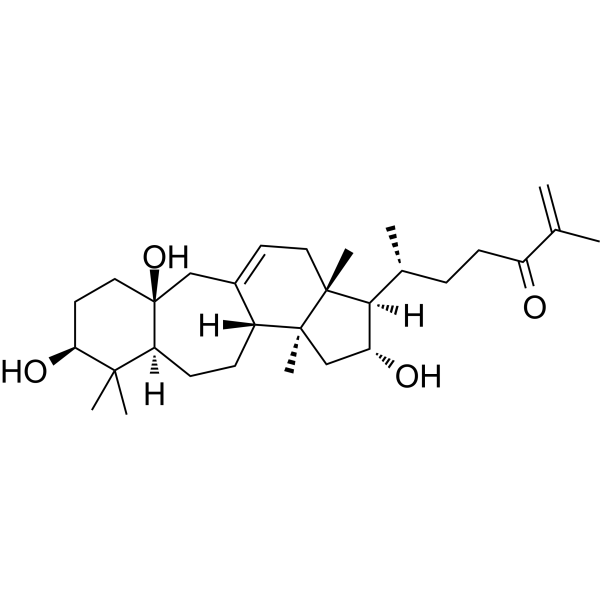
    Neodidymelliosides A (compound 1)It is a secondary metabolite of fungi and has a significant inhibitory effect on Staphylococcus aureus and Candida albicans biofilms. Neodidymelliosides AIt also has anti-cancer activity and can inhibit KB3.1 (cervix),PC-3 (prostate),MCF-7(breast),SKOV-3 (ovary),A431 (skin )and A549 (lung )Cell viability of cell lines .
    Neodidymelliosides A
  • HY-172748

    Drug Derivative Neurological Disease Cancer
    9β-Hydroxyhexahydrocannabinol is a synthetic cannabinoid derivative. 9β-Hydroxyhexahydrocannabinol exhibits cytotoxicity against various tumor cell lines, such as HCT-116, MCF-7, K562, MIAPaCa-2, PANC-1, A549, PC-3 and SW-620, with IC50 values ranging from 15.23 to 33.74 μM. 9β-Hydroxyhexahydrocannabinol can be used in the study of cancer .
    9β-Hydroxyhexahydrocannabinol
  • HY-183765

    PARP Pyruvate Kinase Cancer
    PARP1/PKM2-IN-1 is a dual PARP1/PKM2 inhibitor, with an IC50 of 39.5 nM against PARP1, and IC50 values of 261 nM (recombinant PKM2) and 50 nM (dimeric PKM2) against PKM2. PARP1/PKM2-IN-1 reduces the dimerization of PKM2 and decreases its nuclear accumulation level. PARP1/PKM2-IN-1 also selectively downregulates PKM2 mRNA and impairs poly (ADP-ribose)-mediated nuclear retention of PKM2. PARP1/PKM2-IN-1 exhibits antiproliferative activity and inhibits the formation of 3D cancer spheroids. PARP1/PKM2-IN-1 can be used in research related to mammary adenocarcinoma, triple-negative breast cancer, BRCA1-mutant triple-negative breast cancer, and prostate adenocarcinoma .
    PARP1/PKM2-IN-1

Inquiry Online

Your information is safe with us. * Required Fields.

Salutation


Country or Region *

Applicant Name *


Organization Name *

Department *


Email Address *


Product Name *

Cat. No.


Requested quantity *

Phone Number *


Remarks

Inquiry Online

Inquiry Information

Product Name:
Cat. No.:
Quantity:
MCE Japan Authorized Agent:

