3287 Results for "

PE reporter mice

" in MedChemExpress (MCE) Product Catalog:
Products (3287)

3287 Results for "PE reporter mice" in MCE Product Catalog:

324
324 Publications Verification
Cat. No.: HY-13818
CAS No.: 19983-44-9
Purity:  99.58%
Target:  

STAT Apoptosis

Research Areas:  

Inflammation/Immunology Cancer

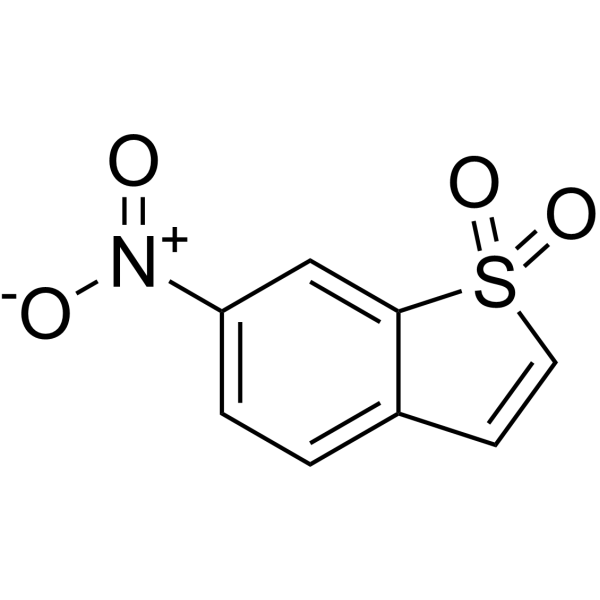
Stattic is a potent STAT3 inhibitor and inhibits STAT3 phosphorylation (at Y705 and S727) . Stattic inhibits the binding of a high affinity phosphopeptide for the SH2 domain of STAT3 . Stattic ameliorates the renal dysfunction in Alport syndrome (AS) mice .
loading...
    loading...
273
273 Cited Publications
Cat. No.: HY-13757
CAS No.: 54965-24-1
Purity:  99.93%
Synonyms: ICI 46474; (Z)-Tamoxifen Citrate; trans-Tamoxifen Citrate
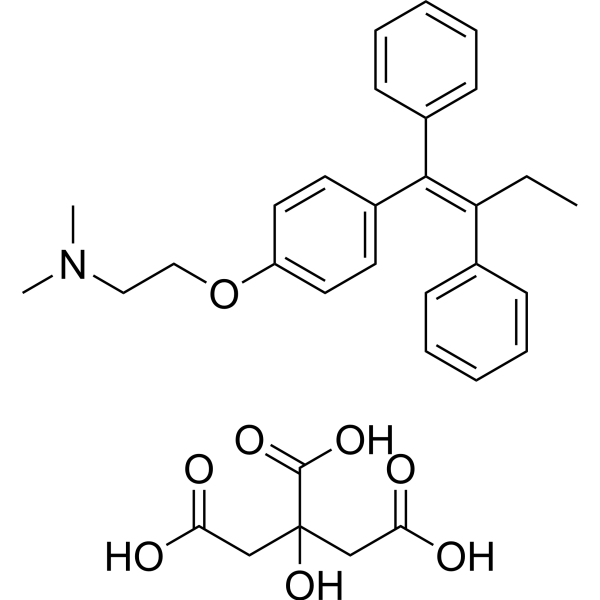
Tamoxifen Citrate (ICI 46474) is an orally active, selective estrogen receptor modulator (SERM) which blocks estrogen action in breast cells and can activate estrogen activity in other cells, such as bone, liver, and uterine cells.Tamoxifen Citrate is a potent Hsp90 activator and enhances the Hsp90 molecular chaperone ATPase activity. Tamoxifen Citrate also potent inhibits infectious EBOV Zaire and Marburg (MARV) with IC50 of 0.1 μM and 1.8 μM, respectively. Tamoxifen Citrate activates autophagy and induces apoptosis. Tamoxifen Citrate can also be used to induce gene knockout in CreER transgenic mice .
loading...
    loading...
273
273 Cited Publications
Cat. No.: HY-13757A
CAS No.: 10540-29-1
Purity:  99.78%
Synonyms: ICI 47699; (Z)-Tamoxifen; trans-Tamoxifen
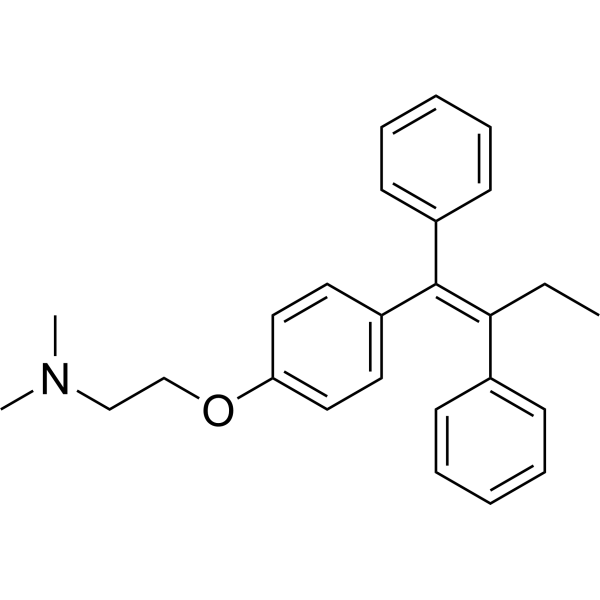
Tamoxifen (ICI 47699) is an orally active, selective estrogen receptor modulator (SERM) which blocks estrogen action in breast cells and can activate estrogen activity in other cells, such as bone, liver, and uterine cells. Tamoxifen is a potent Hsp90 activator and enhances the Hsp90 molecular chaperone ATPase activity. Tamoxifen also potent inhibits infectious EBOV Zaire and Marburg (MARV) with IC50 of 0.1 μM and 1.8 μM, respectively. Tamoxifen activates autophagy and induces apoptosis. Tamoxifen can also be dissolved in corn oil (HY-Y1888) for use in inducing gene knockout in CreER transgenic mice. Tamoxifen has better solubility in corn oil compared to Tamoxifen Citrate (HY-13757) .
loading...
    loading...
234
234 Cited Publications
Cat. No.: HY-10484
CAS No.: 1160295-21-5
Purity:  98.58%
Synonyms: MLN4924 hydrochloride
Research Areas:  

Cancer

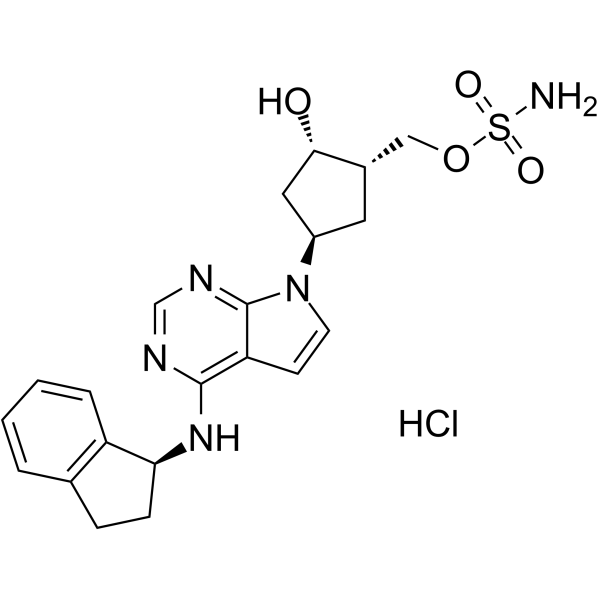
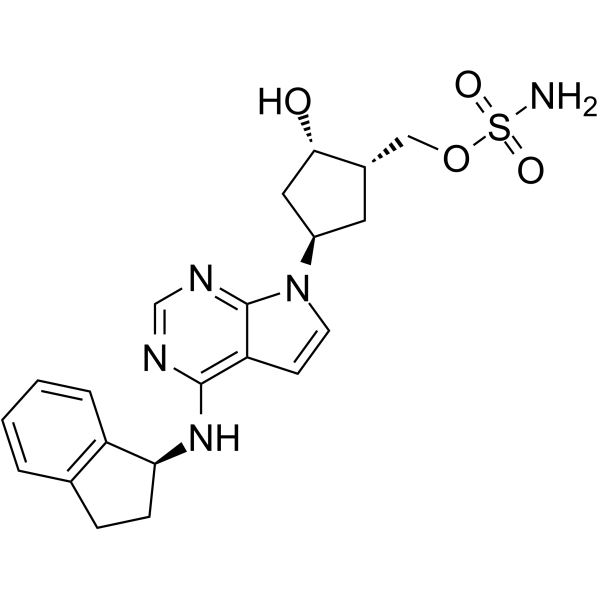
Pevonedistat (MLN4924) hydrochloride is a potent and selective NEDD8-activating enzyme (NAE) inhibitor, with an IC50 of 4.7 nM. Pevonedistat hydrochloride induces the deregulation of S-phase DNA synthesis, thereby disrupting protein turnover mediated by cullin-RING ligase, leading to apoptosis of human tumor cells. Pevonedistat hydrochloride suppresses the growth of human tumour xenografts in mice .
loading...
    loading...
234
234 Cited Publications
Cat. No.: HY-70062
CAS No.: 905579-51-3
Synonyms: MLN4924
Research Areas:  

Cancer

Pevonedistat (MLN4924) is a potent and selective NEDD8-activating enzyme (NAE) inhibitor with an IC50 of 4.7 nM. Pevonedistat induces the deregulation of S-phase DNA synthesis, thereby disrupting protein turnover mediated by cullin-RING ligase, leading to apoptosis of human tumor cells. Pevonedistat suppresses the growth of human tumour xenografts in mice .
loading...
    loading...
178
178 Cited Publications
Cat. No.: HY-B2176
CAS No.: 56-65-5
Synonyms: Adenosine 5'-triphosphate
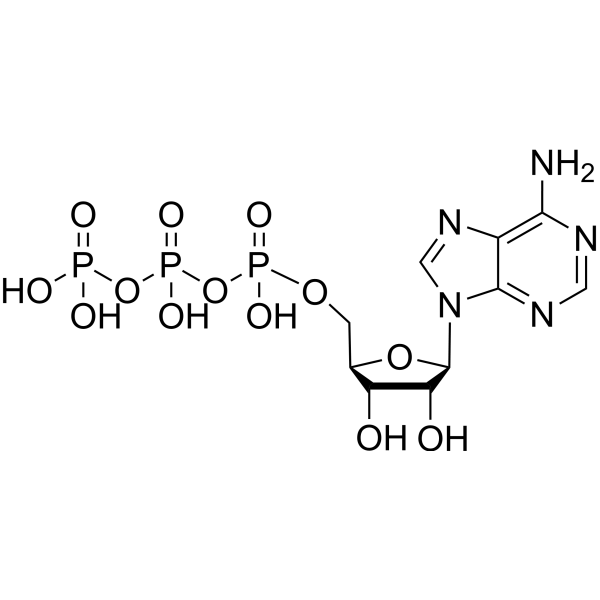
ATP (Adenosine 5'-triphosphate) is a central component of energy storage and metabolism in vivo. ATP provides the metabolic energy to drive metabolic pumps and serves as a coenzyme in cells. ATP is an important endogenous signaling molecule in immunity and inflammation. ATP can activate the NLRP3 inflammasome and induce IL-1β and chemokines secretion. ATP has anti-bacterial infection effects and can protect mice against bacterial infection in mice .
loading...
    loading...
178
178 Cited Publications
Cat. No.: HY-B2176B
CAS No.: 74804-12-9
Synonyms: Adenosine 5'-triphosphate dimagnesium
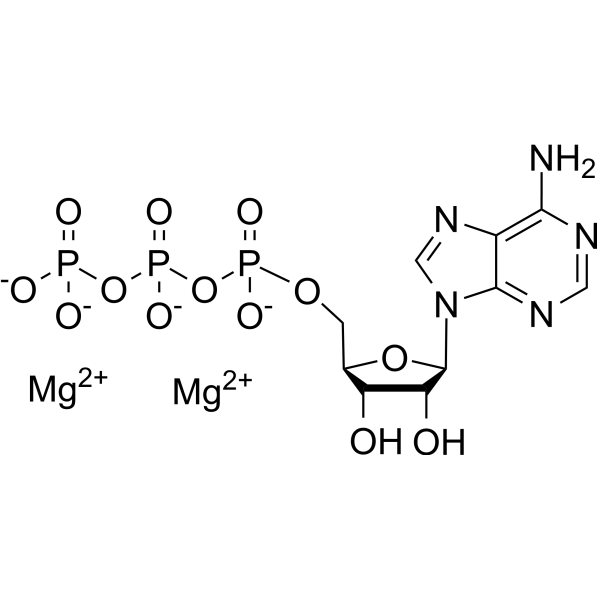
ATP (Adenosine 5'-triphosphate) dimagnesium is a central component of energy storage and metabolism in vivo. ATP dimagnesium provides the metabolic energy to drive metabolic pumps and serves as a coenzyme in cells. ATP dimagnesium is an important endogenous signaling molecule in immunity and inflammation. ATP dimagnesium can activate the NLRP3 inflammasome and induce IL-1β and chemokines secretion. ATP dimagnesium has anti-bacterial infection effects and can protect mice against bacterial infection in mice .
loading...
    loading...
178
178 Cited Publications
Cat. No.: HY-B2176A
CAS No.: 51963-61-2
Synonyms: Adenosine-5'-triphosphate disodium trihydrate
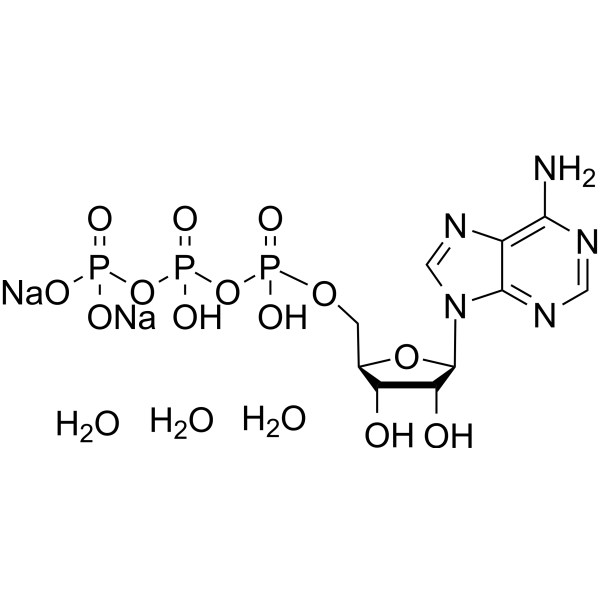
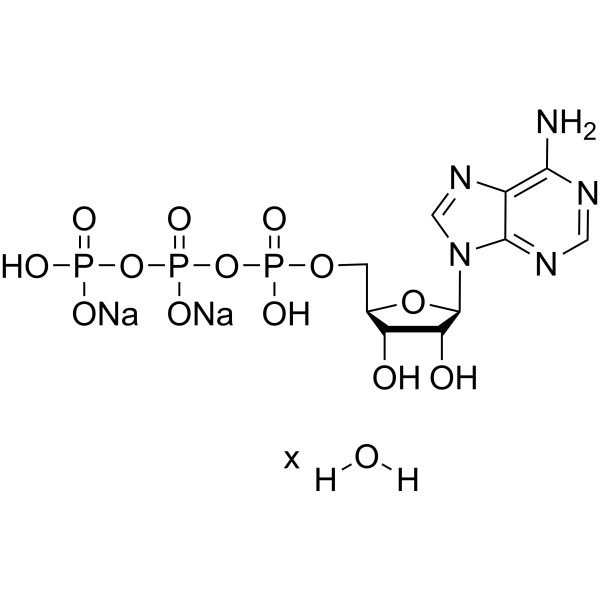
ATP (Adenosine 5'-triphosphate) disodium trihydrate is a central component of energy storage and metabolism in vivo. ATP disodium trihydrate provides the metabolic energy to drive metabolic pumps and serves as a coenzyme in cells. ATP disodium trihydrate is an important endogenous signaling molecule in immunity and inflammation. ATP disodium trihydrate can activate the NLRP3 inflammasome and induce IL-1β and chemokines secretion. ATP disodium trihydrate has anti-bacterial infection effects and can protect mice against bacterial infection in mice .
loading...
    loading...
175
175 Cited Publications
Cat. No.: HY-16561
CAS No.: 501-36-0
Synonyms: trans-Resveratrol; SRT501
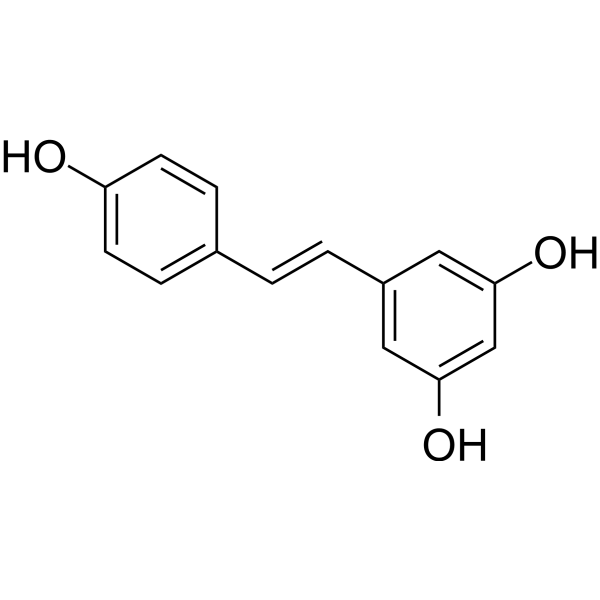
Resveratrol (trans-Resveratrol; SRT501) is a CNS-penetrant natural polyphenolic phytoalexin that possesses anti-oxidant, anti-inflammatory, cardioprotective, and anti-cancer properties. Resveratrol (SRT 501) has a wide spectrum of targets including mTOR, JAK, β-amyloid, Adenylyl cyclase, IKKβ, DNA polymerase. Resveratrol also is a specific SIRT1 activator . Resveratrol is a potent pregnane X receptor (PXR) inhibitor . Resveratrol is an Nrf2 activator, ameliorates aging-related progressive renal injury in mice model . Resveratrol increases production of NO in endothelial cells .
loading...
    loading...
171
171 Cited Publications
Cat. No.: HY-W010735
CAS No.: 34369-07-8
Synonyms: Adenosine 5'-triphosphate disodium salt hydrate
ATP (Adenosine 5'-triphosphate) disodium salt hydrate is a central component of energy storage and metabolism in vivo. ATP disodium salt hydrate provides the metabolic energy to drive metabolic pumps and serves as a coenzyme in cells. ATP disodium salt hydrate is an important endogenous signaling molecule in immunity and inflammation. ATP disodium salt hydrate can activate the NLRP3 inflammasome and induce IL-1β and chemokines secretion. ATP disodium salt hydrate has anti-bacterial infection effects and can protect mice against bacterial infection in mice .
loading...
    loading...
168
168 Cited Publications
Cat. No.: HY-B2176C
CAS No.: 42373-41-1
Synonyms: Adenosine 5'-triphosphate dipotassium
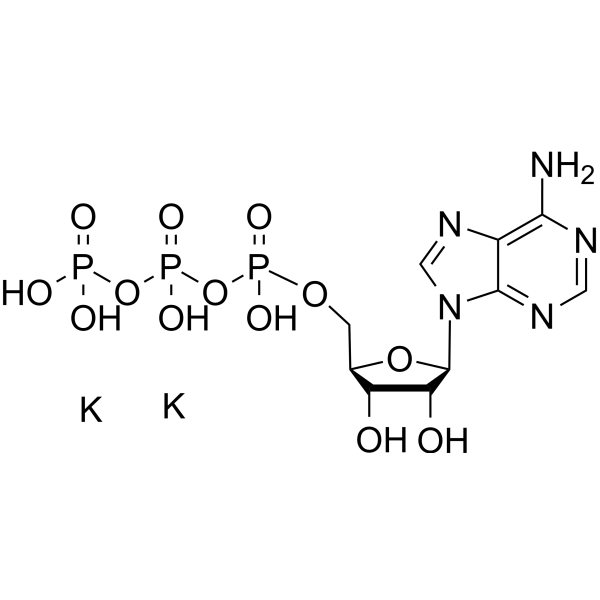
ATP (Adenosine 5'-triphosphate) dipotassium is a central component of energy storage and metabolism in vivo. ATP dipotassium provides the metabolic energy to drive metabolic pumps and serves as a coenzyme in cells. ATP dipotassium is an important endogenous signaling molecule in immunity and inflammation. ATP dipotassium can activate the NLRP3 inflammasome and induce IL-1β and chemokines secretion. ATP dipotassium has anti-bacterial infection effects and can protect mice against bacterial infection in mice .
loading...
    loading...
168
168 Cited Publications
Cat. No.: HY-B2176E
CAS No.: 1476-84-2
Synonyms: Adenosine 5'-triphosphate magnesium
ATP (Adenosine 5'-triphosphate) magnesium is a central component of energy storage and metabolism in vivo. ATP magnesium provides the metabolic energy to drive metabolic pumps and serves as a coenzyme in cells. ATP magnesium is an important endogenous signaling molecule in immunity and inflammation. ATP magnesium can activate the NLRP3 inflammasome and induce IL-1β and chemokines secretion. ATP magnesium has anti-bacterial infection effects and can protect mice against bacterial infection in mice .
loading...
    loading...
168
168 Cited Publications
Cat. No.: HY-B2176I
CAS No.: 987-65-5
Synonyms: Adenosine 5'-triphosphate disodium salt, 100 mM Solution, PCR Grade
ATP (Adenosine 5'-triphosphate) disodium salt, 100 mM Solution, PCR Grade is a central component of energy storage and metabolism in vivo. ATP disodium salt, 100 mM Solution, PCR Grade provides the metabolic energy to drive metabolic pumps and serves as a coenzyme in cells. ATP disodium salt, 100 mM Solution, PCR Grade is an important endogenous signaling molecule in immunity and inflammation. ATP disodium salt, 100 mM Solution, PCR Grade can activate the NLRP3 inflammasome and induce IL-1β and chemokines secretion. ATP disodium salt, 100 mM Solution, PCR Grade has anti-bacterial infection effects and can protect mice against bacterial infection in mice .
loading...
    loading...
143
143 Cited Publications
Cat. No.: HY-12591B
CAS No.: 115144-35-9
Purity:  99.97%
Synonyms: D-(-)-Luciferin potassium; Firefly luciferin potassium; Beetle Luciferin potassium
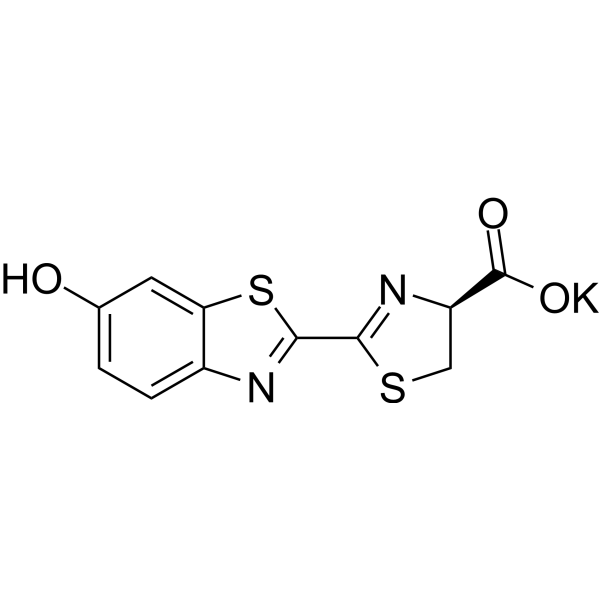
D-luciferin potassium is the natural substrate of the enzyme luciferase (Luc) that catalyzes the production of the typical yellowgreen light of fireflies. The 560 nm chemiluminescence from this reaction peaks within seconds, with light output that is proportional to luciferase concentration when the substrate luciferin is present in excess. The luciferase (luc) gene is a popular reporter gene for research and agent screening. Chemiluminescent techniques are virtually background-free, making the luc reporter gene ideal for detecting low-level gene expression. As little as 0.02 pg of luciferase can be reliably measured in a standard scintillation counter. In addition to its role as a reporter of gene expression, luciferase is commonly used in an extremely sensitive assay for ATP . We offer the firefly luciferase (HY-P1004A), luciferin free acid (HY-12591A), as well as its water-soluble sodium salts (HY-12591) and potassium salts (HY-12591B) .
loading...
    loading...
143
143 Cited Publications
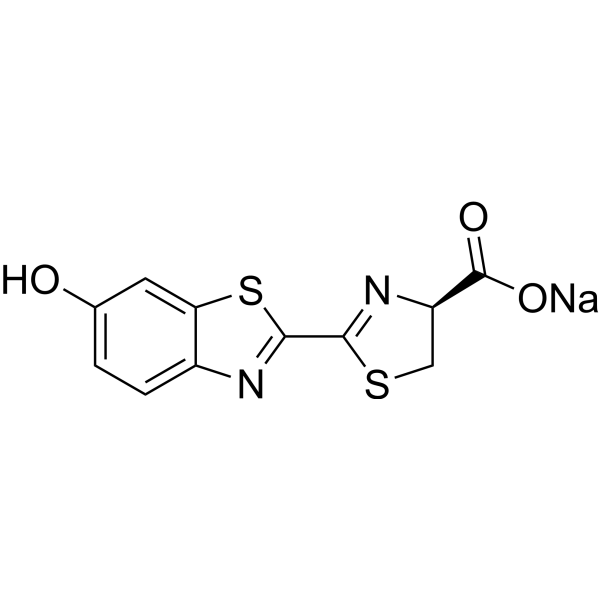
Cat. No.: HY-12591
CAS No.: 103404-75-7
Purity:  99.92%
Synonyms: D-(-)-Luciferin sodium; Firefly luciferin sodium; Beetle Luciferin sodium
D-luciferin sodium is the natural substrate of the enzyme luciferase (Luc) that catalyzes the production of the typical yellowgreen light of fireflies. The 560 nm chemiluminescence from this reaction peaks within seconds, with light output that is proportional to luciferase concentration when the substrate luciferin is present in excess. The luciferase (luc) gene is a popular reporter gene for research and agent screening. Chemiluminescent techniques are virtually background-free, making the luc reporter gene ideal for detecting low-level gene expression. As little as 0.02 pg of luciferase can be reliably measured in a standard scintillation counter. In addition to its role as a reporter of gene expression, luciferase is commonly used in an extremely sensitive assay for ATP . We of er the firefly luciferase (HY-P1004A), luciferin free acid (HY-12591A), as well as its water-soluble sodium salts (HY-12591) and potassium salts (HY-12591B) .
loading...
    loading...
143
143 Cited Publications
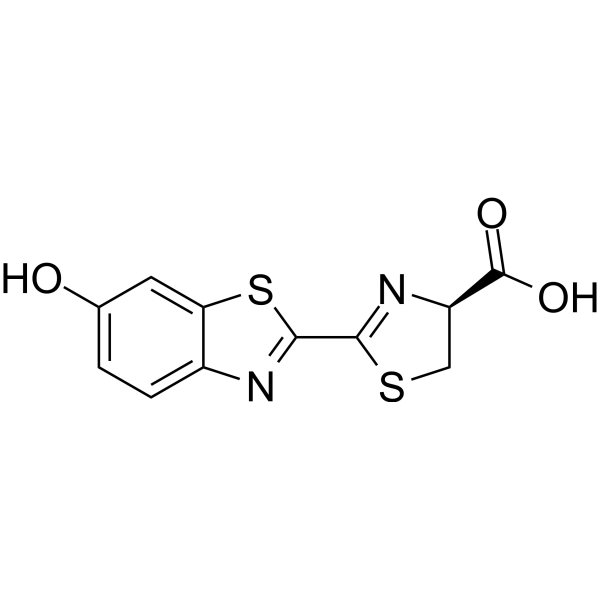
Cat. No.: HY-12591A
CAS No.: 2591-17-5
Purity:  99.54%
Synonyms: D-(-)-Luciferin; Firefly luciferin; Beetle Luciferin
D-luciferin is the natural substrate of the enzyme luciferase (Luc) that catalyzes the production of the typical yellowgreen light of fireflies. The 560 nm chemiluminescence from this reaction peaks within seconds, with light output that is proportional to luciferase concentration when the substrate luciferin is present in excess. The luciferase (luc) gene is a popular reporter gene for research and agent screening. Chemiluminescent techniques are virtually background-free, making the luc reporter gene ideal for detecting low-level gene expression. As little as 0.02 pg of luciferase can be reliably measured in a standard scintillation counter. In addition to its role as a reporter of gene expression, luciferase is commonly used in an extremely sensitive assay for ATP . We of er the firefly luciferase (HY-P1004A), luciferin free acid (HY-12591A), as well as its water-soluble sodium salts (HY-12591) and potassium salts (HY-12591B) .
loading...
    loading...
111
111 Cited Publications
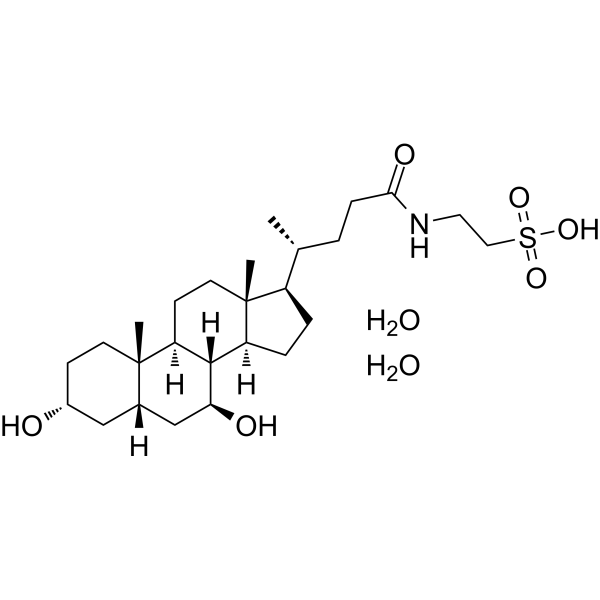
Cat. No.: HY-19696B
CAS No.: 117609-50-4
Synonyms: Tauroursodeoxycholic acid dihydrate; TUDCA dihydrate; UR 906 dihydrate
Tauroursodeoxycholate dehydrate is an orally active taurine conjugate of Ursodeoxycholic acid (HY-13771). Tauroursodeoxycholate dehydrate inhibits caspase-3/7, Apoptosis, IRE1α/TRAF2/NF-κB, prevents JNK phosphorylation, inhibits ROS generation, and activates Akt signaling. Tauroursodeoxycholate dehydrate prevents cataract formation, reduces renal tubular damage in type 2 diabetic mice, reduces I/R injury in liver, and inhibits intestinal inflammation and barrier disruption in nonalcoholic fatty liver disease .
loading...
    loading...
101
101 Cited Publications
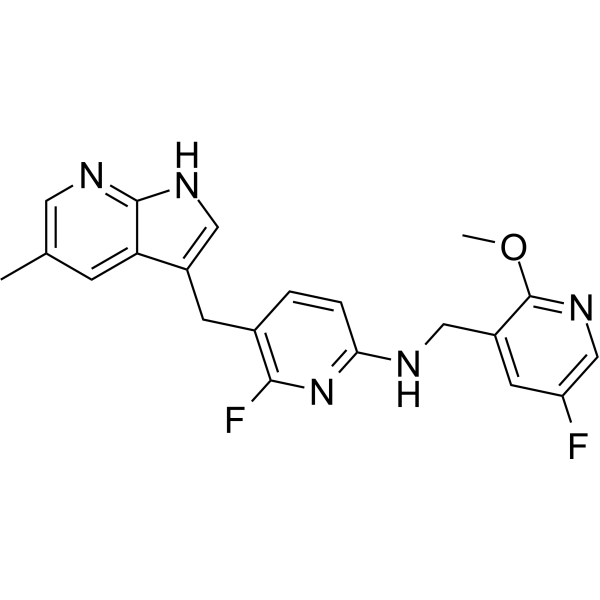
Cat. No.: HY-114153
CAS No.: 1303420-67-8
Purity:  99.79%
Target:  

c-Fms

PLX5622 is a highly selective brain penetrant and orally active CSF1R inhibitor (IC50=0.016 μM; Ki=5.9 nM). PLX5622 allows for extended and specific microglial cells elimination, preceding and during pathology development. PLX5622 is an ideal choose for microglia function research in healthy or diseased states. PLX5622 has been verified by MedChemExpress, which demonstrates desirable microglia depletion efficiency in mice. PLX5622 is predominantly administered via ad libitum diets with a dose of 1200 ppm .
loading...
    loading...
88
88 Cited Publications
Cat. No.: HY-114180
CAS No.: 2262452-06-0
Purity:  99.95%
Synonyms: RU320521
Research Areas:  

Metabolic Disease

RU.521 (RU320521) is a potent and selective cyclic GMP-AMP synthase (cGAS) inhibitor and inhibits cGAS-mediated interferon upregulation. RU.521 suppresses dsDNA-activated reporter activity with an IC50 of 0.7 μM. RU.521 reduces constitutive expression of interferon in macrophages from a mouse model of Aicardi-Goutières syndrome (AGS) .
loading...
    loading...
76
76 Cited Publications
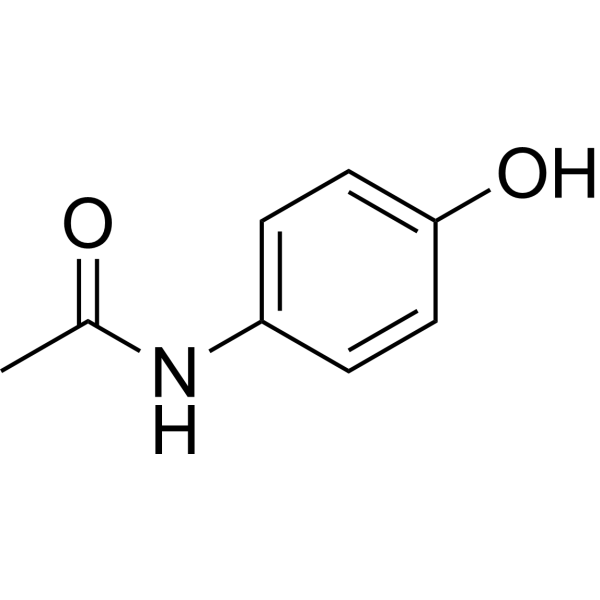
Cat. No.: HY-66005
CAS No.: 103-90-2
Synonyms: Paracetamol; 4-Acetamidophenol; 4'-Hydroxyacetanilide
Acetaminophen (Paracetamol) is a selective cyclooxygenase-2 (COX-2) inhibitor with an IC50 of 25.8 μM; is a widely used antipyretic and analgesic agent. . Acetaminophen is a potent hepatic N-acetyltransferase 2 (NAT2) inhibitor . Acetaminophen induces ferroptosis and leads to acute liver injury in mice model .
loading...
    loading...

