
348 Results for "

Pseudomonas aeruginosa

" in MedChemExpress (MCE) Product Catalog:
Products (348)

348 Results for "Pseudomonas aeruginosa" in MCE Product Catalog:

31
31 Cited Publications
Cat. No.: HY-113678
CAS No.: 1066-17-7
Synonyms: Polymyxin E
Target:  

Antibiotic Bacterial

Research Areas:  

Infection

Colistin is an orally active polypeptide antibiotic. Colistin has excellent activity against various Gram-negative rod-shaped bacteria, including multidrug-resistant Pseudomonas aeruginosa, Acinetobacter baumannii and Klebsiella pneumoniae. Colistin is associated with nephrotoxicity. Colistin can be used for the research of infections caused by Gram-negative bacilli .
loading...
    loading...
19
19 Cited Publications
Cat. No.: HY-B0441
CAS No.: 32986-56-4
Synonyms: Nebramycin Factor 6; Deoxykanamycin B
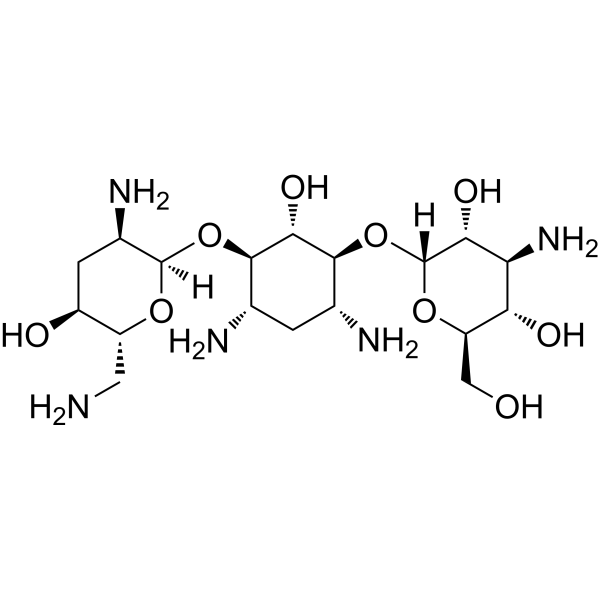
Tobramycin (Nebramycin Factor 6) is a parenterally administered, broad spectrum aminoglycoside antibiotic that is widely used in the treatment of moderate to severe bacterial infections due to sensitive organisms .Tobramycin can be used to pneumonia research caused by Pseudomonas aeruginosa .
loading...
    loading...
19
19 Cited Publications
Cat. No.: HY-B0441A
CAS No.: 49842-07-1
Synonyms: Nebramycin Factor 6 sulfate; Deoxykanamycin B sulfate
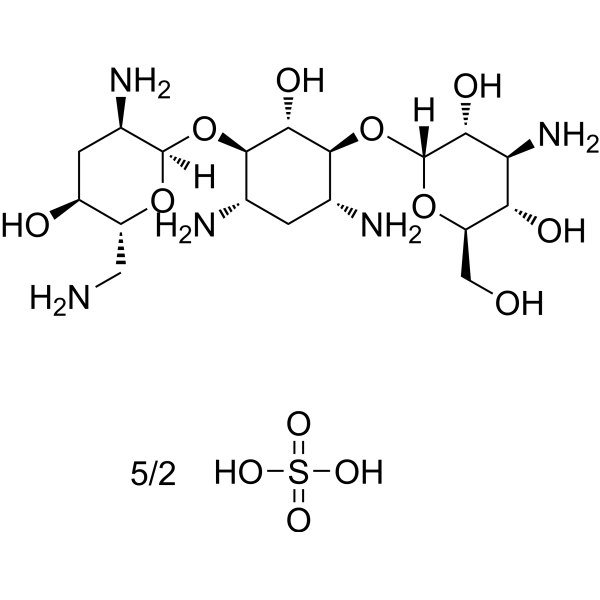
Tobramycin (Nebramycin Factor 6) sulfate is a parenterally administered, broad spectrum aminoglycoside antibiotic that is widely used in the treatment of moderate to severe bacterial infections due to sensitive organisms. Tobramycin sulfate can be used to pneumonia research caused by Pseudomonas aeruginosa .
loading...
    loading...
7
7 Cited Publications
Cat. No.: HY-A0076
CAS No.: 161715-21-5
Synonyms: LJC 11036
Target:  

Bacterial Antibiotic

Research Areas:  

Infection

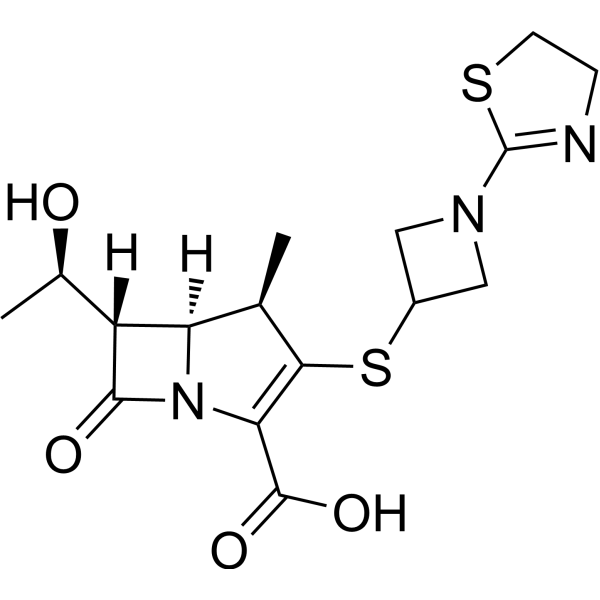
Tebipenem is an orally available carbapenem antibiotic, shows broad-spectrum activity against Gram-positive and -negative bacteria, except for Pseudomonas aeruginosa.
loading...
    loading...
7
7 Cited Publications
Cat. No.: HY-100577
CAS No.: 29457-07-6
Purity:  98.42%
Target:  

Bacterial Antibiotic

Research Areas:  

Infection

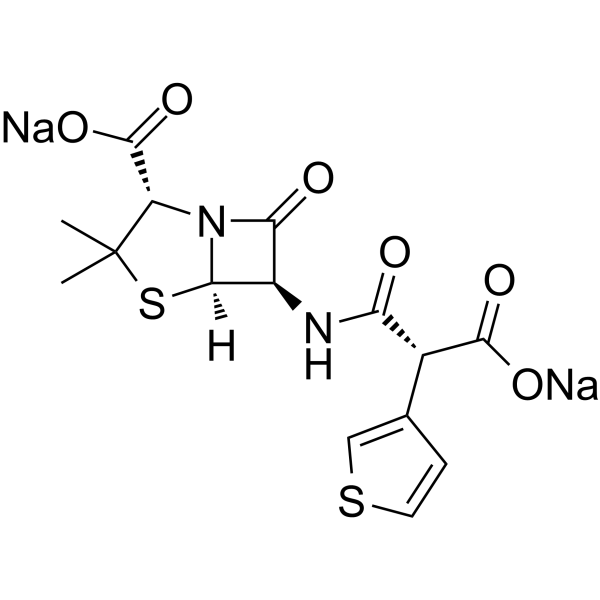
Ticarcillin sodium is an injectable antibiotic for the treatment of Gram-negative bacteria, particularly Pseudomonas aeruginosa. It is also one of the few antibiotics capable of treating Stenotrophomonas maltophilia infections .
loading...
    loading...
5
5 Cited Publications
Cat. No.: HY-139056
CAS No.: 2210228-45-6
Purity:  99.96%
SU0268 is a potent and specific inhibitor of 8-Oxoguanine DNA glycosylase 1 (OGG1). SU0268 regulates inflammatory responses during Pseudomonas aeruginosa infection .
loading...
    loading...
4
4 Cited Publications
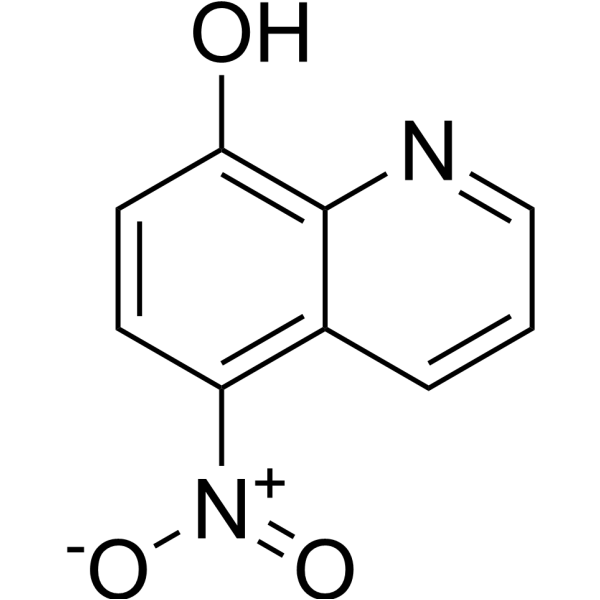
Cat. No.: HY-B1159
CAS No.: 4008-48-4
Synonyms: 8-Hydroxy-5-nitroquinoline; 5-Nitro-8-quinolinol
Research Areas:  

Infection Cancer

Nitroxoline (8-Hydroxy-5-nitroquinoline), an antibiotic, is an orally active antibiofilm agent. Nitroxoline reduces the formation and induces the dispersal of Pseudomonas aeruginosa biofilms by chelation of iron and zinc. Nitroxoline can be used for the urinary tract infections and cancer research .
loading...
    loading...
3
3 Cited Publications
Cat. No.: HY-111278
CAS No.: 85-66-5
Purity:  99.23%
Synonyms: Pyocyanine; Sanazin; Sanasin
Pyocyanin (Pyocyanine) is a toxic, quorum sensing (QS) controlled metabolite produced by Pseudomonas aeruginosa. Pyocyanin is a REDOX active compound that promotes the production of reactive oxygen species (ROS). Pyocyanin has antibacterial and anti-inflammatory activity .
loading...
    loading...
3
3 Cited Publications
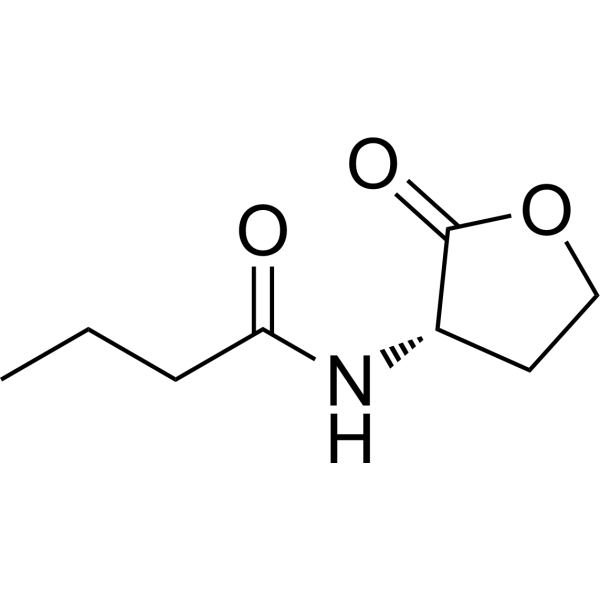
Cat. No.: HY-114816
CAS No.: 67605-85-0
Purity:  98.77%
Synonyms: C4-HSL; N-Butyryl-L-homoserine lactone
Target:  

ADC Linkers Bacterial

Research Areas:  

Infection Inflammation/Immunology

N-Butanoyl-L-homoserine lactone (C4-HSL) is a cleavable ADC linker used in the synthesis of antibody-drug conjugates (ADCs). N-Butanoyl-L-homoserine lactone has antibacterial activity and is used in antibacterial biofilm . N-Butanoyl-L-homoserine lactone aptamers blocks qurom sensing and inhibits biofilm formation in Pseudomonas aeruginosa .
loading...
    loading...
3
3 Cited Publications
Cat. No.: HY-B0147
CAS No.: 70458-92-3
Synonyms: Pefloxacinium
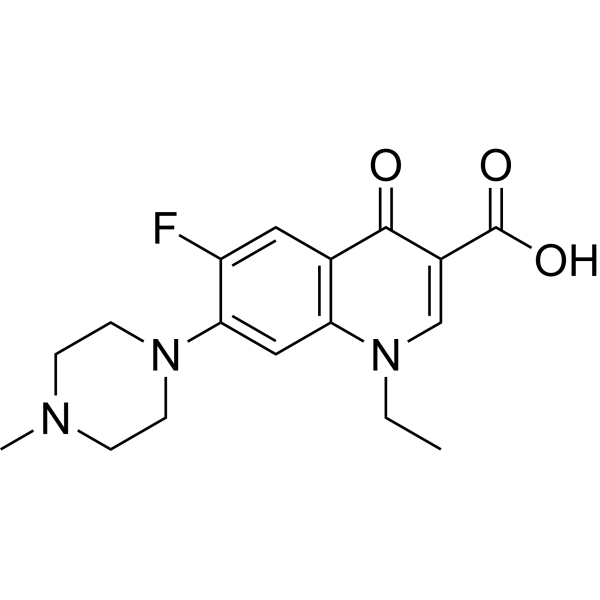
Pefloxacin (Pefloxacinium) is a broad spectrum antibiotic. Pefloxacin blocks DNA replication by inhibiting DNA gyrase. Pefloxacin inhibits DNA relaxation catalyzed by topoisomerase I with an IC50 of 45 μg/mL. Pefloxacin exhibits antibacterial activity against Escherichia coli, Pseudomonas aeruginosa, and Bacteroides fragilis with MIC90s of 0.12, 4, and 16 mg/L, respectively. Pefloxacin has anti-Plasmodium yoelii infection activity. Pefloxacin increase UVA-induced edema and immunesuppression. Pefloxacin can be used for infection studies .
loading...
    loading...
3
3 Cited Publications
Cat. No.: HY-B0147A
CAS No.: 70458-95-6
Synonyms: Pefloxacinium mesylate
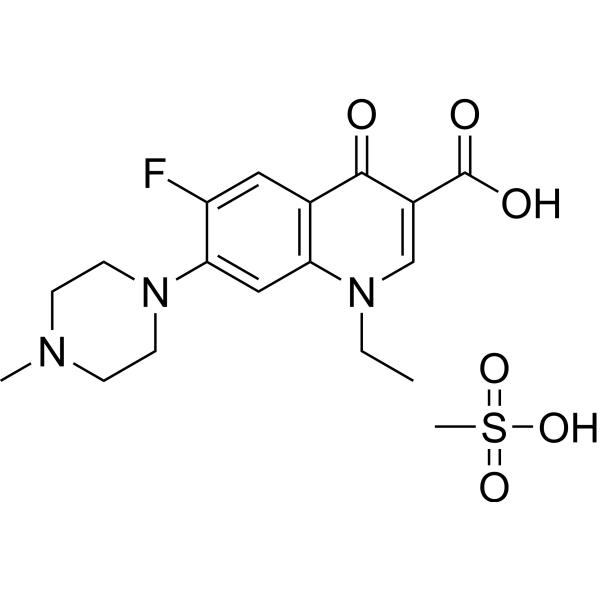
Pefloxacin (Pefloxacinium) mesylate is a broad spectrum antibiotic. Pefloxacin blocks DNA replication by inhibiting DNA gyrase. Pefloxacin mesylate inhibits DNA relaxation catalyzed by topoisomerase I with an IC50 of 45 μg/mL. Pefloxacin mesylate exhibits antibacterial activity against Escherichia coli, Pseudomonas aeruginosa, and Bacteroides fragilis with MIC90s of 0.12, 4, and 16 mg/L, respectively. Pefloxacin mesylate has anti-Plasmodium yoelii infection activity. Pefloxacin mesylate increase UVA-induced edema and immunesuppression. Pefloxacin mesylate can be used for infection studies .
loading...
    loading...
3
3 Cited Publications
Cat. No.: HY-B0147B
CAS No.: 149676-40-4
Synonyms: Pefloxacinium mesylate dihydrate
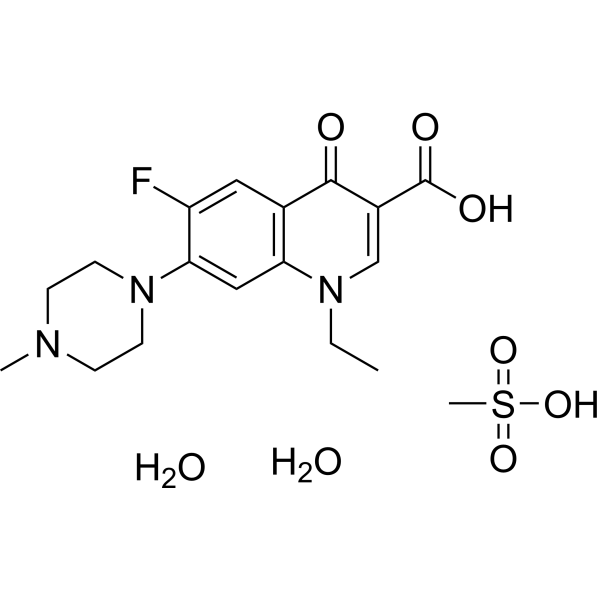
Pefloxacin (Pefloxacinium) mesylate dihydrate is a broad spectrum antibiotic. Pefloxacin mesylate dihydrate blocks DNA replication by inhibiting DNA gyrase. Pefloxacin mesylate dihydrate inhibits DNA relaxation catalyzed by topoisomerase I with an IC50 of 45 μg/mL. Pefloxacin mesylate dihydrate exhibits antibacterial activity against Escherichia coli, Pseudomonas aeruginosa, and Bacteroides fragilis with MIC90s of 0.12, 4, and 16 mg/L, respectively. Pefloxacin mesylate dihydrate has anti-Plasmodium yoelii infection activity. Pefloxacin mesylate dihydrate increase UVA-induced edema and immunesuppression. Pefloxacin mesylate dihydrate can be used for infection studies .
loading...
    loading...
2
2 Cited Publications
Cat. No.: HY-128200
CAS No.: 108985-27-9
Purity:  99.84%
Synonyms: PQS
Target:  

Bacterial

Research Areas:  

Infection Inflammation/Immunology

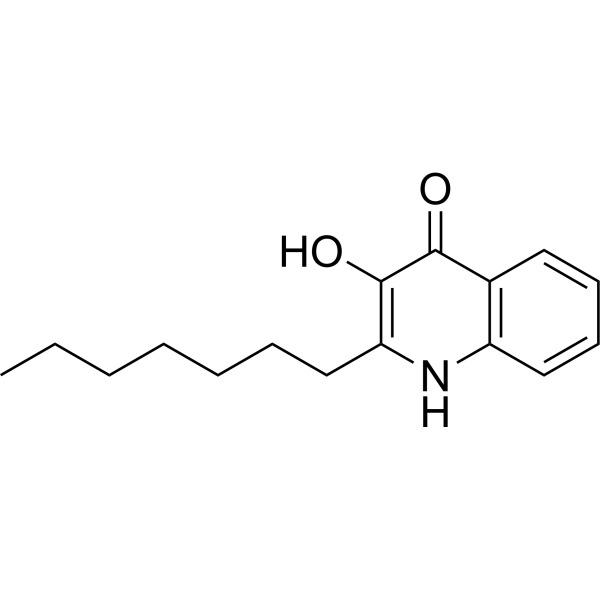
Pseudomonas quinolone signal (PQS) is a quorum-sensing signaling molecule produced by Pseudomonas aeruginosa. The synthesis of Pseudomonas quinolone signal relies on the las quorum-sensing system, and its biological activity is associated with the rhl system. Pseudomonas quinolone signal regulates the expression of the virulence gene lasB. Additionally, Pseudomonas quinolone signal plays roles in iron acquisition, cytotoxicity, outer-membrane vesicle biogenesis, and host immune modulation .
loading...
    loading...
2
2 Cited Publications
Cat. No.: HY-B0343A
CAS No.: 91296-87-6
Synonyms: A-56620 hydrochloride
Target:  

Bacterial

Research Areas:  

Infection Inflammation/Immunology

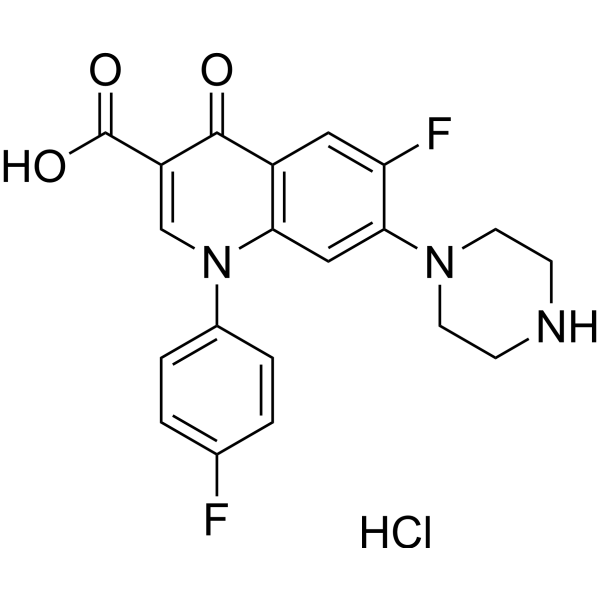
Sarafloxacin hydrochloride (A-56620 hydrochloride) is a fluoroquinolone Antibacterial agent. Sarafloxacin inhibits the growth of Staphylococcus aureus, Enterobacteriaceae, and both aminoglycoside-sensitive and aminoglycoside-resistant strains of Pseudomonas aeruginosa .
loading...
    loading...
2
2 Cited Publications
Cat. No.: HY-B0343
CAS No.: 98105-99-8
Synonyms: A-56620
Target:  

Bacterial

Research Areas:  

Infection Inflammation/Immunology

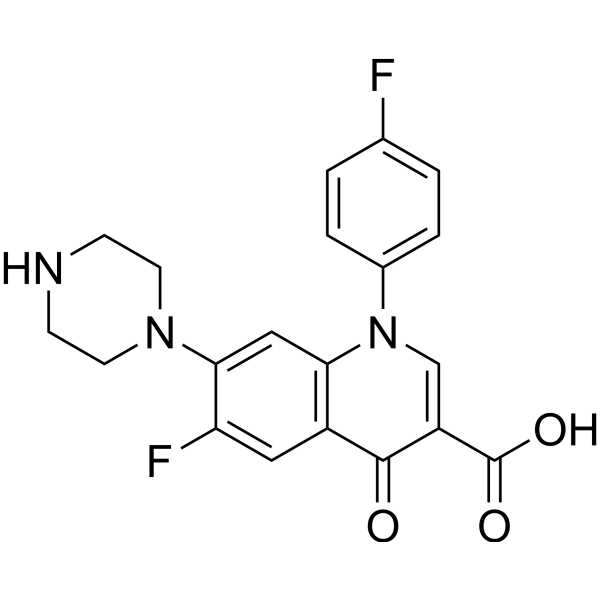
Sarafloxacin (A-56620) is a fluoroquinolone Antibacterial agent. Sarafloxacin inhibits the growth of Staphylococcus aureus, Enterobacteriaceae, and both aminoglycoside-sensitive and aminoglycoside-resistant strains of Pseudomonas aeruginosa .
loading...
    loading...
2
2 Cited Publications
Cat. No.: HY-105284
CAS No.: 120788-07-0
Purity:  99.70%
Synonyms: CP-70429
Research Areas:  

Infection

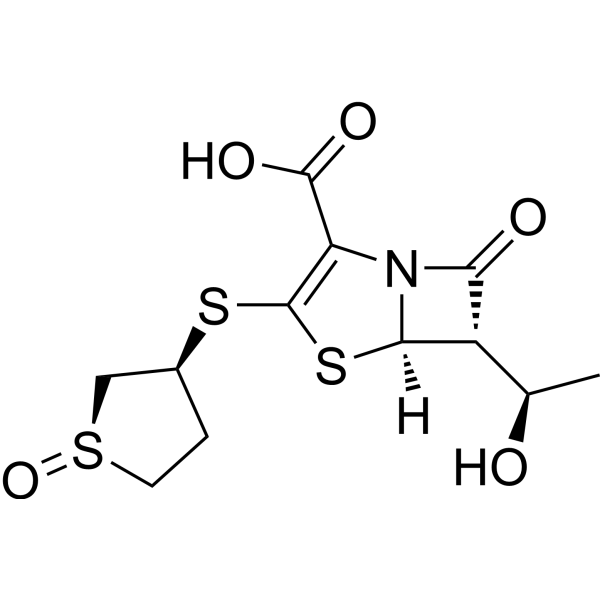
Sulopenem (CP-70429) is an orally active, parenteral penem antibiotic with broad-spectrum activities against Gram-positive and Gram-negative bacteria. Sulopenem has the potential for urinary tract infections and intra-abdominal infections treatment. Sulopenem is inactive against Pseudomonas aeruginosa and Xanthomonas maltophilia .
loading...
    loading...
2
2 Cited Publications
Cat. No.: HY-B0914
CAS No.: 112-38-9
Synonyms: Undecylenic acid
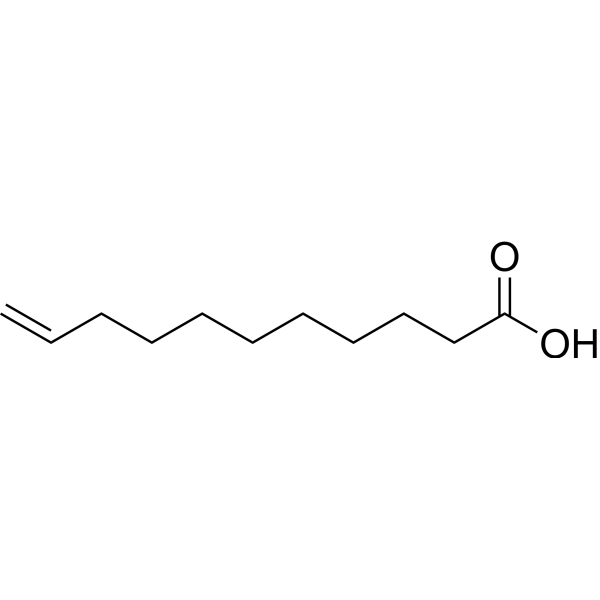
10-Undecenoic acid (Undecylenic acid) is an antifungal agent. 10-Undecenoic acid inhibits Aβ oligomerization, scavenges ROS and inhibits μ-calpain activity. 10-Undecenoic acid has neuroprotective effects. 10-Undecenoic acid has anticancer effects on a variety of tumors. 10-Undecenoic acid inhibits C. albicans biofilm formation and MRSA infection. 10-Undecenoic acid inhibits quorum sensing signals of Bacillus subtilis and Pseudomonas aeruginosa .
loading...
    loading...
2
2 Cited Publications
Cat. No.: HY-B0914A
CAS No.: 557-08-4
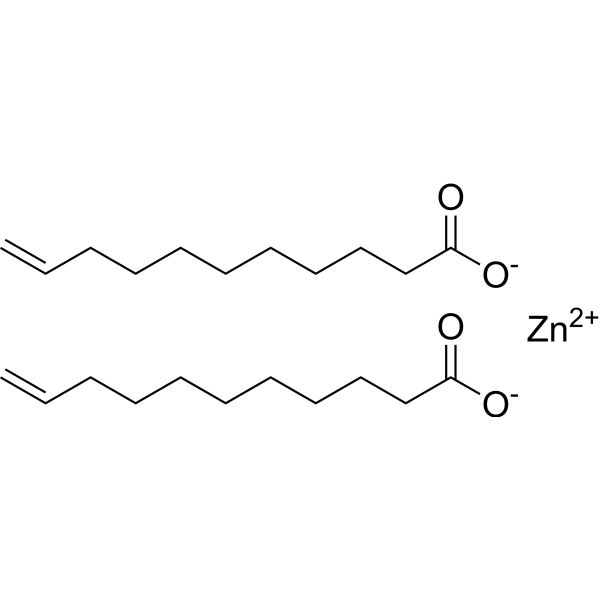
Synonyms: Zinc undecylenate
10-Undecenoic acid zinc salt (Undecylenic acid zinc salt) is an antifungal agent. 10-Undecenoic acid zinc salt inhibits Aβ oligomerization, scavenges ROS and inhibits μ-calpain activity. 10-Undecenoic acid zinc salt has neuroprotective effects. 10-Undecenoic acid zinc salt has anticancer effects on a variety of tumors. 10-Undecenoic acid zinc salt inhibits C. albicans biofilm formation and MRSA infection. 10-Undecenoic acid zinc salt inhibits quorum sensing signals of Bacillus subtilis and Pseudomonas aeruginosa .
loading...
    loading...
1
1 Cited Publications
Cat. No.: HY-D1056E
Synonyms: LPS, from Pseudomonas aeruginosa (10)
Lipopolysaccharides from P. aeruginosa (Pseudomonas aeruginosa) 10 are lipopolysaccharide endotoxins and TLR4 activators derived from Pseudomonas aeruginosa 10, and are classified as S-type LPS. Lipopolysaccharides from P. aeruginosa 10 exhibit a typical three-part structure: O-antigen, core oligosaccharide, and lipid A. The lipopolysaccharides of P. aeruginosa 10 have a fatty acid composition distinct from common enterobacteria, an exceptionally high degree of phosphorylation (triphosphate residues have been detected), and a unique outer region of the core oligosaccharide. Additionally, their O-specific side chains are typically rich in novel aminosugars. Lipopolysaccharides from P. aeruginosa 10 demonstrate susceptibility to viruses, with the level of susceptibility determined by the content of high molecular weight polysaccharides in their composition. The absence of high molecular weight polysaccharides increases their sensitivity to bacteriophages .
It is recommended to prepare a solution with concentration ≥2 mg/mL. Vortex thoroughly for more than 10 minutes. Due to the adsorption characteristics of LPS, silanized container or low adsorption centrifuge tubes should be used for aliquoting and storage, and mix thoroughly before use.
loading...
    loading...
1
1 Cited Publications
Cat. No.: HY-118697
CAS No.: 137173-46-7
Purity:  ≥98.0%
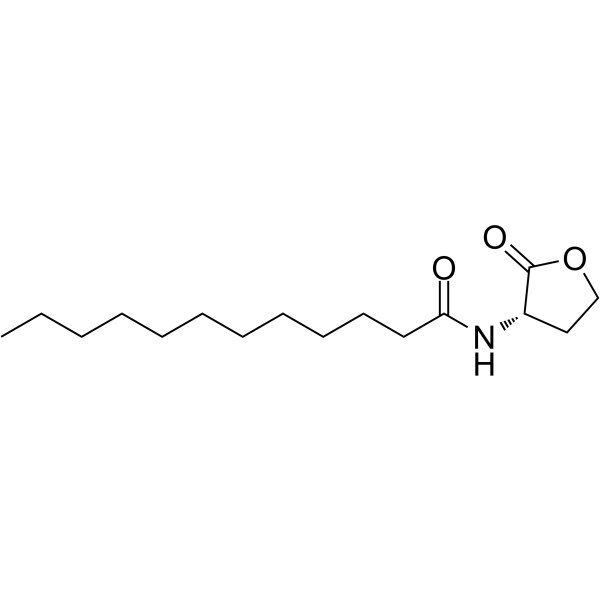
Synonyms: C12-HSL
Target:  

Bacterial

Research Areas:  

Infection

N-dodecanoyl-L-Homoserine lactone (C12-HSL) is a quorum sensing (QS) signaling molecule. N-dodecanoyl-L-Homoserine lactone (C12-HSL) aptamers blocks qurom sensing and inhibits biofilm formation in Pseudomonas aeruginosa .
loading...
    loading...

