65 Results for "

RIPK3

" in MedChemExpress (MCE) Product Catalog:
Products (65)

65 Results for "RIPK3" in MCE Product Catalog:

110
110 Publications Verification
Cat. No.: HY-101872
CAS No.: 1346546-69-7
Purity:  99.80%
Target:  

RIP kinase

Research Areas:  

Inflammation/Immunology

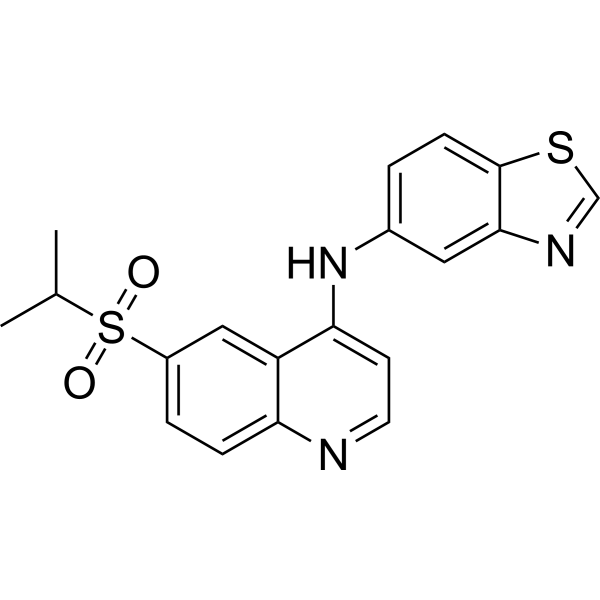
GSK-872 is a RIPK3 inhibitor, which binds RIP3 kinase domain with an IC50 of 1.8 nM, and inhibits kinase activity with an IC50 of 1.3 nM. GSK-872 decreases the RIPK3-mediated necroptosis and subsequent cytoplasmic translocation and expression of HMGB1, as well as ameliorates brain edema and neurological deficits in early brain injury [3].
loading...
    loading...
110
110 Publications Verification
Cat. No.: HY-101872A
CAS No.: 2703752-81-0
Purity:  99.21%
Target:  

RIP kinase

Research Areas:  

Inflammation/Immunology

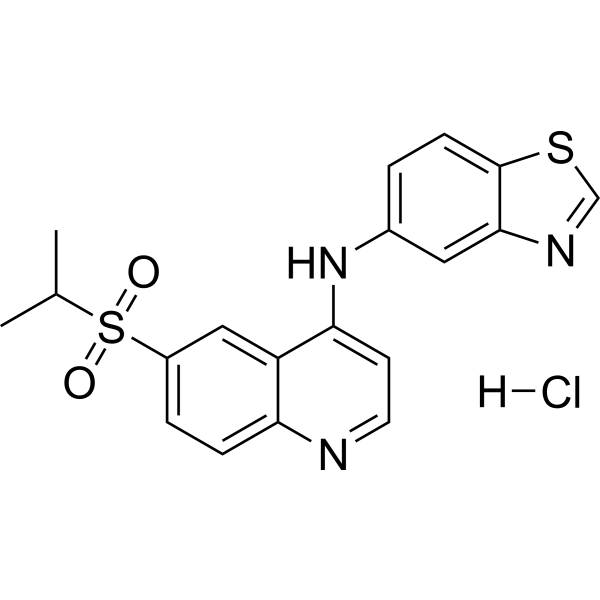
GSK-872 hydrochloride is a RIPK3 inhibitor, which binds RIP3 kinase domain with an IC50 of 1.8 nM, and inhibits kinase activity with an IC50 of 1.3 nM. GSK-872 hydrochloride decreases the RIPK3-mediated necroptosis and subsequent cytoplasmic translocation and expression of HMGB1, as well as ameliorates brain edema and neurological deficits in early brain injury [3].
loading...
    loading...
8
8 Cited Publications
Cat. No.: HY-125402
CAS No.: 1601496-05-2
Purity:  99.18%
Synonyms: GSK'843
Target:  

RIP kinase Apoptosis

Research Areas:  

Inflammation/Immunology

GSK-843 (GSK'843) is a receptor-interacting protein kinase 3 (RIP3 or RIPK3) inhibitor, which binds RIP3 kinase domain with an IC50 of 8.6 nM, and inhibits kinase activity with an IC50 of 6.5 nM. GSK-843 can be used for the research of inflammation .
loading...
    loading...
2
2 Cited Publications
Cat. No.: HY-N0546
CAS No.: 260413-62-5
Synonyms: Nuezhenoside
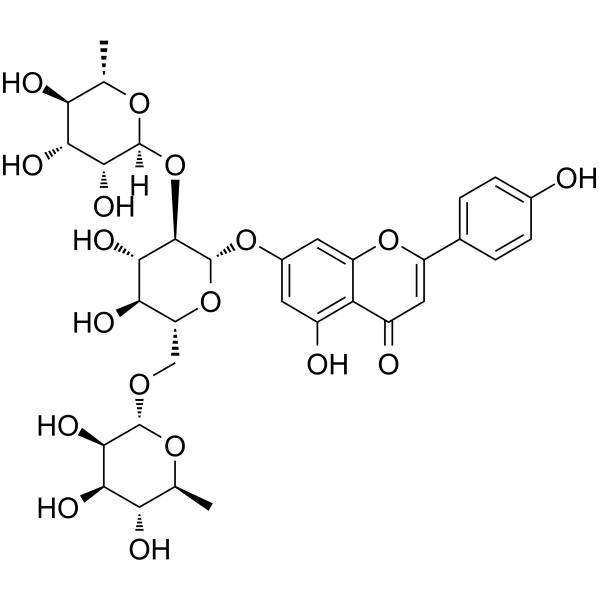
Ligustroflavone is an orally active flavonoid compound. Ligustroflavone can be extracted from Ligustrum lucidum. Ligustroflavone antagonizes the calcium-sensing receptor (CaSR), inhibits the RIPK1/RIPK3/MLKL pathway, and downregulates TGF-β/Smad signaling. Ligustroflavone regulates calcium metabolism, protects bone tissue, reduces cerebral ischemic injury, and inhibits liver fibrosis. Ligustroflavone can be used in the study of diabetic osteoporosis, ischemic stroke, and liver fibrosis [3].
loading...
    loading...
1
1 Cited Publications
Cat. No.: HY-131064
CAS No.: 2361139-70-8
Purity:  99.19%
Target:  

RIP kinase

Research Areas:  

Inflammation/Immunology

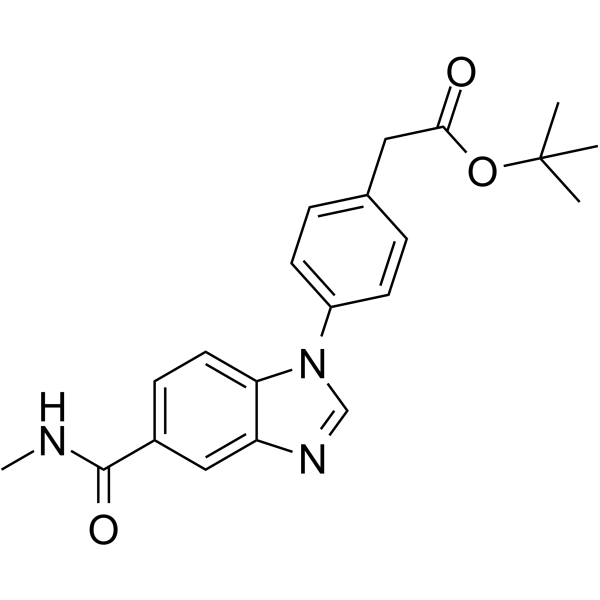
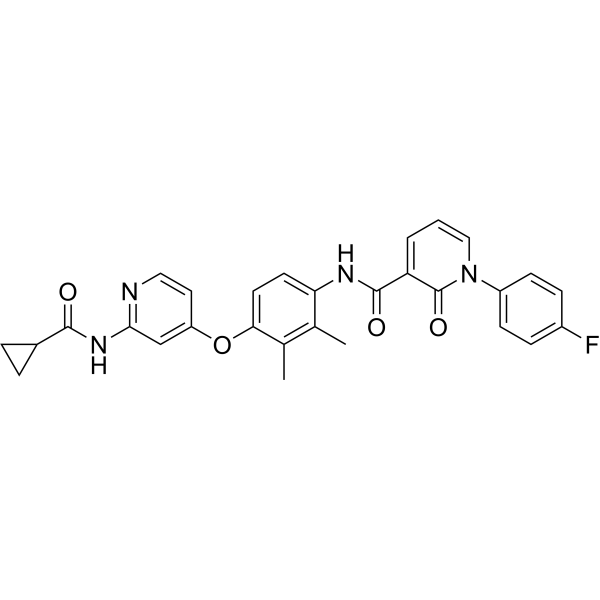
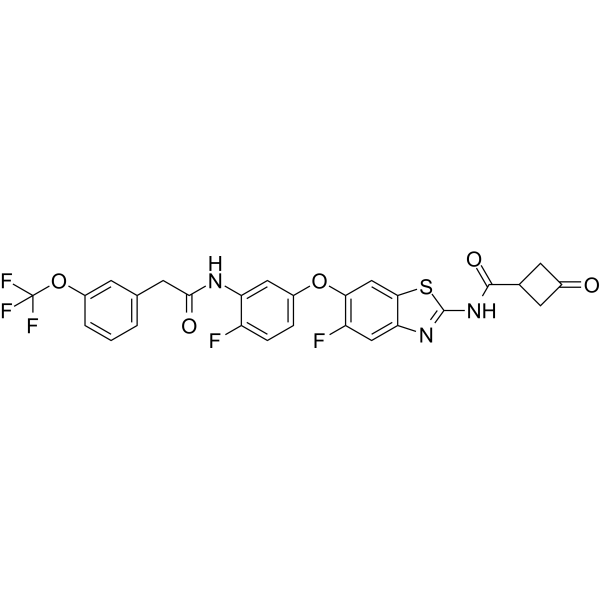
RIPK3-IN-1 is a RIPK3 type II DFG-out inhibitor with an IC50 of 9.1 nM. RIPK3-IN-1 inhibits RIPK1 and RIPK2 with IC50s of 5.5 and >10 μM. RIPK3-IN-1 is also a c-Met kinase inhibitor with an IC50 of 1.1 μM .
loading...
    loading...
1
1 Cited Publications
Cat. No.: HY-104021
CAS No.: 2361146-30-5
Purity:  99.95%
Synonyms: GSK'840
Target:  

RIP kinase

Research Areas:  

Inflammation/Immunology

GSK840 (GSK'840) is a receptor-interacting protein kinase 3 (RIP3 or RIPK3) inhibitor, which binds RIP3 kinase domain with an IC50 of 0.9 nM, and inhibits kinase activity with an IC50 of 0.3 nM .
loading...
    loading...
1
1 Cited Publications
Cat. No.: HY-171658
CAS No.: 3070346-91-4
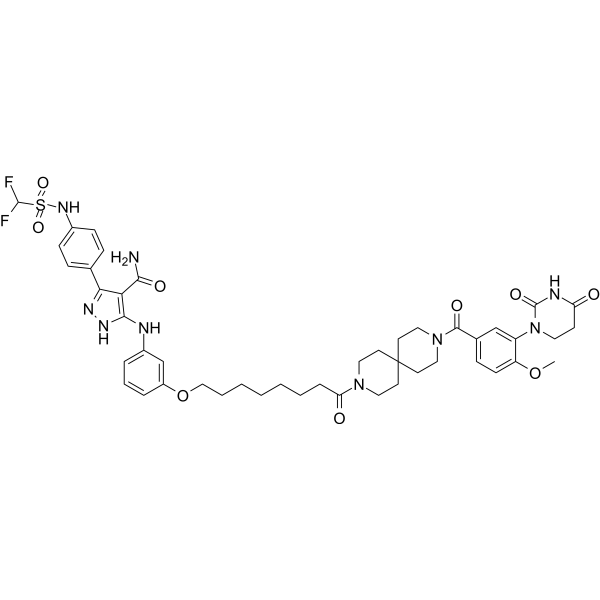
R1-ICR-5 is a highly selective RIPK1 PROTAC degrader. Mediated by VHL, R1-ICR-5 induces the degradation of RIPK1, which in turn dysregulates the TNFR1 and TLR3/4 signaling hubs, enhances the signaling outputs of NF-κB, MAPK and IFN, and simultaneously promotes RIPK3 activation and necroptosis (necroptosis). R1-ICR-5 can be used in the research of triple-negative breast cancer and skin inflammation .
loading...
    loading...
1
1 Cited Publications
Cat. No.: HY-156591
CAS No.: 3032600-90-8
Purity:  99.76%
Research Areas:  

Others

PROTAC MLKL Degrader-1 is a selective MLKL PROTAC degrader with a DC50 of 2.4 μM. PROTAC MLKL Degrader-1 blocks necroptosis without modulating the phosphorylation of RIPK1 or RIPK3, and exhibits a linear correlation between MLKL levels and necroptotic cell death .
loading...
    loading...
1
1 Cited Publications
Cat. No.: HY-158312
CAS No.: 2540881-21-6
Purity:  99.80%
UH15-38 is a potent RIPK3 inhibitor with an IC50 value of 20 nM. UH15-38 blocks IAV (influenza A virus)-activated necroptosis. UH15-38 dampens IAV-induced lung injury .
loading...
    loading...
1
1 Cited Publications
Cat. No.: HY-158312A
UH15-38 TFA is a potent RIPK3 inhibitor with an IC50 value of 20 nM. UH15-38 TFA blocks IAV (influenza A virus)-activated necroptosis. UH15-38 TFA dampens IAV-induced lung injury .
loading...
    loading...
Cat. No.: HY-N2909
CAS No.: 58115-31-4
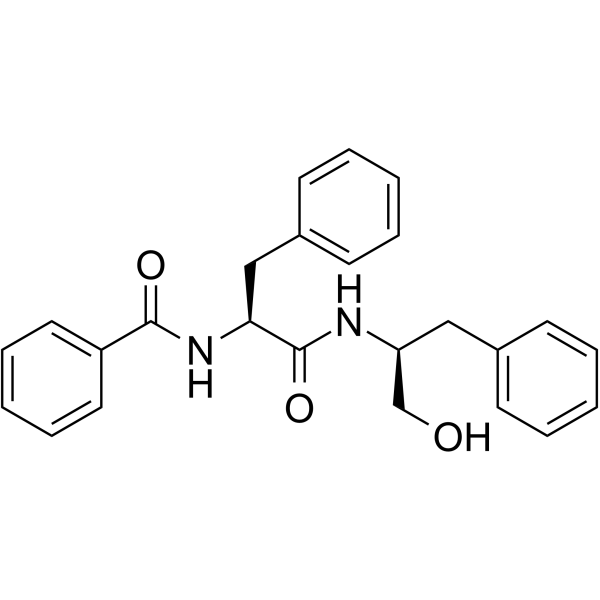
Aurantiamide is a non-covalent, orally active, blood-brain-permeable GRPR selective antagonist with anti-inflammatory and neuroprotective effects. Aurantiamide reduces inflammation and oxidative stress in renal tissue by inhibiting GRPR-mediated renal necrosis pathways (such as RIPK3/MLKL signaling) and NF-κB inflammatory pathways, exerting anti-acute kidney injury and endothelial function activities. Aurantiamide also inhibits the M1 polarization of microglia and inhibits NLRP3 activation, thereby improving AD mouse models. Aurantiamide has in vivo inhibitory efficacy in acute kidney injury models such as ischemia/reperfusion, sepsis, and hypertension models [3] .
loading...
    loading...
Cat. No.: HY-N0660
CAS No.: 55466-05-2
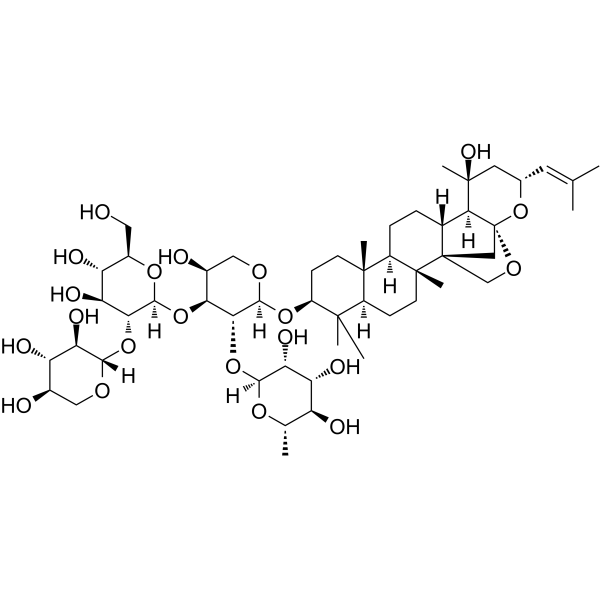
Jujuboside B is a bioactive saponin component isolated from Ziziphi Spinosae Semen (sour jujube seed), with oral efficacy and blood-brain barrier permeability. Jujuboside B induces acute leukemia cell death and drives necroptosis apoptosis by activating the RIPK1/RIPK3/MLKL pathway. Jujuboside B upregulates the expression of NOXA, PARP and caspase-3, activates AMPK, inhibits the proliferation of breast cancer cells, and induces cell apoptosis and autophagy. Jujuboside B inhibits angiogenesis and tumor growth by blocking the VEGFR-2 signaling pathway. Jujuboside B alleviates liver injury in mice by regulating the Nrf2-STING signaling pathway . Jujuboside B alleviates liver injury by regulating anti-inflammatory responses and downregulating the expression of 11β-HSD2. Jujuboside B induces ferroptosis and overcomes radioresistance in non-small cell lung cancer via the PPARγ-ATF3-Gpx4 signaling pathway. Jujuboside B exerts inhibitory effects on platelet aggregation. Jujuboside B inhibits febrile seizures by suppressing the activity of AMPA receptors. Jujuboside B reverses chronic unpredictable mild stress-promoted tumor progression by blocking the PI3K/Akt and MAPK/ERK pathways and dephosphorylating CREB signaling. Jujuboside B is applicable to related studies on acute leukemia, breast cancer, PM2.5-induced lung injury, hepatotoxicity, liver injury, colorectal cancer, non-small cell lung cancer, thromboembolic diseases, cardiovascular diseases associated with high platelet aggregation, febrile seizures, and depressive-like phenotypes [3] .
loading...
    loading...
Cat. No.: HY-108636
CAS No.: 1036069-26-7
Purity:  99.42%
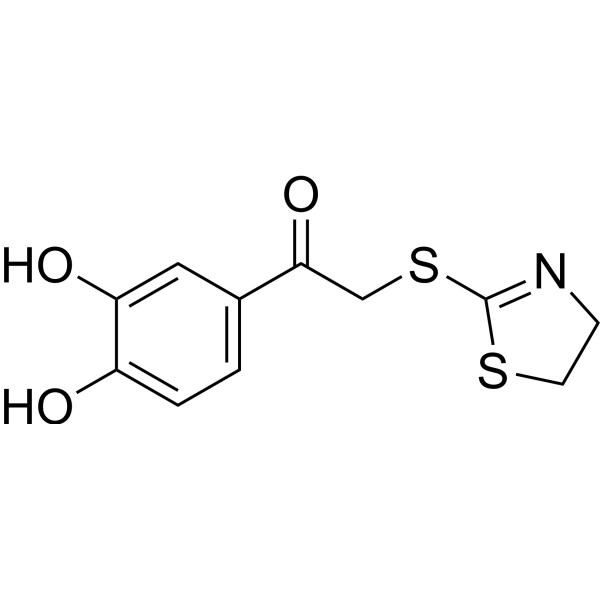
RETRA is a RIPK1/RIPK3/MLKL and p73 activator. RETRA mediates plasma membrane disruption, induces ROS accumulation, triggers early mitochondrial hyperpolarization, and synergistically drives necroptosis. RETRA inhibits cancer cells carrying mutant p53 via a p73-dependent salvage pathway. RETRA can be used in research related to cervical cancer and cancers with mutant p53 .
loading...
    loading...
Cat. No.: HY-177119
ZBP1 Covalent PROTAC-1 is a covalent Z-DNA binding protein 1 ZBP1 PROTAC degrader, with its DC50 being 25.69 nM. ZBP1 Covalent PROTAC-1 integrates the ligand that recruits the VHL E3 ubiquitin ligase and the DNA aptamer (Aptamer Z3) with the specific Zα domain that can bind to ZBP1, which has a high affinity (KD = 2.71 nM) with ZBP1. After degrading ZBP1, the phosphorylation levels of downstream signaling molecules RIPK3 and MLKL significantly decrease. ZBP1 Covalent PROTAC-1, encapsulated by nano-liposomes, significantly improves the survival rate of mice infected with influenza A virus (IAV) after administration via the trachea .
loading...
    loading...
Cat. No.: HY-RS11998
Research Areas:  

Others

RIPK3 Human Pre-designed siRNA Set A contains three designed siRNAs for RIPK3 gene (Human), as well as a negative control, a positive control, and a FAM-labeled negative control.

loading...
    loading...
Cat. No.: HY-149393
CAS No.: 3052303-53-1
Purity:  95.98%
Research Areas:  

Cancer

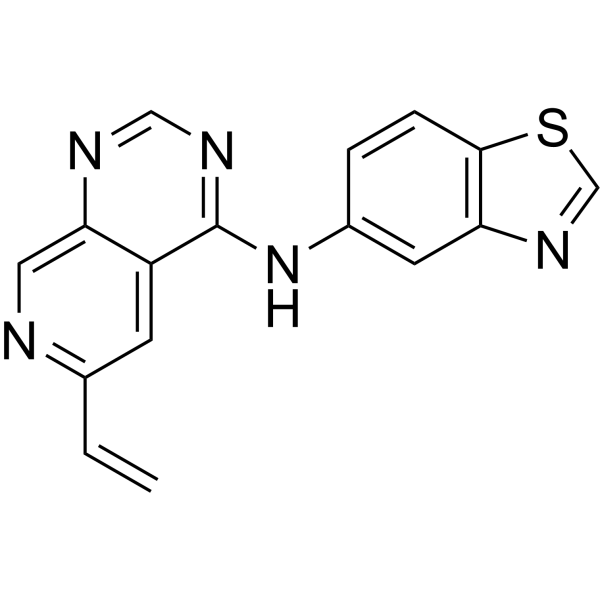
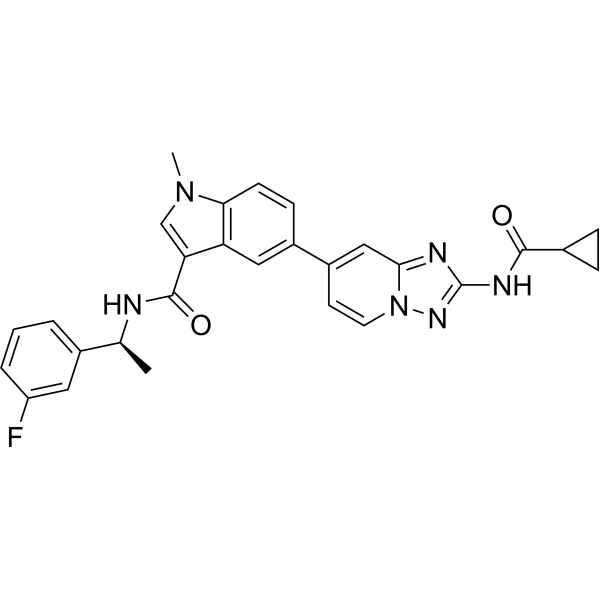
RIPK3-IN-3 (compound 20) is a selective inhibitor of RIP kinase RIPK3 (IC50=10 nM). RIPK3 mediates the phosphorylation of Mixed Lineage Kinase (MLKL) and causes necroptosis, while RIPK3-IN-3 inhibits p-MLKL oligomerization and thereby inhibits necroptosis. RIPK3-IN-3 also downregulates CXCL5 secretion and inhibits AsPC-1 cell migration and invasion .
loading...
    loading...
Cat. No.: HY-24504
CAS No.: 305866-70-0
MBA-m1 is a reversible non-covalent allosteric inhibitor of mMLKL2, with a Kd value of 6 μM for mMLKL2. MBA-m1 delays Necroptosis. MBA-m1 has no effect on the activities of RIPK1 or RIPK3. MBA-m1 alleviates skin injury, epidermal thickening and immune cell infiltration in dermatitis models, and reduces aortic diameter enlargement and structural changes in abdominal aortic aneurysm models. MBA-m1 can be used in research related to dermatitis and abdominal aortic aneurysm .
loading...
    loading...
Cat. No.: HY-151873
CAS No.: 3027645-52-6
Purity:  99.59%
Target:  

RIP kinase

Research Areas:  

Inflammation/Immunology Cancer

SZM679 is a potent, orally active and selective RIPK1 inhibitor with Kd values of 8.6 nM and >5000 nM for RIPK1 and RIPK3, respectively. SZM679 reverses the tumor necrosis factor-induced systemic inflammatory response. SZM679 decreases the Tau hyperphosphorylation, neuroinflammation, and the RIPK1 phosphorylation level in the hippocampus and cortex. SZM679 can be used in research of Alzheimer's disease (AD) .
loading...
    loading...
Cat. No.: HY-157456
CAS No.: 2763831-43-0
Purity:  ≥98.0%
Target:  

RIP kinase

Research Areas:  

Inflammation/Immunology

RIPK1-IN-19 is a selective RIPK1 inhibitor (IC50=15 nM). RIPK1-IN-19 does not show obvious activity against RIPK2, RIPK3, and RIPK4. RIPK1-IN-19 displays potent protective activity in TNFα-induced systemic inflammatory response syndrome (SIRS) model and Imiquimod (IMQ)-induced psoriasis model. RIPK1-IN-19 can be used in research on inflammation and immune system diseases .
loading...
    loading...
Cat. No.: HY-148365
Purity:  98.02%
Research Areas:  

Cancer

NecroIr1 is an iridium(III) complex, serves as necroptosis inducers in Cisplatin (HY-17394)-resistant lung cancer cells (A549R). NecroIr1 selectively accumulates in mitochondria, leading to oxidative stress and loss of mitochondrial membrane potential (MMP). NecroIr1 activates receptor-interacting serine-threonine kinase 3 (RIPK3) and Mixed Lineage Kinase (MLKL), and regulates CDK4 expression .
loading...
    loading...

