312 Results for "

fatty acyl-CoA

" in MedChemExpress (MCE) Product Catalog:
Products (312)

312 Results for "fatty acyl-CoA" in MCE Product Catalog:

22
22 Publications Verification
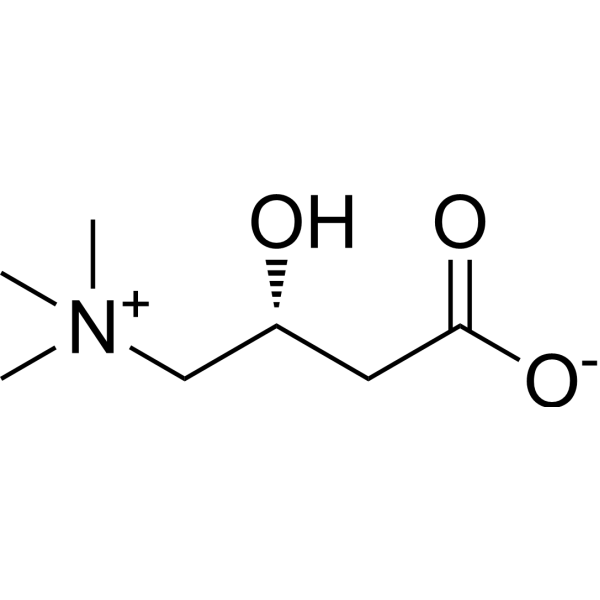
Cat. No.: HY-B0399
CAS No.: 541-15-1
Synonyms: (R)-Carnitine; Levocarnitine
L-Carnitine ((R)-Carnitine), a highly polar, small zwitterion, is an essential co-factor for the mitochondrial β-oxidation pathway. L-Carnitine functions to transport long chain fatty acyl-CoAs into the mitochondria for degradation by β-oxidation. L-Carnitine is an antioxidant. L-Carnitine can ameliorate metabolic imbalances in many inborn errors of metabolism .
loading...
    loading...
22
22 Publications Verification
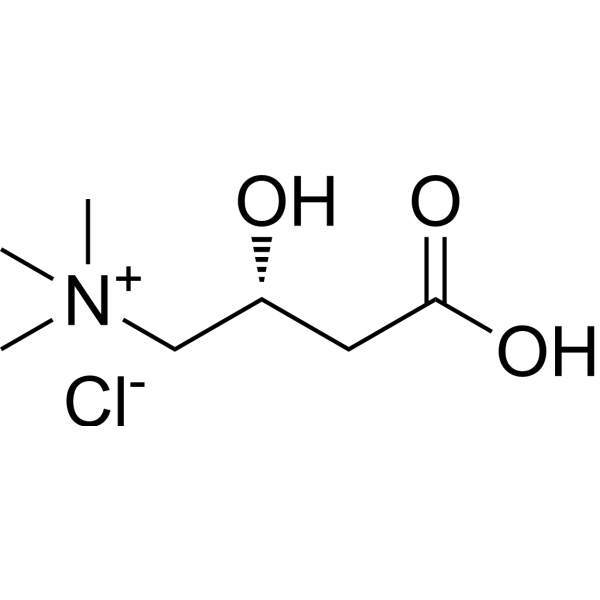
Cat. No.: HY-B2246
CAS No.: 6645-46-1
Synonyms: (R)-Carnitine hydrochloride; Levocarnitine hydrochloride
L-Carnitine hydrochloride ((R)-Carnitine hydrochloride), a highly polar, small zwitterion, is an essential co-factor for the mitochondrial β-oxidation pathway. L-Carnitine hydrochloride functions to transport long chain fatty acyl-CoAs into the mitochondria for degradation by β-oxidation. L-Carnitine hydrochloride is an antioxidant. L-Carnitine hydrochloride can ameliorate metabolic imbalances in many inborn errors of metabolism .
loading...
    loading...
22
22 Publications Verification
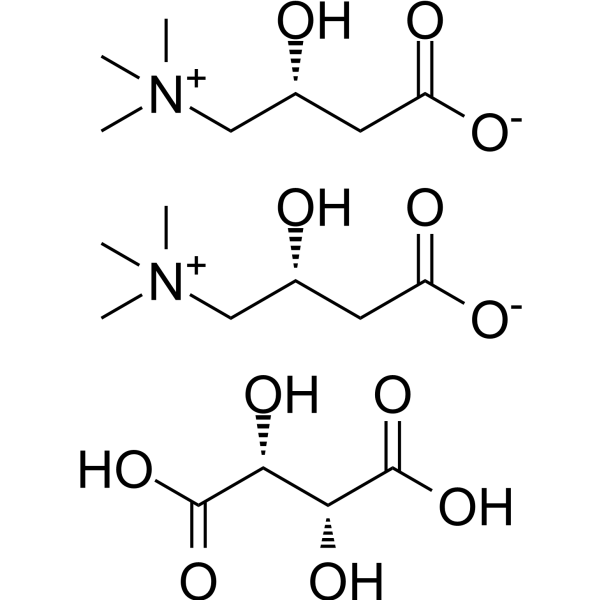
Cat. No.: HY-W105518
CAS No.: 36687-82-8
L-Carnitine tartrate is a highly polar, small zwitterion. L-Carnitine tartrate is an essential co-factor for the mitochondrial β-oxidation pathway. L-Carnitine tartrate functions to transport long chain fatty acyl-CoAs into the mitochondria for degradation by β-oxidation. L-Carnitine tartrate is an antioxidant. L-Carnitine tartrate can ameliorate metabolic imbalances in many inborn errors of metabolism [3] .
loading...
    loading...
12
12 Cited Publications
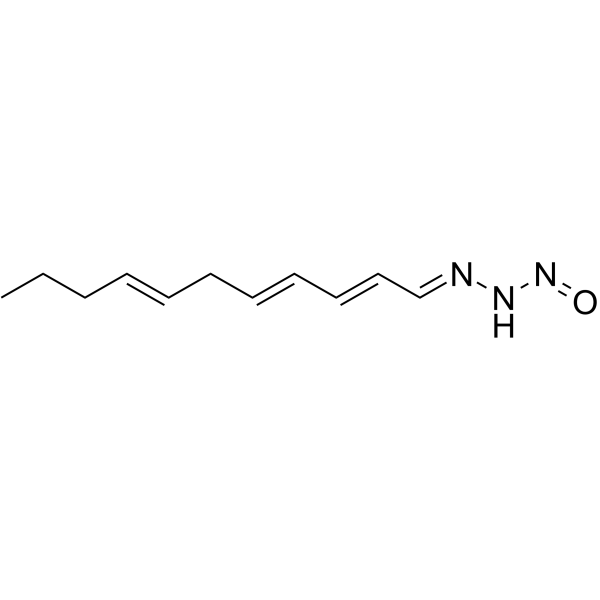
Cat. No.: HY-N6707
CAS No.: 76896-80-5
Synonyms: WS 1228A; FR 900190
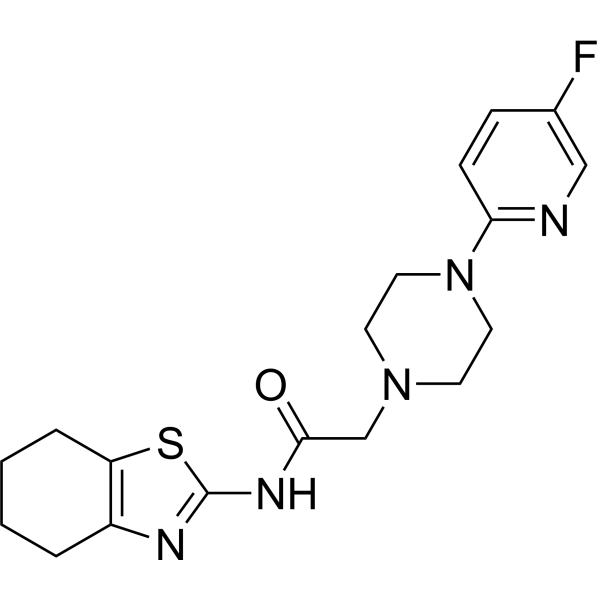
Triacsin C (WS 1228A), is an orally active and intracellular long-chain acyl-CoA synthetases (ACSL) inhibitor, which can be isolated from Streptomyces aureofaciens. Triacsin C inhibits TAG accumulation into lipid droplets (LD) by suppressing ACSL activity . Triacsin C exhibits highly inhibitory effect against rotavirus replication .
loading...
    loading...
2
2 Cited Publications
Cat. No.: HY-141699
CAS No.: 1431945-95-7
Purity:  99.55%
Target:  

FATP

Research Areas:  

Metabolic Disease

FATP1-IN-1 (compound 5k) is a fatty acid transport protein 1 (FATP1) inhibitor. FATP1-IN-1 is an inhibition of recombinant human or mouse acyl-CoA synthetase activity of FATP1, with the IC50 values of 0.046 μM or 0.60 μM, respectively .
loading...
    loading...
2
2 Cited Publications
Cat. No.: HY-B1212
CAS No.: 521-74-4
Synonyms: Dibromohydroxyquinoline; 5,7-Dibromo-8-hydroxyquinoline
Research Areas:  

Infection

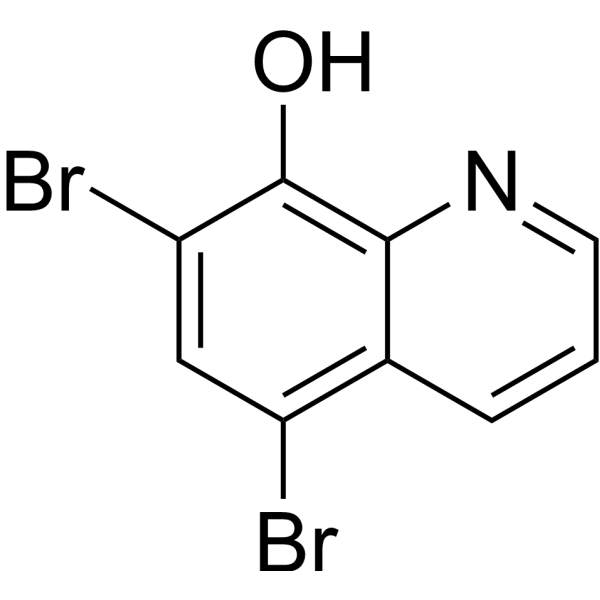
Broxyquinoline (Dibromohydroxyquinoline) is an effective inhibitor of severe fever with thrombocytopenia syndrome virus (SFTSV) with an IC50 of 5.8 µM. Additionally, Broxyquinoline is an inhibitor of CpACBP1 with an IC50 of 64.9 μM. CpACBP1 is a fatty acyl-CoA binding protein of Cryptosporidium parvum, thus Broxyquinoline has the potential to inhibit parasite growth. Broxyquinoline shows promise for research in the field of infectious diseases .
loading...
    loading...
1
1 Cited Publications
Cat. No.: HY-113165A
CAS No.: 6920-31-6
Purity:  ≥98.0%
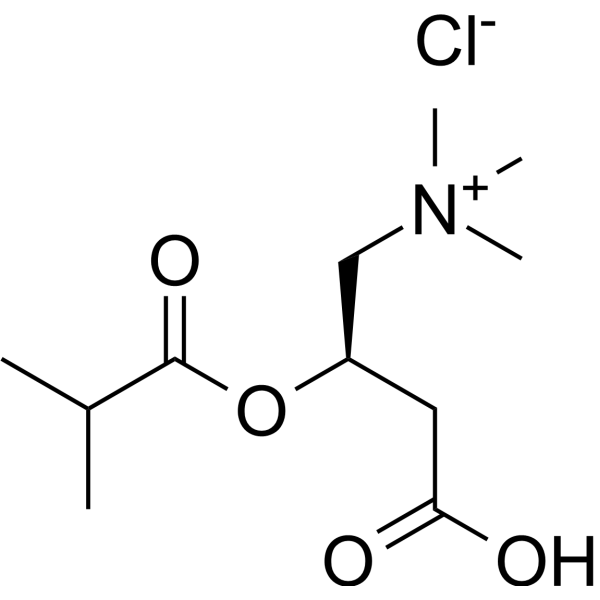
Isobutyryl-L-carnitine chloride is a biomarker. Isobutyryl-L-carnitine chloride is a product of acyl-CoA dehydrogenases involved in fatty acid β-oxidation, and it buffers the mitochondrial acyl-CoA/CoA ratio, oxidizes branched-chain amino acids, and supports the endogenous antioxidant defense system. Isobutyryl-L-carnitine chloride is a plasma biomarker of hepatic OCT1 transporter inhibition. Isobutyryl-L-carnitine chloride is a urinary biomarker of renal cell carcinoma, and its levels are elevated one year after nephrectomy compared with before nephrectomy. Isobutyryl-L-carnitine chloride can be used in research on renal cell carcinoma .
loading...
    loading...
1
1 Cited Publications
Cat. No.: HY-113165
CAS No.: 25518-49-4
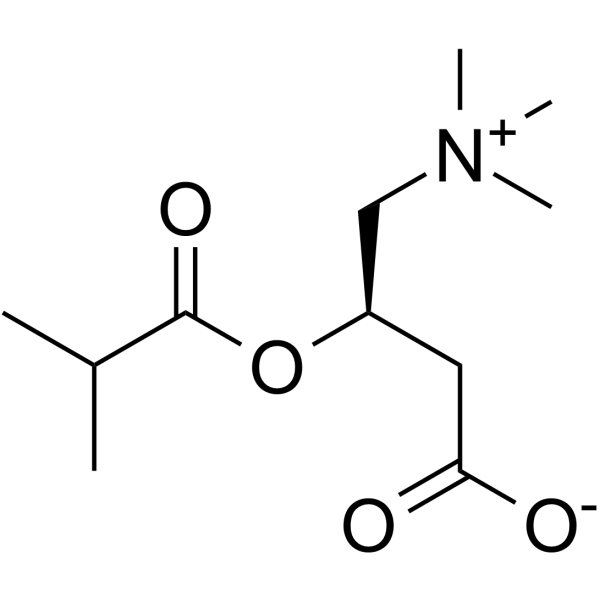
Isobutyryl-L-carnitine is a biomarker. Isobutyryl-L-carnitine is a product of acyl-CoA dehydrogenases involved in fatty acid β-oxidation, and it buffers the mitochondrial acyl-CoA/CoA ratio, oxidizes branched-chain amino acids, and supports the endogenous antioxidant defense system. Isobutyryl-L-carnitine is a plasma biomarker of hepatic OCT1 transporter inhibition. Isobutyryl-L-carnitine is a urinary biomarker of renal cell carcinoma, and its levels are elevated one year after nephrectomy compared with before nephrectomy. Isobutyryl-L-carnitine can be used in research on renal cell carcinoma .
loading...
    loading...
1
1 Cited Publications
Cat. No.: HY-P86465
Synonyms: Long-chain-fatty-acid--CoA ligase 4; Long-chain acyl-CoA synthetase 4; LACS 4; ACS4 antibody; ACSL 4 antibody; Acsl4 antibody

Host:  

Rabbit

Application:  

WB, IHC-P, ICC/IF, IP, ELISA

Reactivity:  

Human, Mouse, Rat

loading...
    loading...
1
1 Cited Publications
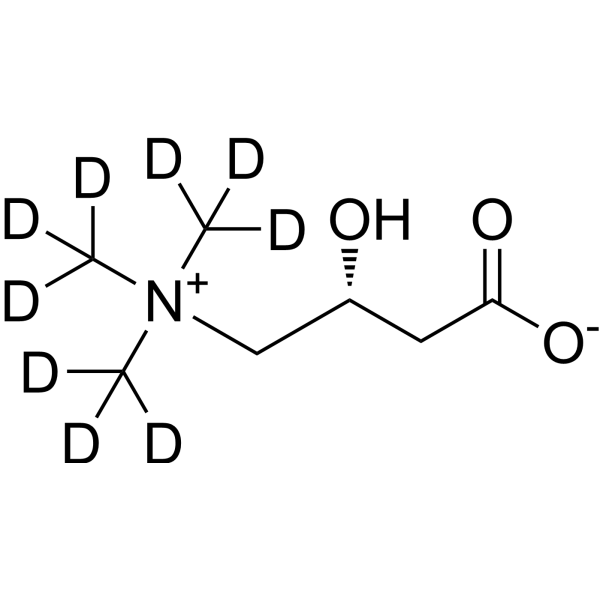
Cat. No.: HY-B0399S
CAS No.: 126827-79-0
Synonyms: (R)-Carnitine-d9; Levocarnitine-d9
L-Carnitine-d9 is the deuterium labeled L-Carnitine. L-Carnitine (Levocarnitine) is an endogenous molecule involved in fatty acid metabolism, biosynthesized within the human body using amino acids: L-lysine and L-methionine, as substrates. L-Carnitine functions to transport long chain fatty acyl-CoAs into the mitochondria for degradation by β-oxidation. L-carnitine can ameliorate metabolic imbalances in many inborn errors of metabolism .
loading...
    loading...
1
1 Cited Publications
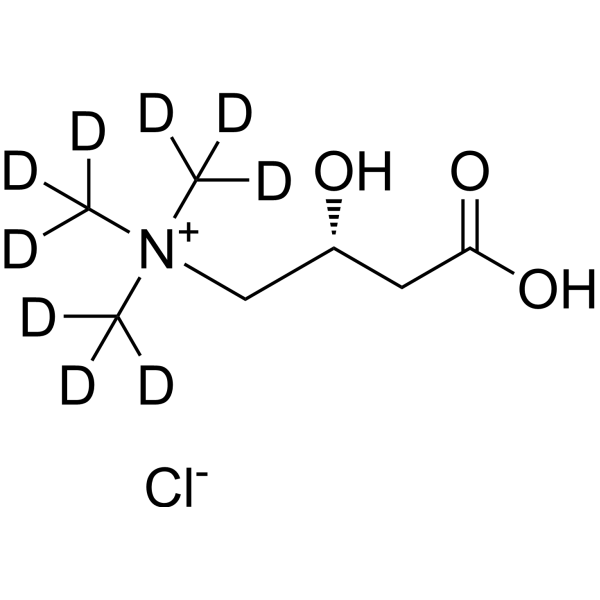
Cat. No.: HY-B2246S
CAS No.: 2687961-04-0
Synonyms: (R)-Carnitine-d9 chloride; Levocarnitine-d9 chloride
L-Carnitine-d9 (chloride)e is the deuterium labeled L-Carnitine chloride. L-Carnitine chloride, a highly polar, small zwitterion, is an essential co-factor for the mitochondrial β-oxidation pathway. L-Carnitine chloride functions to transport long chain fatty acyl-CoAs into the mitochondria for degradation by β-oxidation. L-Carnitine chloride is an antioxidant. L-Carnitine chloride can ameliorate metabolic imbalances in many inborn errors of metabolism .
loading...
    loading...
1
1 Cited Publications
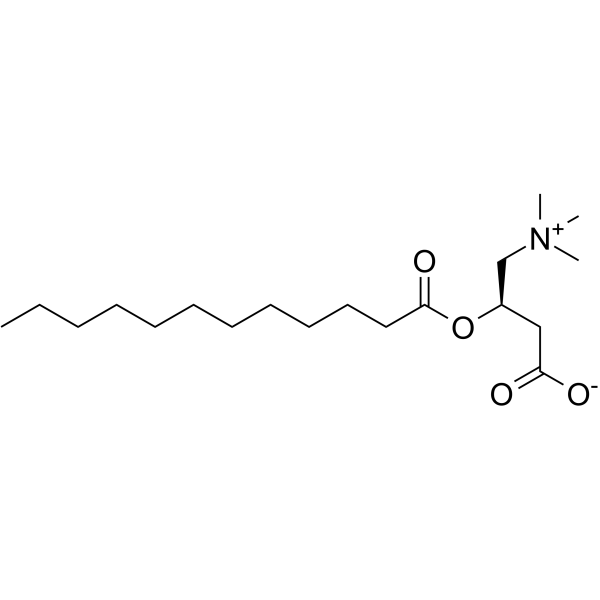
Cat. No.: HY-113166
CAS No.: 25518-54-1
Purity:  99.75%
Synonyms: (-)-Lauroylcarnitine
Dodecanoylcarnitine ((-)-Lauroylcarnitine) is a medium long-chain acylcarnitine, an intermediate product in key energy metabolic pathways of fatty acid β-oxidation and amino acids catabolism. The abnormal decrease in the Dodecanoylcarnitine levels indicats that mitochondrial fuel metabolism, including fatty acid oxidation is significantly disturbed. Changes in plasma concentrations of Dodecanoylcarnitine are not only associated with type II diabetes, but also with pre-diabetes status. Dodecanoylcarnitine is present in fatty acid oxidation disorders such as long-chain acyl CoA dehydrogenase deficiency, carnitine palmitoyltransferase I/II deficiency, and is also associated with celiac disease. Dodecanoylcarnitine deomonstrates high sensitivities and specificities in predicting asthma. Combined model of Decanoylcarnitine (HY-113069), Dodecanoylcarnitine, PC (16:0/0:0), and Asp Arg Pro can be used as a potential biomarker for the diagnosis of Yin-deficiency-heat syndrome .
loading...
    loading...
Cat. No.: HY-E70009
CAS No.: 61116-22-1
Synonyms: ACO
Research Areas:  

Others

Acyl-CoA oxidase (ACO) is a peroxisomal catalyst. Acyl-CoA oxidase acts as a key rate-limiting enzyme in the process of peroxisomal fatty acid β-oxidation. Acyl-CoA oxidase participates in lipid catabolism and phytohormone biosynthesis pathways .
loading...
    loading...
Cat. No.: HY-113201
CAS No.: 25597-07-3
Purity:  ≥98.0%
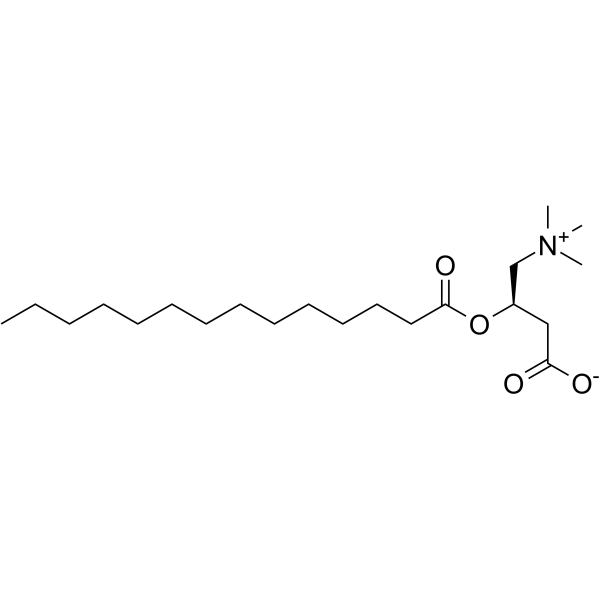
Tetradecanoylcarnitine is an acylcarnitine involved in mitochondrial β-oxidation of long-chain saturated fatty acids and fatty acid metabolism. Tetradecanoylcarnitine serves as a biomarker for very long-chain acyl-CoA dehydrogenase deficiency and MPTP (HY-15608)-induced Parkinson's disease. Tetradecanoylcarnitine exhibits a characteristic significant elevation in plasma levels in patients with sarcopenia, including those complicated with hypertension, and this elevation is closely associated with an increased risk of death. Tetradecanoylcarnitine is widely used in research on the pathological mechanisms of diseases such as Parkinson's disease and sarcopenia .
loading...
    loading...
Cat. No.: HY-E70523
CAS No.: 4752-33-4
Synonyms: Valeryl-CoA; Valeryl-coenzyme A; Pentanoyl coenzyme A free acid
Target:  

Endogenous Metabolite

Research Areas:  

Metabolic Disease

Pentanoyl coenzyme A (Valeryl-CoA) is a short-chain fatty acyl-CoA that functions as an intermediate in mitochondrial β-oxidation and related metabolic pathways. Pentanoyl coenzyme A results from the formal condensation of the thiol group of coenzyme A with the carboxy group of pentanoic acid. Pentanoyl coenzyme A's levels can reflect changes in lipid metabolism under different physiological and pathological conditions. Pentanoyl coenzyme A can be used for research on lipid metabolism .
loading...
    loading...
Cat. No.: HY-128603
CAS No.: 1383119-39-8
Research Areas:  

Metabolic Disease

2-Hydroxyisobutyryl-CoA is a hydroxy fatty acyl-CoA. 2-Hydroxyisobutyryl-CoA mutase forms the isomer (S)-3-hydroxybutyryl-CoA .
loading...
    loading...
Cat. No.: HY-CE01710
CAS No.: 87935-97-5
Synonyms: Coenzyme A,S-(9Z)-9-tetradecenoate
Target:  

Endogenous Metabolite

Research Areas:  

Others

Myristoleoyl-CoA (Coenzyme A,S-(9Z)-9-tetradecenoate) is a monounsaturated fatty acyl-CoA derivative. Myristoleoyl-CoA is produced via the Δ9-desaturase-catalyzed desaturation of myristoyl-CoA in chicken liver microsomes .
loading...
    loading...
Cat. No.: HY-166119
CAS No.: 6709-57-5
Synonyms: Linoleoyl Coenzyme A; 9(Z),12(Z)-Octadecadienoyl Coenzyme A; 9Z,12Z-Octadecadienoyl-CoA; 9Z,12Z-Octadecadienoyl-coenzyme A
Research Areas:  

Metabolic Disease

Linoleoyl-CoA (Linoleoyl Coenzyme A) is a long-chain acyl-CoA ester formed from linoleic acid and coenzyme A. Linoleoyl-CoA serves as a key activated fatty acid intermediate involved in lipid biosynthesis, fatty acid β-oxidation and the regulation of cellular metabolism. Elevated levels of Linoleoyl-CoA in skeletal muscle correlate with increased lipid availability, insulin resistance and metabolic dysregulation and can be used for activity assays of acyl-CoA synthetases, acyltransferases and fatty acid metabolic enzymes .
loading...
    loading...
Cat. No.: HY-CE01051
CAS No.: 86370-20-9
Synonyms: 3-Ketostearoyl-Coenzyme A
Research Areas:  

Metabolic Disease

3-Ketostearoyl-CoA (3-Ketostearoyl-Coenzyme A) is a 3-oxo-fatty acyl-CoA .
loading...
    loading...
Cat. No.: HY-CE00435
CAS No.: 1111-46-2
Synonyms: (R)-3-Hydroxydecanoyl-coenzyme A
Research Areas:  

Metabolic Disease

(R)-3-Hydroxydecanoyl-CoA ((R)-3-Hydroxydecanoyl-coenzyme A) is a 3-hydroxy fatty acyl-CoA.
loading...
    loading...

