
1. Search Result
Search Result
Results for "

fermentation

" in MedChemExpress (MCE) Product Catalog:

174

Inhibitors & Agonists

1

Screening Libraries

2

Fluorescent Dye

12

Biochemical Assay Reagents

2

Peptides

99

Natural
Products

36

Isotope-Labeled Compounds

2

Oligonucleotides

2

GMP Molecules

Cat. No. Product Name Target Research Areas Chemical Structure
  • HY-W050026
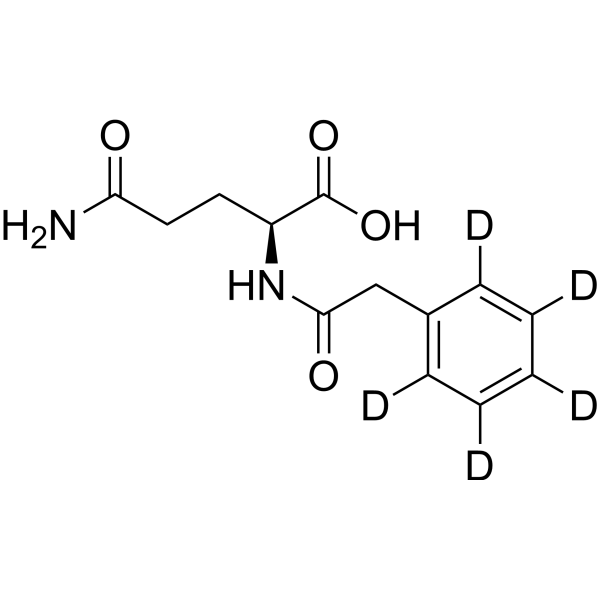
    Phenylacetylglutamine
    3 Publications Verification

    NSC 203800; Phenylacetyl-L-glutamine

    Endogenous Metabolite Others
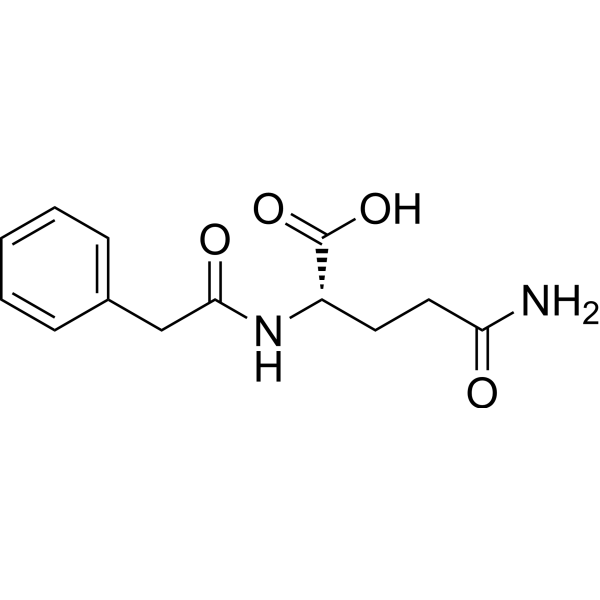
    Phenylacetylglutamine is a colonic microbial metabolite from amino acid fermentation.
    Phenylacetylglutamine
  • HY-N0658
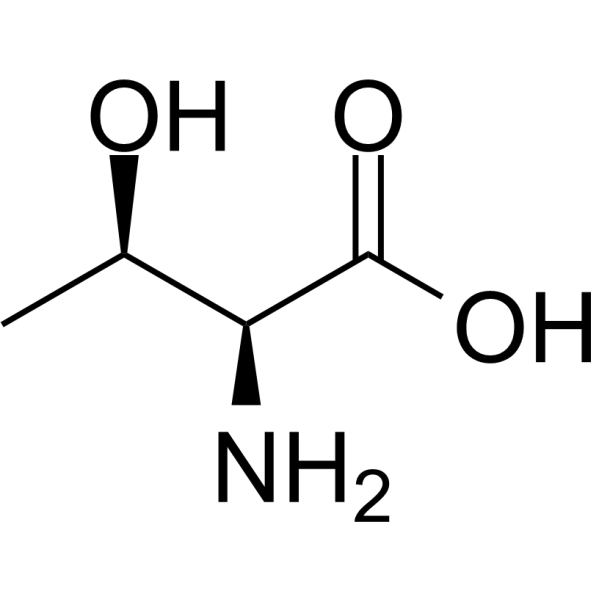
    L-Threonine
    3 Publications Verification

    Endogenous Metabolite Others
    L-Threonine is a natural amino acid, can be produced by microbial fermentation, and is used in food, medicine, or feed .
    L-Threonine
  • HY-N2325

    Endogenous Metabolite Others
    D-(+)-Cellobiose is a water-soluble disaccharide and an important intermediate product in the degradation process of cellulose and hemicellulose. D-(+)-cellobiose is used as a carbon source by microorganisms in fermentation processes, where it is converted into ethanol or other metabolic products. D-(+)-Cellobiose has significant application value in biofuel production, such as bioethanol .
    D-(+)-Cellobiose
  • HY-N0537
    Xylose
    5 Publications Verification

    D-(+)-Xylose; (+)-Xylose; Wood sugar

    Environmental Pollutants Endogenous Metabolite Metabolic Disease
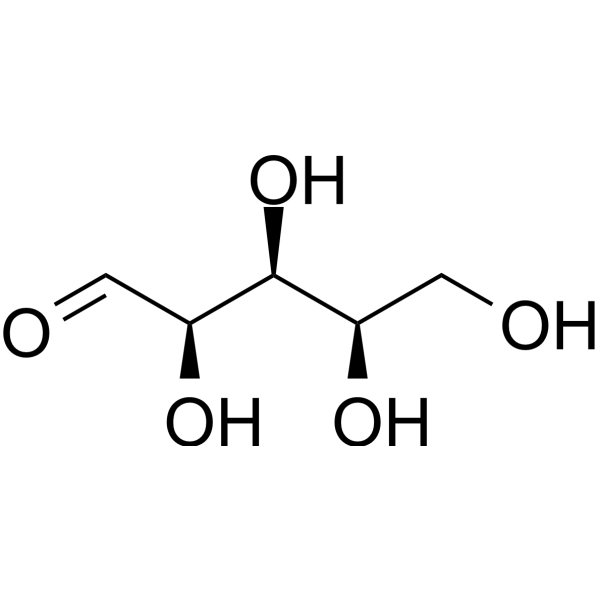
    Xylose (D-(+)-Xylose) is a natural pentose sugar that is catalyzed by xylose isomerase to form xylulose, which is a key step in the anaerobic ethanol fermentation of Xylose. Xylose can be used by microorganisms to produce fuels, chemicals, and bulk industrial enzymes. Xylose provides the substances and energy for cells, as a carbon source for the biosynthesis of high-value chemicals and biofuel. Xylose can be used to fully explore lignocellulose resources and provide a new direction for microbia fermentation .
    Xylose
  • HY-B1207
    Urethane
    4 Publications Verification

    Ethyl carbamate; Carbamic acid ethyl ester; Ethylurethane

    Environmental Pollutants Bacterial Parasite Infection Neurological Disease Cancer
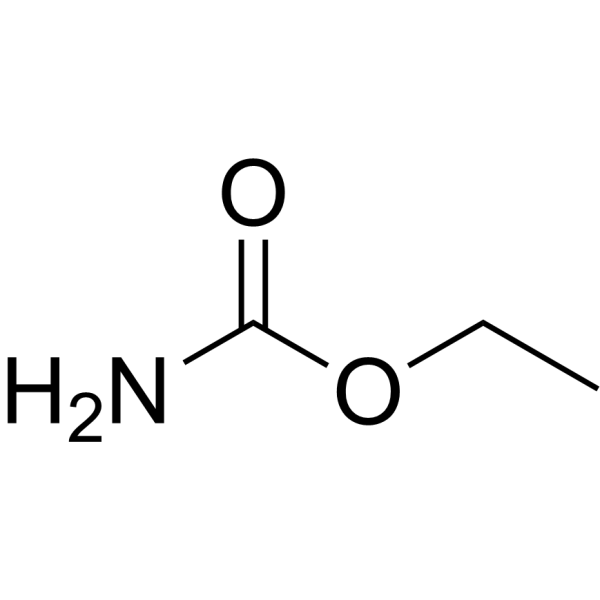
    Urethane (Ethyl carbamate), the ethyl ester of carbamic acid, is a byproduct of fermentation found in various food products. Urethane has the ability to suppress bacterial, protozoal, sea urchin egg, and plant tissue growth in vitro .
    Urethane
  • HY-P2373
    Kinase, Natto fermentation
    4 Publications Verification

    PAI-1 Cardiovascular Disease
    Kinase, Natto fermentation is a potent fibrinolytic enzyme. Kinase, Natto fermentation can break down blood clots by directly hydrolyzing fibrin and plasmin substrate. Kinase, Natto fermentation can be used for the research of cardiovascular diseases .
    Kinase, Natto fermentation
  • HY-Y0051
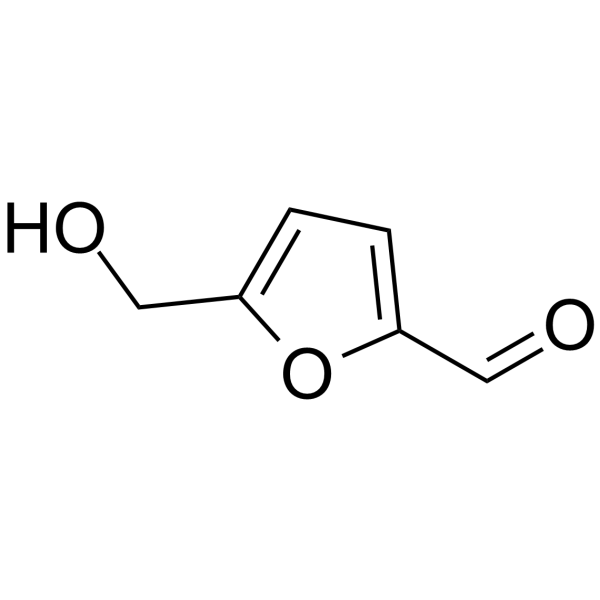
    5-Hydroxymethylfurfural
    1 Publications Verification

    2-Hydroxymethyl-5-furfural; 2-Formyl-5-hydroxymethylfuran

    Fungal Others
    5-Hydroxymethylfurfural (2-Hydroxymethyl-5-furfural), derived from Cornus officinalis, inhibits yeast growth and fermentation as stressors.
    5-Hydroxymethylfurfural
  • HY-B2228
    Proteinase, Aspergillus oryzae
    1 Publications Verification

    Biochemical Assay Reagents Cancer
    Proteinase, Aspergillus oryzae is a serine protease that hydrolyzes peptide bonds in protein substrates, preferring alkaline conditions (optimal pH 10.5). It efficiently degrades casein, poly-L-glutamic acid, and poly-L-lysine, with activity irreversibly inhibited by diisopropylfluorophosphate (DFP) and potato inhibitor. This enzyme catalyzes proteolysis via serine residues in its active site, finding applications in food processing (e.g., soy sauce fermentation), detergents, and leather industries due to its high yield in solid-state fermentation and cost-effective production.
    Proteinase, Aspergillus oryzae
  • HY-W017758

    Environmental Pollutants Others
    1,3-Propanediol is produced in nature by the fermentation of glycerol in microorganism, which has orally active .
    1,3-Propanediol
  • HY-138800
    Spinosad
    4 Publications Verification

    nAChR Neurological Disease
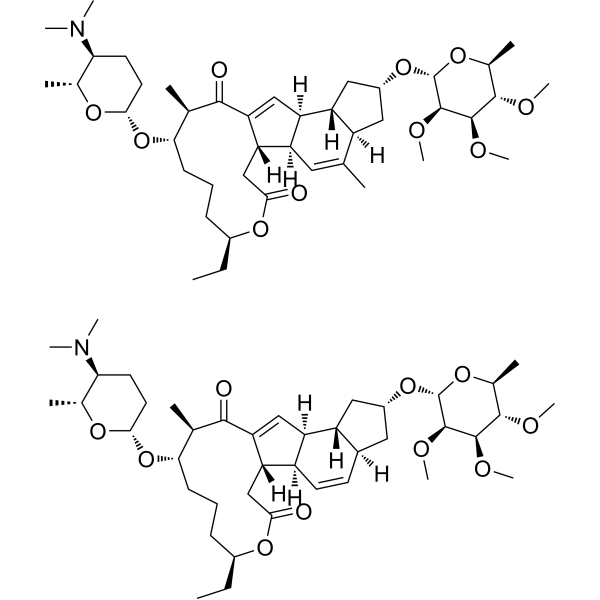
    Spinosad, a mixture of spinosyns A and D known as fermentation products of a soil actinomycete (Saccharopolyspora spinosa), is a biological neurotoxic insecticide with a broader action spectrum. Spinosad targets the nicotinic acetylcholine receptor (nAChRs) of the insect nervous system. Spinosad has an excellent environmental and mammalian toxicological profile. Larvicidal activity .
    Spinosad
  • HY-134426

    Endogenous Metabolite Metabolic Disease
    DL-β-Hydroxybutyryl coenzyme A lithium is an intermediate in the fermentation of butyric acid and the metabolism of lysine and tryptophan, and is produced from β-hydroxybutyric acid by short-chain-CoA synthase .
    DL-β-Hydroxybutyryl coenzyme A lithium
  • HY-N0420S1

    Wormwood acid-d4

    Endogenous Metabolite Metabolic Disease
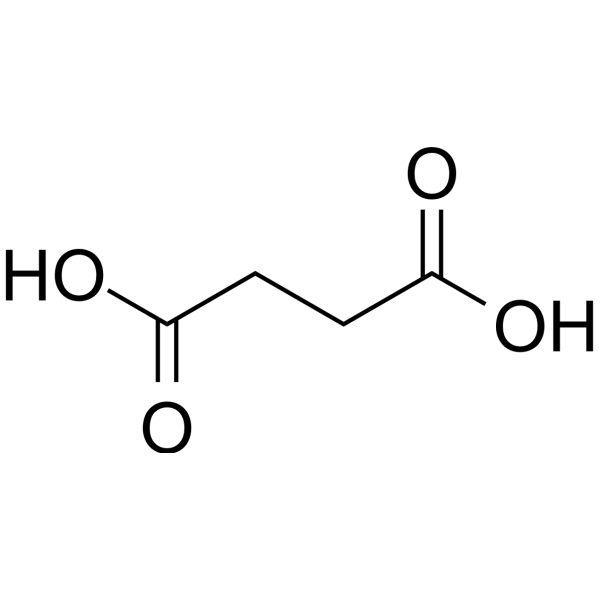
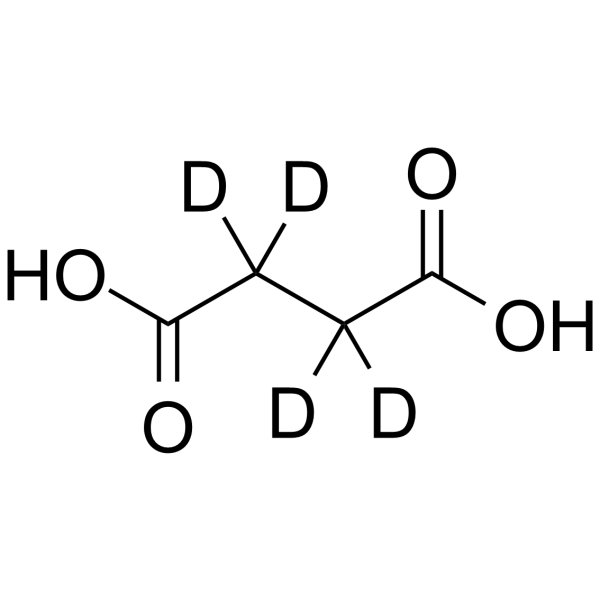
    Succinic-2,2,3,3-d4 acid is the deuterium labeled Succinic acid. Succinic acid is an intermediate product of the tricarboxylic acid cycle, as well as one of fermentation products of anaerobic metabolism.
    Succinic acid-d4
  • HY-113362
    Petroselinic acid
    1 Publications Verification

    Antibiotic Bacterial Fungal Infection
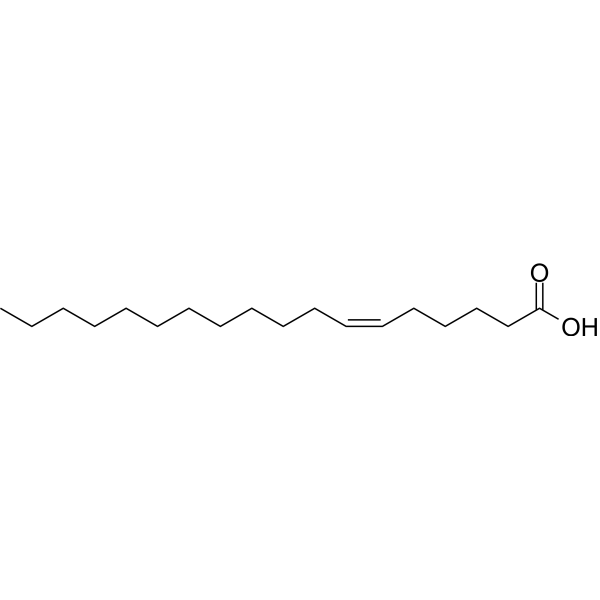
    Petroselinic acid, a positional isomer of oleic acid, is isolated from the vegetable oil of Coriandrum sativum fruits. Petroselinic acid is used as substrate for sophorolipid fermentation. Petroselinic acid inhibits the biofilm formation in microorganisms, exhibits antibacterial and antifungal activities. Petroselinic acid is orally active [4.
    Petroselinic acid
  • HY-127033

    α-Santalene

    Drug Derivative Infection Cancer
    Santalene is a bicyclic sesquiterpene and a major component of sandalwood oil found in the heartwood of Santalum album. Santalene exhibits antibacterial, antioxidant and antitumor pharmacological activities .
    Santalene
  • HY-W050026S
    Phenylacetylglutamine-d5
    2 Publications Verification

    NSC 203800-d5; Phenylacetyl-L-glutamine-d5

    Endogenous Metabolite Isotope-Labeled Compounds Others
    Phenylacetylglutamine-d5 (NSC 203800-d5) is the deuterium labeled Phenylacetylglutamine (HY-W050026). Phenylacetylglutamine is a colonic microbial metabolite from amino acid fermentation .
    Phenylacetylglutamine-d5
  • HY-W012708

    Endogenous Metabolite Others
    3-Amino-4-methylpentanoic acid is a β amino acid and positional isomer of L-leucine which is naturally produced in humans via the metabolism of L-leucine by the enzyme leucine 2,3-aminomutase. 3-Amino-4-methylpentanoic acid is also a metabolite produced by Torulaspora delbrueckii and can be used in the research of wine fermentation .
    3-Amino-4-methylpentanoic acid
  • HY-N0658S6
    L-Threonine-13C4
    1 Publications Verification

    Isotope-Labeled Compounds Endogenous Metabolite Others
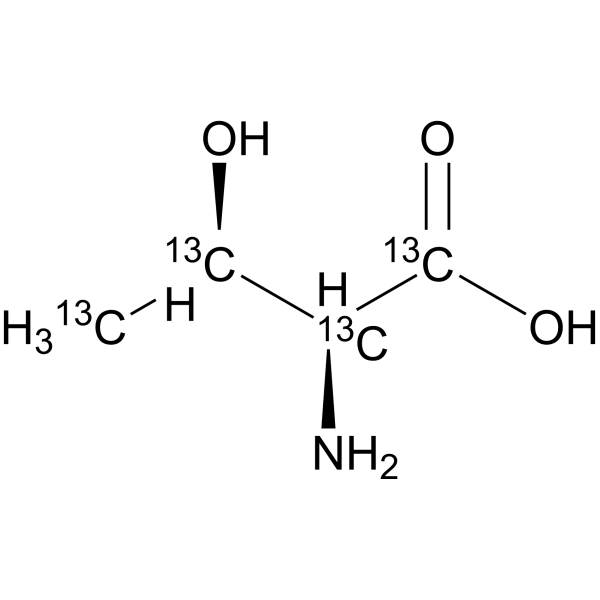
    L-Threonine- 13C4 is the 13C labeled L-Threonine . L-Threonine is a natural amino acid, can be produced by microbial fermentation, and is used in food, medicine, or feed .
    L-Threonine-13C4
  • HY-12361
    PF 1022A
    1 Publications Verification

    Parasite Infection
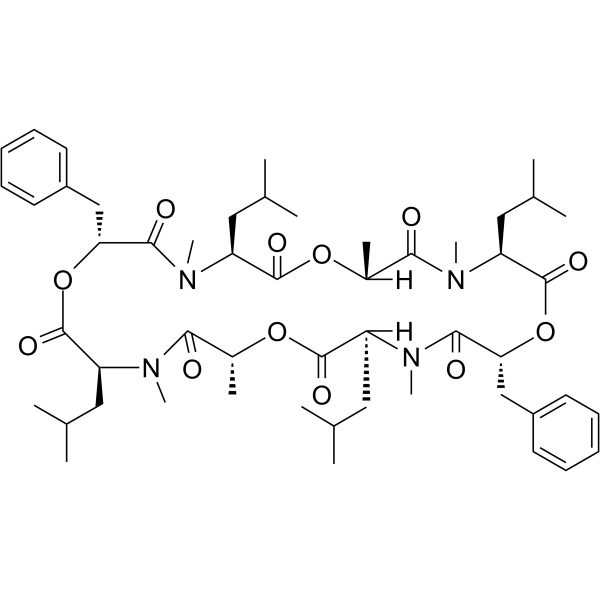
    PF 1022A is a cyclooctadepsipeptide with broadspectrum anthelmintic properties produced by fermentation of the fungus Mycelia sterilia. PF 1022A is a channel-forming ionophore. PF 1022A showes strong anthelmintic activities against Ascaridia galli in chickens. PF 1022A also can be used for angiostrongyliasis research .
    PF 1022A
  • HY-N4301

    Others Others
    Monensin B is a polyketide produced by Streptomyces cinnamonensis. Fermentations of Streptomyces cinnamonensis produce a mixture of Monensin A and Monensin B in a ratio dependent upon the relative concentrations of ethylmalonyl-CoA and methylmalonyl-CoA .
    Monensin B
  • HY-N0658S1

    Isotope-Labeled Compounds Endogenous Metabolite Others
    L-Threonine-d5 is the deuterium labeled L-Threonine. L-Threonine is a natural amino acid, can be produced by microbial fermentation, and is used in food, medicine, or feed .
    L-Threonine-d5
  • HY-N2960

    Cholinesterase (ChE) Cardiovascular Disease Cancer
    Broussonin A is a potent BChE inhibitor, with an IC50 of 4.16 µM. Broussonin A is a diarylpropane natural product that can be isolated from the bark of Broussonetia papyrifera after solid fermentation .
    Broussonin A
  • HY-N0658S3

    Isotope-Labeled Compounds Endogenous Metabolite Others
    L-Threonine- 13C4, 15N is the 13C- and 15N-labeled L-Threonine. L-Threonine is a natural amino acid, can be produced by microbial fermentation, and is used in food, medicine, or feed .
    L-Threonine-13C4,15N
  • HY-N0420S

    Wormwood acid-d6

    Endogenous Metabolite Metabolic Disease
    Succinic acid-d6 is the deuterium labeled Succinic acid. Succinic acid is an intermediate product of the tricarboxylic acid cycle, as well as one of fermentation products of anaerobic metabolism.
    Succinic acid-d6
  • HY-W779019

    D-(+)-Xylose-13C5; (+)-Xylose-13C5; Wood sugar-13C5

    Isotope-Labeled Compounds Endogenous Metabolite Metabolic Disease
    Xylose- 13C5 (D-(+)-Xylose- 13C5) is 13C labeled Xylose. Xylose (D-(+)-Xylose) is a natural pentose sugar that is catalyzed by xylose isomerase to form xylulose, which is a key step in the anaerobic ethanol fermentation of Xylose. Xylose can be used by microorganisms to produce fuels, chemicals, and bulk industrial enzymes. Xylose provides the substances and energy for cells, as a carbon source for the biosynthesis of high-value chemicals and biofuel. Xylose can be used to fully explore lignocellulose resources and provide a new direction for microbia fermentation .
    Xylose-13C5
  • HY-B1207S

    Ethyl carbamate-d5; Carbamic acid ethyl ester-d5; Ethylurethane-d5

    Bacterial Parasite Infection Neurological Disease Cancer
    Urethane-d5 is the deuterium labeled Urethane. Urethane (Ethyl carbamate), the ethyl ester of carbamic acid, is a byproduct of fermentation found in various food products. Urethane has the ability to suppress bacterial, protozoal, sea urchin egg, and plant tissue growth in vitro .
    Urethane-d5
  • HY-N0658S

    Isotope-Labeled Compounds Endogenous Metabolite Others
    L-Threonine- 15N is the 15N-labeled L-Threonine. L-Threonine is a natural amino acid, can be produced by microbial fermentation, and is used in food, medicine, or feed .
    L-Threonine-15N
  • HY-N0658R

    Reference Standards Endogenous Metabolite Others
    L-Threonine (Standard) is the analytical standard of L-Threonine. This product is intended for research and analytical applications. L-Threonine is a natural amino acid, can be produced by microbial fermentation, and is used in food, medicine, or feed .
    L-Threonine (Standard)
  • HY-N0537R

    D-(+)-Xylose (Standard); (+)-Xylose (Standard); Wood sugar (Standard)

    Reference Standards Endogenous Metabolite Metabolic Disease
    Xylose (Standard) (D-(+)-Xylose (Standard)) is the analytical standard of Xylose (HY-N0537). This product is intended for research and analytical applications. Xylose (D-(+)-Xylose) is a natural pentose sugar that is catalyzed by xylose isomerase to form xylulose, which is a key step in the anaerobic ethanol fermentation of Xylose. Xylose can be used by microorganisms to produce fuels, chemicals, and bulk industrial enzymes. Xylose provides the substances and energy for cells, as a carbon source for the biosynthesis of high-value chemicals and biofuel. Xylose can be used to fully explore lignocellulose resources and provide a new direction for microbia fermentation.
    Xylose (Standard)
  • HY-N0537S3

    D-(+)-Xylose-2-13C; (+)-Xylose-2-13C; Wood sugar-2-13C

    Isotope-Labeled Compounds Endogenous Metabolite Metabolic Disease
    Xylose-2- 13C (D-(+)-Xylose-2- 13C) is the 13C labeled Xylose (HY-N0537). Xylose (D-(+)-Xylose) is a natural pentose sugar that is catalyzed by xylose isomerase to form xylulose, which is a key step in the anaerobic ethanol fermentation of Xylose. Xylose can be used by microorganisms to produce fuels, chemicals, and bulk industrial enzymes. Xylose provides the substances and energy for cells, as a carbon source for the biosynthesis of high-value chemicals and biofuel. Xylose can be used to fully explore lignocellulose resources and provide a new direction for microbia fermentation .
    Xylose-2-13C
  • HY-Y0051R

    2-Hydroxymethyl-5-furfural (Standard); 2-Formyl-5-hydroxymethylfuran (Standard)

    Reference Standards Fungal Others
    5-Hydroxymethylfurfural (Standard) is the analytical standard of 5-Hydroxymethylfurfural. This product is intended for research and analytical applications. 5-Hydroxymethylfurfural (2-Hydroxymethyl-5-furfural), derived from Cornus officinalis, inhibits yeast growth and fermentation as stressors.
    5-Hydroxymethylfurfural (Standard)
  • HY-125682

    Fungal Infection
    Amphotericin A is a tetraenic polyene antifungal agent, produced in the fermentation broth of Amphotericin B (HY-B0221). Amphotericin A has a structure identical to Amphotericin B except for a single bond between carbons 28 and 29 instead of a double bond. Amphotericin A can be used for research on fungal infection .
    Amphotericin A
  • HY-N16433

    Parasite Insecticide Infection
    Nodulisporic acid A (Compound 1a) is an insecticidal agent. Nodulisporic acid A can isolated from fermentations of Nodulisporium sp. Nodulisporic acid A has a potent insecticidal activity against the larvae of the blowfly and mosquito with LC50s of 0.5 and 0.3 ppm against A. aegypti and L. seracata, respectively. Nodulisporic acid A can be used for the development of insecticide .
    Nodulisporic acid A
  • HY-W017758R

    Reference Standards Others Others
    1,3-Propanediol (Standard) is the analytical standard of 1,3-Propanediol. This product is intended for research and analytical applications. 1,3-Propanediol is produced in nature by the fermentation of glycerol in microorganism, which has orally active .
    1,3-Propanediol (Standard)
  • HY-W017758S

    Isotope-Labeled Compounds Others
    1,3-Propanediol-d6 is the deuterium labeled 1,3-Propanediol . 1,3-Propanediol is produced in nature by the fermentation of glycerol in microorganism .
    1,3-Propanediol-d6
  • HY-W015410S2

    Endogenous Metabolite Metabolic Disease
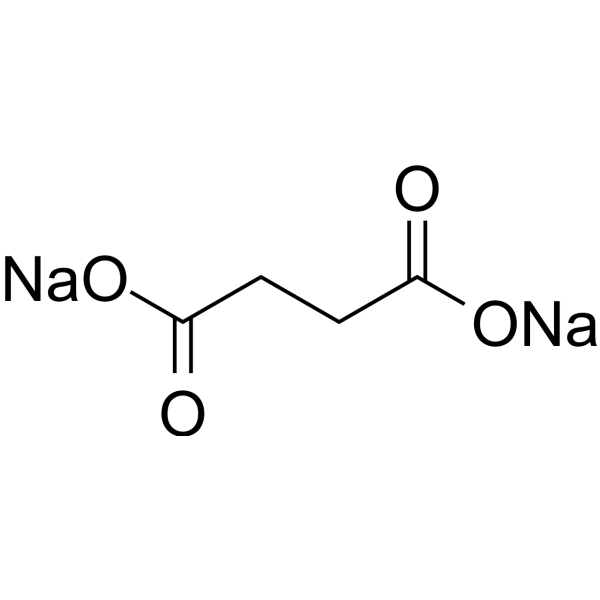
    Disodium succinate-d4 is the deuterium labeled Disodium succinate . Disodium succinate is the disodium salt of Succinic acid. Succinic acid is an intermediate product of the tricarboxylic acid cycle, as well as one of fermentation products of anaerobic metabolism .
    Disodium succinate-d4
  • HY-B1207R

    Ethyl carbamate (Standard); Carbamic acid ethyl ester (Standard); Ethylurethane (Standard)

    Reference Standards Bacterial Parasite Infection Neurological Disease Cancer
    Urethane (Standard) is the analytical standard of Urethane. This product is intended for research and analytical applications. Urethane (Ethyl carbamate), the ethyl ester of carbamic acid, is a byproduct of fermentation found in various food products. Urethane has the ability to suppress bacterial, protozoal, sea urchin egg, and plant tissue growth in vitro .
    Urethane (Standard)
  • HY-119445

    2-O-beta-D-Glucopyranosyl-D-glucopyranose

    Biochemical Assay Reagents Others
    Sophorose is a disaccharide component of microbial glycolipids produced by yeast called sophorolipids. Due to their hydrophobic nature, sophorolipids are commonly used as biosurfactants. Sophorolipids also exhibit antibacterial, antifungal, spermicidal, virucidal, and anticancer activities. Sophorose has been identified as a potent inducer of cellulase gene expression in Trichoderma reesei fermentation studies.
    Sophorose
  • HY-130995

    Antibiotic ADC Payload Infection
    Agrochelin, an alkaloid cytotoxic antibiotic, is produced by the fermentation of a marine Agrobacterium sp. Agrochelin has cytotoxic activity in tumor cell lines .
    Agrochelin
  • HY-W017758S1

    Isotope-Labeled Compounds Others
    1,3-Propanediol-d8 is the deuterium labeled 1,3-Propanediol . 1,3-Propanediol is produced in nature by the fermentation of glycerol in microorganism .
    1,3-Propanediol-d8
  • HY-W015410S

    Endogenous Metabolite Metabolic Disease
    Disodium succinate- 13C2 is the 13C labeled Disodium succinate . Disodium succinate is the disodium salt of Succinic acid. Succinic acid is an intermediate product of the tricarboxylic acid cycle, as well as one of fermentation products of anaerobic metabolism .
    Disodium succinate-13C2
  • HY-W038795

    Environmental Pollutants Infection
    (S)-Ethyl lactate ((S)-(-)-ethyl lactate) is a volatile compound produced by plant fermentation. (S)-Ethyl lactate cansynergistically attracts palm weevils with specific pheromones and is mainly used for pest monitoring and control research .
    (S)-Ethyl lactate
  • HY-118331

    PD 124895; CL-1957E

    Antibiotic Infection Cancer
    Kazusamycin B is an antibiotic that could be isolated from the fermentation broth of Streptomyces sp. No. 81-484. Kazusamycin B inhibits cell growth and arrests cell cycle at G1 phase. Kazusamycin B can be used in research of cancer .
    Kazusamycin B
  • HY-141465

    Endogenous Metabolite Metabolic Disease
    3-Hydroxybutyryl-CoA is a metabolite which can be found in mouse or E.coli, et al. 3-Hydroxybutyryl-CoA has a 3-hydroxybutanoyl as the S-acyl component, and is an intermediate in the fermentation of butyric acid, and in the metabolism of lysine and tryptophan .
    3-Hydroxybutyryl-CoA
  • HY-N8061

    Endogenous Metabolite Others
    β-Lysine is an amino acid. β-Lysine is a fermentation intermediate of lysine .
    β-Lysine
  • HY-135055

    Biochemical Assay Reagents Others
    Magnesium lactate is a magnesium additive, which is used in food, beverages and pharmaceutical industries .
    Magnesium lactate
  • HY-148209

    Antibiotic Bacterial Infection
    Balhimycin is a glycopeptide antibiotic, found from the fermentation broth of a Amycolatopsis sp. Balhimycin shows anti-bacterial activity against staphylococci and anaerobes .
    Balhimycin
  • HY-N15533

    Drug Metabolite Others
    (S)-Menthiafolic acid is a component found in wines and grape juices. (S)-Menthiafolic acid can be generated from the grape-derived (S)-menthiafolic acid glucose ester during alcoholic and malolactic fermentation, thereby influencing the aroma components of wine .
    (S)-Menthiafolic acid
  • HY-123404

    Fungal Farnesyl Transferase Infection
    L-731128 is a novel alkyl citrate. L-731128 can be isolated as a minor component of Sporormiella intermedia (MF 5447, ATCC 20985) fermentations. L-731128 is a potent squalene synthase inhibitor, with an IC50 value of 767 nM .
    L-731128
  • HY-N16390A

    Drug Metabolite Others
    (9Z)-16-Hydroxy-9-hexadecenoic acid is an unsaturated hydroxy fatty acid. (9Z)-16-Hydroxy-9-hexadecenoic acid can be produced by the fermentation of Methyl palmitoleate (HY-W011688) using the yeast Torulopsis apicola .
    (9Z)-16-Hydroxy-9-hexadecenoic acid
  • HY-N1872

    Others Infection
    4-(3, 4-dihydroxyphenyl)butan-2-one is a compound isolated from the subspecies Lactobacillus plantarum subsp. argentoratensis. 4-(3, 4-dihydroxyphenyl)butan-2-one has antioxidant and anti-inflammatory activity. 4-(3, 4-dihydroxyphenyl)butan-2-one can be used for research of microbial fermentation .
    4-(3,4-Dihydroxyphenyl)butan-2-one

Inquiry Online

Your information is safe with us. * Required Fields.

Salutation


Country or Region *

Applicant Name *


Organization Name *

Department *


Email Address *


Product Name *

Cat. No.


Requested quantity *

Phone Number *


Remarks

Inquiry Online

Inquiry Information

Product Name:
Cat. No.:
Quantity:
MCE Japan Authorized Agent:

