

1. Search Result
Search Result
Results for "

heavy

" in MedChemExpress (MCE) Product Catalog:

281

Inhibitors & Agonists

3

Screening Libraries

17

Biochemical Assay Reagents

16

Peptides

320

Inhibitory Antibodies

22

Natural
Products

30

Recombinant Proteins

6

Isotope-Labeled Compounds

68

Antibodies

4

Oligonucleotides

Cat. No. Product Name Target Research Areas Chemical Structure
  • HY-B0300
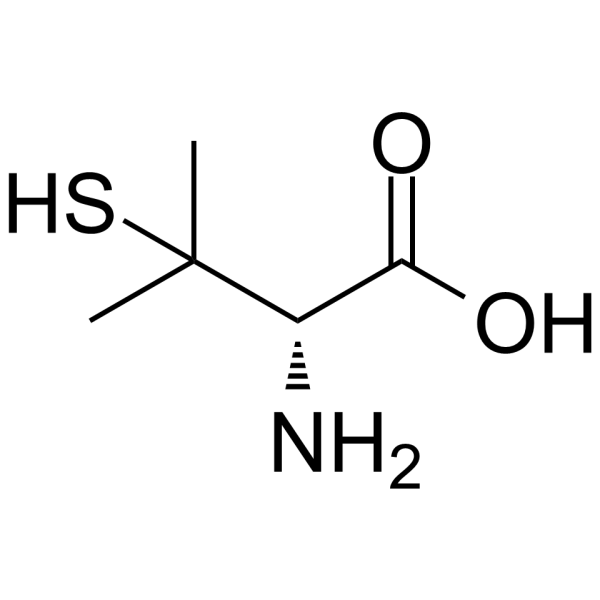
    Penicillamine
    3 Publications Verification

    D-(-)-Penicillamine

    Cuproptosis Drug Metabolite Inflammation/Immunology Cancer
    Penicillamine (D-(-)-Penicillamine) is a penicillin metabolic degradation product, can be used as a heavy metal chelator. Penicillamine increases free copper and increases oxidative stress. Penicillamine has effect of seizures through nitric oxide/NMDA pathways. Penicillamine is a potential immune modulator. Penicillamine can be used for the research of Wilson disease, rheumatoid arthritis, and cystinuria .
    Penicillamine
  • HY-100202
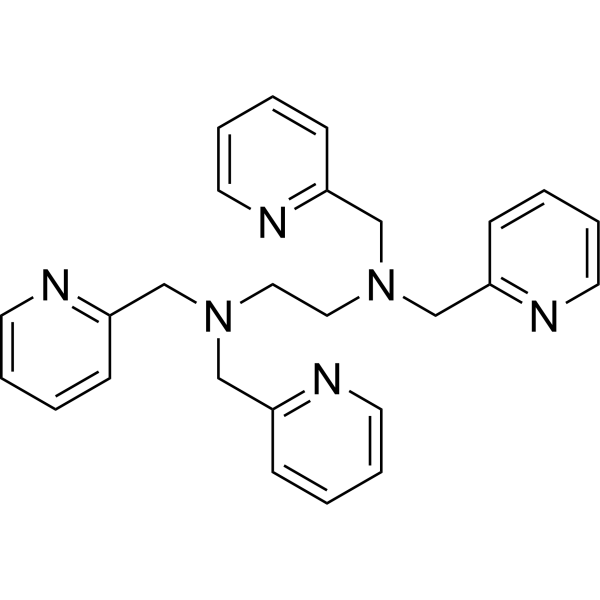
    TPEN
    20+ Cited Publications

    TPEDA

    MOFs Reactive Oxygen Species (ROS) Apoptosis Autophagy Cancer
    TPEN (TPEDA) is a specific cell-permeable heavy metal chelator. TPEN has a higher affinity for Zn 2+, but a lower affinity for Mg 2+ and Ca 2+. TPEN induces DNA damage and increases intracellular ROS production. TPEN also inhibits cell proliferation and induces apoptosis .
    TPEN
  • HY-B1335
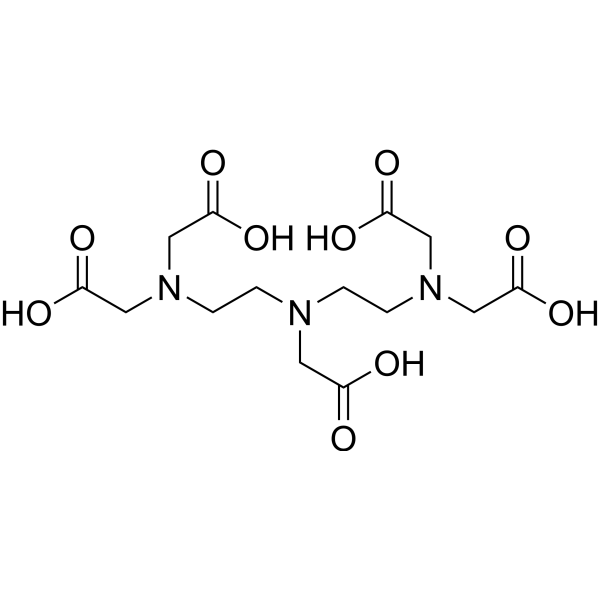
    Pentetic acid
    3 Publications Verification

    Diethylenetriaminepentaacetic acid; DTPA

    Environmental Pollutants Biochemical Assay Reagents Others
    Pentetic acid (Diethylenetriaminepentaacetic acid) is an orally active compound with biodegradability used to construct magnetic adsorbent, which can simultaneously remove heavy metal and dye from complex wastewater. Pentetic acid can form strong metal complexes, which prevents metal ions from catalysing the decomposition of peroxygen chemicals, especially hydrogen peroxide .
    Pentetic acid
  • HY-Y1310
    Sodium alginate
    1 Publications Verification

    Environmental Pollutants Others Cancer
    Sodium alginate is the sodium salt of alginic acid. Sodium alginate can be extracted and purified from brown seaweed Laminaria japonica. Sodium alginate can be used in food additives and pharmaceuticals, adsorb heavy metal ions, and has mucosal-protective and hemostatic effects .
    Sodium alginate
  • HY-B1285
    Dimercaprol
    1 Publications Verification

    2,3-Dimercapto-1-propanol; Dithioglycerol

    HIV Infection
    Dimercaprol (2,3-Dimercapto-1-propanol) is an anti-heavy metal-poisoning agent, which exhibits anti-HIV activity. Dimercaprol can be used for the study for arsenic, mercury, gold, lead, antimony, and other toxic metal poisoning .
    Dimercaprol
  • HY-132580
    Tofersen
    2 Publications Verification

    BIIB067; ISIS-SOD1Rx; ISIS 333611

    SOD Neurological Disease
    Tofersen (BIIB067) is an antisense oligonucleotide and SOD1 mRNA inhibitor with an IC50 of 320 pM. Tofersen mediates RNase H-dependent degradation of SOD1 mRNA to reduce SOD1 protein levels in cerebrospinal fluid and serum. Tofersen downregulates cerebrospinal fluid neurofilament light chain, neurofilament heavy chain, amyloid-beta 1-40, amyloid-beta 1-42, neuropeptide Y, ubiquitin C-terminal hydrolase L1, neuropentraxins 1, 2, R, corticotropin-releasing hormone, IL-15, and serum neurofilament light chain, neurofilament heavy chain. Tofersen can be used for the research of superoxide dismutase 1-associated amyotrophic lateral sclerosis .
    Tofersen
  • HY-N0848
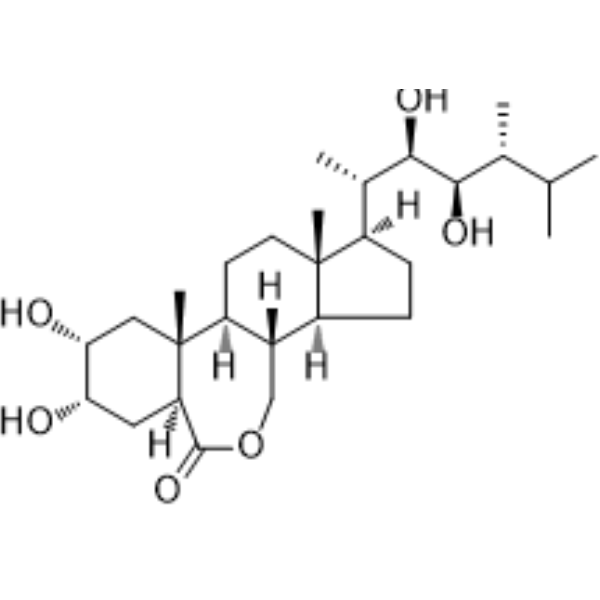
    Epibrassinolide
    Maximum Cited Publications
    16 Publications Verification

    24-Epibrassinolide; B1105; BP55

    Environmental Pollutants Apoptosis Cancer
    Epibrassinolide (24-Epibrassinolide) is a ubiquitously occurring plant growth hormone which shows great potential to alleviate heavy metals and pesticide stress in plants . Epibrassinolide is a potential apoptotic inducer in various cancer cells without affecting the non-tumor cell growth .
    Epibrassinolide
  • HY-B0302
    Etidronic acid
    1 Publications Verification

    Etidronate; HEDPA; HEDP

    Environmental Pollutants Apoptosis Metabolic Disease Cancer
    Etidronic acid (Etidronate) is an orally and intravenously active bisphosphonate. Etidronic acid inhibits resorption of bone, reduces arterial calcification and can be used for osteoporosis research. Etidronic acid has anticancer activity. Etidronic acid is a chelating agent and can be used to remove heavy metal in water .
    Etidronic acid
  • HY-Y0015

    4-Dimethylaminobenzaldehyde

    Biochemical Assay Reagents Others
    p-Dimethylaminobenzaldehyde (4-Dimethylaminobenzaldehyde) can be used as a chromogenic reagent or as an absorbent agent for heavy metal ions .
    p-Dimethylaminobenzaldehyde
  • HY-B0373
    Tiopronin
    1 Publications Verification

    Others Metabolic Disease
    Tiopronin is a diffusible antioxidant, an antidote to heavy metal poisoning and a radioprotective agent. Tiopronin can control the rate of cystine precipitation and excretion and has the potential for cystinuria, rheumatoid arthritis and hepatic disorders .
    Tiopronin
  • HY-B0302A
    Etidronic acid disodium
    1 Publications Verification

    Etidronate disodium; HEDPA disodium; HEDP disodium

    Apoptosis Metabolic Disease Cancer
    Etidronic acid (Etidronate) disodium is an orally and intravenously active bisphosphonate. Etidronic acid disodium inhibits resorption of bone, reduces arterial calcification and can be used for osteoporosis research. Etidronic acid disodium has anticancer activity. Etidronic acid disodium is a chelating agent and can be used to remove heavy metal in water .
    Etidronic acid disodium
  • HY-110188
    BiP inducer X
    5+ Cited Publications

    Apoptosis Neurological Disease
    BiP inducer X, a selective inducer of immunoglobulin heavy chain binding protein (BiP)/GRP78, is an effective ER (endoplasmic reticulum) stress inhibitor. BiP inducer X preferentially induces BiP with slight inductions of GRP94, calreticulin, and C/EBP homologous protein. BiP inducer X protects neurons from ER stress .
    BiP inducer X
  • HY-16739

    NBMI; BDTH2

    Cuproptosis Reactive Oxygen Species (ROS) Inflammation/Immunology Cancer
    Emeramide is a thiol-redox antioxidant and heavy metal chelator .
    Emeramide
  • HY-B1827
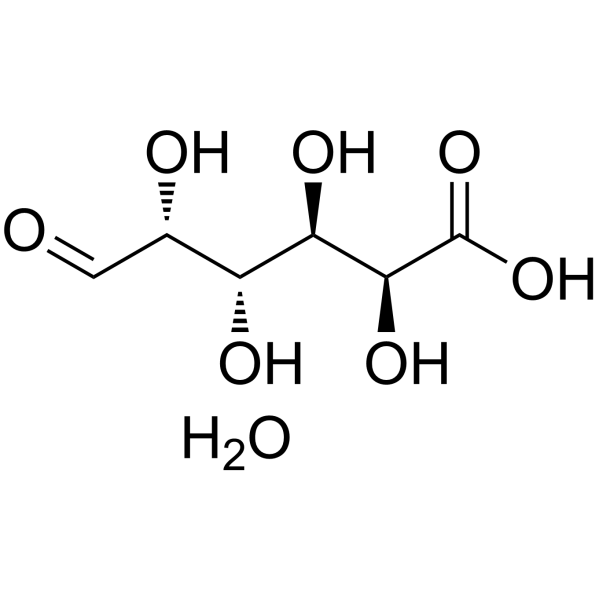
    D-Galacturonic acid hydrate
    2 Publications Verification

    D-galUA hydrate

    Endogenous Metabolite Metabolic Disease
    D-Galacturonic acid (D-galUA) hydrate, as the main component of pectin, is abundantly present in plants. The carboxyl group of D-Galacturonic acid hydrate can bind to metal cations. D-Galacturonic acid hydrate plays an important role in the food industry, pharmaceutical field, and heavy metal removal, among other aspects .
    D-Galacturonic acid hydrate
  • HY-132580A
    Tofersen sodium
    2 Publications Verification

    BIIB067 sodium; ISIS-SOD1Rx sodium; ISIS 333611 sodium

    SOD Neurological Disease
    Tofersen (BIIB067) sodium is an antisense oligonucleotide and SOD1 mRNA inhibitor with an IC50 of 320 pM. Tofersen sodium mediates RNase H-dependent degradation of SOD1 mRNA to reduce SOD1 protein levels in cerebrospinal fluid and serum. Tofersen sodium downregulates cerebrospinal fluid neurofilament light chain, neurofilament heavy chain, amyloid-beta 1-40, amyloid-beta 1-42, neuropeptide Y, ubiquitin C-terminal hydrolase L1, neuropentraxins 1, 2, R, corticotropin-releasing hormone, IL-15, and serum neurofilament light chain, neurofilament heavy chain. Tofersen sodium can be used for the research of superoxide dismutase 1-associated amyotrophic lateral sclerosis .
    Tofersen sodium
  • HY-W129633

    DCIP sodium hydrate; DPIP sodium hydrate

    Biochemical Assay Reagents Others
    2,6-Dichlorophenolindophenol (DCIP; DPIP) sodium hydrate is a redox chromogenic indicator with a redox potential of +217 mV relative to SHE, and it acts as a substrate for reduction reactions. During the metabolic process of nutrient consumption by Saccharomyces cerevisiae, 2,6-Dichlorophenolindophenol sodium hydrate is reduced from dark blue to colorless, resulting in a decrease in absorbance. 2,6-Dichlorophenolindophenol sodium hydrate is widely used in spectrophotometric biochemical oxygen demand determination and preclinical colorimetric toxicity analysis for heavy metal ion detection based on Saccharomyces cerevisiae .
    2,6-Dichlorophenolindophenol sodium hydrate
  • HY-159821

    CK-4021586; CK-586

    Myosin Cardiovascular Disease
    Ulacamten (CK-4021586; CK-586) is an orally active cardiac myosin inhibitor and an inhibitor of the double-headed cardiac heavy meromyosin (HMM)ATPase (excluding single-headed myosin subfragment-1), with an EC50 of 2.9 μM. Ulacamten regulates cardiac myosin, reduces excessive myocardial contractility, and alleviates left ventricular outflow tract obstruction. Ulacamten increases the left ventricular short-axis systolic internal diameter, inhibits dobutamine-induced exacerbation of obstruction, and exerts only a mild reducing effect on left ventricular systolic function. Ulacamten also inhibits the fractional shortening of the short axis without altering calcium transients. Ulacamten shows good safety and tolerability in purpose-bred cats with naturally occurring obstructive hypertrophic cardiomyopathy .
    Ulacamten
  • HY-W115738

    Biochemical Assay Reagents Others
    PAR is an azo dye widely used as a colorimetric reagent for metal ions. PAR forms stable chelates with different metal ions. PAR can also complex with heavy metal ions in polar organic solvents, such as ethanol .
    PAR
  • HY-126236
    3,5-Diiodothyropropionic acid
    1 Publications Verification

    Thyroid Hormone Receptor Cardiovascular Disease Endocrinology
    3,5-Diiodothyropropionic acid is a thyroid hormone analog, induces α-myosin heavy chain mRNA expression, binds to thyroid hormone receptor (TR), with Ka of 2.40 and 4.06 M -1 for TRα1 and TRβ1, respectively. 3,5-Diiodothyropropionic acid promotes angiogenesis in 3-D human dermal microvascular endothelial cell sprouting assay. 3,5-Diiodothyropropionic acid prevents myocardial arteriolar loss in thyroidectomized rats and enhances cardiac energy-generating capacity in postinfarction heart failure rats. 3,5-Diiodothyropropionic can be used in studies related to angiogenesis and heart failure .
    3,5-Diiodothyropropionic acid
  • HY-W012683

    Biochemical Assay Reagents Cancer
    Iminodiacetic acid is a metal ion chelator targeting Cr 6+, Cd 2+, Ni 2+, and Pb 2+. Iminodiacetic acid selectively and irreversibly binds metal ions through the coordination of carboxyl and imino groups, reduces the toxicity of metal ions and promotes their adsorption and separation. Iminodiacetic acid has the functions of heavy metal ion removal and coordination complex stabilization. Iminodiacetic acid is often used in environmental pollution control (such as heavy metal adsorption in water) and coordination chemistry (such as metal ion detection and separation) research .
    Iminodiacetic acid
  • HY-P990920

    MK-6070; HPN328

    CD3 Inflammation/Immunology
    HY-P990920 is an CD3E/ALB/DLL3-targeting (scFv-heavy-lamdba)-VH-VH' type chimeric humanized antibody .
    Gocatamig
  • HY-P991699

    AZD9829 antibody; INT-020

    ADC Antibody Interleukin Related Cancer
    Lixarkitug (AZD9829 antibody; INT-020) is a humanized IgG1κ antibody targeting IL-3Ra/CD123. Lixarkitug can be conjugated with Samrotecan to form the intact ADC molecule lixarkitug samrotecan (AZD9829), which is used in studies of acute myeloid leukemia (AML) . The isotype control corresponding to Lixarkitug is Human IgG1 kappa, Isotype Control (HY-P99001).
    Lixarkitug
  • HY-B1827A
    D-Galacturonic acid
    2 Publications Verification

    D-galUA

    Endogenous Metabolite Metabolic Disease
    D-Galacturonic acid (D-galUA), as the main component of pectin, is abundantly present in plants. The carboxyl group of D-Galacturonic acid can bind to metal cations. D-Galacturonic acid plays an important role in the food industry, pharmaceutical field, and heavy metal removal, among other aspects .
    D-Galacturonic acid
  • HY-W013851

    Environmental Pollutants Biochemical Assay Reagents Others
    EDTA-OH is a chelating agent, which forms thermodynamically stable chelates with metal ions like calcium, magnesium, iron, zinc and copper . EDTA-OH exhibits ability of phytoremediation in heavy-metal-contaminated soils . EDTA-OH is able to cross brain-blood barrier .
    EDTA-OH
  • HY-P990651

    TREM receptor Inflammation/Immunology
    PY314 is a humanized antibody expressed in CHO, targeting TREM2. PY314 has a huIgG1 heavy chain and a huκ light chain, with a predicted molecular weight (MW) of 145 kDa. The isotype control for PY314 can refer to Human IgG1 kappa, Isotype Control (HY-P99001).
    PY314
  • HY-W034674

    Silver(1+) diethyldithiocarbamate

    Biochemical Assay Reagents Others
    Silver diethyldithiocarbamate (SDDC) is an organic compound consisting of silver ions complexed with the ligand diethyldithiocarbamate. SDDC is mainly used as a reagent in analytical chemistry to detect the presence of copper, iron and other heavy metals in various materials. It acts as a chelating agent, binding to metal ions and forming stable complexes that can be easily analyzed using techniques such as UV-Vis spectroscopy.
    Silver diethyldithiocarbamate
  • HY-P990642

    Transmembrane Glycoprotein Inflammation/Immunology
    Oportuzumab is a CHO-expressed humanized antibody that targets EpCAM/TROP1/CD326. Oportuzumab contains a huIgG1 heavy chain and a huκ light chain, with a predicted molecular weight (MW) of 145 kDa. The isotype control for Oportuzumab can be referenced as Human IgG1 kappa, Isotype Control (HY-P99001).
    Oportuzumab
  • HY-P990669

    Interleukin Related Inflammation/Immunology
    Torudokimab is a humanized antibody expressed in CHO, targeting IL-33. Torudokimab has a huIgG4SP type heavy chain and a huκ type light chain, with a predicted molecular weight (MW) of 145.22 kDa. The isotype control for Torudokimab can refer to Human IgG4 kappa, Isotype Control (HY-P99003).
    Torudokimab
  • HY-P990312

    Interleukin Related Inflammation/Immunology
    ABT-325 is a humanized antibody expressed in CHO that targets IL-18. ABT-325 has a huIgG1 type heavy chain and a huκ type light chain, with a predicted molecular weight (MW) of 146.28 kDa. The isotype control for ABT-325 can refer to Human IgG1 kappa, Isotype Control (HY-P99001).
    ABT-325
  • HY-45290

    Biochemical Assay Reagents Others
    trans-1,2-Cyclohexanediaminetetraacetic acid is a commonly used aminopolycarboxylic acid and a strong chelator of heavy metal ions .
    trans-1,2-Cyclohexanediaminetetraacetic acid
  • HY-P990903

    YMS-5A

    CD3 Inflammation/Immunology
    HY-P990903 is an CD3E/CD33-targeting [H-γ1 _ L-κ-scFv heavy -κ]-dimer type bispecific antibody .
    Avitotamig
  • HY-W041831

    Ethanedioic acid ammonium

    Environmental Pollutants Biochemical Assay Reagents Others
    Oxalic acid (ammonium) is a oxalic acid bound to ammonium. Oxalic acid has high acidity, reducibility, and chelation ability. Oxalic acid plays important roles in the regulation of plant growth and development, the response to both biotic and abiotic stresses such as plant defense and heavy metals detoxification, and food quality .
    Oxalic acid ammonium
  • HY-P990571
    Coltuximab
    1 Publications Verification

    CD19 Inflammation/Immunology
    Coltuximab is a CHO-expressed humanized antibody that targets CD19. Coltuximab is composed of huIgG1 heavy chains and huκ light chains, with a molecular weight (MW) of 144.70 kDa. The isotype control for Coltuximab can refer to Human IgG1 kappa, Isotype Control (HY-P99001).
    Coltuximab
  • HY-P990587
    FR104
    1 Publications Verification

    CD28 Inflammation/Immunology
    FR104 is a humanized antibody expressed in CHO cells that targets CD28. FR104 comprises a huIgG2 heavy chain and a huκ light chain, with a predicted molecular weight (MW) of 145 kDa. The isotype control for FR104 can be referenced as Human IgG2 kappa, Isotype Control (HY-P99002).
    FR104
  • HY-P990631

    Neuropeptide Y Receptor Inflammation/Immunology
    Mibavademab is a CHO-expressed humanized antibody that targets LEPR/CD295. Mibavademab is equipped with a huIgG4SP heavy chain and a huκ light chain, with a predicted molecular weight (MW) of 145.58 kDa. The isotype control for Mibavademab can be referenced as Human IgG4 kappa, Isotype Control (HY-P99003).
    Mibavademab
  • HY-P990480

    LDLR Inflammation/Immunology
    The Anti-oxLDL Antibody is a humanized antibody expressed in CHO cells that targets oxLDL. The Anti-oxLDL Antibody has a huIgG1 heavy chain and a huκ light chain, with a predicted molecular weight (MW) of 150 kDa. The isotype control for the Anti-oxLDL Antibody can be referenced as Human IgG1 kappa, Isotype Control (HY-P99001).
    Anti-oxLDL Antibody
  • HY-P990675

    VEGFR Inflammation/Immunology
    VGX-100 is a humanized antibody expressed in CHO cells, targeting VEGFC. VGX-100 is composed of huIgG1 heavy chains and huλ light chains, with a predicted molecular weight (MW) of 143.6 kDa. The isotype control for VGX-100 can refer to Human IgG1 kappa, Isotype Control (HY-P99001).
    VGX-100
  • HY-P3320

    PC 3

    Biochemical Assay Reagents Others
    Phytochelatin 3 (PC 3) is the small metal chelating peptide that can be used for chelating heavy metals. Phytochelatin 3 is a short metal detoxification peptide made from the sulfur-rich molecule glutathione. Phytochelatin 3 can be found in different sources including plant, fungal, algal, and bacterial species, as a detoxification mechanism in response to heavy metal exposure. Phytochelatin 3 plays an important metabolic role in plants .
    Phytochelatin 3
  • HY-P990818

    Fc Receptor (FcR) Inflammation/Immunology
    Anti-Rat FcRn heavy chain heterodimers Antibody (1G3) is an anti-rat FcRn heavy chain heterodimers IgG1 monoclonal antibody. Anti-Rat FcRn heavy chain heterodimers Antibody (1G3) can effectively bind to FcRn and competitively inhibit the binding of IgG to FcRn. Anti-Rat FcRn heavy chain heterodimers Antibody (1G3) can reduce the total serum IgG level. Anti-Rat FcRn heavy chain heterodimers Antibody (1G3) can be used for researches on autoimmune conditions such as experimental autoimmune myasthenia gravis (EAMG). The recommend isotype control of Anti-Rat FcRn heavy chain heterodimers Antibody (1G3): Mouse IgG1 kappa, Isotype Control (HY-P99977) .
    Anti-Rat FcRn heavy chain heterodimers Antibody (1G3)
  • HY-W017007SA
    3-Methyl-L-histidine-d3 hydrochloride
    1 Publications Verification

    Isotope-Labeled Compounds Endogenous Metabolite Cardiovascular Disease Metabolic Disease
    3-Methyl-L-histidine-d3 hydrochloride is the deuterium labeled 3-Methyl-L-histidine hydrochloride. 3-Methyl-L-histidine hydrochloride is an endogenous amino acid that can be found in actin and myosin .
    3-Methyl-L-histidine-d3 hydrochloride
  • HY-W582564

    Ethylenediaminetetraacetic acid copper disodium tetrahydrate

    Biochemical Assay Reagents Others
    Cu(Ⅱ)-EDTA disodium tetrahydrate, a typical contaminant in industrial wastewater, is an EDTA-complexed heavy metal. Cu(Ⅱ)-EDTA disodium tetrahydrate can be used in research on the recovery of heavy metal resources from mixed wastewater .
    Cu(Ⅱ)-EDTA disodium tetrahydrate
  • HY-W110925

    Biochemical Assay Reagents Others
    Alkali blue 6B monosodium (IND) is a basic dye that can be used as a reagent in biochemical and medical research. Alkali blue 6B monosodium (IND) interacts with various proteins, and can be used in protein adsorption studies. Alkali blue 6B monosodium (IND) contains SO3H -, NH and OH groups that may react with divalent heavy metal ions, and can be used for the removal of heavy metals from aqua .
    Alkali blue 6B monosodium(IND)
  • HY-P990088

    VEGFR PD-1/PD-L1 Cardiovascular Disease
    Sotiburafusp alfa is a bispecific fusion protein, which is a humanized VEGFR-1 extracellular domain fragment (129-228, 1-100 in the current sequence) fused via the peptide linker 101GGSGGSGGSGGSGGS 115 to the N-terminus of the heavy chain (116-564) of a humanized IgG1-kappa anti-human PD-L1 heavy chain variant L352>A, L353>A. Sotiburafusp alfa also functions as a PD-L1 inhibitor and a VEGF inhibitor .
    Sotiburafusp alfa
  • HY-119635

    Others Cancer
    Albicanol is a sesquiterpenoid with potent antioxidant and antagonistic activities against heavy metal toxicity. Albicanol shows cytotoxicity. Albicanol suppress Profenofos (HY-B0832) induced genotoxicity in grass carp hepatocytes .
    Albicanol
  • HY-P991705

    JJP-1212

    Fc Receptor (FcR) Inflammation/Immunology
    Nebaprubart (JJP-1212) is a humanized IgG4κ antibody against FCAR/CD89, and its corresponding isotype control is Human IgG4 kappa, Isotype Control (HY-P99003) .
    Nebaprubart
  • HY-P990572
    DCBY02
    1 Publications Verification

    Transmembrane Glycoprotein Inflammation/Immunology
    DCBY02 is a monoclonal antibody targeting CD93 expressed in CHO cells. DCBY02 has a heavy chain of the mlgG type and a light chain of the mkappa type, with a predicted molecular weight (MW) of 150 kDa. The isotype control for DCBY02 can be referenced as Mouse IgG1 kappa, Isotype Control.
    DCBY02
  • HY-P990662

    Interleukin Related Inflammation/Immunology
    Sapelizumab is a CHO-expressed humanized antibody targeting IL-6Ra/CD126. Sapelizumab has a huIgG2 heavy chain and a huκ light chain, with a predicted molecular weight (MW) of 145 kDa. The isotype control for Sapelizumab can refer to Human IgG2 kappa, Isotype Control (HY-P99002).
    Sapelizumab
  • HY-N7090

    Environmental Pollutants Others
    Benzyl cinnamate, occurs in Balsam of Peru and Tolu balsam, in Sumatra and Penang benzoin, and as the main constituent of copaiba balsam, is used in heavy oriental perfumes and as a fixative. Benzyl cinnamate has antibacterial activity against S. aureus and S. epidermidis (MIC = 537.81 μM). Benzyl cinnamate can induce acute toxixity, depression, and skin irritation in vivo .
    Benzyl cinnamate
  • HY-P990614

    Myosin Inflammation/Immunology
    LK-1 is a humanized antibody expressed in CHO that targets S100A4. LK-1 carries a huIgG1 heavy chain and a huκ light chain, with a predicted molecular weight (MW) of 150 kDa. The isotype control for LK-1 can be referenced as Human IgG1 kappa, Isotype Control (HY-P99001).
    LK-1
  • HY-N0848R

    24-Epibrassinolide (Standard); B1105 (Standard); BP55 (Standard)

    Reference Standards Apoptosis Cancer
    Epibrassinolide (Standard) is the analytical standard of Epibrassinolide. This product is intended for research and analytical applications. Epibrassinolide (24-Epibrassinolide) is a ubiquitously occurring plant growth hormone which shows great potential to alleviate heavy metals and pesticide stress in plants[1]. Epibrassinolide is a potential apoptotic inducer in various cancer cells without affecting the non-tumor cell growth[2].
    Epibrassinolide (Standard)

Inquiry Online

Your information is safe with us. * Required Fields.

Salutation


Country or Region *

Applicant Name *


Organization Name *

Department *


Email Address *


Product Name *

Cat. No.


Requested quantity *

Phone Number *


Remarks

Inquiry Online

Inquiry Information

Product Name:
Cat. No.:
Quantity:
MCE Japan Authorized Agent:

