



1. Search Result
Search Result
Results for "

long-term

" in MedChemExpress (MCE) Product Catalog:

192

Inhibitors & Agonists

5

Screening Libraries

10

Fluorescent Dyes

9

Biochemical Assay Reagents

23

Peptides

16

MCE Kits

2

Inhibitory Antibodies

14

Natural
Products

14

Isotope-Labeled Compounds

2

Click Chemistry

5

Oligonucleotides

1

GMP Molecules

Cat. No. Product Name Target Research Areas Chemical Structure
  • HY-B0218
    Orlistat
    30+ Cited Publications

    Tetrahydrolipstatin; Ro-18-0647

    Fatty Acid Synthase (FASN) Apoptosis Metabolic Disease Cancer
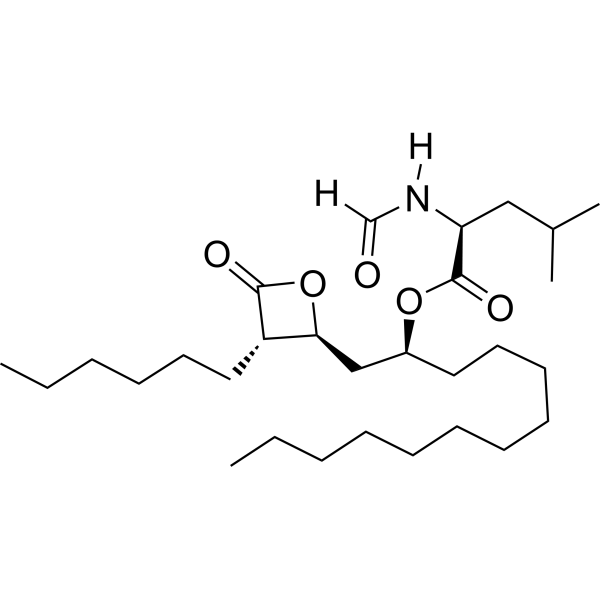
    Orlistat (Tetrahydrolipstatin) is a well-known irreversible inhibitor of pancreatic and gastric lipases. Orlistat is also an inhibitor of fatty acid synthase (FASN), is used orally for long-term research of obesity . Anti-atherosclerotic effect .
    Orlistat
  • HY-P1061
    Colivelin
    Maximum Cited Publications
    92 Publications Verification

    STAT Amyloid-β Neurological Disease
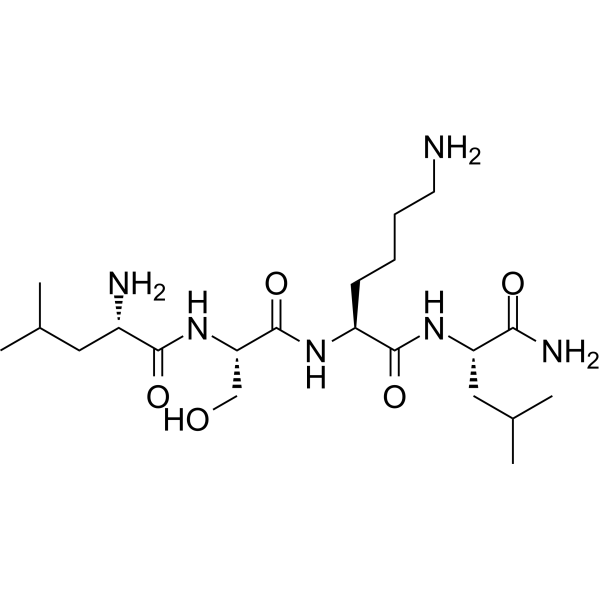
    Colivelin is a brain penetrant neuroprotective peptide and a potent activator of STAT3, suppresses neuronal death by activating STAT3 in vitro . Colivelin exhibits long-term beneficial effects against neurotoxicity, Aβ deposition, neuronal apoptosis, and synaptic plasticity deficits in neurodegenerative disease . Colivelin has the potential for the treatment of alzheimer's disease and ischemic brain injury
    Colivelin
  • HY-Y0320D

    DMSO, cryoprotectant vitrification agent; Dimethyl sulfoxide vitrification agent

    Environmental Pollutants Bacterial Cholinesterase (ChE) Others
    Dimethyl sulfoxide, cryoprotectant vitrification agent (DMSO, cryoprotectant vitrification agent) is a biochemical reagent that can be used as a biological material or organic compound for life science related research . This product has been sterilized and has no endotoxin. It can be used for long-term cell cryopreservation and will not affect the normal growth of cells.
    Dimethyl sulfoxide, cryoprotectant vitrification agent
  • HY-D1462
    CellTracker Blue CMAC
    Maximum Cited Publications
    7 Publications Verification

    Fluorescent Dye Others
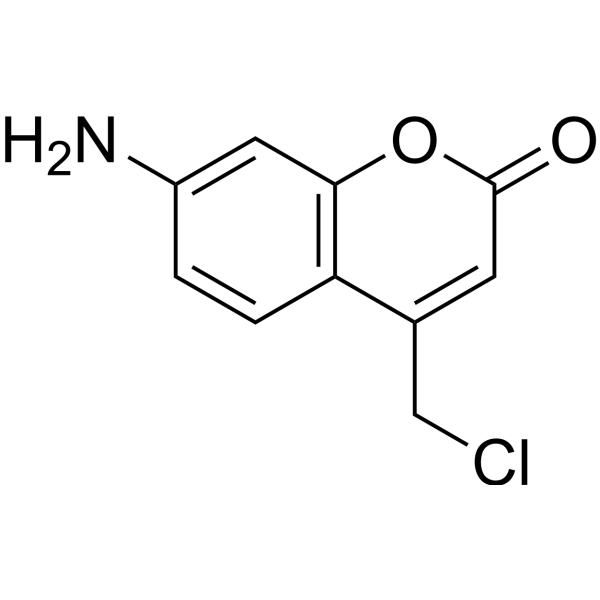
    CellTracker Blue CMAC is a non-fluorescent cell membrane permeable dye. The chloromethyl groups of CellTracker Blue CMAC are enzymatically cleaved by intracellular glutathione (GSH) to generate a fluorescent product (blue fluorescence, Ex/Em: 360/460 nm). CellTracker Blue CMAC is suitable for long-term cell tracking (up to 72 hours) and cell proliferation studies, and can also quantify GSH levels .
    CellTracker Blue CMAC
  • HY-A0014
    Ramelteon
    10+ Cited Publications

    TAK-375

    Melatonin Receptor Neurological Disease Endocrinology Cancer
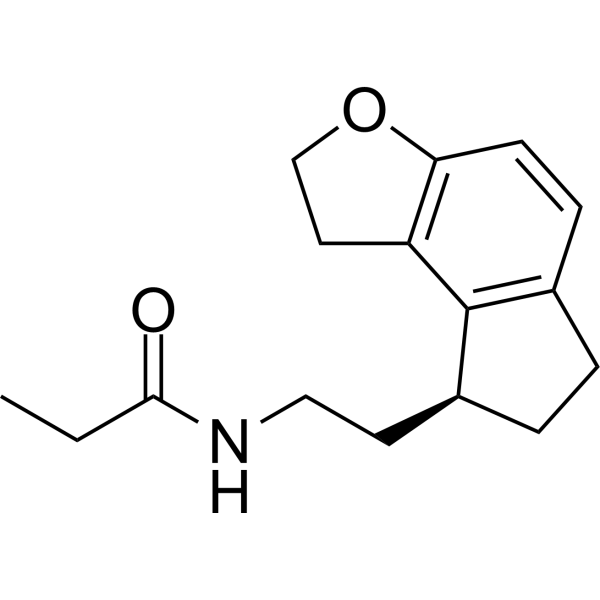
    Ramelteon is a potent, highly selective, and orally active agonist of MT1/MT2 with Ki values of 14 and 112 pM, respectively. Ramelteon has the potential for the research of insomnia. Ramelteon consistently reduces sleep onset after long-term treatment, with no next-morning residual effects or rebound insomnia or withdrawal symptoms upon discontinuation .
    Ramelteon
  • HY-CP001
    D-Trehalose, Carrier Protein
    1 Publications Verification

    Biochemical Assay Reagents Metabolic Disease
    D-Trehalose is a disaccharide formed by a 1,1-glycosidic bond between two α-glucose units and is widely used as a food ingredient and pharmaceutical excipient. D-Trehalose is known to protect and stabilise proteins. For long-term storage, recombinant protein solution should be diluted further with 5% D-Trehalose, Carrier Protein.
    D-Trehalose, Carrier Protein
  • HY-N2922

    Amyloid-β NF-κB Neurological Disease Inflammation/Immunology
    β-Amyrin shows effectively counteract amyloid β (Aβ)-induced impairment of long-term potentiation (LTP). β-Amyrin is a promising candidate for Alzheimer's disease (AD) research. β-Amyrin exhibits anti-inflammatory effects, protective activity against pulmonary fibrosis, and notable antibacterial capabilities. β-Amyrin is an orally active natural triterpenoid compound .
    β-Amyrin
  • HY-W723152

    Drug Intermediate Inflammation/Immunology
    Poly(D,L-lactide-co-glycolide) is a biodegradable polymer copolymer. Poly(D,L-lactide-co-glycolide) undergoes degradation through ester bond hydrolysis into lactic acid and glycolic acid. These two products can be naturally eliminated through metabolism in the body (such as the tricarboxylic acid cycle), without the risk of long-term accumulation. Poly(D,L-lactide-co-glycolide) can be used in medical sutures, implants, and drug delivery systems .
    Poly(D,L-lactide-co-glycolide)
  • HY-CP002

    Biochemical Assay Reagents Others
    Bovine Serum Albumin (BSA) is a 583 amino acid protein consisting of three homologous full alpha structural domains. BSA is a spherical protein essential for the transport of molecules such as fatty acids, drugs and hormones from the blood. It is used in many biochemical applications as a drug carrier for biologically active compounds. For long-term storage, recombinant protein solution should be diluted further with 0.1% BSA .
    Bovine Serum Albumin, Carrier Protein
  • HY-P1061A
    Colivelin TFA
    Maximum Cited Publications
    92 Publications Verification

    STAT Amyloid-β Apoptosis Neurological Disease
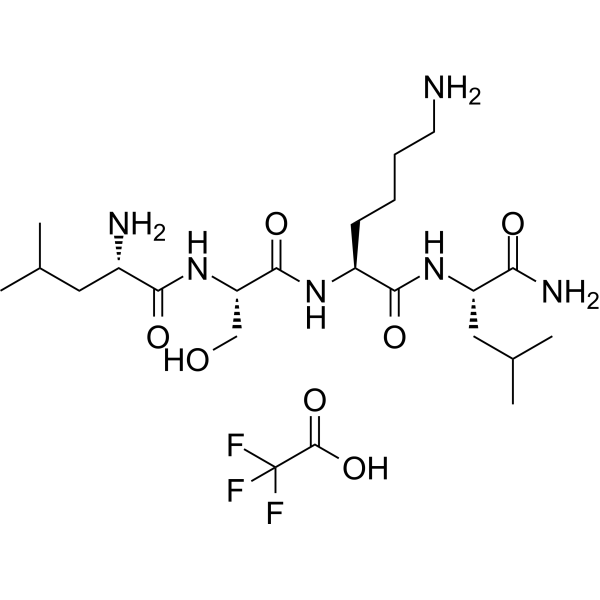
    Colivelin TFA is a brain penetrant neuroprotective peptide and a potent activator of STAT3, suppresses neuronal death by activating STAT3 in vitro . Colivelin TFA exhibits long-term beneficial effects against neurotoxicity, Aβ deposition, neuronal apoptosis, and synaptic plasticity deficits in neurodegenerative disease . Colivelin TFA has the potential for the treatment of alzheimer's disease and ischemic brain injury .
    Colivelin TFA
  • HY-P99301

    Anti-Canine IL31 Recombinant Antibody; CAN34D3-65; PF-06443537

    Interleukin Related Inflammation/Immunology
    Lokivetmab (Anti-Canine IL31 Recombinant Antibody) is an anti-canine IL-31 monoclonal antibody. Lokivetmab inhibits IL-31-mediated activation of pruritogenic signals in peripheral sensory neurons and reduces TH2-weighted inflammation. Lokivetmab demonstrates long-term efficacy in controlling pruritus and improving skin lesions in dogs with canine atopic dermatitis (CAD). Lokivetmab can be used for the research of atopic dermatitis (AD) in dogs .
    Lokivetmab
  • HY-116673

    Histone Acetyltransferase Neurological Disease
    TTK21 is an activator of the histone acetyltransferases CBP/p300. TTK21 passes the blood–brain barrier, induces no toxicity, and reaches different parts of the brain when conjugated to glucose-based carbon nanosphere (CSP). TTK21 has beneficial implications for the brain functions of neurogenesis and long-term memory .CSP-TTK21 can ameliorate Aβ-impaired long-term potentiation (LTP). CSP-TTK21 may enhance the transcription of genes that promote synaptic health and cognitive function . CSP-TTK21 is orally effective and leads to improvements in motor functions, histone acetylation dynamics in a spinal injury rat model .
    TTK21
  • HY-152955
    STING agonist-22
    1 Publications Verification

    STING Infection Inflammation/Immunology
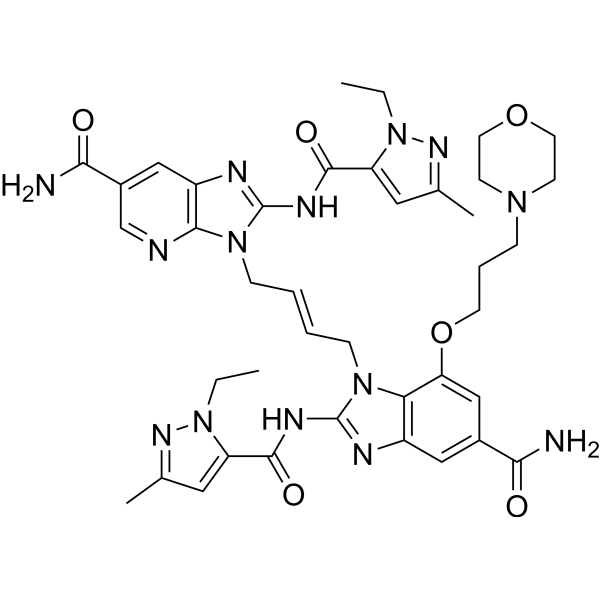
    STING agonist-22 (CF501) is a potent non-nucleotide STING agonist. STING agonist-22 is a adjuvant by activating STING to induce the type I interferon (IFN-I) response and proinflammatory cytokine production. STING agonist-22 can be used as an adjuvant to boost the original protein vaccine, producing potent, broad, and long-term immune protection. STING agonist-22 can be used for SARS-CoV-2 variants and sarbecovirus diseases research .
    STING agonist-22
  • HY-101955A

    (2R,6R)-HNK hydrochloride

    Drug Metabolite Neurological Disease
    (2R,6R)-Hydroxynorketamine ((2R,6R)-HNK) hydrochloride is an active ketamine metabolite with no NMDAR binding activity. (2R,6R)-Hydroxynorketamine hydrochloride rescues impaired dorsal hippocampal long-term potentiation and restores robust long-term potentiation in the hippocampal SC-CA1 pathway. (2R,6R)-Hydroxynorketamine hydrochloride can be used for research on depression .
    (2R,6R)-Hydroxynorketamine hydrochloride
  • HY-113788

    Pyk2 p38 MAPK Amyloid-β Neurological Disease Inflammation/Immunology
    PF-719 is a highly selective Pyk2 inhibitor with an IC50 value of 17 nM. PF-719 promotes the activation of LKB1 and p38 MAPK. PF-719 blocks synaptic deficits induced by Amyloid-beta oligomers and reverses the inhibition of long-term potentiation induced by β-amyloid oligomers. PF-719 can be used in research related to Alzheimer's disease and autoimmune diseases .
    PF-719
  • HY-N7055

    Trierucoylglycerol

    Drug Derivative Metabolic Disease
    Trierucin (Trierucoylglycerol) is a triester formed by glycerol and erucic acid, which serves as an occlusive skin conditioning agent and non-aqueous thickener in cosmetics. Long-term feeding of Trierucin to rats induces chronic toxicities such as cardiac lipid deposition and fibrosis .
    Trierucin
  • HY-133167
    Clothianidin
    1 Publications Verification

    Environmental Pollutants Insecticide Others
    Clothianidin is a neonicotinoid insecticide. Clothianidin shows excellent long-term control effect in small doses against various insect pests such as Coleoptera, Thysanoptera, Lepidoptera, Diptera, Homoptera, Heteroptera, Orthoptera and Isoptera families. Clothianidin has various application methods and high safety for crops .
    Clothianidin
  • HY-Y0378

    (R)-Leucine

    Endogenous Metabolite Neurological Disease
    D-Leucine is a more potent anti-seizure agent than L-leucine. D-leucine potently terminates seizures even after the onset of seizure activity. D-leucine, but not L-leucine, reduces long-term potentiation but had no effect on basal synaptic transmission in vitro .
    D-Leucine
  • HY-P5883

    tatM2NX

    TRP Channel Cardiovascular Disease Neurological Disease
    TAT-M2NX (tatM2NX) is a selective inhibitor targeting human TRPM2 channels and exerts inhibitory effects on ischemic stroke. TAT-M2NX reduces H2O2-induced calcium influx via TRPM2 channels. After traumatic brain injury in mice, TAT-M2NX preserves hippocampal long-term potentiation, improves memory function, and reduces infarct volume after middle cerebral artery occlusion, but it shows no effect on female mice. TAT-M2NX can be used in studies related to traumatic brain injury and ischemic stroke .
    TAT-M2NX
  • HY-W143531

    NOV03; SHR8058

    Biochemical Assay Reagents Inflammation/Immunology
    Perfluorohexyloctane (NOV03), a semifluorinated alkane, reduces tear film instability in Meibomian gland dysfunction and evaporative dry eye disease. Perfluorohexyloctane is a long-term tamponade agent. Perfluorohexyloctane increases tear film breakup time and lipid layer thickness .
    Perfluorohexyloctane
  • HY-141514
    MSA-2 dimer
    1 Publications Verification

    STING Inflammation/Immunology Cancer
    MSA-2 dimer is a selective, orally active non-nucleotide STING agonist (Kd=145 μM) with long-term antitumor and immunogenic activity. MSA-2 dimer is bound to STING as a non-covalent dimer exhibiting higher permeability than cyclic dinucleotide .
    MSA-2 dimer
  • HY-N2125

    5-HT Receptor iGluR Caspase Interleukin Related TNF Receptor SOD NF-κB Neurological Disease Inflammation/Immunology
    Parishin C is a brain-penetrant major bioactive component found in Gastrodia elata Blume. Parishin C is a 5-HT1A receptor agonist with an EC50 of 34 nM. Parishin C has antipsychotic and neuroprotective effects. Parishin C protects against Aβ-induced long-term potentiation damage and NMDA receptor current impairment. Parishin C reduces oxidative stress, pro-inflammatory cytokine levels, caspase activity, brain water content, and cerebral infarct volume; increases antioxidant enzyme activity and BDNF levels; improves nerve function and histopathological brain damage. Parishin C attenuates phencyclidine-induced immobility time increases, sociability deficits, and visual recognition memory impairment. Parishin C can be used for the research of ischemic stroke, Alzheimer's disease, and schizophrenia-like psychosis .
    Parishin C
  • HY-B0318A
    Metronidazole hydrochloride
    60+ Cited Publications

    SC 326421

    Antibiotic Bacterial Parasite Apoptosis Infection Inflammation/Immunology Cancer
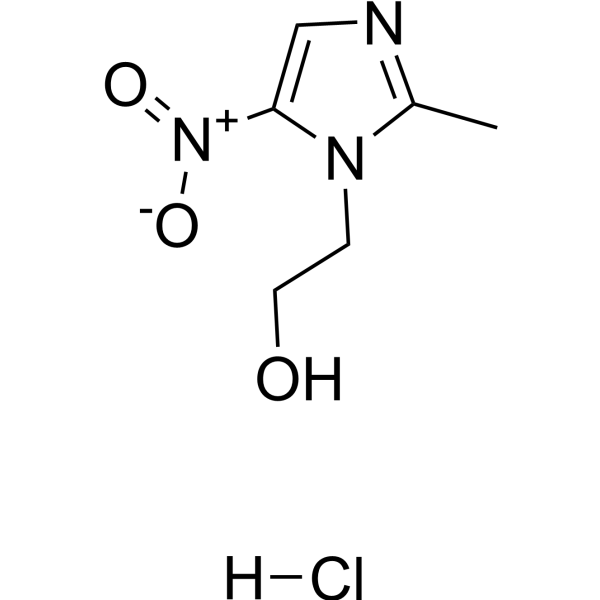
    Metronidazole hydrochloride (SC 326421) is an orally active nitroimidazole antibiotic, can be used to research anaerobic infections. Metronidazole hydrochloride can cross blood brain barrier and results inflammation and skeletal muscle contraction under long-term application .
    Metronidazole hydrochloride
  • HY-176550

    Sodium Channel Neurological Disease
    ASIC1a antagonist-1 (Compound 5b) is an orthosteric noncompetitive Acid sensing ion channels 1a (ASIC1a) antagonist with an IC50 of 27 nM (pH 6.7). ASIC1a antagonist-1 shifts pH dependence of ASIC1a activation and inhibits its maximal evoked response. ASIC1a antagonist-1 completely inhibits long-term potentiation (LTP) induction in CA3-CA1 pathway. ASIC1a antagonist-1 can be used for brain diseases and pathologies research .
    ASIC1a antagonist-1
  • HY-B0218R
    Orlistat (Standard)
    30+ Cited Publications

    Tetrahydrolipstatin (Standard); Ro-18-0647 (Standard)

    Reference Standards Fatty Acid Synthase (FASN) Apoptosis Metabolic Disease Cancer
    Orlistat (Standard) is the analytical standard of Orlistat. This product is intended for research and analytical applications. Orlistat (Tetrahydrolipstatin) is a well-known irreversible inhibitor of pancreatic and gastric lipases. Orlistat is also an inhibitor of fatty acid synthase (FASN), is used orally for long-term research of obesity . Anti-atherosclerotic effect .
    Orlistat (Standard)
  • HY-W116007

    Environmental Pollutants DNA/RNA Synthesis Endocrinology
    Octamethylcyclotetrasiloxane promotes the anchorage-independent growth of MCF-10A and MCF-10F cells. Octamethylcyclotetrasiloxane induces DNA damage, inhibits the expression of DNA-repairing protein BRCA1 under long-term and high-concentration exposure. Octamethylcyclotetrasiloxane exhibits intrinsic estrogenic activity .
    Octamethylcyclotetrasiloxane
  • HY-D2346
    HBmito Crimson
    3 Publications Verification

    Fluorescent Dye Others
    HBmito Crimson is a deep red fluorescent probe (λex: 658 nm, λem: 678 nm) for the inner mitochondrial membrane. HBmito Crimson is a cell membrane-permeable probe with high selectivity for the mitochondrial inner membrane, suitable for specific fluorescence staining of the inner mitochondrial membrane in living cells. HBmito Crimson has high photostability and brightness, suitable for long-term dynamic fluorescence imaging.
    HBmito Crimson
  • HY-136642

    Glucocorticoid Receptor Inflammation/Immunology
    Fluocinolone is a potent steroid with highly selective glucocorticoid receptor agonist activity. Fluocinolone stabilizes the blood-retinal barrier by enhancing endothelial tight junctions, inhibiting the VEGF pathway and inflammatory factors. Fluocinolone has high lipophilicity, enabling long-term sustained release in the vitreous. Fluocinolone is used in research related to dermatological diseases, diabetic macular edema, uveitis and oral lichen planus .
    Fluocinolone
  • HY-148867

    Dopamine Receptor Neurological Disease
    UCM-1306 is a potent and orally active human dopamine D1 receptor allosteric modulator (PAM). UCM-1306 increases the endogenous dopamine (DA) maximal effect both in human and mouse D1 receptors. UCM-1306 is not only for improving motor symptoms but also for addressing the key comorbid cognitive impairment associated with long-term Parkinson’s disease (PD) .
    UCM-1306
  • HY-P10235

    Amylin Receptor Neurological Disease
    Cyclic AC253 is an antagonist for amylin receptor, with IC50 of 0.3 μM. Cyclic AC253 exhibits neuroprotective efficacy against Aβ toxicity and abrogates Aβ-induced impairment of hippocampal long-term potentiation. Cyclic AC253 penetrate blood-brain barrier (BBB) .
    Cyclic AC253
  • HY-W004705

    2-Hydroxymethylaniline

    Chloride Channel Neurological Disease
    (2-Aminophenyl)methanol (2-Hydroxymethylaniline) is a molecular chaperone to rescue P123S mutant pendrin. (2-Aminophenyl)methanol has the advantages of low dose, long-term effect and low toxicity. (2-Aminophenyl)methanol can be used for the study of Pendred syndrome (a syndromic deafness) .
    (2-Aminophenyl)methanol
  • HY-113365S

    4-Cholesten-3-one-d5

    Endogenous Metabolite Metabolic Disease
    Cholestenone-d5 is the deuterium labeled Cholestenone. Cholestenone (4-Cholesten-3-one), the intermediate oxidation product of cholesterol, is metabolized primarily in the liver. Cholestenone is highly mobile in membranes and influences cholesterol flip-flop and efflux. Cholestenone may cause long-term functional defects in cells .
    Cholestenone-d5
  • HY-Y0378S

    (R)-Leucine-d10

    Isotope-Labeled Compounds Endogenous Metabolite Neurological Disease
    D-Leucine-d10 is the deuterium labeled D-Leucine. D-Leucine is a more potent anti-seizure agent than L-leucine. D-leucine potently terminates seizures even after the onset of seizure activity. D-leucine, but not L-leucine, reduces long-term potentiation but had no effect on basal synaptic transmission in vitro .
    D-Leucine-d10
  • HY-DY1041

    Fluorescent Dye Others
    CellTracker Blue CMAC (solution) is a non-fluorescent cell membrane permeable dye. The chloromethyl groups of CellTracker Blue CMAC are enzymatically cleaved by intracellular glutathione (GSH) to generate a fluorescent product (blue fluorescence, Ex/Em: 360/460 nm). CellTracker Blue CMAC is suitable for long-term cell tracking (up to 72 hours) and cell proliferation studies, and can also quantify GSH levels .
    Solvent and concentration: DMSO: 10 mM
    CellTracker Blue CMAC (solution)
  • HY-19411

    nAChR Neurological Disease
    SSR180711 hydrochloride is an orally active, selective and reversible α7 acetylcholine nicotinic receptor (n-AChRs) partial agonist. SSR180711 hydrochloride can act on rat α7 n-AChR (Ki=22 nM; IC50=30 nM) and human α7 n-AChR (Ki=14 nM; IC50=18 nM). SSR180711 hydrochloride increases glutamatergic neurotransmission, ACh release and long-term potentiation (LTP) in the hippocampus .
    SSR180711 hydrochloride
  • HY-124136
    WYC-209
    1 Publications Verification

    RAR/RXR Apoptosis Autophagy Cancer
    WYC-209, a synthetic retinoid, is a retinoic acid receptor (RAR) agonist. WYC-209 induces apoptosis primarily via the caspase 3 pathway (IC50=0.19 μM for inmalignant murine melanoma TRCs), and has long-term effects with little toxicity .
    WYC-209
  • HY-21170E

    Zinc(II) Triflate

    Biochemical Assay Reagents Others
    Zinc trifluoromethanesulfonate (Zinc (II) Triflate) is a Zn 2+ salt commonly used in potentiometric titration to determine the stability constants of Zn 2+-quinoline sulfonamide complexes. Aqueous solutions of Zinc trifluoromethanesulfonate form micellar structures, which result in poor desolvation kinetics of Zn 2+ and induce dendrite growth on zinc anodes, failing to support long-term cycling of zinc anodes .
    Zinc trifluoromethanesulfonate
  • HY-A0014S

    TAK-375-d5

    Isotope-Labeled Compounds Melatonin Receptor Neurological Disease Endocrinology Cancer
    Ramelteon-d5 is deuterium labeled Ramelteon. Ramelteon is a potent, highly selective, and orally active agonist of MT1/MT2 with Ki values of 14 and 112 pM, respectively. Ramelteon has the potential for the research of insomnia. Ramelteon consistently reduces sleep onset after long-term treatment, with no next-morning residual effects or rebound insomnia or withdrawal symptoms upon discontinuation .
    Ramelteon-d5
  • HY-19463A

    Sodium Channel Cardiovascular Disease
    F 15845 is a highly effective persistent sodium current blocker. F 15845 also is a cardioprotective agent, has anti-ischemic activity and exerts short- and long-term cardioprotection after myocardial infarction. F 15845 can be used for the research of myocardium functional impairment .
    F15845
  • HY-B0218S

    Tetrahydrolipstatin-d3; Ro-18-0647-d3

    Isotope-Labeled Compounds Fatty Acid Synthase (FASN) Apoptosis Metabolic Disease
    Orlistat-d3 is a deuterated labeled Orlistat . Orlistat (Tetrahydrolipstatin) is a well-known irreversible inhibitor of pancreatic and gastric lipases. Orlistat is also an inhibitor of fatty acid synthase (FASN), is used orally for long-term research of obesity .?Anti-atherosclerotic?effect .
    Orlistat-d3
  • HY-19463

    Sodium Channel Cardiovascular Disease
    F 15845 hydrobromide is a highly effective persistent sodium current blocker. F 15845 hydrobromide is also a cardioprotective agent, has anti-ischemic activity and exerts short- and long-term cardioprotection after myocardial infarction. F 15845 hydrobromide can be used for the research of myocardium functional impairment .
    F-15845 hydrobromide
  • HY-113365S2

    4-Cholesten-3-one-13C2

    Isotope-Labeled Compounds Endogenous Metabolite Metabolic Disease
    Cholestenone- 13C2 is the 13C labeled Cholestenone. Cholestenone (4-Cholesten-3-one), the intermediate oxidation product of cholesterol, is metabolized primarily in the liver. Cholestenone is highly mobile in membranes and influences cholesterol flip-flop and efflux. Cholestenone may cause long-term functional defects in cells .
    Cholestenone-13C2
  • HY-124985

    mGluR Neurological Disease
    VU6010608 is a blood-brain barrier-crossing mGlu7 negative allosteric modulator (IC50 = 0.76 μM). VU6010608 can block long-term enhancement (LTP) of SC-CA1 synapses in mouse brain slices induced by high-frequency stimulation. VU6010608 can be used for research on neurological diseases .
    VU6010608
  • HY-133167S

    Isotope-Labeled Compounds Others
    Clothianidin-d3 is the deuterium labeled Clothianidin.Clothianidin-d3 is a neonicotinoid insecticide. Clothianidin-d3 shows excellent long-term control effect in small doses against various insect pests such as Coleoptera, Thysanoptera, Lepidoptera, Diptera, Homoptera, Heteroptera, Orthoptera and Isoptera families. Clothianidin-d3 has various application methods and high safety for crops .
    Clothianidin-d3
  • HY-169327

    PROTACs MDM-2/p53 Cancer
    MD-265 is a PROTAC degrader that can break down MDM2, leading to activation of p53 in cancer cells carrying wild-type p53. MD-265 achieves complete tumor regression and improves long-term survival of mice with leukemia. (Pink: MI-1063 (HY-133754); Black: linker; Blue: Lenalidomide (HY-A0003) .
    MD-265
  • HY-174308

    STING Inflammation/Immunology Cancer
    ZSA-215 is a potent and orally active STING agonist with an EC50 of 3.3 μM. ZSA-215 enhances STING signaling through promoting the phosphorylation of STING and interferon regulatory factor 3 (IRF3) and secretion of IFN-β. ZSA-215 inhibits tumor regression and long-term survival of mice in MC38 colon cancer model. ZSA-215 can be used to the study of colon cancerr .
    ZSA-215
  • HY-B1970

    2,4'-DDT

    Insecticide Estrogen Receptor/ERR Endocrinology
    o,p'-DDT (2,4'-DDT) is a chlorinated organic pesticide with estrogenic activity. o,p'-DDT is persistent in the environment, can accumulate in organisms and disrupt the endocrine system. o,p'-DDT is used in agriculture as a pesticide, especially for controlling insect pests. The use of o,p'-DDT has led to toxic effects in organisms, raising widespread concern about its environmental and health effects. o,p'-DDT has also led to research into its long-term effects in ecosystems .
    o,p'-DDT
  • HY-D1562

    Fluorescent Dye Others
    CytoTrace Red CMTPX is a cell permeable long-term cell tracer (Ex=577 nm, Em=602 nm) .
    CytoTrace Red CMTPX
  • HY-148250

    iGluR Neurological Disease
    TP-050, a chemical probe, is a potent, orally active and selective NMDAR agonist with an EC50 value of 0.51 μM and 9.6 μM for GluN2A and GluN2D, respecticely. TP-050 can cross the blood-brain barrier (BBB). TP-050 induces hippocampal long-term (LPT) potentiation enhancemen and enhances neuronal signal transmission .
    TP-050
  • HY-120386

    iGluR Neurological Disease
    LY382884 is a selective antagonist for GluR5 kainate receptor. LY382884 prevents the induction of NMDA receptor independent long-term potentiation (LTP) .
    LY382884

Inquiry Online

Your information is safe with us. * Required Fields.

Salutation


Country or Region *

Applicant Name *


Organization Name *

Department *


Email Address *


Product Name *

Cat. No.


Requested quantity *

Phone Number *


Remarks

Inquiry Online

Inquiry Information

Product Name:
Cat. No.:
Quantity:
MCE Japan Authorized Agent:

