1. Search Result
Search Result
Results for "

progression

" in MedChemExpress (MCE) Product Catalog:

497

Inhibitors & Agonists

19

Screening Libraries

1

Fluorescent Dye

7

Biochemical Assay Reagents

31

Peptides

12

Inhibitory Antibodies

61

Natural
Products

23

Isotope-Labeled Compounds

9

Click Chemistry

109

Oligonucleotides

Cat. No. Product Name Target Research Areas Chemical Structure
  • HY-100599
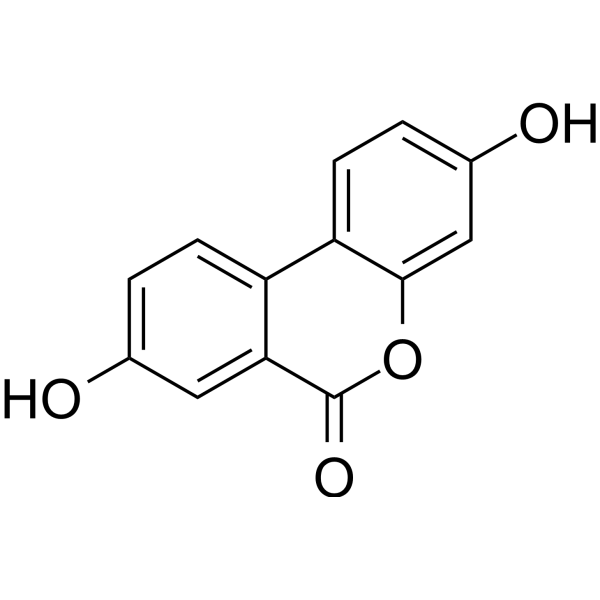
    Urolithin A
    Maximum Cited Publications
    46 Publications Verification

    Drug Metabolite Reactive Oxygen Species (ROS) DNA/RNA Synthesis Autophagy Apoptosis Endogenous Metabolite Cancer
    Urolithin A, a gut-microbial metabolite of ellagic acid, exerts anti-inflammatory, antiproliferative, and antioxidant properties. Urolithin A induces autophagy and apoptosis, suppresses cell cycle progression, and inhibits DNA synthesis .
    Urolithin A
  • HY-N0177
    Diosgenin
    5+ Cited Publications

    STAT MicroRNA Metabolic Disease
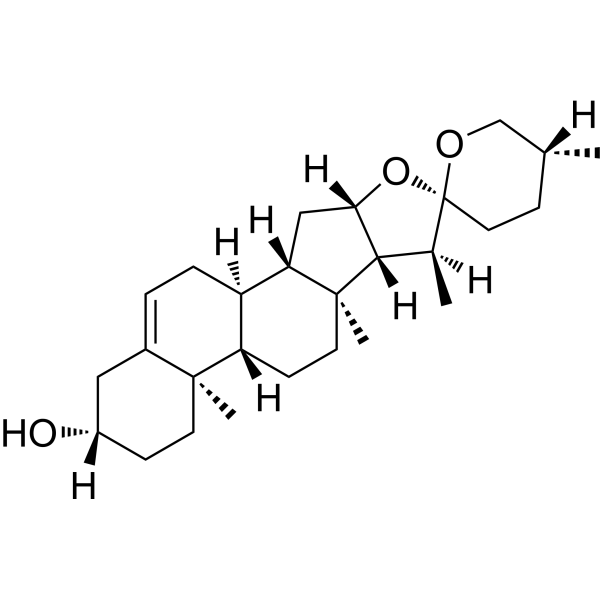
    Diosgenin, a steroidal saponin, can inhibit STAT3 signaling pathway . Diosgenin is an exogenous activator of Pdia3/ERp57 . Diosgenin inhibits aortic atherosclerosis progression by suppressing macrophage miR-19b expression .
    Diosgenin
  • HY-50682
    Azeliragon
    10+ Cited Publications

    TTP488; PF-04494700

    Amyloid-β Neurological Disease Cancer
    Azeliragon (TTP488) is an orally bioavailable inhibitor of the receptor for advanced glycation end products (RAGE) in development as a potential treatment to slow disease progression with mild Alzheimer’s disease (AD) . Azeliragon also can cross the blood-brain barrier (BBB) .
    Azeliragon
  • HY-12956
    Dinoprost
    5+ Cited Publications

    Prostaglandin F2α; PGF2α

    Prostaglandin Receptor Endogenous Metabolite Autophagy Apoptosis Endocrinology
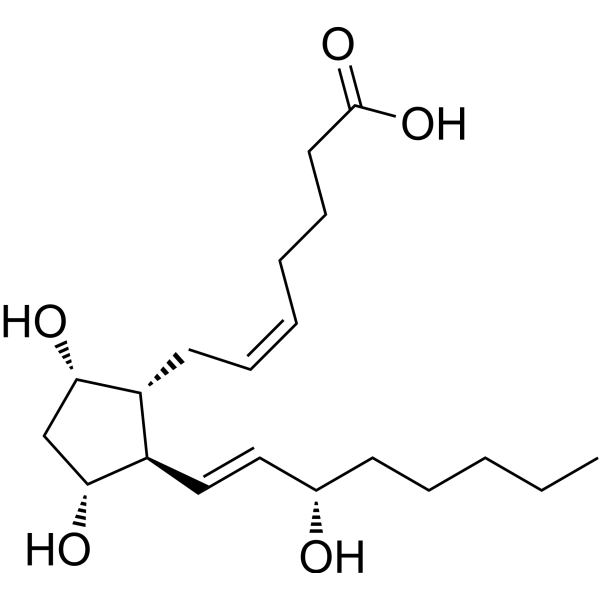
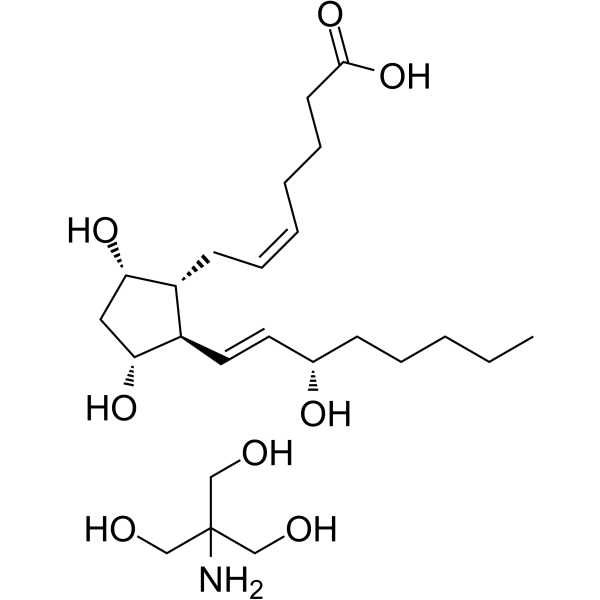
    Dinoprost (Prostaglandin F2α) is an orally active, potent prostaglandin F (PGF) receptor (FP receptor) agonist. Dinoprost is a luteolytic hormone produced locally in the endometrial luminal epithelium and corpus luteum (CL). Dinoprost plays a key role in the onset and progression of labour .
    Dinoprost
  • HY-13555
    β-Lapachone
    10+ Cited Publications

    ARQ-501; NSC-26326

    Indoleamine 2,3-Dioxygenase (IDO) Topoisomerase Autophagy Apoptosis Cancer
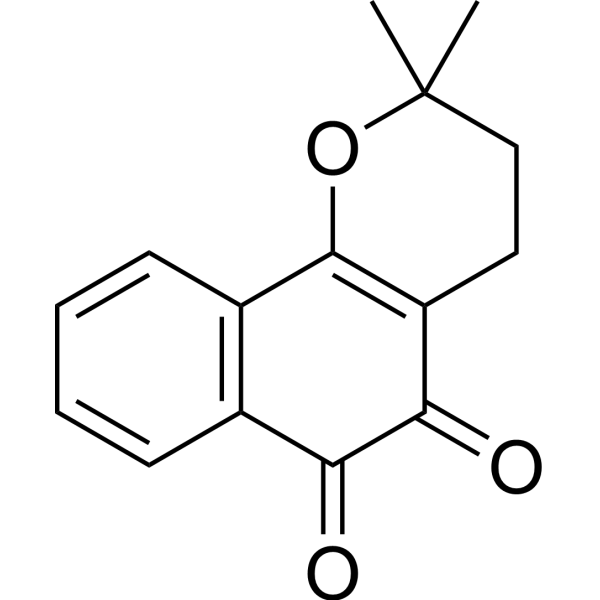
    β-Lapachone (ARQ-501;NSC-26326) is a naturally occurring O-naphthoquinone, acts as a topoisomerase I inhibitor, and induces apoptosis by inhibiting cell cycle progression.
    β-Lapachone
  • HY-P99112

    RG-6168; SA-237

    Interleukin Related Inflammation/Immunology Cancer
    Satralizumab is a humanized monoclonal antibody that targets IL-6R. Satralizumab prevents dTAA formation and progression in rattus norvegicus. Satralizumab can be used for neuromyelitis optica spectrum disorder (NMOSD) and descending thoracic aorta aneurysm (dTAA) research .
    Satralizumab
  • HY-122506

    STAT Cancer
    Salviolone is a natural diterpenoid derivative that can against melanoma cells. Salviolone exhibits a pleiotropic effect against melanoma by hampering cell cycle progression, STAT3 signaling, and malignant phenotype of A375 melanoma cells .
    Salviolone
  • HY-120546
    Ulixacaltamide
    1 Publications Verification

    Z944; PRAX-944

    Calcium Channel Neurological Disease Inflammation/Immunology
    Ulixacaltamide (Z944) is an orally available T-type calcium channel antagonist that can slow the progression of epilepsy. Ulixacaltamide effectively reduces tremor in a normal alkaline tremor animal model. Ulixacaltamide reverses thermal hyperalgesia and mediates pain relief .
    Ulixacaltamide
  • HY-119711

    MMP Cancer
    NNGH is a stromelysin-1 (MMP-3) inhibitor. MMP-3 is both a direct transcriptional target and a necessary contributor of the Wnt/β-catenin signaling pathway. Matrix metalloproteinases (MMPs) play a well-defined role in later stages of tumor progression .
    NNGH
  • HY-113057

    Endogenous Metabolite Cancer
    3-Hydroxycapric acid is an inhibitor for mitotic progression.
    3-Hydroxycapric acid
  • HY-14804
    Tasisulam
    1 Publications Verification

    LY 573636

    Molecular Glues Apoptosis Cancer
    Tasisulam is a anticancer agent and induces apoptosis via the intrinsic pathway, resulting in cytochrome c release and caspase-dependent cell death. Tasisulam inhibits mitotic progression and induces vascular normalization .
    Tasisulam
  • HY-150147
    CAM833
    1 Publications Verification

    RAD51 Apoptosis Cancer
    CAM833 is a potent orthosteric inhibitor of the interaction between BRCA2 and RAD51 with a Kd of 366 nM against the ChimRAD51 protein. CAM833 also inhibits RAD51 oligomerization. CAM833 increases the progression of G2/M-arrested cells into apoptosis .
    CAM833
  • HY-B1817A

    Zinc(II) acetate, 99.99% trace metals basis

    CDK Heme Oxygenase (HO) Apoptosis Others
    Zinc (Zinc (II)) acetate, 99.99% trace metals basis is a heme oxygenase 1 (HO-1) activator and apoptosis inducer with cytotoxic and anticancer activities. Zinc acetate, 99.99% trace metals basis enhances HO-1 expression, alters the microRNA profile, and increases the level of caspase-cleaved cytokeratin 18. Zinc acetate, 99.99% trace metals basis also regulates the expression of Cdk2/cyclin E and interferes with cell cycle progression. Zinc acetate, 99.99% trace metals basis effectively inhibits cancer cell proliferation and induces their rapid death, with no significant cytotoxicity to non-tumor tissues. Zinc acetate, 99.99% trace metals basis has been widely used in studies related to hepatocellular carcinoma, prostate cancer, and other conditions .
    Zinc acetate, 99.99% trace metals basis
  • HY-135035

    (-)-Decanoylcarnitine

    Endogenous Metabolite Metabolic Disease Cancer
    Decanoyl-L-carnitine ((-)-Decanoylcarnitine) is an endogenous metabolite. Decanoyl-L-carnitine can be used as a serum metabolic biomarkers as indicators in the progression of intravenous leiomyomatosis .
    Decanoyl-L-carnitine
  • HY-133558
    VII-31
    2 Publications Verification

    E1/E2/E3 Enzyme Apoptosis Cancer
    VII-31 is a potent NEDDylation pathway activator to inhibit the tumor progression in vitro and in vivo. VII-31 induces apoptosis via intrinsic and extrinsic pathways .
    VII-31
  • HY-122381
    Kyotorphin
    1 Publications Verification

    Bacterial Endogenous Metabolite Neurological Disease
    Kyotorphin is an endogenou neuroactive dipeptide with analgesic properties. Kyotorphin possesses anti-inflammatory and antimicrobial activity. Kyotorphin levels in cerebro-spinal fluid correlate negatively with the progression of neurodegeneration in Alzheimer's Disease patients .
    Kyotorphin
  • HY-16532

    AEZS-108; AN-152

    Peptide-Drug Conjugates (PDCs) GnRH Receptor Cancer
    Zoptarelin doxorubicin (AEZS-108; AN-152) is a hybrid anticancer agent, containing Zoptarelin and Doxorubicin. Zoptarelin doxorubicin has been used to research targeting tumors expressing LHRH receptors. Zoptarelin doxorubicin abolishes tumor progression and induces remarkable apoptosis in vitro .
    Zoptarelin doxorubicin
  • HY-132822

    SBP-101

    Drug Derivative Cancer
    Ivospemin (SBP-101) is an antineoplastic spermine analog. Ivospemin has shown efficacy in slowing pancreatic and ovarian tumor progression in vitro and in vivo. Ivospemin shows modest induction of polyamine catabolism, but stronger repression of ornithine decarboxylase activity. Ivospemin is promising for research of cancers .
    Ivospemin
  • HY-145759
    Mutant p53 modulator-1
    1 Publications Verification

    MDM-2/p53 Cancer
    Mutant p53 modulator-1 is a mutant p53 modulator. Mutant p53 modulator-1 reduces the progression of cancers that contain a p53 mutation (extracted from patent WO2021231474A1, compound 231B) .
    Mutant p53 modulator-1
  • HY-119518

    BMS-209641

    RAR/RXR Cancer
    BMS641 (BMS-209641) is a selective RARβ agonist. BMS641 has a higher affinity for RARβ (Kd, 2.5 nM) that is 100 times higher than that for RARα (Kd, 225 nM) or RARγ (Kd, 223 nM) .
    BMS641
  • HY-153833
    PDS-0330
    1 Publications Verification

    KVA-E-23A

    Gap Junction Protein Cancer
    PDS-0330 is a specific and potent Claudin-1 inhibitor. PDS-0330 interferes with claudin-1/Src association and inhibits colorectal cancer (CRC) progression and metastasis .
    PDS-0330
  • HY-156430

    MMP Cancer
    MMP-7-IN-3 is a potent and selective inhibitor of MMP-7. MMP-7-IN-3 suppresses kidney fibrosis progression in a mouse model with unilateral ureteral obstruction .
    MMP-7-IN-3
  • HY-13706A

    TM30089

    Prostaglandin Receptor Inflammation/Immunology
    CAY10471 (TM30089) is a potent, selective, and orally active prostaglandin D2 receptor CRTH2 antagonist. CAY10471 attenuates the progression of tubulointerstitial fibrosis and chronic contact hypersensitivity (CHS) in animal model .
    CAY10471
  • HY-N1196

    NF-κB Inflammation/Immunology
    Suberosin, isolated from Plumbago zeylanica, exhibits anti-inflammatory and anticoagulant activity. Suberosin suppresses PHA-induced PBMC proliferation and arrested cell cycle progression from the G1 transition to the S phase through the modulation of the transcription factors NF-AT and NF-κB .
    Suberosin
  • HY-107637

    MMP Cardiovascular Disease
    ONO-4817 is a potent inhibitor of matrix metalloproteinase (MMP). Inhibition of matrix metalloproteinases (MMPs) is expected to suppress atherosclerotic neointimal proliferation and thus limits atheromatous plaque progression. ONO-4817 suppresses the development of aortic intimal hyperplasia in experimental hyperlipidemic rabbit .
    ONO-4817
  • HY-120793

    TRB-N0224

    Ras Apoptosis MMP Inflammation/Immunology Cancer
    CMC2.24 (TRB-N0224), an orally active tricarbonylmethane agent, is effective against pancreatic tumor in mice by inhibiting Ras activation and its downstream effector ERK1/2 pathway. CMC2.24 is also a potent inhibitor of zinc-dependent MMPs with IC50s ranging from 2.0-69 μM. CMC2.24 alleviates osteoarthritis progression by restoring cartilage homeostasis and inhibiting chondrocyte apoptosis via the NF-κB/HIF-2α axis .
    CMC2.24
  • HY-176861

    E1/E2/E3 Enzyme Cadherin Cancer
    Hakin-1 is a E3 Ubiquitin-Ligase Hakai inhibitor. Hakin-1 blocks Hakai-mediated global ubiquitination and specific ubiquitination of E-cadherin and inhibits epithelial-mesenchymal transition (EMT) progression. Hakan-1 inhibits tumor progression and cancer metastasis. Hakin-1 can be used for the study of carcinoma such as colorectal cancer .
    Hakin-1
  • HY-105063

    HSP Metabolic Disease Inflammation/Immunology
    DiaPep277 is a 24 amino acid peptide derived from positions 437-460 in HSP60. DiaPep277 arrests the progression of β-cell destruction in NOD mice. DiaPep277 has an immune modulatory effect on diabetogenic T cells in animal models of diabetes .
    DiaPep277
  • HY-W088191

    Drug Intermediate Cardiovascular Disease
    4-Hydroxybenzamide, found in the herb of Berberis pruinosa, is a known natural product that has potential to slow down the progression of atherosclerosis .
    4-Hydroxybenzamide
  • HY-W700800

    Cytochrome P450 Cancer
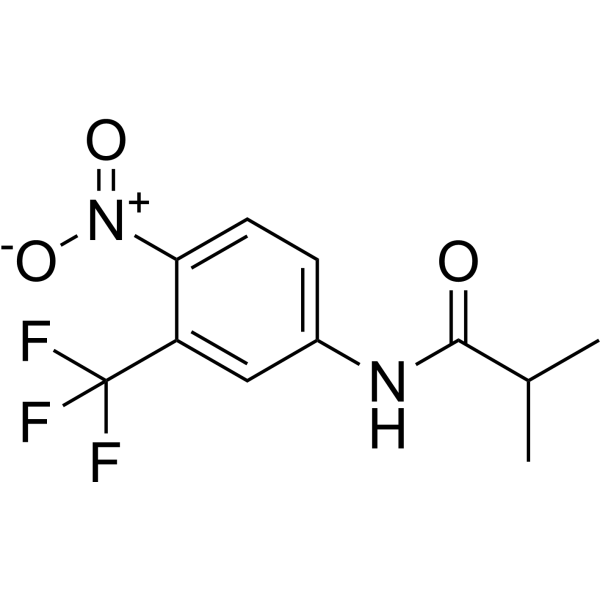
    Flu-6 is a metabolite of Flutamide (HY-B0022). FLU-6 production in the liver requires the involvement of NADPH: cytochrome P450 reductase (CPR). Flutamide can inhibit prostate cancer progression .
    Flu-6
  • HY-149482
    LN5P45
    1 Publications Verification

    Cathepsin Cancer
    LN5P45 is an OTUB2 inhibitor (IC50: 2.3 μM). LN5P45 induces monoubiquitination of OTUB2 on lysine 31. LN5P45 can be used for research of tumor progression and metastasis .
    LN5P45
  • HY-172448

    ATM/ATR Cancer
    YY2201 is a highly potent and selective ATR inhibitor with an IC50 of 8 nM. YY2201 shows >200-fold more selective for ATR than mTOR. YY2201 inhibits tumor progression in broad-spectrum cancer types (such as lung cancer) .
    YY2201
  • HY-124557

    NF-κB Metabolic Disease Inflammation/Immunology
    Mahanimbine is an orally active alkaloid from Murraya koenigii. Mahanimbine inhibits progression of high-fat diet (HFD)-induced metabolic complications in mice .
    Mahanimbine
  • HY-120499

    Hedgehog Smo Cancer
    AZD8542 is an antagonist of Smoothened (SMO), playing an important role in oncology. AZD8542 is an Hedgehog (Hh) pathway antagonist on tumor progression with an emphasis on the role of the stroma compartment .
    AZD8542
  • HY-N3913

    STAT Bcl-2 Family Cancer
    Furowanin A is a flavonoid with anti-neoplastic effects. Furowanin A inhibits STAT3/Mcl-1 axis to suppress proliferation, block cell cycle progression, induce apoptosis and promote autophagy. Furowanin A potently inhibits colorectal cancer (CRC) cells .
    Furowanin A
  • HY-W369099

    STAT Apoptosis Cancer
    HJC0152 (free base) is an orally active and potent inhibitor of STAT3. HJC0152 (free base) inhibits cell cycle progression and induces apoptosis. HJC0152 (free base) significantly suppresses MDA-MB-231 xenograft tumor growth in mice .
    HJC0152 free base
  • HY-156792

    RIO Kinase Cancer
    RIOK2-IN-1 (com 4) is a potent and selective RIOK2 inhibitor (Kd=150 nM), but has low cellular activity (IC50=14,600 nM). RIOK2 is an atypical kinase associated with a variety of human cancers and is involved in ribosome maturation and cell cycle progression. The small molecule inhibitor CQ211 (HY-147655), an improvement of RIOK2-IN-1 as the lead compound, has good in vivo and in vitro activity, inhibits the proliferation of MKN-1 and HT-29 cancer cells, and can xenograft MKN in mice -1 model inhibits tumor progression .
    RIOK2-IN-1
  • HY-142931

    ATM/ATR Neurological Disease Cancer
    ATM-IN-1 is a potent inhibitor of ATM. ATM is located mainly in the nucleus and microsomes and is involved in cell cycle progression and in the cell cycle checkpoint response to DNA damage. ATM-IN-1 has the potential for the research of cancer and neurology diseases (extracted from patent WO2021139814A1, compound 3) .
    ATM-IN-1
  • HY-P991647

    CXCR Cancer
    ALX-0651 is a biparatopic humanized monoclonal antibody inhibitor targeting CXCR4. ALX-0651 inhibits hematopoietic stem cell trafficking, tumor progression and metastasis. ALX-0651 can be used for non-Hodgkin’s lymphoma and multiple myeloma research .
    ALX-0651
  • HY-100670

    Epigenetic Reader Domain Neurological Disease
    Olinone is a selective BRD4 BrD1 inhibitor . Olinone accelerates the progression of mouse primary oligodendrocyte progenitors toward differentiation .
    Olinone
  • HY-117962A

    Guanylate Cyclase Metabolic Disease
    BI 703704 is a potent soluble guanylate cyclase (sGC) activator. BI 703704 inhibits the progression of diabetic nephropathy in the ZSF1 rat .
    BI 703704
  • HY-116582

    NO Synthase Infection Inflammation/Immunology Cancer
    8-Nitroguanine, a product of nitrative DNA damage caused by reactive nitrogen species, is a potential biomarker for progression of malignant fibrous histiocytoma .
    8-Nitroguanine
  • HY-147361

    Apoptosis Lactate Dehydrogenase Cancer
    LDCA is a dual-hit metabolic modulator and inhibits LDH-A enzyme activity to stimulate apoptosis in the malignant population. LDCA can be used for the research of oncogenic progression .
    LDCA
  • HY-P2115

    GnRH Receptor Cancer
    Ramorelix is a luteinizing-hormone-releasing hormone (LHRH) antagonist. Ramorelix can inhibit tumor progression in vivo. Ramorelix can be studied in anti-cancer research .
    Ramorelix
  • HY-116894

    Apoptosis Cancer
    Rotundifuran, a labdane type diterpene, is isolated from Vitex rotundifolia. Rotundifuran can inhibit the cell cycle progression and induce apoptosis in human myeloid leukaemia cells .
    Rotundifuran
  • HY-19253A

    Angiotensin Receptor Cardiovascular Disease Metabolic Disease
    KRH-594 is an orally active angiotensin AT1 receptor antagonist. KRH-594 ameliorates the progression of diabetic nephropathy and hyperlipidaemia. KRH-594 inhibits cardiac hypertrophy .
    KRH-594
  • HY-W134312

    Tricalcium dicitrate

    Environmental Pollutants Biochemical Assay Reagents Inflammation/Immunology
    Calcium citrate,AR,99% (Tricalcium dicitrate) is an alkalinizing agent. Calcium citrate,AR,99% attenuates tubulointerstitial damage. Calcium citrate,AR,99% ameliorates the progression of chronic renal injury .
    Calcium citrate,AR,99%
  • HY-135035S

    (-)-Decanoylcarnitine-d3

    Isotope-Labeled Compounds Endogenous Metabolite Metabolic Disease Cancer
    Decanoyl-L-carnitine ((-)-Decanoylcarnitine)-d3 is deuterium labeled Decanoyl-L-carnitine (HY-135035). Decanoyl-L-carnitine is an endogenous metabolite. Decanoyl-L-carnitine can be used as a serum metabolic biomarkers as indicators in the progression of intravenous leiomyomatosis .
    Decanoyl-L-carnitine-d3
  • HY-156979

    SARS-CoV HCV Infection
    RBT-9 prevents progression to severe COVID-19 and organ failure. RBT-9 also has antiviral effects, as demonstrated in several enveloped viruses, including influenza, HCV, dengue, and yellow fever .
    RBT-9
  • HY-111314

    5-Hydroxy-1-methylhydantoin

    Reactive Oxygen Species (ROS) Inflammation/Immunology
    NZ 419 (5-Hydroxy-1-methylhydantoin) is a metabolite of creatinine and an antioxidant with oral activity, which has the ability to scavenge hydroxyl radicals (•OH). NZ 419 can inhibit the progression of chronic kidney disease (CKD) in rats .
    NZ 419

Inquiry Online

Your information is safe with us. * Required Fields.

Salutation


Country or Region *

Applicant Name *


Organization Name *

Department *


Email Address *


Product Name *

Cat. No.


Requested quantity *

Phone Number *


Remarks

Inquiry Online

Inquiry Information

Product Name:
Cat. No.:
Quantity:
MCE Japan Authorized Agent:

