
1. Search Result
Search Result
Results for "

site-specific

" in MedChemExpress (MCE) Product Catalog:

60

Inhibitors & Agonists

4

Fluorescent Dyes

4

Biochemical Assay Reagents

4

Peptides

3

Inhibitory Antibodies

9

Click Chemistry

5

Oligonucleotides

Cat. No. Product Name Target Research Areas Chemical Structure
  • HY-135140

    Biochemical Assay Reagents Others
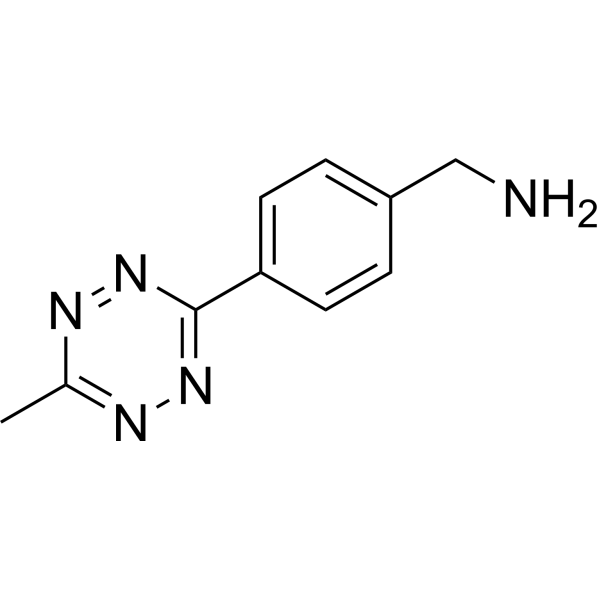
    Methyltetrazine-amine, a tetrazine compound, is used for the site-specific dual functionalization of the resulting bioconjugates .
    Methyltetrazine-amine
  • HY-145746

    Fluorescent Dye PD-1/PD-L1 Inflammation/Immunology Cancer
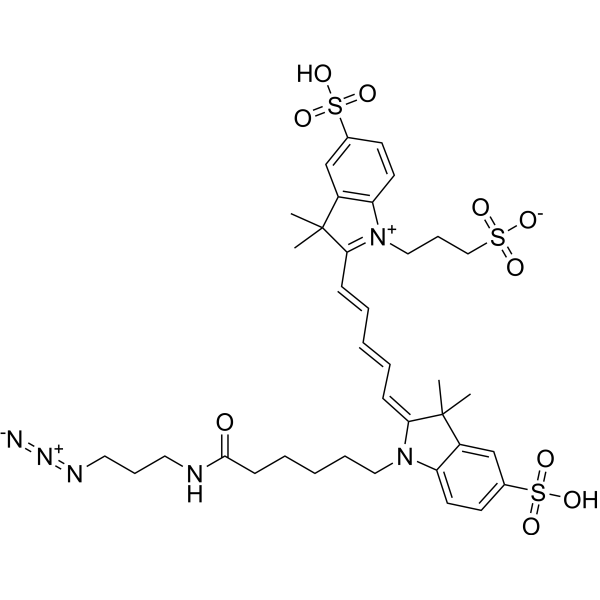
    Sulfo-Cy5 azide is a near-infrared fluorescent probe with favorable click chemistry reactivity. Sulfo-Cy5 azide enables fluorescence imaging, tissue and cellular visualization of PD-L1 in tumors, and site-specific modification of anti-PD-L1 antibodies. Sulfo-Cy5 azide has been employed for RNA labeling and imaging. Sulfo-Cy5 azide can be conjugated to targeting agents for fluorescence imaging in atherosclerosis and breast cancer models (Ex/Em = 645/670 nm) .
    Sulfo-Cy5 azide
  • HY-W087027

    Radionuclide-Drug Conjugates (RDCs) Biochemical Assay Reagents Integrin Cancer
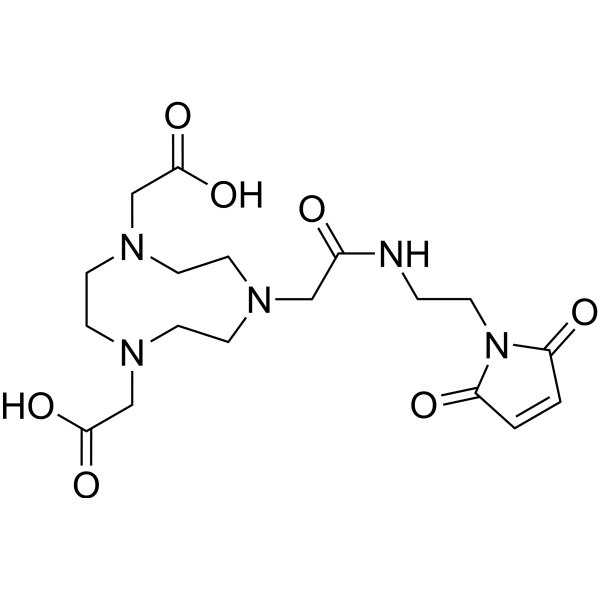
    Maleimide-NOTA is a chelate. Maleimide-NOTA can be site-specifically coupled to the hPD-L1 nanobody bearing the Cys-tag. Maleimide-NOTA can specifically conjugate to A20FMDV2 (HY-P1654). The [ 68Ga]Ac-CG6 formed by the conjugation of 68Ga radiolabeled Maleimide-NOTA with A20FMDV2 can be used for PET imaging of αvβ6 integrin-positive pancreatic ductal adenocarcinoma .
    Maleimide-NOTA
  • HY-133870
    Itaconate-alkyne
    3 Publications Verification

    ITalk

    Fluorescent Dye Inflammation/Immunology
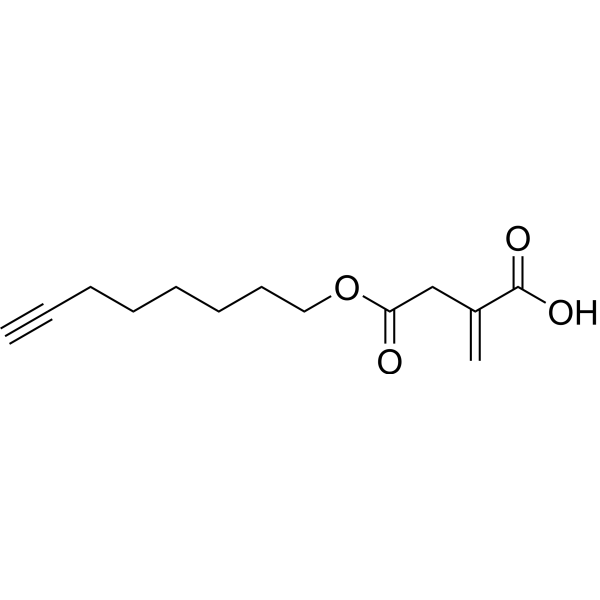
    Itaconate-alkyne (ITalk) is a specific bioorthogonal probe for quantitative and site-specific chemoproteomic profiling of Itaconation in living cells. Itaconate-alkyne, a functional analogue of Itaconate, exhibits comparable antiinflammatory effect with Itaconate and enables the labeling of bona fide targets of Itaconate . Itaconate-alkyne is a click chemistry reagent, it contains an Alkyne group and can undergo copper-catalyzed azide-alkyne cycloaddition (CuAAc) with molecules containing Azide groups.
    Itaconate-alkyne
  • HY-130086

    ADC Linker Cancer
    Bis-PEG4-NHS ester is a crosslinking reagent and amine-reactive modulator .Bis-PEG4-NHS ester reacts with primary amine groups on liposome surfaces via amide bond formation to covalently attach dibenzylcyclooctyne groups, with a hydrophilic PEG4 spacer reducing steric hindrance for subsequent click chemistry .Bis-PEG4-NHS ester enables site-specific antibody coupling to liposome surfaces via copper-free strain-promoted alkyne-azide cycloaddition click chemistry without disrupting liposome structure in minimal organic solvent volumes .Bis-PEG4-NHS ester undergoes hydrolysis during annealing to form -COOH groups that interact with PbI and FAI to enhance perovskite structural integrity, passivate defects, and modulate nucleation kinetics to regulate crystal growth .Bis-PEG4-NHS ester enhances device efficiency and long-term stability when used as an antisolvent additive for p-i-n perovskite solar cells .
    Bis-​PEG4-​NHS ester
  • HY-148426

    Drug-Linker Conjugates for ADC Others
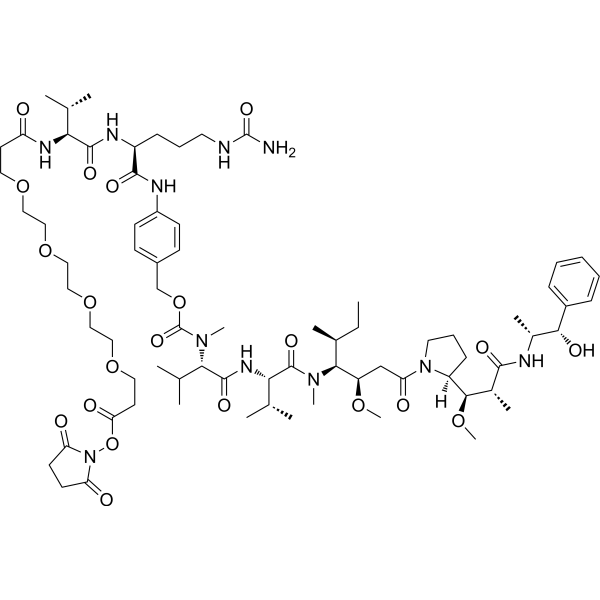
    OSu-PEG4-VC-PAB-MMAE involves in GDP-FAmP4MMAE (Monomethylauristatin E) synthesis, which is for GDP label via site-specific conjugation .
    OSu-PEG4-VC-PAB-MMAE
  • HY-111434A

    UAA crosslinker 1 hydrochloride

    Amino Acid Derivatives Cancer
    N6-[(2-Azidoethoxy)carbonyl]-L-lysine hydrochloride (UAA crosslinker 1 hydrochloride) is a click chemistry-reactive amino acid derivative. N6-[(2-Azidoethoxy)carbonyl]-L-lysine hydrochloride mediates the generation of antibody-drug conjugates (ADCs). N6-[(2-Azidoethoxy)carbonyl]-L-lysine hydrochloride is used for site-specific incorporation into recombinant proteins, or for synthesizing chemical probes and tools for biological research .
    N6-[(2-Azidoethoxy)carbonyl]-L-lysine hydrochloride
  • HY-168534

    SF3B1 Apoptosis Cancer
    WX-02-23 is a small-molecule probe that stereoselectively and site-specifically binds to C258 of FOXA1 and C1111 of SF3B1. WX-02-23 remodels FOXA1's chromatin binding and pioneer activity in a DNA-dependent manner, disrupts spliceosome assembly, and enhances the thermal stability of SF3B1. WX-02-23 inhibits tumor cell proliferation and induces apoptosis. WX-02-23 can be used for research on cancers such as prostate cancer .
    WX-02-23
  • HY-161762

    RA-2034

    CHIKV Virus Protease Infection
    RA-0002034 is a Chikungunya virus (CHIKV) nsP2 protease inhibitor with an IC50 of 58 nM. RA-0002034 covalently modifies the catalytic cysteine in a site-specific manner .
    RA-0002034
  • HY-135140A

    Biochemical Assay Reagents Others
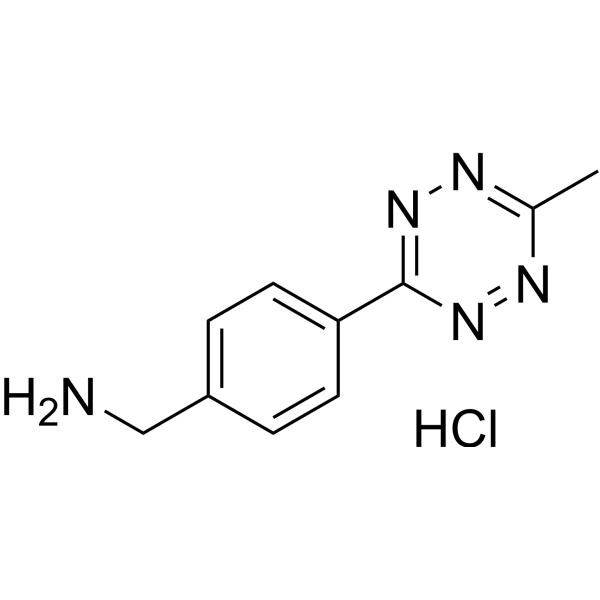
    Methyltetrazine-Amine hydrochloride is a tetrazine compound. Methyltetrazine-Amine hydrochloride can be used for the site-specific dual functionalization of the resulting bioconjugates. Methyltetrazine-Amine hydrochloride can be added during protein precipitation in experiments using trans-cyclooctene .
    Methyltetrazine-amine hydrochloride
  • HY-177554

    Biochemical Assay Reagents Cancer
    KB05yne is a site-selective, alkyne-functionalized electrophilic "probe" fragment probe designed for covalent ligand discovery, with preferential reactivity toward specific cysteine residues in proteins. KB05yne strongly labels wild-type target proteins (e.g., CDKN2AIP, HPCAL1) but does not label their cysteine-to-alanine mutants, confirming site-specific cysteine reactivity. KB05yne can be used for the discovery and optimization of site-specific covalent ligands, and is applicable to proteins with diverse structures and functions, especially in studies targeting cysteine residues in cancer-related or difficult-to-purify proteins .
    KB05yne
  • HY-148835

    Fluorescent Dye Others
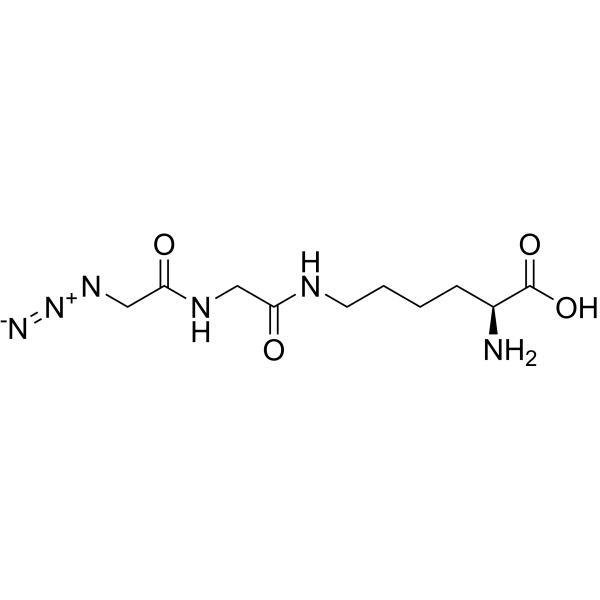
    AzGGK is an unnatural amino acid. AzGGK is site-specifically incorporated into proteins via genetic-code expansion. AzGGK can be used as site-specific probe for ubiquitylation and SUMOylation . AzGGK is a click chemistry reagent, it contains an Azide group and can undergo copper-catalyzed azide-alkyne cycloaddition reaction (CuAAc) with molecules containing Alkyne groups. It can also undergo strain-promoted alkyne-azide cycloaddition (SPAAC) reactions with molecules containing DBCO or BCN groups.
    AzGGK
  • HY-101532

    β-CDN3; 6A-deoxy-6A-azido-β-cyclodextrin

    Biochemical Assay Reagents Others
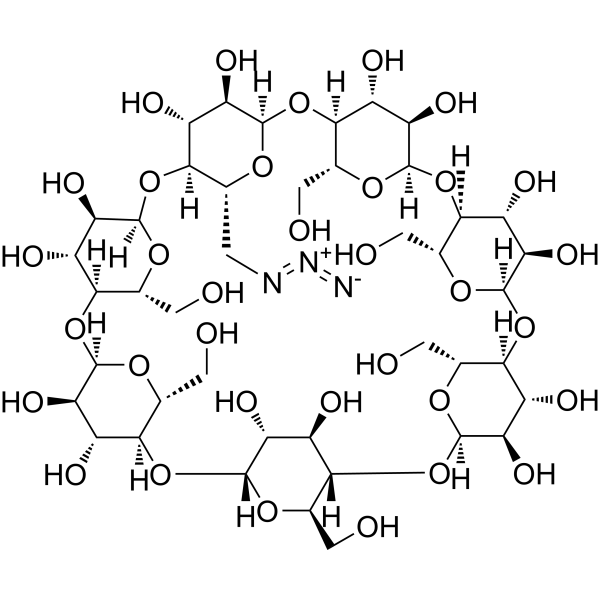
    6A-Azido-6A-deoxy-β-cyclodextrin (β-CDN3) is a site-specifically modified β-cyclodextrin with a single azido group replacing the hydroxyl group at the C6 position. 6A-Azido-6A-deoxy-β-cyclodextrin forms a host-guest inclusion complex with Dexamethasone (HY-14648), localizing the drug within its hydrophobic cavity, which restricts the rotational mobility of the drug and places Dexamethasone in a less polar environment. 6A-Azido-6A-deoxy-β-cyclodextrin acts as a coupling agent to graft β-cyclodextrin onto thermosensitive nanogels via strain-promoted alkyne-azide cycloaddition (SPAAC). 6A-Azido-6A-deoxy-β-cyclodextrin also serves as a click chemistry reagent. It contains an azide group and undergoes copper-catalyzed azide-alkyne cycloaddition (CuAAc) with molecules bearing an alkyne group. It also undergoes strain-driven alkyne-azide cycloaddition (SPAAC) with molecules containing DBCO or BCN groups .
    6A-Azido-6A-deoxy-β-cyclodextrin
  • HY-W784030

    Amino Acid Derivatives Biochemical Assay Reagents Fluorescent Dye Others
    N-TCO-L-lysine is a non-canonical amino acid. N-TCO-L-lysine contains a trans-cyclooctene (TCO) bioorthogonal reactive linker. N-TCO-L-lysine undergoes a bioorthogonal click reaction with SiR-Tz to enable fluorescent labeling of endogenously expressed proteins with site-specific incorporation. When used in combination with SiR-Tz, N-TCO-L-lysine allows super-resolution and live-cell imaging of endogenous proteins .
    N-TCO-L-lysine
  • HY-130426

    Mal-PEG3-acid

    ADC Linker PROTAC Linkers Cancer
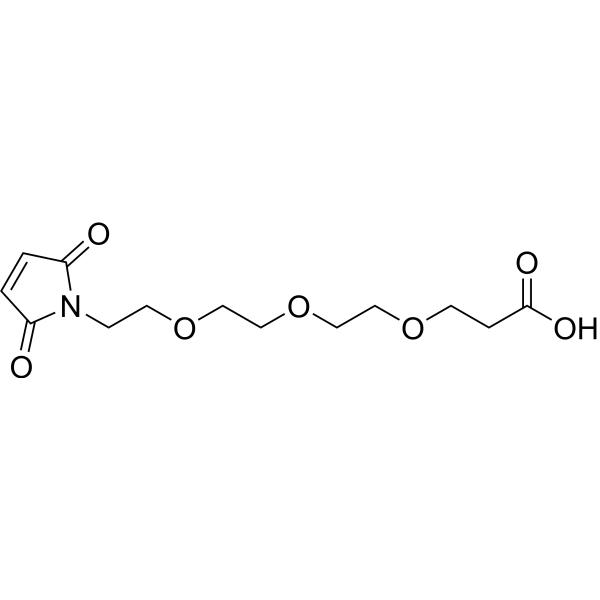
    Maleimido-tri(ethylene glycol)-propionic acid is a cleavable ADC linker used in the synthesis of antibody-drug conjugates (ADCs). Maleimido-tri(ethylene glycol)-propionic acid is used for the preparation of neolymphostin-based ADC precursors for site-specific cysteine mutant trastuzumab-A114C conjugation . Maleimido-tri(ethylene glycol)-propionic acid also can be used as a PEG-based PROTAC linker that can be used in the synthesis of PROTACs.
    Maleimido-tri(ethylene glycol)-propionic acid
  • HY-151379

    Histone Methyltransferase Cancer
    EM127 (compound 11c) is a SMYD3 covalent inhibitor with high selectivity, high affinity (KD=13 μM) and site-specificity. EM127 effectively inhibits ERK1/2 phosphorylation and reduces transcriptional regulation of SMYD3 target genes. EM127 effectively and prolongedly impairs methyltransferase activity. EM127 can be used in cancer research, particularly in SMYD3 positive tumours .
    EM127
  • HY-D2186
    BTD probe-1
    1 Publications Verification

    Biochemical Assay Reagents Others
    BTD probe-1 is a benzothiazine-based chemoproteomic probe and selective protein S-sulfenic acid (Cys-SOH) labeling agent. BTD probe-1 labels protein S-sulfenic acids in vitro in cell and tissue samples, and in situ in intact cells, enabling detection or enrichment of modified proteins/peptides. BTD probe-1 exhibits no cytotoxicity in cells at concentrations ≤1 mM. BTD probe-1 enables global, site-specific mapping and quantification of cysteine S-sulfenylation in complex proteomes with lower input material .
    BTD probe-1
  • HY-114354

    BOD FL alkyne

    Fluorescent Dye Inflammation/Immunology
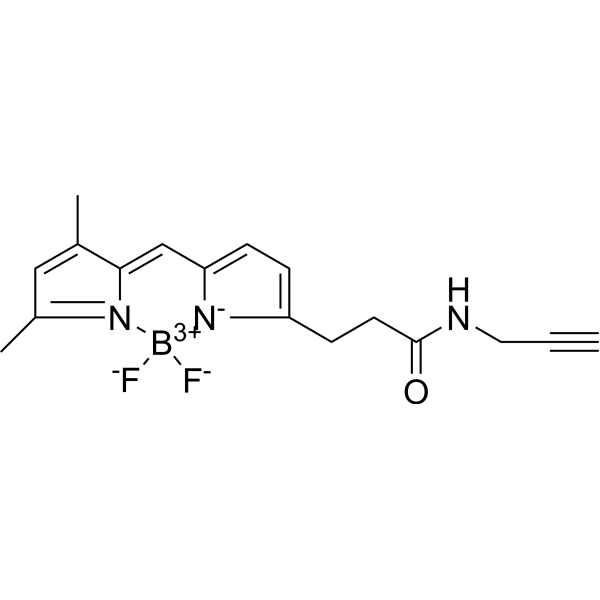
    BODIPY (BOD) FL alkyne is an alkyne-containing BODIPY fluorophore derivative. BODIPY FL alkyne is a bioorthogonal labeling reagent with low toxicity and extremely low non-specific reactivity, and it is widely used in fluorescent bioimaging. BODIPY FL alkyne specifically labels azide groups on intracellular glycoconjugates mainly via strain-promoted azide-alkyne cycloaddition (SPAAC), or mediates site-specific conjugation with proteins such as IL-33, and supports positive cross-linking with other probes (e.g., DBCO-SCy5) for dual labeling. With the advantages of high specificity and low background interference, BODIPY FL alkyne can be used in the research of related diseases such as asthma, atopic dermatitis and inflammatory bowel disease .
    BODIPY FL alkyne
  • HY-E70370

    Virus Protease Others
    hrv 3c Protease is a protease originated from human rhinoviruses. hrv 3c Protease recognizes the sequence LEVLFQGP and cleaves precisely between the Q and GP residues. hrv 3c Protease can be used to remove additional tags from the target proteins .
    hrv 3c Protease
  • HY-P99238

    ADC Antibody Inflammation/Immunology Cancer
    Rolinsatamab is a IgG1κ type chimeric antibody targeting to PRLR (prolactin receptor). Rolinsatamab can be conjugated with pyrrolobenzodiazepine (PDB) dimer SGD-1882 (HY-101127) via a cleavable maleimidocaproyl type linker, to form an antibody-drug conjugate, Rolinsatamab talirine. One Rolinsatamab talirine has an average of 2 site-specific drug attachment engineered cysteines (S239C). The linker equips the valine-alanine dipeptide, as cathepsine B cleavage site. on an average of 2 site-specific drug attachment engineered cysteines (S239C) .
    Rolinsatamab
  • HY-111434

    UAA crosslinker 1

    Amino Acid Derivatives Cancer
    N6-[(2-Azidoethoxy) carbonyl]-L-lysine (UAA crosslinker 1) is a click chemistry-reactive amino acid derivative. N6-[(2-Azidoethoxy) carbonyl]-L-lysine mediates the generation of antibody-drug conjugates (ADCs). N6-[(2-Azidoethoxy) carbonyl]-L-lysine is used for site-specific incorporation into recombinant proteins, or for synthesizing chemical probes and tools for biological research .
    N6-[(2-Azidoethoxy)carbonyl]-L-lysine
  • HY-164583

    Phosphoramidites DNA/RNA Synthesis Others
    DMTr-2'-O-C22-rA-3'-CE-Phosphoramidite is an RNA phosphoramidite monomer. DMTr-2'-O-C22-rA-3'-CE-Phosphoramidite allows site-specific introduction of a 2'-O-C22 lipophilic modification at adenosine positions to construct double-stranded RNA (dsRNA) molecules with extrahepatic delivery capability. DMTr-2'-O-C22-rA-3'-CE-Phosphoramidite supports target gene silencing in skeletal muscle, cardiac muscle and adipose tissue by enhancing the lipophilicity and tissue uptake efficiency of dsRNA. DMTr-2'-O-C22-rA-3'-CE-Phosphoramidite can be used for the construction and mechanism research of nucleic acid silencing molecules .
    DMTr-2'-O-C22-rA-3'-CE-Phosphoramidite
  • HY-125372

    ABAO

    Biochemical Assay Reagents Others
    2-Amino benzamidoxime (ABAO) acts as a bioconjugation reagent precursor and a fluorescent probe precursor. 2-Amino benzamidoxime contains an aniline group for imine activation of aldehydes, as well as a nucleophilic group (Nu:) located at the ortho position of the amine, which is responsible for intramolecular cyclization. 2-Amino benzamidoxime reacts with glyoxal at the N-terminus of phage-displayed peptide libraries. Derivatives of 2-Amino benzamidoxime can be used for protein bioconjugation. Derivatives of 2-Amino benzamidoxime serve as fluorescent probes .\n


    2-Amino benzamidoxime
  • HY-Y1422B
    Lipase (MS grade)
    1 Publications Verification

    Endogenous Metabolite Metabolic Disease
    Lipase (MS grade) catalyzes the hydrolysis of triacylglycerols to release long-chain fatty acids in a site-specific manner. Lipase (MS grade) is involved in a variety of biological processes, from fat metabolism to cell signaling and inflammation, and can be used to study diseases such as pancreatic insufficiency, celiac disease and cystic fibrosis .
    Lipase (MS grade)
  • HY-177542

    Emi-Le; XMT-1660

    Cancer
    Emiltatug ledadotin (Emi-Le; XMT-1660) is a B7-H4-targeted antibody-drug conjugate (ADC). Emiltatug ledadotin consists of the tumor-specific anti-B7-H4 monoclonal antibody Emiltatug (HY-P990918) and the linker-payload system Ledadotin (HY-177541), with site-specific conjugation achieved via GlycoConnect click chemistry. Emiltatug ledadotin inhibits the growth of B7-H4-positive cancer cells. Emiltatug ledadotin can be used to study advanced solid tumors with B7-H4 overexpression, particularly breast cancer, ovarian cancer, and endometrial cancer .
    Emiltatug ledadotin
  • HY-W048513

    DNA/RNA Synthesis Cancer
    7-Deaza-2'-deoxyadenosine is an isosteric dATP analog of 2'-deoxyadenosine. 7-Deaza-2'-deoxyadenosine is recognized by various DNA polymerases and incorporated into DNA strands as a substrate. 7-Deaza-2'-deoxyadenosine undergoes a bioorthogonal inverse electron demand Diels-Alder reaction with tetrazine-modified molecules, enabling site-specific labeling of DNA, surface antibody immobilization and intracellular fluorescent labeling. 7-Deaza-2'-deoxyadenosine reduces the DNA curvature of d(A6)·d(T6) fragments and the stability of DNA/RNA double helices, and leads to decreased antisense activity against SV40 T Antigen. 7-Deaza-2'-deoxyadenosine finds application in the research field of SV40 T Antigen-related cancers .
    7-Deaza-2'-deoxyadenosine
  • HY-164582

    Phosphoramidites DNA/RNA Synthesis Others
    DMTr-2'-O-C22-rC (Ac)-3'-CE-Phosphoramidite is an RNA phosphoramidite monomer. DMTr-2'-O-C22-rC (Ac)-3'-CE-Phosphoramidite enables site-specific introduction of 2'-O-C22 lipophilic modification at cytidine positions during oligonucleotide synthesis, which is used to construct double-stranded RNA (dsRNA) molecules with extrahepatic delivery capability. DMTr-2'-O-C22-rC (Ac)-3'-CE-Phosphoramidite supports target gene silencing in skeletal muscle, cardiac muscle and adipose tissue by enhancing the lipophilicity and tissue uptake efficiency of dsRNA. Construction and mechanism study of DMTr-2'-O-C22-rC (Ac)-3'-CE-Phosphoramidite nucleic acid silencing molecules .
    DMTr-2'-O-C22-rC(Ac)-3'-CE-Phosphoramidite
  • HY-160607

    Radionuclide-Drug Conjugates (RDCs) Exosomes Others
    MMA-NODAGA is a chelator for site-specific labeling of targeting proteins containing unpaired cysteine. MMA-NODAGA can be used to conjugate with exosome and 64Cu in image with positron emission tomography (PET) <[2].
    MMA-NODAGA
  • HY-164581

    Phosphoramidites DNA/RNA Synthesis Others
    DMTr-2'-O-C22-rG (ibu)-3'-CE-Phosphoramidite is an RNA phosphoramidite monomer for oligonucleotide synthesis. DMTr-2'-O-C22-rG (ibu)-3'-CE-Phosphoramidite enables site-specific introduction of 2'-O-C22 lipophilic modification at guanosine positions to construct double-stranded RNA (dsRNA) molecules with extrahepatic delivery capability. DMTr-2'-O-C22-rG (ibu)-3'-CE-Phosphoramidite supports target gene silencing in skeletal muscle, cardiac muscle and adipose tissue by enhancing the lipid solubility and tissue uptake efficiency of dsRNA. DMTr-2'-O-C22-rG (ibu)-3'-CE-Phosphoramidite can be used for the construction and mechanism research of nucleic acid silencing molecules .
    DMTr-2'-O-C22-rG(ibu)-3'-CE-Phosphoramidite
  • HY-157006A

    Biochemical Assay Reagents Others
    TCO-PEG3-NH2 is a click chemistry reagent, it contains a TCO group that can undergo an inverse electron demand Diels-Alder reaction (iEDDA) with molecules containing Tetrazine groups. The amino group of TCO-PEG3-NH2 can react with compounds containing carboxyl, ester, or other reactive groups to form stable amide bonds, enabling site-specific conjugation or modification of biomolecules.
    TCO-PEG3-NH2
  • HY-D2956

    CLIP-GLA-NHS

    Biochemical Assay Reagents Others
    BC-GLA-NHS (CLIP-GLA-NHS) is a NHS-labeled CLIP tag, which is an amine-reactive crosslinker and can achieve site-specific protein labeling. The NHS ester of BC-GLA-NHS reacts with the primary amine of the target molecule (such as antibodies, quantum dots) in a pH 7.5-8.5 buffer solution to form a stable amide bond. After coupling, the BC molecule undergoes a nucleophilic substitution reaction with the active site (Cys) of the CLIP-tagged fusion protein, releasing benzylcytosine and forming an irreversible thioether bond, achieving covalent labeling. BC-GLA-NHS can be used for click chemistry labeling .
    BC-GLA-NHS
  • HY-W1048851C

    4-Arm-PEG20000-Mal

    Biochemical Assay Reagents Others
    4-Arm-PEG20000-Maleimide can be used for site-specific protein and peptide modification and can be used for drug delivery .
    4-Arm-PEG20000-Maleimide
  • HY-177710

    Antibody-Drug Conjugates (ADCs) EGFR Cancer
    MEDI4276 is a biparatopic tetravalent antibody targeting two nonoverlapping epitopes in subdomains 2 and 4 of the HER2 ecto-domain. MEDI4276 is composed of MEDI4276 Antibody (HY-P991238) and a cytotoxic payload AZ1508 (HY-128962) linked through site-specific coupling. MEDI4276 exhibits antitumor activity .
    MEDI4276
  • HY-177787A

    Nucleoside Antimetabolite/Analog Others
    2'-Deoxy-N-methyl-AMP ammonium is an N6-substituted adenine nucleotide derivative and a glycosyl donor. On one hand, 2'-Deoxy-N-methyl-AMP ammonium acts as a specific substrate for N6-methyl-AMP aminohydrolase, and it is catalytically converted to dIMP to participate in the nucleotide metabolic cycle. On the other hand, 2'-Deoxy-N-methyl-AMP ammonium also serves as a guanosine diphosphate (GDP)-linked fucose derivative donor, driving site-specific glycoconjugation of proteins under the mediation of α-1,3-fucosyltransferase. 2'-Deoxy-N-methyl-AMP ammonium is an important molecular tool for investigating the mechanisms of nucleotide modification and protein glycosylation .
    2'-Deoxy-N-methyl-AMP ammonium
  • HY-126054

    Topoisomerase Others
    A1062 is an inhibitor for Tn3 encoded resolvase with IC50 in micromolar level. A1062 suppresses the binding of resolvase proteins to res sites, and blocks resolvase-induced site-specific recombination .
    A1062
  • HY-P5107A

    LMWP acetate; TDSP5 acetate

    VEGFR Cancer
    Low molecular weight protamine (LMWP) is a truncated arginine-rich protamine peptide, which also acts as an antidote for heparin/low molecular weight heparin and a cell-penetrating delivery vector. Low molecular weight protamine neutralizes heparin-induced anticoagulant activities, including aPTT, anti-Xa and anti-IIa activities. Low molecular weight protamine translocates across mammalian cell membranes, delivers conjugated impermeable molecules through tumor tissues, enhances the skin permeability of conjugated epidermal growth factor, and accelerates wound healing when conjugated with epidermal growth factor. Low molecular weight protamine retains the in vitro cell proliferation activity of conjugated EGF, and also enables site-specific conjugation with peptides or proteins via genetic recombination. Low molecular weight protamine can be used in studies related to colon cancer, skin wounds and diabetic skin wounds .
    Low molecular weight protamine acetate
  • HY-W591402

    ADC Linker Cancer
    3,4-Dibromo-Mal-PEG4-acid is a site specific ADC linker with a dibromomaleimide group and an acid group. The dibromomaleimide group allows for two points of substitution due to the two bromine atoms. The carboxylic acid can react with primary amines in the presence of EDC and HATU to form a stable amide bond. The hydrophilic PEG linker increases the water solubility of compounds in aqueous media.
    3,4-Dibromo-Mal-PEG4-Acid
  • HY-145576

    Fluorescent Dye Others
    2-Amino-8-oxononanoic acid is an amino acid, incorporation into proteins in E.coli in genetic. 2-Amino-8-oxononanoic acid is efficient in labeling of proteins with different probes with a site-specific manner under a mild condition close to the physiological pH .
    2-Amino-8-oxononanoic acid
  • HY-114684

    Topoisomerase Others
    A20832 is a specific resolvase inhibitor that blocks both the recombination and topoisomerase activities of resolvase. A20832 inhibits the site-specific recombination reaction mediated by the Tn3-encoded resolvase protein at the strand cleavage step and has no effect on synapsis .
    A20832
  • HY-145576B

    Fluorescent Dye Others
    2-Amino-8-oxononanoic acid (hydrochloride) is the hydrochloride form of 2-Amino-8-oxononanoic acid. 2-Amino-8-oxononanoic acid is an amino acid, incorporation into proteins in E.coli in genetic. 2-Amino-8-oxononanoic acid is efficient in labeling of proteins with different probes with a site-specific manner under a mild condition close to the physiological pH .
    2-Amino-8-oxononanoic acid hydrochloride
  • HY-W1048851A

    4-Arm-PEG5000-Mal

    Biochemical Assay Reagents Others
    4-Arm-PEG5000-Maleimide can be used for site-specific protein and peptide modification and can be used for drug delivery .
    4-Arm-PEG5000-Maleimide
  • HY-W1048851D

    4-Arm-PEG40000-Mal

    Biochemical Assay Reagents Others
    4-Arm-PEG40000-Maleimide can be used for site-specific protein and peptide modification and can be used for drug delivery .
    4-Arm-PEG40000-Maleimide
  • HY-W414321

    D-Isoglucosamine hydrochloride

    Endogenous Metabolite Others
    Fructosamine (D-Isoglucosamine) hydrochloride is a metabolic intermediate and component of cell membranes and cartilage. Fructosamine hydrochloride induces site-specific breaks in DNA chains, especially in the presence of Cu 2+ .
    Fructosamine hydrochloride
  • HY-161762A

    (E/Z)-RA-2034

    Influenza Virus CHIKV Cancer
    (E/Z)-RA-0002034 is a Chikungunya virus (CHIKV) nsP2 protease inhibitor with IC50 of 58 nM. RA-0002034 covalently modifies the catalytic cysteine in a site-specific manner.
    (E/Z)-RA-0002034
  • HY-E70128

    Others Others
    Leucyl aminopeptidase, Porcine is a metallopeptidase that cleave N-terminal residues from proteins and peptides. Leucyl aminopeptidase serves as transcriptional repressors to control pyrimidine, alginate and cholera toxin biosynthesis, as well as mediate site-specific recombination events in plasmids and phages .
    Leucyl aminopeptidase, Porcine
  • HY-P4161

    DNA/RNA Synthesis Cancer
    KWWCRW is a Holliday linker inhibitory peptide with anticancer activity. KWWCRW inhibits homologous recombination repair (HDR) during DNA repair by binding to the reactive Holliday linker intermediate and preventing its degradation, and inhibits site-specific recombination by bacteriophage in vitro .
    KWWCRW
  • HY-118168

    Galosfen

    Topoisomerase Others
    A9387 is an inhibitor of the Tn3 Resolvase, which promotes site-specific recombination reactions between two directly repeated recombination sites. Several inhibitors have been isolated that inhibit this event. A9387 inhibits the binding of resolvase to the res site .
    A 9387
  • HY-E70371

    Biochemical Assay Reagents Others
    Cre recombinase is a resolvase derived from the P1 bacteriophage. Cre recombinase catalyzes site-specific recombination between two loxP DNA sequences, converts dimers of P1 chromosome into monomers before cell division. Cre recombinase is utilized in genetic engineering and molecular biology applications .
    Cre recombinase
  • HY-123615

    Endogenous Metabolite Cardiovascular Disease Inflammation/Immunology
    SPD-2 is a photo-controlled hydrogen sulfide (H2S) donor that can generate hydrogen sulfide (H2S) upon UVA irradiation (325-385 nm). SPD-2 enables photo-controlled, site-specific H2S release in living cells .
    SPD-2
  • HY-148835A

    Fluorescent Dye Others
    AzGGK TFA is an unnatural amino acid. AzGGK TFA is site-specifically incorporated into proteins via genetic-code expansion. AzGGK TFA can be used as a site-specific probe for ubiquitylation and SUMOylation. AzGGK TFA is a click chemistry reagent, it contains an Azide group and can undergo copper-catalyzed azide-alkyne cycloaddition reaction (CuAAc) with molecules containing Alkyne groups. It can also undergo strain-promoted alkyne-azide cycloaddition (SPAAC) reactions with molecules containing DBCO or BCN groups .
    AzGGK TFA

Inquiry Online

Your information is safe with us. * Required Fields.

Salutation


Country or Region *

Applicant Name *


Organization Name *

Department *


Email Address *


Product Name *

Cat. No.


Requested quantity *

Phone Number *


Remarks

Inquiry Online

Inquiry Information

Product Name:
Cat. No.:
Quantity:
MCE Japan Authorized Agent: