200 Results for "

substrate receptor

" in MedChemExpress (MCE) Product Catalog:
Products (200)

200 Results for "substrate receptor" in MCE Product Catalog:

  • Categories Recommended:
    More
14
14 Publications Verification
Cat. No.: HY-D1027
CAS No.: 10121-91-2
Synonyms: Monodansyl cadaverine
Target:  

Autophagy

Domaines de recherche:  

Others

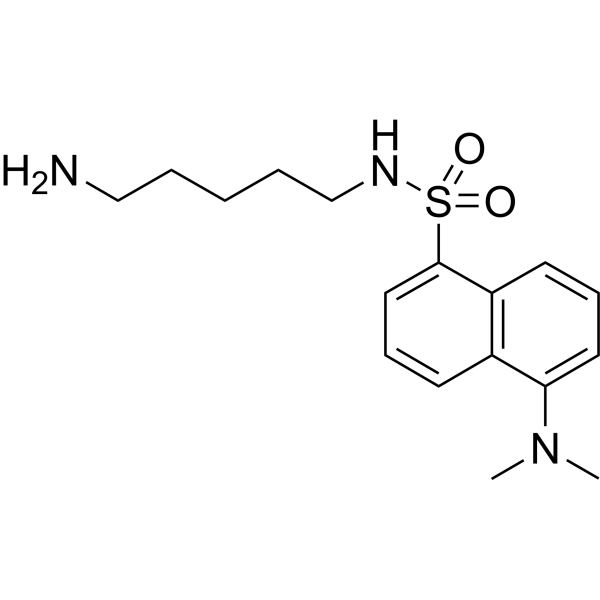
Dansylcadaverine (Monodansyl cadaverine) is an autofluorescent compound used for the labeling of autophagic vacuoles. Dansylcadaverine, a high affinity substrate of transglutaminases, can block the receptor-mediated endocytosis of many ligands .
loading...
    loading...
11
11 Cited Publications
Cat. No.: HY-D0845
CAS No.: 57564-91-7
Synonyms: GSNO; RVC-588; S-Nitroso-L-glutathione
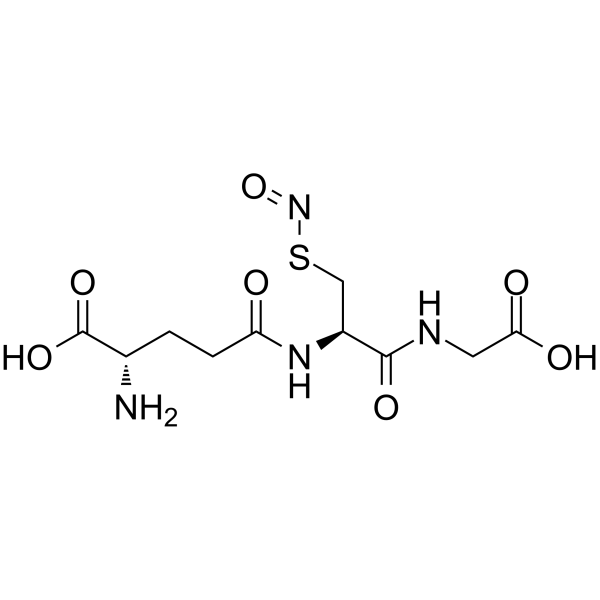
Nitrosoglutathione (GSNO), a exogenous NO donor and a substrate for rat alcohol dehydrogenase class III isoenzyme, inhibits cerebrovascular angiotensin II-dependent and -independent AT1 receptor responses .
loading...
    loading...
5
5 Cited Publications
Cat. No.: HY-B0804
CAS No.: 42200-33-9
Synonyms: SQ-11725
Target:  

Adrenergic Receptor

Domaines de recherche:  

Cardiovascular Disease

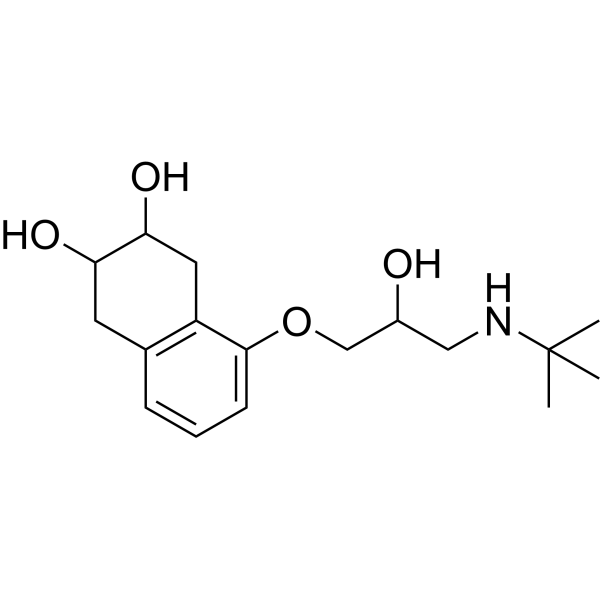
Nadolol (SQ-11725) is a non-selective and orally active β-adrenergic receptors blocker and is a substrate of organic anion transporting polypeptide 1A2 (OATP1A2). Nadolol has the the potential for high blood pressure, angina pectoris and vascular headaches research .
loading...
    loading...
5
5 Cited Publications
Cat. No.: HY-13463A
CAS No.: 677007-74-8
Pureté:  99.88%
Synonyms: AKR-501 maleate; E5501 maleate; YM477 maleate
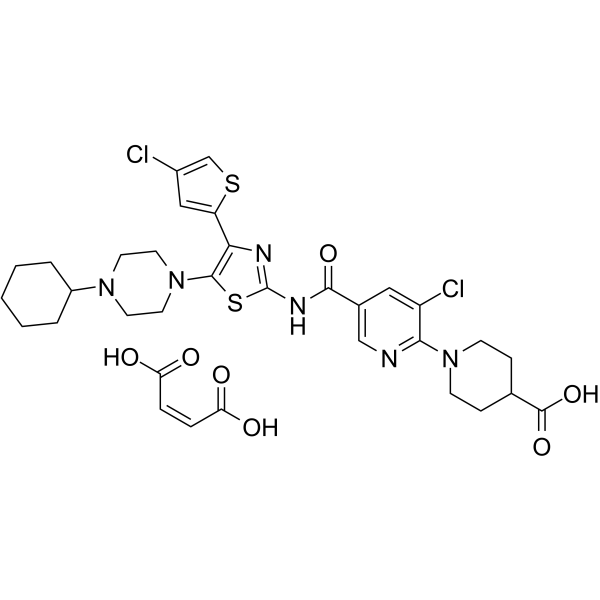
Avatrombopag (AKR-501) maleate is an orally active, non-peptide thrombopoietin receptor (TPO receptor) agonist (EC50: 3.3 nM). Avatrombopag maleate mimics the biological activity of TPO. Avatrombopag maleate increases platelet production by activating intracellular signaling systems and promotes the production of platelets and megakaryocytes from hematopoietic precursor cells. Avatrombopag maleate is a substrate for cytochrome P450 (CYP) 2C9 and CYP3A .
loading...
    loading...
5
5 Cited Publications
Cat. No.: HY-13463
CAS No.: 570406-98-3
Pureté:  99.83%
Synonyms: AKR-501; E5501; YM477
Domaines de recherche:  

Inflammation/Immunology Cancer

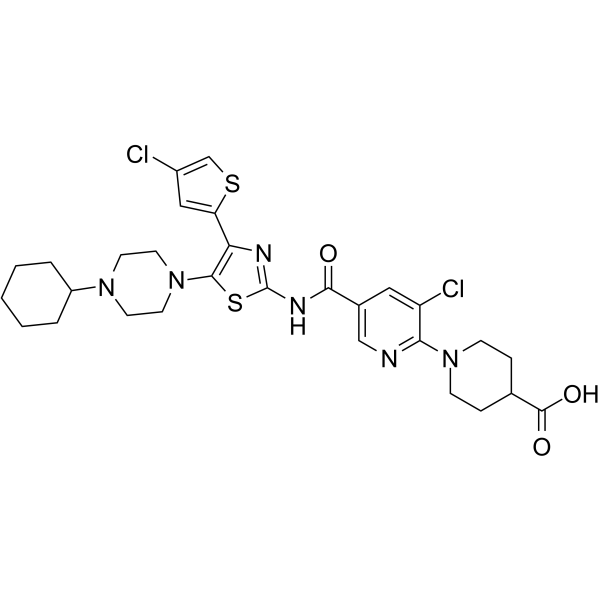
Avatrombopag (AKR-501) is an orally active, nonpeptide thrombopoietin (TPO) receptor agonist (EC50=3.3 nM). Avatrombopag mimics the biological activities of TPO. Avatrombopag increases platelet production by activating the intracellular signaling system, and promotes production of platelets and megakaryocytes from hemopoietic precursor cells. Avatrombopag is a substrate of cytochrome P450 (CYP) 2C9 and CYP3A .
loading...
    loading...
5
5 Cited Publications
Cat. No.: HY-13463B
CAS No.: 570403-17-7
Pureté:  97.05%
Synonyms: AKR-501 hydrochloride; E5501 hydrochloride; YM477 hydrochloride
Domaines de recherche:  

Cardiovascular Disease Cancer

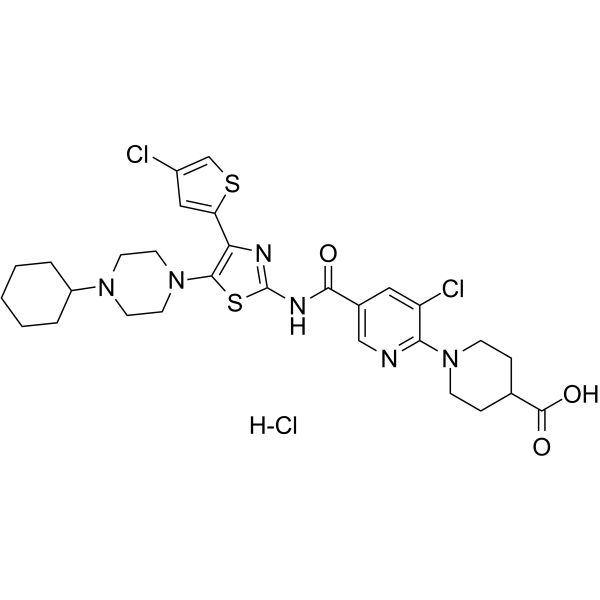
Avatrombopag (AKR-501) hydrochloride is an orally active, nonpeptide thrombopoietin (TPO) receptor agonist (EC50=3.3 nM). Avatrombopag hydrochloride mimics the biological activities of TPO. Avatrombopag hydrochloride increases platelet production by activating the intracellular signaling system, and promotes production of platelets and megakaryocytes from hemopoietic precursor cells. Avatrombopag hydrochloride is a substrate of cytochrome P450 (CYP) 2C9 and CYP3A .
loading...
    loading...
4
4 Cited Publications
Cat. No.: HY-W013093
CAS No.: 19817-92-6
Synonyms: UTP trisodium salt; Uridine 5'-triphosphate trisodium salt
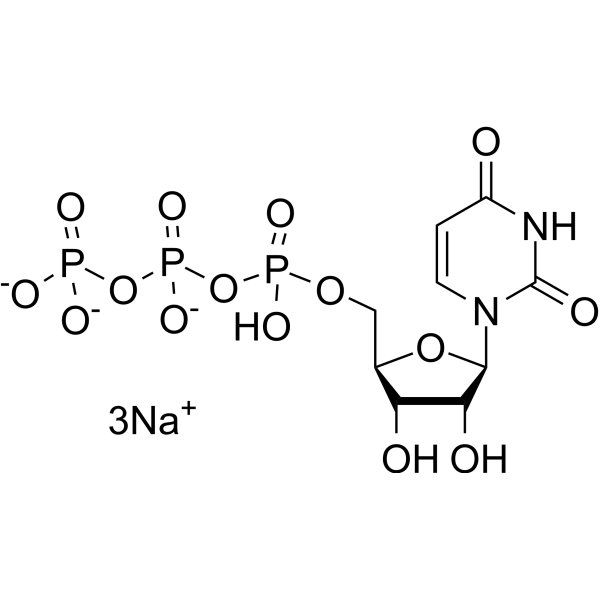
Uridine triphosphate (UTP) trisodium salt is a pyrimidine nucleoside triphosphate that is used as a substrate to synthesize RNA or as an energy source in metabolic reactions. Uridine triphosphate trisodium salt activates membrane-bound P2Y2 receptors .
loading...
    loading...
4
4 Cited Publications
Cat. No.: HY-A0016
CAS No.: 141626-36-0
Synonyms: SR 33589
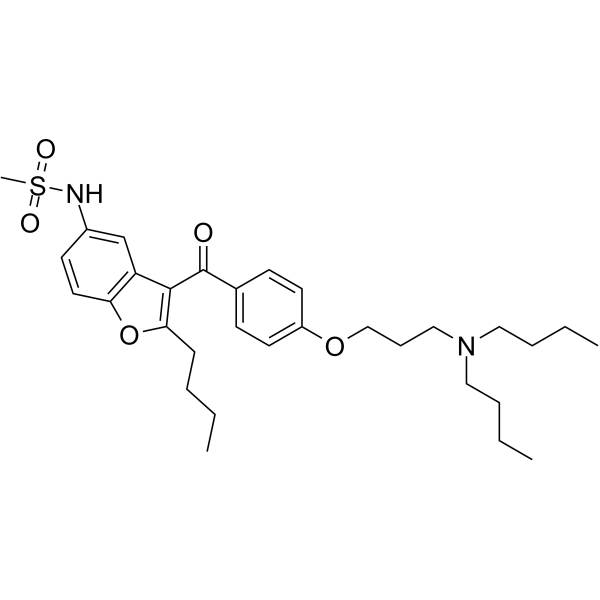
Dronedarone (SR 33589), a derivative of amiodarone (HY-14187), is a class III antiarrhythmic agent for the study of atrial fibrillation (AF) and atrial flutter. Dronedarone is a potent blocker of multiple ion currents, including potassium current, sodium current, and L-type calcium current, and exhibits antiadrenergic effects by noncompetitive binding to β-adrenergic receptors. Dronedarone is a substrate for and a moderate inhibitor of CYP3A4 .
loading...
    loading...
3
3 Cited Publications
Cat. No.: HY-N6065
CAS No.: 73069-27-9
Synonyms: (+)-Praeruptorin A
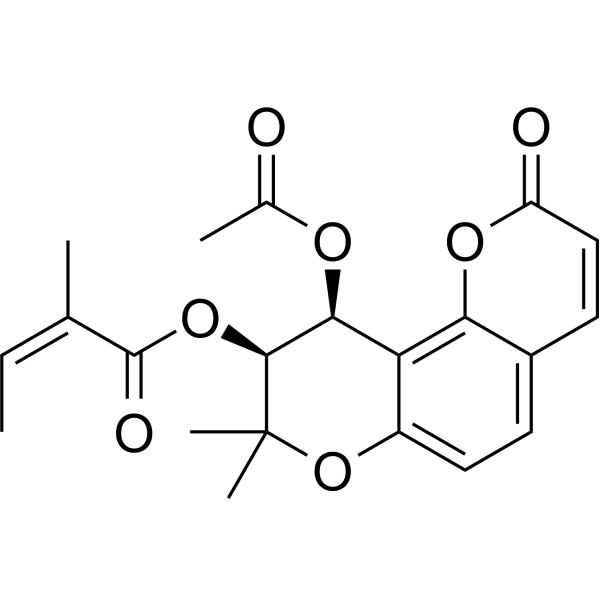
Praeruptorin A ((+)-Praeruptorin A) is an orally active isomer of (±)-Praeruptorin A (HY-N0081). Praeruptorin A also acts as a Calcium channel blocker. Praeruptorin A can be isolated from Peucedanum. Praeruptorin A serves as a substrate for CYP3A4. Praeruptorin A downregulates NMDA receptors containing GluN2B and inhibits neuronal Apoptosis. Praeruptorin A mediates vasodilation, inhibits vascular hypertrophy and reduces blood pressure. Praeruptorin A can be used in research related to neurological diseases, myocardial ischemia, heart failure, exertional angina, renovascular hypertension and spontaneous hypertension .
loading...
    loading...
2
2 Cited Publications
Cat. No.: HY-W010820
CAS No.: 21931-53-3
Synonyms: UDP sodium salt
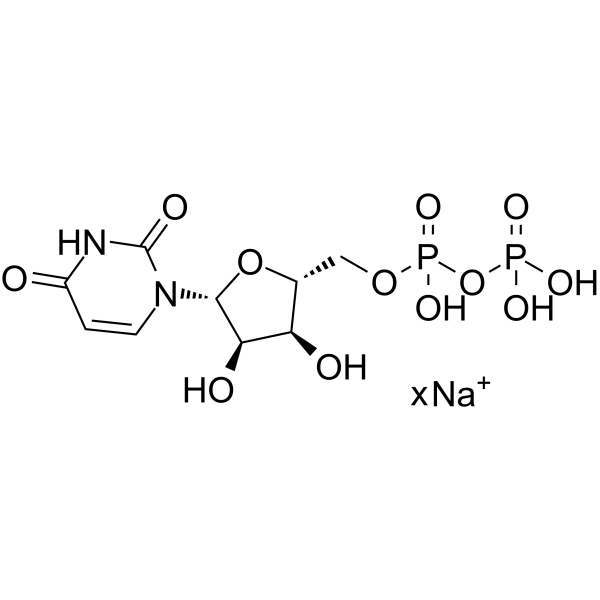
Uridine-5'-diphosphate (UDP) sodium salt is an important nucleotide made of uracil, ribose, and a pyrophosphate group. Uridine-5'-diphosphate sodium salt is a potent, selective human P2Y6 receptor native agonist (EC50 = 300 nM; pEC50 = 6.52). Uridine-5'-diphosphate sodium salt, an endogenous metabolite, catalyzes the glucuronidation of a wide array of substrates and is used in nucleic acid (RNA) biosynthesis .
loading...
    loading...
2
2 Cited Publications
Cat. No.: HY-W010832
CAS No.: 27821-45-0
Synonyms: UDP disodium salt
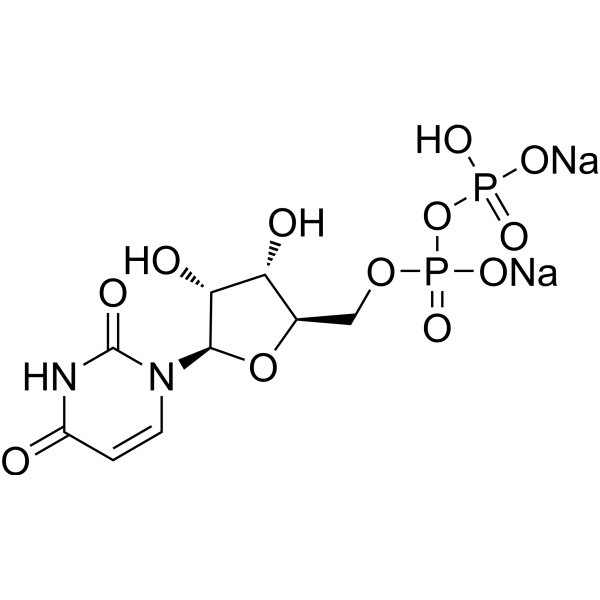
Uridine-5'-diphosphate (UDP) disodium salt is an important nucleotide made of uracil, ribose, and a pyrophosphate group. Uridine-5'-diphosphate disodium salt is a potent, selective human P2Y6 receptor native agonist (EC50 = 300 nM; pEC50 = 6.52). Uridine-5'-diphosphate disodium salt, an endogenous metabolite, catalyzes the glucuronidation of a wide array of substrates and is used in nucleic acid (RNA) biosynthesis .
loading...
    loading...
1
1 Cited Publications
Cat. No.: HY-P82526
Synonyms: Insulin receptor substrate 2; IRS 2; IRS-2

Host:  

Rabbit

Application:  

WB, IHC-P, ICC/IF, FC

Reactivity:  

Human, Mouse, Rat

loading...
    loading...
1
1 Cited Publications
Cat. No.: HY-108666
CAS No.: 93839-89-5
Pureté:  94.15%
Synonyms: Adenosine-5'-O-3-thiotriphosphate tetralithium salt; Adenosine 5'-[γ-thio]triphosphate tetralithium salt
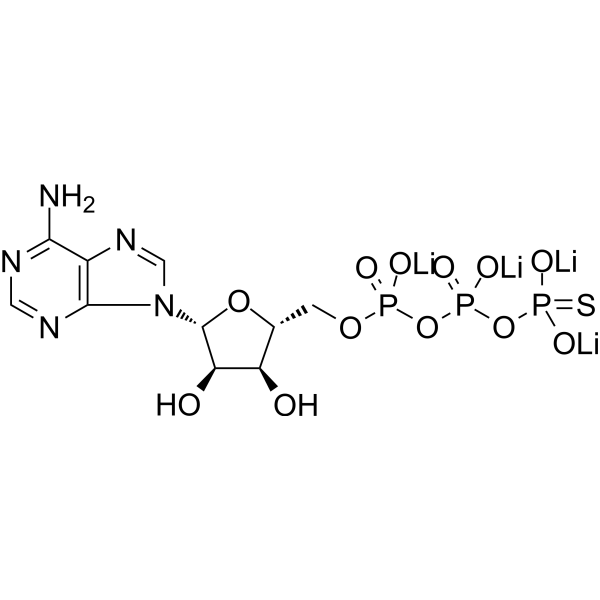
ATPγS (tetralithium salt) is a P2Y11 receptor agonist, an antioxidant and a neuroprotective agent. ATPγS (tetralithium salt) can be used as a substrate for the nucleotide hydrolysis and RNA unwinding activities of eukaryotic translation initiation factor eIF4A. ATPγS (tetralithium salt) is active in ATP hydrolysis .
loading...
    loading...
1
1 Cited Publications
Cat. No.: HY-112171
CAS No.: 5875-41-2
Pureté:  ≥98.0%
Synonyms: γ-Glu-Ala
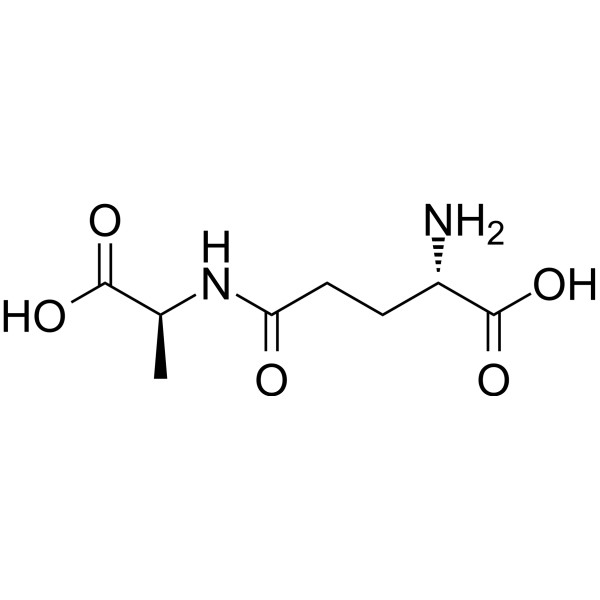
γ-L-Glutamyl-L-alanine (γ-Glu-Ala), composed of gamma-glutamate and alanine, is a proteolytic breakdown product of larger proteins. γ-L-Glutamyl-L-alanine is a natural substrate of the γ-Glutamylcyclotransferase. γ-L-Glutamyl-L-alanine is a positive modulator of calcium-sensing receptor (CaR) function .
loading...
    loading...
1
1 Cited Publications
Cat. No.: HY-P2753
CAS No.: 9074-06-0
Synonyms: SP
Target:  

Glycosidase

Domaines de recherche:  

Cancer

Sucrose phosphorylase is a bacterial transglucosidase that catalyzes the conversion of sucrose and phosphate into α-D-glucose-1-phosphate and D-fructose. The glucosylated Sucrose phosphorylase can also be hydrolyzed into α-D-glucose, or transfer the glucoyl to the hydroxyl group of the receptor, and then decomposed into new α-D-glucoside products. The enzymatic activity of base phosphorylase to substrate and product is weak .
loading...
    loading...
1
1 Cited Publications
Cat. No.: HY-145935
CAS No.: 1198078-60-2
Pureté:  98.57%
Target:  

Insulin Receptor STAT

Domaines de recherche:  

Cancer

NT219 is a potent and dual inhibitor of insulin receptor substrates 1/2 (IRS1/2) and STAT3. IRS1/2 and STAT3 are major signaling junctions regulated by various oncogenes. NT219 affects IRS1/2 degradation and inhibits STAT3 phosphorylation. NT219 has the potential for the research of cancer diseases .
loading...
    loading...
1
1 Cited Publications
Cat. No.: HY-125904
CAS No.: 66592-72-1
Pureté:  95.11%
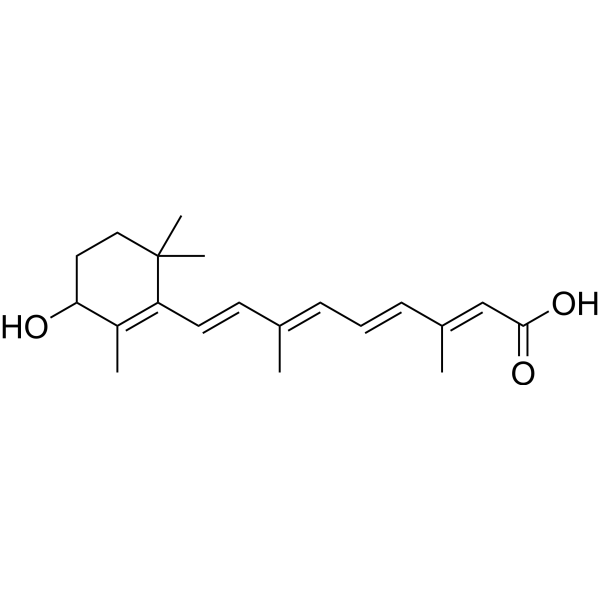
4-Hydroxyretinoic acid (4-HRA) is a derivative of Retinoic acid (HY-14649). 4-Hydroxyretinoic acid is formed via the catalysis of retinol by cytochrome P-450 isoenzymes. 4-Hydroxyretinoic acid also serves as a substrate for UDP-glucuronosyltransferase (s) and recombinant UGT2B7. 4-Hydroxyretinoic acid binds to the nuclear receptor RAR (Retinoic Acid Receptor), activates RAR and RXR-alpha, subsequently regulates gene expression and cell differentiation, and induces cancer cell apoptosis (Apoptosis). 4-Hydroxyretinoic acid also participates in multiple physiological processes such as immunoregulation, neuroprotection and antioxidation .
loading...
    loading...
1
1 Cited Publications
Cat. No.: HY-N1420
CAS No.: 3615-41-6
Synonyms: L-Rhamnose
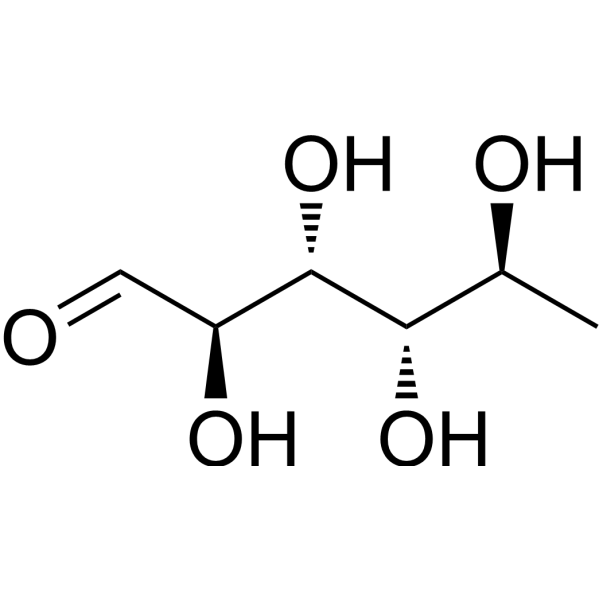
Rhamnose (L-Rhamnose ) is an orally active deoxysugar. Rhamnose can inhibit levels of pro-inflammatory interleukin and matrix metalloproteinases (MMPs) in skin aging models. Rhamnose can promote the phosphorylation levels of PKA substrates and HSL in SVF-derived adipocytes, stimulating PKA signaling. Rhamnose can act against obesity in mice by stimulating fat dopamine receptors and inducing thermogenesis. Rhamnose shows anti-aging effects. Rhamnose monohydrate can be used in the study of Ehrlich’s solid tumors and sarcomas .
loading...
    loading...
1
1 Cited Publications
Cat. No.: HY-N1420A
CAS No.: 10030-85-0
Synonyms: L-Rhamnose monohydrate
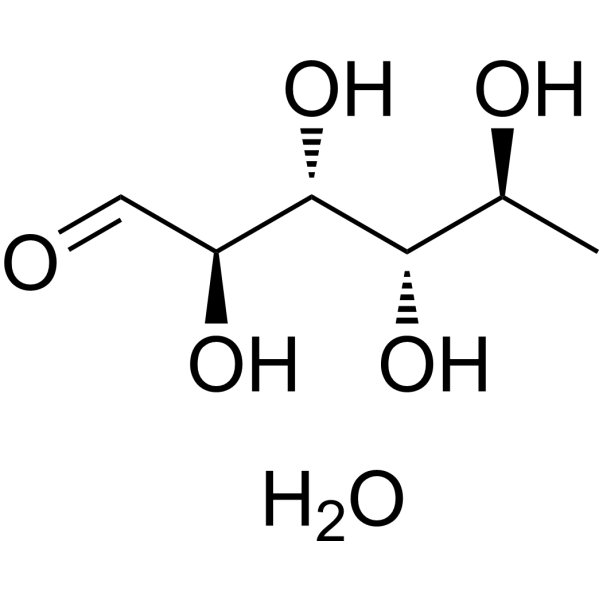
Rhamnose monohydrate (L-Rhamnose monohydrate) is an orally active deoxysugar. Rhamnose monohydrate can inhibit levels of pro-inflammatory interleukin and matrix metalloproteinases (MMPs) in skin aging models. Rhamnose can promote the phosphorylation levels of PKA substrates and HSL in SVF-derived adipocytes, stimulating PKA signaling. Rhamnose monohydrate can act against obesity in mice by stimulating fat dopamine receptors and inducing thermogenesis. Rhamnose monohydrate shows anti-aging effects. Rhamnose monohydrate can be used in the study of Ehrlich’s solid tumors and sarcomas .
loading...
    loading...
1
1 Cited Publications
Cat. No.: HY-48999A
CAS No.: 3033987-42-4
Target:  

EGFR

Domaines de recherche:  

Cancer

FSK hydrochloride is fluorosulfonyloxybenzoyl-L-lysine, which features a long, flexible aryl fluorosulfate-containing side chain that can reach protein sites inaccessible to covalent conjugation. FSK hydrochloride modifies nanomolecules to target epidermal growth factor receptor (EGFR), resulting in irreversibly bound covalent interactions. Through genetically encoded chemical crosslinking, FSK hydrochloride captures unknown enzyme-substrate interactions in living cells, targets residues other than Cys, and mediates crosslinking at the binding periphery. FSK hydrochloride enables the construction of a bioreactive SuFEx system for generating covalent bonds in various proteins both in vitro and in vivo .
loading...
    loading...

