1. Search Result
Search Result
Results for "

vascularization

" in MedChemExpress (MCE) Product Catalog:

940

Inhibitors & Agonists

5

Screening Libraries

16

Fluorescent Dye

33

Biochemical Assay Reagents

95

Peptides

28

Inhibitory Antibodies

170

Natural
Products

72

Isotope-Labeled Compounds

32

Oligonucleotides

1

GMP Molecules

Cat. No. Product Name Target Research Areas Chemical Structure
  • HY-N0455
    L-Arginine
    20+ Cited Publications

    Environmental Pollutants Endogenous Metabolite NO Synthase Cardiovascular Disease Inflammation/Immunology
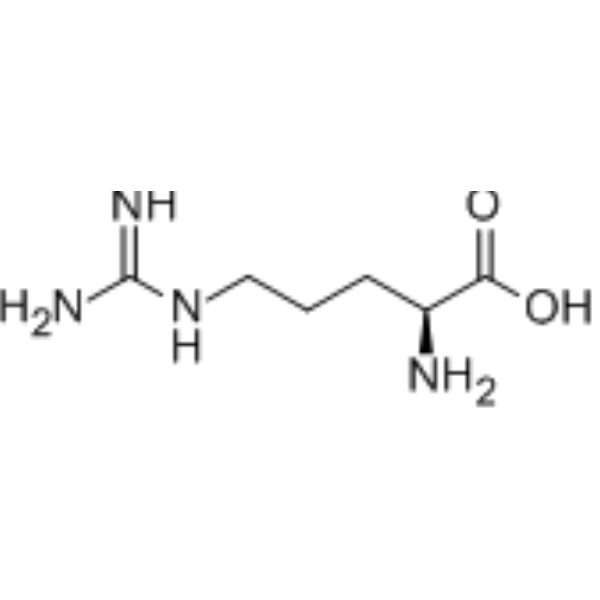
    L-Arginine ((S)-(+)-Arginine) is the substrate for the endothelial nitric oxide synthase (eNOS) to generate NO. L-Arginine is transported into vascular smooth muscle cells by the cationic amino acid transporter family of proteins where it is metabolized to nitric oxide (NO), polyamines, or L-proline. L-Arginine is a potent vasodilator, and can be used to induce experimental acute pancreatitis .
    L-Arginine
  • HY-14664A
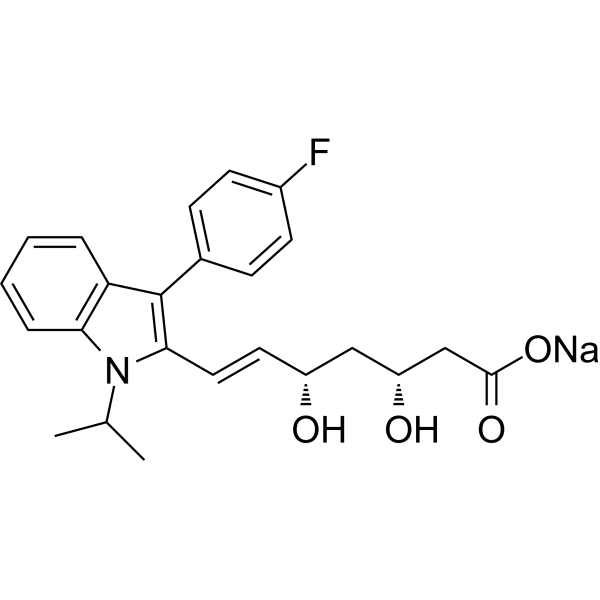
    Fluvastatin sodium
    15+ Cited Publications

    XU 62-320

    HMG-CoA Reductase (HMGCR) Autophagy Ferroptosis Cardiovascular Disease Cancer
    Fluvastatin sodium (XU 62320) is a first fully synthetic, competitive HMG-CoA reductase inhibitor with an IC50 of 8 nM. Fluvastatin sodium protects vascular smooth muscle cells against oxidative stress through the Nrf2-dependent antioxidant pathway .
    Fluvastatin sodium
  • HY-N0455A
    L-Arginine hydrochloride
    20+ Cited Publications

    (S)-(+)-Arginine hydrochloride

    NO Synthase Endogenous Metabolite Cardiovascular Disease Inflammation/Immunology
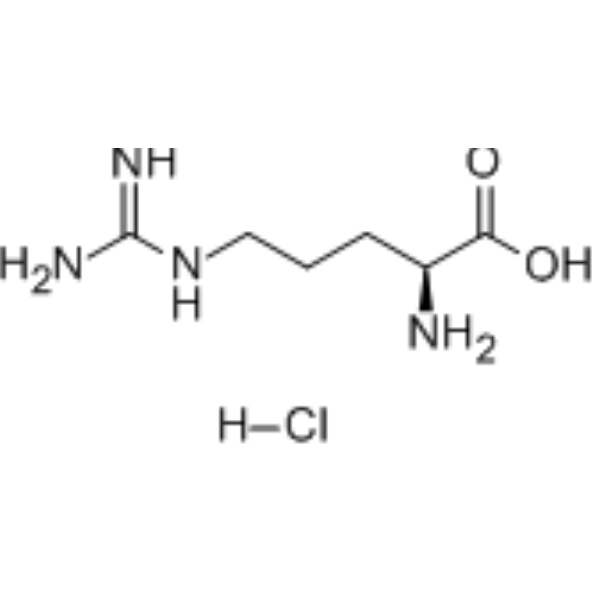
    L-Arginine ((S)-(+)-Arginine) is the substrate for the endothelial nitric oxide synthase (eNOS) to generate NO. L-Arginine is transported into vascular smooth muscle cells by the cationic amino acid transporter family of proteins where it is metabolized to nitric oxide (NO), polyamines, or L-proline. L-Arginine is a potent vasodilator, and can be used to induce experimental acute pancreatitis .
    L-Arginine hydrochloride
  • HY-10977
    Tivozanib
    5+ Cited Publications

    AV-951; KRN951

    VEGFR Cancer
    Tivozanib (AV-951; KRN951) is a selective, orally active inhibitor for vascular endothelial growth factor receptor (VEGFR)-1, 2 3, with IC50s of 30, 6.5 and 15 nM, respectively. Tivozanib exhibits antitumor efficacy .
    Tivozanib
  • HY-B0252
    Hydrochlorothiazide
    5+ Cited Publications

    HCTZ

    TGF-beta/Smad Potassium Channel Cardiovascular Disease Metabolic Disease Cancer
    Hydrochlorothiazide (HCTZ), an orally active diuretic agent of the thiazide class, inhibits transforming TGF-β/Smad signaling pathway. Hydrochlorothiazide has direct vascular relaxant effects via opening of the calcium-activated potassium (KCA) channel. Hydrochlorothiazide improves cardiac function, reduces fibrosis and has antihypertensive effect .
    Hydrochlorothiazide
  • HY-15583

    ADC Payload Microtubule/Tubulin Cancer
    Auristatin F is a potent cytotoxin in antibo-conjugated agents and an analogue of MMAF. Auristatin F is a potent microtubule inhibitor and vascular damaging agent (VDA). Auristatin F inhibits cell division by preventing tubulin aggregation.Auristatin F can be used in antibody-drug conjugates (ADC) .
    Auristatin F
  • HY-125665

    Apoptosis Cardiovascular Disease Cancer
    Pheophorbide A is an intermediate product in the chlorophyll degradation pathway. Pheophorbide A can be used as a photosensitizer. Pheophorbide A is a lymphatic vascular activator. Pheophorbide A has antitumor activity. Pheophorbide A can be used for human lymphatic vascular insufficiencies research .
    Pheophorbide A
  • HY-B0309
    Felodipine
    3 Publications Verification

    Calcium Channel Autophagy Cardiovascular Disease
    Felodipine, a dihydropyridine, is a potent, vasoselective calcium channel antagonist. Felodipine lowers blood pressure (BP) by selective action on vascular smooth muscle, especially in the resistance vessels. Felodipine, an anti-hypertensive agent, induces autophagy. Felodipine can cross the blood-brain barrier .
    Felodipine
  • HY-B0259
    Indapamide
    1 Publications Verification

    Potassium Channel Cardiovascular Disease
    Indapamide is an orally active sulphonamide diuretic agent, that can reduce blood pressure by decreasing vascular reactivity and peripheral vascular resistance. Indapamide is also can reduce left ventricular hypertrophy .
    Indapamide
  • HY-W013215
    Adrenic acid
    1 Publications Verification

    cis-7,10,13,16-Docosatetraenoic acid

    Endogenous Metabolite Metabolic Disease Inflammation/Immunology
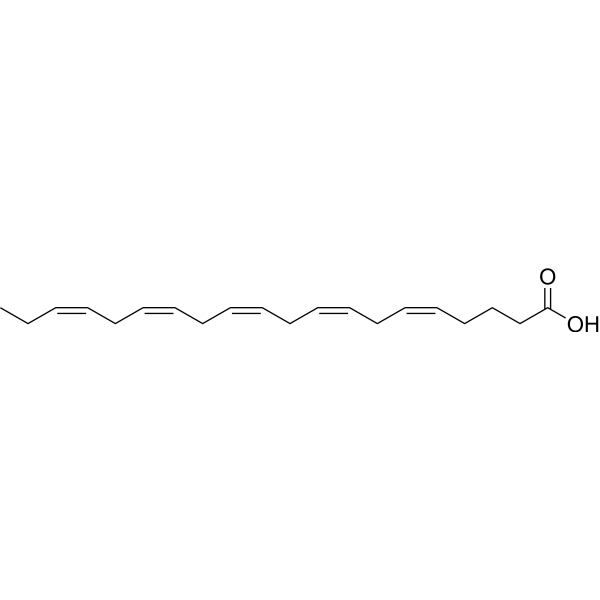
    Adrenic Acid (cis-7,10,13,16-Docosatetraenoic acid) is a naturally polyunsaturated fatty acid in the adrenal gland, brain, kidney, and vasculature. Adrenic Acid can regulate the vascular tone in arteries of the adrenal cortex. Adrenic Acid also is an inflammation enhancer in non-alcoholic fatty liver disease .
    Adrenic acid
  • HY-P1471
    Adrenomedullin (AM) (22-52), human
    4 Publications Verification

    22-52-Adrenomedullin (human)

    CGRP Receptor Cardiovascular Disease
    Adrenomedullin (AM) (22-52), human, an NH2 terminal truncated adrenomedullin analogue, is an adrenomedullin receptor antagonist, and also antagonizes the calcitonin generelated peptide (CGRP) receptor in the hindlimb vascular bed of the cat .
    Adrenomedullin (AM) (22-52), human
  • HY-W015370
    L-Lysine hydrate
    5+ Cited Publications

    Endogenous Metabolite Others Inflammation/Immunology
    L-Lysine hydrate is an essential amino acid. L-Lysine hydrate can be research for vascular calcification (VC) and acute pancreatitis .
    L-Lysine hydrate
  • HY-B0006B

    (S)-BM 14190

    Adrenergic Receptor Cardiovascular Disease
    (S)-Carvedilol, the S-enantiomer of Carvedilol, is a non-selective β/α-1 blocker. (S)-Carvedilol exerts protection against the vascular or cardiac toxicity of Doxorubicin (DOX) .
    (S)-Carvedilol
  • HY-121457

    Drug Derivative Cardiovascular Disease
    9-Nitrooleate, a nitro fatty acid, is a nitro derivative of Oleic acid (HY-N1446). 9-Nitrooleate has potential for use in vascular disease research.
    9-Nitrooleate
  • HY-N1082

    Others Cardiovascular Disease Neurological Disease Inflammation/Immunology
    Visnagin, an antioxidant furanocoumarin derivative, possess anti-inflammatory and analgesic properties. Visnagin has substantial potential to prevent Cerulein induced acute pancreatitis (AP). Visnagin possess promising vasodilator effects in vascular smooth muscles .
    Visnagin
  • HY-N0455R

    Reference Standards NO Synthase Endogenous Metabolite Cardiovascular Disease Cancer
    L-Arginine (Standard) is the analytical standard of L-Arginine. This product is intended for research and analytical applications. L-Arginine ((S)-(+)-Arginine) is the substrate for the endothelial nitric oxide synthase (eNOS) to generate NO. L-Arginine is transported into vascular smooth muscle cells by the cationic amino acid transporter family of proteins where it is metabolized to nitric oxide (NO), polyamines, or L-proline. L-Arginine is a potent vasodilator, and can be used to induce experimental acute pancreatitis .
    L-Arginine (Standard)
  • HY-10564
    Sarpogrelate hydrochloride
    1 Publications Verification

    MCI-9042

    5-HT Receptor Cardiovascular Disease
    Sarpogrelate hydrochloride (MCI-9042) is a selective 5-HT2R antagonist, with pKis of 8.52, 6.57, and 7.43 for 5-HT2A, 5-HT2B, and 5-HT2C receptors, respectively. Sarpogrelate hydrochloride displays selectivity over 5-HT1, 5-HT3, 5-HT4, α1-, α2- and β-adrenoreceptor, histamine H1, H2 and muscarinic M3 receptors. Sarpogrelate hydrochloride can be used for the research of vascular disease associated with thrombosis .
    Sarpogrelate hydrochloride
  • HY-B1815

    Xanthinol Niacinate

    PDGFR Cardiovascular Disease
    Xanthinol Nicotinate (Xanthinol Niacinate), a vasodilator, can act directly on the smooth muscle of small arteries and capillaries. Xanthinol Nicotinate expands blood vessels, improves blood rheology and reduces peripheral vascular resistance .
    Xanthinol Nicotinate
  • HY-P0095

    Angiotensin-converting Enzyme (ACE) Others
    Acetyl tetrapeptide-5 inhibits glycosylation and ACE-1 activity. Acetyl tetrapeptide-5 reduces edema and relieves vascular pressure by improving the vascular system and strengthening the skin under the eyes. Acetyl tetrapeptide-5 can be used in the research of Antioxidant, anti-aging skin care .
    Acetyl tetrapeptide-5
  • HY-103460

    Endothelin Receptor Cardiovascular Disease
    IRL 2500 is a potent Endothelin receptor antagonist. IRL 2500 shows IC50 values of 1.3 and 94 nM for ETB and ETA receptors, respectively. IRL 2500 inhibits ETB receptor-mediated blood pressure increase and renal vascular resistance in rats in vivo .
    IRL 2500
  • HY-N2531

    Autophagy Cardiovascular Disease
    Notoginsenoside Fc, a protopanaxadiol- (PPD-) type saponin isolated from the leaves of Panax notoginseng, effectively counteracts platelet aggregation. Notoginsenoside Fc can accelerate reendothelialization following vascular injury in diabetic rats by promoting autophagy .
    Notoginsenoside Fc
  • HY-B0757A

    rel-Vitamin E Nicotinate

    Reactive Oxygen Species (ROS) Endogenous Metabolite Cardiovascular Disease
    (±)-α-Tocopherol nicotinate, vitamin E - nicotinate, is an orally active fat-soluble antioxidant that prevents lipid peroxidation in cell membranes. (±)-α-Tocopherol nicotinate is hydrolysed in the blood to α -tocopherol and niacin and may be used in studies of related vascular diseases .
    (±)-α-Tocopherol nicotinate
  • HY-10977A
    Tivozanib hydrochloride hydrate
    5+ Cited Publications

    AV-951 hydrochloride hydrate; KRN951 hydrochloride hydrate

    VEGFR Cancer
    Tivozanib hydrochloride hydrate is the hydrate hydrochloride form of Tivozanib (HY-10977). Tivozanib hydrochloride hydrate is a selective, orally active inhibitor for vascular endothelial growth factor receptor (VEGFR)-1, 2 3, with IC50s of 30, 6.5 and 15 nM, respectively. Tivozanib hydrochloride hydrate exhibits antitumor efficacy .
    Tivozanib hydrochloride hydrate
  • HY-111326
    Naphazoline
    1 Publications Verification

    Naphthazoline

    Adrenergic Receptor TNF Receptor Interleukin Related VEGFR Cardiovascular Disease Inflammation/Immunology Cancer
    Naphazoline (Naphthazoline) is a potent α-adrenergic receptor agonist. Naphazoline reduces vascular hyperpermeability and promotes vasoconstriction. Naphazoline reduces the levels of inflammatory factors (TNF-α, IL-1β and IL-6), cytokines (IFN-γ and IL-4), IgE, GMCSF, and NGF. Naphazoline can be used for non-bacterial conjunctivitis research .
    Naphazoline
  • HY-108589

    PNU 37883A

    Potassium Channel Neurological Disease
    PNU 37883 hydrochloride (PNU 37883A) is a selective vascular ATP-sensitive potassium (Kir6, KATP) channels blocker. PNU 37883 hydrochloride has diuretic effects with specific binding in kidney and vascular smooth muscle rather than in brain or pancreatic beta cells .
    PNU 37883 hydrochloride
  • HY-138822

    2,3-DPG pentasodium salt

    Endogenous Metabolite Cardiovascular Disease
    2,3-Diphospho-D-glyceric acid (2,3-DPG) pentasodium salt is a hemoglobin binder and vascular calcification inhibitor that reduces the oxygen affinity of hemoglobin. 2,3-Diphospho-D-glyceric acid pentasodium salt also specifically delays the transformation of colloidal calciprotein particles into crystalline forms, thereby effectively inhibiting vascular smooth muscle cell calcification without affecting the normal formation of osteoid nodules in osteoblast-like cells. 2,3-Diphospho-D-glyceric acid pentasodium salt shows no cytotoxicity to tested cell lines and only weakly interferes with β-hematin formation mediated by glyceryl monopalmitate. 2,3-Diphospho-D-glyceric acid pentasodium salt can be used to study the pathological mechanisms of vascular calcification and malaria-related conditions .
    2,3-Diphospho-D-glyceric acid pentasodium salt
  • HY-B1298

    Adrenergic Receptor Neurological Disease Endocrinology
    Methoxamine hydrochloride is a selective alpha1-adrenergic receptor agonist. Methoxamine hydrochloride causes vasoconstriction and increased peripheral vascular resistance . Methoxamine hydrochloride significantly increased the overflow of ATP, ADP and AMP, but not adenosine, by a prazosin-sensitive mechanism in the rabbit pulmonary artery .
    Methoxamine hydrochloride
  • HY-106690

    Centhaquine; PMZ-2010

    Adrenergic Receptor Cardiovascular Disease Inflammation/Immunology
    Centhaquine (Centhaquin; PMZ-2010) is a novel agent has the potential for treatment of haemorrhagic shock. Centhaquine (Centhaquin; PMZ-2010) can augment cardiac output, reduce systemic vascular resistance in haemorrhagic models .
    Centhaquin
  • HY-N2005

    Calcium Channel Apoptosis Cardiovascular Disease Inflammation/Immunology Cancer
    Cycleanine is a potent vascular selective Calcium antagonist. Cycleanine has analgesic, muscle relaxant and anti-inflammatory activities. Cycleanine has potential for anti-ovarian cancer acting through the apoptosis pathway .
    Cycleanine
  • HY-B1440

    Calcium Channel Monoamine Oxidase Cardiovascular Disease
    Ethaverine hydrochloride, a derivative of papaverine, inhibits cardiac L-type calcium channel. Ethaverine hydrochloride is a peripheral vasodilator and antispasmodic agent. Ethaverine hydrochloride can be used for research of peripheral vascular disease .
    Ethaverine hydrochloride
  • HY-121018

    BM-13505; SKF 96148

    Prostaglandin Receptor Cardiovascular Disease
    Daltroban (BM-13505) is a selective and specific thromboxane A2 (TXA2) receptor antagonist. Daltroban increase intracellular calcium in vascular smooth muscle cells. Daltroban shows protective effect in reperfusion injury .
    Daltroban
  • HY-P99215

    Anti-EGFL7; RG 7414

    VEGFR Cancer
    Parsatuzumab (Anti-EGFL7; RG 7414) is a humanized monoclonal antibody, acts as an immunomodulator and binds to EGFL7. Parsatuzumab selectively blocks the interaction between EGFL7 and endothelial cells, potentially inhibiting vascular regrowth and reducing vascular endothelial growth factor (VEGF) inhibition .
    Parsatuzumab
  • HY-W100287

    NF-κB p38 MAPK Interleukin Related IKK JNK β-catenin Wnt Neurological Disease Inflammation/Immunology Cancer
    Murrayafoline A is a carbazole alkaloid that can be extracted from Murraya tetramera. Murrayafoline A directly targets Specificity protein 1 (Sp1), thereby inhibiting NF-κB and MAPK signaling pathways. Murrayafoline a induces a G0/G1-phase arrest in platelet-derived growth factor (PDGF)-stimulated vascular smooth muscle cells. Murrayafoline A attenuates the Wnt/β-catenin pathway by promoting the degradation of intracellular β-catenin proteins. Murrayafoline A enhances the contraction of rat ventricular myocytes and L-type calcium current by activating protein kinase C. Murrayafoline A inhibits LPS (HY-D1056)-induced neuroinflammation in vivo. Murrayafoline A can be used for the study of inflammation, vascular complications and colon cancer .
    Murrayafoline A
  • HY-157746
    CTPS1-IN-1
    1 Publications Verification

    DNA/RNA Synthesis Inflammation/Immunology Cancer
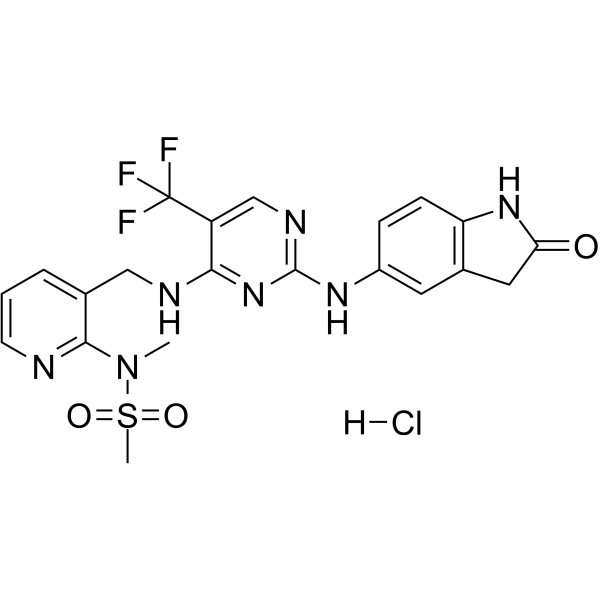
    CTPS1-IN-1 (compound R80) is a CTPS1 inhibitor. CTPS1-IN-1 has the potential to research cancer (such as promoting vascular injury or surgical recovery) and immune system diseases (such as rejection of transplanted cells and tissues, transplant-related diseases or disorders, allergies, and autoimmune diseases) .
    CTPS1-IN-1
  • HY-N1551
    Przewaquinone A
    1 Publications Verification

    Others Cardiovascular Disease
    Przewaquinone A, a lipophilic diterpene quinone present only in Salvia przewalskii, induces a potent inhibitory action on vascular contraction .
    Przewaquinone A
  • HY-16196

    IRC-110160

    Microtubule/Tubulin HIF/HIF Prolyl-Hydroxylase STAT Cancer
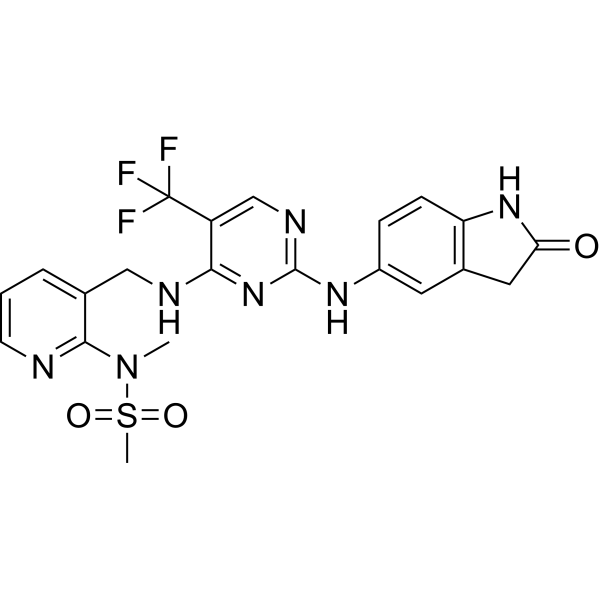
    ENMD-1198 (IRC-110160), an orally active microtubule destabilizing agent, is a 2-methoxyestradiol analogue with antiproliferative and antiangiogenic activity. ENMD-1198 is suitable for inhibiting HIF-1alpha and STAT3 in human HCC cells and leads to reduced tumor growth and vascularization.
    ENMD-1198
  • HY-N7699C

    Bacterial Neurological Disease
    D-Pentamannuronic acid, an alginate oligomer, is produced by marine brown algae and by a limited range of Gram negative bacteria. D-Pentamannuronic acid can be used for the research of pain and vascular dementia .
    D-Pentamannuronic acid
  • HY-121287

    Herbicide Cardiovascular Disease
    Ioxynil is an herbicide that act as endocrine disruptor. Ioxynil can disrupt vascular and heart development in zebrafish .
    Ioxynil
  • HY-W014606
    L-Lysine acetate
    5+ Cited Publications

    Endogenous Metabolite Others Inflammation/Immunology
    L-Lysine acetate is an essential amino acid. L-Lysine acetate can be research for vascular calcification (VC) and Acute pancreatitis .
    L-Lysine acetate
  • HY-P3525A

    Integrin Others
    G-Pen-GRGDSPCA TFA is an αvβ3-inhibiting RGD peptide. G-Pen-GRGDSPCA can limit neointimal hyperplasia and lumen stenosis after vascular injury, as well as regulate the migration and proliferation of smooth muscle cells. G-Pen-GRGDSPCA TFA can be used in the study of the mechanism of vascular injury repair .
    G-Pen-GRGDSPCA TFA
  • HY-B1298A

    Adrenergic Receptor Cardiovascular Disease
    Methoxamine is a selective alpha1-adrenergic receptor agonist. Methoxamine causes vasoconstriction and increased peripheral vascular resistance . Methoxamine hydrochloride significantly increased the overflow of ATP, ADP and AMP, but not adenosine, by a prazosin-sensitive mechanism in the rabbit pulmonary artery .
    Methoxamine
  • HY-130368
    W-7
    5+ Cited Publications

    Calmodulin Potassium Channel Phosphodiesterase (PDE) Myosin Apoptosis Cardiovascular Disease
    W-7 is a selective calmodulin antagonist. W-7 inhibits the Ca 2+-calmodulin-dependent phosphodiesterase and myosin light chain kinase with IC50 values of 28 μM and 51 μM, respectively. W-7 induces apoptosis and has antitumor and vascular relaxing activity. W-7 is a blocker of Kv4.3 and can be used for research of arrhythmias .
    W-7
  • HY-143316

    Guanylate Cyclase Neurological Disease
    NPR-C activator 1 (Compound 1) is a potent activator of natriuretic peptide receptor C (NPR-C). C-type natriuretic peptide (CNP) is involved in the regulation of vascular homeostasis. NPR-C activator 1 is identified as a potent agonist (EC50 ∼ 1 μM) with promising in vivo pharmacokinetic properties .
    NPR-C activator 1
  • HY-P3525

    Integrin Others
    G-Pen-GRGDSPCA is an αvβ3-inhibiting RGD peptide. G-Pen-GRGDSPCA can limit neointimal hyperplasia and lumen stenosis after vascular injury, as well as regulate the migration and proliferation of smooth muscle cells. G-Pen-GRGDSPCA can be used in the study of the mechanism of vascular injury repair .
    G-Pen-GRGDSPCA
  • HY-D1073

    3,3'-Diheptyloxacarbocyanine iodide

    Fluorescent Dye Cardiovascular Disease
    DiOC7(3) (3,3'-Diheptyloxacarbocyanine iodide) is a green membrane potential probe (Ex=450-490 nm, Em=510-520 nm). DiOC7(3) can be used to quantify the vascular densities .
    DiOC7(3)
  • HY-134368

    Calcium Channel Cardiovascular Disease
    Ap3A is a vasoactive molecule that regulates intracellular Ca 2+ levels. Ap3A can promote the growth of vascular smooth muscle cells .
    Ap3A
  • HY-N7699B

    Bacterial Neurological Disease
    D-Tetramannuronic acid, an alginate oligomer, is produced by marine brown algae and by a limited range of Gram negative bacteria. D-Tetramannuronic acid can be used for the research of pain and vascular dementia .
    D-Tetramannuronic acid
  • HY-N7699F

    Bacterial Neurological Disease
    D-Octamannuronic acid, an alginate oligomer, is produced by marine brown algae and by a limited range of Gram negative bacteria. D-Octamannuronic acid can be used for the research of pain and vascular dementia .
    D-Octamannuronic acid
  • HY-10383

    Endothelin Receptor Cardiovascular Disease Metabolic Disease
    J-104132 (L-753037) is a potent, orally active, selective and competitive ETA/ETB receptor antagonist with Ki of 0.034 nM for ETA and 0.104 nM for ETB receptors. J-104132 inhibits Endothelin-1 (ET-1) (HY-P71446)-induced signaling and vascular contractions in vitro. J-104132 alleviates hypertension, vascular remodeling, and diabetic endothelial dysfunction in vivo by dual ETA/ETB blockade. J-104132 can be used for research on diabetic vascular complications [1][3].
    J-104132
  • HY-134367

    Adenosine Receptor PKA Apoptosis Cardiovascular Disease
    Ap2A (disodium) is a symmetrical dinucleoside polyphosphate. Ap2A (disodium) can promote the growth of vascular smooth muscle cells .
    Ap2A disodium

Inquiry Online

Your information is safe with us. * Required Fields.

Salutation


Country or Region *

Applicant Name *


Organization Name *

Department *


Email Address *


Product Name *

Cat. No.


Requested quantity *

Phone Number *


Remarks

Inquiry Online

Inquiry Information

Product Name:
Cat. No.:
Quantity:
MCE Japan Authorized Agent:

