



MSC2530818
Based on 4 publication(s) in Google Scholar
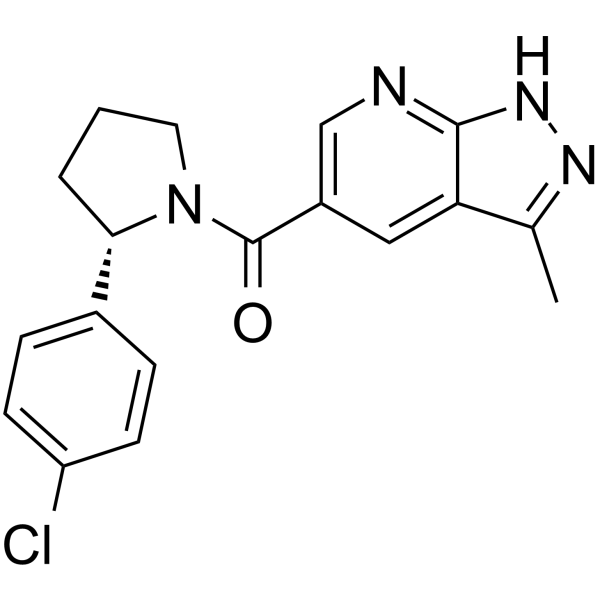
MSC2530818 is a potent, selective and orally available CDK8 inhibitor with an IC50 of 2.6 nM for CDK8.
For research use only. We do not sell to patients.
- Purity : 99.55%
- CAS No.: 1883423-59-3
- Formula: C18H17ClN4O
- Molecular Weight:340.81
-
Storage:Powder -20°C, 3 years , 4°C, 2 years ; In solvent -80°C, 2 years , -20°C, 1 year

To place orders, for customer services and technical support, please contact: MedChemExpress USA
Tel: 609-228-6898 E-mail: [email protected] [email protected]


-
 Biological Activity
-
Chemical Information
-
Solvent & Solubility
- Protocols
- Purity & Documentation
- References
-
 Help & FAQs


-
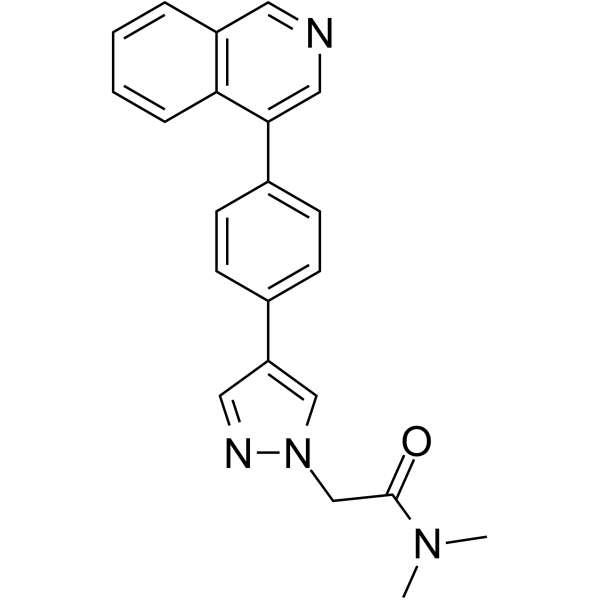
HY-120350
BI-1347CDK8 Inhibitor -
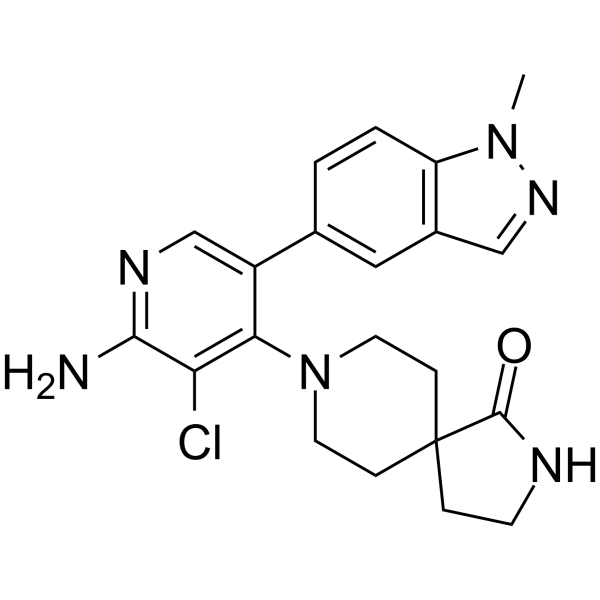
HY-19984
CCT-251921CDK8 Inhibitor -
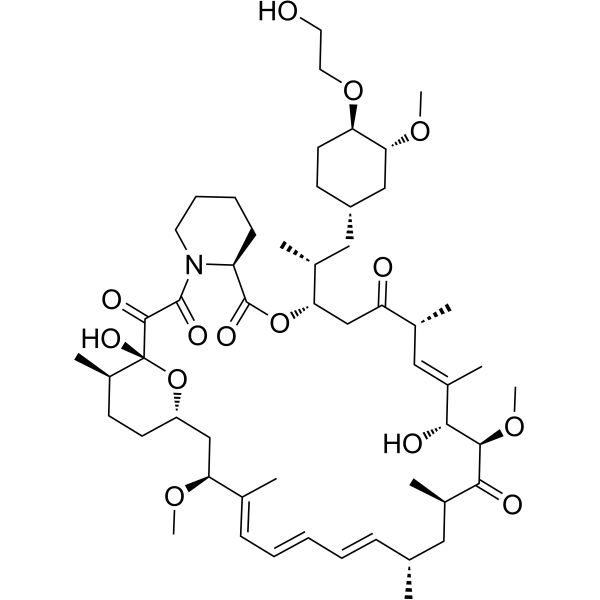
HY-10218
EverolimusmTORC Inhibitor -
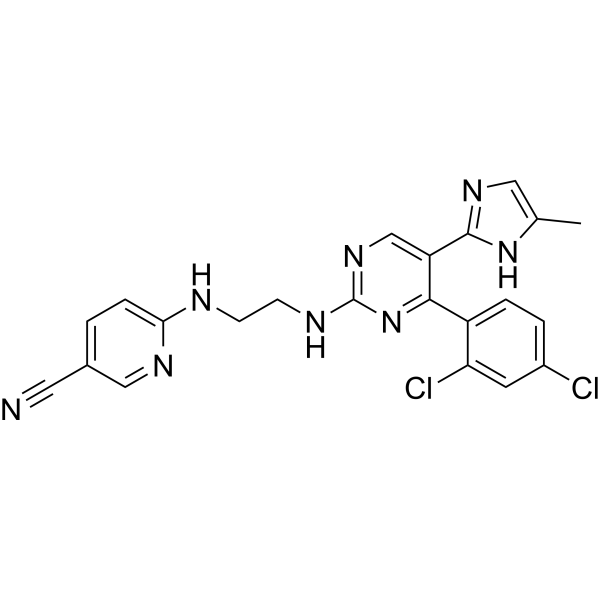
HY-10182
LaduviglusibGSK-3 Inhibitor -
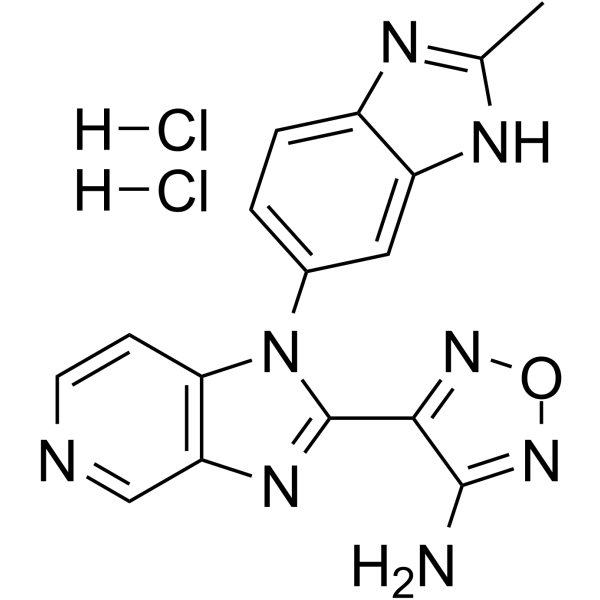
HY-126675A
AS2863619CDK8/19 Inhibitor -
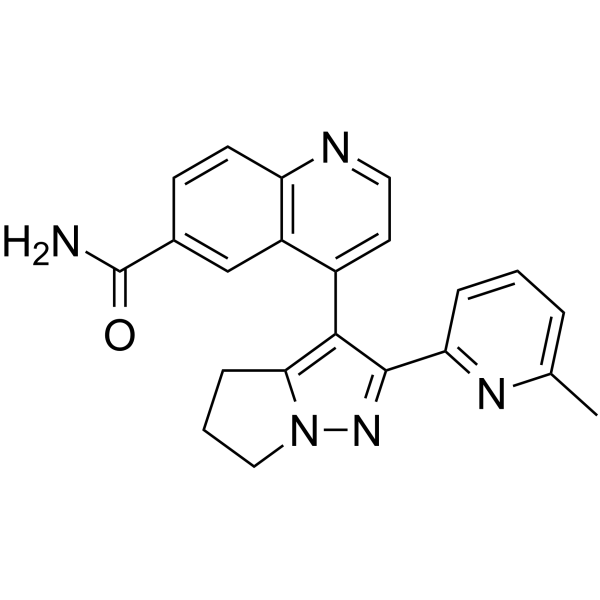
HY-13226
GalunisertibTGFβRI Inhibitor -
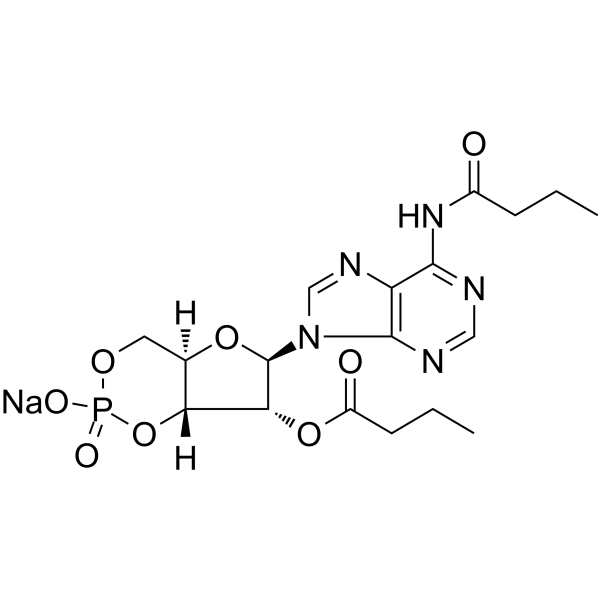
HY-B0764
Bucladesine sodiumcAMP Analog -
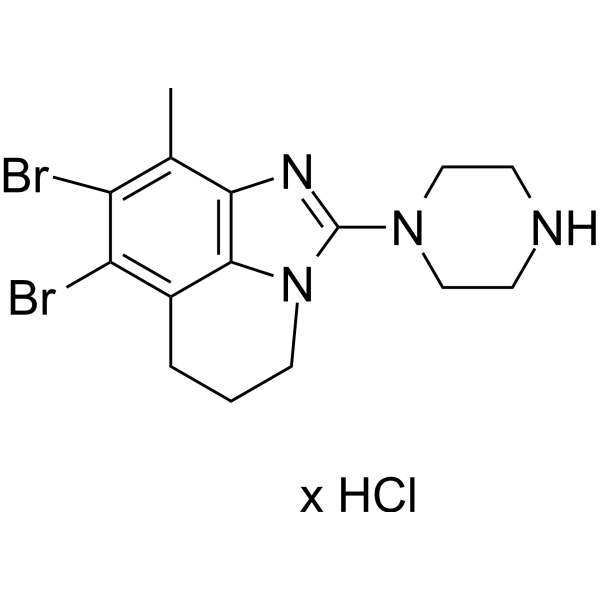
HY-111388B
Romaciclib hydrochloride -
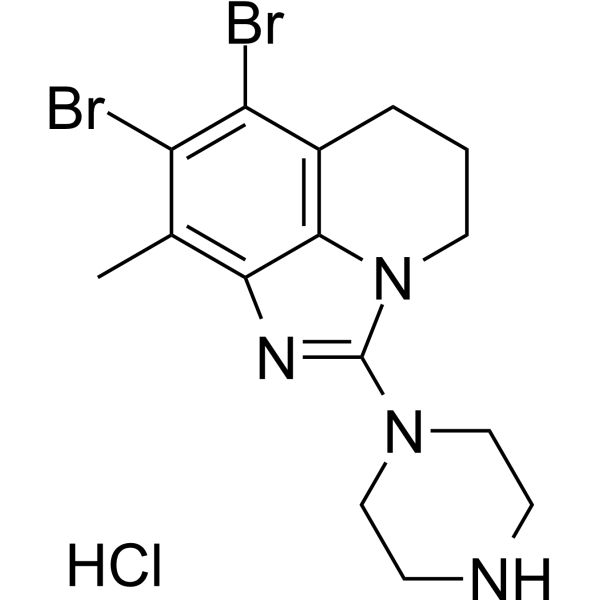
HY-111388A
Romaciclib monohydrochlorideCDK Inhibitor -
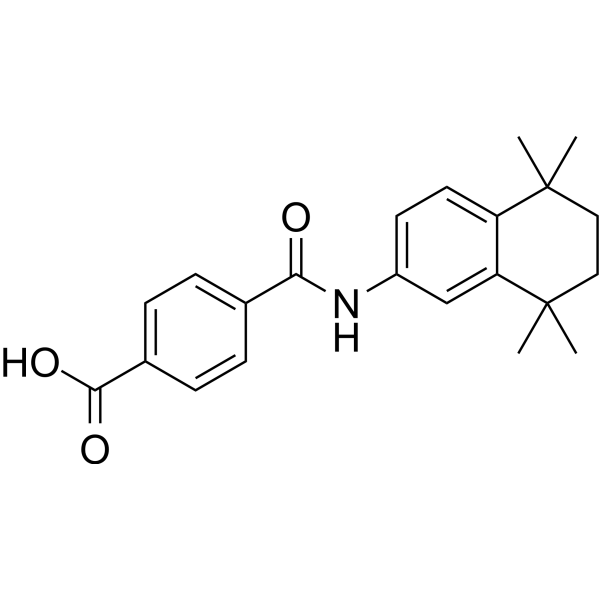
HY-14652
TamibaroteneApoptosis Inducer -

HY-101611R
MSC2530818 (Standard)CDK8 Inhibitor -
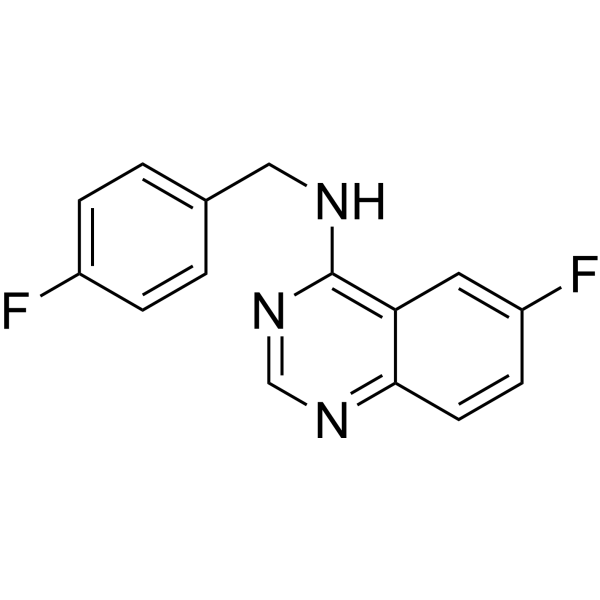
HY-12990
Spautin-1Autophagy Inhibitor
Publications Citing Use of MedChemExpress (MCE) MSC2530818
More

Biological Activity
Description
IC50 & Target
[1]|
CDK8 2.6 nM (IC50) |
Cellular Effect
|
Cell Line

|
Type | Value | Description | References |
|---|---|---|---|---|
| CHO | IC50 |
8.5 μM
Compound: 25; MSC2530818
|
Displacement of [3H]BTCP from human recombinant dopamine transporter expressed in CHO cells after 120 mins by scintillation counting method
Displacement of [3H]BTCP from human recombinant dopamine transporter expressed in CHO cells after 120 mins by scintillation counting method
|
[PMID: 27490956] |
| COLO 205 | IC50 |
9 nM
Compound: 25; MSC2530818
|
Inhibition of CDK8 in human COLO205 cells expressing APC mutant assessed as suppression of WNT pathway by luciferase reporter gene assay
Inhibition of CDK8 in human COLO205 cells expressing APC mutant assessed as suppression of WNT pathway by luciferase reporter gene assay
|
[PMID: 27490956] |
| HCT-116 | IC50 |
70.25 μM
Compound: MSC2530818
|
Growth inhibition of human HCT116 cells after 72 hrs by Celltiter-glo assay
Growth inhibition of human HCT116 cells after 72 hrs by Celltiter-glo assay
|
[PMID: 30630717] |
| LS174T | IC50 |
32 nM
Compound: 25; MSC2530818
|
Inhibition of CDK8 in human LS174T cells expressing beta-catenin mutant assessed as suppression of WNT pathway by luciferase reporter gene assay
Inhibition of CDK8 in human LS174T cells expressing beta-catenin mutant assessed as suppression of WNT pathway by luciferase reporter gene assay
|
[PMID: 27490956] |
| PA-1 | IC50 |
52 nM
Compound: 25; MSC2530818
|
Inhibition of CDK8 in human PA1 cells assessed as suppression of WNT3a ligand-induced WNT pathway by luciferase reporter gene assay
Inhibition of CDK8 in human PA1 cells assessed as suppression of WNT3a ligand-induced WNT pathway by luciferase reporter gene assay
|
[PMID: 27490956] |
| SW-620 | IC50 |
52.41 μM
Compound: MSC2530818
|
Growth inhibition of human SW620 cells after 72 hrs by Celltiter-glo assay
Growth inhibition of human SW620 cells after 72 hrs by Celltiter-glo assay
|
[PMID: 30630717] |
| SW-620 | IC50 |
8 nM
Compound: 25; MSC2530818
|
Inhibition of CDK8 in human SW620 cells assessed as decrease in STAT1 phosphorylation at Ser727
Inhibition of CDK8 in human SW620 cells assessed as decrease in STAT1 phosphorylation at Ser727
|
[PMID: 27490956] |
In Vitro
MSC2530818 binds to CDK8 and CDK19 with similar affinity (4 nM). Potent inhibition of phospho-STAT1SER727, an established biomarker of CDK8 activity, in SW620 human colorectal carcinoma cells is also observed (pSTAT1SER727 IC50=8±2 nM). MSC2530818 demonstrates potent inhibition of WNT-dependent transcription in human cancer cell lines that have constitutively activated WNT signaling. For example, MSC2530818 inhibits the reporter-based luciferase readout in several cell lines bearing activating WNT-pathway mutations; LS174T (β-catenin mutant, IC50=32±7 nM), COLO205 (APC mutant, IC50=9±1 nM) and demonstrates inhibition of WNT3a ligand-dependent reporter readout in PA-1 cells (IC50=52±30 nM). MSC2530818 demonstrates minimal activity in the CEREP panel, and demonstrates minimal hERG inhibition. Furthermore, MSC2530818 is a soluble CDK8 inhibitor with high permeability and low efflux ratio in Caco-2 cells and does not inhibit any cytochrome P450 subtypes[1].
MedChemExpress (MCE) has not independently confirmed the accuracy of these methods. They are for reference only. Further protocols information, click here.
In Vivo
MedChemExpress (MCE) has not independently confirmed the accuracy of these methods. They are for reference only.


Chemical Information
-
CAS No. 1883423-59-3
-
Appearance Solid
-
Molecular Weight 340.81
-
Formula C18H17ClN4O
-
Color White to off-white
-
SMILES
O=C(N1[C@H](C2=CC=C(Cl)C=C2)CCC1)C3=CN=C(NN=C4C)C4=C3
-
Shipping
Room temperature in continental US; may vary elsewhere.
-
Storage
Powder -20°C 3 years 4°C 2 years In solvent -80°C 2 years -20°C 1 year


Publications (4)
-
Journal Impact Factor
-
Most Recent
-
Pharmaceuticals (Basel)
New Assay Systems to Characterize the Broad-Spectrum Antiherpesviral and Non-Herpesviral Activity of Cyclin-Dependent Kinase (CDK) 8 Inhibitors. [Abstract]2025 Oct 16;18(10):1560. PMID: 41155676 -
-
-


Solvent & Solubility
In Vitro:
DMSO : 110 mg/mL (322.76 mM; Need ultrasonic; Hygroscopic DMSO has a significant impact on the solubility of product, please use newly opened DMSO)
Please refer to the solubility information to select the appropriate solvent. Once prepared, please aliquot and store the solution to prevent product inactivation from repeated freeze-thaw cycles.
Storage method and period of stock solution: -80°C, 2 years; -20°C, 1 year. When stored at -80°C, please use it within 2 years. When stored at -20°C, please use it within 1 year.
Please refer to the solubility information to select the appropriate solvent. Once prepared, please aliquot and store the solution to prevent product inactivation from repeated freeze-thaw cycles.
Storage method and period of stock solution: -80°C, 2 years; -20°C, 1 year. When stored at -80°C, please use it within 2 years. When stored at -20°C, please use it within 1 year.
Concentration (start) × Volume (start) = Concentration (final) × Volume (final)
In Vivo:
Select the appropriate dissolution method based on your experimental animal and administration route.
- For the following dissolution methods, please ensure to first prepare a clear stock solution using an In Vitro approach and then sequentially add co-solvents:
- To ensure reliable experimental results, the clarified stock solution can be appropriately stored based on storage conditions. As for the working solution for In Vivo experiments, it is recommended to prepare freshly and use it on the same day.
- The percentages shown for the solvents indicate their volumetric ratio in the final prepared solution. If precipitation or phase separation occurs during preparation, heat and/or sonication can be used to aid dissolution.
Add each solvent one by one: 10% DMSO 40% PEG300 5% Tween-80 45% Saline
Solubility: ≥ 2.75 mg/mL (8.07 mM); Clear solution
This protocol yields a clear solution of ≥ 2.75 mg/mL (saturation unknown).
Taking 1 mL working solution as an example, add 100 μL DMSO stock solution (27.5 mg/mL) to 400 μL PEG300, and mix evenly; then add 50 μL Tween-80 and mix evenly; then add 450 μL Saline to adjust the volume to 1 mL.
Preparation of Saline: Dissolve 0.9 g sodium chloride in ddH₂O and dilute to 100 mL to obtain a clear Saline solution.
Add each solvent one by one: 10% DMSO 90% (20% SBE-β-CD in Saline)
Solubility: 2.75 mg/mL (8.07 mM); Suspended solution; Need ultrasonic
This protocol yields a suspended solution of 2.75 mg/mL. Suspended solution can be used for oral and intraperitoneal injection.
Taking 1 mL working solution as an example, add 100 μL DMSO stock solution (27.5 mg/mL) to 900 μL 20% SBE-β-CD in Saline, and mix evenly.
Preparation of 20% SBE-β-CD in Saline (4°C, storage for one week): 2 g SBE-β-CD powder is dissolved in 10 mL Saline, completely dissolve until clear.
In Vivo Dissolution Calculator
Please enter the basic information of animal experiments:
-
-
-
-
Recommended: Prepare an additional quantity of animals to account for potential losses during experiments.
Please enter your animal formula composition:
-
%DMSO +
Recommended: Keep the proportion of DMSO in working solution below 2% if your animal is weak.
-
%+
-
+%Tween-80 + +
-
%Saline +
The co-solvents required include: DMSO, . All of co-solvents are available by MedChemExpress (MCE). , Tween 80. All of co-solvents are available by MedChemExpress (MCE).
Working solution concentration: 0.22 mg/mL
Method for preparing stock solution: mg drug dissolved in μL DMSO. Stock solution concentration: mg/mL.
1. Take μL DMSO stock solution;
2. Add μL .
μL , mix evenly;
3. Then add μL Tween 80, mix evenly;
4. Then add μL
Please ensure that the stock solution in the first step is dissolved to a clear state, and add co-solvents in sequence. You can use ultrasonic heating (ultrasonic cleaner, recommended frequency 20-40 kHz), vortexing, etc. to assist dissolution.

Protocols
-
Cell Cytotoxicity Assay
Cytotoxicity assays are usually based on the assessment of cell membrane damage, which can also be indirectly detected by measuring cell viability. Detection methods include MTT assay, CKK-8 assay, LDH assay and ATP assay, etc.


Purity & Documentation
-
Data Sheet (281 KB)
-
SDS (393 KB)
- English - EN (393 KB)
- Français - FR (393 KB)
- Deutsch - DE (393 KB)
- Norwegian - NO (393 KB)
- Español - ES (393 KB)
- Swedish - SV (393 KB)
- Italian - IT (393 KB)
- Korean - KR (393 KB)
- Portuguese - PT (393 KB)
-
Handling Instructions (2659 KB)
References


Complete Stock Solution Preparation Table
Please refer to the solubility information to select the appropriate solvent. Once prepared, please aliquot and store the solution to prevent product inactivation from repeated freeze-thaw cycles.
Storage method and period of stock solution: -80°C, 2 years; -20°C, 1 year. When stored at -80°C, please use it within 2 years. When stored at -20°C, please use it within 1 year.
| Optional Solvent | Concentration Solvent Mass | 1 mg | 5 mg | 10 mg | 25 mg |
|---|---|---|---|---|---|
| DMSO | 1 mM | 2.9342 mL | 14.6709 mL | 29.3419 mL | 73.3547 mL |
| 5 mM | 0.5868 mL | 2.9342 mL | 5.8684 mL | 14.6709 mL | |
| 10 mM | 0.2934 mL | 1.4671 mL | 2.9342 mL | 7.3355 mL | |
| 15 mM | 0.1956 mL | 0.9781 mL | 1.9561 mL | 4.8903 mL | |
| 20 mM | 0.1467 mL | 0.7335 mL | 1.4671 mL | 3.6677 mL | |
| 25 mM | 0.1174 mL | 0.5868 mL | 1.1737 mL | 2.9342 mL | |
| 30 mM | 0.0978 mL | 0.4890 mL | 0.9781 mL | 2.4452 mL | |
| 40 mM | 0.0734 mL | 0.3668 mL | 0.7335 mL | 1.8339 mL | |
| 50 mM | 0.0587 mL | 0.2934 mL | 0.5868 mL | 1.4671 mL | |
| 60 mM | 0.0489 mL | 0.2445 mL | 0.4890 mL | 1.2226 mL | |
| 80 mM | 0.0367 mL | 0.1834 mL | 0.3668 mL | 0.9169 mL | |
| 100 mM | 0.0293 mL | 0.1467 mL | 0.2934 mL | 0.7335 mL |


MSC2530818 Related Classifications
HY-101611 Related Classifications
 Powered by Bioz