



1-Deoxynojirimycin hydrochloride
Based on 7 publication(s) in Google Scholar
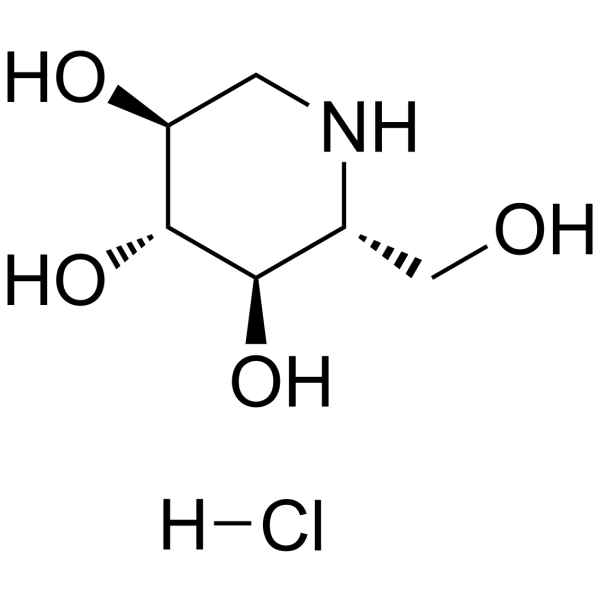
1-Deoxynojirimycin hydrochloride (Duvoglustat hydrochloride) is a potent and orally active α-glucosidase inhibitor. 1-Deoxynojirimycin hydrochloride suppresses postprandial blood glucose and is widely used for diabetes mellitus. 1-Deoxynojirimycin hydrochloride possesses antihyperglycemic, anti-obesity, and antiviral features.
For research use only. We do not sell to patients.
- Purity : 99.95%
- CAS No.: 73285-50-4
- Formula: C6H14ClNO4
- Molecular Weight:199.63
-
Storage:
4°C, sealed storage, away from moisture and light
* In solvent : -80°C, 6 months; -20°C, 1 month (sealed storage, away from moisture and light)

To place orders, for customer services and technical support, please contact: MedChemExpress USA
Tel: 609-228-6898 E-mail: [email protected] [email protected]


-
 Biological Activity
-
Chemical Information
-
Solvent & Solubility
- Protocols
- Purity & Documentation
- References
-
 Help & FAQs


-
HY-100944
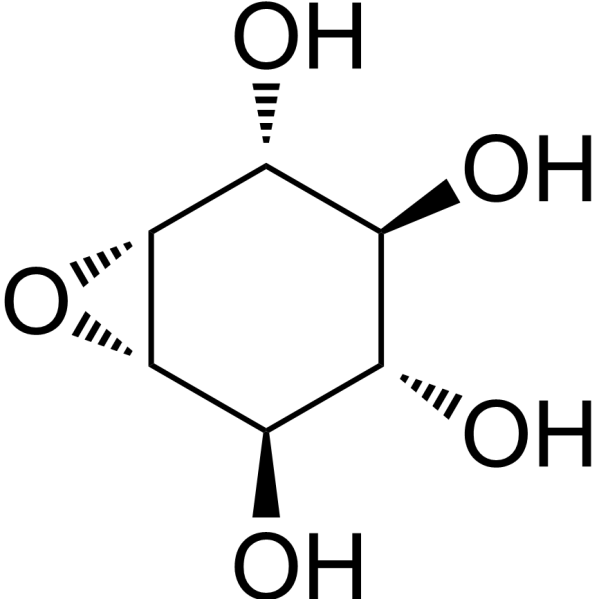
Conduritol B epoxideGcase Inhibitor -
HY-N2022
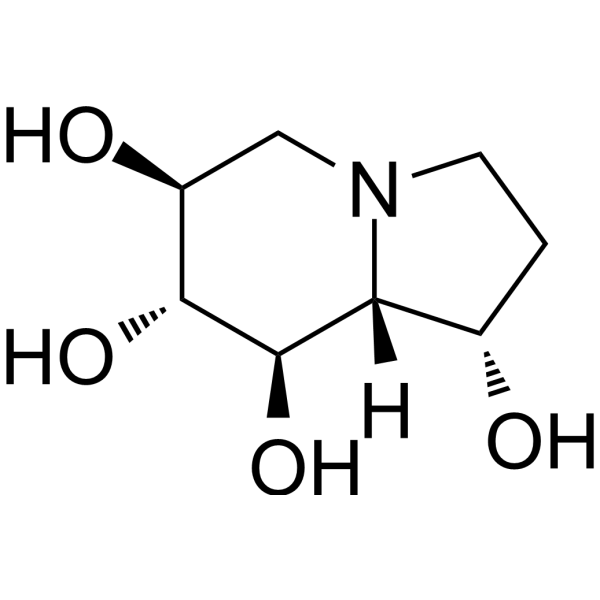
Castanospermineα/β-Glucosidases Inhibitor -
HY-N4102
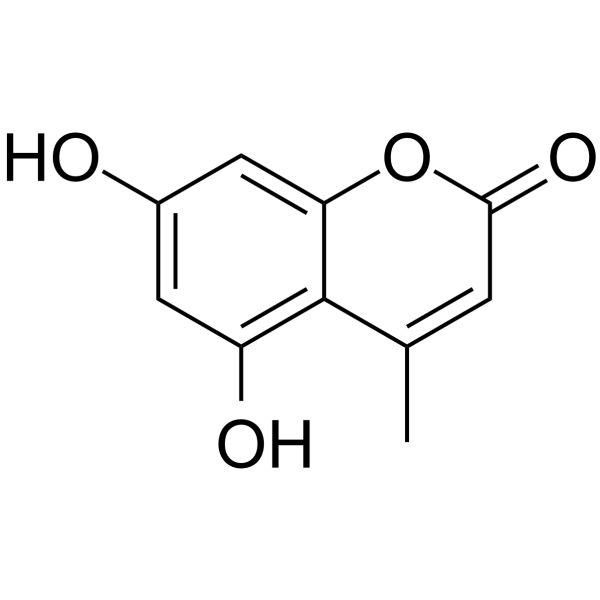
5,7-Dihydroxy-4-methylcoumarinAntioxidant -
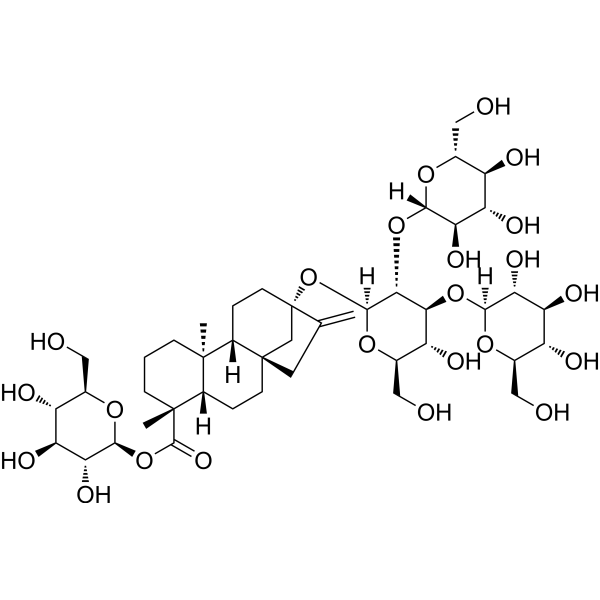
HY-N0466
Rebaudioside Aα-Glucosidase Inhibitor -
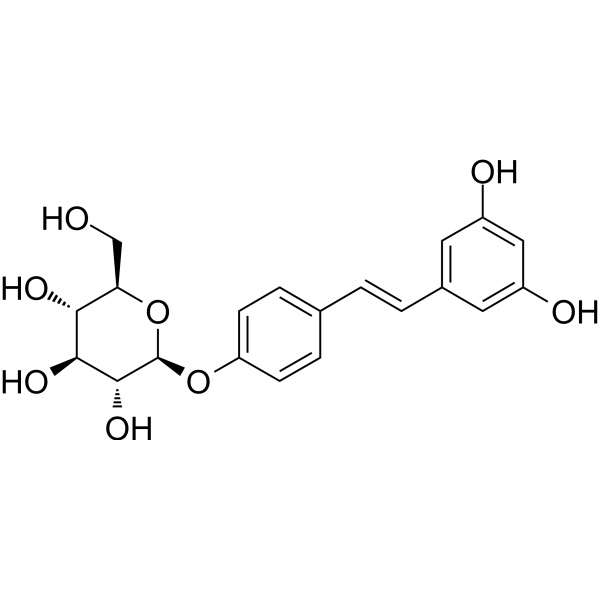
HY-N4195
Resveratrolosideα-Glucosidase Inhibitior -
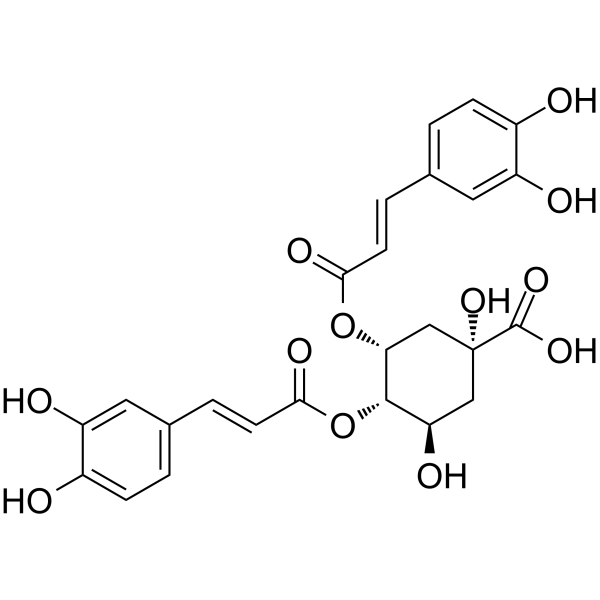
HY-N0058
4,5-Dicaffeoylquinic acidAntioxidant -
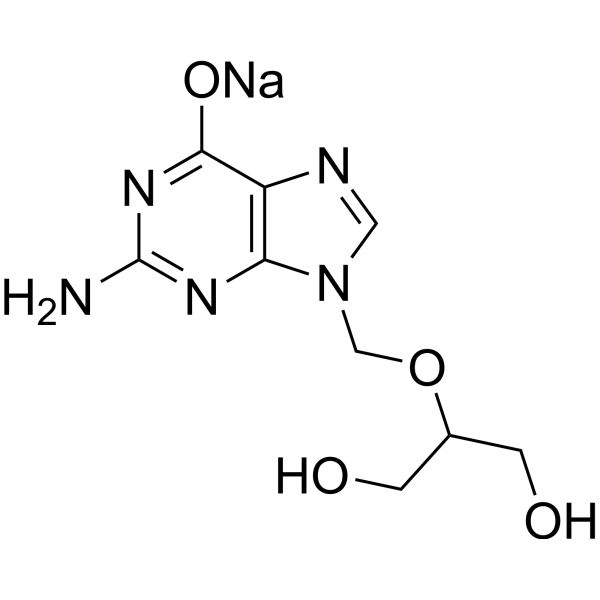
HY-13637A
Ganciclovir sodiumAntiviral Agent -
HY-B0089
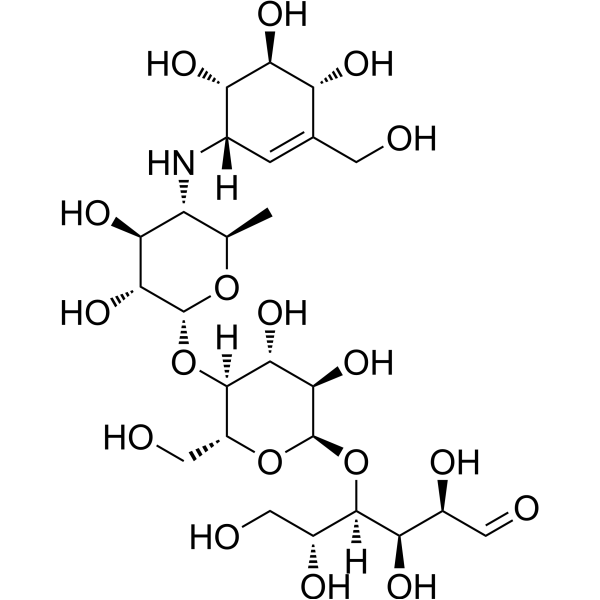
AcarboseAlpha-Glucosidase Inhibitor -
HY-14860
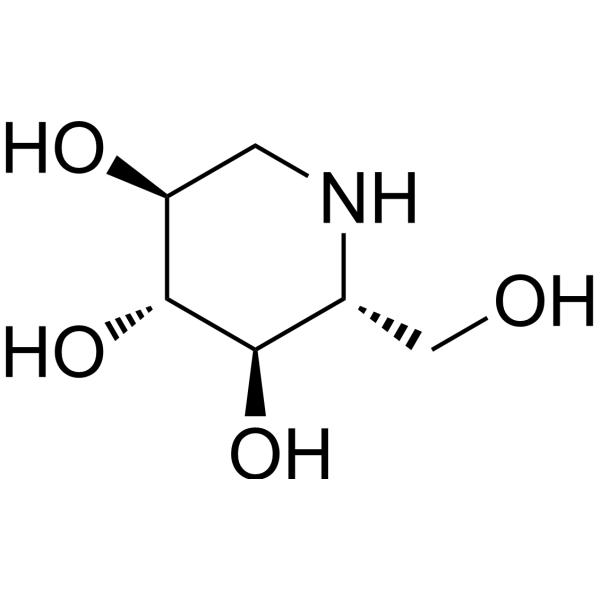
1-Deoxynojirimycinα-glucosidase Inhibitor -
HY-119821
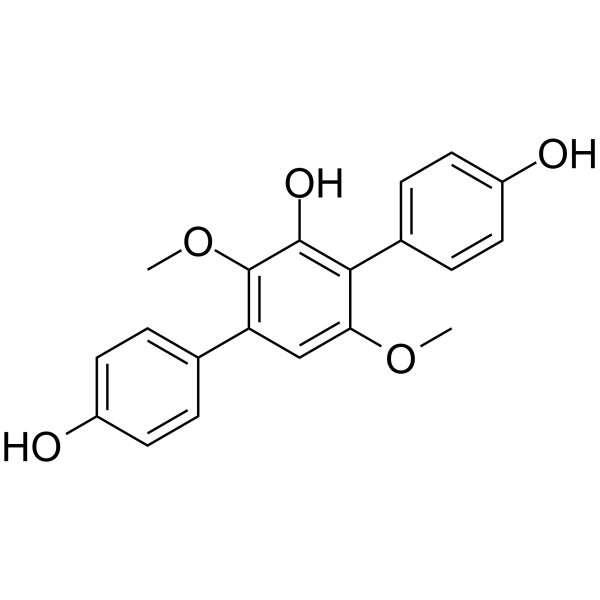
TerphenyllinGlucosidase Inhibitor -
HY-B1039
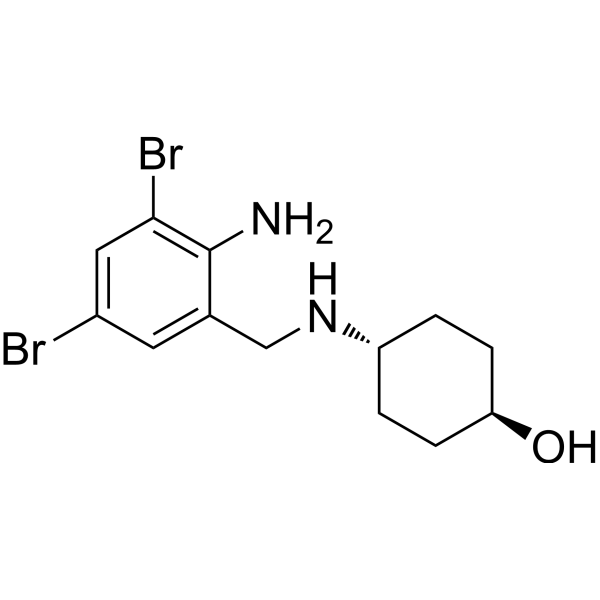
AmbroxolBromhexine Metabolite -

HY-N4102R
5,7-Dihydroxy-4-methylcoumarin (Standard)Antibacterial Agent
Publications Citing Use of MedChemExpress (MCE) 1-Deoxynojirimycin hydrochloride
More- Adv Healthc Mater. 2025 Mar;14(6):e2404015. [Abstract]
- Int J Biol Macromol. 2025 Feb:289:138846. [Abstract]
- J Biol Chem. 2023 Oct;299(10):105211. [Abstract]
- Environ Microbiol. 2021 Sep;23(9):5114-5130. [Abstract]
- Exp Cell Res. 2020 Dec 1;397(1):112334. [Abstract]
- bioRxiv. 2026 May 15.
- Authorea. 2025 Jan 05.
All Antibiotic Isoforms
More

Biological Activity
Description
In Vivo
1-Deoxynojirimycin hydrochloride significantly improves insulin sensitivity via activating insulin signaling PI3K/AKT pathway in skeletal muscle of db/db mice[3].
MedChemExpress (MCE) has not independently confirmed the accuracy of these methods. They are for reference only.
-
Animal Model:db/db mice[3]
-
Dosage:20, 40, 80 mg/kg
-
Administration:Intravenously; daily for four weeks
-
Result:Significantly reduced body weight, blood glucose and serum insulin levels; Improved glucose tolerance and insulin tolerance.


Chemical Information
-
CAS No. 73285-50-4
-
Appearance Solid
-
Molecular Weight 199.63
-
Formula C6H14ClNO4
-
Color White to off-white
-
SMILES
O[C@@H]1[C@@H](CO)NC[C@H](O)[C@H]1O.[H]Cl
-
Synonyms
Duvoglustat hydrochloride
-
Structure Classification
-
Initial Source
-
Shipping
Room temperature in continental US; may vary elsewhere.
-
Storage
4°C, sealed storage, away from moisture and light
* In solvent : -80°C, 6 months; -20°C, 1 month (sealed storage, away from moisture and light)


Publications (7)
-
Journal Impact Factor
-
Most Recent
-
Adv Healthc Mater
Regulation of T Cell Glycosylation by MXene/β-TCP Nanocomposite for Enhanced Mandibular Bone Regeneration. [Abstract]2025 Mar;14(6):e2404015. PMID: 39764719 -
Int J Biol Macromol
Site-specific analysis and functional characterization of N-linked glycosylation for β-Klotho protein. [Abstract]2025 Feb:289:138846. PMID: 39701265 -
J Biol Chem
Golgi α-Mannosidases Regulate Cell Surface N-Glycan Type and Ectodomain Shedding of the Transmembrane Protease Corin. [Abstract]2023 Oct;299(10):105211. PMID: 37660903 -
Environ Microbiol
Interaction between the cell walls of microalgal host and fungal carbohydrate-activate enzymes is essential for the pathogenic parasitism process. [Abstract]2021 Sep;23(9):5114-5130. PMID: 33723900 -
Exp Cell Res
Blood coagulation factor VIII D1241E polymorphism leads to a weak malectin interaction and reduction of factor VIII posttranslational modification and secretion. [Abstract]2020 Dec 1;397(1):112334. PMID: 33144078 -
-


Solvent & Solubility
In Vitro:
H2O : 250 mg/mL (1252.32 mM; Need ultrasonic)
Please refer to the solubility information to select the appropriate solvent. Once prepared, please aliquot and store the solution to prevent product inactivation from repeated freeze-thaw cycles.
Storage method and period of stock solution: -80°C, 6 months; -20°C, 1 month (sealed storage, away from moisture and light). When stored at -80°C, please use it within 6 months. When stored at -20°C, please use it within 1 month.
* Note: If you choose water as the stock solution, please dilute it to the working solution, then filter and sterilize it with a 0.22 μm filter before use.
Please refer to the solubility information to select the appropriate solvent. Once prepared, please aliquot and store the solution to prevent product inactivation from repeated freeze-thaw cycles.
Storage method and period of stock solution: -80°C, 6 months; -20°C, 1 month (sealed storage, away from moisture and light). When stored at -80°C, please use it within 6 months. When stored at -20°C, please use it within 1 month.
* Note: If you choose water as the stock solution, please dilute it to the working solution, then filter and sterilize it with a 0.22 μm filter before use.
Concentration (start) × Volume (start) = Concentration (final) × Volume (final)

Protocols
-
Research Protocol for Infectious Diseases
Infectious-disease experiments test how pathogens interact with host barriers, innate immune receptors, inflammatory signaling, pathogen replication, and tissue injury; pattern-recognition receptors such as TLRs, RIG-I-like receptors, NOD-like receptors, and inflammasomes detect microbial molecules and activate NF-κB, interferon, and cytokine responses. The central hypothesis is that infection severity reflects the balance between pathogen burden and host response: protective inflammation restricts pathogen growth, whereas excessive or mislocalized inflammation contributes to tissue damage and disease phenotype. Unresolved questions include which host pathways are protective versus pathogenic, why some infection models fail to translate to human disease, and which combined readouts best predict clinically relevant infection outcomes.
-
Research Protocol for Metabolic Diseases
AMP-activated protein kinase, AMPK, is a conserved cellular energy sensor that responds to reduced cellular energy status and coordinates metabolism by increasing ATP-generating catabolic pathways while suppressing ATP-consuming anabolic processes. In metabolic disease research, the AMPK pathway is experimentally relevant because it regulates hepatic lipid synthesis, fatty acid oxidation, glucose production, skeletal-muscle glucose disposal, mTORC1-linked biosynthesis, autophagy, mitochondrial homeostasis, and whole-body energy balance. The central pathway logic is that energy stress, metformin, exercise-like stimulation, or direct AMPK activators increase AMPKα Thr172 phosphorylation and downstream substrate phosphorylation, including ACC and RAPTOR. Phosphorylation of ACC suppresses lipogenesis and supports fatty acid oxidation, whereas phosphorylation of RAPTOR suppresses mTORC1 signaling and links cellular energy status to growth and protein synthesis control. The pathway is linked


Purity & Documentation
-
Data Sheet (276 KB)
-
SDS (393 KB)
- English - EN (393 KB)
- Français - FR (393 KB)
- Deutsch - DE (393 KB)
- Norwegian - NO (393 KB)
- Español - ES (393 KB)
- Swedish - SV (393 KB)
- Italian - IT (393 KB)
- Korean - KR (393 KB)
- Portuguese - PT (393 KB)
-
Handling Instructions (2659 KB)
References
[1]. Gao K, et al. 1-Deoxynojirimycin: Occurrence, Extraction, Chemistry, Oral Pharmacokinetics, Biological Activities and In Silico Target Fishing. Molecules. 2016 Nov 23;21(11). pii: E1600. [Content Brief]
[3]. Liu Q, et al. 1-Deoxynojirimycin Alleviates Insulin Resistance via Activation of Insulin Signaling PI3K/AKT Pathway in Skeletal Muscle of db/db Mice. Molecules. 2015 Dec 4;20(12):21700-14. [Content Brief]


Complete Stock Solution Preparation Table
Please refer to the solubility information to select the appropriate solvent. Once prepared, please aliquot and store the solution to prevent product inactivation from repeated freeze-thaw cycles.
Storage method and period of stock solution: -80°C, 6 months; -20°C, 1 month (sealed storage, away from moisture and light). When stored at -80°C, please use it within 6 months. When stored at -20°C, please use it within 1 month.
| Optional Solvent | Concentration Solvent Mass | 1 mg | 5 mg | 10 mg | 25 mg |
|---|---|---|---|---|---|
| H2O | 1 mM | 5.0093 mL | 25.0463 mL | 50.0927 mL | 125.2317 mL |
| 5 mM | 1.0019 mL | 5.0093 mL | 10.0185 mL | 25.0463 mL | |
| 10 mM | 0.5009 mL | 2.5046 mL | 5.0093 mL | 12.5232 mL | |
| 15 mM | 0.3340 mL | 1.6698 mL | 3.3395 mL | 8.3488 mL | |
| 20 mM | 0.2505 mL | 1.2523 mL | 2.5046 mL | 6.2616 mL | |
| 25 mM | 0.2004 mL | 1.0019 mL | 2.0037 mL | 5.0093 mL | |
| 30 mM | 0.1670 mL | 0.8349 mL | 1.6698 mL | 4.1744 mL | |
| 40 mM | 0.1252 mL | 0.6262 mL | 1.2523 mL | 3.1308 mL | |
| 50 mM | 0.1002 mL | 0.5009 mL | 1.0019 mL | 2.5046 mL | |
| 60 mM | 0.0835 mL | 0.4174 mL | 0.8349 mL | 2.0872 mL | |
| 80 mM | 0.0626 mL | 0.3131 mL | 0.6262 mL | 1.5654 mL | |
| 100 mM | 0.0501 mL | 0.2505 mL | 0.5009 mL | 1.2523 mL |
* Note: If you choose water as the stock solution, please dilute it to the working solution, then filter and sterilize it with a 0.22 μm filter before use.


1-Deoxynojirimycin hydrochloride Related Classifications
HY-14860A Related Classifications
 Powered by Bioz