Endocrinology
-
Endocrinology Related Products (3780)
Related Products (3780)

-
Antibodies (4)
-
Related Compound Screening Libraries (1)
-
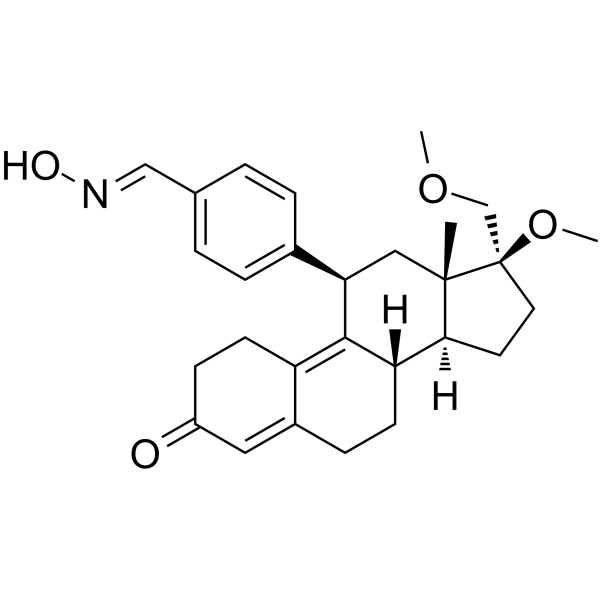
Asoprisnil
 0 ImagesSynonyms: J867
Asoprisnil (J867), a selective progesterone receptor modulator, exhibits mixed progesterone agonist and antagonist effects on various progesterone targeted tissues in animal and human.
-
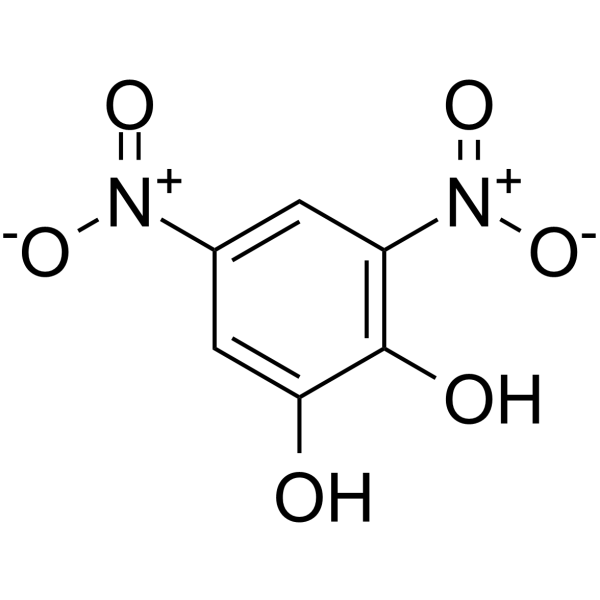
3,5-Dinitrocatechol
 0 Images
3,5-Dinitrocatechol (OR-486) is an orally active, blood-brain barrier-permeable selective catechol-O-methyltransferase (COMT) inhibitor. 3,5-Dinitrocatechol can be used in research related to Parkinson's disease, pheochromocytoma and adult cataract.
-
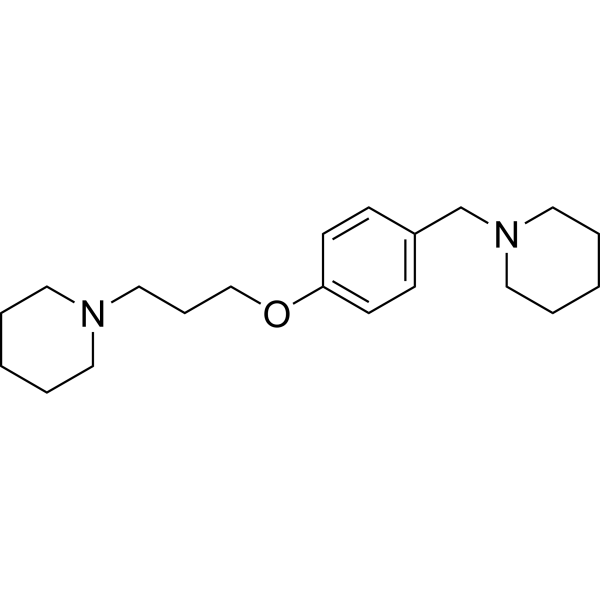
JNJ-5207852
 0 Images
JNJ-5207852 is a selective and potent histamine H3 receptor (H3R) antagonist, with pKis of 8.9, 9.24 for rat and human H3R, respectively.
-
Fimasartan
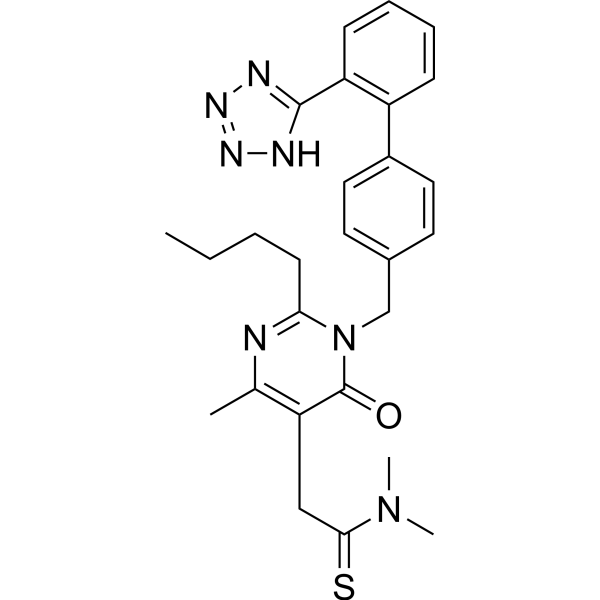 0 ImagesSynonyms: BR-A-657
Fimasartan (BRA-657) is an orally effective angiotensin receptor AT1 non-peptide antagonist. Fimasartan has antihypertensive effects. Fimasartan improves neuroinflammation and brain injury mediated by NLRP3 inflammatome after intracerebral hemorrhage, and has neuroprotective effect. Fimasartan inhibits the expression of inducible nitric oxide synthase through the inactivation of NF-κB and activator protein-1.
-
Meptyldinocap
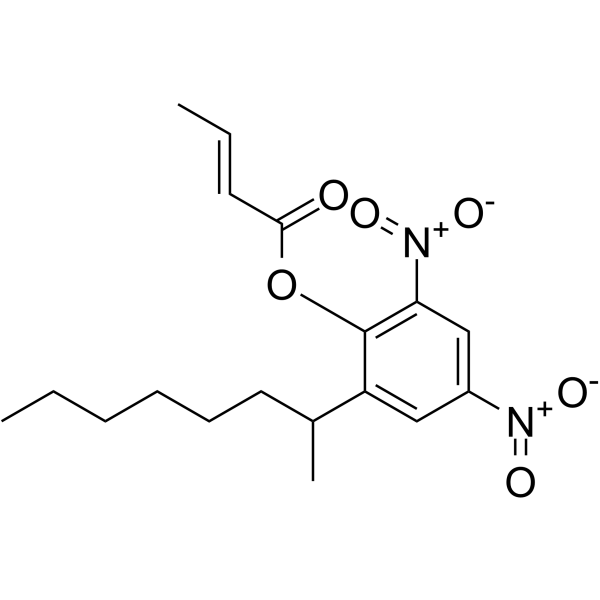 0 Images
Meptyldinocap (2,4-DNOPC) is a fungicide and cytotoxic agent that acts against powdery mildew. Meptyldinocap upregulates the phosphorylation levels of ERK1/2, JNK and p38. Meptyldinocap induces apoptosis and endoplasmic reticulum stress, disrupts calcium homeostasis, inhibits cell proliferation and migration, downregulates the expression of proliferation- and pregnancy-related genes, and triggers mitochondrial dysfunction. Meptyldinocap can be used in studies related to powdery mildew and implantation failure.
-
GSK1059865
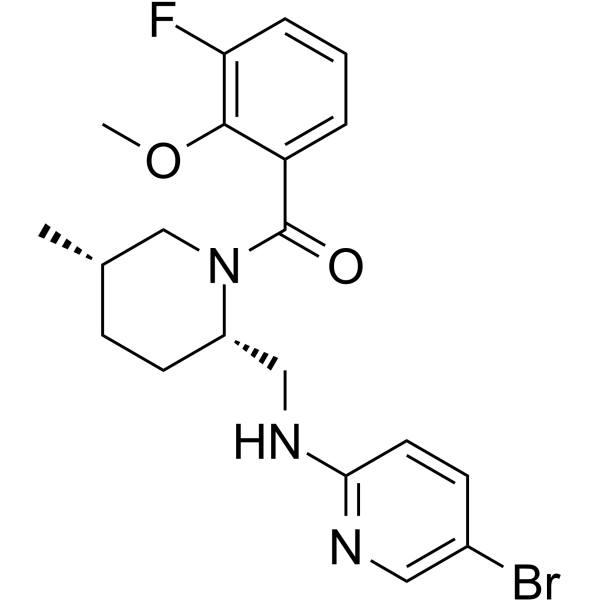 0 Images
GSK1059865 is a potent orexin 1 receptor antagonist.
-
γ-1-Melanocyte Stimulating Hormone (MSH), amide
 0 ImagesCat. No.: HY-P1531CAS No.: 72629-65-3
γ-1-Melanocyte Stimulating Hormone (MSH), amide is a 11-amino acid peptide. γ-1-Melanocyte Stimulating Hormone (MSH) regulates sodium (Na+) balance and blood pressure through activation of the melanocortin receptor 3 (MC3-R).
-
Lilial
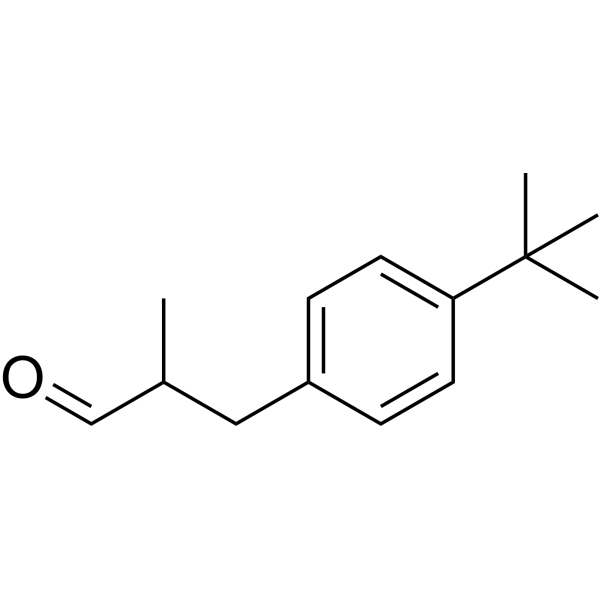 0 Images
Lilial is a widely used synthetic fragrance and ester in consumer products. Lilial possesses estrogenic activity in vitro. Lilial can induce a toxic effect on mitochondria that causes a decrease in the viability of HaCaT cells. Lilial can increase NRF2 protein level in vitro. Lilial is able to target respiratory chain complexes, inhibit complexes I and II of the electron transport chain, increase the generation of reactive oxygen species, and decrease the level of intracellular ATP. Lilial can induce systemic toxicity in vivo. Lilial induces significant DNA strand breaks.
-
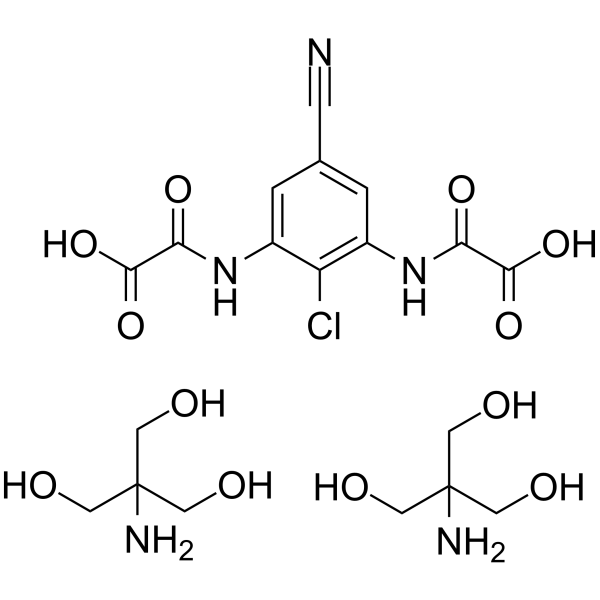
Lodoxamide tromethamine
 0 ImagesSynonyms: U-42585E
Lodoxamide tromethamine (U-42585E) is a medication for the treatment of prophylaxis of mast cell-mediated allergic disease.
-
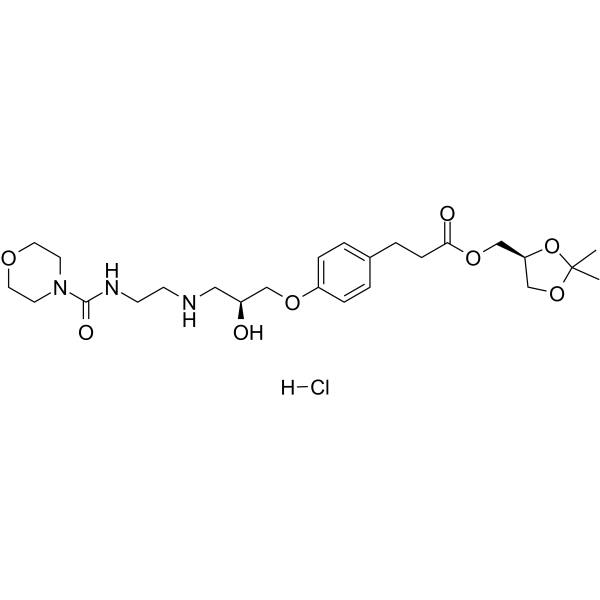
Landiolol hydrochloride
 0 ImagesSynonyms: ONO1101 hydrochloride
Landiolol (ONO1101) hydrochloride is a highly selective, ultra-short-acting competitive inhibitor of β1 adrenergic receptors. Landiolol hydrochloride specifically blocks cardiac β1 receptors, reducing heart rate and myocardial oxygen consumption. Landiolol hydrochloride inhibits TNF-α-induced excessive mitochondrial oxygen consumption and reactive oxygen species production in a sepsis model, alleviating renal injury. Landiolol hydrochloride has little effect on cardiac ion channels (such as L-type calcium current and inward rectifier potassium current) and has a weak negative inotropic effect. Landiolol hydrochloride can be used for perioperative tachycardia control and protection studies of sepsis-related acute kidney injury.
-
Sevelamer carbonate
 0 ImagesCat. No.: HY-13995BCAS No.: 845273-93-0
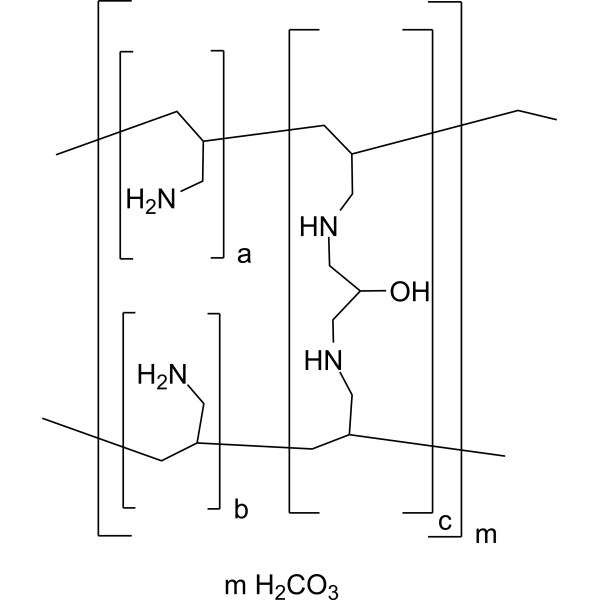
Sevelamer carbonate is an orally active polymeric phosphate binder and bile acid sequestrant. Sevelamer carbonate binds dietary phosphate in the gastrointestinal tract, reducing phosphate absorption and serum phosphorus levels, and reduces urinary phosphate excretion. Sevelamer carbonate binds polyanion bile acids, increases bile acid faecal excretion, and reduces total cholesterol and LDL cholesterol levels. Sevelamer carbonate can be used for the research of hyperphosphataemia, hyperparathyroidism, chronic renal failure, kidney disease, and type 2 diabetes.
-
d[Cha4]-AVP
![d[Cha4]-AVP](https://file.medchemexpress.com/product_pic/hy-p1390.gif "Click to View d[Cha4]-AVP Product Detail") 0 Images
0 Imagesd[Cha4]-AVP is a potent and selective vasopressin (AVP) V1b receptor agonist with a Ki of 1.2 nM for human V1b receptor. d[Cha4]-AVP shows more selective for V1b receptor than human V1a receptor, V2 receptor, and oxytocin receptors.
-
Ciproxifan maleate
 0 ImagesSynonyms: FUB 359 maleate
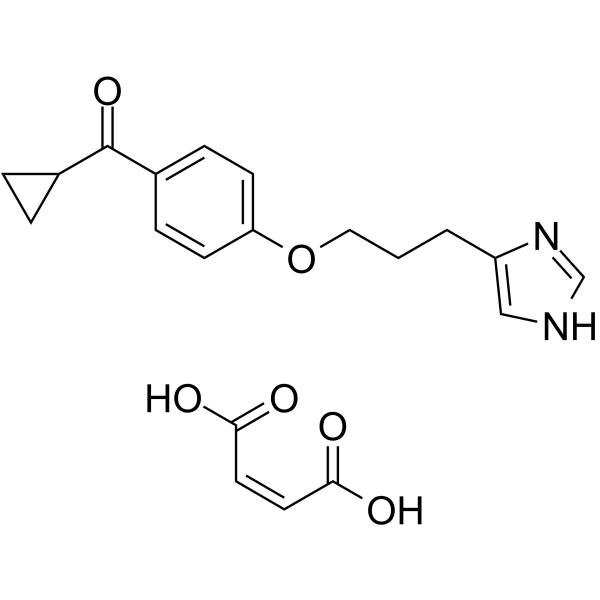
Ciproxifan maleate (FUB 359 maleate) is a potent, selective, orally bioavailable and competitive antagonist of histamine H3-receptor, with an IC50 of 9.2 nM. Ciproxifan maleate displays low apparent affinity at other receptor subtypes. Ciproxifan maleate can be used for the research of aging disorders and Alzheimer's disease.

-
TAK-220
 0 Images
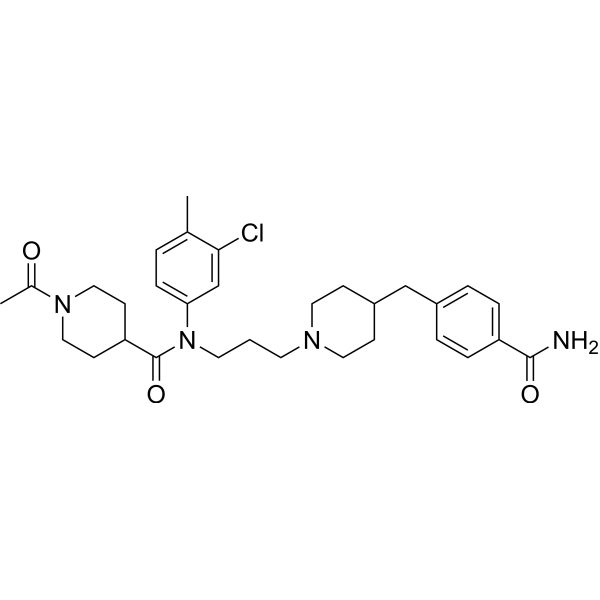
TAK-220 is a selective and orally bioavailable CCR5 antagonist, with IC50s of 3.5 nM and 1.4 nM for inhibition on the binding of RANTES and MIP-1α to CCR5, respectively, but shows no effect on the binding to CCR1, CCR2b, CCR3, CCR4, or CCR7; TAK-220 also selectively inhibits HIV-1, with EC50s of 1.2 nM (HIV-1 KK), 0.72 nM (HIV-1 CTV), 1.7 nM (HIV-1 HKW), 1.7 nM (HIV-1 HNK), 0.93 nM (HIV-1 HTN), and 0.55 nM (HIV-1 HHA), and EC90s of 12 nM (HIV-1 KK), 5 nM (HIV-1 CTV), 12 nM (HIV-1 HKW), 28 nM (HIV-1 HNK), 15 nM (HIV-1 HTN), and 4 nM (HIV-1 HHA) in PBMCs.
-
Stressin I TFA
 0 ImagesCat. No.: HY-P1368APurity: 98.63%Synonyms: Cyclo(31-34)[DPhe12,Nle21,38,Glu31,Lys34]Ac-hCRF(4-41) TFA
Stressin I (Cyclo(31-34)[DPhe12,Nle21,38,Glu31,Lys34]Ac-hCRF(4-41)) TFA is a potent CRF1 receptor selective agonist, Ki is 1.7 nM. Stressin I induces an increase in adrenocorticotropic hormone (ACTH) levels in rats.
![[Sar9,Met(O2)11]-Substance P](https://file.medchemexpress.com/product_pic/hy-p1012.gif "Click to View [Sar9,Met(O2)11]-Substance P Product Detail")