



AMPK
AMP-activated protein kinase (AMPK) functions as a conserved cellular energy sensor that maintains metabolic homeostasis by coordinating ATP-producing catabolic pathways with ATP-consuming anabolic processes during energetic stress[1][2]. AMPK exists as a heterotrimeric complex composed of catalytic α, regulatory β, and γ subunits, generating multiple isoform combinations with distinct biochemical properties, tissue distribution patterns, and signaling outputs[2][3]. Mechanistically, AMPK is activated by increases in cellular AMP:ATP or ADP:ATP ratios and subsequently regulates glucose metabolism, fatty acid oxidation, mitochondrial function, and stress adaptation pathways[1][4]. In disease contexts, dysregulated AMPK signaling has been linked to diabetes, obesity, inflammation, cardiovascular disorders, and cancer, making AMPK a central target in metabolic and translational research[4][5]. Compared with related catalytic isoforms, AMPKα1 generally exhibits higher basal activity and greater sensitivity to allosteric activation, whereas AMPKα2 responds more strongly to energy stress and is frequently associated with distinct regulatory functions in tissue remodeling and disease models[2][6]. Experimental studies further demonstrate that AMPKα2 promotes osteogenic differentiation more effectively than AMPKα1 and can rescue impaired osteogenesis in pathological skeletal models[6]. For experimental applications, both indirect activators that alter cellular energy status and direct activators that bind AMPK regulatory sites are widely used to investigate isoform-specific signaling, metabolic regulation, and therapeutic mechanisms[1][4].
References:
- [1]. Barquissau V, et al. White-to-brite conversion in human adipocytes promotes metabolic reprogramming towards fatty acid anabolic and catabolic pathways. Mol Metab. 2016 Mar 18;5(5):352-365. [Content Brief]
- [2]. Smiles WJ, et al. The metabolic sensor AMPK: Twelve enzymes in one. Mol Metab. 2024 Dec;90:102042. [Content Brief]
- [3]. Tarasiuk O, et al. AMPK and Diseases: State of the Art Regulation by AMPK-Targeting Molecules. Biology (Basel). 2022 Jul 11;11(7):1041. [Content Brief]
- [4]. Jeon SM. Regulation and function of AMPK in physiology and diseases. Exp Mol Med. 2016 Jul 15;48(7):e245. doi: 10.1038/emm.2016.81. PMID: 27416781; PMCID: PMC4973318. et al. Regulation and function of AMPK in physiology and diseases. Exp Mol Med. 2016 Jul 15;48(7):e245. [Content Brief]
- [5]. Behrens M, et al. Blends of Non-caloric Sweeteners Saccharin and Cyclamate Show Reduced Off-Taste due to TAS2R Bitter Receptor Inhibition. Cell Chem Biol. 2017 Oct 19;24(10):1199-1204.e2. [Content Brief]
- [6]. Wang YG, et al. Functional differences between AMPK α1 and α2 subunits in osteogenesis, osteoblast-associated induction of osteoclastogenesis, and adipogenesis. Sci Rep. 2016 Sep 7;6:32771. [Content Brief]
-
AMPK Related Products (354)
Related Products (354)

-
Antibodies (4)
-
Biotin-AMPKα1β1γ2 Recombinant Human Active Protein Kinase
 0 ImagesCat. No.: HY-E70794AMPK is an αβγ heterotrimeric serinethreonine kinase activated by decreasing concentrations of adenosine triphosphate (ATP) and increasing AMP concentrations. Biotin-AMPKα1β1γ2 Recombinant Human Active Protein Kinase is obtained by co-expressing AMPKα1, AMPKβ1, and AMPKγ2 proteins and is biotinylated.
-
AMARA peptide
 0 ImagesCat. No.: HY-P1576CAS No.: 163560-19-8AMARA peptide is a synthetic peptide substrate of sucrose non-fermenting-1-related protein kinase 1 (SnRK1). AMARA peptide contains residues required for SnRK1 phosphorylation, retains the minimal motif recognized by SnRK1, and when this substrate is recognized by cauliflower SnRK1 HRK-A, the hydrophobic residues at the relative positions P-5 and P+4 of the phosphorylated serine require a critical spacing. AMARA peptide can serve as a control substrate in peptide phosphorylation assays for the detection of SnRK1 activity in Arabidopsis thaliana, potato tuber tissues, and during SnRK1 purification.
-
AMPK activator 7
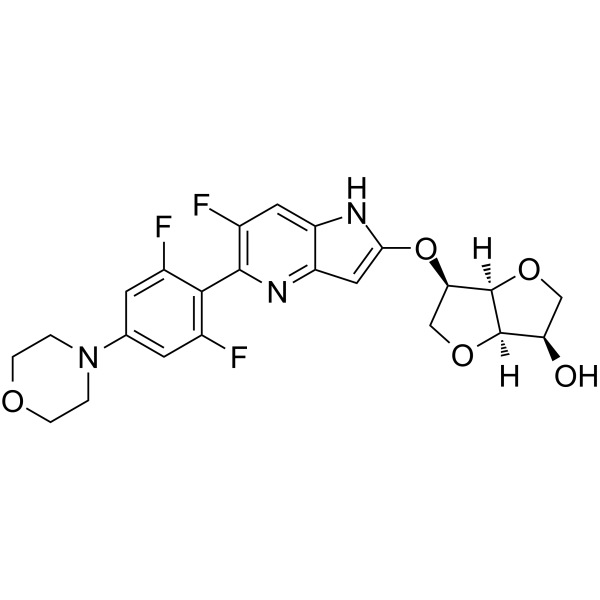 0 ImagesCat. No.: HY-147037CAS No.: 1623138-03-3AMPK activator 7 (compound I-3-24) is a an AMPK activator with the EC50 of 8.8 nM. AMPK activator 7 can be used for the research of diseases involving AMPK, particularly diseases such as type 2 diabetes, hyperglycemia, metabolic syndrome, obesity, hypercholesterolemia and/or hypertension.
-
D-Arabinose-13C-3
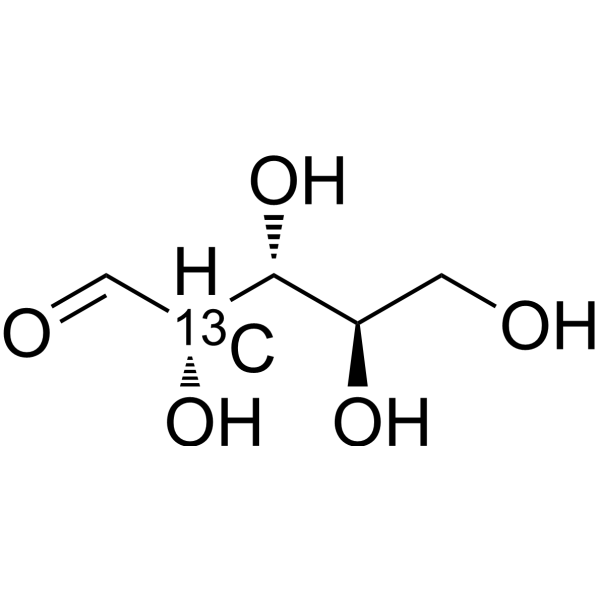 0 ImagesCat. No.: HY-N0059S3CAS No.: 101615-87-6D-Arabinose-13C-3 is the 13C-labeled D-Arabinose (HY-N0059). D-Arabinose is is an orally active antidepressant and a growth inhibitor of C. elegans (IC50 is 7.5 mM). D-Arabinose can penetrate the blood-brain barrier, selectively interfere with the metabolism of D-ribose and D-fructose, and inhibit the growth of nematodes. D-Arabinose can also inhibit the synthesis of cell biofilm and exert antibacterial activity. D-Arabinose activates the ACSS2-PPARγ/TFEB-CRTC1 axis through the lysosomal AXIN-LKB1-AMPK pathway, inducing CRTC1 transcription, exerts antidepressant-like activity. D-Arabinose is the ring-opened form of the aldopentose D-Arabinose (HY-N7082).
-
Alginate oligosaccharides
 0 ImagesCat. No.: HY-N20693Synonyms: AOSAlginate oligosaccharides (AOS) are orally effective linear oligosaccharides with anti-inflammatory, antioxidant and antimicrobial activities. Alginate oligosaccharides inhibit the activation of NLRP3 inflammasome and NF-κB, promote nuclear translocation of Nrf2 and phosphorylation of AMPK, and reduce the enhanced functional level of TRPV1. Alginate oligosaccharides improve oxidative stress, ROS production, mitochondrial bioenergetic dysfunction and gait impairment. Alginate oligosaccharides inhibit the release of neuropeptides; alter the structure and viscoelasticity of mucin matrix; disrupt bacterial and fungal biofilms; regulate gut microbiota; and exert anti-apoptotic effects.
-
AMPK activator 11
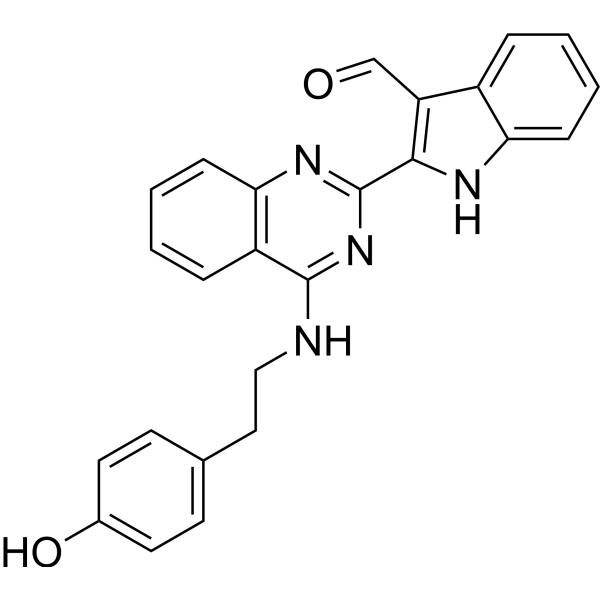 0 ImagesCat. No.: HY-154973CAS No.: 2948304-00-3AMPK activator 11 is an AMP-activated protein kinase (AMPK) activator with nanomolelevel antiproliferation activities against several CRCs. AMPK activator 11 selectively inhibits the RKO xenograft growth along by activating AMPK and upregulating oxidative phosphorylation (OXPHOS) ( mitochondrial metabolism ) and can be used for anti-tumor and metabolic disease research.
-
Ciliatoside A
 0 ImagesCat. No.: HY-N21694CAS No.: 303084-57-3Ciliatoside A is a naturally bioactive compound that exhibits significant anti-inflammatory, antiviral, and neuroprotective activities. Ciliatoside A serves as a mitophagy inducer and NLRP3 inflammasome inhibitor, activating AMPK, SIRT1, and the PINK1/Parkin axis, and inhibiting pyroptosis and apoptosis. Ciliatoside A promotes autophagic flux, autophagosome-lysosome fusion, mTOR inhibition, and p62-dependent HBc degradation; reduces Aβ aggregation, plaque deposition, microglial/astrocyte activation, and bacterial load; and maintains neuronal integrity, mitochondrial membrane potential, and ATP production. Ciliatoside A is used in research on Alzheimer's disease, Klebsiella pneumoniae-induced pneumonia, hepatitis B virus infection, and inflammation.
-
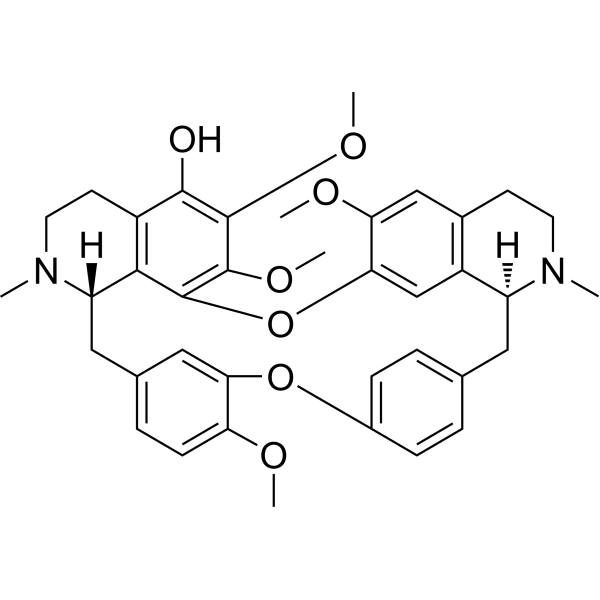
Lipid-lowering agent-2
 0 ImagesCat. No.: HY-162703Lipid-lowering agent-2 (Compound 14d) is an orally active lipid-lowering agent with an EC50 of 0.06 μM. Lipid-lowering agent-2 inhibits the lipid synthesis, activates the AMPK signaling pathway, and exhibits anti-obesity effect. Lipid-lowering agent-2 inhibits food intake, improves the glucose metabolism, and reduces the body weight and adipose tissue in high-fat diet (HFD)-induced obese mice.
-
AR493
 0 ImagesCat. No.: HY-174157CAS No.: 1290546-06-3AR493 is an autophagy activator acting on AMPK (adenosine monophosphate-activated protein kinase). AR493 regulates pathways related to cellular energy sensing and increases autophagy levels. AR493 is promising for research of aging-associated diseases (such as diabetes, neurodegenerative diseases) and autophagy regulation.
-
4-O-Methyl-ascochlorin
 0 ImagesCat. No.: HY-N15121CAS No.: 38561-40-94-O-Methyl-ascochlorin (Compound MAC) is a derivative of Ascochlorin (HY-101021). 4-O-Methyl-ascochlorin can selectively induce apoptosis of K562 leukemia cells, cause G1 phase arrest and downregulate c-Myc expression. 4-O-Methyl-ascochlorin can promote the phosphorylation of AMPK and inhibit the phosphorylation of mTOR and its target proteins, including p70S6 K and 4E-BP-1. 4-O-Methyl-ascochlorin can be used for research of leukemia.
-
D-Arabinose-d5
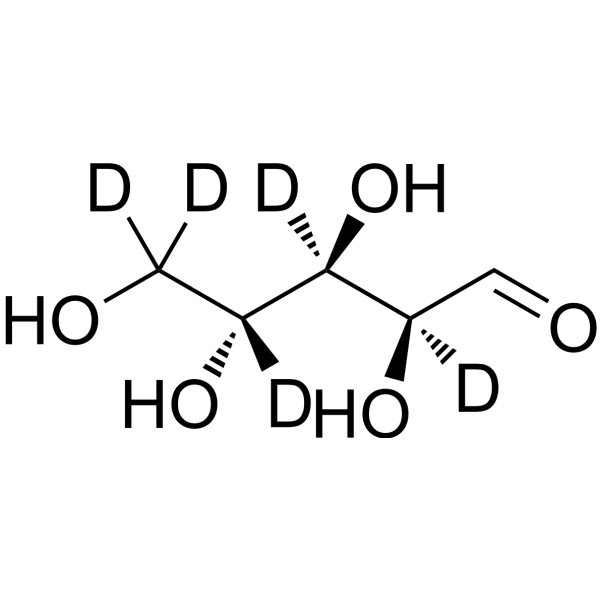 0 ImagesCat. No.: HY-N0059S5D-Arabinose-d5 is the deuterated-labeled D-Arabinose (HY-N0059). D-Arabinose is is an orally active antidepressant and a growth inhibitor of C. elegans (IC50 is 7.5 mM). D-Arabinose can penetrate the blood-brain barrier, selectively interfere with the metabolism of D-ribose and D-fructose, and inhibit the growth of nematodes. D-Arabinose can also inhibit the synthesis of cell biofilm and exert antibacterial activity. D-Arabinose activates the ACSS2-PPARγ/TFEB-CRTC1 axis through the lysosomal AXIN-LKB1-AMPK pathway, inducing CRTC1 transcription, exerts antidepressant-like activity. D-Arabinose is the ring-opened form of the aldopentose D-Arabinose (HY-N7082).
-
6-O-Cinnamoyl-D-glucopyranose
 0 ImagesCat. No.: HY-N18373CAS No.: 698393-97-46-O-Cinnamoyl-D-glucopyranose is a natural product. 6-O-Cinnamoyl-D-glucopyranose can be isolated from the roots of Scrophularia ningpoensis. 6-O-Cinnamoyl-D-glucopyranose has the potential to act as a AMPK agonist. 6-O-Cinnamoyl-D-glucopyranose can be used in studies related to metabolic syndrome.
-
Daphnetin (Standard)
 0 ImagesDaphnetin (Standard) is the analytical standard of Daphnetin. This product is intended for research and analytical applications. Daphnetin (7,8-dihydroxycoumarin), one coumarin derivative can be found in plants of the Genus Daphne, is a potent, oral active protein kinase inhibitor, with IC50s of 7.67 μM, 9.33 μM and 25.01 μM for EGFR, PKA and PKC in vitro, respectively. Daphnetin triggers ROS-induced cell apoptosis and induces cytoprotective autophagy by modulating the AMPK/Akt/mTOR pathway. Daphnetin has anti-inflammation activitity and inhibits TNF-α, IL-1 , ROS, and MDA production. Daphnetin has schizontocidal activity against malaria parasites. Daphnetin can be used for rheumatoid arthritis , cancer and anti-malarian research.
-
Luteolin 7-diglucuronide (Standard)
 0 ImagesCat. No.: HY-N7269RCAS No.: 96400-45-2Luteolin 7-diglucuronide (Standard) is the analytical standard of Luteolin 7-diglucuronide. This product is intended for research and analytical applications. Luteolin 7-diglucuronide is the major flavonoid isolated from Aloysia triphylla and Verbena officinalis.
-
Multi-kinase-IN-12
 0 ImagesCat. No.: HY-18692CAS No.: 597544-21-3Multi-kinase-IN-12 is a non-selective multi-target inhibitor, with IC50 values against human targets as follows: Flt3 < 0.001 μM, c-Src 0.002 μM, KDR 0.004 μM, Eph-A2, MNK-1 and Flt1 0.011 μM, Lck 0.016 μM, Rsk1 0.21 μM, and α2 subunit of AMPK 0.041 μM. Multi-kinase-IN-12 can be used in research related to solid tumors.
-
SIK-IN-2
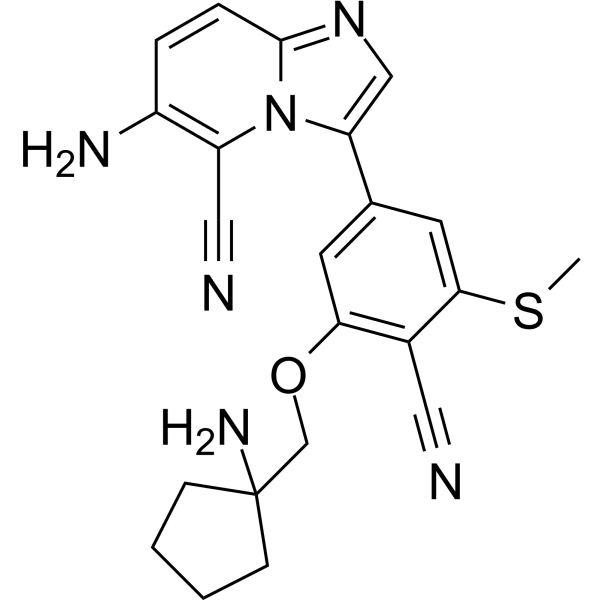 0 ImagesCat. No.: HY-161441CAS No.: 3033846-20-4SIK-IN-2 (Compound 45) is an inhibitor for salt-inducible kinase (SIK), which inhibits SKI1, SIK2 and SIK3 with IC50s of 0.1, 0.2 and 0.4 nM, respectively. SIK-IN-2 inhibits the release of TNFa with IC50 of 0.5 nM, stimulates the LPS (HY-D1056) -induced IL-10 release with EC50 of 2 nM in human macrophages.
-
Atractyloside potassium salt (Standard)
 0 ImagesCat. No.: HY-N1462RCAS No.: 102130-43-8Atractyloside (potassium salt) (Standard) is the analytical standard of Atractyloside (potassium salt). This product is intended for use in research and analytical applications. Atractyloside potassium salt is a powerful and specific inhibitor of mitochondrial ADP/ATP transport. Atractyloside potassium salt inhibits chloride channels from mitochondrial membranes of rat heart. Atractyloside potassium salt activates autophagy, inhibits ANT2, mTOR and promotes the activation of p-AMPK. Atractyloside potassium salt has anti-cancer effects on non-small cell lung cancer and can inhibit liver steatosis. Atractylodesin potassium salt has nephrotoxicity.
-
4-PivO-NMT chloride
 0 ImagesCat. No.: HY-168652CAS No.: 3019920-38-5




