



Akt Inhibitor
-
X-370
 0 ImagesCat. No.: HY-12482CAS No.: 1280725-80-5
X-370 is a PI3Kδ inhibitor (IC50 = 7 nM). X-370 inhibits the survival of leukemia cells, inducing G1 arrest and apoptosis. X-370 blocks PDK1 binding and phosphorylation of MEK1/2, eliminating Akt and Erk1/2 signaling. X-370 can be used in research on B-cell acute lymphoblastic leukemia (B-ALL).

-
ALK-IN-31
 0 ImagesCat. No.: HY-173493CAS No.: 3043840-25-8
ALK-IN-31 (Compound Ld-10) is an orally active ALK inhibitor (IC50: 1135 nM). ALK-IN-31 exhibits excellent antiproliferative activity against lung cancer H2228 cells with an IC50 value of 1.35 μM. ALK-IN-31 induces apoptosis and arrests cell proliferation in the G0/G1 phase by affecting mitochondrial function. ALK-IN-31 exerts its anti-tumor effect by downregulating the expression of p-AKT and p-mTOR in the PI3K-AKT-mTOR signaling pathway downstream of ALK. ALK-IN-31 can be used in the study of non-small cell lung cancer (NSCLC).
-
LIB3S0280
 0 ImagesCat. No.: HY-172620Purity: 99.89%
LIB3S0280 is a potent TBK1 inhibitor with an IC50 value of 493.9 nM. LIB3S0280 exhibits better anticancer effects in pancreatic cancer cell lines with high TBK1 expression. LIB3S0280 inhibits TBK1 downstream signaling pathways, including PI3K/AKT and NF-κB. LIB3S0280 induces G2/M arrest, apoptosis and cellular senescence. LIB3S0280 can be used for pancreatic ductal adenocarcinoma (PDAC) research.
-
FGFR-IN-25
 0 ImagesCat. No.: HY-181005
FGFR-IN-25 (Compound 19E) is a FGFR inhibitor (IC50s: 1.30 nM and 0.85 nM for FGFR1 and FGFR2, respectively) and radiosensitizer. FGFR-IN-25 effectively reduces the phosphorylation of FGFR1 and its key downstream effectors, pAKT and pERK. FGFR-IN-25 exerts broad-spectrum antitumor activity against gastric cancer, colorectal carcinoma, hepatocellular carcinoma, breast cancer, triple-negative breast cancer, and glioblastoma. FGFR-IN-25, when combined with radiotherapy, synergistically activates the ROS-Caspase-3-GSDME axis, downregulates PD-L1 expression, and induces immunogenic cell death (ICD). FGFR-IN-25 combined with radiotherapy improves the antitumor efficacy.
-
VEGFR-2-IN-77
 0 ImagesCat. No.: HY-179032CAS No.: 169205-26-9
VEGFR-2-IN-77 (Compound 10) is a VEGFR-2 inhibitor with an IC50 value of 139 nM. VEGFR-2-IN-77 inhibits the PI3K/AKT/mTOR pathway. VEGFR-2-IN-77 exhibits selective cytotoxicity, being particularly sensitive to leukemia and prostate cancer cells. VEGFR-2-IN-77 causes cell cycle arrest and apoptosis, inhibiting cell migration and invasion. VEGFR-2-IN-77 can be used for the study of leukemia and prostate cancer.
-
RLX hydrochloride
 0 ImagesCat. No.: HY-116604ACAS No.: 21314-60-3Synonyms: PD 139530 hydrochloride
RLX (PD 139530) hydrochloride is the hydrochloride of RLX (HY-116604). RLX is a PI3K/Akt/FoxO3a signaling inhibitor, possessing significant therapeutic potential in experimental colon cancer. RLX can effectively modulate the tumor microenvironment, enhancing the efficacy of cancer immunotherapy. RLX demonstrates the ability to improve the retention time of therapeutic agents within the tumor microenvironment by utilizing advanced nanoparticle delivery systems. RLX can be integrated with various treatment modalities, such as chemotherapy and radiotherapy, to enhance overall tumor therapy effectiveness.
-
AKT-IN-9
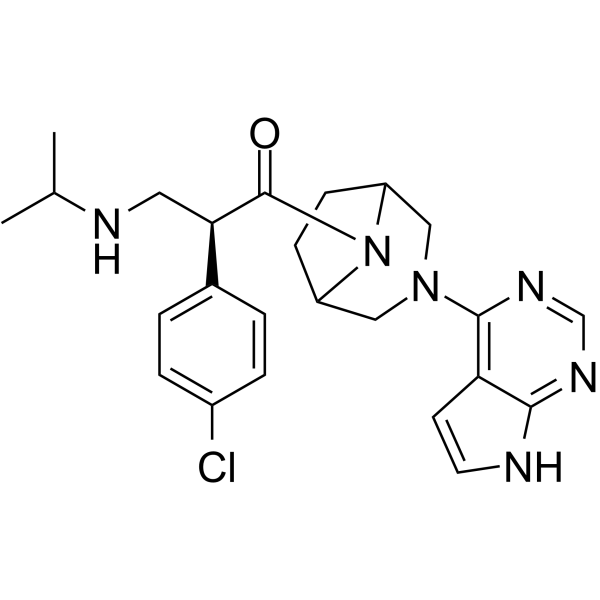 0 ImagesCat. No.: HY-144059CAS No.: 2709045-53-2
AKT-IN-9 is a potent inhibitor of AKT. Protein kinase B (PKB, also known as AKT) is central to PI3K/AKT/mTOR signaling in cells, and its function is important for cell growth, survival, differentiation and metabolism. AKT-IN-9 has the potential for the research of breast and prostate cancer (extracted from patent WO2021185238A1, compound 1).

-
Tubulin/AKT1-IN-1
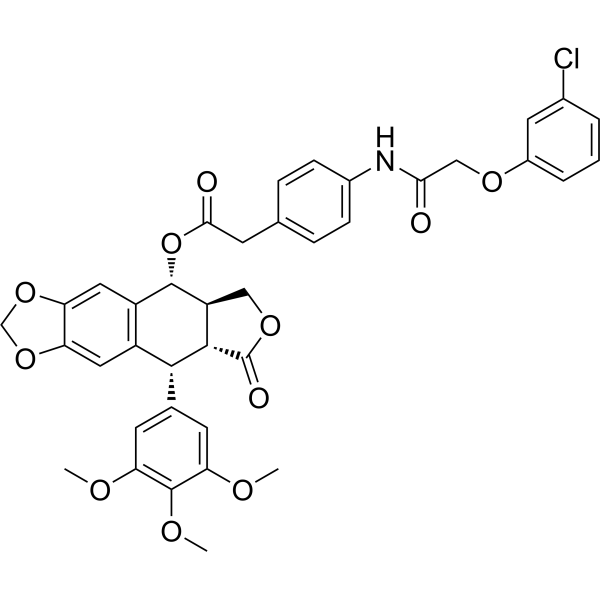 0 ImagesCat. No.: HY-154960CAS No.: 2988927-63-3
Tubulin/AKT1-IN-1 (Compound D1-1) is an inhibitor of tubulin polymerization and AKT pathway activation. Tubulin/AKT1-IN-1 significantly inhibits the proliferation and metastasis of H1975 cells and slightly induced their apoptosis and can be used for non-small-cell lung cancer (NSCLC) research .
-
DHW-208
 0 ImagesCat. No.: HY-128633CAS No.: 2269470-35-9
PI3K-IN-4 is a potent Pan-PI3K inhibitor. PI3K-IN-4 has high activity for three PI3K isoforms with the IC50 values of picomole. PI3K-IN-4 shows superior inhibitory activity against PI3Kα (IC50 = 0.20 nM), PI3Kβ (IC50 = 2.99 nM), PI3Kδ (IC50 = 0.48 nM) and PI3Kγ (IC50 = 0.58 nM) and has no significant activity against EGFR. PI3K-IN-4 inhibits cancer cell growth though PI3K/Akt signaling pathway, leading to the inhibition of colony formation and the induction of apoptosis. PI3K-IN-4 can be used for lung, colon and breast cancer research.
-
SH543
 0 ImagesCat. No.: HY-180112
SH543 is a potent anti-osteoporosis agent. SH543 inhibits nuclear factor κB ligand (RANKL)-induced osteoclastogenesis with an IC50 of 3.3 nM. SH543 directly binds to KEAP1, activates the Nrf2-HO-1 antioxidant pathway, reduces ROS levels, and inhibits PI3K-AKT and MAPK signaling pathways. SH543 attenuates pathological bone loss in ovariectomized mice. SH543 can be used for osteoporosis research.
-
Tubulin-IN-55
 0 ImagesCat. No.: HY-175874CAS No.: 353258-94-3
Tubulin-IN-55 is a tubulin inhibitor. Tubulin-IN-55 disrupts the PI3K/Akt signaling pathway in cancer cells. Tubulin-IN-55 exerts broad-spectrum anti-proliferative activity against multiple tumor cells (HeLa, HCT116, 4T1, A549, H1299, MDA-MB231). Tubulin-IN-55 induces G2/M phase arrest and apoptosis, and inhibits tumor cell migration/invasion in cancer cells. Tubulin-IN-55 demonstrates potent antitumor efficacy in orthotopic autologous transplantation mice. Tubulin-IN-55 can be used for the study of cancer.
-
AKT-IN-12
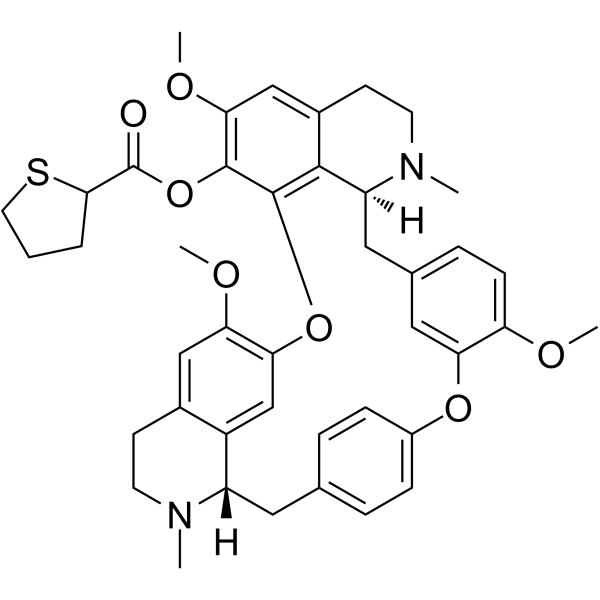 0 ImagesCat. No.: HY-147513CAS No.: 2396718-52-6
-
BJ-2302
 0 ImagesCat. No.: HY-182614CAS No.: 1631056-29-5
BJ-2302 is a Src kinase inhibitor with an IC50 of 3.23 μM, and inhibits cathepsin S (CTSS) activity.BJ-2302 binds to Src, suppresses PI3K/AKT and Ras/Raf/ERK pathways, and reduces CTSS and MMP-9 expression.BJ-2302 inhibits cancer cell invasion, metastasis, proliferation, and tumor growth.BJ-2302 does not induce cytotoxicity in normal breast epithelial cells.BJ-2302 can be used for the research of breast cancer and triple-negative breast cancer.
-
Kaempferol 3-O-(2G-glucosylrutinoside)-7-O-glucoside
 0 ImagesCat. No.: HY-N18025CAS No.: 131559-50-7
Kaempferol 3-O-(2G-glucosylrutinoside)-7-O-glucoside is an anti-inflammatory agent. Kaempferol 3-O-(2G-glucosylrutinoside)-7-O-glucoside exerts significant anti-inflammatory effects in LPS (HY-D1056)-induced RAW 264.7 macrophages by inhibiting the NF-κB, MAPK and Akt signaling pathways, thereby reducing the production of inflammatory mediators (NO, PGE2) and pro-inflammatory cytokines (TNF-α, IL-1β, IL-6).
-
AKT-IN-20
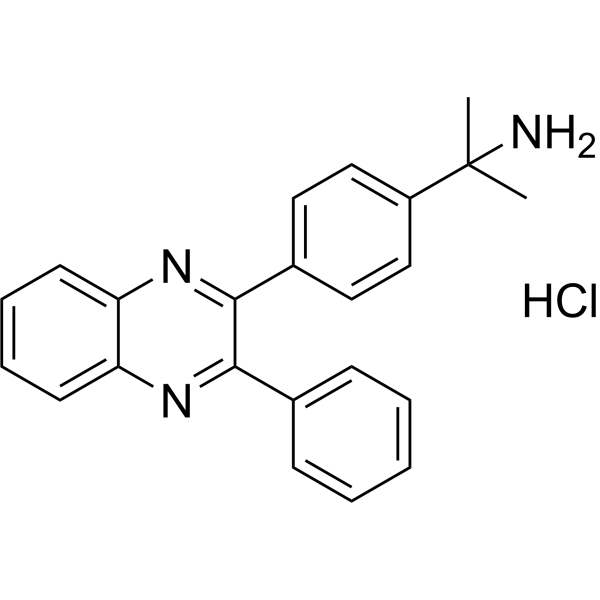 0 ImagesCat. No.: HY-16034CAS No.: 473382-50-2
-
Melafolone
 0 ImagesCat. No.: HY-165394CAS No.: 129724-42-1
Melafolone is a potent dual COX-2/EGFR inhibitor with IC50s of 13.2 μM (COX-2) and 17.4 μM (EGFR). Melafolone enhances the effect of anti-PD-1 through vascular normalization and PD-L1 downregulation via the PI3K/Akt pathway in Lewis lung carcinoma (LLC) and CMT167 models. Melafolone can be used for lung cancer research.
-
EGFR-IN-176
 0 ImagesCat. No.: HY-178057CAS No.: 2754394-10-8
EGFR-IN-176 is an orally active and ATP-competitive EGFR mutant inhibitor (particularly C797S-mediated EGFR triple mutant). EGFR-IN-176 effectively inhibits subsequent AKT signaling and induces apoptosis in Ba/F3 and PC-9 cells expressing EGFR19del/T790M/C797S and EGFRL858R/T790M/C797S. EGFR-IN-176 selectively inhibits EGFR signaling in cell lines harboring EGFR triple mutation and shows no inhibitory effect against A431 cells that express wild-type EGFR. EGFR-IN-176 can effectively inhibit the enzymatic activity of ALK (IC50 < 0.5 nM). EGFR-IN-176 can be used for the study of non-small cell lung cancer (NSCLC).
-
CYB-5067
 0 ImagesCat. No.: HY-184598
CYB-5067 is a FGFR molecular glue degrader with a DC50 of 27 nM against FGFR2. CYB-5067 inhibits FGFR1, FGFR3, FGFR4 and downstream FGFR signaling pathways, induces antiproliferative activity in vitro, and exhibits sustained target protein inhibition in vivo without obvious hook effect. CYB-5067 shows significant tumor growth inhibitory activity in the ETV6-FGFR2 fusion Ba/F3 xenograft model. CYB-5067 can be used for the research of FGFR-driven cancers.



