



Apoptosis
Apoptosis
Apoptosis is a distinctive form of cell death exhibiting specific morphological and biochemical characteristics, including cell membrane blebbing, chromatin condensation, genomic DNA fragmentation, and exposure of specific phagocytosis signaling molecules on the cell surface. Cells undergoing apoptosis differ from those dying through necrosis. Necrotic cells are usually recognized by the immune system as a danger signal and, thus, resulting in inflammation; in contrast, apoptotic death is quiet and orderly.
There are two major pathways of apoptotic cell death induction: The intrinsic pathway, also called the Bcl-2-regulated or mitochondrial pathway, is activated by various developmental cues or cytotoxic insults, such as viral infection, DNA damage and growth-factor deprivation, and is strictly controlled by the BCL-2 family of proteins. The extrinsic or death-receptor pathway is triggered by ligation of death receptors (members of the tumor necrosis factor (TNF) receptor family, such as Fas or TNF receptor-1 (TNFR1)) that contain an intracellular death domain, which can recruit and activate caspase-8 through the adaptor protein Fas-associated death domain (FADD; also known as MORT1) at the cell surface. This recruitment causes subsequent activation of downstream (effector) caspases, such as caspase-3, -6 or -7, without any involvement of the BCL-2 family.
Studies suggest that alterations in cell survival contribute to the pathogenesis of a number of human diseases, including cancer, viral infections, autoimmune diseases, neurodegenerative disorders, and AIDS (acquired immunodeficiency syndrome). Treatments designed to specifically alter the apoptotic threshold may have the potential to change the natural progression of some of these diseases.
All Product Categories
-
Apoptosis Inhibitors
(904)
View all products
-
Apoptosis Agonists
(7)
View all products
-
Apoptosis Antagonists
(9)
View all products
-
Apoptosis Activators
(363)
View all products
-
Apoptosis Modulators
(60)
View all products
-
Apoptosis Inducers
(7944)
View all products
-
Apoptosis Degrader
(1)
View all products
-
Apoptosis Controls
(33)
View all products
-
Apoptosis Related Products (9888)
Related Products (9888)

-
Antibodies (120)
-
3-Fluoro-evodiamine glucose
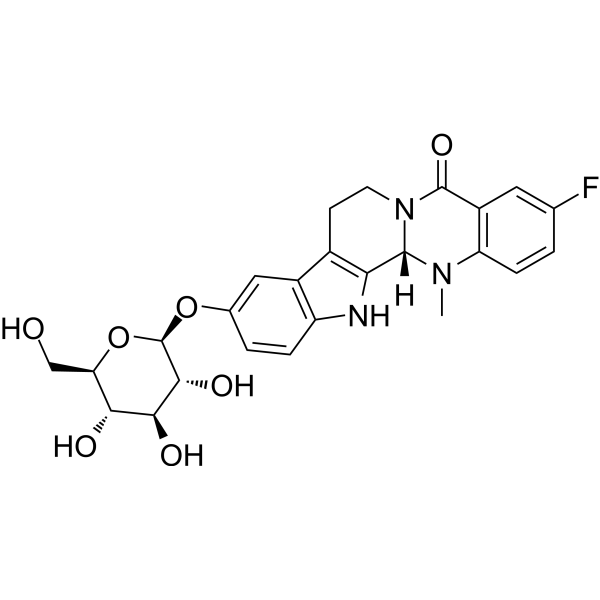 0 ImagesCat. No.: HY-161501Purity: 99.95%3-Fluoro-evodiamine glucose (Compound 8) is an evodiamine-glucose conjugate. 3-Fluoro-evodiamine glucose activates the expression of glucose transporter 1 (GLUT1), and inhibits topoisomerase I/II. 3-Fluoro-evodiamine glucose induces apoptosis and arrests the cell cycle at G2/M phase. 3-Fluoro-evodiamine glucose exhibits antitumor efficacy in vivo and in vitro, without significant toxicity.
-
Silydianin (Standard)
 0 ImagesCat. No.: HY-N0646RCAS No.: 29782-68-1Silydianin (Standard) is the analytical standard of Silydianin (HY-N0646). This product is intended for research and analytical applications. Silydianin is a flavonolignan. Silydianin can be obtained from Silybum marianum. Silydianin inhibits PTP1B with an IC50 of 17.38 μM. Silydianin inhibits both monophenolase and diphenolase of tyrosinase significantly, with IC50s of 2.6 μM and 16.5 μM, respectively. Silydianin induces Apoptosis and reduces cytokines (IL-4 and IL-5). Silymarin has antioxidant, cytoprotective and immunomodulatory effects. Silydianin has antitumor activity against prostate cancer. Silymarin can be used in allergic asthma research.
-
(E)-Ethyl p-methoxycinnamate (Standard)
 0 Images(E)-Ethyl p-methoxycinnamate (Standard) is the analytical standard of (E)-Ethyl p-methoxycinnamate. This product is intended for research and analytical applications. (E)-Ethyl p-methoxycinnamate is a natural product found in Kaempferia galangal with anti-inflammatory, anti-neoplastic and anti-microbial effects. (E)-Ethyl p-methoxycinnamate inhibits COX-1 and COX-2 in vitro with IC50s of 1.12 and 0.83 μM, respectively.
-
KRAS G12D-IN-37
 0 ImagesCat. No.: HY-183355KRAS G12D-IN-37 is a KRASG12D inhibitor. KRAS G12D-IN-37 shows antiproliferative activity against KRASG12D mutant tumor cells and minimal cytotoxicity toward normal cells. KRAS G12D-IN-37 binds stably to KRASG12D via hydrogen bond interactions with residues His 95, Arg 68, and Asp 12, and inhibits downstream ERK/AKT signaling pathways. KRAS G12D-IN-37 elevates ROS levels, induces apoptosis, disrupts mitochondrial membrane potential. KRAS G12D-IN-37 downregulates the level of anti-apoptotic protein Bcl-2, and upregulates the levels of pro-apoptotic proteins Bax and caspase 3. KRAS G12D-IN-37 can be used for the research of cancer, such as gastric adenocarcinoma and colorectal cancer.

-
Dendrobine-N-oxide
 0 ImagesCat. No.: HY-N21794CAS No.: 40072-57-9Dendrobine-N-oxide is a dendrobine-type sesquiterpene alkaloid. It is isolated from Dendrobium nobile. Dendrobine-N-oxide inhibits neuroinflammation, reduces β-Amyloid accumulation, enhances the expression of neurotrophic factors, suppresses the hyperphosphorylation of Tau protein, and exerts anti-neuronal Apoptosis effects. Dendrobine-N-oxide shows no anticancer activity against colon cancer and pancreatic adenocarcinoma. It is used in research on neurodegenerative diseases.
-
TAT-327
 0 ImagesCat. No.: HY-P10995TAT-327 is cell-penetrating peptide. TAT-327 selectively inserts into cancer cell membranes and shows potent antitumor activity. TAT-327 effectively inhibits cancer cells proliferation, induces apoptosis and disrupts EGFR signal pathway by inhibiting downstream signals (such as IL-2, TNF-α and IFN-γ) expression and the Eps8/EGFR interaction. TAT-327 significantly inhibits tumor growth in HT-29 xenograft mcie models.
-
HBF-0079
 0 ImagesCat. No.: HY-18203CAS No.: 315702-93-3
-
KMUP-1
 0 ImagesCat. No.: HY-129670CAS No.: 81996-46-5KMUP-1 is a xanthine derivative with vasodilator activity. KMUP-1 is a inhibitor of phosphodiesterase (PDE) and activator of soluble guanylyl cyclase (sGC). KMUP-1 stimulates NO/sGC/cyclic GMP pathway. KMUP-1 has K+ channels opening activity. KMUP-1 ameliorates ischemia-induced cardiomyocyte apoptosis. KMUP-1 can be used for cardiovascular and anti-inflammatory study.
-
Aurora kinase/ALK-IN-1
 0 ImagesCat. No.: HY-183767Aurora kinase/ALK-IN-1 is a dual Aurora A kinase and ALK inhibitor with IC50 values of 0.296 μM and 0.332 μM, respectively. Aurora kinase/ALK-IN-1 induces G2/M cell cycle arrest, triggers mitochondrial apoptosis, elevates intracellular reactive oxygen species (ROS) levels, and inhibits ALDH1 activity. Aurora kinase/ALK-IN-1 demonstrates cytotoxicity and tumor selectivity. Aurora kinase/ALK-IN-1 can be used for the research of anaplastic large cell lymphoma.
-
PROTAC AURKA degrader-4
 0 ImagesCat. No.: HY-187470CAS No.: 3135155-78-8PROTAC AURKA degrader-4 is a AURKA PROTAC degrader with a DC50 of 25.62 nM (Jurkat cells). PROTAC AURKA degrader-4 recruits the CRBN E3 ubiquitin ligase via the ubiquitin-proteasome system. PROTAC AURKA degrader-4 disrupts both the catalytic and non-catalytic functions of AURKA, including its interactions with TPX2 and c-Myc. PROTAC AURKA degrader-4 induces G2/M phase arrest and apoptosis. PROTAC AURKA degrader-4 exhibits enhanced antiproliferative activity and in vivo antitumor efficacy in models with high CRBN and AURKA expression. PROTAC AURKA degrader-4 can be used for the research of acute lymphoblastic leukemia.
-
5-OH-HxMF
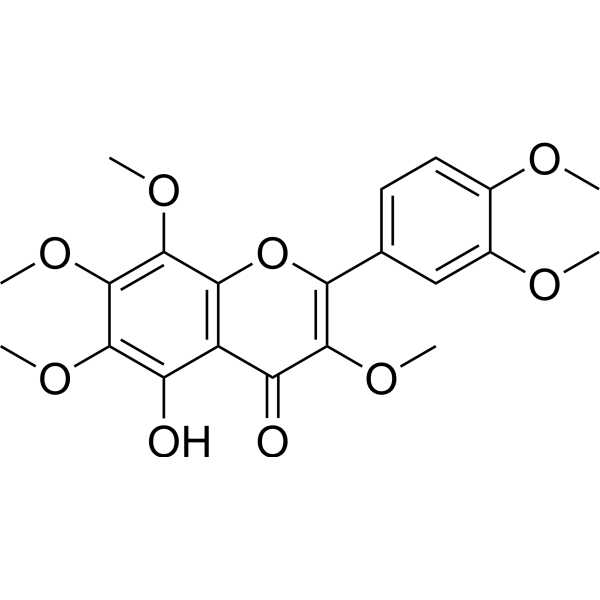 0 Images5-OH-HxMF is a hydroxylated polymethoxyflavone that has anti-inflammatory, anticancer, neurotrophic and neuroprotective activities.
-
Thalidomide-azetidine-pyrrolidine-C-piperidine-C-boc
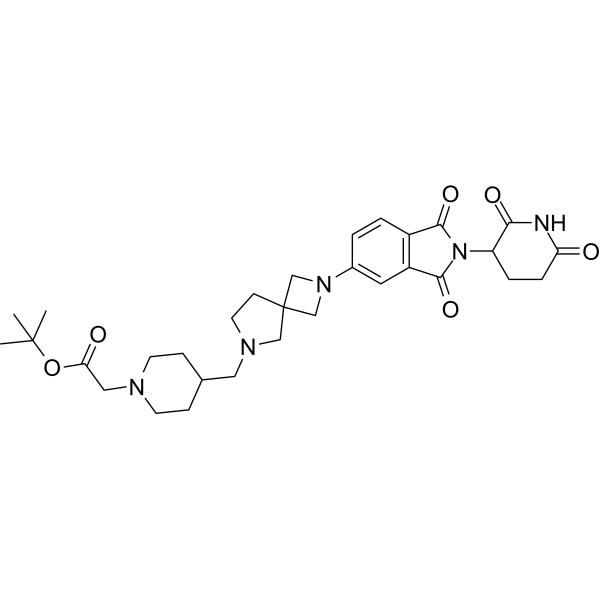 0 ImagesCat. No.: HY-161198Thalidomide-azetidine-pyrrolidine-C-piperidine-C-boc is a conjugate of E3 ligase ligand and linker, consisting of Thalidomide (HY-14658) and the corresponding Linker. Thalidomide-azetidine-pyrrolidine-C-piperidine-C-boc can serve as a Cereblon ligand to recruit CRBN protein and serve as a key intermediate for the synthesis of complete PROTAC molecules.
-
erythro-Austrobailignan-6
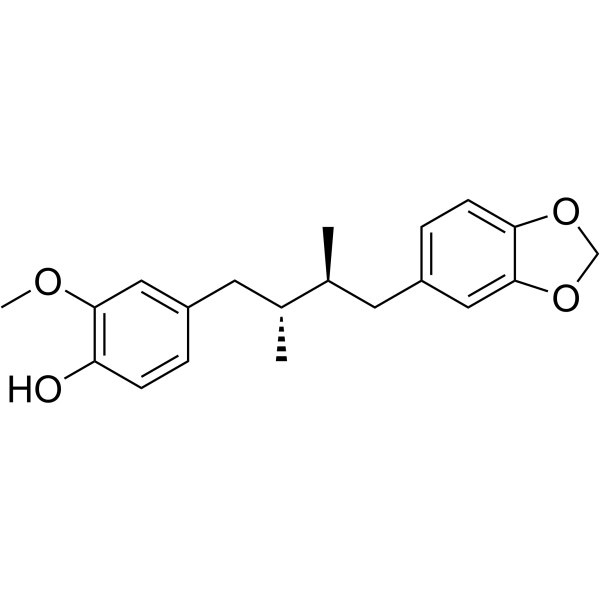 0 ImagesCat. No.: HY-N11536CAS No.: 114127-24-1erythro-Austrobailignan-6 is an orally active anti-cancer agent. erythro-Austrobailignan-6 inhibits DNA topoisomerase I and II activity. erythro-Austrobailignan-6 induces cell apoptosis and increases phosphorylation of p38 and JNK.
-
Tubulin/MMP-IN-3
 0 ImagesCat. No.: HY-172088Tubulin/MMP-IN-3 (Compound 15j) is the dual inhibitor for tubulin polymerization and MMP, and inhibits MMP-2 and MMP-9 with IC50 of 21.13 μM and 19.24 μM. Tubulin/MMP-IN-3 inhibits NF-κB signaling pathway, causes mitochondrial dysfunction and the apoptosis through a mitochondrial-dependent pathway. Tubulin/MMP-IN-3 exhibits antiproliferative activity in a variety of cancer cells, arrests the cell cycle at G2/M phase, and exhibits antitumor efficacy in mouse models.
-
Antitumor agent-110
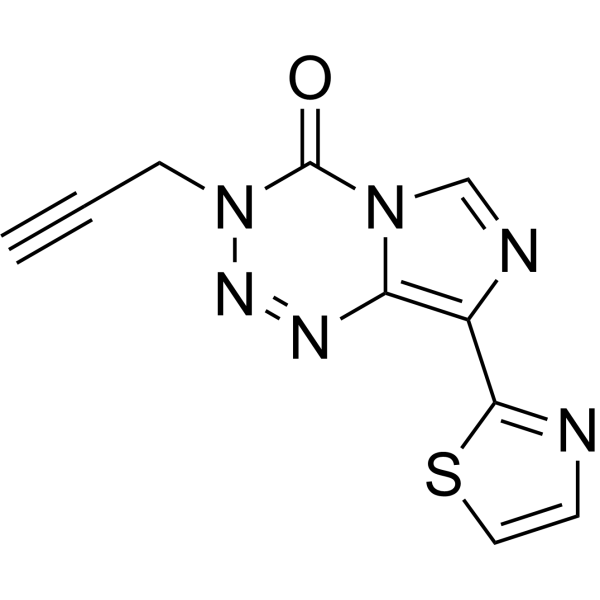 0 ImagesCat. No.: HY-155541CAS No.: 2563879-93-4Antitumor agent-110 (compound 13) is an anticancer imidazotetrazine with good permeability properties. Antitumor agent-110 arrests cell cycel at G2/M phase, and induces apoptosis. Antitumor agent-110 is a click chemistry reagent, it contains an Alkyne group and can undergo copper-catalyzed azide-alkyne cycloaddition (CuAAc) with molecules containing Azide groups.
-
FAK-IN-24
 0 ImagesCat. No.: HY-168899CAS No.: 3062175-62-3FAK-IN-24 (Compound 9f) is a FAK inhibitor (IC50: 0.815 nM). FAK-IN-24 induces DNA damage and apoptosis. FAK-IN-24 has anti-glioblastoma activity. FAK-IN-24 inhibits proliferation of glioblastoma cell lines U87-MG (IC50 = 15 nM) and U251 (IC50 = 20 nM). FAK-IN-24 inhibits tumor growth in U87-MG xenograft model.
-
Antitumor agent-214
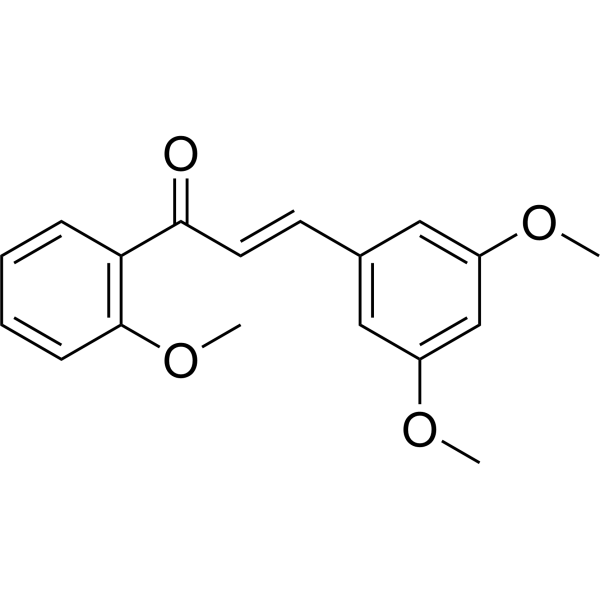
 0 ImagesCat. No.: HY-181720CAS No.: 1911631-77-0Antitumor agent-214 is a chalcone analogue with anti-tumor activity. Antitumor agent-214 induces cell cycle arrest and apoptosis in tumor cells, disrupts mitochondrial metabolism, and upregulates the expression of caspase 3, caspase 7 and caspase 9, downregulates PARP1. Antitumor agent-214 can be used for anti-tumor research related to colorectal cancer, breast cancer, lung cancer, and cervical cancer.
-
Ferroptosis inducer-16
 0 ImagesCat. No.: HY-182052CAS No.: 3063042-21-4Synonyms: anti-NSCLC agent-2Ferroptosis inducer-16 (anti-NSCLC agent-2) is a nitric oxide (NO) donor and a ferroptosis inducer. Ferroptosis inducer-16 inhibits DNA synthesis and colony formation. Ferroptosis inducer-16 disrupts lysosomal integrity by releasing NO, triggers iron overload and oxidative stress, downregulates the SLC7A11-GPX4 axis, depletes GSH, and accumulates lipid peroxides. Ferroptosis inducer-16 inhibits tumor growth in an OVCAR8/ADR xenograft mouse model without obvious toxicity, and can be used in the study of non-small cell lung cancer and drug-resistant ovarian cancer.




