



Bacterial
Anything that destroys bacteria or suppresses their growth or their ability to reproduce. Heat, chemicals such as chlorine, and antibiotic drugs all have antibacterial properties. Many antibacterial products for cleaning and handwashing are sold today. Such products do not reduce the risk for symptoms of viral infectious diseases in otherwise healthy persons. This does not preclude the potential contribution of antibacterial products to reducing symptoms of bacterial diseases in the home.
All Product Categories
-
Bacterial Inhibitors
(7553)
View all products
-
Bacterial Agonists
(3)
View all products
-
Bacterial Antagonists
(9)
View all products
-
Bacterial Activators
(25)
View all products
-
Bacterial Modulators
(27)
View all products
-
Bacterial Chemicals
(2)
View all products
-
Bacterial Inducers
(6)
View all products
-
Bacterial Controls
(14)
View all products
-
Bacterial Substrates
(2)
View all products
-
Bacterial Ligand
(1)
View all products
-
Bacterial Related Products (8893)
Related Products (8893)

-
Antibodies (14)
-
Related Compound Screening Libraries (1)
-
Cefpodoxime Proxetil (Standard)
 0 ImagesCat. No.: HY-N7101RCAS No.: 87239-81-4Synonyms: U-76,252 (Standard); CS-807 (Standard)Cefpodoxime Proxetil (Standard) is the analytical standard of Cefpodoxime Proxetil. This product is intended for research and analytical applications. Cefpodoxime Proxetil is an orally active broad spectrum third-generation cephalosporin with potent antibacterial activity against both Gram-positive and Gram-negative bacteria including staphylococci, streptococci, Haemophilus influenzae, Neisseria gonorrhoeae, Escherichia coli, Klebsiella pnuemoniae, Citrobacter spp, and Proteus spp. Cefpodoxime Proxetil binds to penicillin binding proteins (PBPs), which inhibits peptidoglycan synthesis, finally results in interfering bacterial cell wall biosynthesis. Cefpodoxime Proxetil can be used against skin structure infections, acute otitis media, pharyngitis, tonsillitis, upper respiratory tract infection, urinary tract infections and sexually transmitted diseases.
-
Ceftriaxone sodium hydrate (Standard)
 0 ImagesCat. No.: HY-B0712ARCAS No.: 104376-79-6Synonyms: Ro 13-9904 sodium hydrate (Standard)Ceftriaxone (sodium hydrate) (Standard) is the analytical standard of Ceftriaxone (sodium hydrate). This product is intended for research and analytical applications. Ceftriaxone sodium hydrate (Ro 13-9904 sodium hydrate) is a broad spectrum β-lactam third-generation cephalosporin antibiotic, which has good antibacterial activity against a variety of gram-negative and positive bacteria. Ceftriaxone sodium hydrate is a covalent inhibitor of GSK3β with IC50 value of 0.78 μM. Ceftriaxone sodium hydrate is an inhibitor of Aurora B. Ceftriaxone sodium hydrate has anti-inflammatory, antitumor and antioxidant activities. Ceftriaxone sodium hydrate can be used in the study of bacterial infections and meningitis.
-
Ascr#18 (Standard)
 0 ImagesCat. No.: HY-N8393RCAS No.: 1355681-10-5Ascr#18 (Standard) is the analytical standard of Ascr#18 (HY-N8393). This product is intended for research and analytical applications. Ascr#18, an ascaroside, is a hormone of nematodes. Ascr#18 is expressed during nematode development. Ascr#18 increases resistance in Arabidopsis, tomato, potato and barley to viral, bacterial, oomycete, fungal and nematode infections.
-
Carnegine hydrochloride
 0 ImagesCat. No.: HY-W676530CAS No.: 5852-92-6Carnegine hydrochloride is a fungicide with broad-spectrum antibacterial activity, as well as a stereoselective inhibitor of MAO-A/MAO-B. Carnegine hydrochloride has no antioxidant activity and does not affect cerebral PDE, but it antagonizes the chronotropic effects of adrenaline and noradrenaline at low concentrations and induces tolerance in *Drosophila melanogaster*. Carnegine hydrochloride stimulates respiration, exerts mild spasmolytic and hypotensive effects, inhibits cancer cell respiration, and exhibits central nervous system excitatory toxicity and negative chronotropic effects on the cardiovascular system.
-
Katanosin A
 0 ImagesCat. No.: HY-N15017CAS No.: 116103-86-7Katanosin A is a peptide antibiotic with anti-Gram-positive bacterial effect.
-
Urease-IN-16
 0 ImagesCat. No.: HY-161998CAS No.: 1203704-26-0Urease-IN-16 (compound 4e) is a urease inhibitor, with an IC50 value of 132 μmol/L. Urease-IN-16 can coordinate with the nickel atom through the oxygen atoms of carbonyl or boronic acid groups. Urease-IN-16 shows great potential as an additive in the development of efficient fertilizers and medical applications.
-
MBL-IN-5
 0 ImagesCat. No.: HY-173472CAS No.: 2876921-34-3MBL-IN-5 is a metallo-β-lactamase (MBL) inhibitor. MBL-IN-5 inhibits three clinically relevant B1 subfamily MBLs (NDM-1, VIM-1, and IMP-1) with IC50s of 0.05 nM, 14 nM and 21 nM respectively. MBL-IN-5 remarkably enhances carbapenems’ effectiveness against MBL-producing clinical strains and significantly reduces the bacterial load in a neutropenic murine thigh infection model combined with the IPM antibiotic.
-
Nitrosulfathiazole
 0 ImagesNitrosulfathiazole (Nisulfazole; p-Nitrosulfathiazole) is a sulfonamide antibacterial agent and also a key chemical intermediate for the hematotoxicity of Chloramphenicol (HY-B0239). Nitrosulfathiazole induces DNA helix instability, strand breakage and aplastic anemia. Nitrosulfathiazole can be used in research related to bacterial infections and aplastic anemia.
-
Tulathromycin A (Standard)
 0 ImagesSynonyms: Tulathromycin (Standard); CP 472295 (Standard)Tulathromycin A (Standard) is the analytical standard of Tulathromycin A. This product is intended for research and analytical applications. Tulathromycin A (Tulathromycin), a macrolide antibiotic, inhibits protein synthesis (IC50=0.26 μM) by targeting bacterial ribosome. Tulathromycin A is used for the research of respiratory disease in cattle and swine. Immunomodulatory effects.
-
D-Ornithine hydrochloride (Standard)
 0 ImagesCat. No.: HY-34516RCAS No.: 16682-12-5Synonyms: (R)-Ornithine hydrochloride (Standard)D-Ornithine (hydrochloride) (Standard) is the analytical standard of D-Ornithine (hydrochloride). This product is intended for research and analytical applications. D-Ornithine ((R)-Ornithine) hydrochloride is a constituent of bacterial cell wall. D-Ornithine hydrochloride promotes the production of L-arginine (HY-N0455). D-Ornithine hydrochloride enhances the expression of pyrrolysine-containing proteins.
-
δ-(E)-Deoxy-amplexichromanol
 0 ImagesCat. No.: HY-N13186CAS No.: 1639050-37-5δ-(E)-Deoxy-amplexichromanol is a δ-tocotrienolic acid derivative with potent antibacterial activities, which is derivated from hydromethanolic extract of the cones of C. atlantica.
-
Maximin 3
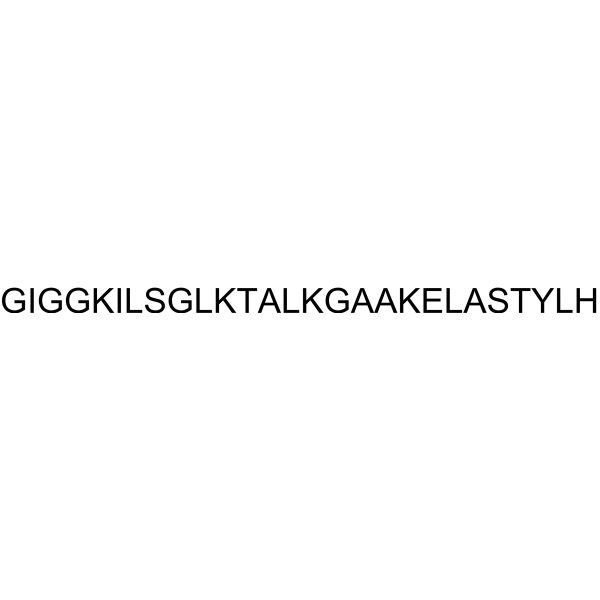 0 ImagesCat. No.: HY-P5606CAS No.: 634600-23-0Maximin 3 is an antimicrobial peptide derived from skin secretions of Bombina maxima. Maximin 3 has cytotoxicity on tumor cells and spermicidal effect. Maximin 3 has significant anti-HIV activity.
-
Licoflavanone
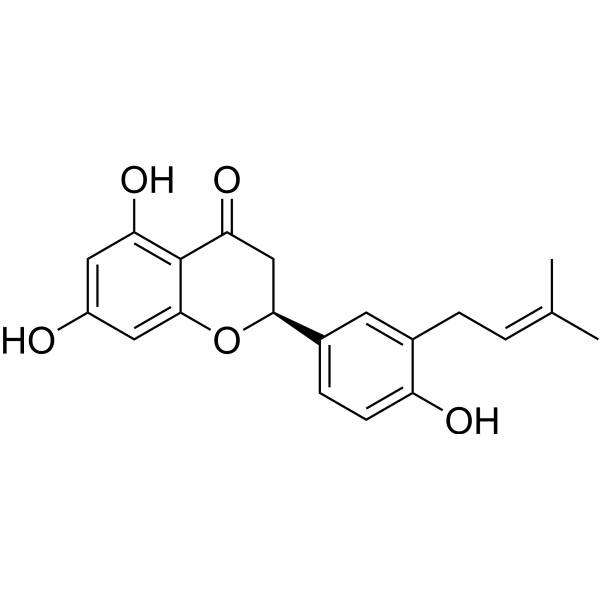 0 ImagesCat. No.: HY-N10133CAS No.: 119240-82-3Synonyms: 3′-PrenylnaringeninLicoflavanone (3′-Prenylnaringenin) is a flavanone with antioxidant, anti-inflammatory and anticancer activities. Licoflavanone can be isolated from the leaf extract of Glycyrrhiza glabra. Licoflavanone downregulates the mTOR/PI3K/AKT signaling pathway to inhibit the proliferation, migration and invasion of cancer cells, while activates Bax, Bad and multiple caspase enzymes to induce apoptosis. Its anti-inflammatory effect is manifested by reducing the nuclear translocation of NF-κB, decreasing the phosphorylation levels of p38, JNK and ERK1/2, thereby inhibiting the expression of nitric oxide, proinflammatory cytokines, COX-2 and iNOS. Licoflavanone is used in studies on nasopharyngeal carcinoma and related mechanisms.
-
Antimycobacterial agent-17
 0 ImagesCat. No.: HY-184336CAS No.: 3125811-49-3Antimycobacterial agent-17 is an anti-tuberculosis and Antibacterial agent. Antimycobacterial agent-17 inhibits the growth of both agent-susceptible and agent-resistant Mycobacterium tuberculosis strains. Antimycobacterial agent-17 can be used in the research of tuberculosis.
-
4-Nitrosodiphenylamine
 0 Images4-Nitrosodiphenylamine shows great antibacterial activity against Erwinia amylovora, with an EC50 value of 5.715 mg/L.
-
Ashimycin B
 0 ImagesCat. No.: HY-N14170CAS No.: 123482-12-2
-
GSK299423
 0 ImagesCat. No.: HY-101967CAS No.: 1352149-24-6GSK 299423 is an antibiotic agent.GSK299423 shows potent inhibition of supercoiling by DNA gyrase from S. aureus(IC50=14 nM)and Escherichia coli(IC50=100 nM.
-
Thiocillin
 0 ImagesThiocillin is a thiopeptide class of RiPPs and anti-bacterial agent. Thiocillin targets the bacterial 50S ribosome. Thiocillin exhibits potent antibacterial activity against a number of agent resistant pathogens.
-
HadAB/InhA=IN-1
 0 ImagesCat. No.: HY-187335HadAB/InhA=IN-1 is a dual inhibitor of Mycobacterium tuberculosis InhA and HadAB with an InhA IC50 of 0.81 μM. HadAB/InhA=IN-1 inhibits InhA enzymatic activity in the FAS-II pathway of mycolic acid biosynthesis. HadAB/InhA=IN-1 undergoes EthA-mediated activation to covalently bind HadA and inhibit HadAB dehydratase function in the same FAS-II pathway. HadAB/InhA=IN-1 reduces mycolic acid-containing lipid and mycolic acid production, and accumulates standard fatty acids in Mycobacterium tuberculosis. HadAB/InhA=IN-1 exhibits antimycobacterial activity against drug-susceptible, ethA-deficient, and multi-drug-resistant Mycobacterium tuberculosis isolates. HadAB/InhA=IN-1 shows cytotoxic effects against human cancer and immortalized normal lung fibroblast cells. HadAB/InhA=IN-1 can be used for the research of tuberculosis.
-
Epithienamycin D
 0 ImagesCat. No.: HY-N14209CAS No.: 65322-98-7Epithienamycin D is a carbapenem antibiotic. Epithienamycin D has anti-Gram-positive bacteria and anti-Gram-negative bacteria activity.




