



Bcl-2 Family Inhibitor
-
(Rac)-BDA-366
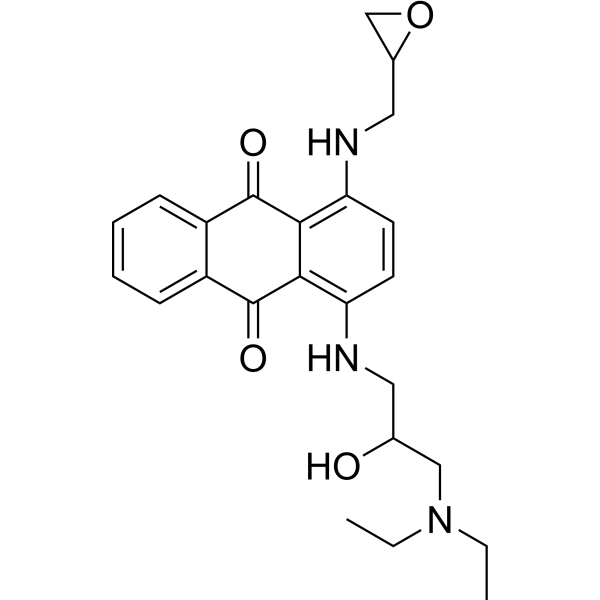 0 ImagesCat. No.: HY-101083ACAS No.: 142645-19-0
(Rac)-BDA-366 (example 2) is the despinner of BDA-366 (HY-101083). BDA-366 is a potent Bcl-2 antagonist (Ki=3.3 nM), binding Bcl-2-BH4 domain with high affinity and selectivity. BDA-366 induces conformational change in Bcl-2 that abrogates its antiapoptotic function, converting it from a survival molecule to a cell death inducer. BDA-366 suppresses growth of lung cancer cells.
-
BDE30671203
 0 ImagesCat. No.: HY-181030
BDE30671203 is a highly selective PLK1 inhibitor (IC50 = 2.163 nM). BDE30671203 induces G2/M phase arrest and Apoptosis. BDE30671203 downregulates key cell cycle regulators (CDC20, CDK1) and the anti-apoptotic gene Bcl-2. BDE30671203 exhibits anticancer activity against non-small cell lung cancer, large cell lung cancer, and liver cancer.
-
Amsacrine isethionate
 0 ImagesCat. No.: HY-13551CCAS No.: 80277-14-1Synonyms: m-AMSA isethionate; Acridinyl anisidide isethionate
Amsacrine isethionate (m-AMSA isethionate) is a Topoisomerase II inhibitor. Amsacrine isethionate intercalates into DNA. Amsacrine isethionate induces Ca2+-mediated inactivation of ERK, and also downregulates AKT, promoting MCL1 downregulation mediated by GSK3β via reducing the phosphorylation level of GSK3β. Amsacrine isethionate induces Apoptosis by activating Caspase-9 and Caspase-3. Amsacrine isethionate blocks HERG potassium channels in the open/inactivated state. Amsacrine isethionate induces chromosomal aberrations and sister chromatid exchanges, and inhibits the synthesis of RNA and DNA. Amsacrine isethionate exhibits anti-leukemic activity. Amsacrine isethionate causes cardiac repolarization disorders, QT interval prolongation, ventricular arrhythmias, and increases the risk of sudden cardiac death. Amsacrine isethionate can be used in research related to acute myeloid leukemia, lymphoma and progressive malignancies.

-
Lonafarnib (Standard)
 0 ImagesSynonyms: Sch66336 (Standard)
Lonafarnib (Standard) (Sch66336 (Standard)) is the analytical standard of Lonafarnib (HY-15136). This product is intended for research and analytical applications. Lonafarnib (Sch66336) is an orally active, blood-brain barrier penetrant farnesyltransferase (FPTase) inhibitor. Lonafarnib increases the phosphorylation levels of Akt, CaMKII and CREB, upregulates BDNF expression in the hippocampus, elevates the content of α7nAChR on cell membranes, and blocks the isoprenylation of H-Ras. Lonafarnib repairs synapses and reverses spatial memory deficits in Aβ1-42 model mice. Lonafarnib inhibits RSV fusion and replication, and alleviates virus-induced lung injury. Lonafarnib activates the lysosomal and autophagic pathways, and reduces the phosphorylation and aggregation of tau. Lonafarnib acts synergistically with Sorafenib (HY-10201) to promote apoptosis, and inhibits the proliferation and invasion of melanoma cells. Lonafarnib inhibits the farnesylation of progerin, repairs nuclear membrane defects, and activates the cGAS-STING-STAT1 signaling pathway. Lonafarnib can be used in research related to diseases including Alzheimer's disease, viral infections, melanoma, and progeria.
-
ML311 (Standard)
 0 ImagesCat. No.: HY-101778RCAS No.: 315698-17-0Synonyms: EU-5346 (Standard)
-
G4232
 0 ImagesCat. No.: HY-118874H
G4232 is an immune-silent BCL2 antisense oligonucleotide that binds to BCL2 mRNA to induce target degradation and inhibit Bcl-2 protein translation. G4232 carries 5'-methylcytosine in its two CpG motifs, which eliminates CpG-mediated immunostimulatory activity and does not cause significant splenomegaly or elevated plasma IL-12 levels in SCID mice. G4232 induces Apoptosis. G4232 inhibits tumor growth in a melanoma xenograft model. G4232 can be used in studies of melanoma and prostate cancer.
-
MK256
 0 ImagesCat. No.: HY-183423CAS No.: 2271348-04-8
MK256 is an orally active, selective CDK8 inhibitor and CDK19/cyclin C inhibitor with IC50 values of 2.5 nM and 3.3 nM, respectively. MK256 downregulates phosphorylated STAT1 (S727), STAT5 (S726), MCL-1 mRNA and CCL2 mRNA. MK256 exhibits anti-tumor activity in acute myeloid leukemia. MK256 can be used for the research of acute myeloid leukemia.
-
Obatoclax mesylate (Standard)
 0 ImagesCat. No.: HY-10969RCAS No.: 803712-79-0Synonyms: GX15-070 Mesylate (Standard)
Obatoclax mesylate (Standard) is the analytical standard of Obatoclax (Mesylate) (HY-10969). This product is intended for research and analytical applications. Obatoclax Mesylate (GX15-070 Mesylate), a BH3 mimetic, is a pan-BCL-2 family proteins inhibitor with a Ki of 220 nM for BCL-2. Obatoclax Mesylate induces autophagy-dependent cell death and targets cyclin D1 for proteasomal degradation. Obatoclax Mesylate has anti-cancer and broad-spectrum antiparasitic activity.
-
Bromuconazole
 0 ImagesCat. No.: HY-W715812CAS No.: 116255-48-2
Bromuconazole is a triazole fungicide with oral efficacy and blood-brain barrier permeability. Bromuconazole protects crops from various fungal contaminations. Bromuconazole exhibits cytotoxicity against a variety of cancer cells, induces G0/G1 cell cycle arrest and inhibits DNA synthesis in cancer cells, and triggers cytoskeletal structural disorder, genotoxic damage, apoptotic (apoptosis) cell death, and mitochondrial membrane depolarization. Bromuconazole activates caspase-3, induces excessive production of ROS, p53 and Bax, lipid peroxidation, increased activities of SOD and CAT, and downregulates Bcl-2. By upregulating p-ERK1/2 and p-JNK, Bromuconazole disrupts the MAPK signaling pathway, impairs the cellular stress response of human trophoblast cells and endometrial cells, and damages the implantation process. Bromuconazole is applicable to research related to glioma, colon cancer, reproductive injury (implantation dysfunction), and cardiac dysfunction.
-
ASO-5005
 0 ImagesCat. No.: HY-188137
ASO-5005 is a 20-mer Gapmer antisense oligonucleotide modified with locked nucleic acids (LNA), featuring a full phosphorothioate backbone, which targets BCL2 mRNA and BCL2L1 mRNA. ASO-5005 downregulates Bcl-2 expression via an RNase H-dependent mechanism, with its sequence fully complementary to BCL2 mRNA; it simultaneously downregulates Bcl-xL expression via an RNase H-dependent mechanism, with three mismatches between its sequence and BCL2L1 mRNA, while LNA modification enhances its activity against this mismatched target. ASO-5005 induces Apoptosis by activating Caspase-3 and cleaving ICAD. ASO-5005 does not significantly regulate the expression of Bcl-W, Survivin, Akt, or p53 in tumor cells. ASO-5005 can be used for research on breast cancer and non-small cell lung cancer.
-
Ch282-5
 0 ImagesCat. No.: HY-164468CAS No.: 65891-87-4
Ch282-5 is an orally active inhibitor targeting the Bcl-2 protein, inducing mitochondria-dependent apoptosis (Apoptosis) by disrupting mitophagy and the mTOR pathway. Ch282-5 exhibits antiproliferative activity against colorectal cancer cells both in vitro and in vivo, and it also inhibits metastasis. Additionally, Ch282-5 enhances Oxaliplatin (HY-17371)-induced autophagy (Autophagy) by downregulating the Mcl-1 protein and increasing platelet count, alleviating adverse effects of Navitoclax (HY-10087).
-
N-Hydroxyphthalimide (Standard)
 0 Images
N-Hydroxyphthalimide (Standard) is the analytical standard of N-Hydroxyphthalimide (HY-Y0396). This product is intended for research and analytical applications. N-Hydroxyphthalimide is a blocking agent and catalyst. N-Hydroxyphthalimide promotes oxidation reactions by generating PINO free radicals and activating hydrogen atom transfer processes. N-Hydroxyphthalimide reduces the expression of anti-apoptotic proteins Survivin and Bcl-xL and activates caspase 9 and caspase 3. N-Hydroxyphthalimide induces Apoptosis. N-Hydroxyphthalimide inhibits the phosphorylation of mTOR (Ser2448, Ser2481) and Akt (Ser473). N-Hydroxyphthalimide has anticancer effects against breast and colon cancer.
-
β-Carotene-15,15'-epoxide
 0 ImagesCat. No.: HY-N15378CAS No.: 132541-62-9
β-carotene-15,15ʹ-epoxide is a XIAP antagonist with apoptosis-inducing and antitumor activity, found in the leaves of Spondias mombin. In a DMBA (HY-W011845)-induced rat model of breast cancer, β-carotene-15,15ʹ-epoxide binds to the BIR3 domain of the anti-apoptotic protein XIAP, blocking its interaction with caspase-9 and thereby promoting tumor cell apoptosis. In addition, β-carotene-15,15ʹ-epoxide significantly downregulates the expression of BCL-2, COX-2, and TNF-α in tumor tissues, reduces MDA levels, increases catalase activity, and modulates serum levels of LDH, ALP, and ALT, demonstrating strong antioxidant, anti-inflammatory, and metabolic protective effects. β-carotene-15,15ʹ-epoxide may be used in research on inflammation-related conditions and cancers such as breast cancer.
-
Sorafenib tosylate (Standard)
 0 ImagesSynonyms: Bay 43-9006 tosylate (Standard)
Sorafenib (tosylate) (Standard) (Bay 43-9006 (tosylate) (Standard)) is the analytical standard of Sorafenib (tosylate) (HY-10201A). This product is intended for research and analytical applications. Sorafenib (Bay 43-9006) tosylate is a potent oral active multikinase inhibitor. Sorafenib blocks autophosphorylation and activity of receptor tyrosine kinases (VEGFR-2, VEGFR-3) and RAF family kinases, thereby suppressing the RAF/MEK/ERK and PI3K/Akt pathways, inhibiting STAT3 phosphorylation, and selectively inhibiting the MAPK pathway in cancer cells. Sorafenib tosylate induces cell cycle arrest, autophagy, apoptosis, and PARP cleavage, reduces Bcl-2, Bcl-XL, cyclin D1 levels, and activates Bak and Bax. Sorafenib tosylate inhibits tumor growth and metastasis in mouse and rat models. Sorafenib tosylate can be used for cancer research, such as colon, breast, non-small-cell lung cancer (NSCLC), ovarian, pancreatic, melanoma, colorectal and hepatocellular carcinoma.
-
Rhodomyrtosone D
 0 ImagesCat. No.: HY-N19904CAS No.: 1079988-19-4
Rhodomyrtosone D is a natural α-glucosidase and BCL-2 inhibitor. Rhodomyrtosone D exhibits an IC50 of 110.45 μg/mL against α-glucosidase derived from Saccharomyces cerevisiae. Rhodomyrtosone D interferes with carbohydrate digestion, interacts with specific BCL-2 amino acid residues, and reduces postprandial blood glucose levels. Rhodomyrtosone D can be used in the research of diabetes and breast cancer.
-
Amsacrine lactate
 0 ImagesCat. No.: HY-13551DCAS No.: 80277-11-8Synonyms: m-AMSA lactate; Acridinyl anisidide lactate
Amsacrine lactate (m-AMSA lactate) is a Topoisomerase II inhibitor. Amsacrine lactate intercalates into DNA. Amsacrine lactate induces Ca2+-mediated inactivation of ERK, and also downregulates AKT, promoting MCL1 downregulation mediated by GSK3β via reducing the phosphorylation level of GSK3β. Amsacrine lactate induces Apoptosis by activating Caspase-9 and Caspase-3. Amsacrine lactate blocks HERG potassium channels in the open/inactivated state. Amsacrine lactate induces chromosomal aberrations and sister chromatid exchanges, and inhibits the synthesis of RNA and DNA. Amsacrine lactate exhibits anti-leukemic activity. Amsacrine lactate causes cardiac repolarization disorders, QT interval prolongation, ventricular arrhythmias, and increases the risk of sudden cardiac death. Amsacrine lactate can be used in research related to acute myeloid leukemia, lymphoma and progressive malignancies.
-
AZD-5991 (Standard)
 0 ImagesCat. No.: HY-101533RCAS No.: 2143061-81-6
AZD-5991 (Standard) is the analytical standard of AZD-5991 (HY-101533). This product is intended for research and analytical applications. AZD-5991 is a potent and selective Mcl-1 inhibitor with an IC50 of 0.7 nM in FRET assay and a Kd of 0.17 nM in surface plasmon resonance (SPR) assay.
-
Acanthoic acid
 0 ImagesCat. No.: HY-116136CAS No.: 119290-87-8Synonyms: NP1302
Acanthoic acid (NP1302) is an orally active pimarane-type diterpenoid. Acanthoic acid is isolated from the root bark of Araliaceae family plant Eleutherococcus senticosus (Siberian ginseng). Acanthoic acid activates LXR and FXR. Acanthoic acid activates the AMPK-LKB1, SIRT1, and p38 MAPK signaling pathways and increases the phosphorylation level of ACC. Acanthoic acid downregulates the expression of SREBP-1, CYP2E1, HIF-1α, and PPARγ, and upregulates the expression of PPARα. Acanthoic acid induces Apoptosis by activating Caspase-3, promoting PARP cleavage, and downregulating Bcl-xL. Acanthoic acid exhibits antioxidant, anti-fibrotic, and hepatoprotective effects. It reduces lipid accumulation and lipogenesis. Acanthoic acid is used in studies on non-alcoholic fatty liver disease, alcoholic liver disease, acute promyelocytic leukemia, and Acetaminophen-induced hepatotoxicity.
-
Venetoclax-d6
 0 ImagesCat. No.: HY-15531S1Synonyms: ABT-199-d6; GDC-0199-d6; RG7601-d6



