



Caspase 3 Activator
-
Desethylamiodarone-d4 hydrochloride
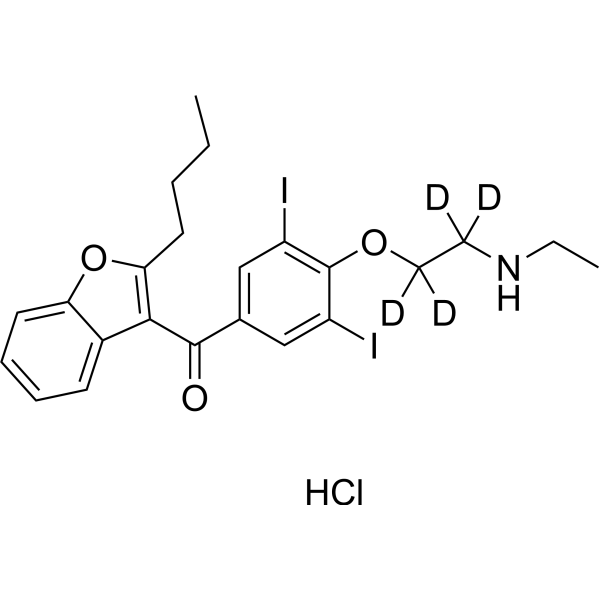 0 ImagesCat. No.: HY-130353SCAS No.: 1189960-80-2Synonyms: N-Desethylamiodarone-d4 hydrochloride; LB 33020-d4 hydrochloride
Desethylamiodarone-d4 hydrochloride (N-Desethylamiodarone-d4 hydrochloride; LB 33020-d4 hydrochloride) is the deuterated-labeled Desethylamiodarone hydrochloride (HY-130353). Desethylamiodarone hydrochloride (N-Desethylamiodarone hydrochloride; LB 33020 hydrochloride) is the major active metabolite of Amiodarone (HY-14187) generated via CYP3A4 metabolism. Desethylamiodarone hydrochloride downregulates p‑Akt, p‑Bad and Bcl‑2, upregulates Bax, promotes mitochondrial release of cytochrome c, activates caspase‑3 and cleaves PARP‑1, thereby inducing cell cycle arrest and apoptosis. Desethylamiodarone hydrochloride can be used in cervical cancer-related research.
-
8-Acetonyldihydronitidine
 0 ImagesCat. No.: HY-N21597CAS No.: 80330-39-8
8‑Acetonyldihydronitidine is a naturally occurring benzophenanthridine alkaloid with antibacterial, antifungal, and anti-proliferative activities against colorectal cancer cells. 8‑Acetonyldihydronitidine inhibits Staphylococcus aureus and exerts a potent antifungal effect against Cladosporium cladosporioides. 8‑Acetonyldihydronitidine activates the p53 signaling pathway, upregulates the expression of target genes including p21, BAX, and FAS, downregulates cyclin A and cyclin B, and induces cell cycle arrest and apoptosis, thereby suppressing the proliferation of colorectal cancer cells. 8‑Acetonyldihydronitidine is used in research related to colorectal cancer, fungal infections, and bacterial infections.
-
Anticancer agent 64
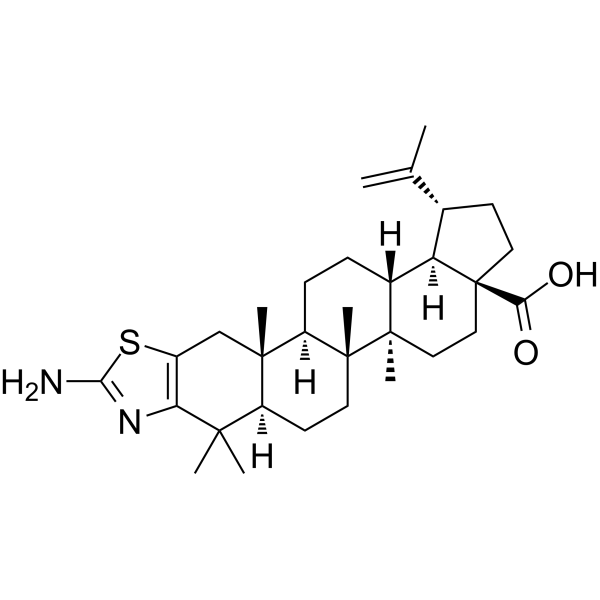 0 ImagesCat. No.: HY-147514CAS No.: 2387902-92-1
Anticancer agent 64 (compound 5m) shows cytotoxic activity in CCRF-CEM cells, with IC50 of 2.4 μM. Anticancer agent 64 shows good anticancer activity through apoptosis induction. Anticancer agent 64 induces caspase 3 and 7 activation and PARP cleavage. Anticancer agent 64 induces significant effect of mitochondria depolarization.
-
EGFR/VEGFR2-IN-9
 0 ImagesCat. No.: HY-178942CAS No.: 3123724-88-6
EGFR/VEGFR2-IN-9 (Compound 9b) is an inhibitor of VEGFR-2 (IC50 = 1.325 μM) and EGFR (IC50 = 1.891 μM). EGFR/VEGFR2-IN-9 significantly inhibits the proliferation of multiple cancer cell lines, particularly leukemia cells. EGFR/VEGFR2-IN-9 upregulates the expression levels of Bax, caspase-3, and p53, while downregulating the expression of Bcl-2. EGFR/VEGFR2-IN-9 induces apoptosis and arrests the cell cycle in the G1 phase. EGFR/VEGFR2-IN-9 can be used to investigate anti-tumor angiogenesis and multi-drug resistant cancers.
-
Candidone
 0 ImagesCat. No.: HY-180324CAS No.: 77727-18-5
Candidone is a type of flavanone phenolic compound with anti-cancer and antibacterial activities. Candidone inhibits the proliferation of hepatoblastoma and cholangiocarcinoma cells and induces their apoptosis by up-regulating p21, Bax, and caspase 3/9, and down-regulating Bcl-2 and survivin. It reduces the metastatic ability of cancer cells by inhibiting the expression of phosphorylated p38 and matrix metalloproteinase MMP-9. Candidone has inhibitory effects on multidrug-resistant bacterial strains. Candidone binds to the base pairs of DNA in a groove-binding manner, thereby slightly altering the conformation of DNA.
-
Caspase-3 activator 5
 0 ImagesCat. No.: HY-180849
Caspase-3 activator 5 (Compound 11) is a caspase-3 activator. Caspase-3 activator 5 reduces MRP1 levels and induces Apoptosis through Caspase-3 activation. Caspase-3 activator 5 exhibits anticancer activity against leukemia, cervical cancer, and breast cancer. Caspase-3 activator 5 shows no antibacterial or antifungal effects.
-
Pycnidione
 0 ImagesCat. No.: HY-N11418CAS No.: 149064-34-6
Pycnidione is a natural small-molecule compound isolated from fungi. Pycnidione inhibits stromelysin/MMP3, targets cyclin D1/E, induces G1 phase arrest, modulates survivin, affects caspase-8/3, targets PAI-1, inhibits topoisomerases, and induces HIF-1α accumulation/nuclear translocation and DNA binding/reporter gene transactivation and erythropoietin expression. Pycnidione induces apoptosis, reactive oxygen species (ROS) generation, and mitochondrial membrane potential collapse. Pycnidione can be used for research on lung cancer.
-
DH20931
 0 ImagesCat. No.: HY-183140CAS No.: 1629992-28-4
DH20931 is a ceramide synthase 2 (CerS2) activator. DH20931 inhibits growth of cancer cells by inducing lipotoxic endoplasmic reticulum (ER) stress. DH20931 shows synergistic anti-tumor efficacy with Doxorubicin (HY-15142A). DH20931 can be used for the research of breast cancer.
-
STK899704
 0 ImagesCat. No.: HY-120339CAS No.: 1578247-29-6
STK899704 is a tubulin polymerization inhibitor. STK899704 exhibits broad-spectrum inhibitory activity against various cancer cell lines with IC50 values ranging from 0.2 to 1.0 μM. STK899704 disrupts the mitotic spindle structure, inducing G2/M phase cell cycle arrest. STK899704 inhibits the migration ability of HT29 cells by downregulating the FAK-MEK-ERK signaling pathway, thereby suppressing the expression and activity of MMP-2 and MMP-9. STK899704 activates caspase-3/7/8/9, leading to PARP cleavage and inducing apoptosis. STK899704 induces cellular senescence through the p53 pathway. STK899704 can be used in research on skin cancer, lung cancer, colon cancer, and other cancers.
-
CK2-TN03
 0 Images
CK2-TN03 is an ATP-competitive casein kinase 2 (CK2) inhibitor, with an IC50 of 165 nM and a Ki of 20 nM. CK2-TN03 inhibits CK2-mediated survivin activation and reduces CK2-dependent phosphorylation levels of BRD4/MYCN and AKT1. CK2-TN03 exerts anti-neuroblastoma effects by inhibiting survivin, leading to mitotic catastrophe and apoptosis of cancer cells. CK2-TN03 can be used in studies related to neuroblastoma.
-
Pan-PDK degrader-1
 0 ImagesCat. No.: HY-184943
Pan-PDK degrader-1 is a pan-PDK class PROTAC degrader that degrades PDK2, PDK3 and PDK4 with DC50 values of 9.2 nM, 9.9 nM and 11.5 nM, respectively. Pan-PDK degrader-1 recruits the mitochondrial protease HsClpP and induces selective pan-PDK degradation via HsClpP-mediated proteolysis. Pan-PDK degrader-1 reprograms mitochondrial metabolism toward oxidative phosphorylation, promoting ROS accumulation, mitochondrial permeability transition pore opening, endogenous mitochondrial apoptosis, calreticulin exposure and HMGB1 release. Pan-PDK degrader-1 upregulates cleaved Caspase-9, Caspase-3 and PARP. Pan-PDK degrader-1 inhibits primary and distal tumor growth via selective degradation of PDK in tumor tissues. Pan-PDK degrader-1 can be used for the research of breast cancer.
-
Dynorphin A TFA
 0 ImagesCat. No.: HY-P1333A
Dynorphin A TFA is an endogenous opioid peptide involved in inhibitory neurotransmission in the central nervous system (CNS). Dynorphin A TFA is a highy potent kappa opioid receptor (KOR) agonist, and is also an agonist for other opioid receptors, such as mu (MOR) and delta (DOR). Dynorphin A TFA can induce neuronal death, and can be used in the research of neurological disease.
-
VEGFR/PD-L1-IN-1
 0 ImagesCat. No.: HY-183369CAS No.: 2675913-94-5
VEGFR/PD-L1-IN-1 is a VEGFR2 and PD-L1 inhibitor, with IC50 values of 0.383 μM and 134.407 pg/mL against VEGFR2 and PD-L1, respectively. VEGFR/PD-L1-IN-1 enhances the secretion of INF-γ, induces G0/G1 cell cycle arrest in cancer cells, and triggers cancer cell apoptosis. VEGFR/PD-L1-IN-1 upregulates the expression of BAX and Caspase-3, and downregulates the expression of Bcl-2. VEGFR/PD-L1-IN-1 can be used in research related to hepatocellular carcinoma, prostate cancer, and colorectal cancer.
-
Lb54
 0 ImagesCat. No.: HY-181168
Lb54 is a caspase-3 and caspase-7 activator with an EC50 of 660.9 nM for human procaspase-3. Lb54 activates caspase-3/7, which cleaves Gasdermin D (GSDMD) at aspartic acid residue 87 to generate a p10 fragment, preventing formation of the pore-forming p30 fragment of GSDMD. Lb54 suppresses GSDMD-mediated pyroptosis through caspase-3/7 activation, thereby attenuating inflammatory responses and conferring protection against sepsis. Lb54 alleviates acute lung injury, and inhibited systemic inflammation by restraining the maturation of monocyte-derived dendritic cells. Lb54 can be used for the research of sepsis.
-
EGFR/HER2-IN-17
 0 ImagesCat. No.: HY-172623
EGFR/HER2-IN-17 (Compound 7h) is a dual inhibitor of epidermal growth factor receptor (EGFR) and human epidermal growth factor receptor 2 (HER2). EGFR/HER2-IN-17 inhibits cancer cell proliferation. EGFR/HER2-IN-17 interacts with the binding pockets of EGFR and HER2, activating caspase-3 and caspase-8, and decreases the expression of Bcl-2, thereby inducing apoptosis. EGFR/HER2-IN-17 is promising for research of cancers.
-
IHMT-BMX-068
 0 ImagesCat. No.: HY-184005
IHMT-BMX-068 is a BMX PROTAC degrader with a DC50 of 0.007 μM. IHMT-BMX-068 promotes ubiquitination and degradation of BMX. IHMT-BMX-068 increases the levels of cleaved PARP and cleaved Caspase-3, and induces Apoptosis. IHMT-BMX-068 exerts anti-cancer effects against prostate cancer. IHMT-BMX-068 can be used for the research of prostate cancer.
-
Mcl-1-IN-23
 0 ImagesCat. No.: HY-184310CAS No.: 2756736-34-0
Mcl-1-IN-23 is a Mcl-1 inhibitor with a Ki value of 0.024 μM. Mcl-1-IN-23 binds directly to Mcl-1 and displaces the pro-apoptotic proteins Bak and Bim from Mcl-1 complexes. Mcl-1-IN-23 induces cell apoptosis, activates caspase-3, promotes PARP cleavage, and exerts antiproliferative activity against cancer cells. Mcl-1-IN-23 can be used for the research of leukemia.
-
Procaspase-3 activator 1
 0 ImagesCat. No.: HY-179699
Procaspase-3 activator 1 is a potent procaspase-3 activator. Procaspase-3 activator directly activates procaspase-3 through zinc chelation, thereby inducing apoptosis and inhibiting cancer cell proliferation. Procaspase-3 activator 1 can be used for the research of non-small cell lung cancer (NSCLC) and melanoma.

-
AR Degrader-3
 0 ImagesCat. No.: HY-178938CAS No.: 1182011-65-9
AR Degrader-3 is an orally active molecular glue that targets AR/ARV7 and induces the degradation of AR and ARV7 through the ubiquitin-proteasome pathway (UPP). AR Degrader-3 directly interacts with the ligand-binding domain (LBD) and the N-terminal domain (NTD) of AR. AR Degrader-3 effectively suppresses the transcriptional activity of wild-type AR (AR-WT), AR mutants, and ARV7. AR Degrader-3 downregulates the mRNA and protein levels of downstream AR target genes, thereby overcoming antiandrogen resistance mediated by ARV7 and AR point mutations. AR Degrader-3 induces apoptosis in Enzalutamide (HY-70002) (ENZa)-resistant cells and increases cleaved caspase-3 protein levels. AR Degrader-3 can be used for the study of castration-resistant prostate cancer (CRPC).



