



Caspase 3 Activator
-
MRTX849-amide-C4-(o)-carborane
 0 ImagesCat. No.: HY-182044
MRTX849-amide-C4-(o)-carborane is a KRASG12C inhibitor with mutation selectivity for cells expressing KRASG12C. MRTX849-amide-C4-(o)-carborane shows low intrinsic cytotoxicity in cancer cells. MRTX849-amide-C4-(o)-carborane covalently binds to Cys12 of KRASG12C, recruits Hsp70, promotes ubiquitination, and induces proteasome-dependent degradation of the target protein. MRTX849-amide-C4-(o)-carborane inhibits the activity of the downstream ERK signaling pathway and induces apoptosis signaling in cancer cells. MRTX849-amide-C4-(o)-carborane is applicable for the research of KRASG12C-positive cancers.
-
Ganoderic acid Mk
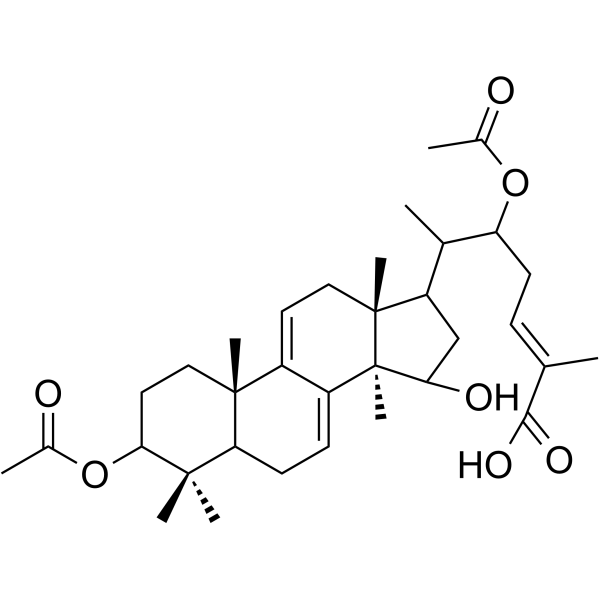 0 ImagesCat. No.: HY-N11643CAS No.: 110024-14-1Synonyms: GA-Mk
Ganoderic acid Mk (GA-Mk) is a triterpenoid acid, that can be isolated from the mycelia of Ganoderma lucidum. Ganoderic acid Mk is efficiently anti-proliferative and can induce apoptosis of HeLa cells by mitochondria-mediated pathway. Ganoderic acid Mk can be used for cervical cancer research.
-
FLC-8
 0 ImagesCat. No.: HY-182937CAS No.: 3100242-36-9
FLC-8 is an orally active FLT3 inhibitor with IC50 values of 10.2 nM, 11.6 nM and 24.10 nM against human FLT3-WT, FLT3-G697R and FLT3-N676D, respectively. FLC-8 inhibits FLT3 autophosphorylation and downstream STAT5, AKT and ERK signaling pathways, and induces apoptosis in acute myeloid leukemia (AML) cells. FLC-8 exhibits potent antitumor activity in the MV4-11 xenograft model. FLC-8 can be used for the research of acute myeloid leukemia.
-
MN33-47
 0 ImagesCat. No.: HY-182759
MN33-47 is a multi-target anti-tumor compound with broad-spectrum anti-proliferative activity. MN33-47 relieves the inhibition of the mitochondrial apoptosis pathway by downregulating the anti-apoptotic protein Bcl-2, while activating caspase-3 and inhibiting Topoisomerase I activity, thereby promoting its degradation through the ubiquitin-proteasome and autophagy-lysosome pathways. MN33-47 can also induce DNA cross-linking and G2/M cell cycle arrest, inhibit cancer cell migration and activate the mitochondrial apoptosis pathway, thus exerting potent anti-tumor effects. MN33-47 can improve the water solubility of SN-38 (HY-13704), and exhibits dose-dependent tumor growth inhibition effects in CT26 tumor-bearing mouse models without obvious toxic and side effects. MN33-47 can be used in related studies on colorectal adenocarcinoma, cervical adenocarcinoma, hepatocellular carcinoma, alveolar basal epithelial adenocarcinoma, gastric cancer and colon cancer.
-
PARP1-IN-58
 0 ImagesCat. No.: HY-187473
PARP1-IN-58 is a ROS-responsive prodrug constructed based on a natural stilbene scaffold, and its active parent nucleus 24c acts as a selective PARP-1 inhibitor. PARP1-IN-58 only hydrolyzes to release the active parent compound in the high-ROS microenvironment of tumors; the active parent compound competitively binds to PARP-1 and blocks DNA single-strand damage repair, upregulates intracellular ROS levels, reduces mitochondrial membrane potential, and thereby induces cell cycle arrest and mitochondria-dependent apoptosis. PARP1-IN-58 exerts potent proliferation-inhibiting effects on BRCA-deficient breast cancer cells under simulated tumor oxidative stress conditions, and exhibits tumor growth inhibitory activity in breast cancer xenograft models. PARP1-IN-58 can be used in cancer-related research.
-
Neosolaniol
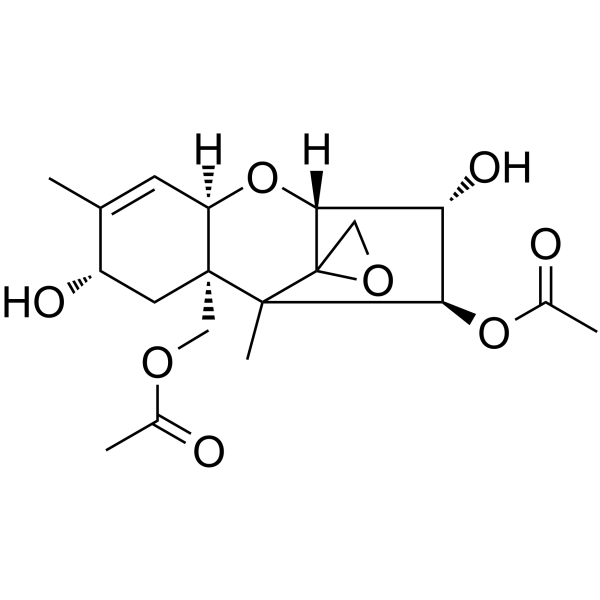 0 Images
Neosolaniol is an orally active type A trichothecene mycotoxin, and it is a metabolite of T-2 Toxin (HY-N6792) in human cancer cells and renal epithelial cells. Neosolaniol targets Bax, Bcl-2, caspase 3, caspase 8, and cytochrome c, thereby inducing apoptosis, emesis and anorexia. Neosolaniol reduces intracellular ATP levels, elevates ROS levels, decreases mitochondrial membrane potential, induces mitochondrial damage, and exerts toxicity on Leydig cells. Neosolaniol downregulates the expression of intestinal tight junction proteins in broilers and increases the load of Salmonella enteritidis in the cecum of broilers. Neosolaniol can be used in research related to anorexia, lymphoma, Fusarium melonis rot, and Salmonella infection.
-
Clausenidin
 0 ImagesCat. No.: HY-N16771CAS No.: 28384-44-3
Clausenidin is a selective inhibitor targeting apoptosis-related pathways, including the mitochondrial pathway and death receptor pathway, and vascular endothelial growth factor (VEGF). Clausenidin induces mitochondrial membrane depolarization by activating caspase-3, caspase-8 and caspase-9, upregulating the pro-apoptotic protein Bax and downregulating the anti-apoptotic protein Bcl-2. Clausenidin also inhibits VEGF expression and blocks angiogenesis, exerting anti-tumor activity. Clausenidin has inhibitory effects against Mycobacterium tuberculosis (MIC=200 μg/mL). Clausenidin can induce apoptosis in liver cancer cells, arrest the cell cycle in the G2/M phase, and inhibit tumor angiogenesis. Clausenidin can be used in the research of malignant tumors such as liver cancer.
-
2-Hexadecanol
 0 Images
2-Hexadecanol is a fatty acid based compound. 2-Hexadecanol can be isolated from marine organism Sea pen. 2-Hexadecanol induces Apoptosis, elevates the expression of caspase-3 and caspase-8. 2-Hexadecanol exhibits anticancer activity against breast cancer and cervical cancer.
-
Bfl-1-IN-7
 0 ImagesCat. No.: HY-180941
Bfl-1-IN-7 is an orally active and selective Bfl-1 inhibitor with an IC50 value of 0.015 μM. Bfl-1-IN-7 activates caspase 3/7, and when combined with the Mcl-1 inhibitor AZD5991 (HY-101533), it reduces the viability of lymphoma cells. Bfl-1-IN-7 can be used in lymphoma-related studies.
-
HDAC8-IN-14
 0 ImagesCat. No.: HY-178380
HDAC8-IN-14, a curcuminoid derivative, is a selective HDAC8 inhibitor with a Ki of 9 nM. HDAC8-IN-14 induces the production of reactive oxygen species (ROS), disrupts mitochondrial membrane potential, and promotes apoptosis. HDAC8-IN-14 can significantly promote the accumulation of cells in the sub-G0/G1 phase, consistent with apoptotic or necrotic cell death. HDAC8-IN-14 induces upregulation of cytochrome c, cleaved caspase-3, and the pro-apoptotic protein Bak while leaving the anti-apoptotic Bcl-2 levels unaltered. HDAC8-IN-14 can be used for the study of leukemia.
-
Dicatenarin
 0 Images
Dicatenarin is a caspase‑3 activator with growth‑inhibitory activity against human cancer cells. Dicatenarin increases caspase‑3 activity, induces intracellular ROS generation, and activates the mitochondrial‑mediated apoptotic pathway. Dicatenarin exerts growth‑inhibitory effects against a panel of human cancer cell lines. Dicatenarin can be used in research on pancreatic cancer, lung cancer, colon cancer, breast cancer, prostate cancer, and ovarian cancer.
-
YN14 (mixture of diastereomers)
 0 ImagesCat. No.: HY-155356ACAS No.: 3053689-54-3
YN14 mixture of diastereomers is a diastereomer mixture of YN14 (HY-155356). YN14 is a KRASG12C PROTAC degrader that recruits E3 ubiquitin ligase to induce the polyubiquitination and proteasomal degradation of KRASG12C. YN14 induces tumor cell apoptosis, cell cycle arrest, and cell migration inhibition. YN14 exhibits in vivo antitumor proliferative activity in tumor cell xenograft nude mice. YN14 can be used in cancer-related research.
-
VEGFR-2-IN-93
 0 ImagesCat. No.: HY-189396
VEGFR-2-IN-93 is a VEGFR-2 inhibitor with an IC50 of 1.79 μM. VEGFR-2-IN-93 exhibits cytotoxicity against multiple cancer cell lines and inhibits cancer cell migration. VEGFR-2-IN-93 induces G0/G1 phase arrest and apoptosis through upregulation of Bax, downregulation of Bcl-2, and activation of Caspase-3/Caspase-8. VEGFR-2-IN-93 demonstrates favorable biosafety. VEGFR-2-IN-93 can be used for research related to breast cancer, hepatocellular carcinoma, and colorectal cancer.
-
Isosilybin B (Standard)
 0 ImagesCat. No.: HY-N7045RCAS No.: 142796-22-3
Isosilybin B (Standard) is the analytical standard of Isosilybin B (HY-N7045). This product is intended for research and analytical applications. Isosilybin B is a flavonolignan. Isosilybin B can be isolated from Silybum marianum. Isosilybin B can regulate cell cycle-related proteins (e.g., reduce cyclins (D3, D1, A, E), Cdk4, Cdk2, Cdc25A), and activate Caspases (Caspase-9 and Caspase-3). Isosilybin B can promote Apoptosis, reduce androgen receptor (AR) and PSA. Isosilybin B has anticancer activity against prostate cancer.
-
VEGFR-2/AKT-IN-2
 0 ImagesCat. No.: HY-169431
VEGFR-2/AKT-IN-2 (Compound 5) is a VEGFR-2/AKT inhibitor (IC50: 0.061 μM for VEGFRin HepG2 cell). VEGFR-2/AKT-IN-2 reduces total and phosphorylated AKT as well as up-regulates BAX and Caspase-3 and down-regulates Bcl-2 in cells, thereby promoting Apoptosis. VEGFR-2/AKT-IN-2 causes cell cycle arrest in S phase. VEGFR-2/AKT-IN-2 inhibits the growth of human liver tumor cells.

-
FI-700
 0 ImagesCat. No.: HY-111268CAS No.: 866883-79-6
FI-700 is an orally active FLT3 inhibitor with an IC50 of 20 nM. FI-700 induces G1 phase cell cycle arrest by inhibiting autophosphorylation of mutant FLT3 and the downstream STAT5/MAPK pathway. FI-700 triggers the mitochondrial apoptosis pathway by downregulating anti-apoptotic proteins Mcl-1 and Bcl-XL, altering the conformation of Bax, and activating caspase-3. FI-700 can be used in research related to acute myeloid leukemia.
-
Prodelphinidin B3
 0 ImagesCat. No.: HY-W714933CAS No.: 78362-05-7Synonyms: (4,8)-(+)-Gallocatechin-(+)-catechin
Prodelphinidin B3 is a proanthocyanidin compound that exhibits significant anti-tumor activity. Prodelphinidin B3 induces cell cycle arrest at the G1/G0 phase in PC-3 cells, activates caspase-3, and promotes apoptosis. Prodelphinidin B3 can induce the differentiation of leukemia cells and synergistically enhance retinoic acid (HY-14649)-induced granulocytic differentiation and sodium butyrate (HY-B0350A)-induced monocytic differentiation in HL-60 cells. Prodelphinidin B3 also possesses antioxidant activity. Prodelphinidin B3 is used in research on prostate cancer and leukemia.
-
PHA-793887 hydrochloride
 0 ImagesCat. No.: HY-11001ACAS No.: 718630-60-5
PHA-793887 hydrochloride is a CDK inhibitor (with IC50 values of 8 nM for Cdk2, 60 nM for Cdk1, 62 nM for Cdk4, 138 nM for Cdk9). PHA-793887 hydrochloride inhibits purified GSK3β (IC50 79 nM). PHA-793887 hydrochloride reduces the phosphorylation level of nucleophosmin/cdc6, induces G1/G2/M phase arrest, and triggers Apoptosis by activating Caspase-3. PHA-793887 hydrochloride exhibits anticancer activity against leukemia. PHA-793887 hydrochloride can be used in research related to acute leukemia, chronic myeloid leukemia, and advanced/metastatic solid tumors.
-
Quinidine sulfate dihydrate
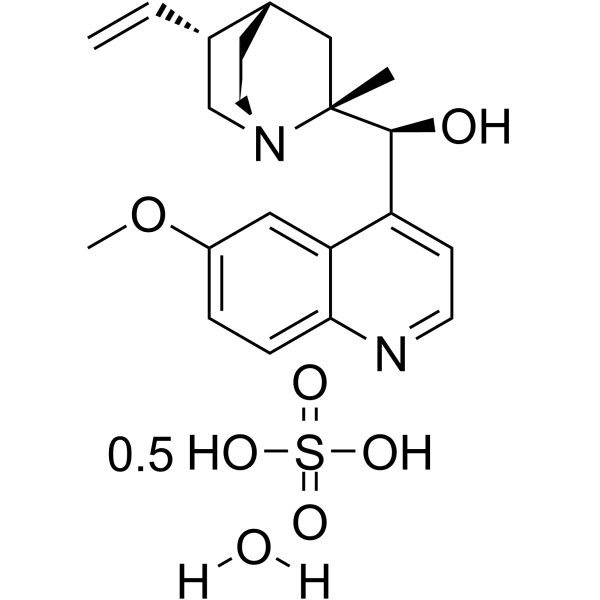 0 Images
Quinidine sulfate dihydrate is an orally active antiarrhythmic agent. Quinidine sulfate dihydrate reduces the expression level of P-gp, inhibits P-gp-mediated efflux, increases the intracellular accumulation of P-gp substrates, induces PARP cleavage and Caspase-3 activation, and elevates the proportion of Apoptotic cells at the sub-G1 phase. Quinidine sulfate dihydrate exerts sustained block and open-channel block effects on IK(f). Quinidine sulfate dihydrate alters the urinary metabolic ratio of Amphetamine, modulates the Pentylenetetrazol-induced seizure threshold, and regulates the anticonvulsant effect of Dextromethorphan. Quinidine sulfate dihydrate can be used in studies related to uterine sarcoma and seizures.



