



Eukaryotic Initiation Factor (eIF) Activator
- 1
- 2
-
Fosigotifator
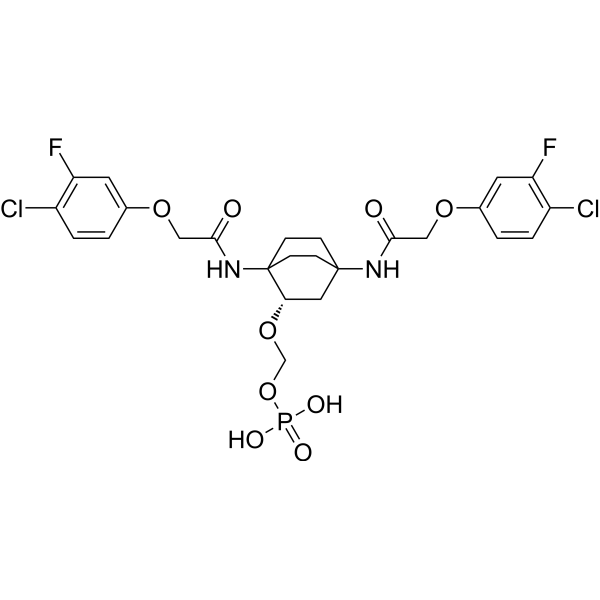 0 ImagesCat. No.: HY-153399CAS No.: 2415715-84-1Synonyms: ABBV-CLS-7262
Fosigotifator (ABBV-CLS-7262) is a brain penetrant, orally active EIF2b (eukaryotic initiation factor) activator. Fosigotifator stabilizes the elF2B complex and boosts the activity, including that of complexes carrying pathogenic vanishing white matter (VWM) mutations. Fosigotifator is an integrated stress response inhibitor (ISRI). Fosigotifator can be used for amyotrophic lateral sclerosis research.
-
ISR activator 2
 0 ImagesCat. No.: HY-179524CAS No.: 332874-88-1
ISR activator 2 is a selective ISR activator. ISR activator 2 can preferentially activate the ISR through the binding of the cytosolic pattern recognition receptor RIG-I, which subsequently activates the heme-regulated inhibitor (HRI) ISR kinase independent of an interferon response. ISR activator 2 can be used for the study of pancreatic cancer.
-
PTC-IN-1
 0 ImagesCat. No.: HY-186313CAS No.: 3079914-21-6
PTC-IN-1 is a human ribosomal peptidyl transferase center (PTC) inhibitor. PTC-IN-1 forms stable interactions with 28S rRNA and undergoes steric-hindrance electrostatic interactions with nascent polypeptide chains, thereby inducing context-dependent translation arrest. PTC-IN-1 activates the ribotoxic stress response through phosphorylation of p46 and p54 JNK, triggers ribosome collisions, and activates the integrated stress response via phosphorylation of eIF2α. PTC-IN-1 inhibits the proliferation of cancer cells. PTC-IN-1 can be used in the research of triple-negative breast cancer, prostate cancer, colorectal cancer.
-
1,3-Bis[3,5-bis(trifluoromethyl)phenyl]urea
![1,3-Bis[3,5-bis(trifluoromethyl)phenyl]urea](https://file.medchemexpress.com/product_pic/hy-w046841.gif "Click to View 1,3-Bis[3,5-bis(trifluoromethyl)phenyl]urea Product Detail") 0 ImagesCat. No.: HY-W046841CAS No.: 3824-74-6
0 ImagesCat. No.: HY-W046841CAS No.: 3824-74-6
-
4-Hydroxybenzophenone-d4
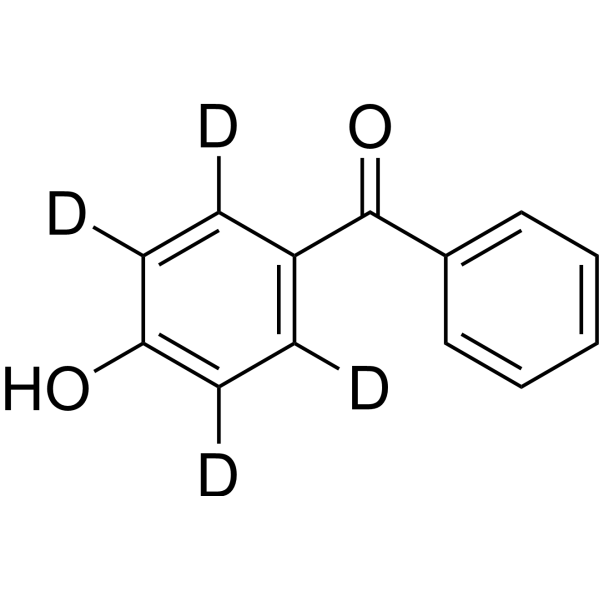 0 ImagesCat. No.: HY-W014937SCAS No.: 93496-64-1Synonyms: 4HBP-d4
4-Hydroxybenzophenone-d4 (4HBP-d4) is the deuterated-labeled 4-Hydroxybenzophenone (HY-W014937). 4‑Hydroxybenzophenone (4HBP) is a major metabolite of Benzophenone (HY-Y0546) and is orally active. 4-Hydroxybenzophenone triggers endoplasmic reticulum stress and activates the PERK-eIF2α-ATF4-CHOP and IRE1α-XBP1s pathways, and inhibits IκB translation. 4-Hydroxybenzophenone induces endoplasmic reticulum stress, unfolded protein response activation, protein homeostasis imbalance, protein aggregation, oxidative stress, ROS accumulation, mitochondrial membrane potential decrease, ATP depletion, and cytotoxicity. 4-Hydroxybenzophenone induces neural stem cell apoptosis (apoptosis) and affects neuronal differentiation. 4-Hydroxybenzophenone promotes malignant proliferation of hepatocellular carcinoma cells and xenograft tumor growth in nude mice. 4-Hydroxybenzophenone can be used in research related to neurodevelopmental toxicity and hepatocellular carcinoma.
-
ZNL-02-096
 0 ImagesCat. No.: HY-208742CAS No.: 2414418-56-5
ZNL-02-096 is a selective Wee1 PROTAC degrader. ZNL-02-096 binds to CRBN and Wee1 to form a ternary complex, inducing CRBN- and proteasome-dependent ubiquitination and proteasomal degradation of Wee1. ZNL-02-096 inhibits recombinant PLK1 with an IC50 of 102 nM, but does not induce its degradation in cells. ZNL-02-096 induces G2/M phase arrest, Apoptosis, transient integrated stress response, upregulation of ATF4, and phosphorylation of GCN2. ZNL-02-096 reduces Tyr15 phosphorylation of CDK1. ZNL-02-096 can be used in research related to ovarian cancer, acute lymphoblastic leukemia, triple-negative breast cancer, multiple myeloma, and pancreatic ductal adenocarcinoma.
-
eIF2B activator-1
 0 ImagesCat. No.: HY-181406CAS No.: 3118633-46-5
eIF2B activator-1 (Compound 7a) is a eIF2B activator with a pEC50 value of 7.3. eIF2B activator-1 exhibits significant hERG inhibitory activity, with a pIC50 value of 5.7. eIF2B activator-1 can be used in research related to Huntington's disease, Parkinson's disease, and amyotrophic lateral sclerosis (ALS).
-
ISR activator 3
 0 ImagesCat. No.: HY-179539CAS No.: 332950-12-6
ISR activator 3 (Compound cc81) is the active metabolite of A8. ISR activator 3 activates the integrated stress response (ISR) by binding to RIG-I (KD ≈ 0.55 μM), without inducing lipid droplet clearance. ISR activator 3 enhances the interferon response under viral mimicry signals. ISR activator 3 can be used for research on neurodegenerative diseases and immune stress.
-
CDC25A/NF-κB-IN-1
 0 ImagesCat. No.: HY-184446
CDC25A/NF-κB-IN-1 is an effective dual-target inhibitor of CDC25A and NF-κB, and is a prodrug of Pt(IV). CDC25A/NF-κB-IN-1 has anticancer activity and low cytotoxicity to normal cells. CDC25A/NF-κB-IN-1 can trigger a variety of anticancer mechanisms, including S phase cell cycle arrest, mitochondrial endogenous apoptosis, endoplasmic reticulum stress, autophagy-dependent ferroptosis. CDC25A/NF-κB-IN-1 has good safety and can be used for ovarian cancer research.
-
L-Azetidine-2-carboxylic acid (Standard)
 0 Images
L-Azetidine-2-carboxylic acid is a proline analog. L-Azetidine-2-carboxylic acid upregulates the lipid autophagy marker LC3-II via activation of the PERK pathway. L-Azetidine-2-carboxylic acid increases pro-apoptotic BAX protein. L-Azetidine-2-carboxylic acid induces ATF6 cleavage and upregulates phosphorylated eIF2α levels. L-Azetidine-2-carboxylic acid induces ER stress, inducing protein misfolding and aggregation. L-Azetidine-2-carboxylic acid shows teratogenic, pro-inflammatory and pro-apoptotic effects.
-
ML291 (Standard)
 0 ImagesCat. No.: HY-101991RCAS No.: 1523437-16-2
ML291 (Standard) is the analytical standard of ML291 (HY-101991). This product is intended for research and analytical applications. ML291 is a UPR (unfolded protein response)-inducing sulfonamidebenzamide. ML291 overwhelms the adaptive capacity of the UPR and induces apoptosis in a variety of solid cancer models. ML291 can activate the PERK/eIF2a/CHOP (apoptotic) arm of the UPR and reduce leukemic cell burden.
-
Lard oil
 0 ImagesCat. No.: HY-W127601CAS No.: 8016-28-2
Lard oil is an orally active biochemical reagent. Lard oil upregulates PERK, eIF2a, CHOP, OPN, TLR2, TLR4, TNF-α, and downregulates GRP78 and IRE1a. Lard oil induces responses such as body fat accumulation, elevated serum insulin levels, increased HOMA-IR, hepatic ectopic lipid deposition, hepatic endoplasmic reticulum stress, and hepatic inflammation. Lard oil can be used in studies related to diet-induced obesity, insulin resistance, and non-alcoholic fatty liver disease.
-
Flurochloridone (Standard)
 0 ImagesCat. No.: HY-121337RCAS No.: 61213-25-0Synonyms: R-40244 (Standard)
Flurochloridone (Standard) (R-40244 (Standard)) is the analytical standard of Flurochloridone (HY-121337). This product is intended for research and analytical applications. Flurochloridone (R-40244) is an orally active herbicide and an inducer of ER stress, apoptosis, and cytotoxicity. Flurochloridone upregulates GRP78 and activates the PERK-eIF2α-ATF4 UPR axis, ATF6, CHOP, Bax, and Bim. Flurochloridone decreases Akt, p-Akt, GSK3β, and p-GSK3β levels, and induces ROS, oxidative stress, γ-glutamyl cycle activation, and GSH accumulation. Flurochloridone inhibits mitochondrial respiration and ATP production while enhancing glycolysis and cell viability inhibition. Flurochloridone inhibits spermatogonial proliferation, spermatocyte meiosis, and sperm mitochondrial membrane potential, and induces Sertoli cell apoptosis and mitochondrial damage. Flurochloridone non-competitively binds phytoene desaturase, blocking phytoene desaturation and carotenoid synthesis, leading to leaf bleaching and phytotoxicity. Flurochloridone can be used for research on male reproductive toxicity, hepatotoxicity, and as a herbicide.
-
1,2,4-Trihydroxybenzene (Standard)
 0 ImagesSynonyms: Hydroxyhydroquinone (Standard)
1,2,4-Trihydroxybenzene (Hydroxyhydroquinone) (Standard) is the analytical standard of 1,2,4-Trihydroxybenzene (HY-W010451). This product is intended for research and analytical applications. 1,2,4-Trihydroxybenzene (Hydroxyhydroquinone) is an ER stress inducer that targets proteins such as PKR-like ER kinase PERK to induce cytotoxicity. 1,2,4-Trihydroxybenzene selectively activates eIF2α phosphorylation, activates the PERK-eIF2α signaling pathway and induces stress granule formation. 1,2,4-Trihydroxybenzene subsequently exacerbates oxidative stress and causes DNA double-strand breaks, destroying organelles such as mitochondria and ER, and inducing cell death. 1,2,4-Trihydroxybenzene also has the potential to exhibit anti-tumor effect, increase blood pressure, and relieve spasm.
- 1
- 2



