



MDM-2/p53 Inhibitor
-
DS-5272
 0 ImagesCat. No.: HY-120667CAS No.: 1235575-97-9
DS-5272 is an orally acitve inhibitor for p53-MDM2 with an IC50 of 20 nM. DS-5272 inhibits the proliferation of SJSA-1 (wildtype p53, IC50=0.17 μM) and DLD-1 (mutant p53). DS-5272 arrest the cell cycle, and induces apoptosis in SJSA-1. DS-5272 exhibits antitumor efficacy in mice.
-
MK-4688
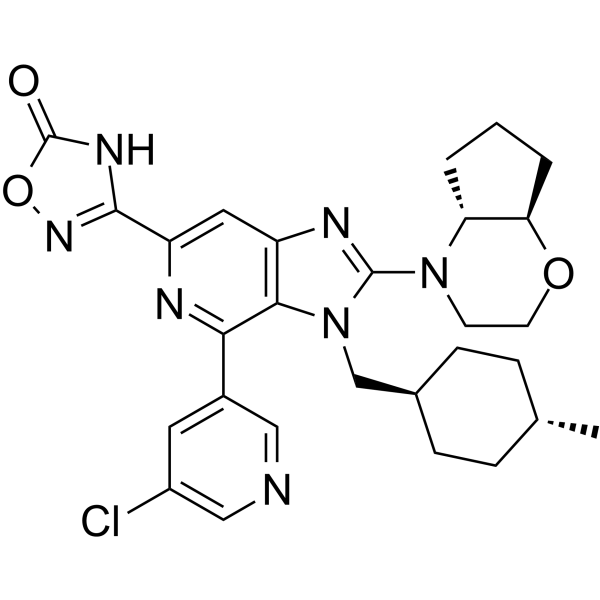 0 ImagesCat. No.: HY-139846CAS No.: 1616428-79-5
MK-4688 is an efficient inhibitor of the HDM2-p53 protein-protein interaction.
-
JN122
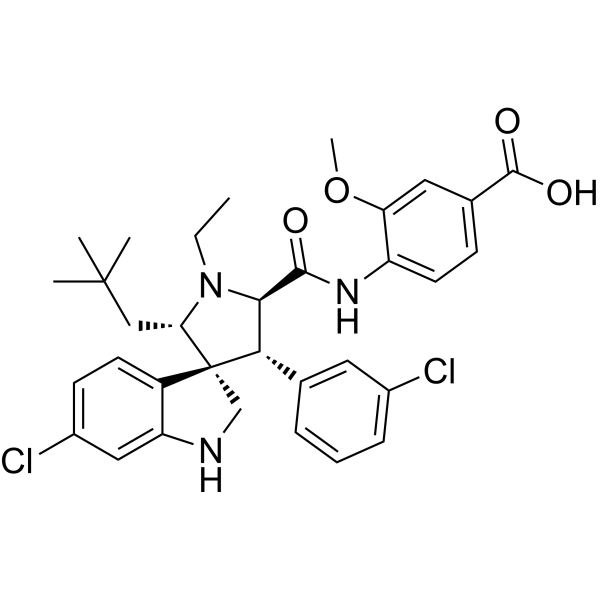 0 ImagesCat. No.: HY-163083CAS No.: 3035577-19-3
JN122, a spiroindoline-containing molecule, is a MDM2 inhibitor. JN122 Inhibits MDM2/p53 protein–protein interaction and exerts robust in vivo antitumor efficacy. JN122 has antiproliferative activity in HCT-116 cells and HEK-293 cells with IC50 values of 39.6 nM and 4.28μM, respectively. JN122 can promote activation of p53 and its target genes, inhibited cell cycle progression, and induced cell apoptosis.
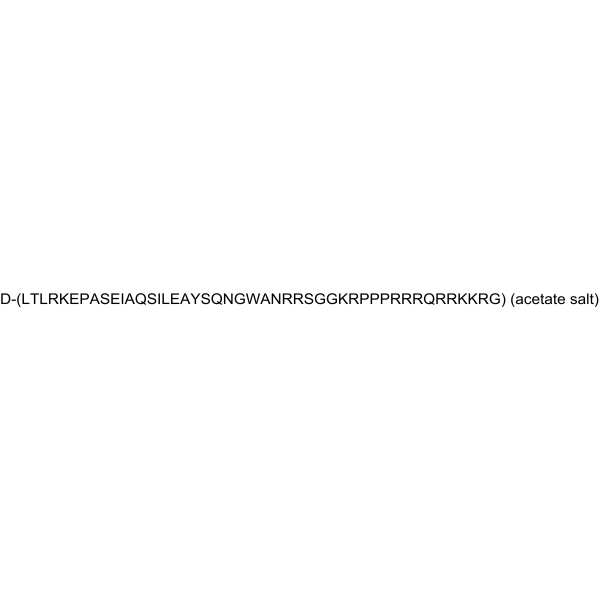
-
PROTAC MAGL degrader-1
 0 ImagesCat. No.: HY-173369
PROTAC MAGL degrader-1 is an orally active, moderately blood-brain barrier permeable bifunctional PROTAC (DC50: 60.28 nM) that possesses MAGL degradation activity alongside MDM2 inhibitory activity. PROTAC MAGL degrader-1 recruits E3 ubiquitin ligase MDM2 to mediate ubiquitination of MAGL and subsequent proteasomal degradation. PROTAC MAGL degrader-1 blocks the interaction between MDM2 and P53 and upregulates the expression of tumor suppressor protein P53. PROTAC MAGL degrader-1 is applicable for research on glioblastoma stem cells, melanoma and breast cancer.
-
OSU-53
 0 ImagesCat. No.: HY-125535CAS No.: 1290069-19-0
OSU-53 is an orally active AMPK activator and mTOR inhibitor, with an IC50 of 0.3 μM for AMPK, an EC50 of 2-5 μM for AMPK, and an IC50 of 8.23 μM for mTOR. OSU-53 inhibits the Akt signaling pathway, directly activates AMPK by binding to its autoinhibitory domain, reduces IKKβ-mediated phosphorylation of Foxo3a, blocks Akt-mediated phosphorylation of MDM2, and promotes the nuclear localization and stabilization of Foxo3a, while directly inhibiting mTOR. OSU-53 inhibits epithelial-mesenchymal transition (EMT), induces epithelial phenotype, suppresses invasion and metastasis, induces autophagy, inhibits the activation of ERK and Akt, reduces the secretion of nitric oxide and proinflammatory cytokines, and inhibits the migration of MDSC; at high doses, it induces MDSC apoptosis, attenuates the immunosuppressive effect of MDSC, reduces MDSC levels, and blocks incision-induced mechanical hyperalgesia. OSU-53 can be used in studies related to breast cancer, prostate cancer, thyroid cancer, melanoma and postoperative pain.
-
VS-II-173
 0 ImagesCat. No.: HY-122670CAS No.: 1627962-21-3
VS-II-173 is a pan-Pim kinase inhibitor with IC50 values of 0.07 μM and 0.02 μM for Pim1 and Pim3, respectively, and a residual activity of 46% for Pim2 at 1 μM. VS-II-173 also inhibits kinases such as HIPK2, PRK2, RSK1, DYRK1a and AMPKα1, selectively inhibiting acute myeloid leukemia (AML) cells with significantly lower toxicity to non-malignant cells (EC50 > 30 μM). VS-II-173 weakens the phosphorylation of substrates such as Stat5 (Y694), MDM2 (S166), Bad (S112), and 4E-BP1 (T37/46) by inhibiting Pim kinase-mediated signaling pathways, blocking pro-survival signals in AML cells and inducing apoptosis. VS-II-173 synergistically enhances anti-AML activity when combined with Daunorubicin (HY-13062A). VS-II-173 can be used in AML research, especially for AML with FLT3-ITD mutations and NPM1 mutations .
-
p53-MDM2-IN-6
 0 ImagesCat. No.: HY-162927CAS No.: 1054506-59-0
p53-MDM2-IN-6 (Compound 10a), a LSM-83177 hydrazone analog, is a potent p53-MDM2 inhibitor with an IC50 value of 11.08 µg/mL. p53-MDM2-IN-6 arrests the cell cycle in the S phase and induces early and late Apoptosis with antiproliferative activity against HT29 cell lines with an IC50 value of 10.44 µg/mL. p53-MDM2-IN-6 inhibits p53-MDM2 interaction with increment in p-53 level and decrease the expression of GST enzymes. p53-MDM2-IN-6 is promising for research of colorectal cancer.
-
ISA 27
 0 ImagesCat. No.: HY-124070CAS No.: 1254366-73-8
-
p53-MDM2-IN-5
 0 ImagesCat. No.: HY-163661CAS No.: 2750075-06-8
-
Radicicol 6-oxime
 0 ImagesCat. No.: HY-186321CAS No.: 501124-40-9Synonyms: KF25706
Radicicol 6-oxime (KF25706) is an Hsp90 inhibitor with an EC50 of 5.5 nM against human Hsp90. Radicicol 6-oxime binds to Hsp90 and disrupts its chaperone function, leading to destabilization and depletion of Hsp90-associated signaling molecules. Radicicol 6-oxime depletes Hsp90-associated signaling proteins such as Raf-1, v-src, p185erbB2, Cdk4, and mutant p53, thereby inhibiting K-ras and v-src signaling pathways. Radicicol 6-oxime exhibits antiproliferative activity against various tumor cells. Radicicol 6-oxime inhibits tumor growth in mouse tumor xenograft models. Radicicol 6-oxime can be used for research on breast cancer, colon cancer, and vulvar epidermoid carcinoma.
-
MI-888 TFA
 0 ImagesCat. No.: HY-16634CAS No.: 1303609-30-4
MI-888 (TFA) is an orally active MDM2-p53 interaction inhibitor with a Ki of 0.44 nM. MI-888 (TFA) can achieve rapid, complete, and sustained tumor regression in a xenograft mouse model of cancer.
-
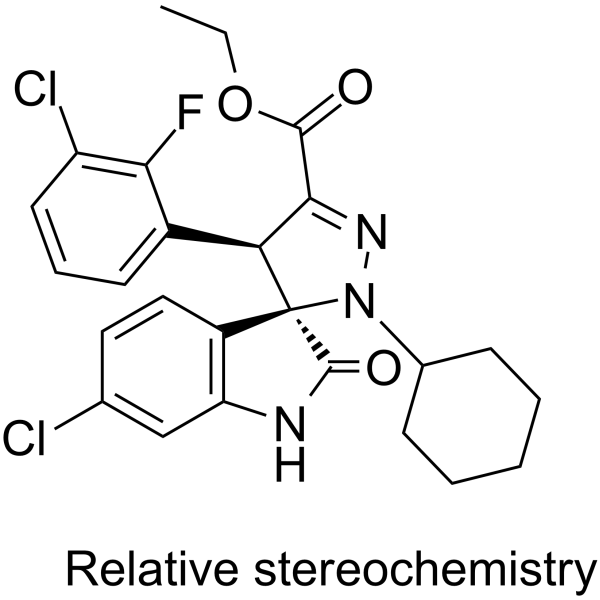
UNP-6457
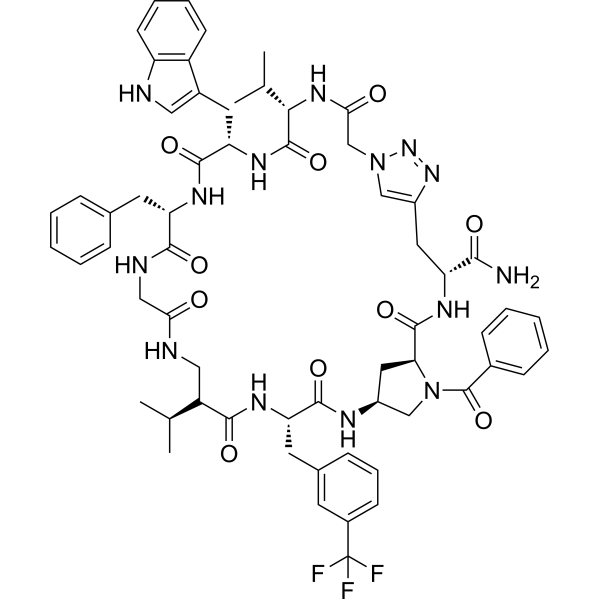 0 ImagesCat. No.: HY-149988CAS No.: 3072696-60-4
UNP-6457 is a potent active MDM2-p53 interaction inhibitor with an IC50 values of 8.9 nM.
-
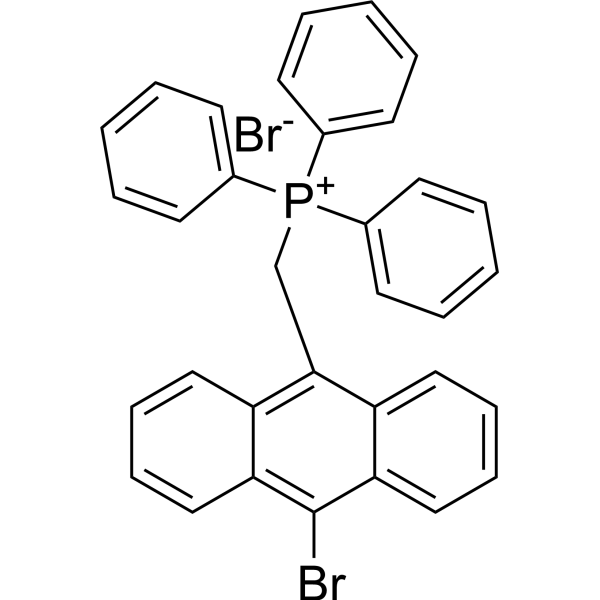
MDM2-IN-24
 0 ImagesCat. No.: HY-163275
MDM2-IN-24 (compound A3f) exhibits MDM2-inhibiting and MDMX-activating properties in triple-negative breast cancer (TNBC) cells, with apoptotic and anti-proliferative activities.
-
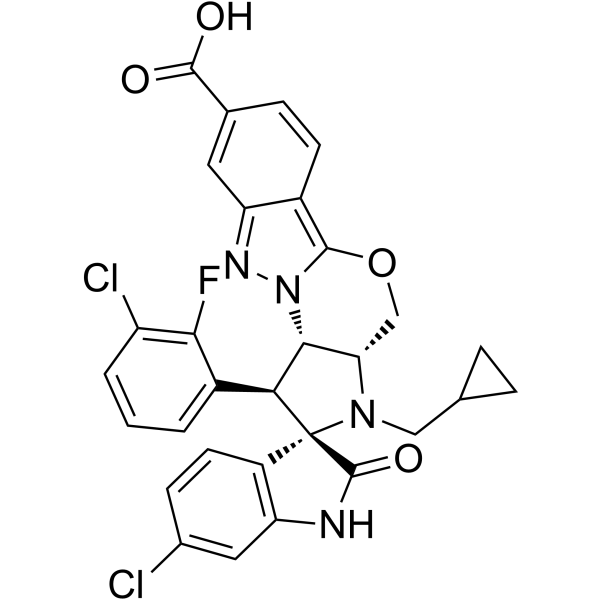
BI-0282
 0 ImagesCat. No.: HY-150620CAS No.: 1883383-48-9
BI-0282 (Compound 1) is a potent MDM2-p53 interaction inhibitor.
-
USP10-IN-4
 0 ImagesCat. No.: HY-175538
USP10-IN-4 is a potent ubiquitin-specific protease 10 (USP10) inhibitor with an IC50 of 10.87 μM and a Kd of 365 nM. USP10-IN-4 effectively inhibits USP10-mediated proteasomal degradation of downstream proteins YAP and p53, leading to the subsequent downregulation of CDK4 in the p53 signaling pathway. USP10-IN-4 promotes apoptosis in HCC cells and inhibits the onset and progression of liver cancer. USP10-IN-4 can used for the study of hepatocellular carcinoma (HCC).
-
MI-773 TFA
 0 Images
MI-773 TFA is an orally active, selective MDM2-p53 interaction inhibitor with a Ki of 0.88 nM for MDM2. MI-773 TFA blocks the MDM2-TP53 interaction. MI-773 TFA potently activates p53. MI-773 TFA induces Apoptosis. MI-773 TFA causes tumor regression in xenograft models of adenoid cystic carcinoma. MI-773 TFA exhibits anticancer effects in neuroblastoma. MI-773 TFA can be used for the research of adenoid cystic carcinoma.
-
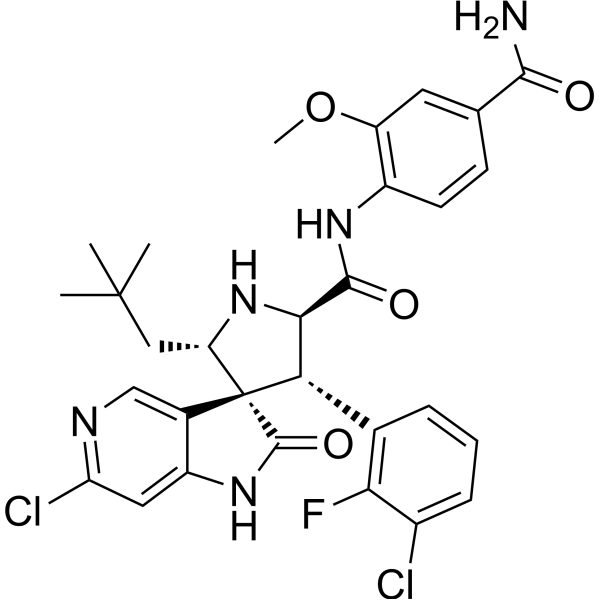
RO 2468
 0 ImagesCat. No.: HY-12579CAS No.: 1360821-21-1
RO 2468 is a potent, orally active and selective p53-MDM2 inhibitor. RO 2468 has anti-proliferative active. RO 2468 suppresses c growth in SJSA1 osteosarcoma models without obvious toxicity.
-
CDK9-IN-53
 0 ImagesCat. No.: HY-13828CAS No.: 1421340-50-2
CDK9-IN-53 is a potent and selective CDK9 inhibitor with a Ki of 7 nM and an IC50 of 14 nM against CDK9/Cyclin T1. CDK9-IN-53 achieves highly selective inhibition by competitively binding to the ATP pocket of CDK9, thereby blocking RNAPII transcription and downregulating the anti-apoptotic protein Mcl-1, ultimately triggering Caspase-dependent apoptosis in cancer cells. CDK9-IN-53 can be used for research on chronic lymphocytic leukemia.



