



PIM3 Inhibitor
- 1
-
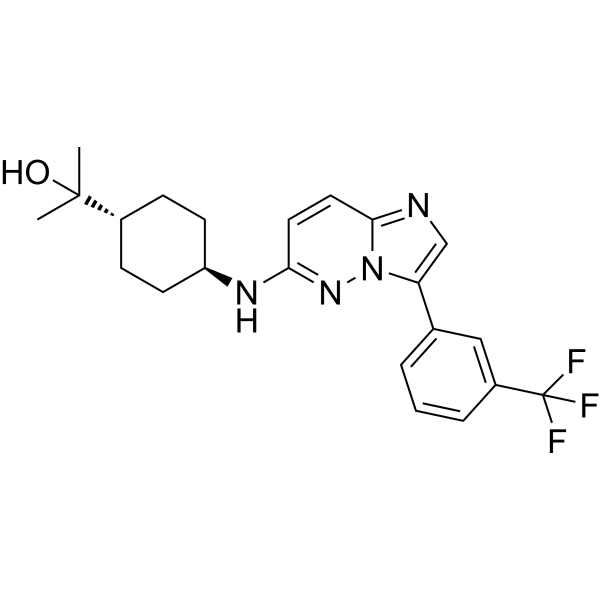
Nuvisertib
 0 ImagesSynonyms: TP-3654
Nuvisertib (TP-3654) is an orally active second-generation pan-PIM kinase inhibitor with Ki values of 5 nM, 239 nM, and 42 nM against PIM-1, PIM-2, and PIM-3, respectively. Nuvisertib inhibits JAK-independent inflammatory and survival signaling pathways, reduces the production of proinflammatory cytokines, restores apoptotic sensitivity, inhibits mTORC1, MYC, and TGF-β signaling pathways, and decreases the expression of fibrosis markers. Nuvisertib selectively impairs the transport function of ABCG2, resensitizes multidrug-resistant cancer cells to cytotoxic drugs, and overcomes JAK2 inhibitor resistance. Nuvisertib can be used in research related to myelofibrosis, renal cell carcinoma, multidrug-resistant cancer, advanced solid tumors, urothelial carcinoma, and prostate adenocarcinoma.
-
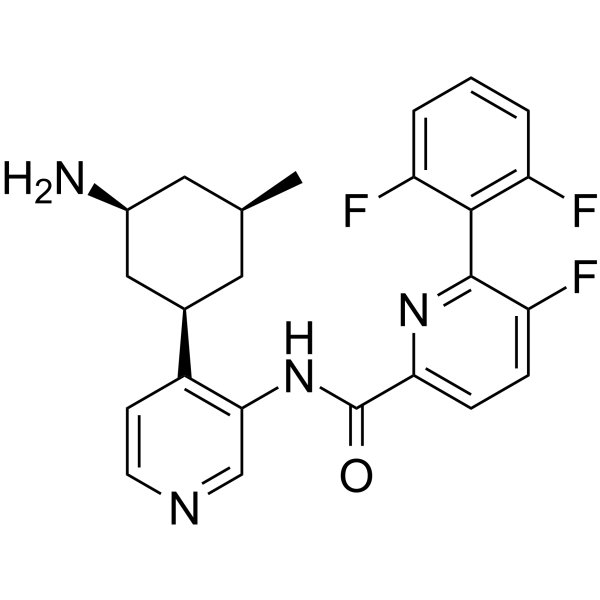
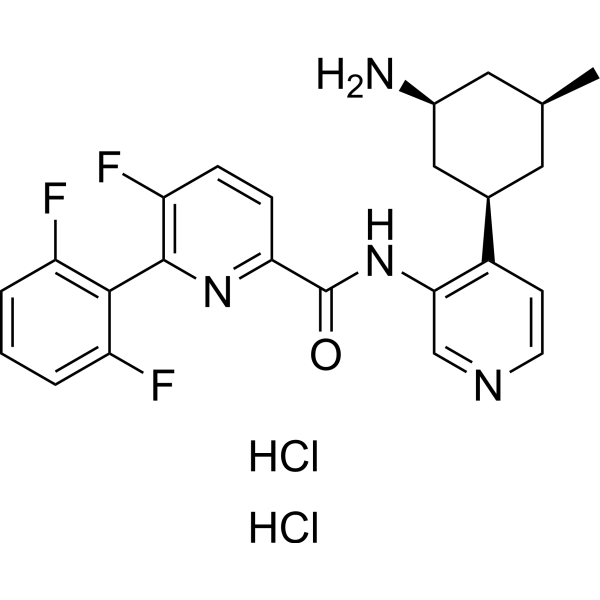
PIM-447 dihydrochloride
 0 ImagesSynonyms: LGH447 dihydrochloride
PIM447 dihydrochloride (LGH447 dihydrochloride) is a potent, orally available, and selective pan-PIM kinase inhibitor, with Ki values of 6, 18, and 9 pM for PIM1, PIM2, and PIM3, respectively. PIM447 dihydrochloride displays dual antimyeloma and bone-protective effects. PIM447 dihydrochloride induces apoptosis.
-
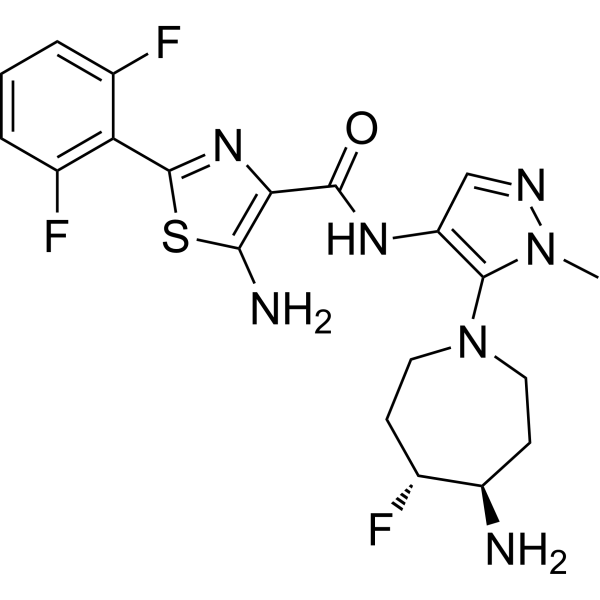
GDC-0339
 0 Images
GDC-0339 is a potent, orally bioavailable and well tolerated pan-Pim kinase inhibitor, with Kis of 0.03 nM, 0.1 nM and 0.02 nM for Pim1, Pim2 and Pim3, respectively. GDC-0339 is discovered as a potential treatment of multiple myeloma.
-
Uzansertib phosphate
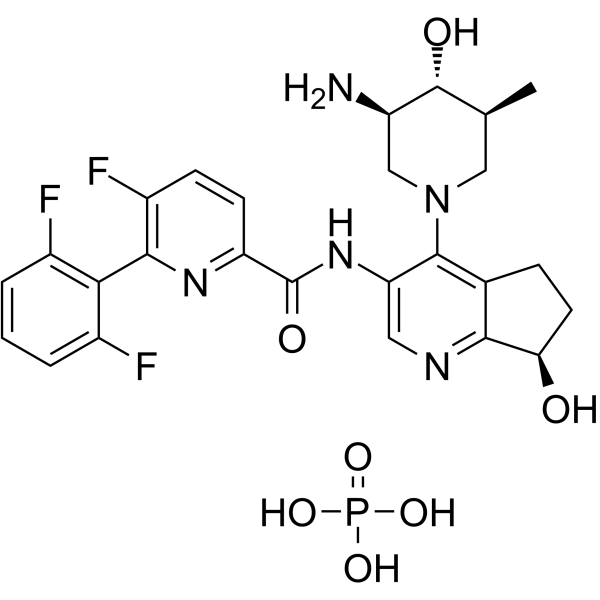 0 ImagesSynonyms: INCB053914 phosphate
-
Uzansertib
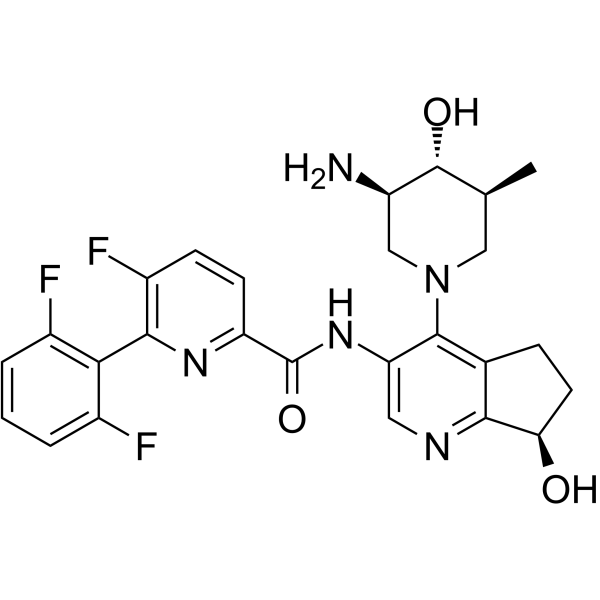 0 ImagesSynonyms: INCB053914
-
PIM1-IN-1
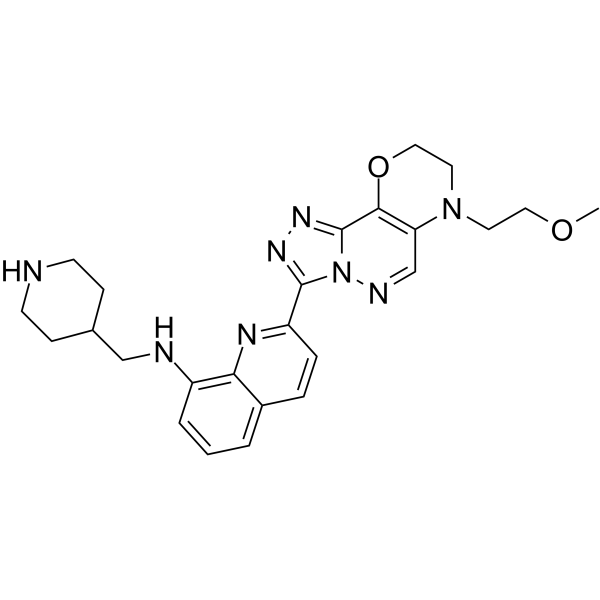 0 Images
PIM1-IN-1 is a potent and highly selective PIM1/3 inhibitor, with IC50s of 7, 5530 and 70 nM for PIM1, PIM2, and PIM3, respectively, inhibits the phosphorylation of BAD, a downstream target of PIM, with an EC50 of 262 nM. PIM1-IN-1 shows no obvious effect on FLT3 or hERG binding. Antiproliferative and anti-cancer activity.
-
AZD1897
 0 Images
AZD1897 is a PIM1, PIM2, and PIM3 inhibitor with IC50 values of less than 3 nM for these three PIM kinases. AZD1897 exhibits anticancer activity and synergistically inhibits the activity of acute myeloid leukemia (AML) cells in combination with Capivasertib (HY-15431). This synergistic inhibitory effect is achieved through the inhibition of the mTOR and MCL1 pathways.
-
HS56
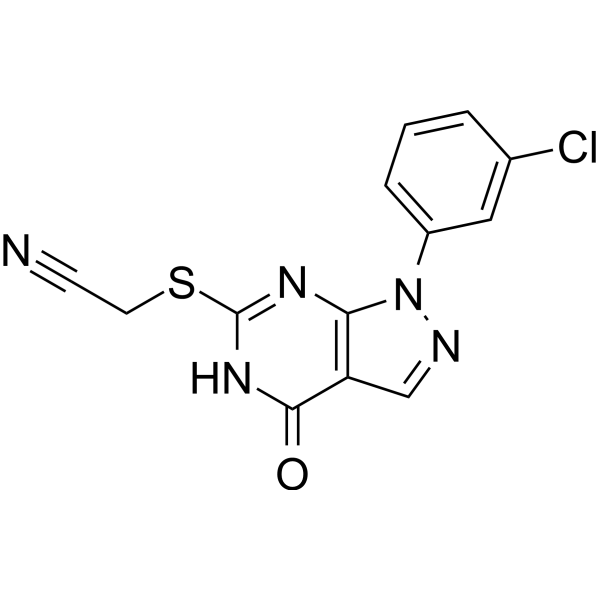 0 Images
HS56 is an ATP-competitive dual Pim/DAPK3 inhibitor with Ki values of 0.26, 0.208, 2.94, and >100 μM for DAPK3, Pim-3, Pim-1, and Pim-2, respectively. HS56 inhibits LC20 phosphorylation and smooth muscle contraction. HS56 decreases blood pressure in spontaneously hypertensive mice. HS56 can be used in research of hypertension.
-
CDK6/PIM1-IN-1
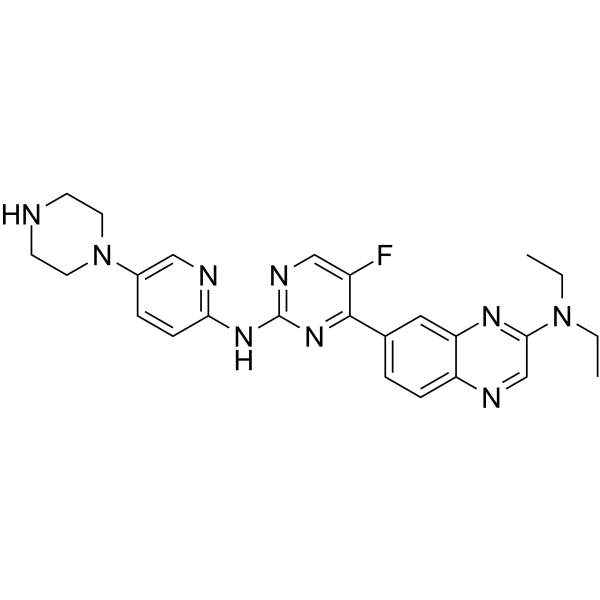 0 ImagesCat. No.: HY-142696CAS No.: 2677026-14-9
CDK6/PIM1-IN-1 is a potent and balanced dual CDK6/PIM1 inhibitor with IC50 values of 39 and 88 nM, respectively. CDK6/PIM1-IN-1 inhibits CDK4 (IC50=3.6 nM). CDK6/PIM1-IN-1 significantly inhibits acute myeloid leukemia (AML) cell proliferation, arrest cell cycle at the G1 phase, and promote cell apoptosis. CDK6/PIM1-IN-1 exhibits potent anti-AML activity.
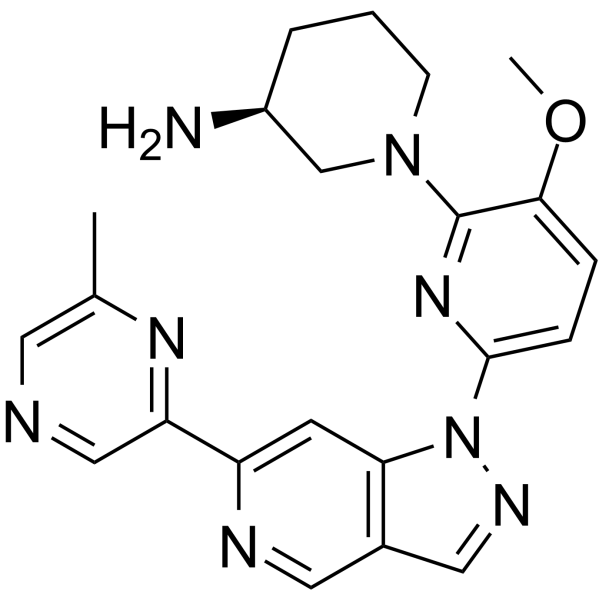
-
VS-II-173
 0 ImagesCat. No.: HY-122670CAS No.: 1627962-21-3
VS-II-173 is a pan-Pim kinase inhibitor with IC50 values of 0.07 μM and 0.02 μM for Pim1 and Pim3, respectively, and a residual activity of 46% for Pim2 at 1 μM. VS-II-173 also inhibits kinases such as HIPK2, PRK2, RSK1, DYRK1a and AMPKα1, selectively inhibiting acute myeloid leukemia (AML) cells with significantly lower toxicity to non-malignant cells (EC50 > 30 μM). VS-II-173 weakens the phosphorylation of substrates such as Stat5 (Y694), MDM2 (S166), Bad (S112), and 4E-BP1 (T37/46) by inhibiting Pim kinase-mediated signaling pathways, blocking pro-survival signals in AML cells and inducing apoptosis. VS-II-173 synergistically enhances anti-AML activity when combined with Daunorubicin (HY-13062A). VS-II-173 can be used in AML research, especially for AML with FLT3-ITD mutations and NPM1 mutations .
-
FD2024
 0 ImagesCat. No.: HY-181925
FD2024 is a pan-PIM kinase inhibitor with IC50 values of 0.17 nM, 1.86 nM, and 0.38 nM against PIM-1, PIM-2, and PIM-3, respectively. FD2024 induces cell apoptosis. FD2024 inhibits the phosphorylation of mTOR, p70S6K, S6, 4EBP1, and BAD proteins. FD2024 exhibits anti-acute myeloid leukemia activity. FD2024 can be used in studies related to acute myeloid leukemia.

-
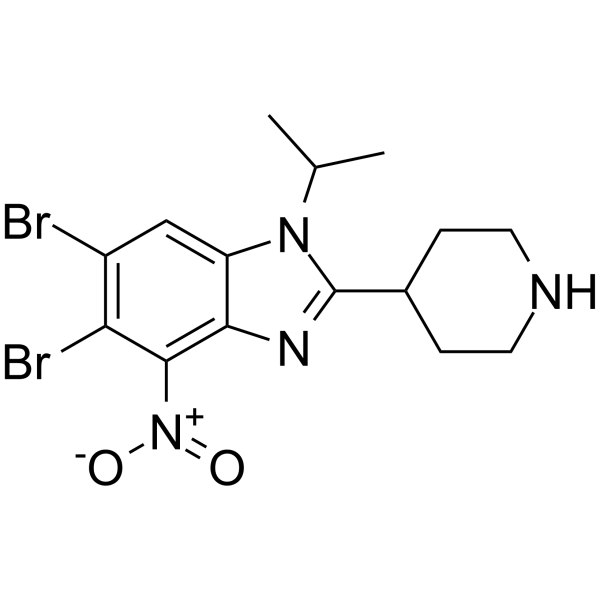
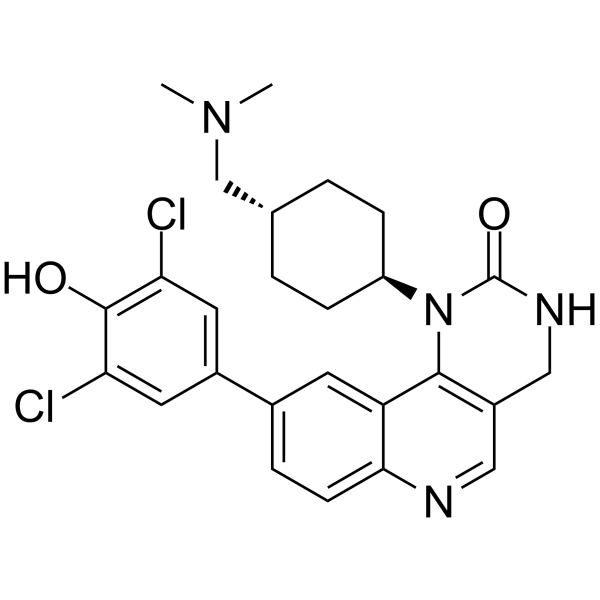
PIM3-IN-1 hydrochloride
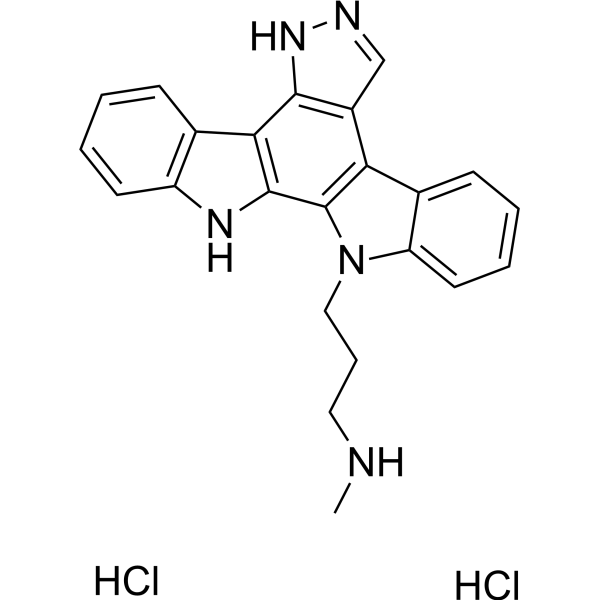 0 ImagesCat. No.: HY-163442A
-
Bufothionine
 0 Images
Bufothionine is an alkaloid. Bufothionine can be isolated from Cinobufacini. Bufothionine induces mitochondria-mediated Apoptosis. Bufothionine significantly reduces serum IL-6 concentration, suppresses p-Stat3tyr705, p-Stat3ser727 and Jak2 expressions. Bufothionine upregulates Atg5, Atg7 and LC3Ⅱ expressions. Bufothionine induces Autophagy. Bufothionine suppresses PIM3 expression. Bufothionine relieves symptoms of H22-tumor-bearing mice and exerts anti-inflammation activity. Bufothionine exerts anti-cancer activities against gastric cancer.
-
Nuvisertib (Standard)
 0 ImagesSynonyms: TP-3654 (Standard)
Nuvisertib (Standard) (TP-3654 (Standard)) is the analytical standard of Nuvisertib (HY-101126). This product is intended for research and analytical applications. Nuvisertib (TP-3654) is an orally active second-generation pan-PIM kinase inhibitor with Ki values of 5 nM, 239 nM, and 42 nM against PIM-1, PIM-2, and PIM-3, respectively. Nuvisertib inhibits JAK-independent inflammatory and survival signaling pathways, reduces the production of proinflammatory cytokines, restores apoptotic sensitivity, inhibits mTORC1, MYC, and TGF-β signaling pathways, and decreases the expression of fibrosis markers. Nuvisertib selectively impairs the transport function of ABCG2, resensitizes multidrug-resistant cancer cells to cytotoxic drugs, and overcomes JAK2 inhibitor resistance. Nuvisertib can be used in research related to myelofibrosis, renal cell carcinoma, multidrug-resistant cancer, advanced solid tumors, urothelial carcinoma, and prostate adenocarcinoma.
-
Nuvisertib hydrochloride
 0 ImagesCat. No.: HY-101126ACAS No.: 1418143-09-5Synonyms: TP-3654 hydrochloride
Nuvisertib hydrochloride (TP-3654 hydrochloride) is an orally active second-generation pan-PIM kinase inhibitor with Ki values of 5 nM, 239 nM, and 42 nM against PIM-1, PIM-2, and PIM-3, respectively. Nuvisertib hydrochloride inhibits JAK-independent inflammatory and survival signaling pathways, reduces the production of proinflammatory cytokines, restores apoptotic sensitivity, inhibits mTORC1, MYC, and TGF-β signaling pathways, and decreases the expression of fibrosis markers. Nuvisertib hydrochloride selectively impairs the transport function of ABCG2, resensitizes multidrug-resistant cancer cells to cytotoxic drugs, and overcomes JAK2 inhibitor resistance. Nuvisertib hydrochloride can be used in research related to myelofibrosis, renal cell carcinoma, multidrug-resistant cancer, advanced solid tumors, urothelial carcinoma, and prostate adenocarcinoma.
- 1



