



STAT3
STAT3 is a widely expressed STAT family transcription factor that regulates cellular growth, differentiation, survival, immunity, hematopoiesis, and cell migration[1]. Mechanistically, cytokines and growth factors activate JAKs, phosphorylate STAT proteins, promote STAT dimerization, and drive nuclear transcriptional regulation[2]. In inflammatory disease models, STAT3 shows strong tyrosine phosphorylation in human ulcerative colitis, Crohn’s disease, and DSS-induced mouse colitis, where IL-6 deficiency reduces colitis and STAT3 activation[3]. In cancer models, persistent STAT3 activation supports proliferation, survival, invasion, metastasis, immune evasion, and drug resistance, making STAT3 signaling a practical axis for tumor biology research[1][4]. Compared with related isoforms, STAT1 knockout mice mainly show impaired interferon signaling, while STAT3 is emphasized in IL-6-linked inflammation, tumor progression, and Th17-related immune dysfunction[2][5]. For experimental applications, JAK/STAT inhibitors such as AG490 and AZD1480 reduce STAT1/STAT3 activation in renal ischemia-reperfusion and α-synuclein neuroinflammation models[6][7].
References:
- [1]. Liu Y, et al. STAT3 and its targeting inhibitors in osteosarcoma. Cell Prolif. 2021 Feb;54(2):e12974. [Content Brief]
- [2]. Heim MH. The Jak-STAT pathway: cytokine signalling from the receptor to the nucleus. J Recept Signal Transduct Res. 1999 Jan-Jul;19(1-4):75-120. doi: 10.3109/10799899909036638. PMID: 10071751. et al. The Jak-STAT pathway: cytokine signalling from the receptor to the nucleus. J Recept Signal Transduct Res. 1999 Jan-Jul;19(1-4):75-120. [Content Brief]
- [3]. Suzuki A, et al. CIS3/SOCS3/SSI3 plays a negative regulatory role in STAT3 activation and intestinal inflammation. J Exp Med. 2001 Feb 19;193(4):471-81. [Content Brief]
- [4]. Wu CJ, et al. Activation of STAT3 and STAT5 Signaling in Epithelial Ovarian Cancer Progression: Mechanism and Therapeutic Opportunity. Cancers (Basel). 2019 Dec 19;12(1):24. [Content Brief]
- [5]. Tolomeo M, et al. The STAT Signaling Pathway in HIV-1 Infection: Roles and Dysregulation. Int J Mol Sci. 2025 Sep 18;26(18):9123. [Content Brief]
- [6]. Si Y, et al. Dexmedetomidine protects against renal ischemia and reperfusion injury by inhibiting the JAK/STAT signaling activation. J Transl Med. 2013 Jun 9;11:141. [Content Brief]
- [7]. Qin H, et al. Inhibition of the JAK/STAT Pathway Protects Against α-Synuclein-Induced Neuroinflammation and Dopaminergic Neurodegeneration. J Neurosci. 2016 May 4;36(18):5144-59. [Content Brief]
All Product Categories
-
STAT3 Inhibitors
(299)
View all products
-
STAT3 Agonist
(1)
View all products
-
STAT3 Antagonists
(2)
View all products
-
STAT3 Activators
(24)
View all products
-
STAT3 Modulators
(9)
View all products
-
STAT3 Inducer
(1)
View all products
-
STAT3 Degraders
(13)
View all products
-
STAT3 Ligands
(2)
View all products
-
STAT3 Related Products (366)
Related Products (366)

-
Antibodies (5)
-
Tofacitinib-13C
 0 ImagesCat. No.: HY-40354S3Synonyms: Tasocitinib-13C; CP-690550-13CTofacitinib-13C (Tasocitinib-13C; CP-690550-13C) is the 13C-labeled Tofacitinib (HY-40354). Tofacitinib (Tasocitinib) is an orally active, blood-brain barrier permeable selective inhibitor of JAK1/JAK3. Tofacitinib blocks the JAK-STAT/NF-κB signaling pathway, inhibits cytokine signal transduction, phosphorylation of STAT1/STAT5, and suppresses innate and adaptive immune responses. Tofacitinib can be used in research related to major depressive disorder, rheumatoid arthritis, pulmonary diseases, systemic lupus erythematosus, and immune-mediated liver injury.
-
GYY4137 (GMP)
 0 ImagesCat. No.: HY-107632GCAS No.: 106740-09-4GYY4137 (GMP) is the GMP-grade version of GYY4137 (HY-107632). Small molecules of GMP grade can be used as adjuvant reagents in cell therapy. GYY4137 (GMP) is a sustained-release H2S donor possessing vasodilatory, antihypertensive, and anti-inflammatory activities. GYY4137 (GMP) can inhibit cell growth, induce apoptosis, and cause cell cycle arrest by blocking the STAT3 pathway, demonstrating potent anticancer activity.
-
MPT0B098
 0 ImagesCat. No.: HY-124595CAS No.: 1254363-89-7MPT0B098 is a microtubule inhibitor with a Ki of 0.8 μM and an IC50 of 0.8 μM. MPT0B098 inhibits tubulin polymerization, blocks HuR nuclear-cytoplasmic translocation to decrease HIF-1α mRNA stability, suppresses HIF-1α, TGF-β/Smad, JAK2/STAT3 and FAK/actin cytoskeleton signaling pathways, upregulates SOCS3 to reinforce the inhibition of JAK2/STAT3 cascade, and induces apoptosis. MPT0B098 can be used for research on multiple malignancies including head and neck squamous cell carcinoma and human non-small cell lung cancer.
-
Pexmetinib hydrochloride
 0 ImagesCat. No.: HY-16782ACAS No.: 1416216-01-7Synonyms: ARRY-614 hydrochloridePexmetinib hydrochloride (ARRY-614 hydrochloride) is an orally active dual Tie-2 and p38 MAPK inhibitor. Pexmetinib hydrochloride binds to Tie-2 and p38 MAPK in a "DFG-out" conformation, attenuates the phosphorylation of p38, inhibits STAT3 activation, reduces the promoter-binding activity of NFATc1, and decreases the expression of MMPs. Pexmetinib hydrochloride inhibits leukemia cell proliferation, abrogates TNF-α-mediated myelosuppression of healthy hematopoietic stem cells, stimulates hematopoiesis in primary myelodysplastic syndrome (MDS) samples, inhibits RANKL-induced osteoclast formation and bone resorption, and suppresses migration, invasion and induced osteolysis of breast cancer cells. Pexmetinib hydrochloride can be used in research related to myelodysplastic syndrome, acute myeloid leukemia and breast cancer-induced osteolysis.
-
Zoniporide hydrochloride hydrate (Standard)
 0 ImagesCat. No.: HY-105064DRCAS No.: 863406-85-3Synonyms: CP-597396 hydrochloride hydrate (Standard)Zoniporide hydrochloride hydrate (Standard) (CP-597396 hydrochloride hydrate (Standard)) is the analytical standard of Zoniporide hydrochloride hydrate (HY-105064D). This product is intended for research and analytical applications. Zoniporide hydrochloride hydrate (CP-597396 hydrochloride hydrate) is a selective Na+/H+ exchanger subtype 1 (NHE1) inhibitor with cardioprotective activity, with IC50 values of 67 nM and 73 nM against rat NHE1. Zoniporide hydrochloride hydrate reduces intracellular Na+ and Ca2+ overload, preserves mitochondrial integrity, activates pro-survival ERK1/2 and STAT3 signaling pathways, reduces necrosis and apoptosis, and decreases neutrophil aggregation. Zoniporide hydrochloride hydrate is applicable to research related to myocardial ischemia-reperfusion injury and heart graft ischemia-reperfusion injury.
-
TT-301 hydrochloride
 0 ImagesCat. No.: HY-111203ACAS No.: 1346545-21-8Synonyms: MW189 hydrochloride; MW01-6-189WH hydrochlorideTT-301 hydrochloride is a small-molecule immunomodulator capable of penetrating the blood-brain barrier. TT-301 hydrochloride exerts neuroprotective effects by binding to IL-1β, downregulating STAT3 expression, and modulating the JAK-STAT signaling pathway, thereby inhibiting microglial activation and the release of proinflammatory mediators, and alleviating neuroinflammation and brain edema. TT-301 hydrochloride is used in research on traumatic brain injury, intracerebral hemorrhage, subarachnoid hemorrhage, muscle wasting and atrophy, and periodontal disease.
-
DETD-35
 0 ImagesCat. No.: HY-164473CAS No.: 1836209-98-3DETD-35 is an inhibitor of the MEK-ERK, Akt, and STAT3 signaling pathways, which promotes cancer cell apoptosis (Apoptosis) and reduces cancer cell resistance to Vemurafenib (HY-12057). The IC50 values of DETD-35 against wild-type and mutant melanoma cell lines B16-F10, MeWo, SK-MEL-2, A2058c, and A375c are 2.7, 6.0, 3.9, 3.1, and 2.5 μM, respectively. DETD-35 holds promise for research in the field of anti-melanoma therapy.
-
Isocucurbitacin B
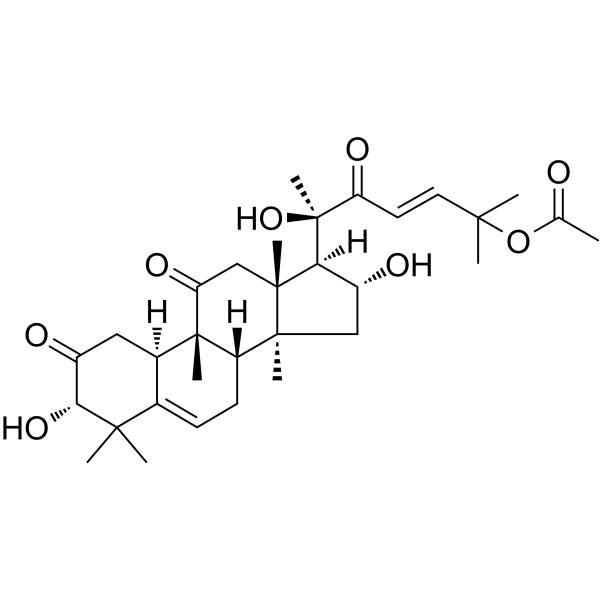 0 ImagesIsocucurbitacin B is a natural terpenoid compound found in Pedicellus Melo. Isocucurbitacin B can inhibit the PI3K/AKT, MAPK, and STAT3 signaling pathways and downregulate CAV1 expression. Isocucurbitacin B can inhbit cancer cell proliferation, migration and invision. Isocucurbitacin B can induce apoptosis and cause G2/M phase arrest. Isocucurbitacin B can decrease intracellular cholesterol and PH levels and increase intracellular calcium levels. Isocucurbitacin B can be used for the research of cancer, such as glioma[1][2].
-
STAT3-IN-39
 0 ImagesCat. No.: HY-171038CAS No.: 3037596-35-0STAT3-IN-39 (compound 10K) is an orally active STAT3 inhibitor that exhibits excellent inhibitory activity against STAT3 phosphorylation, with an IC50 of 0.47 μM in NIH-3T3 cells. STAT3-IN-39 inhibits the TGF-β1-induced fibrotic response and blocks the epithelial-mesenchymal transition in A549. STAT3-IN-39 can be utilized in research related to idiopathic pulmonary fibrosis.
-
Pulchinenoside E2
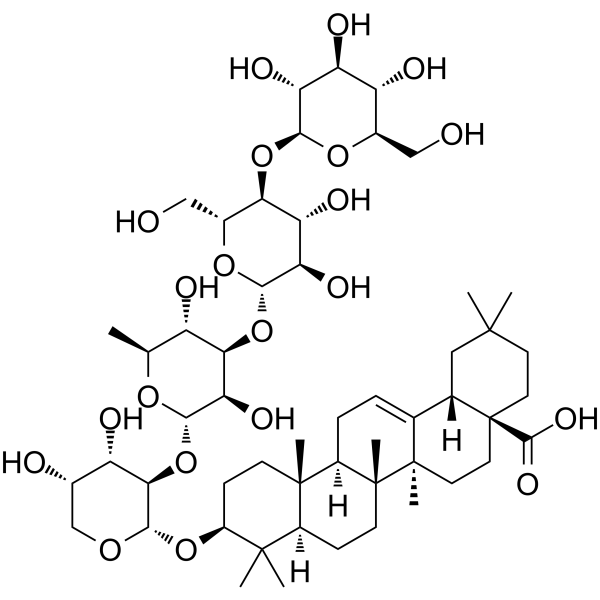 0 ImagesPulchinenoside E2 is a triterpenoid saponin. Pulchinenoside E2 inhibits the phosphorylation of STAT3 and JAK2, blocks the nuclear translocation and transcriptional activity of STAT3, and suppresses STAT3-dependent mitochondrial oxidative phosphorylation. Pulchinenoside E2 inhibits invasion, migration and autophagy of triple-negative breast cancer cells. Pulchinenoside E2 can be used in research related to triple-negative breast cancer.
-
Tyk2-IN-25
 0 ImagesCat. No.: HY-184833CAS No.: 2417137-50-7
-
STA-1474 sodium
 0 ImagesCat. No.: HY-13752BCAS No.: 1402907-09-8STA-1474 sodium is an orally active and highly selective HSP90 inhibitor, as well as a phosphate prodrug of the HSP90 inhibitor STA-9090 (HY-15205). STA-1474 sodium disrupts the chaperone function of HSP90 and promotes the degradation of client proteins. STA-1474 sodium inhibits the phosphorylation of Met, Akt and STAT3, thereby blocking related signaling pathways. STA-1474 sodium induces apoptosis and inhibits proliferation of osteosarcoma cells, and triggers the up-regulation of HSP70 and HSP90. STA-1474 sodium induces tumor regression and caspase-3 activation in mouse osteosarcoma xenograft models. STA-1474 sodium can be used in the research of osteosarcoma.
-
Sorafenib tosylate (Standard)
 0 ImagesSynonyms: Bay 43-9006 tosylate (Standard)Sorafenib (tosylate) (Standard) (Bay 43-9006 (tosylate) (Standard)) is the analytical standard of Sorafenib (tosylate) (HY-10201A). This product is intended for research and analytical applications. Sorafenib (Bay 43-9006) tosylate is a potent oral active multikinase inhibitor. Sorafenib blocks autophosphorylation and activity of receptor tyrosine kinases (VEGFR-2, VEGFR-3) and RAF family kinases, thereby suppressing the RAF/MEK/ERK and PI3K/Akt pathways, inhibiting STAT3 phosphorylation, and selectively inhibiting the MAPK pathway in cancer cells. Sorafenib tosylate induces cell cycle arrest, autophagy, apoptosis, and PARP cleavage, reduces Bcl-2, Bcl-XL, cyclin D1 levels, and activates Bak and Bax. Sorafenib tosylate inhibits tumor growth and metastasis in mouse and rat models. Sorafenib tosylate can be used for cancer research, such as colon, breast, non-small-cell lung cancer (NSCLC), ovarian, pancreatic, melanoma, colorectal and hepatocellular carcinoma.
-
FLLL12
 0 ImagesCat. No.: HY-183402CAS No.: 917813-60-6Synonyms: GO-Y026FLLL12 (GO-Y026) is a curcumin analog anticancer agent. FLLL12 inhibits the phosphorylation of AKT, Bcl-2, Bid, EGFR, mTOR, FOXO1a, FOXO3a, STAT3, HER2/neu, as well as pancreatic AKT/STAT3; upregulates the expression of Bim and DR5; and activates PTPs. FLLL12 regulates downstream pathways, induces mitochondria-mediated and DR5-dependent extrinsic apoptosis, inhibits cancer cell viability, proliferation, anchorage-independent growth and migration, and exerts a synergistic effect with Doxorubicin (HY-15142A). FLLL12 can be used in research related to head and neck squamous cell carcinoma, breast cancer, prostate cancer, pancreatic cancer, lung cancer, colon cancer and colorectal cancer.
-
Tofacitinib-d3
 0 ImagesCat. No.: HY-40354S5Synonyms: Tasocitinib-d3; CP-690550-d3Tofacitinib-d3 (Tasocitinib-d3; CP-690550-d3) is the deuterated-labeled Tofacitinib (HY-40354). Tofacitinib (Tasocitinib) is an orally active, blood-brain barrier permeable selective inhibitor of JAK1/JAK3. Tofacitinib blocks the JAK-STAT/NF-κB signaling pathway, inhibits cytokine signal transduction, phosphorylation of STAT1/STAT5, and suppresses innate and adaptive immune responses. Tofacitinib can be used in research related to major depressive disorder, rheumatoid arthritis, pulmonary diseases, systemic lupus erythematosus, and immune-mediated liver injury.
-
GPA512
 0 ImagesCat. No.: HY-123827CAS No.: 1808115-35-6GPA512 is an orally active STAT3 inhibitor and a prodrug of Galiellalactone (HY-125170). GPA512 inhibits the binding of STAT3 to DNA, downregulates STAT3-activated genes, and suppresses tumor growth in prostate cancer xenograft models. GPA512 is rapidly converted to Galiellalactone in plasma. GPA512 can be used in research related to castration-resistant prostate cancer.
-
Madindoline A
 0 ImagesCat. No.: HY-N14323CAS No.: 184877-64-3Madindoline A is an orally active gp130 antagonist with a KD of 288 μM. Madindoline A inhibits IL-6- and IL-11-induced osteoclastogenesis, suppresses IL-6-stimulated serum amyloid A protein production, inhibits bone resorption and bone loss, and also inhibits IL-6- and IL-11-dependent cell line growth, as well as IL-6-dependent Stat3 tyrosine phosphorylation. Madindoline A is applicable for the research of hormone-dependent postmenopausal osteoporosis.
-
AH057
 0 ImagesCat. No.: HY-183519CAS No.: 118499-11-9AH057 is an orally active JAK1 and JAK2 inhibitor. AH057 blocks IL-6-, IFN-α- and IFN-γ-induced JAK/STAT signaling, reduces cancer cell proliferation, invasion and colony formation, and induces apoptosis and G1 cell-cycle arrest. AH057 can be used for cervical cancer research.

-
Betavulgarin
 0 ImagesCat. No.: HY-N15201CAS No.: 51068-94-1Betavulgarin is an anticancer agent. Betavulgarin can be isolated from Sugar Beet (Beta vulgaris). Betavulgarin suppresses the proliferation, migration, colony formation, and mammosphere formation of breast cancer cells, and reduces the size of the CD44+/CD24− subpopulation and the expression of the self-renewal- related genes C-Myc, Nanog and Oct4. Betavulgarin promotes BCSCs death through the regulation of Stat3/Sox2 signaling.




