



TNF Receptor
Tumor Necrosis Factor Receptor; TNFR
Tumor necrosis factor (TNF) is a major mediator of apoptosis as well as inflammation and immunity, and it has been implicated in the pathogenesis of a wide spectrum of human diseases, including sepsis, diabetes, cancer, osteoporosis, multiple sclerosis, rheumatoid arthritis, and inflammatory bowel diseases.
TNF-α is a 17-kDa protein consisting of 157 amino acids that is a homotrimer in solution. In humans, the gene is mapped to chromosome 6. Its bioactivity is mainly regulated by soluble TNF-α–binding receptors. TNF-α is mainly produced by activated macrophages, T lymphocytes, and natural killer cells. Lower expression is known for a variety of other cells, including fibroblasts, smooth muscle cells, and tumor cells. In cells, TNF-α is synthesized as pro-TNF (26 kDa), which is membrane-bound and is released upon cleavage of its pro domain by TNF-converting enzyme (TACE).
Many of the TNF-induced cellular responses are mediated by either one of the two TNF receptors, TNF-R1 and TNF-R2, both of which belong to the TNF receptor super-family. In response to TNF treatment, the transcription factor NF-κB and MAP kinases, including ERK, p38 and JNK, are activated in most types of cells and, in some cases, apoptosis or necrosis could also be induced. However, induction of apoptosis or necrosis is mainly achieved through TNFR1, which is also known as a death receptor. Activation of the NF-κB and MAPKs plays an important role in the induction of many cytokines and immune-regulatory proteins and is pivotal for many inflammatory responses.
TNF Receptor Isoform Specific Products
-
TNF Receptor
(686)
View all products
-
TNFRSF1A/
CD120a (8)View all products
-
TNFRSF3/
CD18 (1)View all products
-
TNFRSF4
(5)
View all products
-
TNFRSF5/
CD40 (118)View all products
-
TNFRSF6/
Fas/ (2)CD95 View all products
-
TNFRSF7/
CD27 (2)View all products
-
TNFRSF8/
CD30 (3)View all products
-
TNFRSF9/
4-1BB/ (3)CD137 View all products
-
TNFRSF10B/
DR5/ (1)CD262 View all products
-
TNFRSF12A/
TWEAK (5)View all products
-
TNFRSF16/
NGF Receptor/ (1)CD271 View all products
-
TNFRSF18/
GITR/ (6)CD357 View all products
All Product Categories
-
TNF Receptor Inhibitors
(869)
View all products
-
TNF Receptor Agonists
(35)
View all products
-
TNF Receptor Antagonists
(25)
View all products
-
TNF Receptor Activators
(73)
View all products
-
TNF Receptor Modulators
(8)
View all products
-
TNF Receptor Inducers
(10)
View all products
-
TNF Receptor Controls
(4)
View all products
-
TNF Receptor Ligands
(2)
View all products
-
TNF Receptor Superfamily Proteins
(282)
View all products
-
TNF Receptor Related Products (1222)
Related Products (1222)

-
Recombinant Proteins (282)
-
Antibodies (23)
-
TNF Receptor Signaling Pathway
-
TNF Receptor Isoform Comparison
-
TNF-α-IN-27
 0 ImagesCat. No.: HY-178287CAS No.: 340307-20-2TNF-α-IN-27 (Compound 1) is a TNF-α inhibitor with inhibition rate of 64% at 10 μM. TNF-α-IN-27 can be used for the researches of inflammation and immunology, such as asthma.
-
REGN6569
 0 ImagesCat. No.: HY-P992450REGN6569 is a fully human IgG1 monoclonal antibody targeting glucocorticoid-induced tumor necrosis factor receptor-related protein (GITR) with high specificity for GITR. REGN6569 exerts stronger in vitro antibody-dependent cell-mediated cytotoxicity (ADCC) against regulatory T cells expressing GITR. REGN6569 selectively depletes regulatory T cells via antibody-dependent cell-mediated cytotoxicity and increases the proportion of proliferative natural killer (NK) cells in peripheral blood. REGN6569 is applicable for advanced solid malignancies. Isotype control: HY-P99001.
-
Lenalidomide-13C5,15N
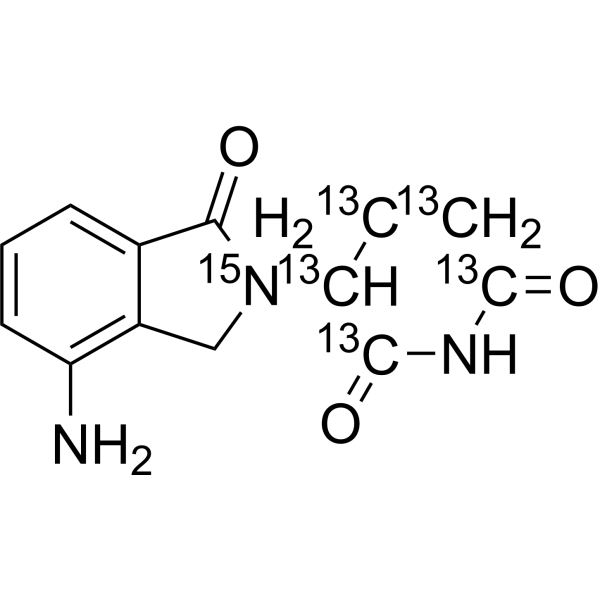 0 ImagesCat. No.: HY-A0003S2Synonyms: CC-5013-13C5,15NLenalidomide-13C5,15N (CC-5013-13C5,15N) is the 13C, 15N-labeled Lenalidomide (HY-A0003). Lenalidomide (CC-5013) is an orally active immunomodulatory agent that binds CRBN as a molecular glue to alter substrate specificity, inducing ubiquitination and proteasome-dependent degradation of IKZF1, IKZF3 and CK1α. Lenalidomide induces apoptosis by degrading IKZF1/3, and activates p53 by degrading CK1α. Lenalidomide promotes IL-2 release and effector functions of CD8+ T/NK cells, while inhibiting TNF-α secretion and M1-type pyroptosis. Lenalidomide can be used in research related to hematological malignancies, acute liver failure and acute kidney injury.
-
SHP2-IN-45
 0 ImagesCat. No.: HY-178983CAS No.: 2949435-53-2SHP2-IN-45 (Compound 6) is a potent, highly selective, and orally active SHP2 allosteric inhibitor. SHP2-IN-45 significantly reduces the expressions of IL-6, TNF-α, IL-1β, and iNOS. SHP2-IN-45 inhibits the polarization of M1-type macrophages. SHP2-IN-45 can inhibit the NF-κB pathway. SHP2-IN-45 can be used in the research of sepsis and acute lung injury.
-
Anti-Mouse BAFF-R Antibody (9B9)
 0 ImagesCat. No.: HY-P991778Anti-Mouse BAFF-R Antibody (9B9) reacts with mouse B-cell activating factor receptor (BAFF-R). Anti-Mouse BAFF-R Antibody (9B9) blocks BAFF-R both in vivo and in vitro. Recommend Isotype Controls: Rat IgG2b kappa, Isotype Control (HY-P990682).
-
MEDI-7352
 0 ImagesCat. No.: HY-P991324MEDI-7352 is a human bispecific antibody (bsAb) targeting NGF/bNGF & TNF. MEDI-7352 can be used in osteoarthritis (OA) pain research.
-
Progranulin modulator-1
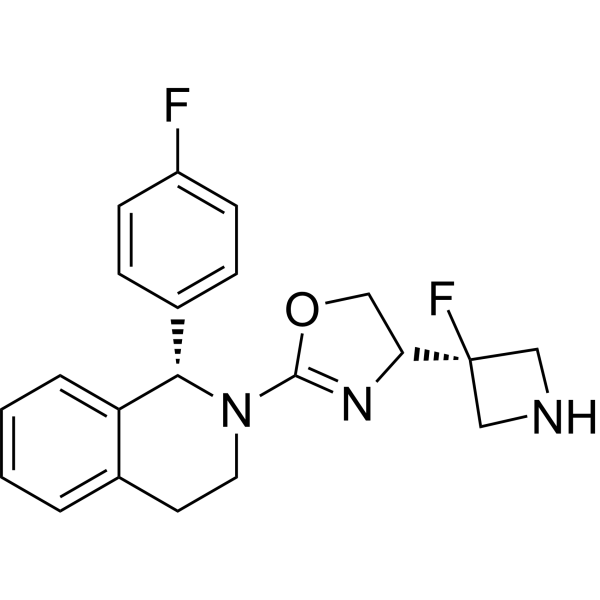 0 ImagesCat. No.: HY-153690CAS No.: 2641013-11-6Progranulin modulator-1 (Compound 60) is an orally active enhancer of progranulin (PGRN) secretion. Progranulin modulator-1 enhances the potency of BV-2 cell to increase PGRN levels, has inhibitory effect on hERG and Low cytotoxicity, the PGRN EC50 and hERG IC50 were 83 and 3100 nM, respectively.
-
COX-2-IN-63
 0 ImagesCat. No.: HY-180822COX-2-IN-63 (Compound 6k) is an orally active COX-2 inhibitor with an IC50 of 0.89 μM. COX-2-IN-63 reduces the levels of inflammatory mediators PGE2, TNF-α, and IL-6. COX-2-IN-63 can effectively alleviate acute inflammation in a rat paw edema model and has a lower risk of gastrointestinal side effects. COX-2-IN-63 can be used in anti-inflammatory research.
-
Isopongaflavone
 0 ImagesCat. No.: HY-N9566CAS No.: 64125-33-3Isopongaflavone is an isoflavone that can be isolated from the seedpods of Tephrosia vogelii with anti-inflammatory effects. Isopongaflavone suppresses the secretion of IL-1β, IFN-γ, granulocyte macrophage-colony stimulating factor (GM-CSF) and TNF-α in LPS (HY-D1056)-stimulated peripheral blood mononuclear cells (PBMCs).
-
Asobamast
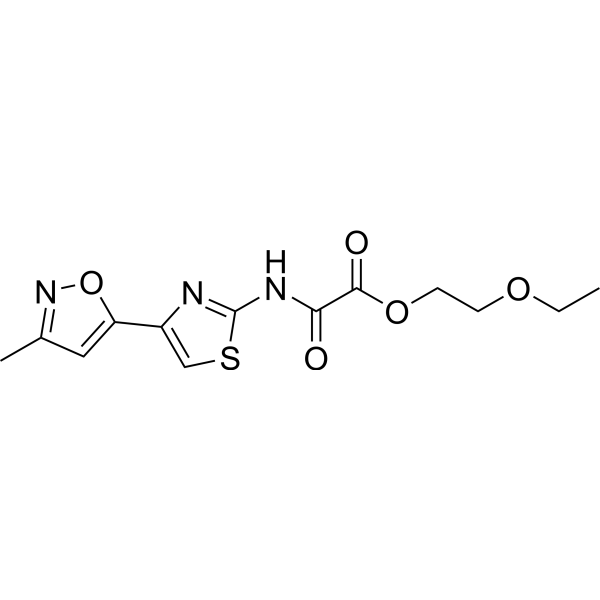 0 ImagesCat. No.: HY-114538CAS No.: 104777-03-9Asobamast is a potent, orally active antiallergic agent that inhibits ige mediated passive pulmonary allergic responses in rats (ED50=4.7 mg/kg) and inhibits antigen-induced mediator release from sensitized guinea pig lung fragments.

-
Peimine (Standard)
 0 ImagesSynonyms: Verticine (Standard); Dihydroisoimperialine (Standard)Peimine (Standard) is the analytical standard of Peimine. This product is intended for research and analytical applications. Peimine (Verticine; Dihydroisoimperialine) is an orally active natural product. Peimine has anti-inflammatory, analgesic and cough relieving effects. Peimine can be used in cancer and inflammation related research.
-
Anti-inflammatory agent 122
 0 ImagesCat. No.: HY-187199Anti-inflammatory agent 122 is an orally active anti-inflammatory agent. Anti-inflammatory agent 122 inhibits the activation of the NF-κB signaling cascade. Anti-inflammatory agent 122 downregulates the phosphorylation levels of JNK, p38 MAPK and ERK, thereby inhibiting the activation of the MAPK pathway. Anti-inflammatory agent 122 reduces the levels of pro-inflammatory cytokines TNF-α, IL-1β, iNOS and COX-2. Anti-inflammatory agent 122 alleviates paw swelling symptoms in rats with adjuvant-induced arthritis. Anti-inflammatory agent 122 can be used in studies related to adjuvant-induced arthritis.
-
AS1940477
 0 ImagesCat. No.: HY-13478CAS No.: 928344-12-1AS1940477 (Compound 3f) is an orally active p38 MAPK inhibitor. AS1940477 inhibits the enzymatic activity of recombinant p38α and β isoforms. AS1940477 inhibits the production of pro-inflammatory cytokines (including TNFα, IL-1β, and IL-6) in human synovial interstitial cells and animal models of inflammation. AS1940477 can be used in research on inflammatory diseases.
-
PDE4B-IN-6
 0 ImagesCat. No.: HY-179504PDE4B-IN-6 (compound 4i) is a potent and selective PDE4B inhibitor with an IC50 of 7.42 nM. PDE4B-IN-6 shows ~195- and ~169-fold selectivity for PDE4B over PDE4A (IC50 = 1540 nM) and PDE4C (IC50 = 1260 nM), respectively. PDE4B-IN-6 increases cAMP level and suppresses TNF-α expression. PDE4B-IN-6 shows favorable antioxidant profiles and low cytotoxicity. PDE4B-IN-6 can be used for chronic obstructive pulmonary disease (COPD) research.

-
MSB013
 0 ImagesCat. No.: HY-P992415MSB013 is a recombinant antibody targeting CD134.
-
CDX-1140
 0 ImagesCat. No.: HY-P991510CDX-1140 is a fully human IgG monoclonal antibody and CD40 agonist, with a Kd value of 0.01 nM against human targets. The epitope of CDX-1140 locates at CD40 CRD1 and avoids the CD40L binding site. It activates DCs and B cells, drives NF-κB reporter gene activation, exhibits agonist activity independent of FcR cross-linking, and shows a synergistic effect with recombinant CD40L. CDX-1140 does not induce systemic cytokine release, exerts direct and immune-mediated anti-tumor activity in tumor xenografts, and has favorable safety profiles. When used as a local vaccine adjuvant in combination with 6MHP+mBRAF+poly-ICLC, CDX-1140 increases the number of DC-LAMP+ DCs and induces Th1 CD4+ responses in high-risk melanoma. CDX-1140 can be used in studies related to B-cell lymphoma, bladder cancer and high-risk melanoma.
-
Centella asiatica extract
 0 ImagesCat. No.: HY-N18667CAS No.: 84696-21-9Centella asiatica extract is an orally active herbal extract. Centella asiatica extract scavenges free radicals, increases stratum corneum hydration, improves epidermal barrier function, and reduces skin redness and skin pH. Centella asiatica extract inhibits pro-inflammatory cytokines, suppresses p38 MAPK phosphorylation, reduces mast cell infiltration, and decreases the expression of TNF-α, IL-4, IL-5, IL-6, IL-17, CXCL9, iNOS and COX-2. Centella asiatica extract upregulates the expression of BDNF and downregulates the expression of VGLUT1, and exhibits neuroprotective effects under hypoxic conditions. Centella asiatica extract inhibits pro-inflammatory M1 macrophage polarization and prevents adipose tissue senescence. Centella asiatica extract can be used in studies related to hypoxia-induced neurological dysfunction, atopic dermatitis, and obesity-induced insulin resistance.
-
Epaldeudomide
 0 ImagesCat. No.: HY-172430SCAS No.: 1918159-31-5Epaldeudomide (Compound A406) is the inhibitor for TNF-α (>50% inhibition rate at 100 nM). Epaldeudomide inhibits the proliferation of cancer cells MM.1S (IC50 < 300 nM), WSU-DLCL-2 (IC50 < 100 nM) and Rec-1 (IC50 < 100 nM). Epaldeudomide exhibits antineoplastic activity.




