



TNF Receptor
Tumor Necrosis Factor Receptor; TNFR
Tumor necrosis factor (TNF) is a major mediator of apoptosis as well as inflammation and immunity, and it has been implicated in the pathogenesis of a wide spectrum of human diseases, including sepsis, diabetes, cancer, osteoporosis, multiple sclerosis, rheumatoid arthritis, and inflammatory bowel diseases.
TNF-α is a 17-kDa protein consisting of 157 amino acids that is a homotrimer in solution. In humans, the gene is mapped to chromosome 6. Its bioactivity is mainly regulated by soluble TNF-α–binding receptors. TNF-α is mainly produced by activated macrophages, T lymphocytes, and natural killer cells. Lower expression is known for a variety of other cells, including fibroblasts, smooth muscle cells, and tumor cells. In cells, TNF-α is synthesized as pro-TNF (26 kDa), which is membrane-bound and is released upon cleavage of its pro domain by TNF-converting enzyme (TACE).
Many of the TNF-induced cellular responses are mediated by either one of the two TNF receptors, TNF-R1 and TNF-R2, both of which belong to the TNF receptor super-family. In response to TNF treatment, the transcription factor NF-κB and MAP kinases, including ERK, p38 and JNK, are activated in most types of cells and, in some cases, apoptosis or necrosis could also be induced. However, induction of apoptosis or necrosis is mainly achieved through TNFR1, which is also known as a death receptor. Activation of the NF-κB and MAPKs plays an important role in the induction of many cytokines and immune-regulatory proteins and is pivotal for many inflammatory responses.
TNF Receptor Isoform Specific Products
-
TNF Receptor
(684)
View all products
-
TNFRSF1A/
CD120a (8)View all products
-
TNFRSF3/
CD18 (1)View all products
-
TNFRSF4
(5)
View all products
-
TNFRSF5/
CD40 (117)View all products
-
TNFRSF6/
Fas/ (2)CD95 View all products
-
TNFRSF7/
CD27 (2)View all products
-
TNFRSF8/
CD30 (3)View all products
-
TNFRSF9/
4-1BB/ (3)CD137 View all products
-
TNFRSF10B/
DR5/ (1)CD262 View all products
-
TNFRSF12A/
TWEAK (5)View all products
-
TNFRSF16/
NGF Receptor/ (1)CD271 View all products
-
TNFRSF18/
GITR/ (6)CD357 View all products
All Product Categories
-
TNF Receptor Inhibitors
(866)
View all products
-
TNF Receptor Agonists
(35)
View all products
-
TNF Receptor Antagonists
(25)
View all products
-
TNF Receptor Activators
(72)
View all products
-
TNF Receptor Modulators
(8)
View all products
-
TNF Receptor Inducers
(10)
View all products
-
TNF Receptor Controls
(4)
View all products
-
TNF Receptor Ligands
(2)
View all products
-
TNF Receptor Superfamily Proteins
(282)
View all products
-
TNF Receptor Related Products (1218)
Related Products (1218)

-
Recombinant Proteins (282)
-
Antibodies (23)
-
TNF Receptor Signaling Pathway
-
TNF Receptor Isoform Comparison
-
Nerelimomab
 0 ImagesCat. No.: HY-P99753CAS No.: 162774-06-3Synonyms: BAYX1351Nerelimomab (BAYX1351) is an anti-TNF-α antibody. Nerelimomab can be used for research of sepsis.
-
RIPK1-IN-32
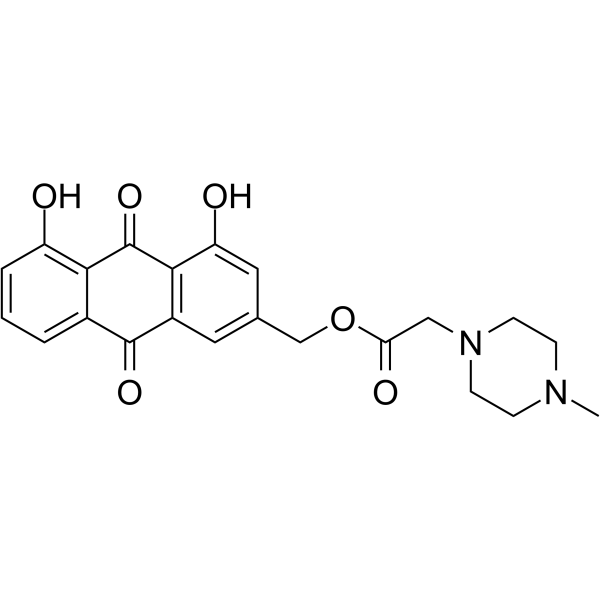
 0 ImagesCat. No.: HY-175007RIPK1-IN-32 is a RIPK inhibitor with anti-inflammatory activity. RIPK1-IN-32 inhibits nitric oxide (NO) release with an IC50 of 3.26 μM. RIPK1-IN-32 significantly alleviates acute liver injury associated with sepsis through the RIPK1/NF-κB/MAPK pathway, therefore preventing the nuclear translocation of p65 and c-fos, which results in reduced expression of TNF-α and IL-6. RIPK1-IN-32 can be used for the study of acute liver injury and sepsis.
-
1,4-Naphthoquinone (Standard)
 0 Images1,4-Naphthoquinone is an inhibitor with broad-spectrum inhibitory activity targeting DNA polymerase, NF-κB and monoamine oxidase (MAO-A/B), with antibacterial and anti-biofilm efficacy. 1,4-Naphthoquinone is a competitive inhibitor of MAO-B (Ki=1.4 μM) and a non-competitive inhibitor of MAO-A (Ki=7.7 μM). 1,4-Naphthoquinone inhibits DNA polymerase pol α, β, γ, δ, ε, λ with IC50 ranging from 5.57-128 μM. 1,4-Naphthoquinone inhibits tumor cell proliferation, induces apoptosis and necrosis, and has anti-angiogenic and anti-inflammatory activities by inducing oxidative stress, depleting glutathione (GSH), inhibiting DNA polymerase-mediated DNA synthesis and blocking NF-κB nuclear translocation. 1,4-Naphthoquinone can be used in anti-bacterial , anti-tumor and anti-inflammatory studies, including inhibition of melanoma and colon cancer cell growth and endothelial cell function, as well as LPS-induced inflammation models.
-
S101
 0 ImagesCat. No.: HY-165526CAS No.: 362508-67-6S101 is an inhibitor of SLP-76 and AhR. By inhibiting SLP-76 phosphorylation, S101 blocks the TCR signaling pathway and prevents AhR nuclear translocation, thereby selectively suppressing the proliferation of activated T cells, inducing their apoptosis, and reducing TNF-α levels. S101 can be used in studies of graft rejection, psoriasis, and superantigen-induced toxic shock.
-
Trigraecum
 0 ImagesCat. No.: HY-N15307CAS No.: 38070-97-2Trigraecum is a flavonoid compound found in Dracaena steudneri and Dalbergia cochinchinensis, exhibiting anti-inflammatory activity. It can inhibit the LPS (HY-D1056)-induced production of IL-1β, IL-2, GM-CSF, and TNF-α in human peripheral blood mononuclear cells. Trigraecum holds promise for research on inflammatory diseases.
-
Gaultherin (Standard)
 0 ImagesGaultherin (Standard) is the analytical standard for Gaultherin (HY-N1965). Gaultherin is an orally active non-steroidal anti-inflammatory agent. Gaultherin selectively inhibits NF-κB, MAPK, COX-2 (IC50 = 0.35 mg/mL), LOX (IC50 = 0.56 mg/mL) and HYAL (IC50 = 28.58 μg/mL) to exert anti-inflammatory, antipyretic and analgesic effects. Gaultherin exhibits modest direct antioxidant capacity, greater in cell-based models. Gaultherin does not affect COX-1 so that avoids the common gastrointestinal side effects of Aspirin (HY-14654).
-
Antitumor agent-19
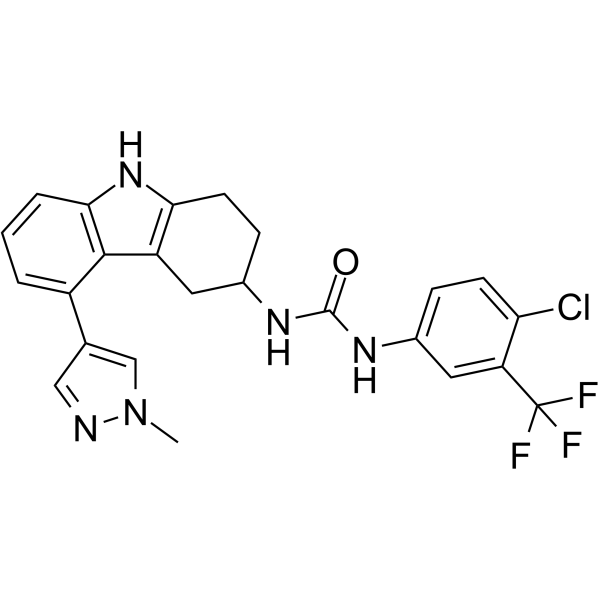 0 ImagesCat. No.: HY-128776CAS No.: 2379727-90-7Antitumor agent-19 is an antitumor agent that targets tumor-associated macrophages (TAMs) and can be used as a potent TAMs modulator. Antitumor agent-19 can increase TNF-alpha levels in tumor cells with EC50 values???of 17.18 μM and 18.87 μM in RAW 264.7 cells and BMDM cells, respectively.
-
Pexmetinib (Standard)
 0 ImagesSynonyms: ARRY-614 (Standard)Pexmetinib (Standard) (ARRY-614 (Standard)) is the analytical standard of Pexmetinib (HY-16782). This product is intended for research and analytical applications. Pexmetinib (ARRY-614) is an orally active dual Tie-2 and p38 MAPK inhibitor. Pexmetinib binds to Tie-2 and p38 MAPK in a "DFG-out" conformation, attenuates the phosphorylation of p38, inhibits STAT3 activation, reduces the promoter-binding activity of NFATc1, and decreases the expression of MMPs. Pexmetinib inhibits leukemia cell proliferation, abrogates TNF-α-mediated myelosuppression of healthy hematopoietic stem cells, stimulates hematopoiesis in primary myelodysplastic syndrome (MDS) samples, inhibits RANKL-induced osteoclast formation and bone resorption, and suppresses migration, invasion and induced osteolysis of breast cancer cells. Pexmetinib can be used in research related to myelodysplastic syndrome, acute myeloid leukemia and breast cancer-induced osteolysis.
-
D-chiro-Inositol (Standard)
 0 ImagesD-chiro-Inositol is a stereoisomer of inositol that exhibits activities such as improving glucose metabolism, anti-tumor effects, anti-inflammatory properties, and antioxidant activity. D-chiro-Inositol effectively alleviates cholestasis by enhancing bile acid secretion and reducing oxidative stress. D-chiro-Inositol improves insulin resistance, lowers hyperglycemia and circulating insulin levels, reduces serum androgen levels, and ameliorates some metabolic abnormalities associated with X syndrome by mimicking the action of insulin. Additionally, D-chiro-Inositol can induce a reduction in pro-inflammatory factors (such as Nf-κB) and cytokines (such as TNF-α), thereby exerting anti-inflammatory effects. D-chiro-Inositol may be used in the study of liver cirrhosis, breast cancer, type 2 diabetes, and polycystic ovary syndrome.
-
BIM-46174
 0 ImagesCat. No.: HY-183400CAS No.: 195450-11-4BIM-46174 is a heterotrimeric G protein complex inhibitor. BIM-46174 blocks GPCR downstream signaling by trapping Gα proteins in a nucleotide-free pocket conformation, thereby inhibiting Gαq-mediated calcium release, Gαs-mediated cAMP production, and GPCR-regulated cancer cell invasion. In vitro, BIM-46174 effectively suppresses a variety of clinically multidrug-resistant cell lines and induces tumor cell apoptosis through activation of caspase-3 and PARP cleavage. BIM-46174 also inhibits activation of the Neu1-MMP-9-GPCR signaling platform and downstream NF-κB signaling, and is widely used in the study of cancer signaling pathways and inflammation-related research, including lung cancer, pancreatic cancer, breast cancer, melanoma, and leukemia.
-
13(S)-HOTrE
 0 Images13 (S)-HOTrE is an oxylipin metabolite of α-Linolenic acid (HY-N0728). 13 (S)-HOTrE mediates the inactivation of the NLRP3 inflammasome through the PPAR-γ pathway to exert anti-inflammatory effects. 13 (S)-HOTrE inhibits NF-κB nuclear translocation, ROS production, autophagy and IL-1β levels, induces apoptosis, and increases IL-10 levels. 13 (S)-HOTrE alleviates LPS-induced inflammatory responses in macrophages, prolongs the survival time of septic mice, and regulates the immunometabolic phenotype in parenteral nutrition mouse models. 13 (S)-HOTrE can be used in the research of immune and inflammation-related diseases.
-
Naphazoline nitrate (Standard)
 0 ImagesSynonyms: Naphthazoline nitrate (Standard)Naphazoline (nitrate) (Standard) is the analytical standard of Naphazoline (nitrate). This product is intended for research and analytical applications. Naphazoline (Naphthazoline) nitrate is an α-adrenergic receptor agonist. Naphazoline nitrate reduces vascular hyperpermeability and promotes vasoconstriction. Naphazoline nitrate reduces the levels of inflammatory factors (TNF-α, IL-1β and IL-6), cytokines (IFN-γ and IL-4), IgE, GMCSF, and NGF. Naphazoline nitrate can be used for non-bacterial conjunctivitis research.
-
Betamethasone succinate
 0 ImagesCat. No.: HY-160713CAS No.: 27297-42-3Synonyms: NSSL-BMSBetamethasone succinate (NSSL-BMS) is a nano-formulation that can cross the blood-brain barrier. Betamethasone succinate is prepared by encapsulating the Betamethasone (HY-13570) semi-succinate in PEG-liposomes. Betamethasone succinate utilizes the enhanced permeation and retention effects of liposomes to target and deliver the potent glucocorticoid to the inflammatory sites. Betamethasone succinate inhibits the secretion of pro-inflammatory cytokines (such as TNF-α and IL-6) while maintaining the level of anti-inflammatory cytokine TGF-β. Betamethasone succinate can be used in the research of arthritis and cerebral malaria.
-
2'-Acetylacteoside (Standard)
 0 ImagesCat. No.: HY-N0026RCAS No.: 94492-24-7Synonyms: 2'-AA (Standard)2'-Acetylacteoside (Standard) is the analytical standard of 2'-Acetylacteoside (2'-AA) (HY-N0026). This product is intended for research and analytical applications. 2'-Acetylacteoside is a natural compound with oral activity and blood-brain barrier permeability. 2'-Acetylacteosideexhibits MAO‑B inhibitory activity (IC50 = 17.71 μM, Ki = 13.81 μM). 2'-Acetylacteoside downregulates the expression of RANK, TRAF6, NF‑κB, NFATc1 and IKKβ, disrupts the RANKL/RANK interaction, blocks downstream signaling pathways, and increases the level of phosphorylated Akt. 2'-Acetylacteoside possesses potent anti-osteoclastogenic, anti-bone resorptive, pro-neurogenic, neuroprotective and antioxidant activities. 2'-Acetylacteoside can be used in the research of osteoporosis, ischemic stroke and Parkinson's disease.
-
Isoforskolin (Standard)
 0 ImagesCat. No.: HY-N6927RCAS No.: 64657-21-2Synonyms: Coleonol B (Standard)Isoforskolin (Standard) is the analytical standard of Isoforskolin. This product is intended for research and analytical applications. Isoforskolin is the principle active component of C. forskohlii native to China. Isoforskolin reduces the secretion of lipopolysaccharide (LPS)-induced cytokines, namely TNF-α, IL-1β, IL-6 and IL-8, in human mononuclear leukocytes. Isoforskolin acts as an anti-inflammatory agent for the treatment of Lyme arthritis.
-
ASB16165
 0 ImagesCat. No.: HY-165553CAS No.: 873541-45-8ASB16165 is a selective and potent PDE7A inhibitor with an IC50 of 15 nM against human PDE7A. ASB16165 inhibits IL-12-induced IFN-γ production via a cAMP/PKA-dependent mechanism, reduces cutaneous TNF-α production, and suppresses keratinocyte proliferation. ASB16165 can be used in research on skin diseases such as psoriasis.
-
Bruceoside B
 0 ImagesCat. No.: HY-N20733CAS No.: 69687-69-0Bruceoside B is a PI3K/Akt/NF-κB inhibitor. Bruceoside B reduces LPS (HY-D1056)-induced nitric oxide release and the secretion of TNF-α, IL-6 and IL-1β, and decreases the activation level of apoptosis. Bruceoside B inhibits the replication, coat protein accumulation and local lesion formation of tobacco mosaic virus (TMV), and enhances the anti-infection ability of plants. Bruceoside B can be used in studies related to acute lung injury and tobacco mosaic virus infection.
-
DPP4-In hydrochloride
 0 ImagesCat. No.: HY-110051CAS No.: 866396-70-5DPP4-In (hydrochloride) is an inhibitor of dipeptidyl peptidase 4 (DPP4) that can reduce DPP4 expression.
-
CD28-IN-4
 0 ImagesCat. No.: HY-184441CAS No.: 3116073-35-6CD28-IN-4 is a selective CD28 inhibitor with a human IC50 of 231 nM and a human Kd of 344 nM. CD28-IN-4 binds to CD28, disrupts its interaction with CD80, blocks CD28-mediated co-stimulatory signal transduction, and reduces cytokine secretion in a human primary tumor-PBMC and epithelial tissue co-culture model. CD28-IN-4 can be used for cancer-related research.




