



Drug Derivative
Drug derivative
Drug derivatives are derived from parent compounds. They replace or add atoms and groups through chemical reactions to optimize the various properties of the parent compound and reduce side effects. The application of drug derivatives provides a diverse compound library for drug research and development and accelerates the discovery of new drugs. For example, urea derivatives Glibenclamide can prolong the blood sugar-lowering effect of anti-diabetic drugs.
References:
- [1]. Vardanyan RS, et al. Fentanyl-related compounds and derivatives: current status and future prospects for pharmaceutical applications. Future Med Chem. 2014 Mar;6(4):385-412.x
- [2]. Ghosh AK, et al. Urea Derivatives in Modern Drug Discovery and Medicinal Chemistry. J Med Chem. 2020 Mar 26;63(6):2751-2788.x
All Product Categories
-
Drug Derivative Inhibitors
(12)
View all products
-
Drug Derivative Agonist
(1)
View all products
-
Drug Derivative Activator
(1)
View all products
-
Drug Derivative Chemical
(1)
View all products
-
Drug Derivative Inducer
(1)
View all products
-
Drug Derivative Controls
(38)
View all products
-
Drug Derivative Substrate
(1)
View all products
-
Drug Derivative Related Products (4056)
Related Products (4056)

-
Pergolide
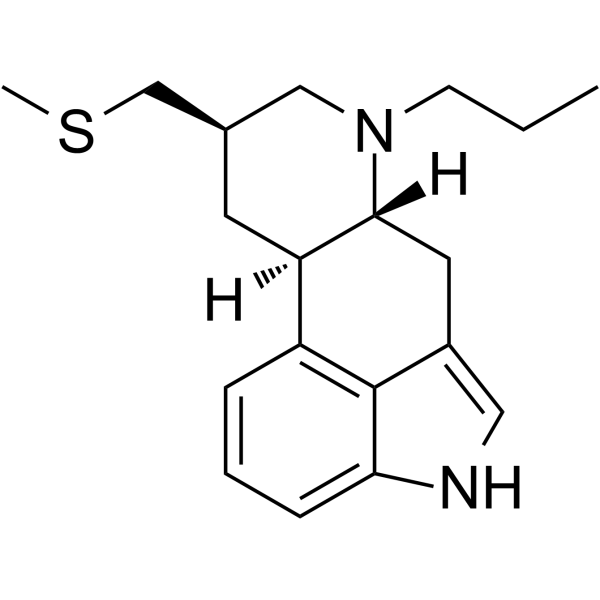 0 ImagesSynonyms: LY127809 free basePergolide (LY127809 free base), an Ergoline derivative, is a potent and orally active dopamine D1 and D2 receptor agonist. Pergolide can be used for Parkinson's disease and hyperprolactinaemia research.
-
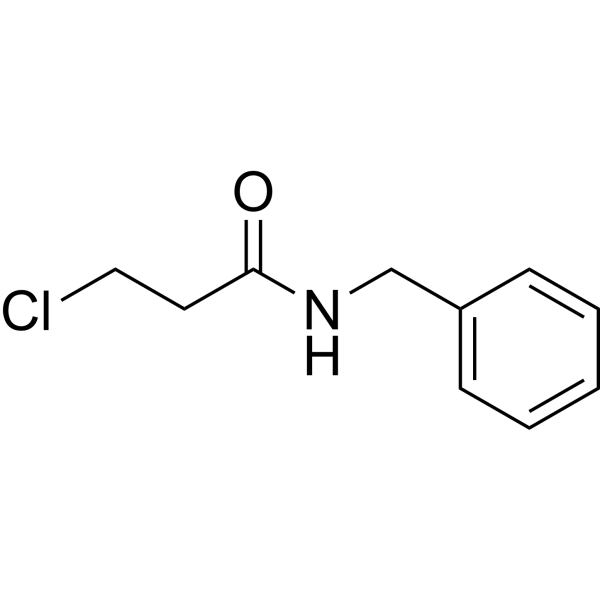
7-(2-Aminoethyl)camptothecin TFA
 0 ImagesCat. No.: HY-159162APurity: 99.56%Synonyms: 7CPT TFA7-(2-Aminoethyl)camptothecin TFA (7CPT TFA) is the TFA salt form of Camptothecin (HY-16560) derivative 7-(2-Aminoethyl)camptothecin (HY-159162). 7-(2-Aminoethyl)camptothecin TFA can be used for synthesis of conjugate with triple helix-forming oligonucleotides (TFOs) and camptothecin (CPT). The TFO-CPT conjugate is used for DNA cleavage.
-
3′-Deoxyguanosine
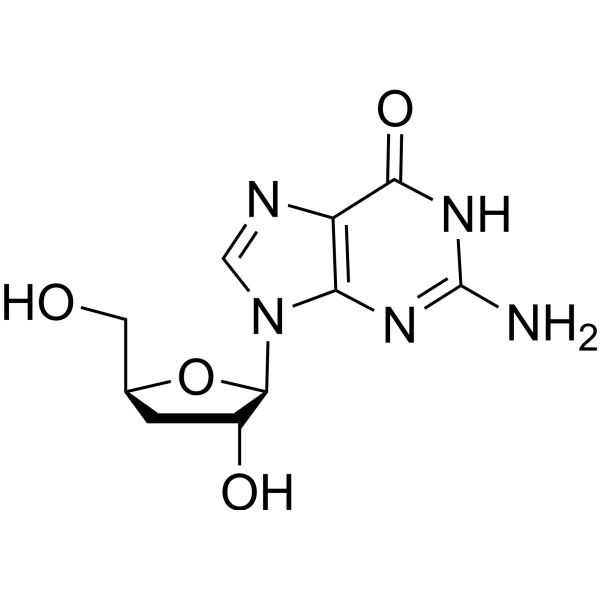 0 ImagesCat. No.: HY-W013330CAS No.: 3608-58-0Synonyms: Guanosine, 3'-deoxy-3′-Deoxyguanosine (Guanosine, 3'-deoxy-) is a derivative of Guanosine (HY-N0097). 3′-Deoxyguanosine interacts with human purine nucleoside phosphorylase via hydrogen bonding with residues such as Glu201 and Asn243. 3′-Deoxyguanosine exhibits moderate displacement activity for [3H]-guanosine in rat meninges. 3′-Deoxyguanosine is useful for studying the mechanism of guanosine receptors and purine metabolism.
-
Sodium gualenate
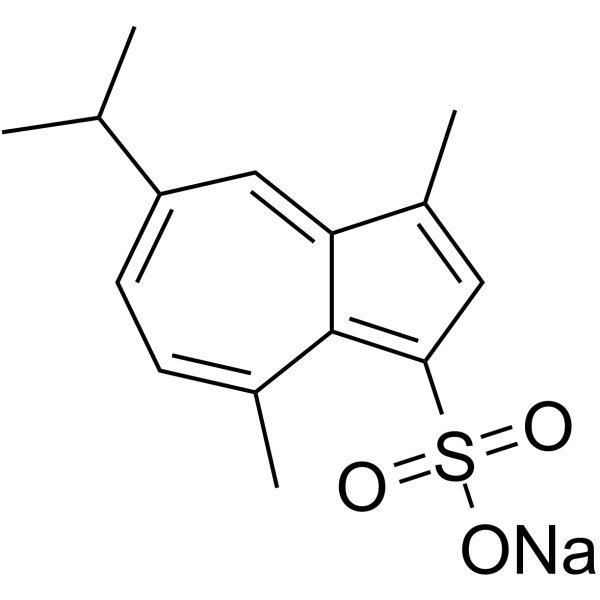 0 ImagesSodium gualenate (Guaiazulenesulfonate sodium) is a hydrophilic derivative of guaiazulene with excellent anti-inflammatory and wound-healing effects mainly used for the treatment of duodenal ulcer, gastric ulcer and gastritis.
-
NCR 631
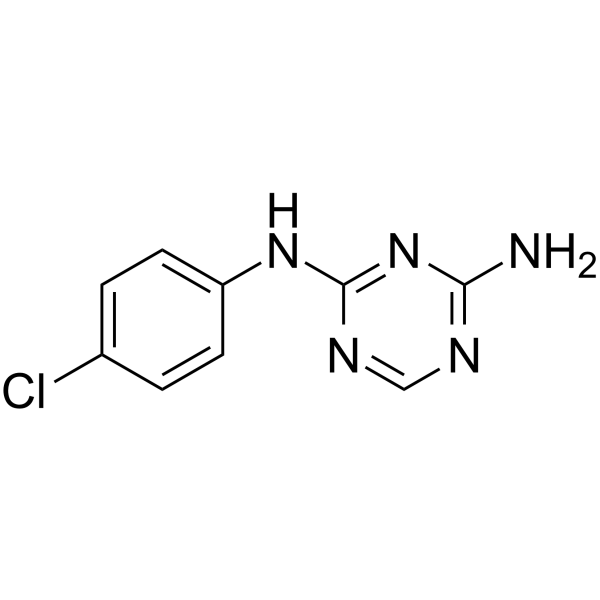
 0 ImagesCat. No.: HY-177986CAS No.: 160911-12-6NCR 631 is a 3-HAO inhibitor and 3-hydroxyanthranilic acid (HY-W001171) analogue. NCR-631 has anticonvulsant properties. NCR-631shows a concentration-dependent protective effect against the anoxia.
-
Fmoc-D-allo-Thr-OH
 0 ImagesCat. No.: HY-P4613CAS No.: 130674-54-3Fmoc-D-allo-Thr-OH is a derivative of D-allothreonine (HY-W001959), which is commonly used as a building block in solid-phase peptide synthesis (SPPS).
-
Captopril disulfide
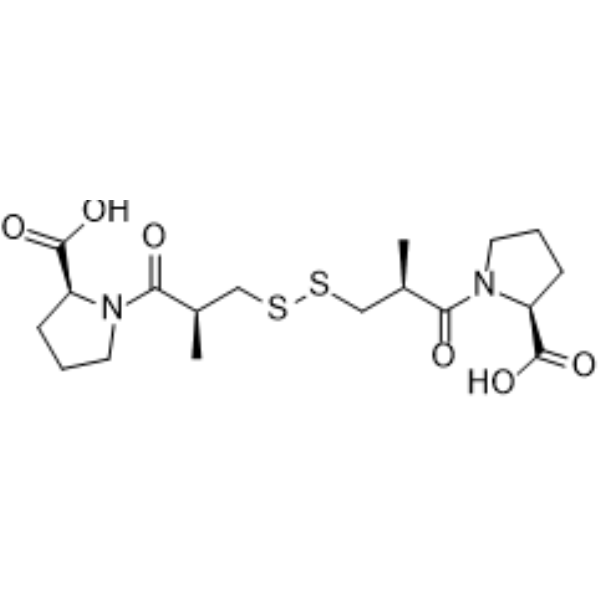 0 ImagesSynonyms: SQ 14551Captopril disulfide (SQ 14551) is an orally active disulfide dimer prodrug. Captopril disulfide is metabolized to Captopril and acts as a Bradykinin potentiator. Captopril disulfide enhances the vasodilatory effect of Bradykinin in anesthetized rats and the contractile response of isolated guinea pig ileum to Bradykinin. Captopril disulfide exhibits antihypertensive activity in spontaneously hypertensive rats. Captopril disulfide can be used in hypertension-related research.
-
DBCO-PEG3-GGFG-Exatecan
 0 ImagesCat. No.: HY-177546CAS No.: 2754384-71-7DBCO-PEG3-GGFG-Exatecan is a Drug-linker conjugate for ADC. DBCO-PEG3-GGFG-Exatecan contains the ADC linker (DBCO-PEG3-GGFG) and a DNA topoisomerase I inhibitor Exatecan (HY-13631).
-
D-Glucono-1,4-lactone
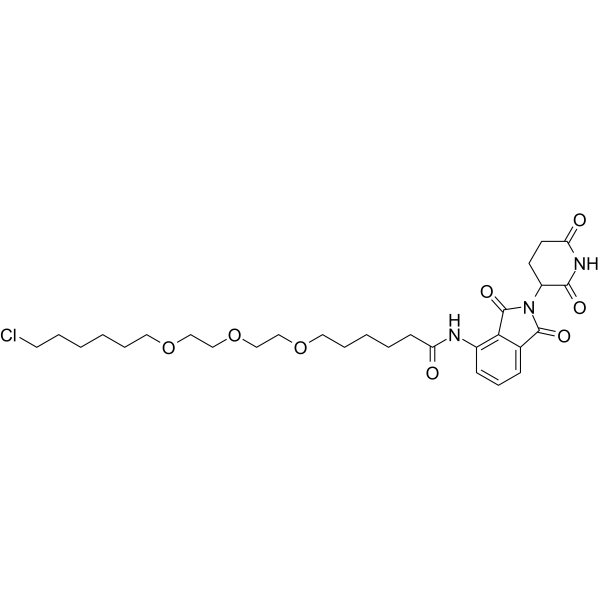
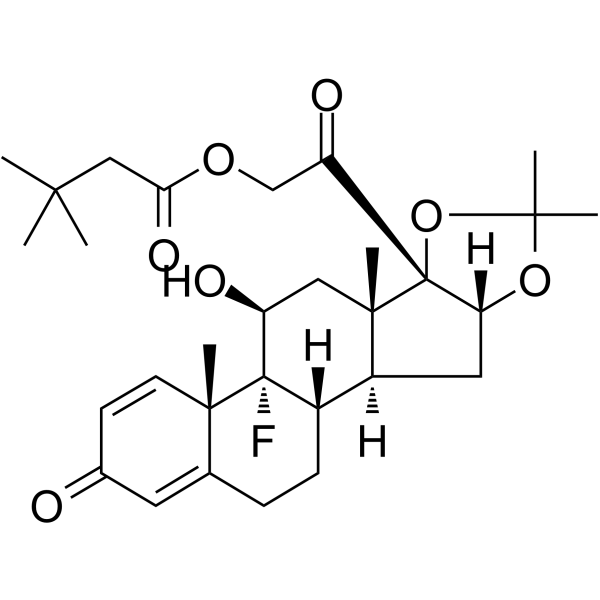
 0 ImagesCat. No.: HY-W047191CAS No.: 1198-69-2D-Glucono-1,4-lactone is a derivative of D-gluconic acid (HY-Y0569C). D-Glucono-1,4-lactone can be isolated from fruits, vegetables, honey, kombucha and wine. D-Glucono-1,4-lactone inhibits thrombin-induced arachidonic acid peroxidation and platelet activation. D-Glucono-1,4-lactone reduces superoxide anion production in thrombin-activated platelets. D-Glucono-1,4-lactone exerts antioxidant activity on platelets under oxidative stress conditions and prevents excessive platelet activation through antioxidant mechanisms. D-Glucono-1,4-lactone can be used in research related to cardiovascular diseases.
-
Yohimbic acid
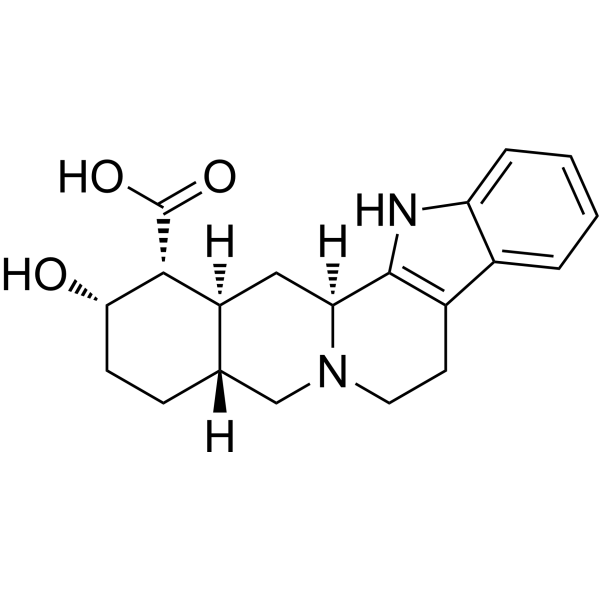 0 ImagesYohimbic acid is a derivative of Yohimbine Hydrochloride (HY-N0127). Yohimbic acid exhibits vasodilatory and anticancer activities. Yohimbic acid can be used for the research of cancer, inflammation and cardiovascular disease.

-
Isomangiferin
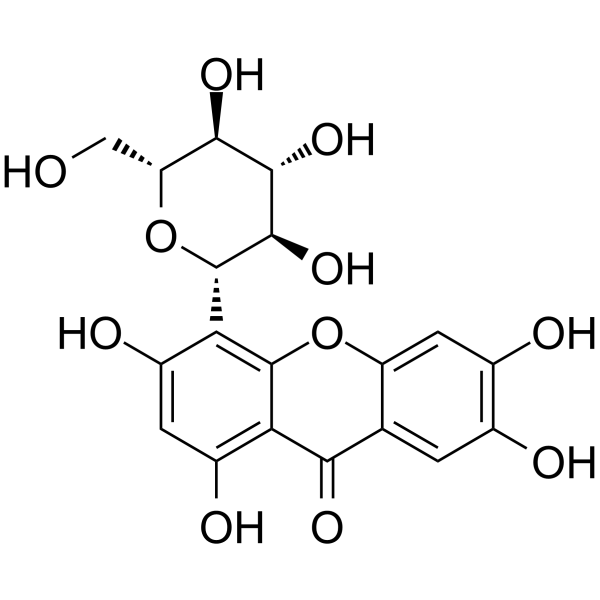 0 ImagesIsomangiferin is an orally active xanthone C-glucoside, and its chemical structure is similar to Mangiferin (HY-N0290). Isomangiferin is an effective VEGFR-2 kinase inhibitor, which can induces cell apoptosis, inhibit the growth, metastasis and angiogenesis of breast cancer. Isomangiferin exerts anti-inflammatory effects by inhibiting the HMGB1/NLRP3/NF-κB signaling pathway, thereby improving the renal function indicators of diabetic mice. Isomangiferin exhibits inhibitory effects on various bacteria and herpes simplex virus type 1 (HSV-1). Isomangiferin promotes the migration and osteogenic differentiation of bone marrow mesenchymal stem cells (BMSCs) and reduces cell apoptosis and the production of ROS by activating the AMPK/ACC pathway, thereby facilitating fracture healing.
-
CoA-S-S-CoA
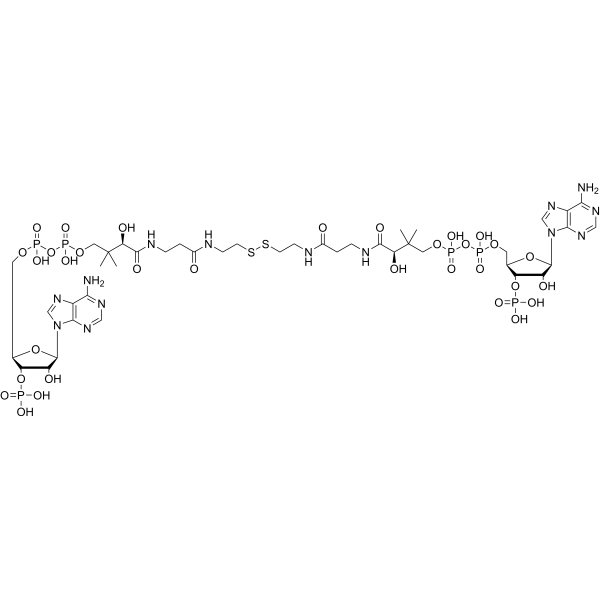 0 ImagesCat. No.: HY-E70236CAS No.: 31664-36-5CoA-S-S-CoA is an oxidized disulfide form of Coenzyme A (HY-128851). CoA-S-S-CoA acts as a pool of disulfide reducing equivalents.
-
Methyl benzyl-L-serinate
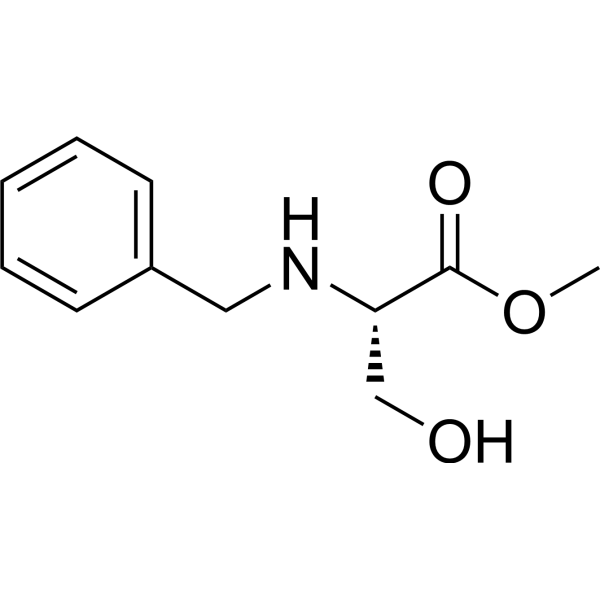 0 ImagesMethyl benzyl-L-serinate is the methyl ester of N-benzyl-L-serine.




