Epoxide Hydrolase
Epoxide hydrolases (EH) present in all living organisms. The mammalian soluble epoxide hydrolase (sEH) is a 120 kDa dimer of two identical 62.5 kDa monomers arranged in an anti-parallel fashion. It is mostly expressed in the liver, kidneys, brain, endothelium, and at lesser levels in other tissues. Inflammation and pain are major components of many disease states. Mammalian sEH inhibition reduces blood pressure, inflammation and pain. The anti-inflammatory activities of sEH inhibitors occur in part through the NF-κB mediated down-regulation of COX2 transcription, resulting in lower production of pro-inflammatory prostaglandins such as PGE2 and PGD2.
All Product Categories
-
Epoxide Hydrolase Related Products (94)
Related Products (94)

-
Antibodies (1)
-
sEH-IN-23
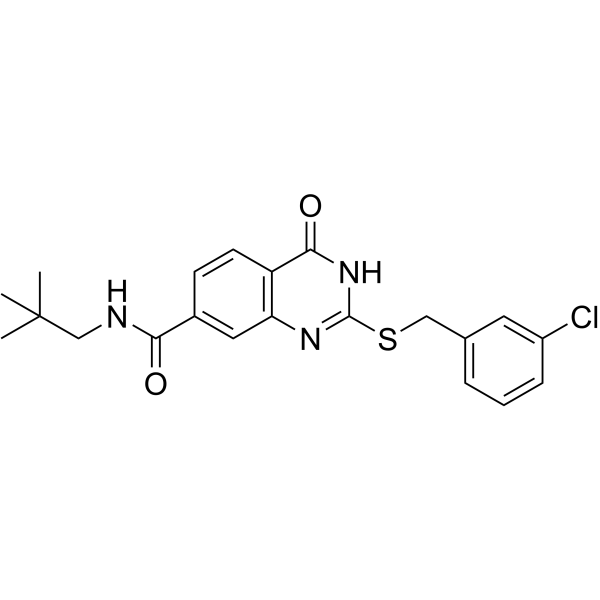
 0 ImagesCat. No.: HY-182283sEH-IN-23 is a soluble epoxide hydrolase inhibitor with a IC50 of 0.8 nM against human sEH and 0.7 nM against murine sEH. sEH-IN-23 inhibits inflammatory factor production mediated by NF-κB activation, reactive oxygen species (ROS) generation, and the release of pro-inflammatory cytokines IL-1β, IL-6 and TNF-α. sEH-IN-23 exhibits anti-inflammatory activity in acute lung injury models. sEH-IN-23 can be used for the research of acute lung injury.

-
Moracin M 3'-O-β-D-glucopyranoside
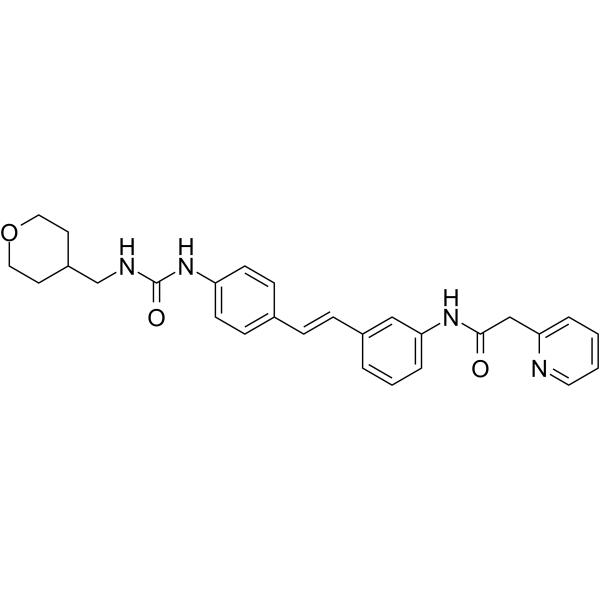
 0 ImagesCat. No.: HY-N21974CAS No.: 152041-26-4Moracin M 3'-O-β-D-glucopyranoside is a natural product with multiple activities such as hypoglycemic and antitumor effects. Moracin M 3'-O-β-D-glucopyranoside acts as an inhibitor of mushroom tyrosinase with an IC50 of 127.5 μM, and also functions as an inhibitor of soluble epoxide hydrolase with an IC50 of 7.7 μM. Moracin M 3'-O-β-D-glucopyranoside can be used in studies related to hyperglycemia and skin tumors.
-
5-LOX/sEH-IN-1
 0 ImagesCat. No.: HY-159169CAS No.: 3040383-48-75-LOX/sEH-IN-1 (Compound 8o) is a dual 5-LOX/sEH-IN-1 inhibitor with cardioprotective effects, exhibiting IC50 values of 3.05 μM and 2.20 nM respectively, and 5-LOX/sEH-IN-1 can also inhibit the activity of COX-2 (IC50=10.50 μM). 5-LOX/sEH-IN-1 has analgesic and anti-inflammatory effects, while reducing ulcer pathogenicity, and can be used to develop anti-inflammatory agents with fewer gastrointestinal and cardiovascular side effects.
-
sEH inhibitor-2
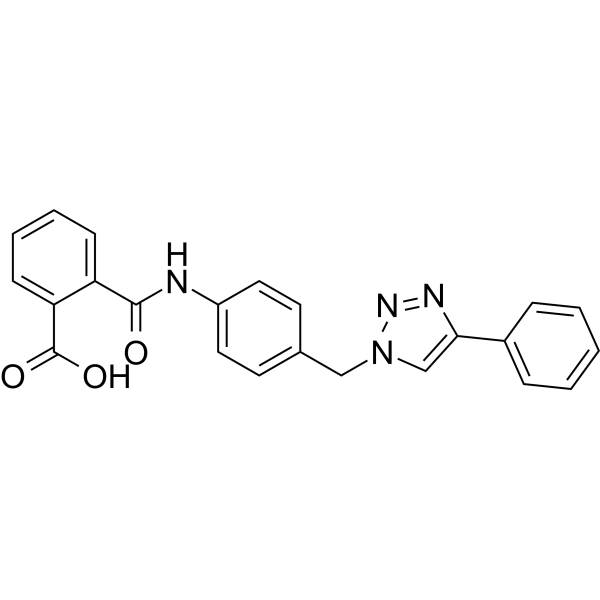 0 ImagesCat. No.: HY-143294CAS No.: 2816102-69-7sEH inhibitor-2 (compound 5l) is an orally active (predicted percentage absorption: 71.2-88.4%) soluble epoxide hydrolase (sEH) inhibitor, with an IC50 of 0.9 nM. sEH inhibitor-2 can maintain epoxyeicosatrienoic acids (EETs) serum level in high concentrations. sEH inhibitor-2 can be used in study of cardiovascular protection.
-
sEH/AChE-IN-3
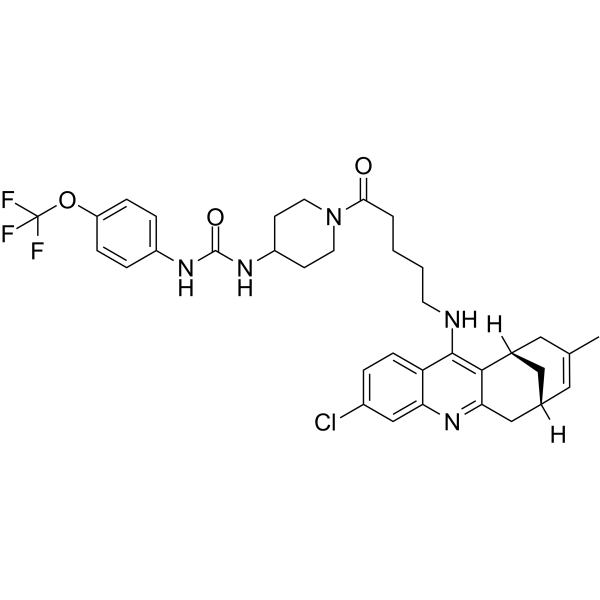 0 ImagesCat. No.: HY-145833CAS No.: 2490589-11-0sEH/AChE-IN-3 (compound (−)-15) is a potent and BBB-penetrated dual inhibitor of sEH (soluble epoxide hydrolase) and AChE (acetylcholinesterase), with IC50 values of 0.4 nM (hsEH), 1.94 nM (hAChE), 615 (hBChE, human butyrylcholinesterase), 4.3 nM (msEH), and 2.61 nM (mAChE), respectively.
-
PROTAC sEH degrader-5
 0 ImagesCat. No.: HY-187425CAS No.: 3123230-60-1PROTAC sEH degrader-5 is a highly efficient PROTAC degrader that targets and degrades soluble epoxide hydrolase (sEH) by recruiting cereblon. PROTAC sEH degrader-5 directly inhibits the hydrolase activity of human and mouse sEH, with pIC50 values of 10.36 and 8.41, respectively. PROTAC sEH degrader-5 alleviates LPS (HY-D1056)-induced acute inflammation in vivo. PROTAC sEH degrader-5 can be used in studies related to LPS-induced acute inflammation.
-
4H-Tomentosin
 0 ImagesCat. No.: HY-N17669CAS No.: 68776-19-24H-Tomentosin is a mixed-competitive type soluble epoxide hydrolase (sEH) inhibitor with an IC50 of 6.84 μM and a Ki of 7.02 μM. 4H-Tomentosin interacts with sEH by forming hydrogen bonds with Tyr343, Ile363, and Tyr383.
-
PROTAC sEH degrader-2
 0 ImagesCat. No.: HY-174443PROTAC sEH degrader-2 is a soluble epoxide hydrolase (sEH) PROTAC degrader, with pIC50 values of 8.37 and 7.12 against hsEH-H and msEH-H, respectively. PROTAC sEH degrader-2 induces targeted degradation of sEH via the ubiquitin-proteasome system, thereby completely blocking its dual functions as an epoxide hydrolase and a lipid phosphatase by bridging the short-branch exit of sEH with the CRBN E3 ubiquitin ligase. PROTAC sEH degrader-2 can be used in the research of neuroinflammation and Alzheimer's disease.
-
Arabinothalictoside
 0 ImagesCat. No.: HY-N15525CAS No.: 153287-94-6Arabinothalictoside is found in A. squamosa L. Arabinothalictoside is a sEH inhibitor (IC50: 47.1 µM). Arabinothalictoside can be used in the research of cardiovascular and urinary diseases.
-
DJ-89
 0 ImagesCat. No.: HY-173568DJ-89 (Compound 77) is a potent soluble epoxide hydrolase (sEH) inhibitor with an IC50 value of 0.51 nM . DJ-89 inhibits sEH from hydrolyzing epoxyeicosatrienoic acids (EETs), reducing the production of pro-inflammatory substances. DJ-89 is promising for research of acute and chronic inflammatory diseases (such as rheumatoid arthritis).
-
sEH/AChE-IN-4
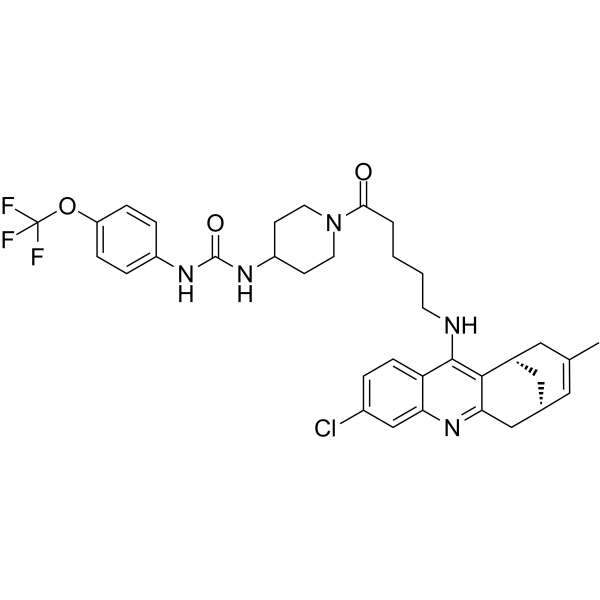 0 ImagesCat. No.: HY-145833ACAS No.: 2490589-12-1sEH/AChE-IN-4 (compound (+)-15) is a potent and BBB-penetrated dual inhibitor of sEH (soluble epoxide hydrolase) and AChE (acetylcholinesterase), with IC50 values of 3.1 nM (hsEH), 1660 nM (hAChE), 179 nM (hBChE, human butyrylcholinesterase), 14.5 nM (msEH), and 102 nM (mAChE), respectively.
-
PROTAC sEH degrader-1
 0 ImagesCat. No.: HY-159494PROTAC sEH degrader-1 is a PROTAC degrader targeting soluble epoxide hydrolase (sEH) with a DC50 of 0.5 nM, and it also possesses sEH inhibitory activity. PROTAC sEH degrader-1 has an IC50 of 3.8 nM against human sEH and an IC50 of 210 nM against mouse sEH. PROTAC sEH degrader-1 relies on the ubiquitin-proteasome system to achieve target protein degradation, and it selectively degrades cytoplasmic sEH. PROTAC sEH degrader-1 rapidly reduces endoplasmic reticulum stress in cells, downregulates the phosphorylation levels of IRE1α, PERK and eIF2α, enhances cell viability, and alleviates Thapsigargin (HY-13433)-induced apoptosis. PROTAC sEH degrader-1 effectively degrades sEH in mouse liver and brown adipose tissue. PROTAC sEH degrader-1 can be used in studies related to metabolic disorders and inflammation.
-
N-(3-Methoxybenzyl)stearamide
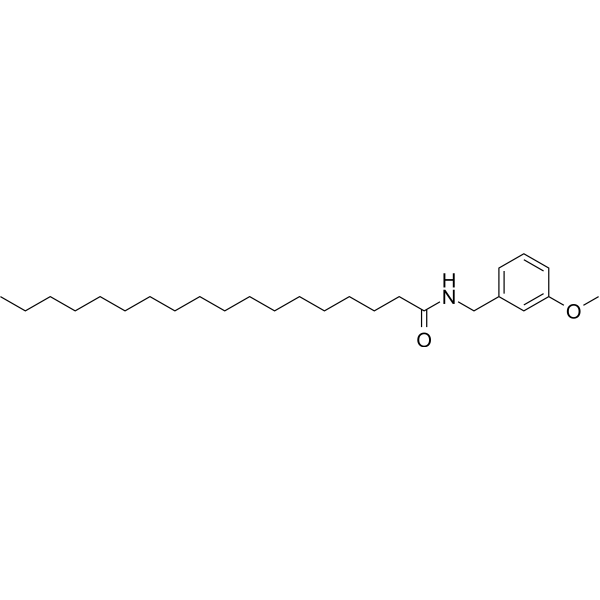 0 ImagesN-(3-Methoxybenzyl)stearamide a natural product from Lepidium meyenii (Maca), inhibits human and mouse soluble epoxide hydrolase (hsEH and msEH) with IC50s of 0.001 and <0.001 μg/nM, respectively.
-
BRP-821
 0 ImagesCat. No.: HY-178434Synonyms: FP30BRP-821 is a soluble epoxide hydrolase (sEH) inhibitor with an IC50 of 0.4 nM. BRP-821 can be used for the researches of inflammation, cardiovascular, metabolic and neurological disease .
-
sEH/AChE-IN-5
 0 ImagesCat. No.: HY-183341sEH/AChE-IN-5 is a selective, orally active and brain-penetrant acetylcholinesterase (AChE) and soluble epoxide hydrolase (sEH) dual inhibitor with IC50 values of 1.7 nM and 0.7 nM. sEH/AChE-IN-5 mediates neuroprotection and anti-inflammation via reduced TNF-α, IL-1β, IL-6, iNOS. sEH/AChE-IN-5 improves Scopolamine (HY-N0296)-induced learning and memory deficits mice. sEH/AChE-IN-5 can be used for the research of Alzheimer's disease.
-
Epoxykynin
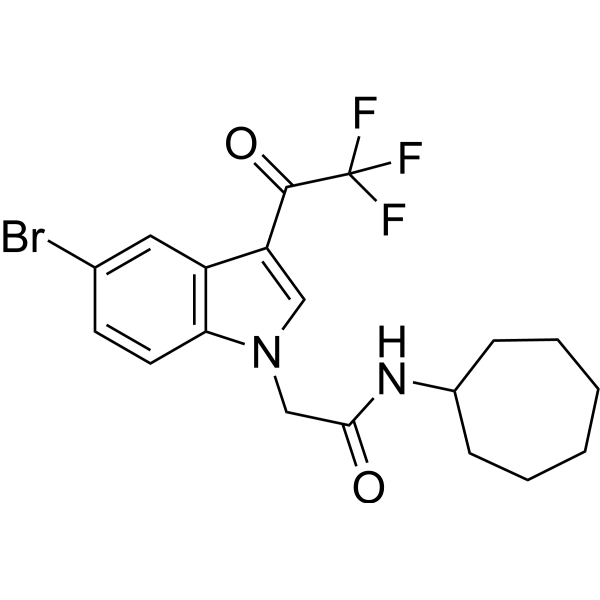 0 ImagesCat. No.: HY-163401CAS No.: 640263-95-2Epoxykynin is a potent epoxide hydrolase (sEH) inhibitor.
-
sEH-IN-21
 0 ImagesCat. No.: HY-176554CAS No.: 3084814-46-7sEH-IN-21 is an orally active sEH inhibitor with IC50s of 0.1 nM for hsEH and msEH. sEH-IN-21 potently inhibits NF-κB signaling pathways. sEH-IN-21 shows a strong anti-inflammatory activity, decreases the release of IL-6 and TNF-α and maintained the integrity of the intestinal barrier. sEH-IN-21 can be used for the study of inflammatory bowel disease (IBD).