



Mitosis
Cellular mitosis is a highly regulated and complex process involving the synergistic action of multiple proteins and molecular mechanisms. The process of mitosis is usually related to tubulin, and mitotic inhibitors can disrupt the polymerization and depolymerization of tubulin, so that chromosomes cannot be properly separated, leading to apoptosis.
All Product Categories
-
Mitosis Related Products (126)
Related Products (126)

-
AJI-214
 0 ImagesCat. No.: HY-164455CAS No.: 1395886-20-0AJI-214 is a dual-target inhibitor of Aurora kinase A and JAK2. AJI-214 directly blocks Aurora kinase A to inhibit T cell mitotic progression and cell polarity, and inhibits JAK2 activation to inhibit STAT3 phosphorylation, thereby reducing the differentiation of TH1 and TH17 cells. AJI-214 can be used in studies on regulating immune responses and preventing graft-versus-host disease (GVHD).
-
Harmol (Standard)
 0 ImagesHarmol (Standard) is the analytical standard of Harmol (HY-107811). This product is intended for research and analytical applications. Harmol hydrochloride is an orally active β-carboline alkaloid. Harmol hydrochloride is a TFEB activator and monoamine oxidase inhibitor. Harmol can induce cell mitosis, Autophagy and Apoptosis. Harmol promotes the degradation of α-synuclein by regulating the autophagy-lysosomal pathway. Harmol has anti-tumor, anti-depressant and anti-aging activities. Harmol improves motor impairment in a mouse Parkinson's disease model.
-
Americanin A
 0 ImagesCat. No.: HY-N18301CAS No.: 69506-79-2Americanin A is a Neolignan. Americanin A can be isolated from the seeds of Phytolacca americana. Americanin A activates ATM and ATR, initiating the subsequent signal transduction cascades that include Chk1, Chk2, and tumor suppressor p53. Americanin A targets selectively Skp2 for degradation and thereby stabilizes p27. Americanin A suppresses the activity of Cyclin B1 and its partner cdc2 to prevent entry into Mitosis. Americanin A induces Apoptosis by producing excessive ROS. Americanin A has anti-cancer activity against colorectal cancer.
-
1-Oleoyl lysophosphatidic acid sodium (Standard)
 0 ImagesCat. No.: HY-107614RCAS No.: 325465-93-8Synonyms: 1-Oleoyl-sn-glycero-3-phosphate sodium (Standard); 1-Oleoyl-LPA sodium (Standard)1-Oleoyl lysophosphatidic acid sodium (Standard) is the analytical standard of 1-Oleoyl lysophosphatidic acid (sodium) (HY-107614). This product is intended for research and analytical applications. 1-Oleoyl lysophosphatidic acid (1-Oleoyl-sn-glycero-3-phosphate) sodium, a potent bioactive phospholipid, is a LPA receptor activator. 1-Oleoyl lysophosphatidic acid sodium can promote mitosis by inducing DNA synthesis. 1-Oleoyl lysophosphatidic acid sodium is also involved in normal and pathological emotional responses, including anxiety and depression.
-
Apcin (Standard)
 0 ImagesCat. No.: HY-110287RCAS No.: 300815-04-7Apcin (Standard) is the analytical standard of Apcin (HY-110287). This product is intended for research and analytical applications. Apcin, a ligand of Cdc20, is a potent and competitive anaphase-promoting complex/cyclosome (APC/C(Cdc20)) E3 ligase activity inhibitor. Apcin competitively inhibits APC/C-dependent ubiquitylation by binding to Cdc20 and preventing substrate recognition. Apcin occupes the D-box-binding pocket on the side face of the WD40-domain and can prolong mitosis.
-
Cemadotin
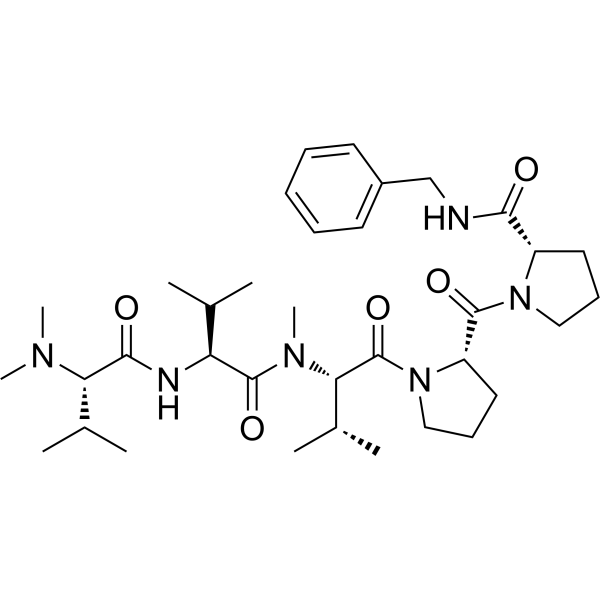 0 ImagesCat. No.: HY-13589CAS No.: 159776-69-9Synonyms: LU103793 free baseCemadotin (LU103793) is a water-soluble synthetic analogue of Dolastatin 15 (HY-P1126) that inhibits cell proliferation in vitro and the growth of tumor xenografts in mice. Cemadotin blocks cells at mitosis, and exhibits Ki value of 1 μM for inhibiting tubulin. Cemadotin can be used to research anticancer.
-
Antimitotic agent-2
 0 ImagesCat. No.: HY-177274CAS No.: 182878-97-3Antimitotic agent-2 (Compound 1) is an antimitotic agent. Antimitotic agent-2 inhibits the proliferation of human epidermal cells. Antimitotic agent-2 can be used in hyperproliferative skin disorders.
-
(2R,3R)-Dap-NE hydrochloride
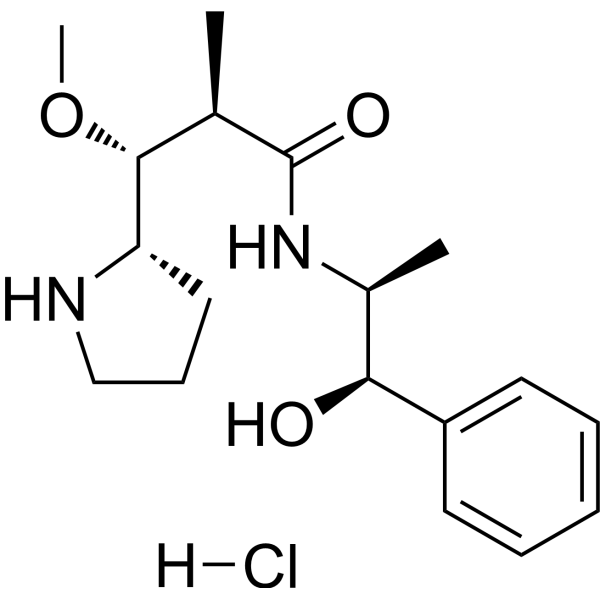 0 ImagesCat. No.: HY-78932D(2R,3R)-Dap-NE hydrochloride is the amino acid residue of the pentapeptide Dolastatin 10 (HY-15580). Dolastatin 10 inhibits tubulin polymerization and mitosis and has anticancer activity.
-
AJI-100
 0 ImagesCat. No.: HY-164454CAS No.: 844435-10-5AJI-100 is a dual-target inhibitor of Aurora kinase A and JAK2 with IC50 values of 12.7 nM and 18.5 nM, respectively. AJI-100 directly blocks Aurora kinase A to inhibit T cell mitosis and cell polarity, and inhibits JAK2 activation to inhibit STAT3 phosphorylation, thereby reducing the differentiation of TH1 and TH17 cells. AJI-100 can be used in studies on regulating immune responses and preventing graft-versus-host disease (GVHD).
-
Tubulozole hydrochloride
 0 ImagesCat. No.: HY-119169ACAS No.: 83086-73-1Synonyms: R 46846 hydrochlorideTubulozole hydrochloride (R 46846 hydrochloride) is an orally active inhibitor of tubulin polymerization with an ID50 of 0.34 μM. Tubulozole hydrochloride induces activation of the Chk1 kinase and phosphorylation of ERK1/2, which is required for microtubule formation. Tubulozole hydrochloride arrests Mitosis at the metaphase stage. Tubulozole hydrochloride causes cells to accumulate in the radiosensitive mitotic phase of the cell cycle. Tubulozole hydrochloride exerts anticancer activity against colon cancer. Tubulozole hydrochloride produces a radiosensitizing effect in mouse tumor models and enhances the tumor growth delay effect when combined with γ-ray irradiation. Tubulozole hydrochloride is used in studies related to colon cancer, fascioliasis, MO4 fibrosarcoma, and Lewis lung carcinoma.
-
4-Methyl erlotinib (Standard)
 0 ImagesCat. No.: HY-129510RCAS No.: 1346601-52-24-Methyl erlotinib (Standard) is the analytical standard of 4-Methyl erlotinib. This product is intended for research and analytical applications. 4-Methyl erlotinib, is a potent and selective epidermal growth factor receptor (EGFR) tyrosine kinase inhibitor. 4-Methyl erlotinib potently inhibits EGF-mediated tumor cell mitosis by reducing EGFr-specific tyrosine phosphorylation. Using a mouse model of human tumor transplantation, 4-Methyl erlotinib demonstrated significant and sustained suppression of EGFr phosphotyrosine levels, resulting in significant growth inhibition of EGFr-dependent human cancers.
-
Ethofumesate (Standard)
 0 ImagesCat. No.: HY-136369RCAS No.: 26225-79-6
-
Tubulin polymerization-IN-57
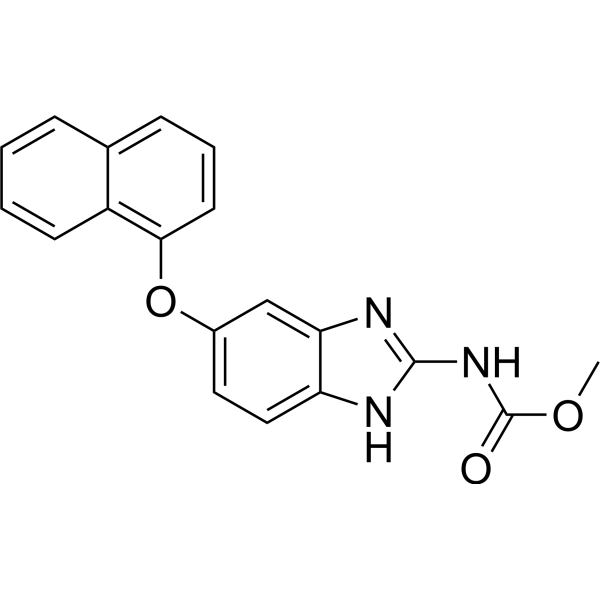 0 ImagesCat. No.: HY-155459CAS No.: 95385-38-9
-
Vincristine (Standard)
 0 ImagesCat. No.: HY-N0488ARCAS No.: 57-22-7Synonyms: Leurocristine (Standard); NSC-67574 (Standard); 22-Oxovincaleukoblastine (Standard)Vincristine (Standard) is the analytical standard of Vincristine (HY-N0488A). This product is intended for research and analytical applications. Vincristine (Leurocristine; NSC-67574; 22-Oxovincaleukoblastine) is a microtubule inhibitor that disrupts microtubule polymerization by binding to β-tubulin (with a Ki of 85 nM in bovine), arrests the cell cycle and induces apoptosis. Vincristine inhibits cell replication, tumor blood flow and the proliferation of various cancer cells, while triggering effects such as oxidative stress, inflammation, calcium overload, epithelial-mesenchymal transition and peripheral neuropathic pain. Vincristine upregulates the expression of various transporters and nuclear receptors, and enriches gastric cancer stem-like cells. Vincristine is used in research related to various tumors including acute lymphoblastic leukemia, lymphoma, melanoma, gastric cancer, solid tumors and sarcomas.
-
Guanosine triphosphate tritris solution (100 mM)
 0 ImagesSynonyms: GTP tritris solution (100 mM)Guanosine triphosphate (GTP) tritris solution (100 mM) is a critical nucleotide and regulator of cellular metabolism. Guanosine triphosphate tritris solution (100 mM) promotes ribosomal DNA localization, pre-rRNA transcription and ribosome biogenesis by binding to RNA polymerase I and GPN proteins (GPN1/3). Guanosine triphosphate tritris solution (100 mM) links MYC-dependent ribosome biogenesis to nucleotide sufficiency, acts as a metabolic gatekeeper supporting protein synthesis, DNA/RNA synthesis and cellular signal transduction, while also participating in the physiological activities of pancreatic β-cells and serving as an oxidative substrate for reactive oxygen species. In small cell lung cancer with high MYC expression, Guanosine triphosphate tritris solution (100 mM) accumulates through the IMPDH-driven synthetic pathway, thereby affecting apoptosis and mitotic processes. Guanosine triphosphate tritris solution (100 mM) is used in the research of small cell lung cancer, hepatoblastoma and cellular metabolism.
-
MKC-1 (Standard)
 0 ImagesCat. No.: HY-13691RCAS No.: 125313-92-0Synonyms: Ro-31-7453 (Standard)MKC-1 (Standard) is the analytical standard of MKC-1. This product is intended for research and analytical applications. MKC-1 (Ro-31-7453) is an orally active and potent cell cycle inhibitor with broad antitumor activity. MKC-1 inhibits the Akt/mTOR pathway. MKC-1 arrests cellular mitosis and induces cell apoptosis by binding to a number of different cellular proteins including tubulin and members of the importin β family.
-
Estramustine (Standard)
 0 ImagesCat. No.: HY-103711RCAS No.: 2998-57-4Estramustine (Standard) is the analytical standard of Estramustine. This product is intended for research and analytical applications. Estramustine is an antineoplastic agent. Estramustine depolymerizes microtnbules by binding to tubulin 1, exhibits antimitotic activity with an IC50 value of ~16 μM for mitosis of DU 145 cells. Estramustine blocks cells at mitosis in prostate tumor xenografts.
-
ON1231320 (Standard)
 0 ImagesON1231320 (Standard) is the analytical standard of ON1231320 (HY-100789). This product is intended for research and analytical applications. ON1231320 is a highly specific polo like kinase 2 (PLK2) inhibitor with an IC50 of 0.31 μM. ON1231320 blocks tumor cell cycle progression in the G2/M phase in mitosis, causing apoptotic cell death. ON1231320, an arylsulfonyl pyrido-pyrimidinone, has antitumor activity.
-
SSE15206 (Standard)
 0 ImagesCat. No.: HY-111425RCAS No.: 1370046-40-4SSE15206 (Standard) is the analytical standard of SSE15206 (HY-111425). This product is intended for research and analytical applications. SSE15206 is a microtubule polymerization inhibitor (GI50 = 197 nM in HCT116 cells) that overcomes multidrug resistance. Causes aberrant mitosis resulting in G2/M arrest due to incomplete spindle formation in cancer cells.



