



Reactive Oxygen Species (ROS) Inducer
-
Rufigallol
 0 Images
Rufigallol is one of the earliest systems reported to form columnar mesophases. Rufigallol is also an oxidant agent. Rufigallol acts in a pro-oxidant fashion to produce oxygen radicals inside parasitized erythrocytes. Rufigallol has vitamin K activity and antimalarial activity.
-
Rosolic acid
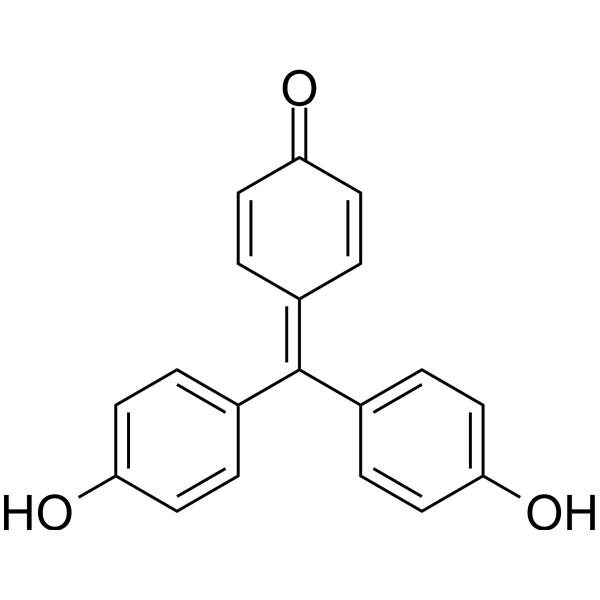 0 ImagesCat. No.: HY-W104821CAS No.: 603-45-2
Rosolic acid is a Michael acceptor molecule isolated from the rhizomes of Plantago asiatica L. Rosolic acid inhibits Keap1, promotes Nrf2 nuclear translocation, and upregulates HO-1 and NQO-1. Rosolic acid reduces ER stress markers PERK, ATF-6, GRP78, and CHOP, as well as oxidative stress, ROS production, inflammation, and apoptosis. Rosolic acid upregulates SOD, CAT, and GPx activities, induces angiogenesis and insulin secretion, and restores endothelial function and pancreatic beta cell protection under ER stress. Rosolic acid can be used in research on diabetes and endothelial dysfunction.
-
Antibacterial agent 307
 0 ImagesCat. No.: HY-180125
Antibacterial agent 307 is an antibacterial agent. Antibacterial agent 307 shows MICs of 1-4 μg/mL against Gram-positive bacteria, moderate activity against Gram-negative bacteria, low hemolytic toxicity, and excellent plasma stability. Antibacterial agent 307 compromises bacterial membrane integrity via increased permeability and depolarization, induces endogenous ROS accumulation, causes cytoplasmic protein and nucleic acid leakage, and drives rapid bacterial cell death. Antibacterial agent 307 can be used for the research of bacterial infection.
-
Saquinavir-13C6
 0 ImagesCat. No.: HY-17007S2Synonyms: Ro 31-8959-13C6
Saquinavir-13C6 (Ro 31-8959-13C6) is 13C labeled Saquinavir (HY-17007). Saquinavir (Ro 31-8959) is an orally active HIV protease inhibitor that can be used in the research of AIDS. Saquinavir also has anti-inflammatory activity and can induce apoptosis of human red blood cells.
-
Antileishmanial agent-43
 0 ImagesCat. No.: HY-183621
Antileishmanial agent-43 is a 3,4,5‑trisubstituted isoxazole with selective antileishmanial activity. Antileishmanial agent-43 shows IC50 values of 12.7 μM against Leishmania amazonensis promastigotes and 0.96 μM against intracellular amastigotes. Antileishmanial agent-43 induces ROS elevation, oxidative stress and mitochondrial dysfunction, resulting in lipid peroxidation, mitochondrial depolarization and ATP imbalance. Antileishmanial agent-43 causes cell shrinkage, phosphatidylserine externalization, plasma membrane permeabilization, and promotes autophagy. Antileishmanial agent-43 can be used for the research of leishmaniasis.
-
Chloranil (Standard)
 0 ImagesSynonyms: Tetrachloro-p-benzoquinone (Standard); TCBQ (Standard)
Chloranil (Standard) is the analytical standard of Chloranil. This product is intended for research and analytical applications. Chloranil, an orally active metabolite of pentachlorophenol and hexachlorobenzene, is a widely used fungicide. Chloranil can induce ROS production. Chloranil induces neutrophil extracellular traps through the ROS-JNK-NOX2 pathway. Chloranil induces ferroptosis and neuroinflammation. Chloranil induces apoptosis of mouse embryonic stem cells.
-
Atiprimod hydrochloride
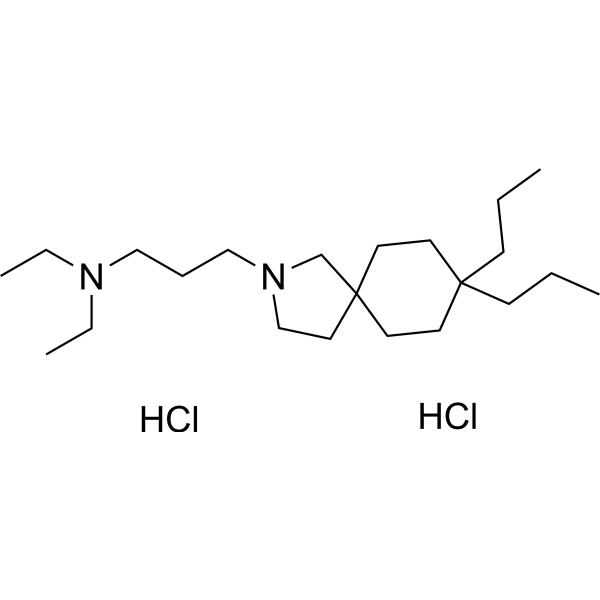 0 ImagesCat. No.: HY-110102CAS No.: 130065-61-1Synonyms: Azaspirane hydrochloride; SKF 106615-12 hydrochloride; SKF 106615
Atiprimod (Azaspirane) hydrochloride is a STAT3 inhibitor with antitumor, anti-inflammatory, and anti-angiogenic activities. Atiprimod blocks the signaling pathways of IL-6 and VEGF by inhibiting the phosphorylation of signal transducer and activator of STAT3. Atiprimod blocks the JAK-STAT signaling pathway by inhibiting the phosphorylation of JAK2 and JAK3. Atiprimod also inhibits cell proliferation, induces cell cycle arrest, and induces autophagy and apoptosis. Atiprimod triggers persistent ER stress-mediated apoptosis in breast cancer cells by activating the PERK/eIF2α/ATF4/CHOP axis and inhibiting the nuclear translocation of STAT3/NF-κB. Atiprimod shows great anti-tumor activities in tumor xenograft mouse models. Atiprimod can be used for the study of pituitary adenoma, breast cancer, multiple myeloma and acute myeloid leukemia (AML).
-
FX-11 (Standard)
 0 ImagesCat. No.: HY-16214RCAS No.: 213971-34-7Synonyms: LDHA Inhibitor FX11 (Standard)
FX-11 (Standard) is the analytical standard of FX-11 (HY-16214). This product is intended for research and analytical applications. FX-11 is a potent, selective, reversible and competitive lactate dehydrogenase A (LDHA) inhibitor, with a Ki of 8 μM. FX-11 reduces ATP levels and induces oxidative stress, ROS production and cell death. FX-11 shows antitumor activity in lymphoma and pancreatic cancer xenografts.
-
Lomefloxacin hydrochloride (Standard)
 0 ImagesSynonyms: SC47111A hydrochloride (Standard); NY-198 hydrochloride (Standard)
Lomefloxacin (hydrochloride) (Standard) is the analytical standard of Lomefloxacin hydrochloride (HY-B0455). This product is intended for research and analytical applications. Lomefloxacin hydrochloride (NY-198 hydrochloride) is an orally active difluoroquinolone antibiotic. Lomefloxacin hydrochloride prevents DNA supercoiling and replication by inhibiting bacterial topoisomerase II. Lomefloxacin hydrochloride induces ROS production and Apoptosis. Lomefloxacin hydrochloride has broad-spectrum bactericidal activity against Gram-positive and Gram-negative bacteria. Lomefloxacin hydrochloride has anticancer effects against melanoma. Lomefloxacin hydrochloride can be used in the study of systemic bacterial infections (such as Salmonella typhimurium infections), skin and melanoma .
-
Antifungal agent 137
 0 ImagesCat. No.: HY-178340CAS No.: 3032062-22-6
Antifungal agent 137 (Compound 4S) is an antifungal agent. Antifungal agent 137 inhibits Phomopsis sp. (PS), with an EC50 of 0.15 μg/mL. Antifungal agent 137 inhibits lanosterol 14α-demethylase (CYP51), with an IC50 of 5.00 μg/mL. Antifungal agent 137 disrupts the morphology of PS mycelia, impairs cell membrane integrity, and induces an increase in intracellular ROS levels, triggering oxidative stress. Antifungal agent 137 can be used for the study of fungal infection.
-
F16 (Standard)
 0 ImagesCat. No.: HY-100395RCAS No.: 36098-33-6
F16 (Standard) is the analytical standard of F16 (HY-100395). This product is intended for research and analytical applications. F16 is a mitochondrial permeability transition pore (PTP) modulator with an EC50 of 30 μM in mice. F16 promotes PTP opening, accumulates in cancer cell mitochondria, and induces mitochondrial depolarization, swelling, cristae disruption, outer membrane rupture, ATP depletion, reactive oxygen species (ROS) production, cytochrome c release and mitochondrial uncoupling. F16 induces cell cycle arrest at the G1 (occasionally G2) phase, reduces the phosphotyrosine content of Neu, as well as the levels of phosphorylated PKB/Akt and phosphorylated MAP kinase, downregulates the protein expression levels of Neu and PKB, triggers apoptosis in cells with moderate Bcl-2 expression, and induces necrosis in cells with overexpressed Bcl-2. F16 can be used in research related to breast cancer and gastric cancer.
-
Gallium hematoporphyrin
 0 ImagesCat. No.: HY-181782Synonyms: GaHP
Gallium hematoporphyrin is a heme analogue and a selective targeting agent against Mycobacteroides abscessus. Gallium hematoporphyrin induces ROS production and inhibits biofilm formation as well as disrupts preformed biofilms in both smooth and rough colony morphotypes of Mycobacteroides abscessus. Gallium hematoporphyrin interferes with heme-dependent metabolic pathways and suppresses the growth of clinical Mycobacteroides abscessus isolatess, with MICs ranging from 0.5 to 1 μg/ml. Gallium hematoporphyrin exhibits synergistic antibacterial activity with Clarithromycin (HY-17508) against Mycobacteroides abscessus. Gallium hematoporphyrin can be used for the research of Mycobacteroides abscessus infection.
-
Dihexyl phthalate (Standard)
 0 Images
Dihexyl phthalate (Standard) is the analytical standard of Dihexyl phthalate (HY-W011215). This product is intended for research and analytical applications. Dihexyl phthalate is an orally active phthalate ester (PAEs) widely used as a plasticizer, and it acts as an environmental endocrine disruptor. Dihexyl phthalate exhibits endocrine-disrupting and reproductive toxic properties, induces oxidative stress and inflammation, and ultimately causes apoptosis and damage to reproductive organs such as the testes. Dihexyl phthalate can be used in studies related to developmental toxicity, embryonic lethality, teratogenicity, and abnormal development of the male reproductive system.
-
Iberverin (Standard)
 0 ImagesCat. No.: HY-121204RCAS No.: 505-79-3Synonyms: 3-Methylthiopropyl isothiocyanate (Standard)
Iberverin (Standard) is the analytical standard of Iberverin. This product is intended for research and analytical applications. Iberverin (-Methylthiopropyl isothiocyanate) is a sulforaphane homolog. Iberverin has anticancer activity. Iberverin inhibits cell proliferation and migration. Iberverin induces mitochondrial-related apoptosis and intracellular reactive oxygen species[1].
-
CP-312 (Standard)
 0 ImagesCat. No.: HY-124815RCAS No.: 895470-67-4
CP-312 (Standard) is the analytical standard of CP-312. This product is intended for research and analytical applications. CP-312 is a potent Heme Oxygenase-1 (HO-1) inducer. CP-312 protects hiPSC-CM viability by targeting the antioxidant response network through induction of HMOX1 expression. CP-312 protects human iPSC-derived cardiomyocytes from oxidative stress.
-
Simazine (Standard)
 0 Images
Simazine (Standard) is the analytical standard of Simazine (HY-B2046). This product is intended for research and analytical applications. Simazine is a triazine herbicide. Simazine is widely used in agriculture, potted plant and tree production. In addition, Simazine can induce the apoptosis of immune cells in the spleen of mice and inhibit the proliferation of B cells and T cells in mice.
-
ROS inducer 8
 0 ImagesCat. No.: HY-168960
ROS inducer 8 (Compound 11g) is the inhibitor for glutathione (GSH), that induces the ROS accumulation in Enterococcus faecalis, thereby exhibiting antibacterial activity. ROS inducer 8 disrupts the biofilm, inhibits S. aureus and E. faecalis with MIC of 8 μg/mL and 2 μg/mL, exhibits post-antibiotic effect. ROS inducer 8 exhibits low hemolytic toxicity to sheep erythrocytes (HC50 > 1280 μg/mL).
-
LQB-118
 0 ImagesCat. No.: HY-124068CAS No.: 1219104-20-7
LQB-118 is an orally active compound derived from sandalwood. LQB-118 can inhibit the migration of glioblastoma cells and induce cell death. LQB-118 can suppress the migration and invasion of prostate cancer cells by regulating the AKT/GSK3β pathway and the expression of the MMP-9/reck genes. LQB-118 can also inhibit yeast polysaccharide-induced inflammation both in vivo and in vitro. Additionally, LQB-118 selectively induces ROS-triggered and mitochondrial-dependent apoptosis in Leishmania amazonensis. LQB-118 can be used in studies related to inflammation, infections, and cancer diseases.
-
Ciprofloxacin-d4
 0 ImagesCat. No.: HY-B0356S2Synonyms: Bay-09867-d4
Ciprofloxacin-d4 (Bay-09867-d4) is deuterium labeled Ciprofloxacin. Ciprofloxacin (Bay-09867) is a potent, orally active topoisomerase IV inhibitor. Ciprofloxacin induces mitochondrial DNA and nuclear DNA damage and lead to mitochondrial dysfunction, ROS production. Ciprofloxacin has anti-proliferative activity and induces apoptosis. Ciprofloxacin is a fluoroquinolone antibiotic, exhibiting potent antibacterial activity.
-
DL-Propargylglycine hydrochloride
 0 ImagesCat. No.: HY-W051612CAS No.: 16900-57-5
DL-Propargylglycine hydrochloride is an irreversible and selective CSE inhibitor that blocks the biosynthesis of endogenous hydrogen sulfide. DL-Propargylglycine hydrochloride induces ROS and TGF-β1 expression. DL-Propargylglycine hydrochloride downregulates carotid ACE2 and Ang-(1-7), and elevates Ang II. DL-Propargylglycine hydrochloride upregulates ICAM-1/LFA-1, exacerbating Aspirin (HY-14654)-induced gastric mucosal injury. DL-Propargylglycine hydrochloride is used in research on diabetes-induced liver injury, diabetic nephropathy, atherosclerosis, gastric mucosal injury, hemorrhagic shock, and Streptococcus agalactiae infection.



