



α-Spinasterol

Based on 1 Customer Validation
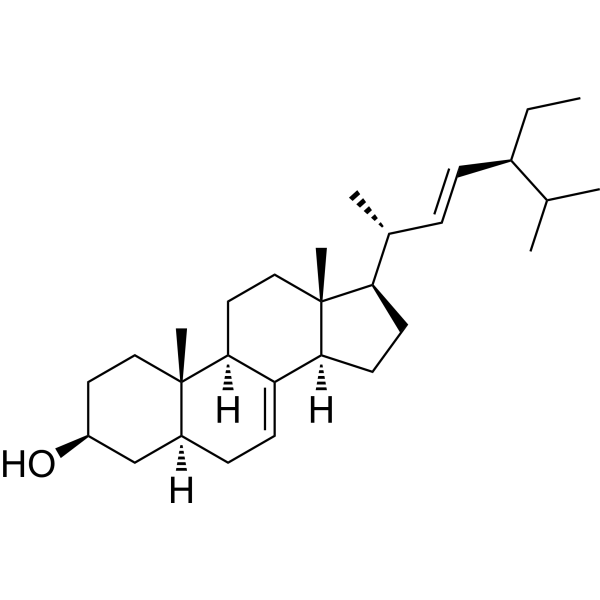
α-Spinasterol is an orally taken antagonist of transient receptor potential vanilloid 1 ( TRPV1), and it's also an inhibitor of COX-1 and COX-2, with IC50 values of 16.17 μM and 7.76 μM, respectively. α-Spinasterol exhibits antibacterial, anti-inflammatory, antidepressant, and antioxidant effects, has the ability to cross the blood-brain barrier, and can improve diabetes in mice.
Nur für Forschungszwecke. Wir verkaufen nicht an Patienten.
- Reinheit : 99.90%
- CAS. Nr.: 481-18-5
- Formel: C29H48O
- Molecular Weight:412.69
-
Speicherung:
4°C, protect from light
* In solvent : -80°C, 6 months; -20°C, 1 month (protect from light)

To place orders, for customer services and technical support, please contact: MedChemExpress USA
Tel: 609-228-6898 E-mail: [email protected] [email protected]


-
 Biologische Aktivität
-
Chemical Information
-
Lösungsmittel & Löslichkeit
- Protokoll
- Reinheit & Dokumentation
- Verweise
-
 Help & FAQs


-
HY-10448
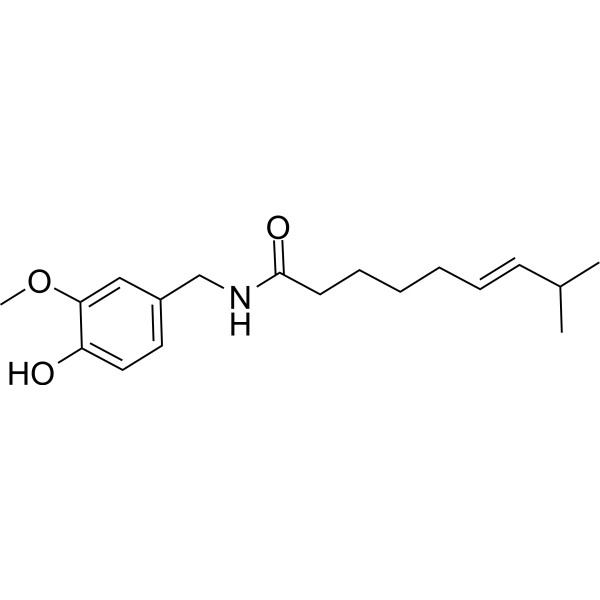
CapsaicinTRPV1 Agonist -
HY-N1459
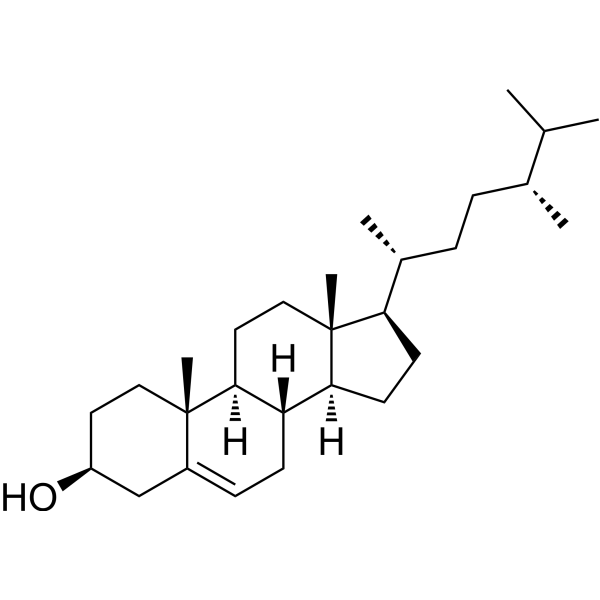
CampesterolEndogenous Metabolite -
HY-10448R
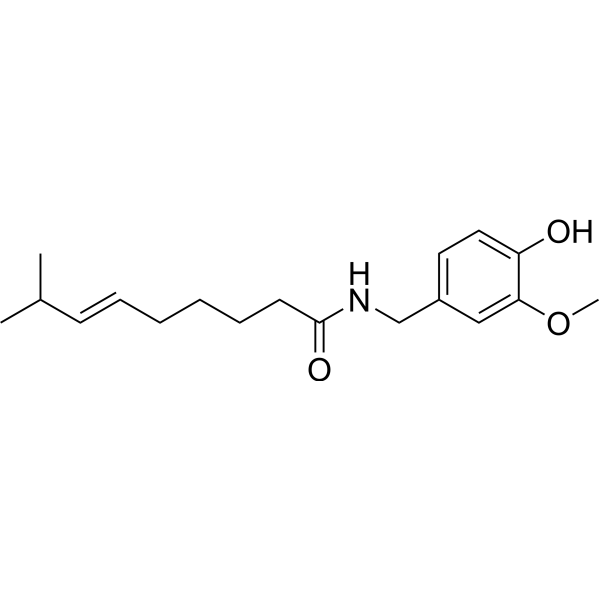
Capsaicin (Standard)Analytical Standard -
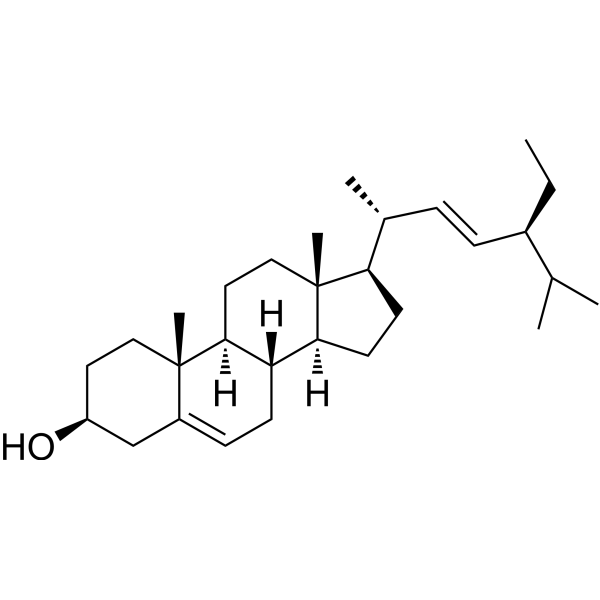
HY-N0131
StigmasterolPlant Sterol -
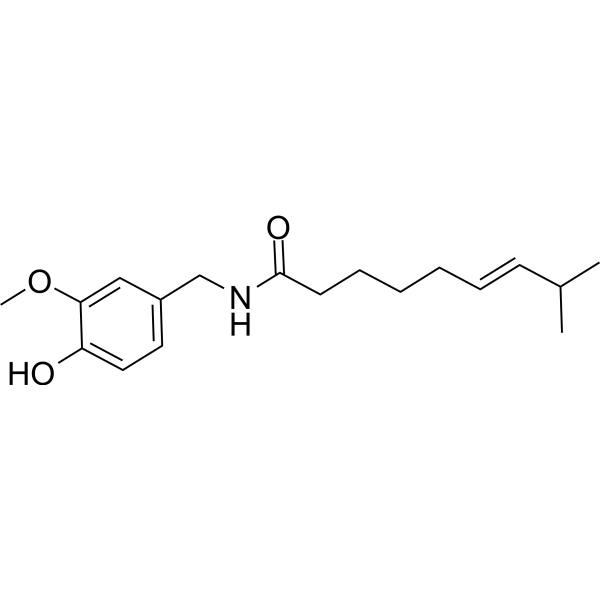
HY-10448A
Capsaicin (Purity 65%)TRPV1 Agonist -
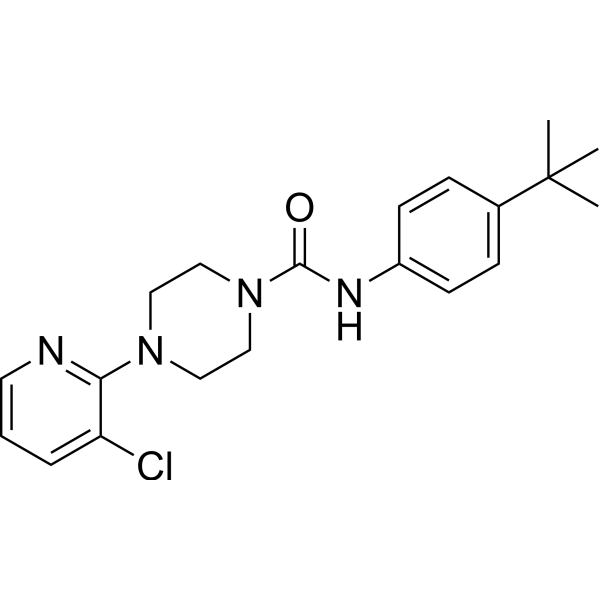
HY-19960
BCTCTRPV1/TRPM8 Antagonist -
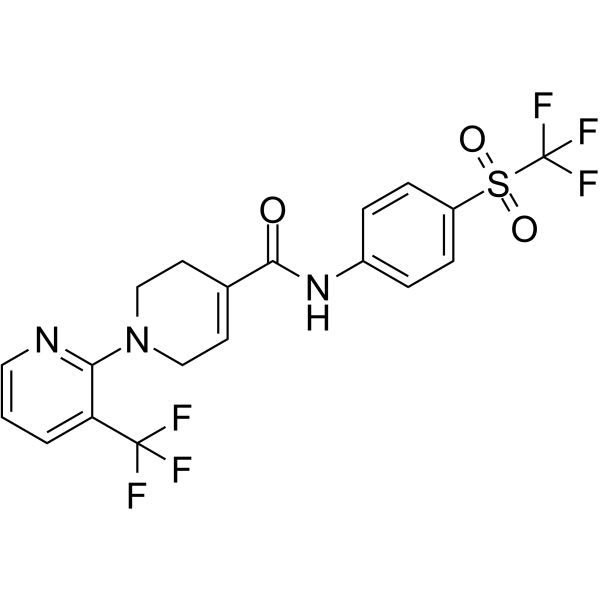
HY-108460
A-784168TRPV1 Inhibitor -
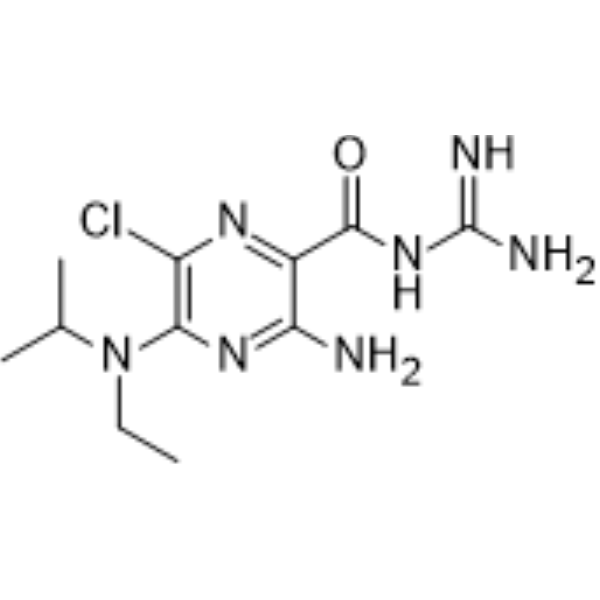
HY-101840
EIPATRPP3 Channel Inhibitor -
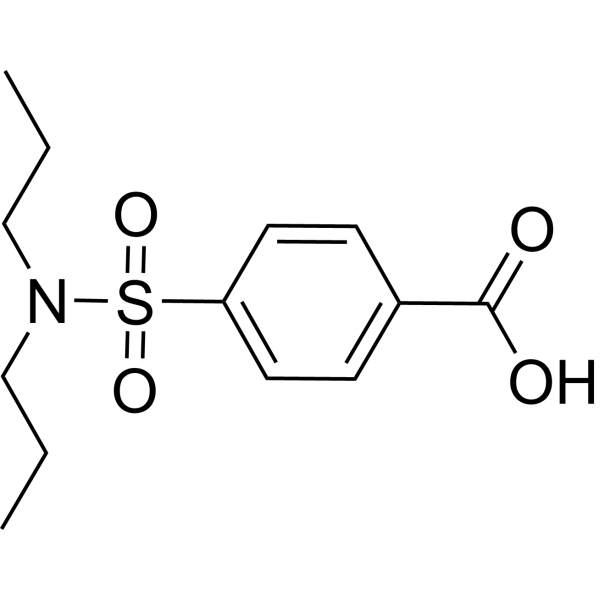
HY-B0545
ProbenecidBacterial Inhibitor -

HY-10448AR
Capsaicin (Purity 65%) (Standard)TRPV1 Agonist -
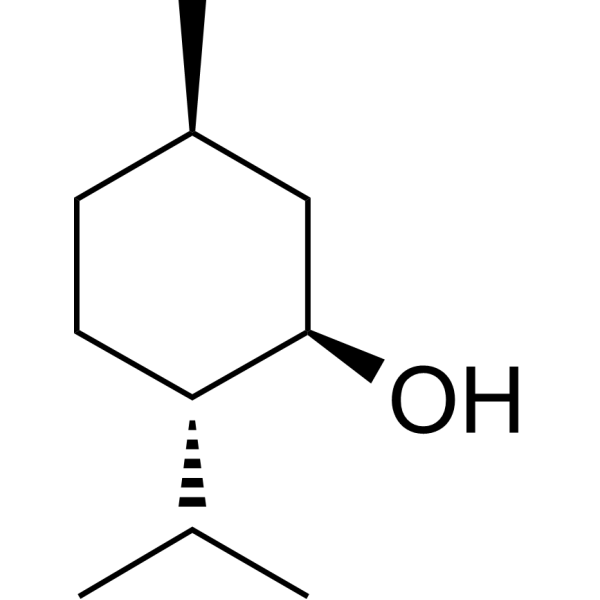
HY-75161
(-)-MentholEndogenous Metabolite -
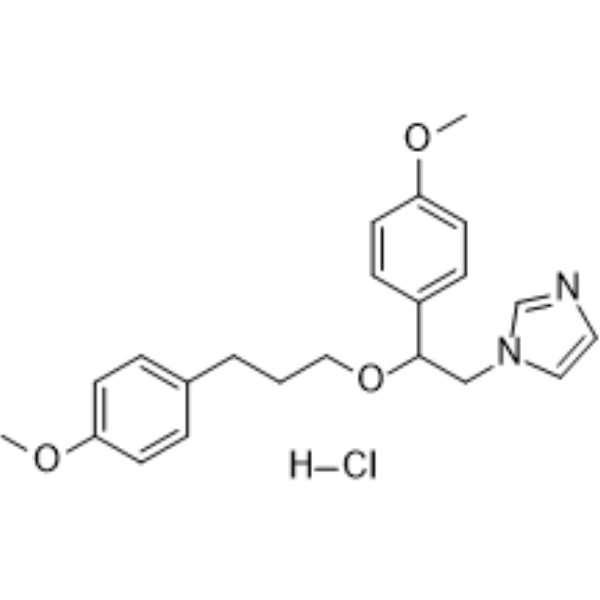
HY-100001
SKF-96365 (hydrochloride)TRPC Channel Antagonist, SOCE Inhibitor


Biologische Aktivität
Beschreibung
IC50 & Target
[2]|
COX-1 16.17 μM (IC50) |
COX-2 7.76 μM (IC50) |
TRPV1 |
Cellular Effect
|
Cell Line

|
Type | Value | Description | References |
|---|---|---|---|---|
| BV-2 | IC50 |
>50 μM
Compound: 19
|
Inhibition of iNOS-mediated NO production in LPS-induced mouse BV2 cells
Inhibition of iNOS-mediated NO production in LPS-induced mouse BV2 cells
|
[PMID: 18926710] |
In Vitro
α-Spinasterol has antimicrobial activity, with MIC values of 0.13, 0.24, 1.92 and 3.69 nM against E.coli, S.pneumoniae CAU0070, S.pullorum cvcc533, S.aureus, respectively[1].
α-Spinasterol shows even better antibacterial effects when combined with ceftriaxone[1].
α-Spinasterol (0-0.5 ng/mL, 24 h) inhibits glomerular mesangial cells (GMCs), with an IC50 of 3.9×10⁻¹² g/mL[2].
MedChemExpress (MCE) has not independently confirmed the accuracy of these methods. They are for reference only.
-
Cell Line:E.coli, S.pneumaniae CAU0070, S.pullorum cvcc533, S.areus
-
Concentration:1/8 MIC
-
Incubation Time:0, 2, 4, 6, 8, 12, 24 h
-
Result:Suppressed all four types of bacteria, and after being exposed for 24 hours, Staphylococcus aureus could be killed, leading to a sharp decline in bacterial numbers.
-
Cell Line:GMCs
-
Concentration:0 and 0.5 ng/mL
-
Incubation Time:24 h
-
Result:Suppressed cell proliferation.
In Vivo
α-Spinasterol (0.1-1 mg/kg, oral, 24 h) has anti-nociceptive effects in postoperative and neuropathic pain models in mice[3].
α-Spinasterol (0-2 mg/kg, i.p., single dose) exhibits antidepressant effects in mice but does not show anxiolytic effects[4].
α-Spinasterol (0.001-10 mg/kg, i.g., single dose) significantly reduces inflammatory cell infiltration induced by LPS (HY-D1056) in mice[5].
α-Spinasterol (0.001-1 mg/kg, i.p., single dose) can inhibit leukocytes and mononuclear cells in mice, with ID50 at 0.006 (0.002-0.01) mg/kg and 0.004 (0.002-0.007) mg/kg[5].
α-Spinasterol (0.001-1 mg/kg, i.p., single dose) has anticonvulsant activity in mice without affecting their neuromuscular strength, impairing motor coordination, or changing body temperature[6].
MedChemExpress (MCE) has not independently confirmed the accuracy of these methods. They are for reference only.
-
Animal Model:Streptozotocin-induced diabetic mice[2]
-
Dosage:0.5 and 2.5 mg/kg/day; 6 weeks
-
Administration:Oral
-
Result:Reduced serum triglycerides in mice, kidney weight, and urinary protein excretion, without affecting serum glucose levels.
-
Animal Model:Mouse postoperative pain models (surgery incision induced) or different neuropathic pain models (trauma or chemotherapy induced)[3]
-
Dosage:0.1, 0.3, 1 mg/kg; 24 h
-
Administration:Oral
-
Result:Relieved post-operative pain, reduce cell infiltration in damaged tissues, alleviated some mechanical ectopic pain caused by sciatic nerve ligation and mechanical and cold ectopic pain induced by paclitaxel, without altering spontaneous or forced motor activity, causing gastric damage, or leading to changes in the liver and kidneys, and without affecting the cell viability in mouse cortical and spinal cord slices.
Inhibited COX-1 and COX-2 enzyme activity without altering the animal's body temperature.
-
Animal Model:Naïve male Albino Swiss mice[4]
-
Dosage:0, 0.5, 1, 2 mg/kg; 0.5-2 mg/kg; single dose
-
Administration:Intraperitoneal injection (i.p.)
-
Result:Showed an anti-immobility effect in the forced swimming test on mice, with no significant changes in body temperature and no alteration in the mice's spontaneous movement activity. Showed no anti-anxiety effects in the elevated plus maze and light-dark box tests.
-
Animal Model:LPS(HY-D1056)-induced peritonitis in mice[5]
-
Dosage:0.001-1 mg/kg; 1-10 mg/kg; single dose
-
Administration:i.g.
-
Result:Reduced inflammatory cell infiltration in LPS-injected mice.
-
Animal Model:Mice induced by PTZ ;Mice induced by 6 Hz [6]
-
Dosage:0, 0.02, 0.1, 0.5, 1 mg/kg; single dose
-
Administration:Intraperitoneal injection (i.p.)
-
Result:Showed higher doses of 0.5 and 1 mg/kg significantly increased the threshold for chronic seizures without affecting the sensitivity of mice to the forelimb rigidity induced by PTZ. The CS50 values in the 0.5 mg/kg and 1 mg/kg groups were significantly increased. Did not affect the neuromuscular strength of the mice, did not impair motor coordination, and did not change the body temperature.


Chemical Information
-
CAS. Nr. 481-18-5
-
Appearance Solid
-
Molecular Weight 412.69
-
Formel C29H48O
-
Color White to off-white
-
SMILES
CC[C@@H](C(C)C)/C=C/[C@@H](C)[C@H]1CC[C@@]2([H])C3=CC[C@@]4([H])C[C@@H](O)CC[C@]4(C)[C@@]3([H])CC[C@]12C
-
Structure Classification
-
Initial Source
-
Versand
Room temperature in continental US; may vary elsewhere.
-
Speicherung
4°C, protect from light
* In solvent : -80°C, 6 months; -20°C, 1 month (protect from light)


Lösungsmittel & Löslichkeit
In Vitro:
DMF : 2 mg/mL (4.85 mM; ultrasonic and warming and heat to 60°C)
Please refer to the solubility information to select the appropriate solvent. Once prepared, please aliquot and store the solution to prevent product inactivation from repeated freeze-thaw cycles.
Storage method and period of stock solution: -80°C, 6 months; -20°C, 1 month (protect from light). When stored at -80°C, please use it within 6 months. When stored at -20°C, please use it within 1 month.
Please refer to the solubility information to select the appropriate solvent. Once prepared, please aliquot and store the solution to prevent product inactivation from repeated freeze-thaw cycles.
Storage method and period of stock solution: -80°C, 6 months; -20°C, 1 month (protect from light). When stored at -80°C, please use it within 6 months. When stored at -20°C, please use it within 1 month.
Konzentration (Stammlösung) × Volumen (Stammlösung) = Konzentration (Ziellösung) × Volumen (Ziellösung)


Reinheit & Dokumentation
-
Data Sheet (281 KB)
-
SDS (252 KB)
- English - EN (252 KB)
- Français - FR (252 KB)
- Deutsch - DE (252 KB)
- Norwegian - NO (252 KB)
- Español - ES (252 KB)
- Swedish - SV (252 KB)
- Italian - IT (252 KB)
- Korean - KR (252 KB)
- Portuguese - PT (252 KB)
-
Handling Instructions (2659 KB)
Verweise
[1]. Yang X, et al. A novel method for synthesis of α-spinasterol and its antibacterial activities in combination with ceftiofur. Fitoterapia. 2017 Jun;119:12-19. [Content Brief]
[2]. Seung I Jeong, et al. alpha-Spinasterol isolated from the root of Phytolacca americana and its pharmacological property on diabetic nephropathy. Planta Med. 2004 Aug;70(8):736-9. [Content Brief]
[3]. Brusco I, et al. α-Spinasterol: a COX inhibitor and a transient receptor potential vanilloid 1 antagonist presents an antinociceptive effect in clinically relevant models of pain in mice. Br J Pharmacol. 2017 Dec;174(23):4247-4262. [Content Brief]
[4]. Katarzyna Socała, et al. Evaluation of the antidepressant- and anxiolytic-like activity of α-spinasterol, a plant derivative with TRPV1 antagonistic effects, in mice. Behav Brain Res. 2016 Apr 15:303:19-25. [Content Brief]
[5]. Fabio R M Borges, et al. Anti-inflammatory action of hydroalcoholic extract, dichloromethane fraction and steroid α-spinasterol from Polygala sabulosa in LPS-induced peritonitis in mice. J Ethnopharmacol. 2014;151(1):144-50. [Content Brief]
[6]. Katarzyna Socała, et al. α-Spinasterol, a TRPV1 receptor antagonist, elevates the seizure threshold in three acute seizure tests in mice. Planta Med. 2004 Aug;70(8):736-9. [Content Brief]


Complete Stock Solution Preparation Table
Please refer to the solubility information to select the appropriate solvent. Once prepared, please aliquot and store the solution to prevent product inactivation from repeated freeze-thaw cycles.
Storage method and period of stock solution: -80°C, 6 months; -20°C, 1 month (protect from light). When stored at -80°C, please use it within 6 months. When stored at -20°C, please use it within 1 month.
| Optional Solvent | Concentration Solvent Mass | 1 mg | 5 mg | 10 mg | 25 mg |
|---|---|---|---|---|---|
| DMF | 1 mM | 2.4231 mL | 12.1156 mL | 24.2313 mL | 60.5782 mL |


α-Spinasterol Related Classifications
HY-N6962 Related Classifications
 Powered by Bioz