



GLPG3312
Based on 1 publication(s) in Google Scholar
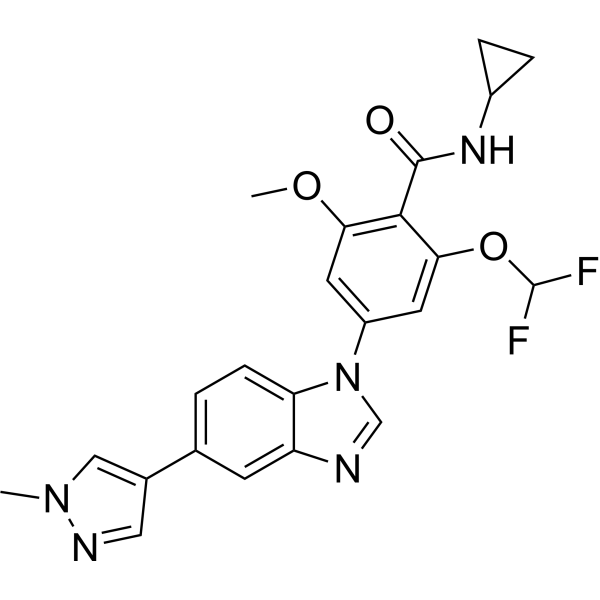
GLPG3312 (Compound 28) is an orally active SIK inhibitor with IC50 values of 2.0 nM, 0.7 nM and 0.6 nM for SIK1, SIK2 and SIK3, respectively. GLPG3312 exhibits anti-inflammatory and immunomodulatory activity in vitro on human primary myeloid cells and in vivo in mouse models. GLPG3312 has good oral bioavailability and can be used for research on inflammatory and immune diseases.
Nur für Forschungszwecke. Wir verkaufen nicht an Patienten.
- Reinheit : 98.63%
- CAS. Nr.: 2340388-72-7
- Formel: C23H21F2N5O3
- Molecular Weight:453.44
-
Speicherung:Powder -20°C, 3 years , 4°C, 2 years ; In solvent -80°C, 6 months , -20°C, 1 month

To place orders, for customer services and technical support, please contact: MedChemExpress USA
Tel: 609-228-6898 E-mail: [email protected] [email protected]


-
 Biologische Aktivität
-
Chemical Information
-
Lösungsmittel & Löslichkeit
- Protokoll
- Reinheit & Dokumentation
- Verweise
-
 Help & FAQs


-
HY-150203
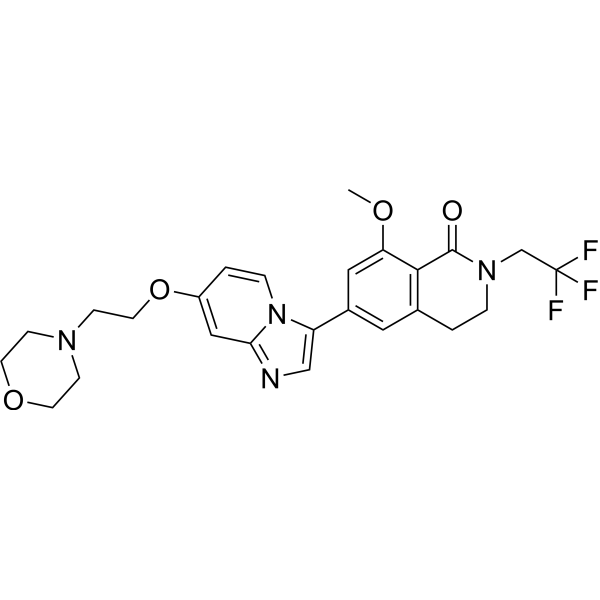
GLPG3970SIK2/SIK3 Inhibitor -
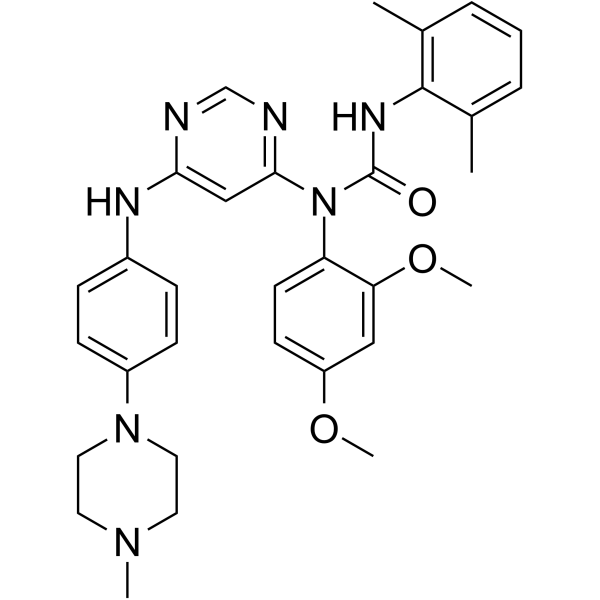
HY-15776
HG-9-91-01SIK Inhibitor -
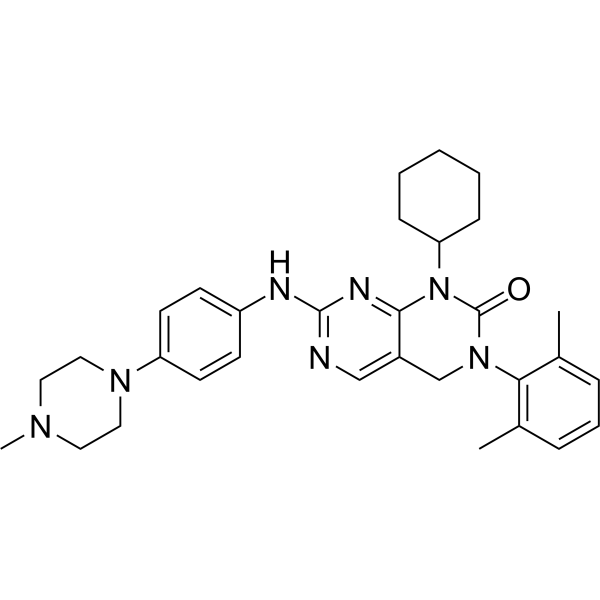
HY-129141
YKL-06-062SIK Inhibitor -
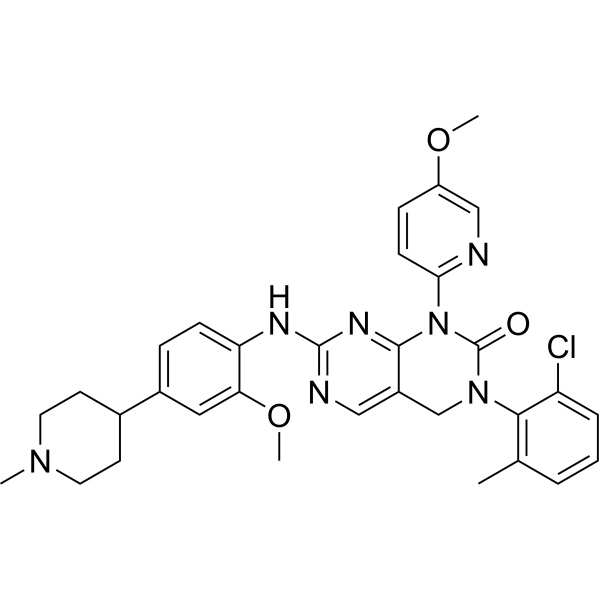
HY-101147
YKL-05-099SIK Inhibitor -
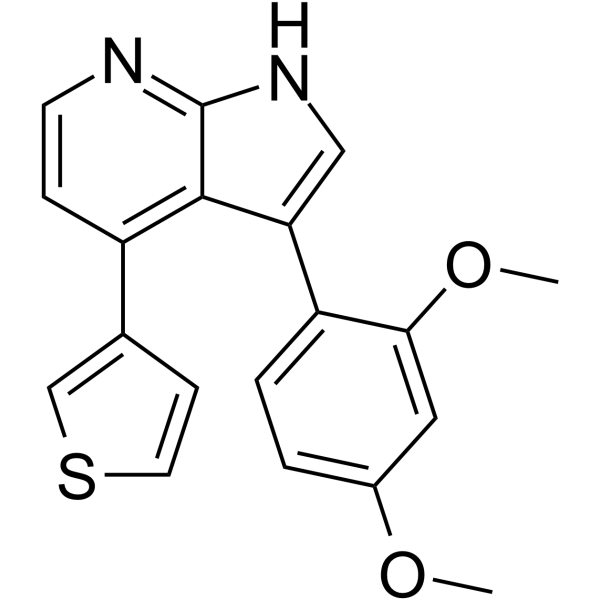
HY-120856
ARN-3236SIK2 Inhibitor -
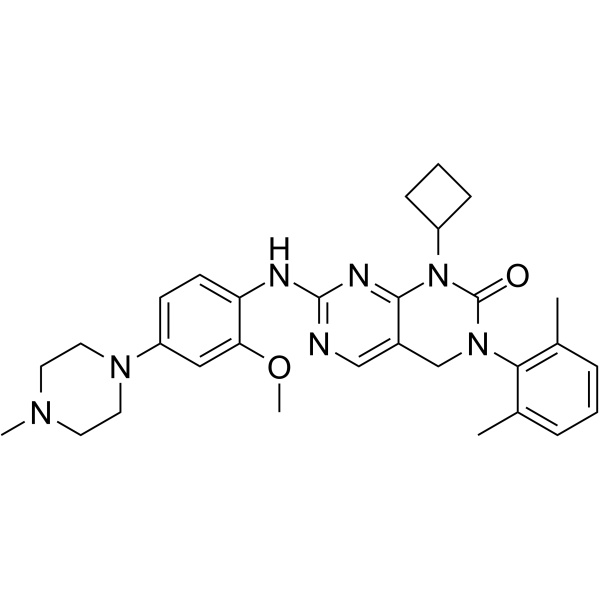
HY-120056
YKL-06-061SIK Inhibitor -
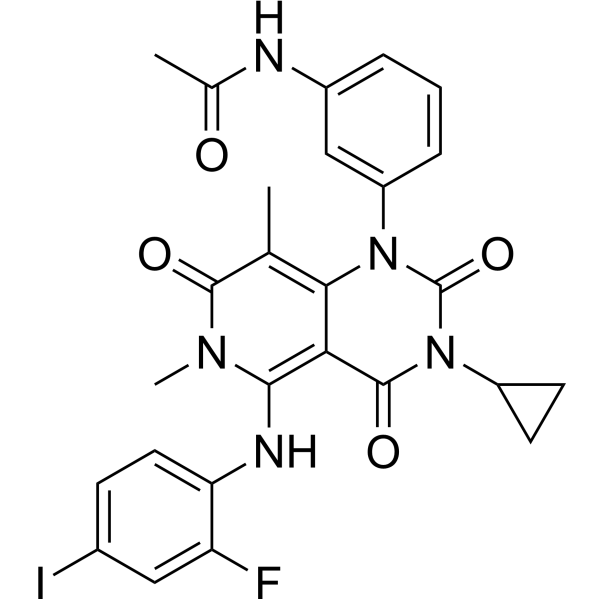
HY-10999
TrametinibMEK Inhibitor -
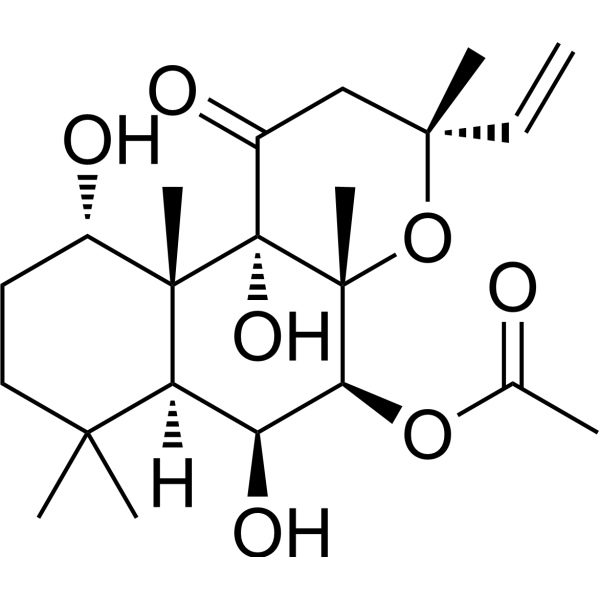
HY-15371
ForskolinAdenylate Cyclase Activator -
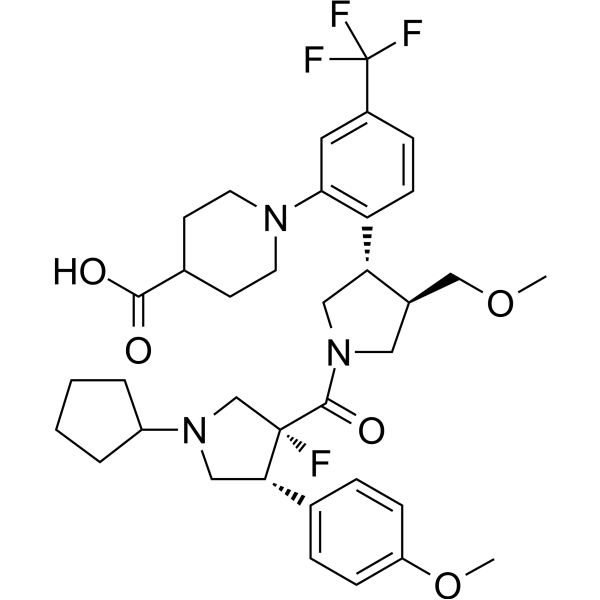
HY-109114
DersimelagonMC1R Agonist -
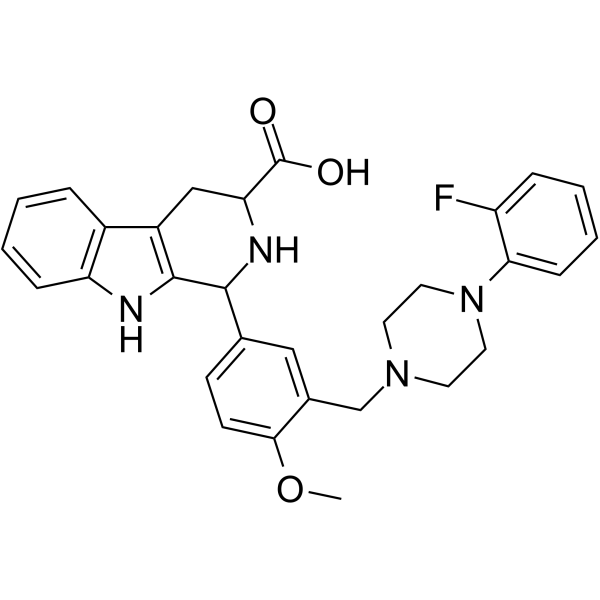
HY-103316A
Ned 19NAADP Antagonist -

HY-101147R
YKL-05-099 (Standard)SIK Inhibitor
Publications Citing Use of MedChemExpress (MCE) GLPG3312
MoreAlle MAP3K Isoform-spezifische Produkte anzeigen
More

Biologische Aktivität
Beschreibung
IC50 & Target
[1]|
QSK/SIK3 0.6 nM (IC50) |
QIK/SIK2 0.7 nM (IC50) |
SIK1 2.0 nM (IC50) |
RIPK2 19.7 nM (IC50) |
DDR1 57 nM (IC50) |
LIMK1 67.3 nM (IC50) |
MAP3K20 103 nM (IC50) |
Lyn 272 nM (IC50) |
Abl1 325 nM (IC50) |
Lck 385 nM (IC50) |
Fyn 447 nM (IC50) |
Abl2 493 nM (IC50) |
Yes 598 nM (IC50) |
FMS 616 nM (IC50) |
Blk 730 nM (IC50) |
ACVR2A 860 nM (IC50) |
ACVR1 992 nM (IC50) |
NLK 1034 nM (IC50) |
BMPR1B 1103 nM (IC50) |
ACVRL1 1333 nM (IC50) |
Hck 2511 nM (IC50) |
In Vitro
GLPG3312 (20 μM, 20 h) inhibits the release of pro-inflammatory cytokines (such as TNFα) and increases the production of anti-inflammatory mediators (such as IL-10) in LPS (HY-D1056)-stimulated human monocytes and monocyte-derived macrophages[1].
MedChemExpress (MCE) has not independently confirmed the accuracy of these methods. They are for reference only.
In Vivo
MedChemExpress (MCE) has not independently confirmed the accuracy of these methods. They are for reference only.
-
Animal Model:Balb/c mouse models[1]
-
Dosage:0.3-3 mg/kg
-
Administration:po, single dose
-
Result:Reduced the level of TNFα and increased the level of IL-10 in mouse plasma.
Clinical Trial
| NCT Number | Sponsor | Condition | Start Date |
Phase

|
|---|---|---|---|---|
| NCT01329991 | Plexxikon| | 2011-05 | PHASE1 |


Chemical Information
-
CAS. Nr. 2340388-72-7
-
Appearance Solid
-
Molecular Weight 453.44
-
Formel C23H21F2N5O3
-
Color White to off-white
-
SMILES
O=C(NC1CC1)C2=C(OC)C=C(N3C=NC4=CC(C5=CN(C)N=C5)=CC=C34)C=C2OC(F)F
-
Versand
Room temperature in continental US; may vary elsewhere.
-
Speicherung
Powder -20°C 3 years 4°C 2 years In solvent -80°C 6 months -20°C 1 month


Publications (1)
-
Journal Impact Factor
-
Most Recent


Lösungsmittel & Löslichkeit
In Vitro:
DMSO : 100 mg/mL (220.54 mM; Need ultrasonic; Hygroscopic DMSO has a significant impact on the solubility of product, please use newly opened DMSO)
Please refer to the solubility information to select the appropriate solvent. Once prepared, please aliquot and store the solution to prevent product inactivation from repeated freeze-thaw cycles.
Storage method and period of stock solution: -80°C, 6 months; -20°C, 1 month. When stored at -80°C, please use it within 6 months. When stored at -20°C, please use it within 1 month.
Please refer to the solubility information to select the appropriate solvent. Once prepared, please aliquot and store the solution to prevent product inactivation from repeated freeze-thaw cycles.
Storage method and period of stock solution: -80°C, 6 months; -20°C, 1 month. When stored at -80°C, please use it within 6 months. When stored at -20°C, please use it within 1 month.
Konzentration (Stammlösung) × Volumen (Stammlösung) = Konzentration (Ziellösung) × Volumen (Ziellösung)
In Vivo:
Select the appropriate dissolution method based on your experimental animal and administration route.
- For the following dissolution methods, please ensure to first prepare a clear stock solution using an In Vitro approach and then sequentially add co-solvents:
- To ensure reliable experimental results, the clarified stock solution can be appropriately stored based on storage conditions. As for the working solution for In Vivo experiments, it is recommended to prepare freshly and use it on the same day.
- The percentages shown for the solvents indicate their volumetric ratio in the final prepared solution. If precipitation or phase separation occurs during preparation, heat and/or sonication can be used to aid dissolution.
Add each solvent one by one: 10% DMSO 40% PEG300 5% Tween-80 45% Saline
Solubility: 2.5 mg/mL (5.51 mM); Clear solution; Need ultrasonic
This protocol yields a clear solution of 2.5 mg/mL.
Taking 1 mL working solution as an example, add 100 μL DMSO stock solution (25.0 mg/mL) to 400 μL PEG300, and mix evenly; then add 50 μL Tween-80 and mix evenly; then add 450 μL Saline to adjust the volume to 1 mL.
Preparation of Saline: Dissolve 0.9 g sodium chloride in ddH₂O and dilute to 100 mL to obtain a clear Saline solution.
Add each solvent one by one: 10% DMSO 90% (20% SBE-β-CD in Saline)
Solubility: 2.5 mg/mL (5.51 mM); Clear solution; Need ultrasonic
This protocol yields a clear solution of 2.5 mg/mL.
Taking 1 mL working solution as an example, add 100 μL DMSO stock solution (25.0 mg/mL) to 900 μL 20% SBE-β-CD in Saline, and mix evenly.
Preparation of 20% SBE-β-CD in Saline (4°C, storage for one week): 2 g SBE-β-CD powder is dissolved in 10 mL Saline, completely dissolve until clear.
In Vivo Dissolution Calculator
Please enter the basic information of animal experiments:
-
-
-
-
Recommended: Prepare an additional quantity of animals to account for potential losses during experiments.
Please enter your animal formula composition:
-
%DMSO +
Recommended: Keep the proportion of DMSO in working solution below 2% if your animal is weak.
-
%+
-
+%Tween-80 + +
-
%Saline +
The co-solvents required include: DMSO, . All of co-solvents are available by MedChemExpress (MCE). , Tween 80. All of co-solvents are available by MedChemExpress (MCE).
Working solution concentration: 0.22 mg/mL
Method for preparing stock solution: mg drug dissolved in μL DMSO. Stock solution concentration: mg/mL.
1. Take μL DMSO stock solution;
2. Add μL .
μL , mix evenly;
3. Then add μL Tween 80, mix evenly;
4. Then add μL
Please ensure that the stock solution in the first step is dissolved to a clear state, and add co-solvents in sequence. You can use ultrasonic heating (ultrasonic cleaner, recommended frequency 20-40 kHz), vortexing, etc. to assist dissolution.


Reinheit & Dokumentation
-
Data Sheet (278 KB)
-
SDS (251 KB)
- English - EN (251 KB)
- Français - FR (251 KB)
- Deutsch - DE (251 KB)
- Norwegian - NO (251 KB)
- Español - ES (251 KB)
- Swedish - SV (251 KB)
- Italian - IT (251 KB)
- Korean - KR (251 KB)
- Portuguese - PT (251 KB)
-
Handling Instructions (2659 KB)
Verweise


Complete Stock Solution Preparation Table
Please refer to the solubility information to select the appropriate solvent. Once prepared, please aliquot and store the solution to prevent product inactivation from repeated freeze-thaw cycles.
Storage method and period of stock solution: -80°C, 6 months; -20°C, 1 month. When stored at -80°C, please use it within 6 months. When stored at -20°C, please use it within 1 month.
| Optional Solvent | Concentration Solvent Mass | 1 mg | 5 mg | 10 mg | 25 mg |
|---|---|---|---|---|---|
| DMSO | 1 mM | 2.2054 mL | 11.0268 mL | 22.0536 mL | 55.1341 mL |
| 5 mM | 0.4411 mL | 2.2054 mL | 4.4107 mL | 11.0268 mL | |
| 10 mM | 0.2205 mL | 1.1027 mL | 2.2054 mL | 5.5134 mL | |
| 15 mM | 0.1470 mL | 0.7351 mL | 1.4702 mL | 3.6756 mL | |
| 20 mM | 0.1103 mL | 0.5513 mL | 1.1027 mL | 2.7567 mL | |
| 25 mM | 0.0882 mL | 0.4411 mL | 0.8821 mL | 2.2054 mL | |
| 30 mM | 0.0735 mL | 0.3676 mL | 0.7351 mL | 1.8378 mL | |
| 40 mM | 0.0551 mL | 0.2757 mL | 0.5513 mL | 1.3784 mL | |
| 50 mM | 0.0441 mL | 0.2205 mL | 0.4411 mL | 1.1027 mL | |
| 60 mM | 0.0368 mL | 0.1838 mL | 0.3676 mL | 0.9189 mL | |
| 80 mM | 0.0276 mL | 0.1378 mL | 0.2757 mL | 0.6892 mL | |
| 100 mM | 0.0221 mL | 0.1103 mL | 0.2205 mL | 0.5513 mL |


GLPG3312 Related Classifications
HY-157442 Related Classifications
 Powered by Bioz