



2-HBA
Based on 3 publication(s) in Google Scholar
2-HBA is a potent inducer of NAD(P)H:quinone acceptor oxidoreductase 1 (NQO1) which can also activate caspase-3 and caspase-10.
Nos produits utilisent uniquement pour la recherche. Nous ne vendons pas aux patients.
- Pureté : 99.46%
- CAS No.: 131359-24-5
- Formule: C17H14O3
- Masse moléculaire:266.29
-
Stockage:Powder -20°C, 3 years , 4°C, 2 years ; In solvent -80°C, 2 years , -20°C, 1 year

To place orders, for customer services and technical support, please contact: MedChemExpress USA
Tel: 609-228-6898 E-mail: [email protected] [email protected]


-
 Activité biologique
-
Chemical Information
-
Solvant et solubilité
- Protocole
- Pureté et documentation
- Références
-
 Help & FAQs


-
HY-N0645
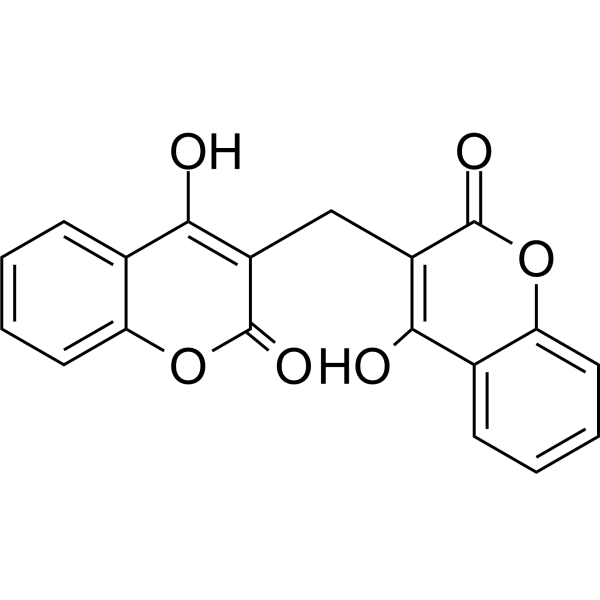
DicoumarolPDHK Inhibitor -

HY-100367
ES 936NQO1 Inhibitor -
HY-13755
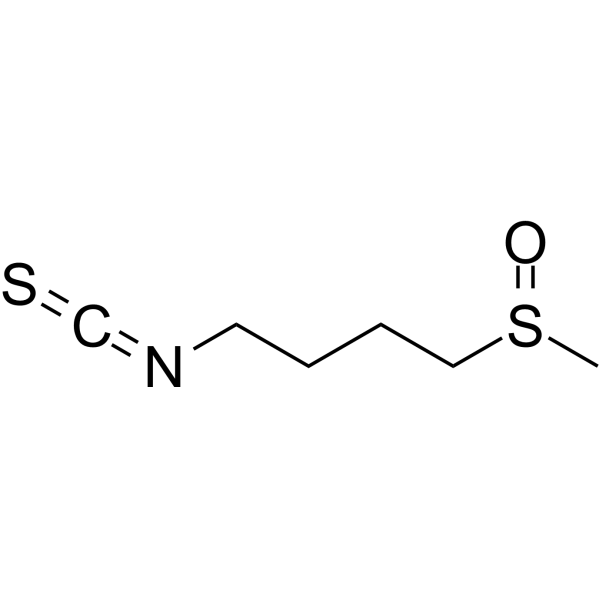
SulforaphaneKeap1/Nrf2/ARE Inducer -
HY-16658
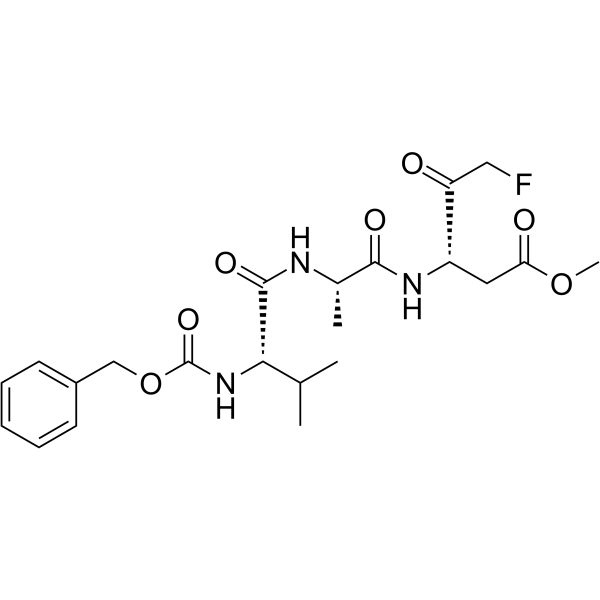
Z-VAD(OMe)-FMKPan-caspase Inhibitor -
HY-13205
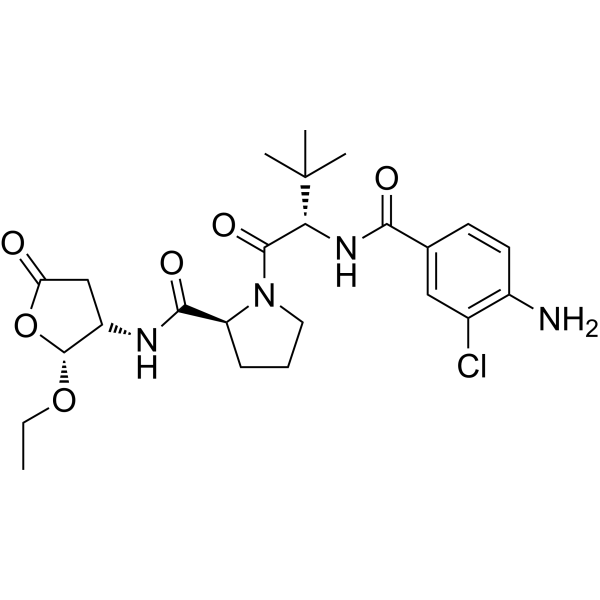
BelnacasanCaspase-1 Inhibitor -
HY-12466
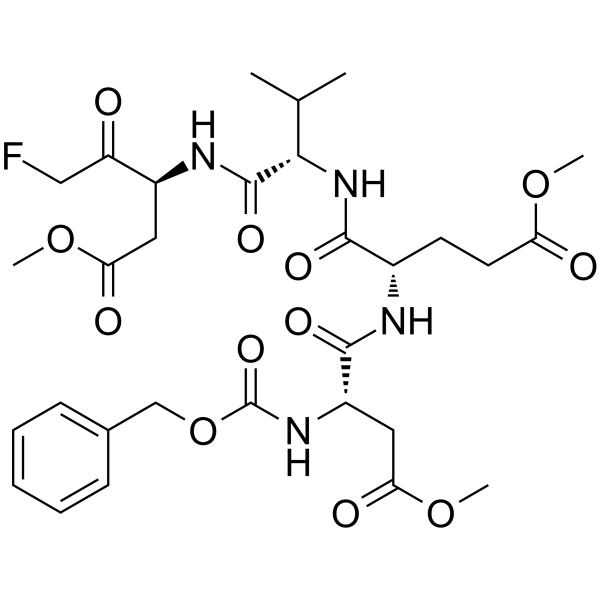
Z-DEVD-FMKCaspase-3 Inhibitor -

HY-103667R
2-HBA (Standard)Reference Standard -
HY-12212
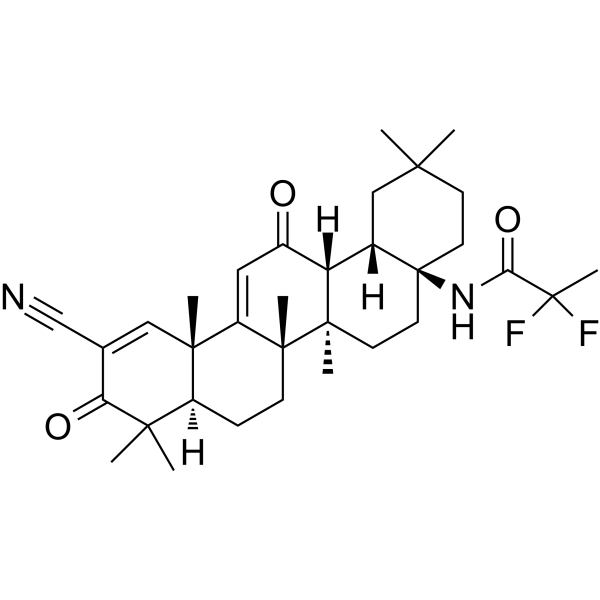
OmaveloxoloneNrf2 Activator -
HY-12305
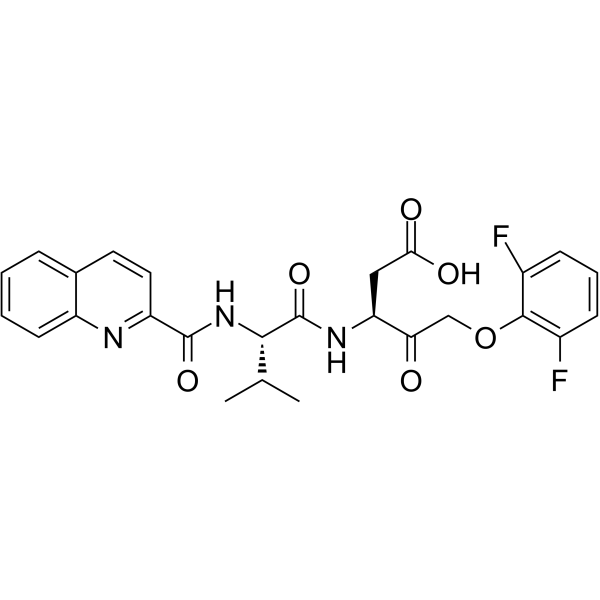
Q-VD-OPhPan-caspase Inhibitor -
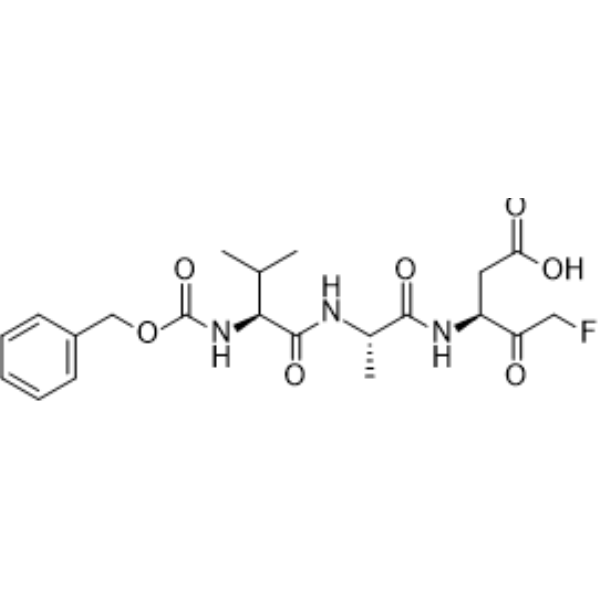
HY-16658B
Z-VAD-FMKPan-Caspase Inhibitor -
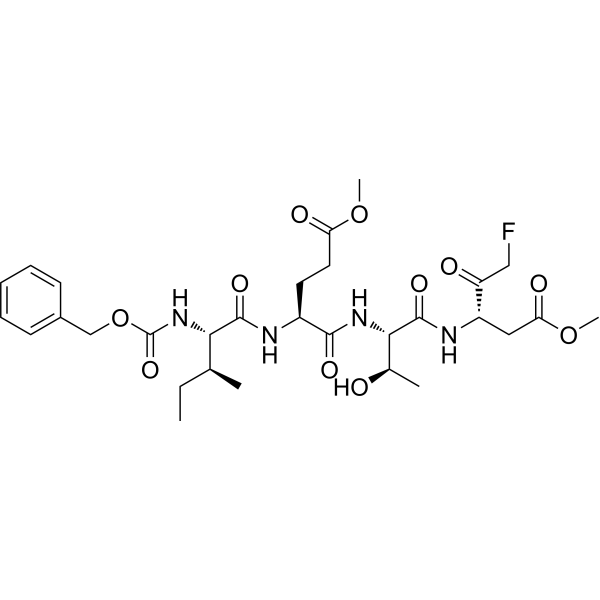
HY-101297
Z-IETD-FMKCaspase-8 Inhibitor -
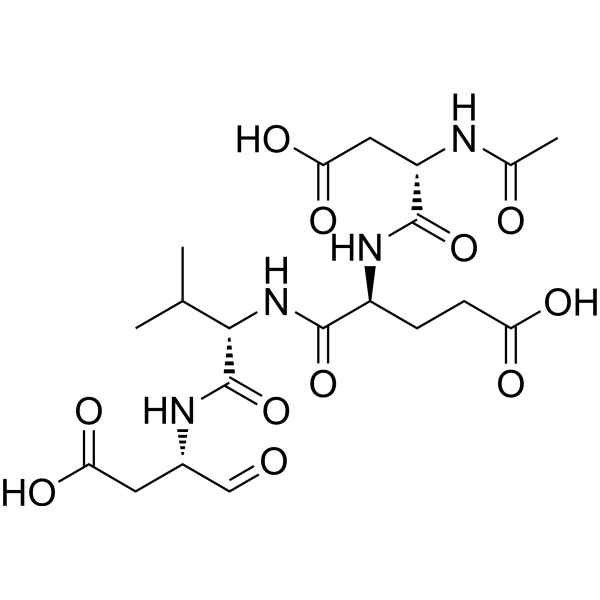
HY-P1001
Ac-DEVD-CHOCaspase-3 Inhibitor
Publications Citing Use of MedChemExpress (MCE) 2-HBA
MoreVoir tous les produits spécifiques à Isoform Caspase
More

Activité biologique
Description
IC50 & Target
[1]|
Caspase-3 |
Caspase-10 |
Cellular Effect
|
Cell Line

|
Type | Value | Description | References |
|---|---|---|---|---|
| Ca-Ski | EC50 |
1.03 μM
Compound: 25; MS17
|
Antiproliferative activity against human Ca-Ski cells assessed as cell growth inhibition measured after 72 hrs by MTT assay
Antiproliferative activity against human Ca-Ski cells assessed as cell growth inhibition measured after 72 hrs by MTT assay
|
[PMID: 32172081] |
| HUVEC | GI50 |
1.8 μM
Compound: 25; MS17
|
Cytotoxicity against HUVEC cells assessed as cell growth inhibition by anti-angiogenisis screening assay
Cytotoxicity against HUVEC cells assessed as cell growth inhibition by anti-angiogenisis screening assay
|
[PMID: 32172081] |
| MDA-MB-231 | GI50 |
1 μM
Compound: 25; MS17
|
Growth inhibition of human MDA-MB-231 cells measured after 72 hrs by microplate reader analysis
Growth inhibition of human MDA-MB-231 cells measured after 72 hrs by microplate reader analysis
|
[PMID: 32172081] |
| RAW264.7 | IC50 |
10.24 μM
Compound: 2
|
Antiinflammatory activity in mouse RAW264.7 cells assessed as inhibition of IFN-gamma/LPS-stimulated nitric oxide production after 17 to 20 hrs by Griess assay
Antiinflammatory activity in mouse RAW264.7 cells assessed as inhibition of IFN-gamma/LPS-stimulated nitric oxide production after 17 to 20 hrs by Griess assay
|
[PMID: 19359068] |
| RPMI-7951 | GI50 |
2.3 μM
Compound: 25; MS17
|
Growth inhibition of human RPMI-7951 cells measured after 72 hrs by microplate reader analysis
Growth inhibition of human RPMI-7951 cells measured after 72 hrs by microplate reader analysis
|
[PMID: 32172081] |
| SVR | GI50 |
1.8 μM
Compound: 25; MS17
|
Cytotoxicity against mouse SVR cells assessed as cell growth inhibition by anti-angiogenisis screening assay
Cytotoxicity against mouse SVR cells assessed as cell growth inhibition by anti-angiogenisis screening assay
|
[PMID: 32172081] |
In Vitro
When L1210 cells are exposed to 0.6 μM 2-HBA (bis(2-hydroxy-benzylidene)acetone), the specific activities of NQO1 and glutathione reductase increase by 6- and 1.5-fold, respectively. The total cellular glutathione content is also coordinately induced by 2.4-fold. In a more detailed study it is found that NQO1 is induced by 2-HBA in a concentration-dependent manner. Treatments with 2-HBA cause cell cycle arrest and apoptosis in both L1210 wild type cells and their Y8 drug-resistant counterparts in a concentration-dependent manner. 2-HBA can also activate caspase-3 and caspase-10[1].
MedChemExpress (MCE) has not independently confirmed the accuracy of these methods. They are for reference only.


Chemical Information
-
CAS No. 131359-24-5
-
Appearance Solid
-
Masse moléculaire 266.29
-
Formule C17H14O3
-
Color Light yellow to yellow
-
SMILES
O=C(/C=C/C1=CC=CC=C1O)/C=C/C2=CC=CC=C2O
-
Livraison
Room temperature in continental US; may vary elsewhere.
-
Stockage
Powder -20°C 3 years 4°C 2 years In solvent -80°C 2 years -20°C 1 year


Publications (3)
-
Journal Impact Factor
-
Most Recent
-
Cell Prolif
Rack1-mediated ferroptosis affects hindgut development in rats with anorectal malformations: Spatial transcriptome insights. [Abstract]2024 Jul;57(7):e13618. PMID: 38523594 -
Biomed Res Int
Ginkgetin Alleviates Inflammation, Oxidative Stress, and Apoptosis Induced by Hypoxia/Reoxygenation in H9C2 Cells via Caspase-3 Dependent Pathway. [Abstract]2020 Nov 4:2020:1928410. PMID: 33204684 -
Biochem Biophys Res Commun
NIPA2 regulates osteoblast function via its effect on apoptosis pathways in type 2 diabetes osteoporosis. [Abstract]2019 Jun 11;513(4):883-890. PMID: 31003774


Solvant et solubilité
In Vitro:
DMSO : 100 mg/mL (375.53 mM; Need ultrasonic; Hygroscopic DMSO has a significant impact on the solubility of product, please use newly opened DMSO)
Please refer to the solubility information to select the appropriate solvent. Once prepared, please aliquot and store the solution to prevent product inactivation from repeated freeze-thaw cycles.
Storage method and period of stock solution: -80°C, 2 years; -20°C, 1 year. When stored at -80°C, please use it within 2 years. When stored at -20°C, please use it within 1 year.
Please refer to the solubility information to select the appropriate solvent. Once prepared, please aliquot and store the solution to prevent product inactivation from repeated freeze-thaw cycles.
Storage method and period of stock solution: -80°C, 2 years; -20°C, 1 year. When stored at -80°C, please use it within 2 years. When stored at -20°C, please use it within 1 year.
Concentration (start) × Volume (start) = Concentration (final) × Volume (final)
In Vivo:
Select the appropriate dissolution method based on your experimental animal and administration route.
- For the following dissolution methods, please ensure to first prepare a clear stock solution using an In Vitro approach and then sequentially add co-solvents:
- To ensure reliable experimental results, the clarified stock solution can be appropriately stored based on storage conditions. As for the working solution for In Vivo experiments, it is recommended to prepare freshly and use it on the same day.
- The percentages shown for the solvents indicate their volumetric ratio in the final prepared solution. If precipitation or phase separation occurs during preparation, heat and/or sonication can be used to aid dissolution.
Add each solvent one by one: 10% DMSO 40% PEG300 5% Tween-80 45% Saline
Solubility: ≥ 2.5 mg/mL (9.39 mM); Clear solution
This protocol yields a clear solution of ≥ 2.5 mg/mL (saturation unknown).
Taking 1 mL working solution as an example, add 100 μL DMSO stock solution (25.0 mg/mL) to 400 μL PEG300, and mix evenly; then add 50 μL Tween-80 and mix evenly; then add 450 μL Saline to adjust the volume to 1 mL.
Preparation of Saline: Dissolve 0.9 g sodium chloride in ddH₂O and dilute to 100 mL to obtain a clear Saline solution.
Add each solvent one by one: 10% DMSO 90% (20% SBE-β-CD in Saline)
Solubility: ≥ 2.5 mg/mL (9.39 mM); Clear solution
This protocol yields a clear solution of ≥ 2.5 mg/mL (saturation unknown).
Taking 1 mL working solution as an example, add 100 μL DMSO stock solution (25.0 mg/mL) to 900 μL 20% SBE-β-CD in Saline, and mix evenly.
Preparation of 20% SBE-β-CD in Saline (4°C, storage for one week): 2 g SBE-β-CD powder is dissolved in 10 mL Saline, completely dissolve until clear.
In Vivo Dissolution Calculator
Please enter the basic information of animal experiments:
-
-
-
-
Recommended: Prepare an additional quantity of animals to account for potential losses during experiments.
Please enter your animal formula composition:
-
%DMSO +
Recommended: Keep the proportion of DMSO in working solution below 2% if your animal is weak.
-
%+
-
+%Tween-80 + +
-
%Saline +
The co-solvents required include: DMSO, . All of co-solvents are available by MedChemExpress (MCE). , Tween 80. All of co-solvents are available by MedChemExpress (MCE).
Working solution concentration: 0.22 mg/mL
Method for preparing stock solution: mg drug dissolved in μL DMSO. Stock solution concentration: mg/mL.
1. Take μL DMSO stock solution;
2. Add μL .
μL , mix evenly;
3. Then add μL Tween 80, mix evenly;
4. Then add μL
Please ensure that the stock solution in the first step is dissolved to a clear state, and add co-solvents in sequence. You can use ultrasonic heating (ultrasonic cleaner, recommended frequency 20-40 kHz), vortexing, etc. to assist dissolution.


Pureté et documentation
-
Fiche technique (275 KB)
-
SDS (394 KB)
- English - EN (394 KB)
- Français - FR (394 KB)
- Deutsch - DE (394 KB)
- Norwegian - NO (394 KB)
- Español - ES (394 KB)
- Swedish - SV (394 KB)
- Italian - IT (394 KB)
- Korean - KR (394 KB)
- Portuguese - PT (394 KB)
-
Instruction de manipulation (2659 KB)
Références


Complete Stock Solution Preparation Table
Please refer to the solubility information to select the appropriate solvent. Once prepared, please aliquot and store the solution to prevent product inactivation from repeated freeze-thaw cycles.
Storage method and period of stock solution: -80°C, 2 years; -20°C, 1 year. When stored at -80°C, please use it within 2 years. When stored at -20°C, please use it within 1 year.
| Optional Solvent | Concentration Solvent Mass | 1 mg | 5 mg | 10 mg | 25 mg |
|---|---|---|---|---|---|
| DMSO | 1 mM | 3.7553 mL | 18.7765 mL | 37.5530 mL | 93.8826 mL |
| 5 mM | 0.7511 mL | 3.7553 mL | 7.5106 mL | 18.7765 mL | |
| 10 mM | 0.3755 mL | 1.8777 mL | 3.7553 mL | 9.3883 mL | |
| 15 mM | 0.2504 mL | 1.2518 mL | 2.5035 mL | 6.2588 mL | |
| 20 mM | 0.1878 mL | 0.9388 mL | 1.8777 mL | 4.6941 mL | |
| 25 mM | 0.1502 mL | 0.7511 mL | 1.5021 mL | 3.7553 mL | |
| 30 mM | 0.1252 mL | 0.6259 mL | 1.2518 mL | 3.1294 mL | |
| 40 mM | 0.0939 mL | 0.4694 mL | 0.9388 mL | 2.3471 mL | |
| 50 mM | 0.0751 mL | 0.3755 mL | 0.7511 mL | 1.8777 mL | |
| 60 mM | 0.0626 mL | 0.3129 mL | 0.6259 mL | 1.5647 mL | |
| 80 mM | 0.0469 mL | 0.2347 mL | 0.4694 mL | 1.1735 mL | |
| 100 mM | 0.0376 mL | 0.1878 mL | 0.3755 mL | 0.9388 mL |


2-HBA Related Classifications
HY-103667 Related Classifications
 Powered by Bioz