



Pyr3
Based on 9 publication(s) in Google Scholar
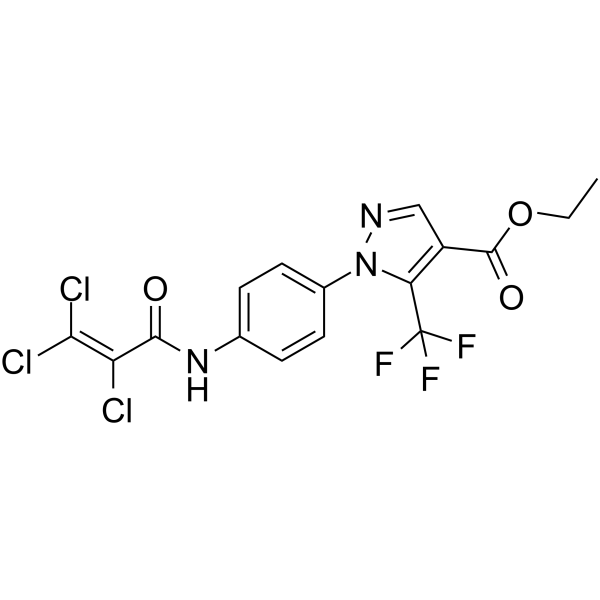
Pyr3 is a selective inhibitor of transient receptor potential canonical channel 3 (TRPC3), with an IC50 of 700 nM for TRPC3-mediated Ca2+ influx.
For research use only. We do not sell to patients.
- Purity : 99.83%
- CAS No.: 1160514-60-2
- Formula: C16H11Cl3F3N3O3
- Molecular Weight:456.63
-
Storage:Powder -20°C, 3 years , 4°C, 2 years ; In solvent -80°C, 2 years , -20°C, 1 year

To place orders, for customer services and technical support, please contact: MedChemExpress USA
Tel: 609-228-6898 E-mail: [email protected] [email protected]


-
 Biological Activity
-
Chemical Information
-
Solvent & Solubility
- Protocols
- Purity & Documentation
- References
-
 Help & FAQs


-
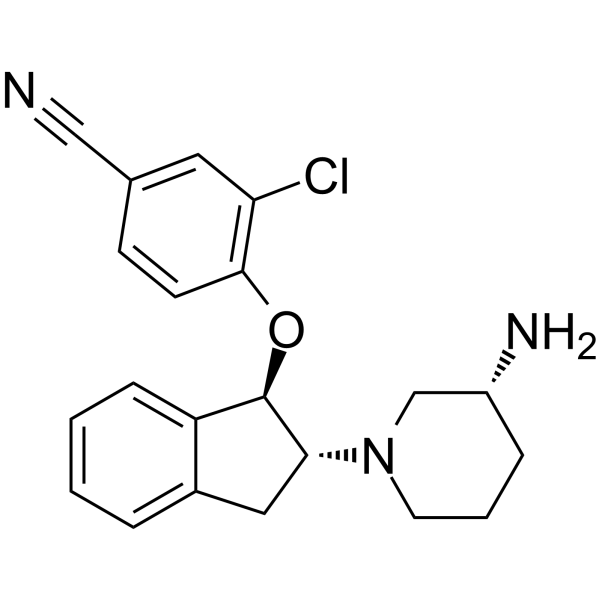
HY-15699
SAR7334TRPC6 Inhibitor -
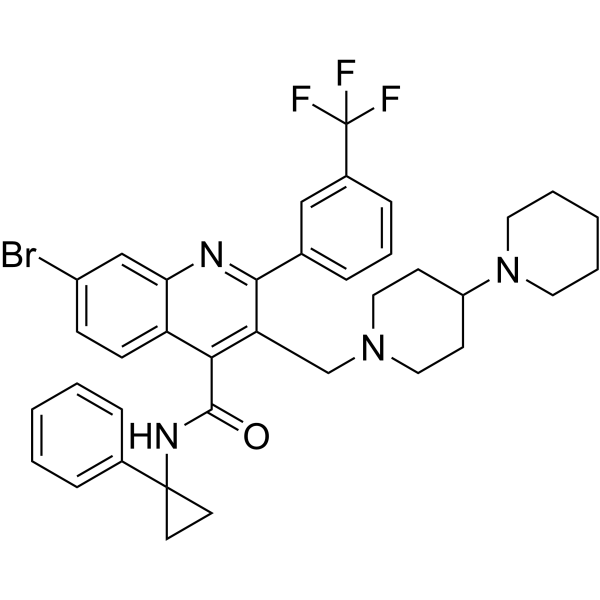
HY-100720
GSK2193874TRPV4 Antagonist -
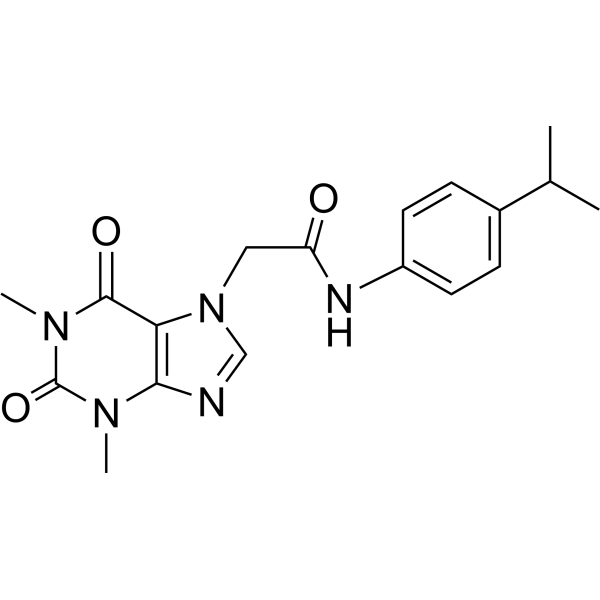
HY-15064
HC-030031TRP Channel Inhibitor -
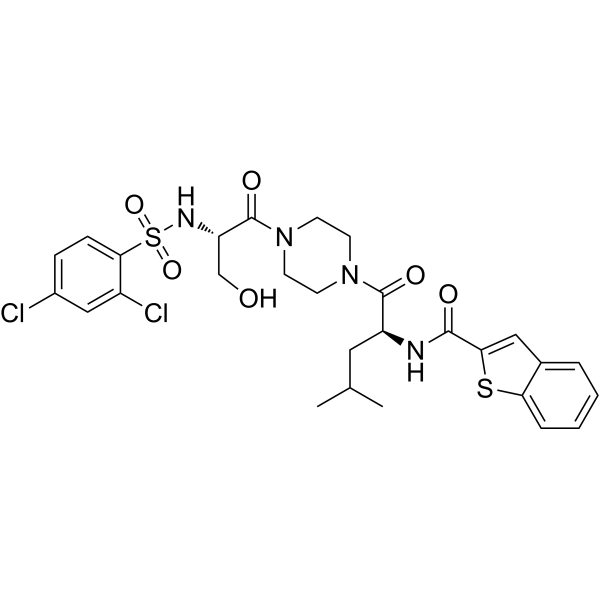
HY-19608
GSK1016790ATRPV4 Channel Agonist -
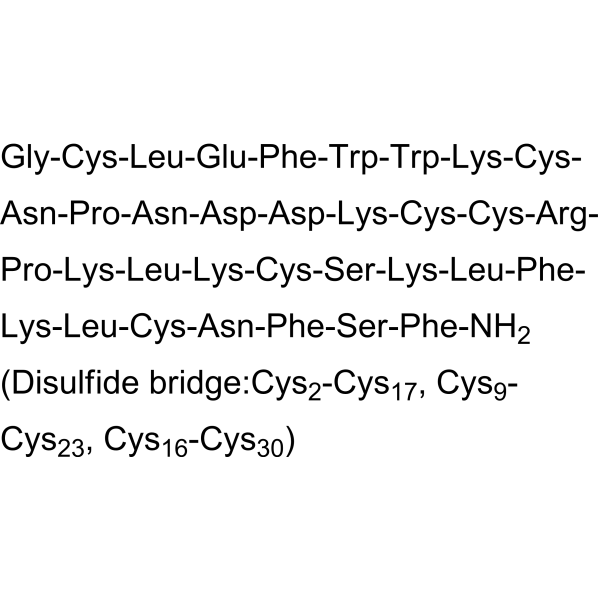
HY-P1410
GsMTx4MSCs Inhibitor -
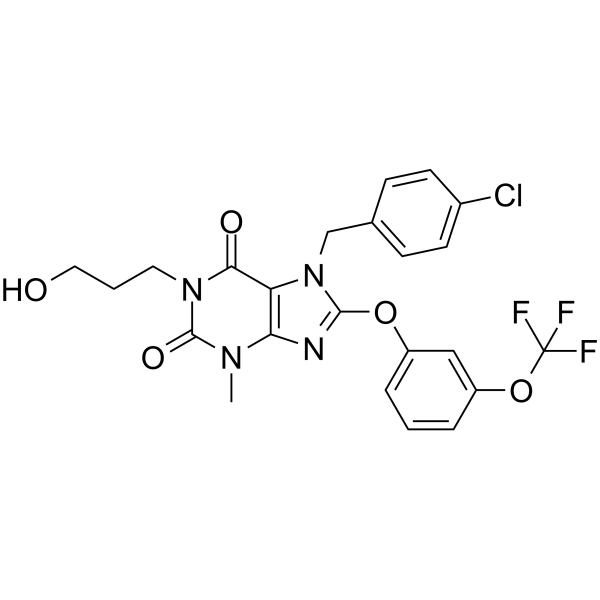
HY-101507
ZerencotrepTRPC1/4/5 Channels Inhibitor -
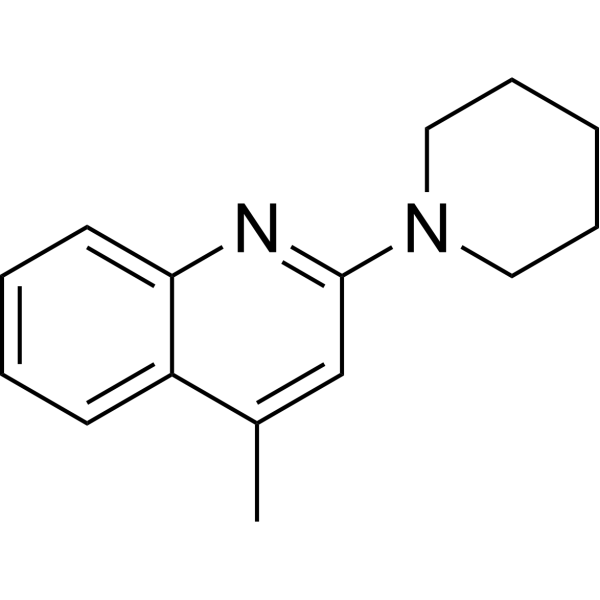
HY-12949
ML204TRPC4/TRPC5 Channel Inhibitor -
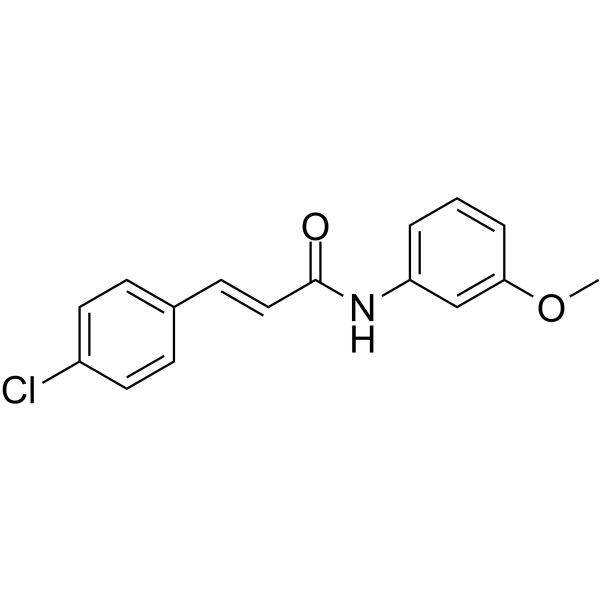
HY-12245
SB-366791VR1/TRPV1 Antagonist -
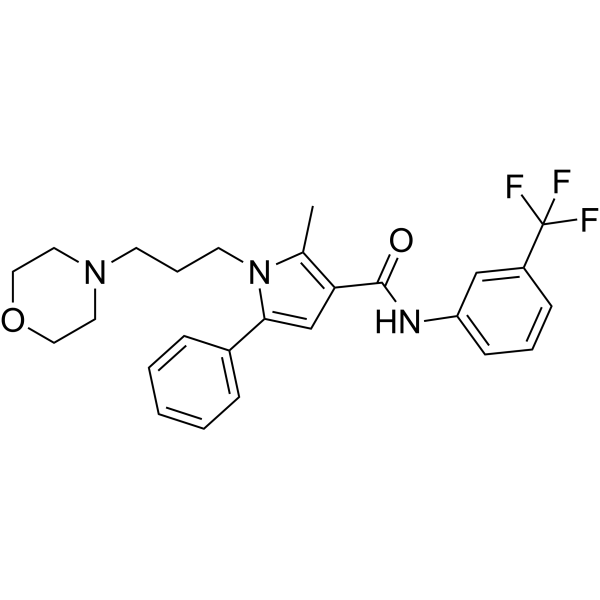
HY-100208
HC-067047TRPV4 Antagonist -
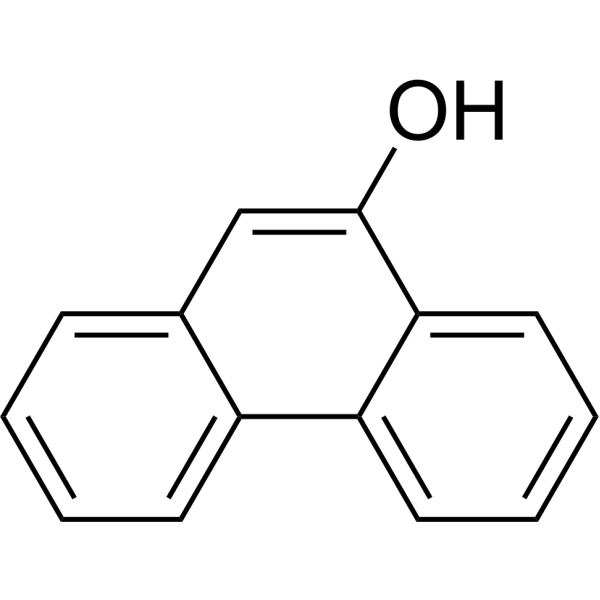
HY-108457
9-PhenanthrolTRPM4 Inhibitor -
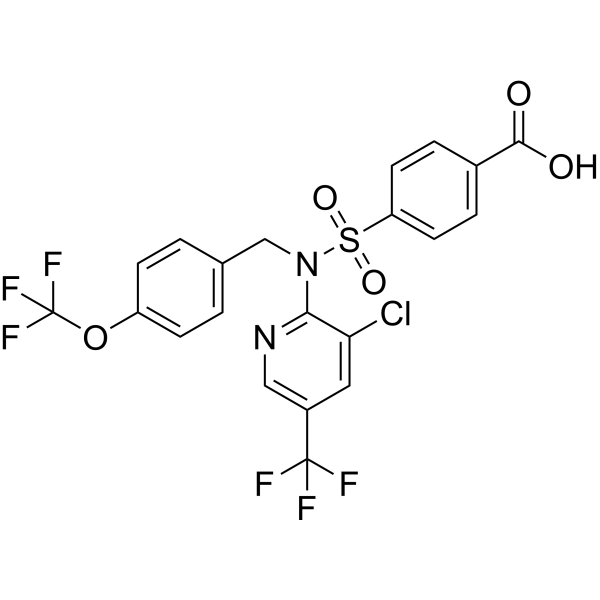
HY-18662
RQ-00203078TRPM8 Antagonist
Publications Citing Use of MedChemExpress (MCE) Pyr3
More- Nat Immunol. 2026 May;27(5):949-960. [Abstract]
- J Am Heart Assoc. 2022 Aug 2;11(15):e025328. [Abstract]
- Eur J Pharmacol. 2025 Feb 5:988:177235. [Abstract]
- Biochim Biophys Acta Mol Basis Dis. 2023 Jan 18;1869(4):166643. [Abstract]
- iScience. 2025 Dec 31.
- Exp Cell Res. 2022 Dec 1;421(1):113374. [Abstract]
- Food Chem Toxicol. 2019 Jul:129:281-290. [Abstract]
- Biol Pharm Bull. 2023;46(6):864-868. [Abstract]
- Environ Toxicol. 2024 Jan;39(1):357-366. [Abstract]


Biological Activity
Description
IC50 & Target
IC50: 700 nM (TRPC3)[1].
Cellular Effect
|
Cell Line

|
Type | Value | Description | References |
|---|---|---|---|---|
| HEK293 | IC50 |
0.54 μM
Compound: 30
|
Inhibition of YFP-tagged TRPC3 (unknown origin) expressed in HEK293 cells assessed as reduction carbhocol-induced receptor operated Calcium influx after 5 mins by fura-2-AM dye based assay
Inhibition of YFP-tagged TRPC3 (unknown origin) expressed in HEK293 cells assessed as reduction carbhocol-induced receptor operated Calcium influx after 5 mins by fura-2-AM dye based assay
|
[PMID: 30943030] |
| MDA-MB-231 | IC50 |
1 μM
Compound: 67; Pyr3
|
Anticancer activity against human MDA-MB-231 cells assessed as cell growth inhibition incubated for 3 to 5 days by MTT assay
Anticancer activity against human MDA-MB-231 cells assessed as cell growth inhibition incubated for 3 to 5 days by MTT assay
|
[PMID: 33650861] |
In Vitro
Pyr3 selectively and directly inhibits TRPC3 channels among TRPC family members. Application of Pyr3 inhibits TRPC3-mediated Ca2+ influx in a dose-dependent manner with the IC50 value of 700 nM. Pyr3 becomes apparent at 0.3 μM, and is almost complete at 3 μM. Interestingly, Ca2+ influx is inhibited by Pyr3 in cells co-expressing TRPC3 plus TRPC6 but not in cells coexpressing TRPC1 plus TRPC5. The Ang II-induced NFAT translocation is suppressed by Pyr3, but weakly by Pyr2 in a concentration-dependent manner (IC50 value was 0.05 μM for Pyr3 and 2 μM for Pyr2)[1].
MedChemExpress (MCE) has not independently confirmed the accuracy of these methods. They are for reference only.


Chemical Information
-
CAS No. 1160514-60-2
-
Appearance Solid
-
Molecular Weight 456.63
-
Formula C16H11Cl3F3N3O3
-
Color White to off-white
-
SMILES
O=C(C1=C(C(F)(F)F)N(C2=CC=C(NC(/C(Cl)=C(Cl)/Cl)=O)C=C2)N=C1)OCC
-
Shipping
Room temperature in continental US; may vary elsewhere.
-
Storage
Powder -20°C 3 years 4°C 2 years In solvent -80°C 2 years -20°C 1 year


Publications (9)
-
Journal Impact Factor
-
Most Recent
-
Nat Immunol
Lipid asymmetry disruption by XKR8 orchestrates neutrophil extracellular trap formation and inhibits fungal infection. [Abstract]2026 May;27(5):949-960. PMID: 41781710 -
J Am Heart Assoc
Sodium-Glucose Cotransporter 2 Inhibitor Canagliflozin Antagonizes Salt-Sensitive Hypertension Through Modifying Transient Receptor Potential Channels 3 Mediated Vascular Calcium Handling. [Abstract]2022 Aug 2;11(15):e025328. PMID: 35904193 -
Eur J Pharmacol
Pyr3 inhibits cell viability and PKCα activity to suppress migration in human bladder cancer cells. [Abstract]2025 Feb 5:988:177235. PMID: 39725132 -
Biochim Biophys Acta Mol Basis Dis
Soluble epoxide hydrolase and TRPC3 channels jointly contribute to homocysteine-induced cardiac hypertrophy: Interrelation and regulation by C/EBPβ. [Abstract]2023 Jan 18;1869(4):166643. PMID: 36669577 -
-
Exp Cell Res
Inhibition of TRPC6 suppressed TGFβ-induced fibroblast-myofibroblast transdifferentiation in renal interstitial NRK-49F cells. [Abstract]2022 Dec 1;421(1):113374. PMID: 36206825 -
Food Chem Toxicol
Activation of TRPC6 channels contributes to (+)-conocarpan-induced apoptotic cell death in HK-2 cells. [Abstract]2019 Jul:129:281-290. PMID: 31054997 -
Biol Pharm Bull
Inhibition of TRPC4/5 Channel Is Effective in Protecting against Histamine-Induced Hyperpermeability by Blocking Ca2+ Influx in Lung Microvascular Endothelial Cells. [Abstract]2023;46(6):864-868. PMID: 37258152 -
Environ Toxicol
MiRNA-26a-5p inhibits preterm labor initiation by targeting and regulating TRPC3 ion channel protein expression. [Abstract]2024 Jan;39(1):357-366. PMID: 37755144


Solvent & Solubility
In Vitro:
DMSO : ≥ 125 mg/mL (273.74 mM; Hygroscopic DMSO has a significant impact on the solubility of product, please use newly opened DMSO)
* "≥" means soluble, but saturation unknown.
Please refer to the solubility information to select the appropriate solvent. Once prepared, please aliquot and store the solution to prevent product inactivation from repeated freeze-thaw cycles.
Storage method and period of stock solution: -80°C, 2 years; -20°C, 1 year. When stored at -80°C, please use it within 2 years. When stored at -20°C, please use it within 1 year.
Please refer to the solubility information to select the appropriate solvent. Once prepared, please aliquot and store the solution to prevent product inactivation from repeated freeze-thaw cycles.
Storage method and period of stock solution: -80°C, 2 years; -20°C, 1 year. When stored at -80°C, please use it within 2 years. When stored at -20°C, please use it within 1 year.
Concentration (start) × Volume (start) = Concentration (final) × Volume (final)
In Vivo:
Select the appropriate dissolution method based on your experimental animal and administration route.
- For the following dissolution methods, please ensure to first prepare a clear stock solution using an In Vitro approach and then sequentially add co-solvents:
- To ensure reliable experimental results, the clarified stock solution can be appropriately stored based on storage conditions. As for the working solution for In Vivo experiments, it is recommended to prepare freshly and use it on the same day.
- The percentages shown for the solvents indicate their volumetric ratio in the final prepared solution. If precipitation or phase separation occurs during preparation, heat and/or sonication can be used to aid dissolution.
Add each solvent one by one: 10% DMSO 40% PEG300 5% Tween-80 45% Saline
Solubility: ≥ 2.08 mg/mL (4.56 mM); Clear solution
This protocol yields a clear solution of ≥ 2.08 mg/mL (saturation unknown).
Taking 1 mL working solution as an example, add 100 μL DMSO stock solution (20.8 mg/mL) to 400 μL PEG300, and mix evenly; then add 50 μL Tween-80 and mix evenly; then add 450 μL Saline to adjust the volume to 1 mL.
Preparation of Saline: Dissolve 0.9 g sodium chloride in ddH₂O and dilute to 100 mL to obtain a clear Saline solution.
Add each solvent one by one: 10% DMSO 90% (20% SBE-β-CD in Saline)
Solubility: ≥ 2.08 mg/mL (4.56 mM); Clear solution
This protocol yields a clear solution of ≥ 2.08 mg/mL (saturation unknown).
Taking 1 mL working solution as an example, add 100 μL DMSO stock solution (20.8 mg/mL) to 900 μL 20% SBE-β-CD in Saline, and mix evenly.
Preparation of 20% SBE-β-CD in Saline (4°C, storage for one week): 2 g SBE-β-CD powder is dissolved in 10 mL Saline, completely dissolve until clear.
In Vivo Dissolution Calculator
Please enter the basic information of animal experiments:
-
-
-
-
Recommended: Prepare an additional quantity of animals to account for potential losses during experiments.
Please enter your animal formula composition:
-
%DMSO +
Recommended: Keep the proportion of DMSO in working solution below 2% if your animal is weak.
-
%+
-
+%Tween-80 + +
-
%Saline +
The co-solvents required include: DMSO, . All of co-solvents are available by MedChemExpress (MCE). , Tween 80. All of co-solvents are available by MedChemExpress (MCE).
Working solution concentration: 0.22 mg/mL
Method for preparing stock solution: mg drug dissolved in μL DMSO. Stock solution concentration: mg/mL.
1. Take μL DMSO stock solution;
2. Add μL .
μL , mix evenly;
3. Then add μL Tween 80, mix evenly;
4. Then add μL
Please ensure that the stock solution in the first step is dissolved to a clear state, and add co-solvents in sequence. You can use ultrasonic heating (ultrasonic cleaner, recommended frequency 20-40 kHz), vortexing, etc. to assist dissolution.


Purity & Documentation
-
Data Sheet (274 KB)
-
SDS (614 KB)
- English - EN (614 KB)
- Français - FR (614 KB)
- Deutsch - DE (614 KB)
- Norwegian - NO (614 KB)
- Español - ES (614 KB)
- Swedish - SV (614 KB)
- Italian - IT (614 KB)
- Korean - KR (614 KB)
- Portuguese - PT (614 KB)
-
Handling Instructions (2659 KB)
References


Complete Stock Solution Preparation Table
Please refer to the solubility information to select the appropriate solvent. Once prepared, please aliquot and store the solution to prevent product inactivation from repeated freeze-thaw cycles.
Storage method and period of stock solution: -80°C, 2 years; -20°C, 1 year. When stored at -80°C, please use it within 2 years. When stored at -20°C, please use it within 1 year.
| Optional Solvent | Concentration Solvent Mass | 1 mg | 5 mg | 10 mg | 25 mg |
|---|---|---|---|---|---|
| DMSO | 1 mM | 2.1900 mL | 10.9498 mL | 21.8996 mL | 54.7489 mL |
| 5 mM | 0.4380 mL | 2.1900 mL | 4.3799 mL | 10.9498 mL | |
| 10 mM | 0.2190 mL | 1.0950 mL | 2.1900 mL | 5.4749 mL | |
| 15 mM | 0.1460 mL | 0.7300 mL | 1.4600 mL | 3.6499 mL | |
| 20 mM | 0.1095 mL | 0.5475 mL | 1.0950 mL | 2.7374 mL | |
| 25 mM | 0.0876 mL | 0.4380 mL | 0.8760 mL | 2.1900 mL | |
| 30 mM | 0.0730 mL | 0.3650 mL | 0.7300 mL | 1.8250 mL | |
| 40 mM | 0.0547 mL | 0.2737 mL | 0.5475 mL | 1.3687 mL | |
| 50 mM | 0.0438 mL | 0.2190 mL | 0.4380 mL | 1.0950 mL | |
| 60 mM | 0.0365 mL | 0.1825 mL | 0.3650 mL | 0.9125 mL | |
| 80 mM | 0.0274 mL | 0.1369 mL | 0.2737 mL | 0.6844 mL | |
| 100 mM | 0.0219 mL | 0.1095 mL | 0.2190 mL | 0.5475 mL |


Pyr3 Related Classifications
HY-108465 Related Classifications
 Powered by Bioz