



Leukotriene E4
Based on 1 publication(s) in Google Scholar
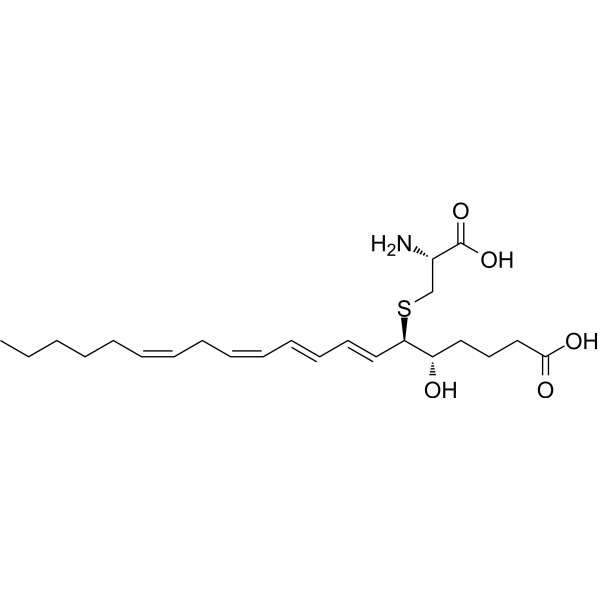
Leukotriene E4 (LTE4) is a stable final metabolite of cysteinyl leukotrienes, produced by immune cells such as mast cells and eosinophils. Leukotriene E4 serves as a key biomarker for evaluating asthma severity, Aspirin (HY-14654) sensitivity, and mast cell activation disorders. Leukotriene E4 is a full functional agonist of CysLT1R, which induces sustained intracellular calcium mobilization and Erk phosphorylation. Leukotriene E4 mediates inflammation in a P2Y12 receptor-dependent manner. Leukotriene E4 can be used in the research of asthma and non-steroidal anti-inflammatory drug-exacerbated respiratory diseases.
The product specifications provided below refer solely to the active content of Leukotriene E4.
商品は「研究用試薬」です。人や動物の医療用・臨床診断用・食品用の製品ではありません。
研究用途以外に使用した場合、当社は一切の責任を負いかねます。
- 純度 : 99.61%
- CAS 番号: 75715-89-8
- 分子式: C23H37NO5S
- 分子量:439.61
-
保管条件:
Solution, -20°C, 2 years

To place orders, for customer services and technical support, please contact: MedChemExpress USA
Tel: 609-228-6898 E-mail: [email protected] [email protected]


-
 生物活性
-
化学情報
- プロトコル
- 純度とドキュメンテーション
- 参考文献
-
 Help & FAQs


-
HY-113456
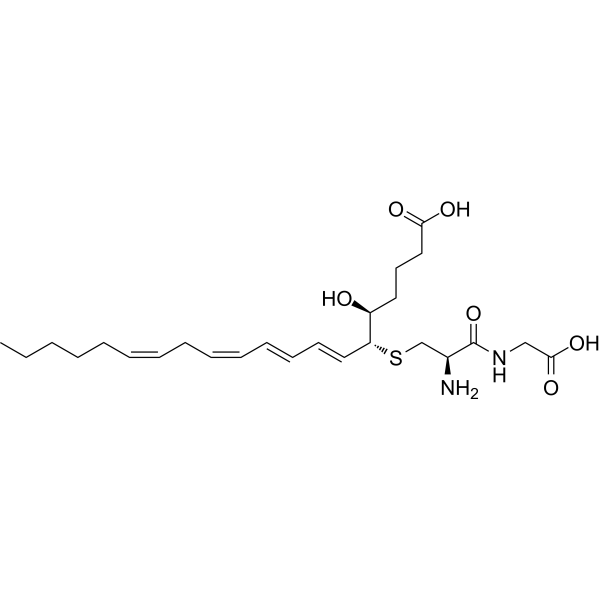
Leukotriene D4Bronchoconstrictor -
HY-113446
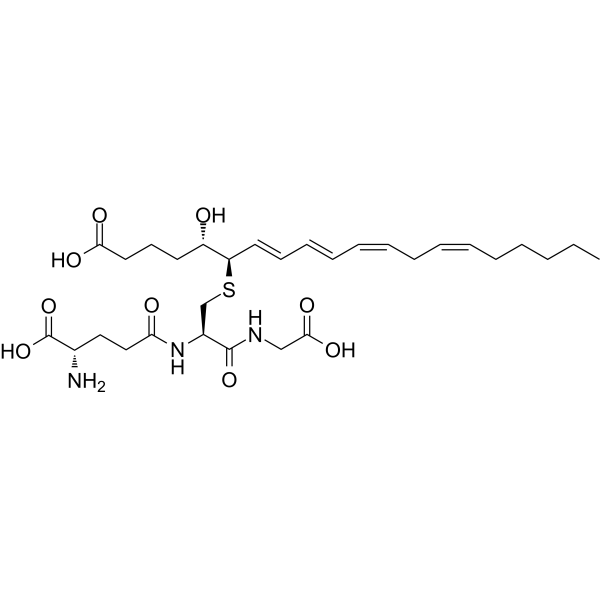
Leukotriene C4Endogenous Metabolite -
HY-125527
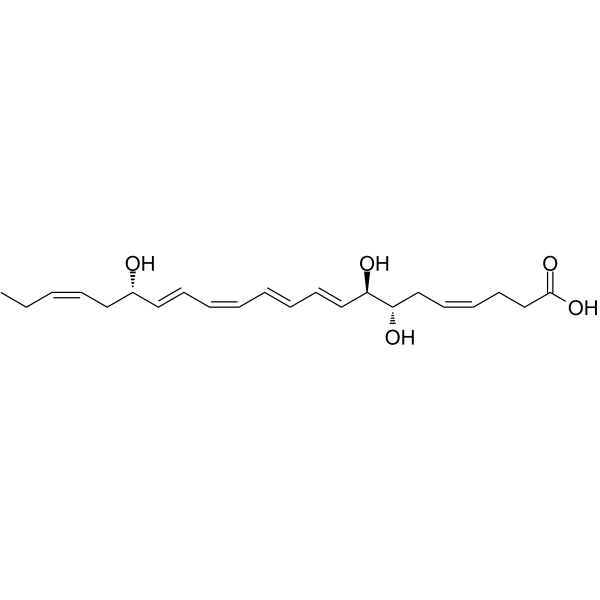
Resolvin D1Endogenous Inflammation Mediator -
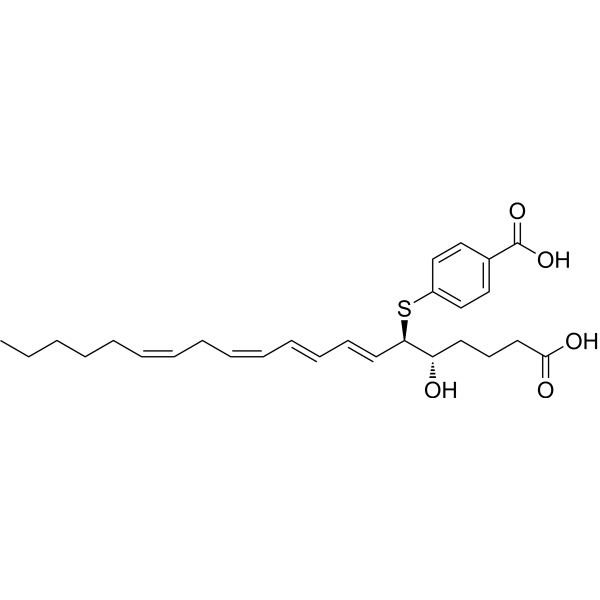
HY-107609
BAY-u 9773Cysteinyl-Leukotriene Receptor Antagonist -
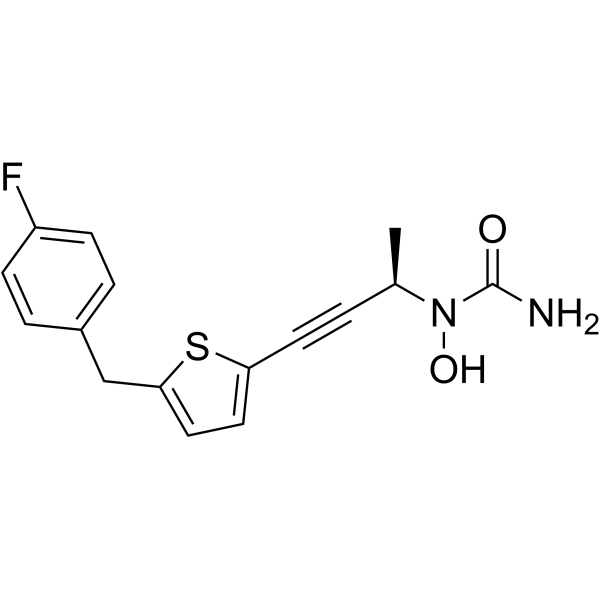
HY-117853
Atreleuton5-Lipoxygenase Inhibitor -
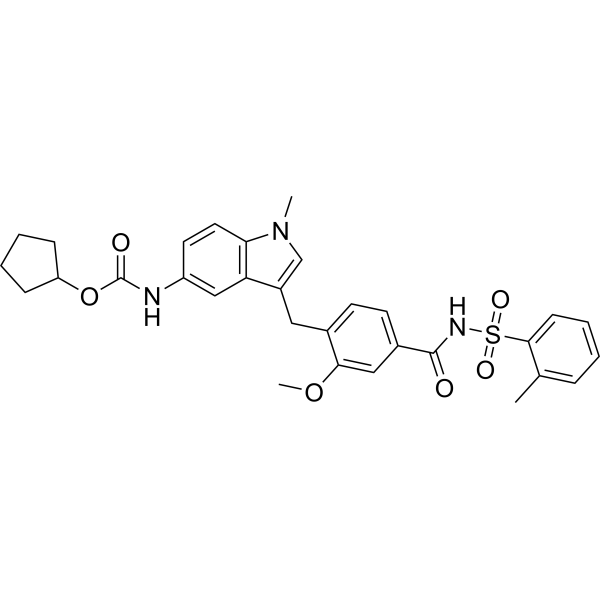
HY-17492
ZafirlukastLeukotriene Receptor Antagonist -
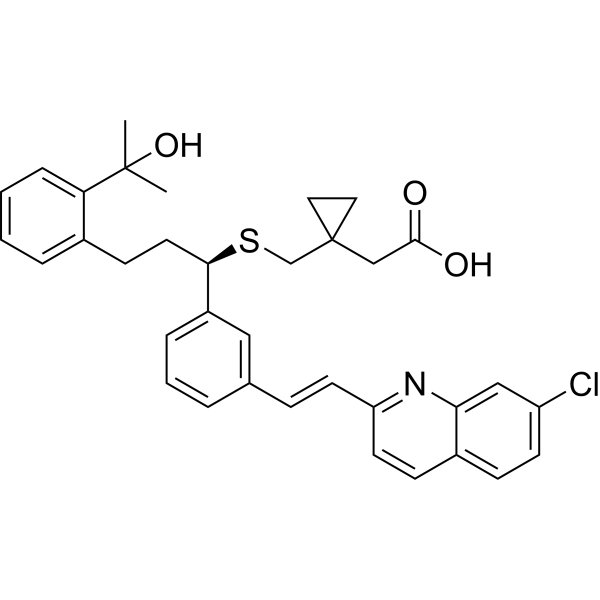
HY-13315A
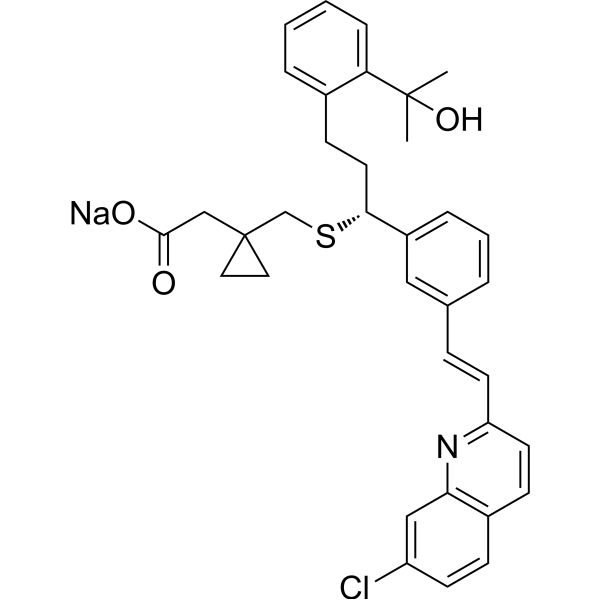
MontelukastCysLT1 Antagonist -
HY-13315
Montelukast sodiumCysltr1 Antagonist -
HY-19989A
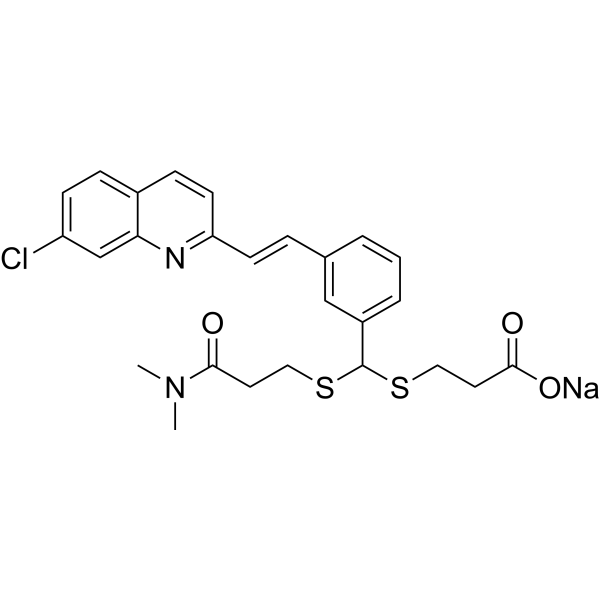
MK-571 sodiumABCC1/MRP4 Inhibitor -

HY-13315AR
Montelukast (Standard)CysLT1 Antagonist -
HY-15744
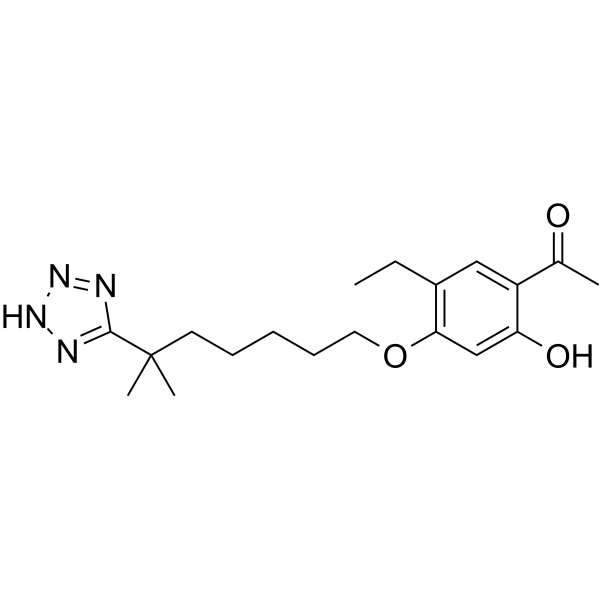
LY255283LTB4 Receptor Antagonist -
HY-105484
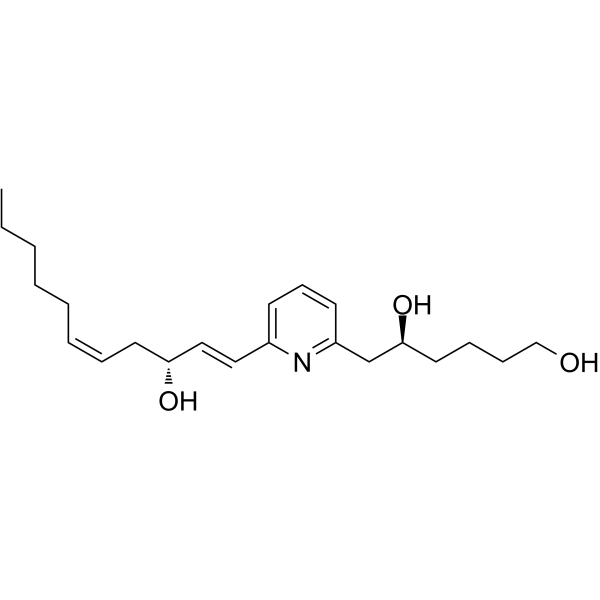
U-75302LTB4 inhibitor
MedChemExpress(MCE)の使用を引用している文献 Leukotriene E4
MoreEndogenous Metabolite アイソフォーム固有の製品をすべて表示
MoreLeukotriene Receptor アイソフォーム固有の製品をすべて表示
MoreCalcium Channel アイソフォーム固有の製品をすべて表示
MoreP2Y Receptor アイソフォーム固有の製品をすべて表示
More

生物活性
製品説明
The product specifications provided below refer solely to the active content of Leukotriene E4.
|
Human Endogenous Metabolite |
CysLT1 |
P2Y14 Receptor |
Cellular Effect
|
Cell Line

|
Type | Value | Description | References |
|---|---|---|---|---|
| Sf9 | IC50 |
9.83 μM
Compound: Leukotrien E4
|
TP_TRANSPORTER: inhibition of E217betaG uptake (E217betaG: 0.055 uM) in membrane vesicles from Mrp2-expressing Sf9 cells
TP_TRANSPORTER: inhibition of E217betaG uptake (E217betaG: 0.055 uM) in membrane vesicles from Mrp2-expressing Sf9 cells
|
[PMID: 11306690] |
体外実験
Leukotriene E4 induces only a very weak, non-sustained intracellular calcium mobilization response in LUVA human mast cells, with no detectable EC50[1].
Leukotriene E4 induces concentration-dependent intracellular calcium mobilization in HEK293T cells transfected with CYSLTR1, with an EC50 of 83.2 nM[1].
Leukotriene E4 (100 nM; 2-60 min) induces sustained phosphorylation of Erk in LAD2 human mast cells, and the activation signal remains detectable after 60 minutes[1].
Leukotriene E4 (100 nM; 2-60 min) induces transient phosphorylation of Erk in LUVA human mast cells, with no sustained activation observed within 60 minutes[1].
Leukotriene E4 (1-100 nM; 15 min) induces PTX-sensitive, MK571-resistant ERK phosphorylation in Chinese hamster ovary cells stably expressing human P2Y12 receptors, with activation initiating at 1 nM and reaching a plateau at 100 nM[2].
Leukotriene E4 (500 nM) induces calcium influx in LAD2 human mast cells, and this response is not inhibited by the P2Y12 antagonist 2-MesAMP (HY-125989)[2].
Leukotriene E4 (100 nM) induces the production of PGD2 in the human mast cell line LAD2, and the generation of this product is completely dependent on the P2Y12 receptor[2].
Leukotriene E4 (1 μM; 10 min) does not induce the expression of CD62P (an activation marker) in human blood platelets[2].
Leukotriene E4 (100 nM; 2-6 h) induces only extremely weak CCL4 mRNA and protein expression in LUVA human mast cells, with much lower potency relative to LTD4[1].
The induction of CCL4 mRNA expression in human mast cell line LAD2 by Leukotriene E4 (100 nM; 2 h) depends on the MEK/Erk pathway and intracellular/extracellular Ca2+, but is independent of Gi/o proteins or the PPAR-γ signaling pathway[1].
Leukotriene E4 (100 nM; 5 min-2 h) requires prolonged exposure (2 h) to induce full CCL4 mRNA expression in LAD2 human mast cells, whereas short-term exposure (5 min) only elicits weak activity[1].
Leukotriene E4 (100-500 nM; 6 h) induces high levels of MIP-1β production in LAD2 human mast cells, and this production process is mainly dependent on the P2Y12 receptor; the P2Y12 antagonist 2-MesAMP inhibits more than 50% of its production, while P2Y12 shRNA knockdown almost completely blocks this production process[2].
MedChemExpress (MCE) has not independently confirmed the accuracy of these methods. They are for reference only.
-
Cell Line:LAD2 human mast cells
-
Concentration:100 nM
-
Incubation Time:2 h (mRNA analysis); 6 h (protein analysis)
-
Result:Consistently induced CCL4 and CSF2 mRNA and protein expression, matching or exceeding the potency of LTD4.
Induced mRNA expression was fully inhibited by pre-treatment with 100 nM Montelukast (HY-13315A) for 10 minutes.
Induced mRNA expression was not affected by 1 μM HAMI3379 (HY-112248A).
-
Cell Line:LUVA human mast cells
-
Concentration:100 nM
-
Incubation Time:2 h (mRNA analysis); 6 h (protein analysis)
-
Result:Induced only very weak CCL4 mRNA and protein expression.
Showed negligible activity compared to LTD4.
-
Cell Line:LAD2 human mast cells
-
Concentration:100 nM
-
Incubation Time:2, 5, 7, 10, 15, 30, 60 minutes
-
Result:Induced Erk phosphorylation that peaked later than LTD4-induced phosphorylation.
Induced Erk phosphorylation remained detectable for 60 minutes, showing sustained activation compared to the gradual decrease observed with LTD4.
-
Cell Line:LUVA human mast cells
-
Concentration:100 nM
-
Incubation Time:2, 5, 7, 10, 15, 30, 60 minutes
-
Result:Induced Erk phosphorylation that peaked at a similar time to LTD4-induced phosphorylation.
Induced Erk phosphorylation was shorter in duration than the sustained activation observed in LAD2 cells.
-
Cell Line:LAD2 human mast cells
-
Concentration:100 nM
-
Incubation Time:2 h
-
Result:Induced CCL4 mRNA expression was potently inhibited by U0126, BAPTA-AM, and EDTA.
Induced CCL4 mRNA expression was not modified by pertussis toxin, GW9662, or T0070907.
-
Cell Line:LAD2 human mast cells
-
Concentration:100 nM
-
Incubation Time:5 minutes, 2 hours
-
Result:2-hour exposure induced CCL4 mRNA expression levels similar to those induced by LTD4.
5-minute exposure induced significantly lower CCL4 mRNA expression than 5-minute exposure to LTD4.
-
Cell Line:CYSLTR1-knockdown LAD2 human mast cells
-
Concentration:100 nM
-
Incubation Time:2 h (mRNA analysis); 6 h (protein analysis)
-
Result:Induced CCL4 mRNA and protein expression was almost completely abrogated compared to empty vector control LAD2 cells.
-
Cell Line:Chinese hamster ovary (CHO) cells stably transfected with human P2Y12 receptor (forward orientation) or empty reverse construct control
-
Concentration:500 nM (stimulation); 1 nM, 100 nM (dose-response analysis)
-
Incubation Time:15 min (stimulation)
-
Result:Exhibited robust ERK phosphorylation in response to LTE4, with activation detectable at doses as low as 1 nM and reaching a plateau at 100 nM.
Showed partial block of LTE4-induced ERK activation by pretreatment with 2-MesAMP.
Showed LTE4-induced ERK activation sensitive to PTX and resistant to MK571.
Showed no ERK phosphorylation in response to LTE4 (reverse orientation P2Y12 construct cells).
-
Cell Line:LAD2 human mast cells
-
Concentration:100 nM, 500 nM
-
Incubation Time:6 h
-
Result:Induced substantial MIP-1β production at 100 nM and 500 nM, exceeding levels induced by LTD4 and IgE plus anti-IgE.
Blocked LTE4-mediated MIP-1β production by >50% after pretreatment with 2-MesAMP.
Nearly abrogated LTE4-induced MIP-1β production after P2Y12 receptor knockdown (reducing mRNA expression by ~90%).
Slightly (non-significantly) decreased the response to LTE4 after CysLT1R knockdown.
体内実験
Leukotriene E4 (2.2 nmol; intranasal administration; once daily for 3 consecutive days) enhances allergen-induced pulmonary inflammation in BALB/c mice, and this effect is independent of the classical CysLT1R and CysLT2R receptors[2].
The enhanced allergen-induced pulmonary inflammation effect in sensitized BALB/c mice mediated by Leukotriene E4 (2.2 nmol; intranasal administration; once daily for 3 consecutive days) is completely dependent on platelets[2].
MedChemExpress (MCE) has not independently confirmed the accuracy of these methods. They are for reference only.
-
Animal Model:BALB/c (male, 6-8 wk old, OVA (HY-W250978)-sensitized asthma model)[2]
-
Dosage:2.2 nmol
-
Administration:i.n.; once daily; 3 days (30 minutes before each OVA challenge)
-
Result:Significantly enhanced bronchoalveolar lavage fluid eosinophilia.
Increased bronchovascular inflammation score per 15 bronchi to levels approaching those of mice challenged with 1% OVA.
Increased PAS-positive goblet cells per mm of bronchial basal lamina to levels approaching those of mice challenged with 1% OVA.
Modestly increased lung expression of IL-13 and MUC5AC mRNA.
-
Animal Model:C57BL/6 wild-type (male and female, 6-8 wk old, OVA-sensitized asthma model); C57BL/6 p2ry12-/- (age- and sex-matched, OVA-sensitized asthma model)[2]
-
Dosage:2.2 nmol
-
Administration:i.n.; once daily; 3 days (30 minutes before each OVA challenge)
-
Result:Potentiated bronchoalveolar lavage fluid eosinophilia, goblet cell metaplasia, and bronchovascular infiltration in wild-type mice.
Severely blunted all LTE4-mediated potentiation of these inflammatory endpoints in P2Y12 receptor-deficient mice.
-
Animal Model:BALB/c wild-type (6-8 wk old, OVA-sensitized asthma model); BALB/c Cysltr1/Cysltr2-/- (OVA-sensitized asthma model)[2]
-
Dosage:2.2 nmol
-
Administration:i.n.; once daily; 3 days (30 minutes before each OVA challenge)
-
Result:Potentiated OVA-induced bronchoalveolar lavage fluid eosinophilia, goblet cell metaplasia, and bronchovascular inflammation completely intact in CysLT1R and CysLT2R double-deficient mice, matching responses in wild-type controls.
-
Animal Model:BALB/c (male, 6-8 wk old, platelet-depleted, OVA-sensitized asthma model)[2]
-
Dosage:2.2 nmol
-
Administration:i.n.; once daily; 3 days (30 minutes before each OVA challenge)
-
Result:Completely eliminated LTE4-mediated potentiation of airway eosinophilia, bronchovascular inflammation, and goblet cell metaplasia, with effects identical to P2Y12 receptor blockade via clopidogrel.


化学情報
-
CAS 番号 75715-89-8
-
性状 Liquid
-
分子量 439.61
-
分子式 C23H37NO5S
-
Color Colorless to light yellow
-
SMILES
CCCCC/C=C\C/C=C\C=C\C=C\[C@@H](SC[C@H](N)C(O)=O)[C@@H](O)CCCC(O)=O
-
別名
LTE4; ロイコトリエンE4
-
Structure Classification
-
Initial Source
-
輸送条件
Room temperature in continental US; may vary elsewhere.
-
保管条件
Solution, -20°C, 2 years


Publications (1)
-
Journal Impact Factor
-
Most Recent
-
Nat Commun
2025 Dec 18;16(1):11205. PMID: 41413034


純度とドキュメンテーション
-
データシート (291 KB)
-
SDS (393 KB)
- English - EN (393 KB)
- Français - FR (393 KB)
- Deutsch - DE (393 KB)
- Norwegian - NO (393 KB)
- Español - ES (393 KB)
- Swedish - SV (393 KB)
- Italian - IT (393 KB)
- Korean - KR (393 KB)
- Portuguese - PT (393 KB)
-
取扱説明書 (2659 KB)
参考文献

Calculators
濃度 (開始) × 体積 (開始) = 濃度 (終了) × 体積 (終了)


Leukotriene E4 関連分類
HY-113465 関連分類
 Powered by Bioz
Keywords
- Leukotriene E4
- 75715-89-8
- LTE4
- Leukotriene E 4
- Leukotriene E-4
- LTE 4
- LTE-4
- Endogenous Metabolite
- Leukotriene Receptor
- Calcium Channel
- ERK
- P2Y Receptor
- Ca2+ channels
- Ca channels
- Extracellular signal regulated kinases
- CysLT1
- HEK293T cells
- BALB/c mice
- C57BL/6 mice
- P2Y12
- NSAID-exacerbated respiratory disease
- Chinese hamster ovary cells
- LAD2 human mast cells
- LUVA human mast cells
- asthma
- Inhibitor
- inhibitor
- inhibit