



D-Arabinose

Based on 1 Customer Validation
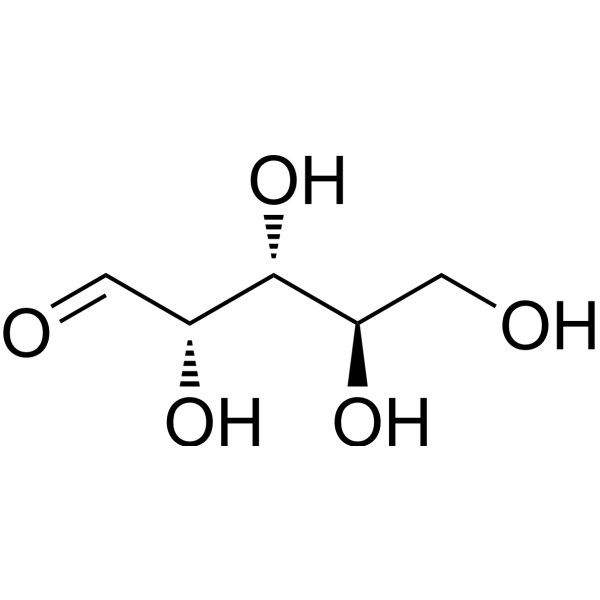
D-Arabinose is is an orally active antidepressant and a growth inhibitor of C. elegans (IC50 is 7.5 mM). D-Arabinose can penetrate the blood-brain barrier, selectively interfere with the metabolism of D-ribose and D-fructose, and inhibit the growth of nematodes. D-Arabinose can also inhibit the synthesis of cell biofilm and exert antibacterial activity. D-Arabinose activates the ACSS2-PPARγ/TFEB-CRTC1 axis through the lysosomal AXIN-LKB1-AMPK pathway, inducing CRTC1 transcription, exerts antidepressant-like activity. D-Arabinose is the ring-opened form of the aldopentose D-Arabinose (HY-N7082).
연구목적의 판매만을 진행합니다. 환자를 대상으로 한 판매는 하지 않습니다.
- Purity : 98.0%
- CAS No.: 10323-20-3
- 화학식: C5H10O5
- 분자량:150.13
-
보관:Powder -20°C, 3 years , 4°C, 2 years ; In solvent -80°C, 6 months , -20°C, 1 month

To place orders, for customer services and technical support, please contact: MedChemExpress USA
Tel: 609-228-6898 E-mail: [email protected] [email protected]


-
 Biological Activity
-
Chemical Information
-
용액&용해도
- Protocol
- 순도&문서
- References
-
 Help & FAQs


-
HY-N0537
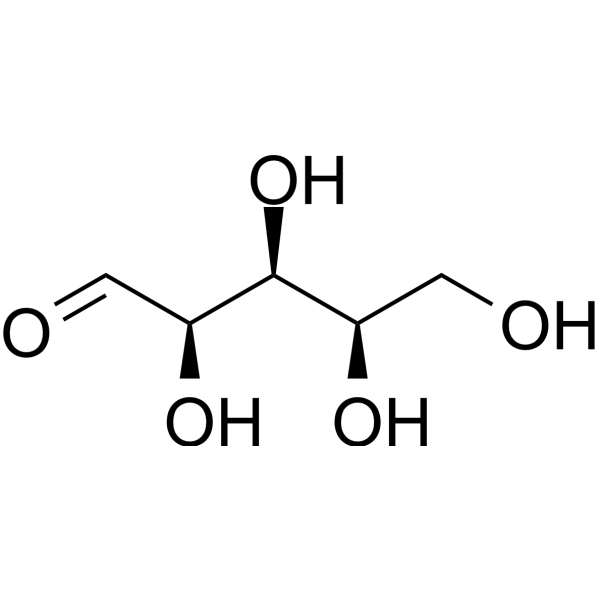
XyloseEndogenous Metabolite -
HY-N7092
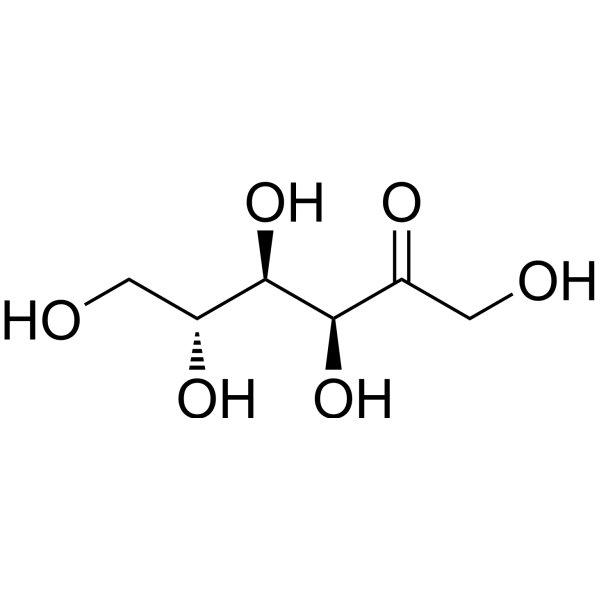
D-FructoseEndogenous Metabolite -

HY-W018772R
D-Ribose(mixture of isomers) (Standard) -
HY-N2325
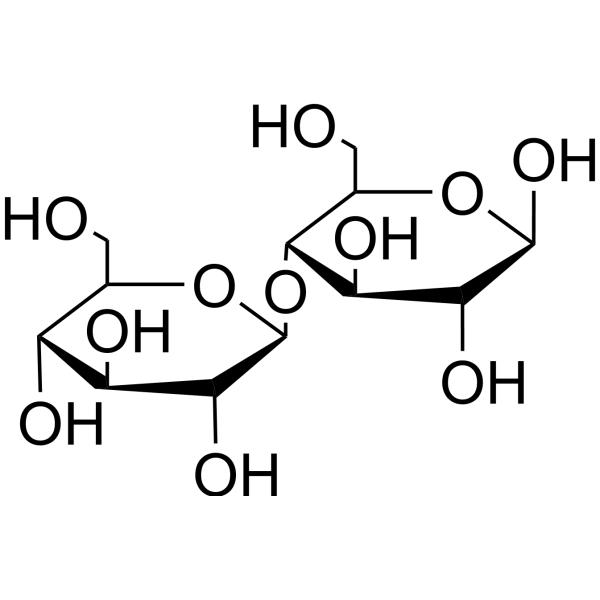
D-(+)-CellobioseEndogenous Metabolite -
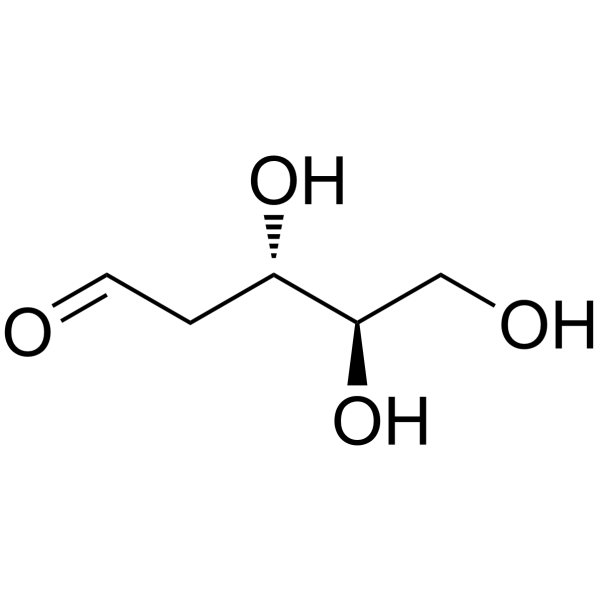
HY-77956
ThyminoseEndogenous Metabolite -
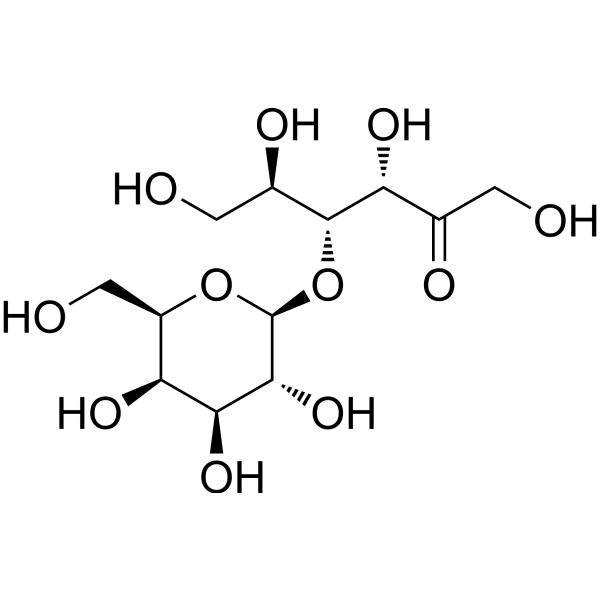
HY-B1172
LactuloseAnti-inflammatory Agent -
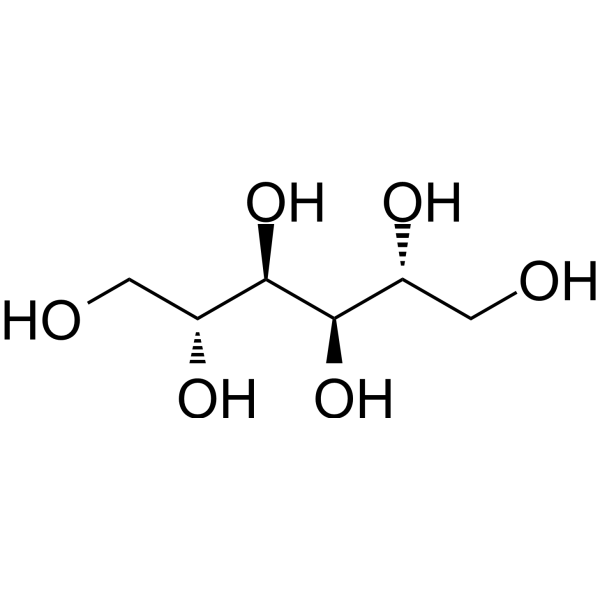
HY-N0378
D-MannitolResistant Sugar/Osmotic Diuretics -
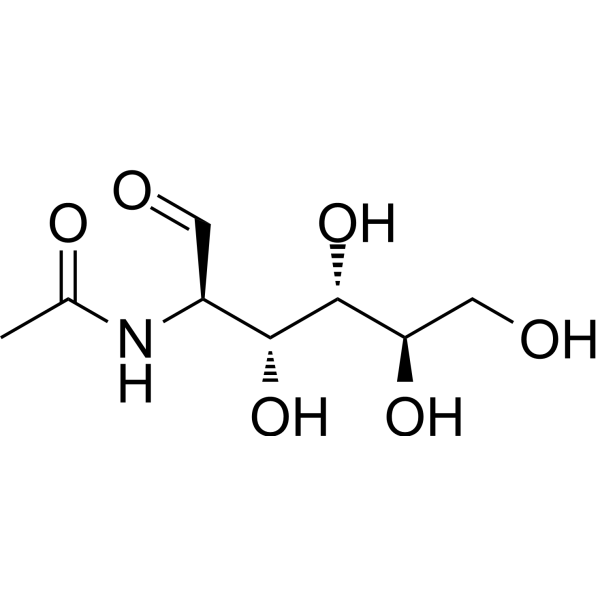
HY-A0132
N-Acetyl-D-glucosamineEndogenous Metabolite -
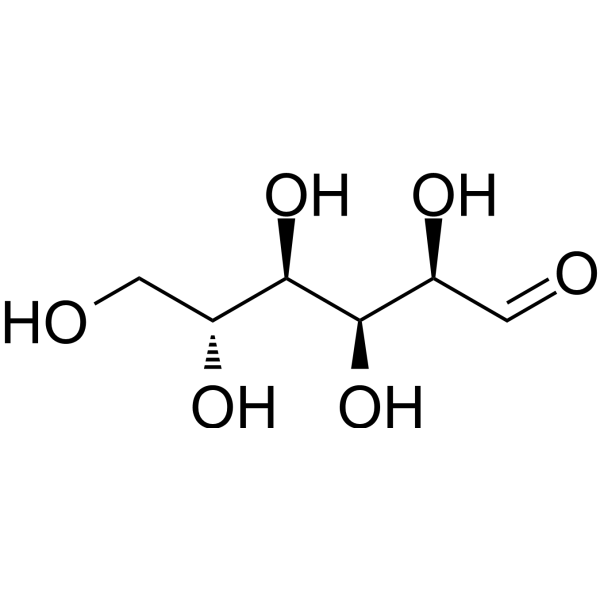
HY-B0389
D-GlucoseMonosaccharide -
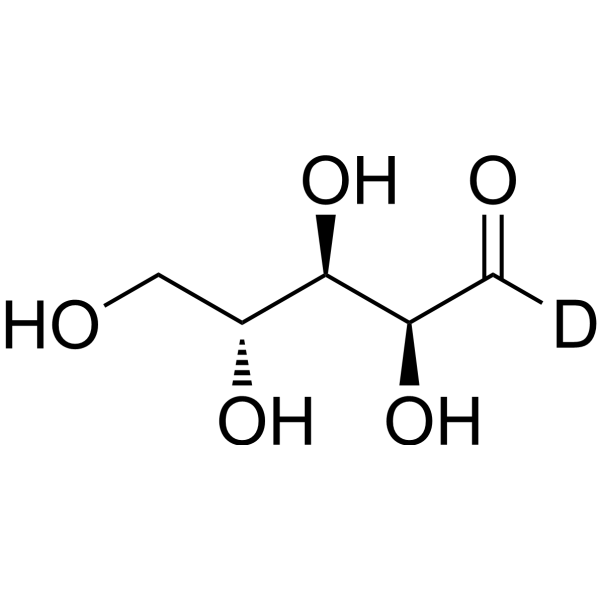
HY-N2353S1
Arabinose-d1Stable Isotope -
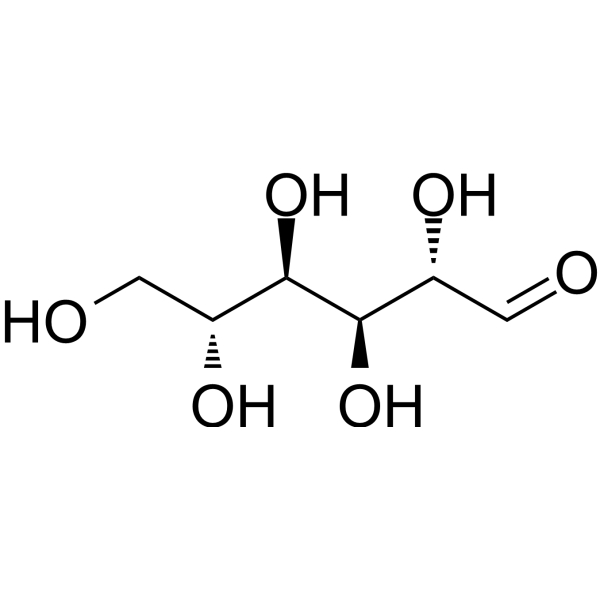
HY-N0379
D-MannoseEndogenous Metabolite -
HY-N6612
D-Glucuronic acidEndogenous Metabolite


Biological Activity
제품 설명
IC50 & Target
|
Human Endogenous Metabolite |
PPAR-γ |
In Vitro
D-Arabinose (40 μM; 24 h) activates the ACSS2-PPARγ/TFEB pathway in SH-SY5Y/BV2 cells and significantly upregulates CRTC1 protein level, BDNF mRNA level and AMPK phosphorylation level[1].
MedChemExpress (MCE) has not independently confirmed the accuracy of these methods. They are for reference only. Further protocols information, click here.
-
Cell Line:SH-SY5Y (human neuroblastoma), BV2 (mouse microglia)
-
Concentration:40 μM (WB/qPCR), 6 h (metabolic flux)
-
Incubation Time:24 h
-
Result:Increased CRTC1 protein (2.1±0.3-fold) and BDNF mRNA (1.8±0.2-fold) in both cell lines; PPARγ/TFEB proteins upregulated (1.7-fold), ACSS2 phosphorylation (S659) increased 2.5-fold.
Enhanced PPARγ/TFEB recruitment to CRTC1 promoter (2.3-fold for PPARγ, 1.9-fold for TFEB).
Increased glucose-derived pyruvate M+1 isotopomer and glutamate synthesis, while reducing ATP levels.
In Vivo
D-Arabinose (42 mM; 3 days) significantly inhibits the growth of C. elegans N2 strain (wild type)[2].
MedChemExpress (MCE) has not independently confirmed the accuracy of these methods. They are for reference only.
-
Animal Model:C57BL/6 J male mice (6-8 weeks, CRS-induced depression model)[1]
-
Dosage:2.5% (w/v, drinking water), 5% (w/v, drinking water)
-
Administration:Oral via drinking water ad libitum; 30 days (chronic treatment) or single gavage (3 h prior to testing)
-
Result:Behavioral tests
Chronic treatment: 2.5% and 5% D-arabinose reduced immobility time in tail suspension test (TST, ↓35% and ↓41%, p<0.001) and forced swim test (FST, ↓38% and ↓45%, p<0.001), and increased sucrose preference (↑42% and ↑50%, p<0.01).
Single gavage (5%): Rapid antidepressant effect with TST immobility ↓28% at 3 h post-treatment.
Neurobiological changes
Hippocampal CRTC1 protein ↑2.1-fold (p<0.01) and BDNF mRNA ↑1.8-fold (p<0.05) in 2.5% group; dendritic spine density in DG region restored to control levels (↑65%, p<0.001).
Knockdown of hippocampal CRTC1/ACSS2/PPARγ/TFEB abolished D-arabinose’s antidepressant effects, confirming pathway dependency.


Chemical Information
-
CAS No. 10323-20-3
-
Appearance Solid
-
분자량 150.13
-
화학식 C5H10O5
-
Color White to off-white
-
SMILES
O=C[C@H]([C@@H]([C@@H](CO)O)O)O
-
Structure Classification
-
Initial Source
-
선적
Room temperature in continental US; may vary elsewhere.
-
보관
Powder -20°C 3 years 4°C 2 years In solvent -80°C 6 months -20°C 1 month


용액&용해도
In Vitro:
DMSO : 100 mg/mL (666.09 mM; Need ultrasonic; Hygroscopic DMSO has a significant impact on the solubility of product, please use newly opened DMSO)
Please refer to the solubility information to select the appropriate solvent. Once prepared, please aliquot and store the solution to prevent product inactivation from repeated freeze-thaw cycles.
Storage method and period of stock solution: -80°C, 6 months; -20°C, 1 month. When stored at -80°C, please use it within 6 months. When stored at -20°C, please use it within 1 month.
Please refer to the solubility information to select the appropriate solvent. Once prepared, please aliquot and store the solution to prevent product inactivation from repeated freeze-thaw cycles.
Storage method and period of stock solution: -80°C, 6 months; -20°C, 1 month. When stored at -80°C, please use it within 6 months. When stored at -20°C, please use it within 1 month.
Concentration (start) × Volume (start) = Concentration (final) × Volume (final)
In Vivo:
Select the appropriate dissolution method based on your experimental animal and administration route.
- For the following dissolution methods, please ensure to first prepare a clear stock solution using an In Vitro approach and then sequentially add co-solvents:
- To ensure reliable experimental results, the clarified stock solution can be appropriately stored based on storage conditions. As for the working solution for In Vivo experiments, it is recommended to prepare freshly and use it on the same day.
- The percentages shown for the solvents indicate their volumetric ratio in the final prepared solution. If precipitation or phase separation occurs during preparation, heat and/or sonication can be used to aid dissolution.
Add each solvent one by one: 10% DMSO 40% PEG300 5% Tween-80 45% Saline
Solubility: ≥ 2.5 mg/mL (16.65 mM); Clear solution
This protocol yields a clear solution of ≥ 2.5 mg/mL (saturation unknown).
Taking 1 mL working solution as an example, add 100 μL DMSO stock solution (25.0 mg/mL) to 400 μL PEG300, and mix evenly; then add 50 μL Tween-80 and mix evenly; then add 450 μL Saline to adjust the volume to 1 mL.
Preparation of Saline: Dissolve 0.9 g sodium chloride in ddH₂O and dilute to 100 mL to obtain a clear Saline solution.
Add each solvent one by one: 10% DMSO 90% (20% SBE-β-CD in Saline)
Solubility: ≥ 2.5 mg/mL (16.65 mM); Clear solution
This protocol yields a clear solution of ≥ 2.5 mg/mL (saturation unknown).
Taking 1 mL working solution as an example, add 100 μL DMSO stock solution (25.0 mg/mL) to 900 μL 20% SBE-β-CD in Saline, and mix evenly.
Preparation of 20% SBE-β-CD in Saline (4°C, storage for one week): 2 g SBE-β-CD powder is dissolved in 10 mL Saline, completely dissolve until clear.
In Vivo Dissolution Calculator
Please enter the basic information of animal experiments:
-
-
-
-
Recommended: Prepare an additional quantity of animals to account for potential losses during experiments.
Please enter your animal formula composition:
-
%DMSO +
Recommended: Keep the proportion of DMSO in working solution below 2% if your animal is weak.
-
%+
-
+%Tween-80 + +
-
%Saline +
The co-solvents required include: DMSO, . All of co-solvents are available by MedChemExpress (MCE). , Tween 80. All of co-solvents are available by MedChemExpress (MCE).
Working solution concentration: 0.22 mg/mL
Method for preparing stock solution: mg drug dissolved in μL DMSO. Stock solution concentration: mg/mL.
1. Take μL DMSO stock solution;
2. Add μL .
μL , mix evenly;
3. Then add μL Tween 80, mix evenly;
4. Then add μL
Please ensure that the stock solution in the first step is dissolved to a clear state, and add co-solvents in sequence. You can use ultrasonic heating (ultrasonic cleaner, recommended frequency 20-40 kHz), vortexing, etc. to assist dissolution.

Protocol
-
Research Protocol for Infectious Diseases
Infectious-disease experiments test how pathogens interact with host barriers, innate immune receptors, inflammatory signaling, pathogen replication, and tissue injury; pattern-recognition receptors such as TLRs, RIG-I-like receptors, NOD-like receptors, and inflammasomes detect microbial molecules and activate NF-κB, interferon, and cytokine responses. The central hypothesis is that infection severity reflects the balance between pathogen burden and host response: protective inflammation restricts pathogen growth, whereas excessive or mislocalized inflammation contributes to tissue damage and disease phenotype. Unresolved questions include which host pathways are protective versus pathogenic, why some infection models fail to translate to human disease, and which combined readouts best predict clinically relevant infection outcomes.
-
Lysosome and acidic-vesicle live-cell staining
Lysosome and acidic-vesicle live-cell staining detects acidic intracellular compartments by using membrane-permeant acidotropic probes that accumulate in low-pH vesicles, including lysosomes, late endosomes, autolysosomes, and acidic phagosomes. LysoTracker staining is commonly used as an intensity-based readout of acidic lysosomal compartment abundance or enlargement, while acridine orange produces green fluorescence in less concentrated compartments and red fluorescence after concentration-dependent accumulation in acidic vesicular organelles. Loss or reduction of acridine-orange red signal can be used as a readout of lysosomal membrane permeabilization or reduced acidic-vesicle integrity. This protocol is designed for live cultured cells and can be adapted for fluorescence microscopy, high-content imaging, plate-reader readout, or flow cytometry when the selected literature supports the readout. Because these dyes report acidotropic accumulation rather than lysosome identity alone,
-
Bacterial live/dead nucleic-acid viability staining
The LIVE/DEAD bacterial viability staining method is based on differential permeability of nucleic-acid-binding fluorescent dyes, most commonly SYTO 9 and propidium iodide (PI), which enables discrimination of bacterial populations with intact versus compromised cytoplasmic membranes. SYTO 9 penetrates both intact and damaged bacterial membranes and binds nucleic acids to produce green fluorescence, whereas propidium iodide penetrates only cells with compromised membranes and fluoresces red while also reducing SYTO 9 signal through competitive binding and fluorescence interactions. The resulting fluorescence pattern is interpreted as a proxy for membrane integrity, which is widely used as an indicator of bacterial viability in microscopy, flow cytometry, and spectroscopic platforms. However, mechanistic studies show that SYTO 9 and PI interactions involve displacement and fluorescence resonance energy transfer effects, which can influence signal interpretation depending on dye ratios a


순도&문서
-
Data Sheet (286 KB)
-
SDS (396 KB)
- English - EN (396 KB)
- Français - FR (396 KB)
- Deutsch - DE (396 KB)
- Norwegian - NO (396 KB)
- Español - ES (396 KB)
- Swedish - SV (396 KB)
- Italian - IT (396 KB)
- Korean - KR (396 KB)
- Portuguese - PT (396 KB)
-
Handling Instructions (2659 KB)
References
[1]. Guo Y, et al. D-arabinose acts as antidepressant by activating the ACSS2-PPARγ/TFEB axis and CRTC1 transcription. Pharmacol Res. 2024 Apr;202:107136. [Content Brief]
[2]. Sakoguchi H, et al. Growth inhibitory effect of D-arabinose against the nematode Caenorhabditis elegans: Discovery of a novel bioactive monosaccharide. Bioorg Med Chem Lett. 2016 Feb 1;26(3):726-729. [Content Brief]
[3]. LeBlanc DJ, et al. Metabolism of D-arabinose: a new pathway in Escherichia coli. J Bacteriol. 1971 Apr;106(1):90-6. [Content Brief]
[4]. An SJ, et al. Inhibitory effect of d-arabinose on oral bacteria biofilm formation on titanium discs. Anaerobe. 2022 Jun;75:102533. [Content Brief]


Complete Stock Solution Preparation Table
Please refer to the solubility information to select the appropriate solvent. Once prepared, please aliquot and store the solution to prevent product inactivation from repeated freeze-thaw cycles.
Storage method and period of stock solution: -80°C, 6 months; -20°C, 1 month. When stored at -80°C, please use it within 6 months. When stored at -20°C, please use it within 1 month.
| Optional Solvent | Concentration Solvent Mass | 1 mg | 5 mg | 10 mg | 25 mg |
|---|---|---|---|---|---|
| DMSO | 1 mM | 6.6609 mL | 33.3045 mL | 66.6089 mL | 166.5223 mL |
| 5 mM | 1.3322 mL | 6.6609 mL | 13.3218 mL | 33.3045 mL | |
| 10 mM | 0.6661 mL | 3.3304 mL | 6.6609 mL | 16.6522 mL | |
| 15 mM | 0.4441 mL | 2.2203 mL | 4.4406 mL | 11.1015 mL | |
| 20 mM | 0.3330 mL | 1.6652 mL | 3.3304 mL | 8.3261 mL | |
| 25 mM | 0.2664 mL | 1.3322 mL | 2.6644 mL | 6.6609 mL | |
| 30 mM | 0.2220 mL | 1.1101 mL | 2.2203 mL | 5.5507 mL | |
| 40 mM | 0.1665 mL | 0.8326 mL | 1.6652 mL | 4.1631 mL | |
| 50 mM | 0.1332 mL | 0.6661 mL | 1.3322 mL | 3.3304 mL | |
| 60 mM | 0.1110 mL | 0.5551 mL | 1.1101 mL | 2.7754 mL | |
| 80 mM | 0.0833 mL | 0.4163 mL | 0.8326 mL | 2.0815 mL | |
| 100 mM | 0.0666 mL | 0.3330 mL | 0.6661 mL | 1.6652 mL |


D-Arabinose Related Classifications
HY-N0059 Related Classifications
 Powered by Bioz