



TAPI-2
Based on 6 publication(s) in Google Scholar
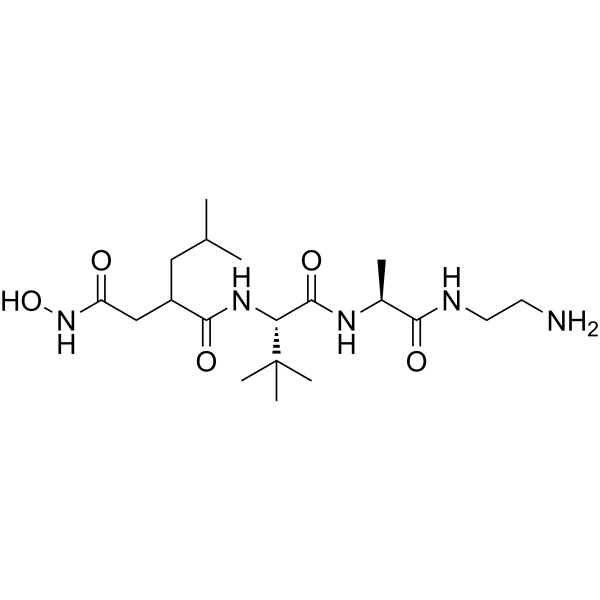
TAPI-2 (TNF Protease Inhibitor 2) is a broad-spectrum inhibitor of matrix metalloprotease (MMP), tumour necrosis factorα-converting enzyme (TACE) and a disintegrin and metalloproteinase (ADAM), with an IC50 of 20 μM for MMP. TAPI-2 blocks the entry of infectious SARS-CoV.
For research use only. We do not sell to patients.
- Purity : 99.85%
- CAS No.: 187034-31-7
- Formula: C19H37N5O5
- Molecular Weight:415.53
-
Storage:
4°C, sealed storage, away from moisture and light
* In solvent : -80°C, 6 months; -20°C, 1 month (sealed storage, away from moisture and light)

To place orders, for customer services and technical support, please contact: MedChemExpress USA
Tel: 609-228-6898 E-mail: [email protected] [email protected]


-
 Biological Activity
-
Chemical Information
-
Solvent & Solubility
- Protocols
- Purity & Documentation
- References
-
 Help & FAQs


-
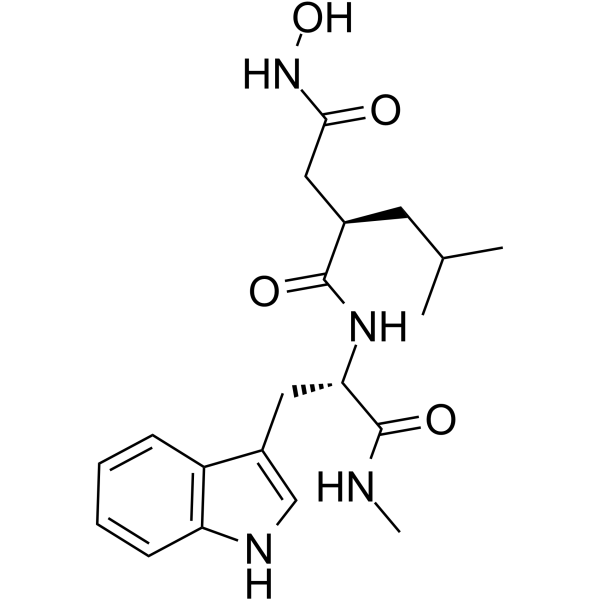
HY-15768
IlomastatMMP Inhibitor -
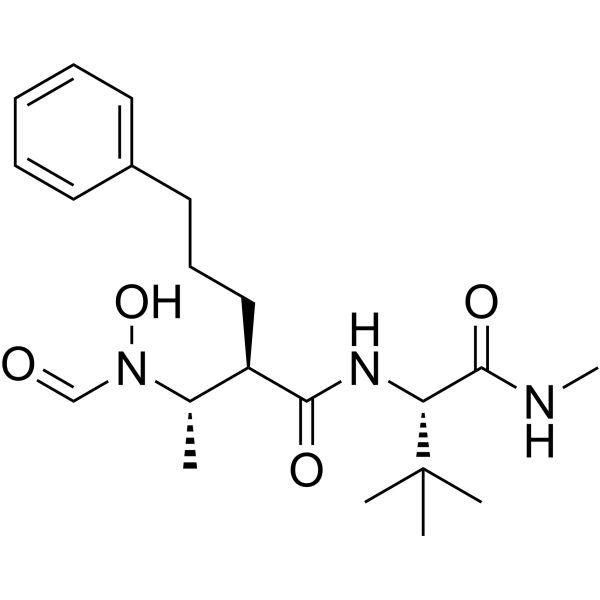
HY-19956
GI254023XADAM10/MMP9 Inhibitor -
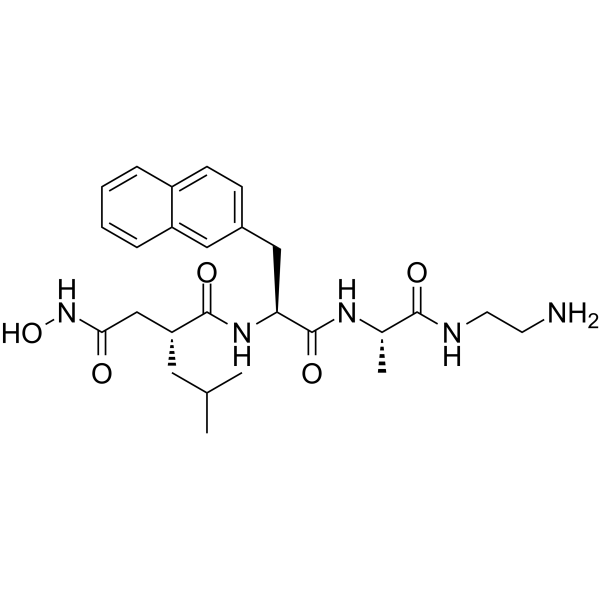
HY-16657
TAPI-1MMP Inhibitor -
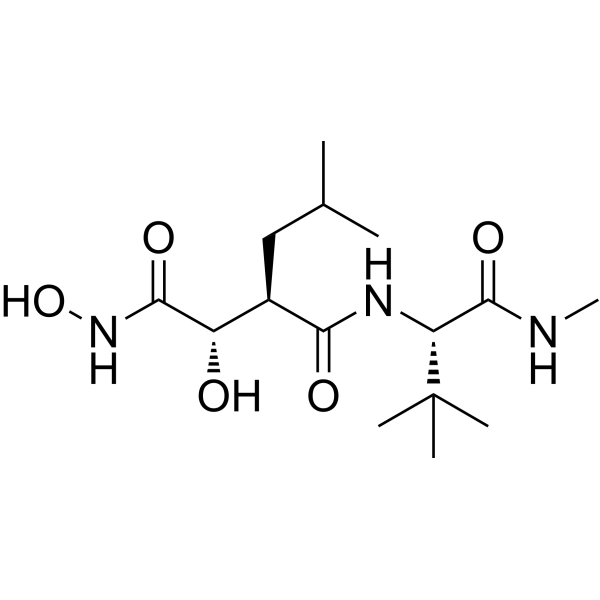
HY-12169
MarimastatMMP Inhibitor -
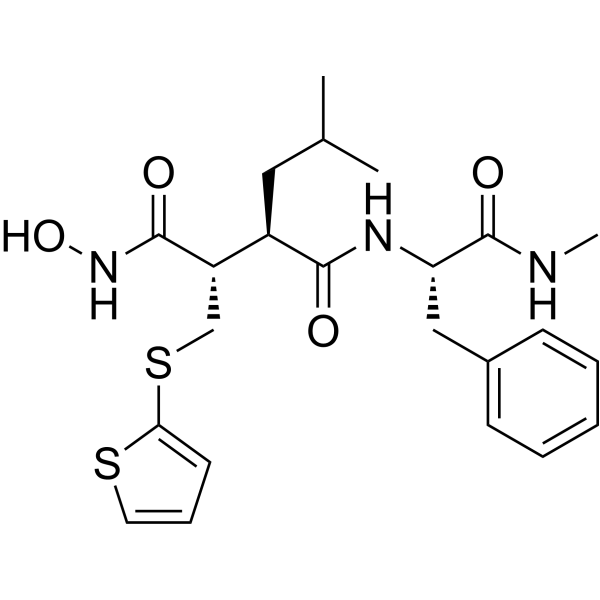
HY-13564
BatimastatMMP Inhibitor -
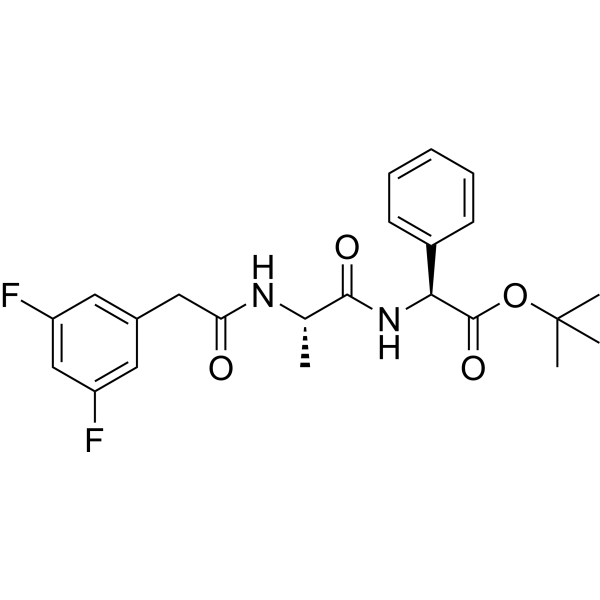
HY-13027
DAPTγ-secretase Inhibitor -
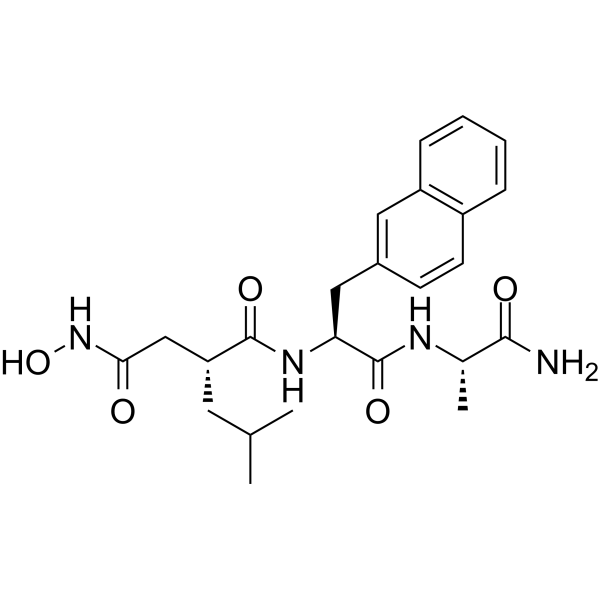
HY-118694
TAPI-0TACE/MMP Inhibitor -
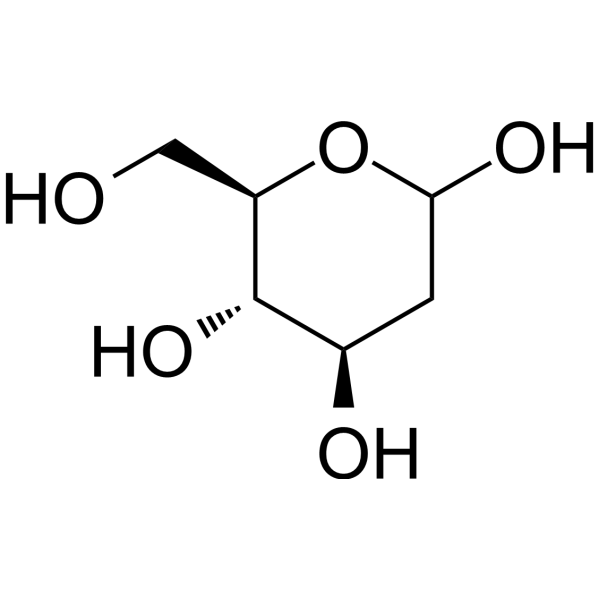
HY-13966
2-Deoxy-D-glucoseGlycolysis Inhibitor -
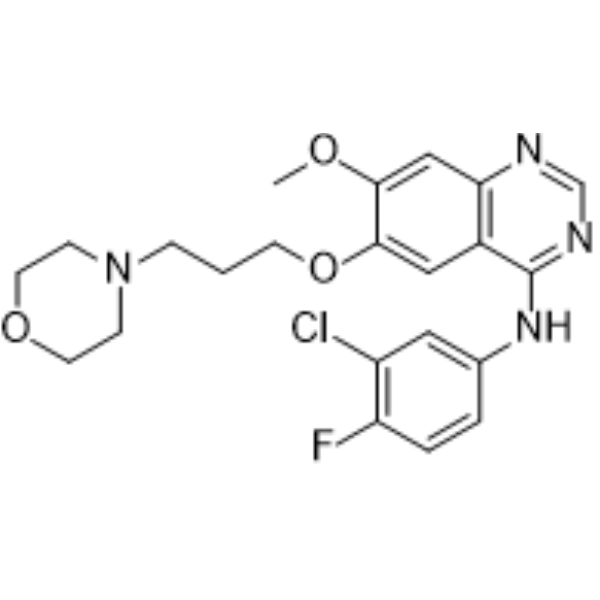
HY-50895
GefitinibEGFR Inhibitor -
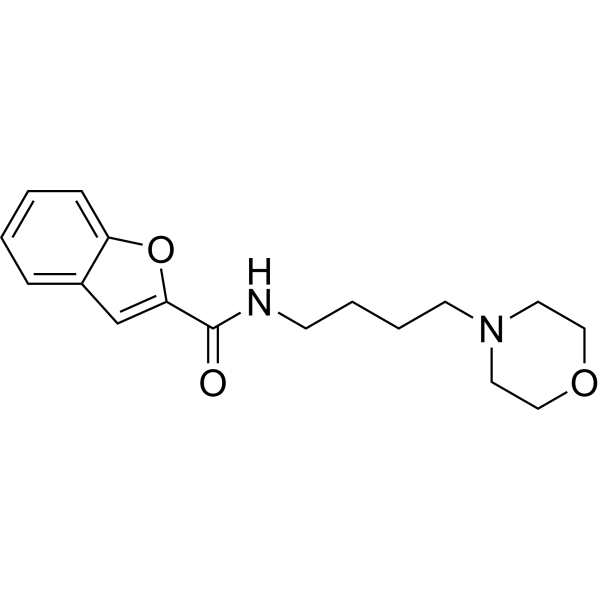
HY-100359
CL-82198MMP-13 Inhibitor -
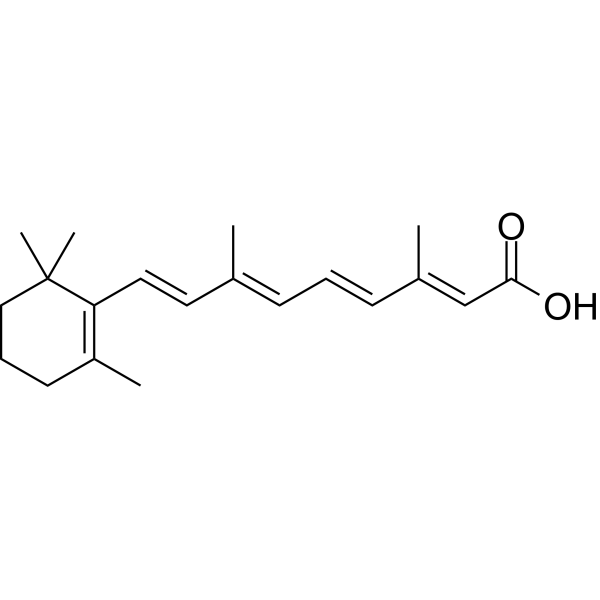
HY-14649
Retinoic acidRAR Agonist -
HY-115670
GW280264XADAM10/17 Inhibitor
Publications Citing Use of MedChemExpress (MCE) TAPI-2
More Customer Validation & Images

-
Histological Imaging/Staining


Biological Activity
Description
IC50 & Target
[1]|
MMP 20 μM (IC50) |
In Vitro
The hydroxamate-based metalloprotease inhibitor TAPI-2 bounds to hmeprin with inhibition constants IC50 20±10 μM for hmeprin β subunit and 1.5±0.27 nM for hmeprin α subunit. Generally, hmeprin α is inhibited more strongly than the β subunit[1]. Without affecting ADAM17 expression, TAPI-2 dramatically decreases the protein levels of NICD and its downstream target HES-1 in both HCP-1 and HT29 cells. Moreover, treating cells with TAPI-2 significantly decreases the CSC phenotype by -50% in both CRC cell lines. The dose-dependent effects of TAPI-2 on the sphere formation and protein levels of NICD and HES-1 confirm that the concentration used (20 μM) is within the effective dose range of TAPI-2 (5-40 μM)[3].
MedChemExpress (MCE) has not independently confirmed the accuracy of these methods. They are for reference only.


Chemical Information
-
CAS No. 187034-31-7
-
Appearance Solid
-
Molecular Weight 415.53
-
Formula C19H37N5O5
-
Color White to off-white
-
SMILES
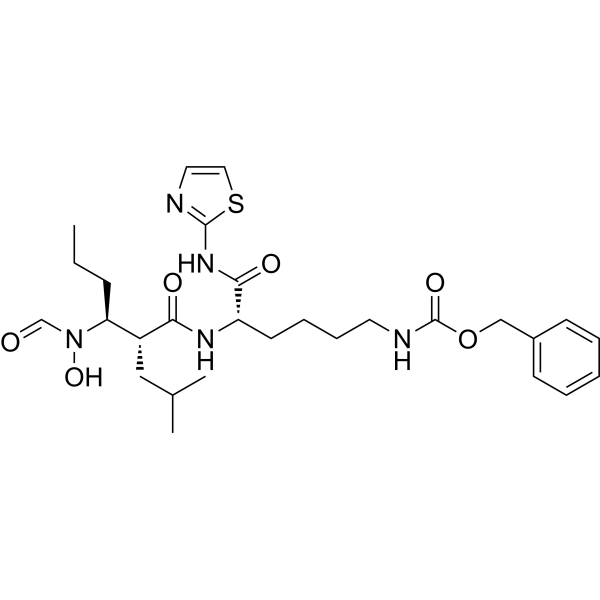
CC(C)(C)[C@@H](C(N[C@H](C(NCCN)=O)C)=O)NC(C(CC(NO)=O)CC(C)C)=O
-
Synonyms
TNF Protease Inhibitor 2
-
Shipping
Room temperature in continental US; may vary elsewhere.
-
Storage
4°C, sealed storage, away from moisture and light
* In solvent : -80°C, 6 months; -20°C, 1 month (sealed storage, away from moisture and light)


Publications (6)
-
Journal Impact Factor
-
Most Recent
-
Nucleic Acids Res
COVID19 Drug Repository: text-mining the literature in search of putative COVID19 therapeutics. [Abstract]2021 Jan 8;49(D1):D1113-D1121. PMID: 33166390 -
J Exp Clin Cancer Res
2020 Jul 29;39(1):145. PMID: 32727598
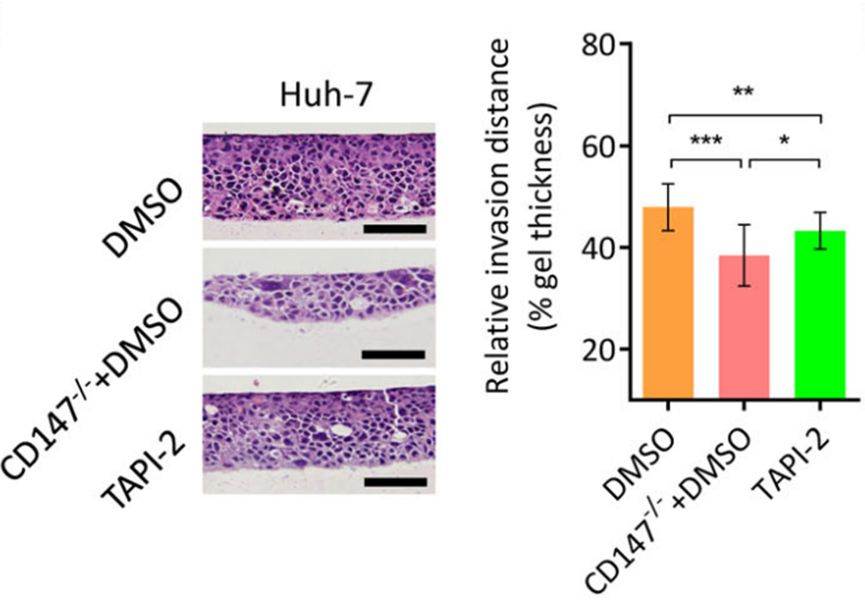
TAPI-2 purchased from MedChemExpress. Usage Cited in: J Exp Clin Cancer Res. 2020 Jul 29;39(1):145. [Abstract]
Representative images of HE staining of 3D cultures of Huh-7 and CD147 knockout cells treated with or without TAPI-2.
-
Cancer Lett
ADAMs contribute to triple negative breast cancer via mTORC1 pathway: targeting ADAM-mTOR axis improves efficacy. [Abstract]2025 Aug 28:626:217775. PMID: 40339955 -
Clin Sci
2019 Mar 1;133(5):611-627. PMID: 30782608 -
J Cell Biochem
Epiregulin (EREG) is upregulated through an IL-1β autocrine loop in Caco-2 epithelial cells with reduced CFTR function. [Abstract]2018 Mar;119(3):2911-2922. PMID: 29091309 -


Solvent & Solubility
In Vitro:
Ethanol : ≥ 100 mg/mL (240.66 mM)
* "≥" means soluble, but saturation unknown.
Please refer to the solubility information to select the appropriate solvent. Once prepared, please aliquot and store the solution to prevent product inactivation from repeated freeze-thaw cycles.
Storage method and period of stock solution: -80°C, 6 months; -20°C, 1 month (sealed storage, away from moisture and light). When stored at -80°C, please use it within 6 months. When stored at -20°C, please use it within 1 month.
Please refer to the solubility information to select the appropriate solvent. Once prepared, please aliquot and store the solution to prevent product inactivation from repeated freeze-thaw cycles.
Storage method and period of stock solution: -80°C, 6 months; -20°C, 1 month (sealed storage, away from moisture and light). When stored at -80°C, please use it within 6 months. When stored at -20°C, please use it within 1 month.
Concentration (start) × Volume (start) = Concentration (final) × Volume (final)


Purity & Documentation
-
Data Sheet (273 KB)
-
SDS (252 KB)
- English - EN (252 KB)
- Français - FR (252 KB)
- Deutsch - DE (252 KB)
- Norwegian - NO (252 KB)
- Español - ES (252 KB)
- Swedish - SV (252 KB)
- Italian - IT (252 KB)
- Korean - KR (252 KB)
- Portuguese - PT (252 KB)
-
Handling Instructions (2659 KB)
References
[1]. Kruse MN, et al. Human meprin alpha and beta homo-oligomers: cleavage of basement membrane proteins and sensitivity to metalloprotease inhibitors. Biochem J. 2004 Mar 1;378(Pt 2):383-9. [Content Brief]
[2]. Shiori Haga, et al. TACE Antagonists Blocking ACE2 Shedding Caused by the Spike Protein of SARS-CoV Are Candidate Antiviral Compounds. Antiviral Res. 2010 Mar;85(3):551-5. [Content Brief]
[3]. Wang R, et al. A Disintegrin and Metalloproteinase Domain 17 Regulates Colorectal Cancer Stem Cells and Chemosensitivity Via Notch1 Signaling. Stem Cells Transl Med. 2016 Mar;5(3):331-8. [Content Brief]


Complete Stock Solution Preparation Table
Please refer to the solubility information to select the appropriate solvent. Once prepared, please aliquot and store the solution to prevent product inactivation from repeated freeze-thaw cycles.
Storage method and period of stock solution: -80°C, 6 months; -20°C, 1 month (sealed storage, away from moisture and light). When stored at -80°C, please use it within 6 months. When stored at -20°C, please use it within 1 month.
| Optional Solvent | Concentration Solvent Mass | 1 mg | 5 mg | 10 mg | 25 mg |
|---|---|---|---|---|---|
| Ethanol | 1 mM | 2.4066 mL | 12.0328 mL | 24.0657 mL | 60.1641 mL |
| 5 mM | 0.4813 mL | 2.4066 mL | 4.8131 mL | 12.0328 mL | |
| 10 mM | 0.2407 mL | 1.2033 mL | 2.4066 mL | 6.0164 mL | |
| 15 mM | 0.1604 mL | 0.8022 mL | 1.6044 mL | 4.0109 mL | |
| 20 mM | 0.1203 mL | 0.6016 mL | 1.2033 mL | 3.0082 mL | |
| 25 mM | 0.0963 mL | 0.4813 mL | 0.9626 mL | 2.4066 mL | |
| 30 mM | 0.0802 mL | 0.4011 mL | 0.8022 mL | 2.0055 mL | |
| 40 mM | 0.0602 mL | 0.3008 mL | 0.6016 mL | 1.5041 mL | |
| 50 mM | 0.0481 mL | 0.2407 mL | 0.4813 mL | 1.2033 mL | |
| 60 mM | 0.0401 mL | 0.2005 mL | 0.4011 mL | 1.0027 mL | |
| 80 mM | 0.0301 mL | 0.1504 mL | 0.3008 mL | 0.7521 mL | |
| 100 mM | 0.0241 mL | 0.1203 mL | 0.2407 mL | 0.6016 mL |


TAPI-2 Related Classifications
HY-100211 Related Classifications
 Powered by Bioz